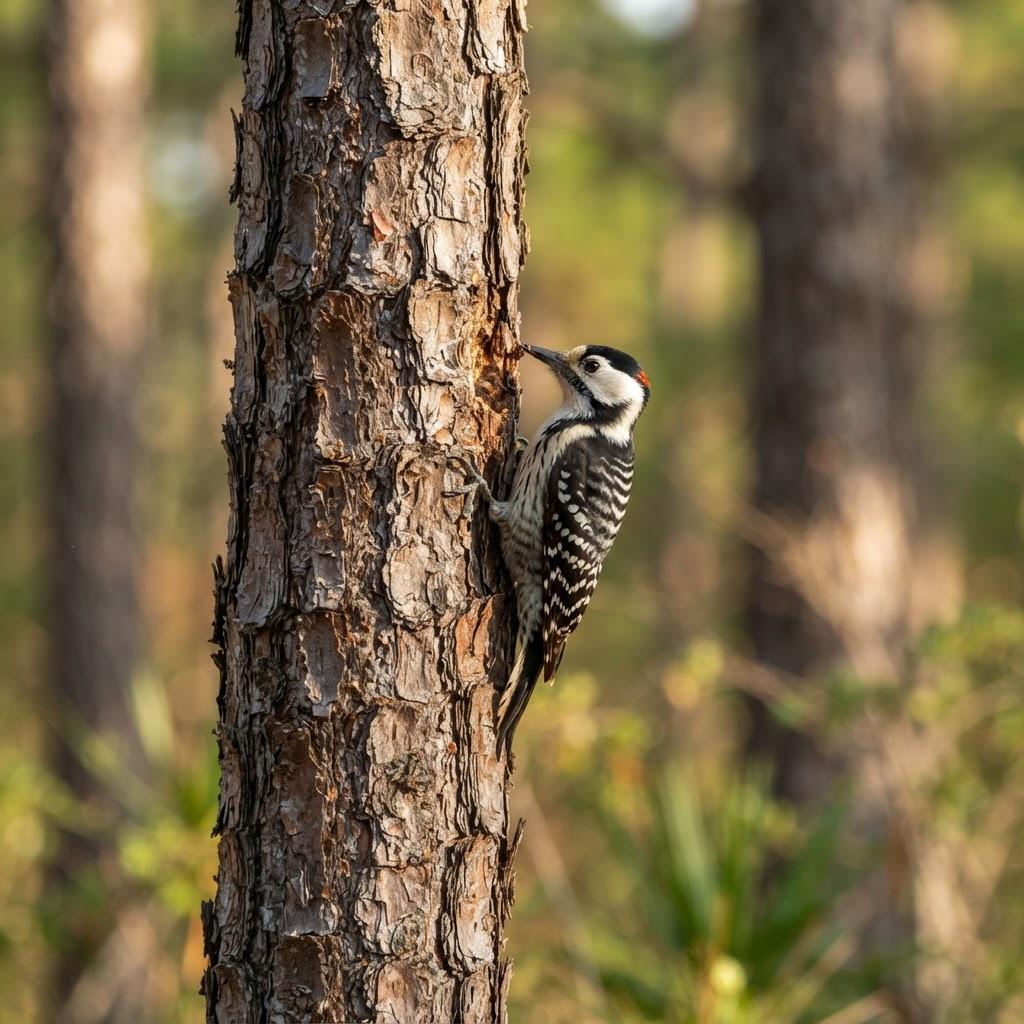
Dryobates borealis
Red-cockaded Woodpecker
Meet the Red-cockaded Woodpecker, an eccentric forest architect that insists on living in the most exclusive, sap-drenched real estate in the South. This pint-sized rebel is a social powerhouse that turns the quiet pine woods into a high-drama, multi-generational soap opera.
Meet the Bird
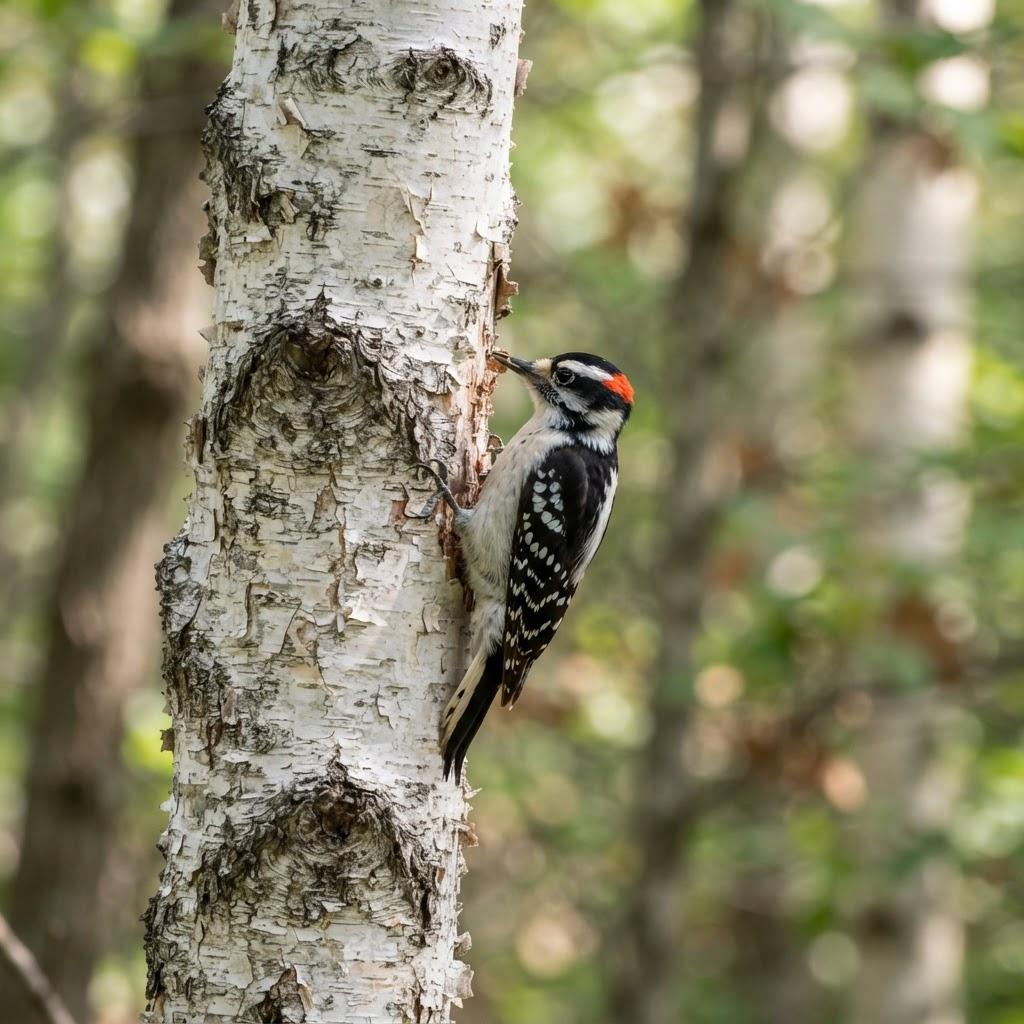
Imagine a tuxedo-clad gentleman who is obsessed with drilling holes into trees but has the social graces of a Victorian-era family patriarch. That is the Red-cockaded Woodpecker. While most woodpeckers are content to bash their heads against any old oak tree they find, this bird is a total snob. It lives exclusively in mature, living pine trees, and it has a very specific set of requirements that would make a real estate agent quit the business in frustration. The 'Red-cockaded' part of their name sounds like a fancy piece of military headwear, but in reality, it refers to a tiny, often-hidden streak of red feathers on the male’s cheek that you will almost certainly never see unless you have binoculars and the patience of a saint. They are roughly the size of a sparrow with an attitude problem, sporting a black-and-white checkered back and a white patch on their cheek that makes them look like they are perpetually surprised by something they just saw in the forest.
Superpowers & Weird Abilities
If you think your DIY projects are impressive, you have nothing on the Red-cockaded Woodpecker. They have a biological superpower that allows them to turn a tree into a sticky fortress. Because they nest in living trees, these birds have figured out how to stimulate the tree to ooze sticky, gooey resin (that’s fancy bird-talk for pine sap) all around the entrance of their hole. Think of it like a medieval castle moat, but instead of water and alligators, it is a bucket of super-sticky tree glue. This sap moat is a genius defense mechanism against snakes. Any rat snake trying to slither up for a snack finds itself stuck in a sticky, sap-covered nightmare, effectively trapping the predator in a delicious, pine-scented jail. It is a masterpiece of evolution that keeps their eggs safe while the parents sleep soundly inside, knowing their front door is protected by a natural alarm system of hardened tree blood.
Drama, Personality & Feathered Chaos
In the world of these woodpeckers, the nuclear family is a thing of the past; it is all about the commune. These birds are cooperative breeders, which is a polite way of saying the teenager birds from the last season stick around to help mom and dad raise the new litter. It is essentially a feathery version of a roommates-in-a-cramped-apartment situation. The alpha male is the boss, and the helpers are the junior interns who do all the work but get zero credit. This creates an enormous amount of social pressure and family drama. If a neighboring male dies or disappears, you might see a literal 'hole takeover,' where the younger males from a nearby family unit swoop in to occupy the vacant property. It is the avian version of a hostile corporate acquisition, complete with screaming matches, aerial chases, and territorial disputes that make your neighborhood HOA look like a peace-loving utopia.
Bizarre Rituals & Quirky Habits
Aside from their architectural hobbies, these birds have a daily routine that would baffle a normal animal. They are obsessed with tidiness. Throughout the day, you can watch them 'flaking' the bark around their nest cavity. They use their bills to chip away at the outer layers of the pine tree, keeping the sap flowing fresh and making the entrance look like a glistening piece of abstract art. It is a constant, frantic maintenance job. If they stop, the bark grows over the sap, and their security system fails. Imagine having to scrub your front door every single morning with sticky tree glue just to keep the neighborhood cats from breaking in. That is the life of a Red-cockaded Woodpecker. They are the workaholics of the bird world, perpetually busy, never sitting still, and deeply concerned with the aesthetic and defensive integrity of their front porches.
Legends, Folklore & Human Stories
While they haven't made their way into massive epic poems like the Raven or the Eagle, these birds are the silent heroes of Southern folklore and ecological history. In the early days of settlement, the longleaf pine forests were so vast you could ride a horse for days without seeing the sun. The Red-cockaded Woodpecker was the master of these woods, but as settlers logged the pines, the birds started to vanish. For a long time, they were just another bird, but eventually, they became the poster child for forest conservation. People started to realize that if the woodpecker disappears, the whole pine ecosystem might follow. They have become accidental symbols of the wild South, representing the stubborn persistence of nature against the relentless march of industry. Every time a scientist successfully helps a new colony establish, it is a win for the little guy who just wanted a sticky house in an old-growth tree.
Mating: The Ridiculous World of Avian Dating
Dating in the pine forest is not for the faint of heart. The males, who have spent years slaving away at the perfect, sap-rimmed apartment, are the ultimate bachelors. They literally own a home, which is a massive upgrade from the typical 'my branch is bigger than yours' posturing. When a female decides it is time to pair up, she is looking for the most stable real estate market she can find. She will visit several males, checking out the quality of their sap-wells and the depth of their cavities. It is essentially a high-stakes version of house hunting. If she is not impressed by his ability to maintain a sticky, insect-free front door, she leaves. There is no second chance and no 'let’s just be friends.' The male is left alone with his sap and his regrets, forced to continue his endless, lonely drumming against the pine bark, waiting for the next wanderer to pass by.
Nesting: Master Architects and Lazy Slumlords
These birds are the master architects of the avian world, but their process is agonizingly slow. It takes a pair of these woodpeckers anywhere from one to three years to fully excavate a nest cavity in a living pine tree. Yes, you read that right—years. They have to drill through the hard outer bark, then through the wood, until they reach the softer heartwood, all while being careful not to kill the tree. It is a task that would break the beak of a less determined species. Once they finish, they have a home that can last for decades. They are not slumlords; they are historic preservationists. In fact, other birds, like bluebirds and crested flycatchers, often try to move into the 'second-hand' holes once the woodpeckers have moved out or retired. The Red-cockaded Woodpecker builds the housing developments that half the forest lives in, even if they don't always invite the tenants.
Raising Babies: The Screaming Food Disposals
Once the eggs hatch, the nest becomes a high-octane, non-stop food delivery operation. The parents—along with their little 'helper' offspring—spend every waking second ferrying bugs into the dark, sticky hole. The babies, meanwhile, are essentially loud, featherless, screaming food-disposal units. They do not say thank you, they do not offer to help, and they certainly don't care that their parents are exhausted. They just flap their wings and scream for more beetles, ants, and caterpillars. Because the nest is high up in a tall, living pine, the parents have to be incredibly stealthy. They don't want to alert hawks or owls to where the babies are. They swoop in, deliver the goods in a split second, and vanish back into the canopy. It is a dangerous, exhausting, and completely thankless job that lasts until the fledglings are finally strong enough to fly out and start their own chaotic lives.
Bird-Watching Travel & Local Hotspots
If you are determined to see this elusive, sap-obsessed bird, you need to head south. Specifically, look for large, protected areas of longleaf pine savanna. The Big Thicket National Preserve in Texas is a fantastic place to start, as is the Francis Marion National Forest in South Carolina. In Florida, the Ocala National Forest is a literal hotbed for them. The best time to go is during the early morning, right as the sun is starting to hit the tops of the pines. You are looking for the 'roost tree'—it will be the one with the white, shiny sap streaks running down the trunk like a giant, vertical candle. Do not expect them to come to you; you have to go to the pine and wait. Keep your eyes on the trunks, not the leaves, and listen for their distinctive 'zit' call, which sounds like someone stepping on a squeaky toy in a library.
Food, Feeder Hacks & DIY Projects
Here is the reality check: you are probably not going to see a Red-cockaded Woodpecker at your backyard hanging feeder. They are specialized, old-growth pine dwellers. If you really want to help them, you need to think big. Instead of buying cheap, millet-heavy birdseed that just feeds the local squirrel population, focus on native plantings. If you live in their range, plant native longleaf pines. The best 'feeder' for this bird is a healthy tree full of wood-boring insects. However, you can make your yard more attractive to all woodpeckers by putting up a natural suet log. Take a small piece of wood, drill some holes in it, and fill them with high-quality, peanut-based suet. Avoid the cheap stuff with seed fillers, which just makes a mess. If you want to get crafty, wrap some twine around a pinecone, stuff the gaps with lard or peanut butter, and hang it high on a tree. It won't get you a Red-cockaded visitor, but it will support the forest ecology they rely on.
Seasonal Guides & "Crisis" Management
As the seasons turn, the woodpecker’s life changes from a scramble for food to a winter of endurance. In the winter months, their sap-wells are essential for keeping their homes warm and protected. If you happen to be out hiking during the spring, you might run into the 'fledgling panic' season. You might see a baby bird hopping on the ground or clinging to a low branch. Resist the urge to 'rescue' it! These little birds are often just learning how to navigate the massive pine forest. Unless the bird is visibly injured—like having a broken wing or being covered in ants—it is almost certainly fine. The parents are usually watching from the branches above, screaming at you to get away from their kid. The best thing you can do for a fledgling is to walk away, keep your dog on a leash, and let the parents handle the parenting. They have been doing it for millions of years.
Backyard Tech & Gadget Reviews
While these birds are too wild for your average AI-powered camera feeder, you can definitely use tech to level up your birding game. If you are serious about observing the forest, look into a decent trail camera. Strap it to a tree at eye level near a spot where you suspect bird activity, and you will get a front-row seat to the local wildlife that ignores you when you are standing there. For window safety, which is a major issue for all birds, skip the silly 'hawk silhouettes' that never work. Instead, try UV-reflective window film or a simple 'zen curtain' made of string hanging outside the glass. This breaks up the reflection that tricks birds into thinking they are flying into open sky. When the birds see the 'curtain,' they know there is a barrier, saving them from a nasty collision and you from the heartbreak of finding a stunned or injured visitor on your porch.
How to Spot One & How It Is Doing
To identify the Red-cockaded Woodpecker, look for the 'checkerboard' black-and-white wings and the white cheek patch. If you see a woodpecker in the deep South and it is behaving like a frantic, sap-obsessed engineer, you might have found one. Listen for a sharp, chattering 'zit' call. Regarding their conservation status, they are currently listed as vulnerable. It sounds scary, but it is actually a success story in progress. Because we know exactly what they need—mature, open pine forests—we can manage the land to help them bounce back. By thinning out the thickets and performing controlled 'prescribed burns' to clear the underbrush, we are creating the perfect habitat for them to thrive. You can help by supporting local wildlife trusts and public lands that focus on longleaf pine restoration. This bird is a survivor, and with a little more room to grow its sticky-sap fortress, it’s going to be around for a long time.