Dryocopus pileatus
Pileated Woodpecker
Meet the Pileated Woodpecker, North America's feathered chainsaw and a bona fide forest celebrity! This giant of the woodpecker world is like a punk rocker with a drill for a beak, leaving a trail of drama and impressive carpentry wherever it goes. Get ready to be amazed by this magnificent bird and learn how to welcome its noisy, energetic presence into your world.
Meet the Bird
Imagine a bird that looks like it just walked off the set of a heavy metal concert, all dramatic red crest and a personality to match. That’s our star, the Pileated Woodpecker, affectionately known as the 'log-cock' or sometimes just the 'big one' by those who’ve witnessed its awe-inspiring presence. This isn't your garden-variety sparrow; this is a bird that commands attention. With its striking black plumage, bold white stripes on its head and neck, and that unforgettable fiery red crest, it’s like nature’s own punk-rock icon. They’re not shy, either. You’ll often hear them before you see them, with a loud, distinctive call that sounds remarkably like a human laughing manically. If you hear that peculiar cackle echoing through the trees, don't be alarmed; it's just the Pileated Woodpecker announcing its arrival, probably to start remodeling the nearest dead tree into a luxury condo. Their sheer size alone is enough to make you do a double-take; these are some of the largest woodpeckers in North America, roughly the size of a crow, and they carry themselves with a certain swagger. They’ve got a vibe that’s equal parts wild lumberjack and avant-garde artist, constantly engaged in projects that reshape their arboreal world. If a tree could have a signature, the Pileated Woodpecker's would be a perfectly rectangular hole, a testament to its artistic vision and industrial-grade tools.
Superpowers & Weird Abilities
Pileated Woodpeckers are basically nature's own construction crew with a built-in shock absorber system. Ever wondered how they can peck away at solid wood for hours without getting a splitting headache? It’s not just brute force; it’s science! Their skulls are like a biological marvel. They have reinforced skulls, tiny air sacs between the skull and brain, and surprisingly strong neck muscles that act like a built-in seatbelt, absorbing the tremendous shock from each powerful strike. Imagine doing that thousands of times a day – it’s like being punched in the face repeatedly, but they just shrug it off and keep drilling. Their tongues are another superpower. Forget boring, short little tongues; theirs are long, sticky, and covered in backward-facing barbs. These tongues can extend incredibly far out of their beaks, sometimes twice the length of their actual bill! They use this prehensile appendage like a tiny, feathered snake to slurp up insects and grubs from deep within the wood. It’s like having a built-in, super-flexible straw that can reach into the deepest, darkest crevices of a tree trunk. They’re also masters of acoustic detection. Their sharp hearing allows them to pinpoint the exact location of insect larvae moving beneath the bark, like a woodpecker sonar system. This precision is crucial for efficient foraging and ensures they don't waste energy on an empty cavity. It’s a combination of physical resilience, specialized anatomy, and acute senses that makes them incredibly successful survivors, capable of turning even the toughest, most unyielding trees into a buffet and a home.
Drama, Personality & Feathered Chaos
The Pileated Woodpecker isn't just a bird; it's a personality, and often, it’s a rather demanding one. Think of them as the loud, boisterous neighbors who are always undertaking some kind of renovation project, and frankly, they don't care if you're trying to sleep. They are territorial, but their territory often involves entire swathes of forest where they are the undisputed heavyweight champions. If another woodpecker, or even a larger bird like a crow, dares to encroach on their prime real estate, expect a dramatic aerial chase with plenty of squawking and flailing. They are not afraid to make a scene. At the feeder, they can be a bit of a bully, much like a hungry teenager raiding the fridge. Their sheer size means they can dominate smaller birds, monopolizing suet feeders and hoarding the best bits. But it's not all aggression; there's a certain social complexity. Pairs bond for life, and you'll often see them foraging together, communicating with those distinctive calls that sound like they’re sharing a particularly hilarious joke. They also have a reputation for being highly adaptable, sometimes venturing into suburban areas if the habitat is right, which can lead to comical encounters with humans who are surprised by the sheer scale and noise of their feathered tenant. Their presence can certainly stir the pot in the local bird community, reminding everyone who’s boss with a resounding *thwack* against a tree trunk. They are the rock stars of the avian world, leaving a trail of sawdust and hushed awe wherever they perch.
Bizarre Rituals & Quirky Habits
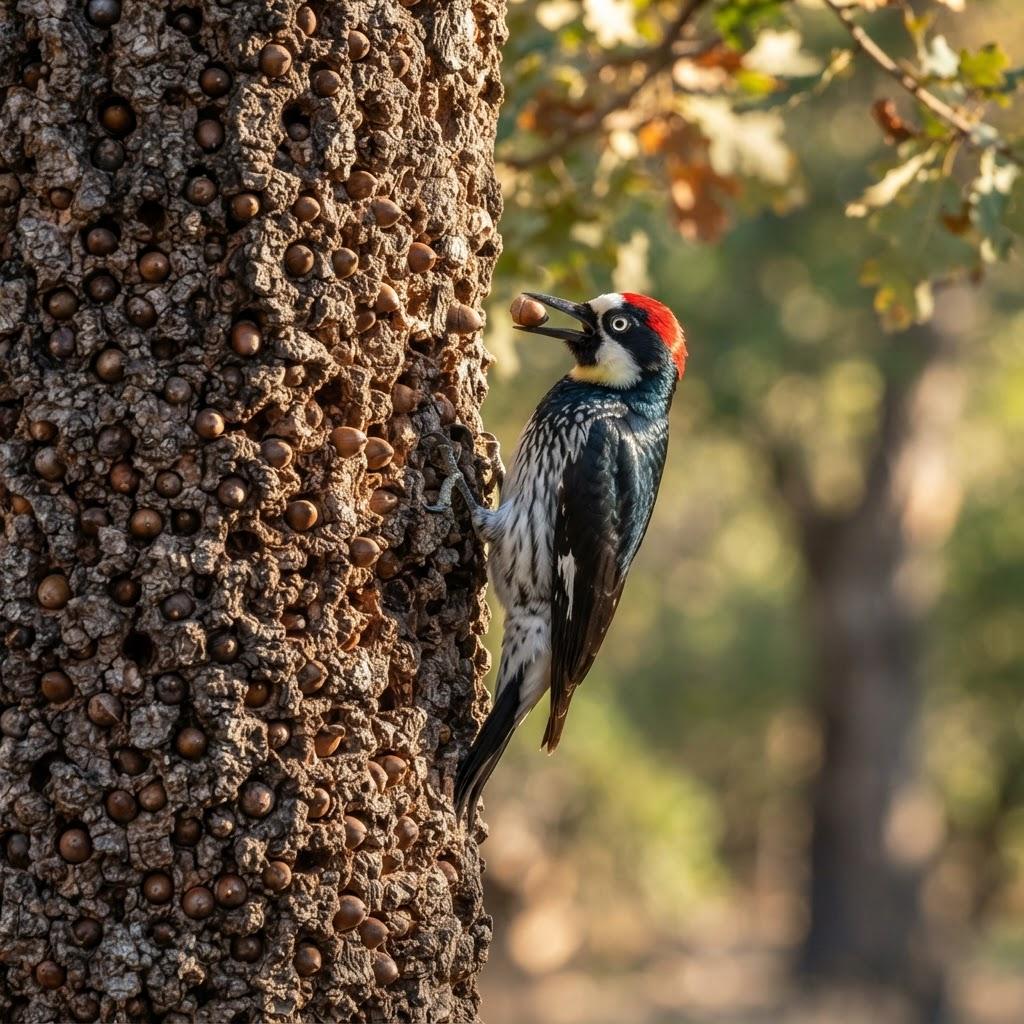
Pileated Woodpeckers have some truly unique habits that might make you scratch your head, or perhaps even laugh out loud. One of their most fascinating, albeit slightly disturbing, behaviors is their absolute obsession with excavating. They don’t just peck; they engage in what looks like an all-out demolition derby on dead trees. These aren't just small exploratory holes; they can create massive rectangular excavations, sometimes a foot or more long, in search of ants, their absolute favorite delicacy. It’s like they’re trying to solve a wooden jigsaw puzzle, but with pure force. They are particularly drawn to carpenter ants, and their ability to locate and extract these juicy morsels from deep within decaying wood is legendary. They can even detect the subtle sounds of ants moving inside. Another quirky habit is their love for roosting in cavities they themselves have carved out. Unlike many birds that might use old nests or natural holes, these guys are self-sufficient homeowners, excavating a fresh roosting cavity for the night, often in a different tree each time. This means they are constantly redecorating and expanding their real estate portfolio, which is a massive amount of work! They also have a distinctive way of caching food, especially during leaner times. They’ll jam insects or nuts into crevices in tree bark or into their own old nest holes, creating a sort of pantry. It's a smart move, but can sometimes lead to them forgetting where they put their snacks, resulting in frantic, noisy searches later on. These habits showcase their intelligence, resourcefulness, and a slightly eccentric approach to survival, making them one of nature's most entertaining characters.
Legends, Folklore & Human Stories
For many Indigenous cultures across North America, the Pileated Woodpecker held significant meaning, often seen as a powerful omen or a messenger. Its striking appearance, loud calls, and the dramatic way it carves into trees imbued it with a sense of mystery and strength. In some traditions, its drumming was believed to predict the weather, its appearance signaling change or important events. The distinctive red crest was often associated with leadership or spiritual power. There are stories where the woodpecker’s drumming was thought to ward off evil spirits or to communicate with the spirit world. Its ability to excavate large holes also tied it to themes of creation and transformation, as it literally reshaped the forest. For others, the loud, almost human-like laughter call might have been interpreted as playful trickster energy or a warning. Unlike the honeyguide, which famously partners with humans to find beehives, the Pileated Woodpecker's interactions tend to be more symbolic or observational. It hasn’t typically been a direct collaborator in human survival, but rather a creature whose presence and actions were deeply observed and interpreted within a rich tapestry of folklore and spiritual belief. Its resilience and power in the forest made it a natural subject for stories that reflected human hopes, fears, and understanding of the natural world. The bird’s constant work on trees also meant it was a visible reminder of the cycles of life, death, and renewal in the forest.
Mating: The Ridiculous World of Avian Dating
When it comes to romance, Pileated Woodpeckers don’t do subtle. Forget roses and candlelit dinners; their courtship rituals are a full-on performance art piece, often involving a lot of noise and dramatic physical displays. Once a pair decides to commit (and they often mate for life, making this a serious decision!), there’s a period of intense bonding that includes synchronized flights and vocalizations. The male, in particular, puts on quite a show. He’ll perform elaborate aerial displays, soaring and swooping through the trees, often calling out to his potential or established mate. He might also engage in what's called 'drumming,' not just for communication or territory, but as a way to impress. This isn't just random pecking; it's a specific, rapid drumming pattern that’s like his audition tape. The female watches intently, and if she's not impressed by his aerial acrobatics or his drumming prowess, well, she might just fly off and leave him to ponder his lack of charisma. There’s no begging, no pleading, just a graceful (or not-so-graceful) exit, leaving him to re-evaluate his mating strategy. If she’s intrigued, she’ll join him in these synchronized displays, a feathered duet of mutual admiration. They also engage in mutual preening, gently nibbling at each other’s feathers, a sign of affection and trust. It’s a high-stakes game of love, where only the most impressive performers secure a lifelong partner. The entire process is a testament to their commitment, transforming basic biological urges into a spectacular display of avian courtship, proving that even birds have their own unique dating drama.
Nesting: Master Architects and Lazy Slumlords
The Pileated Woodpecker is, without a doubt, a master architect. Forget flimsy nests made of twigs and spit; these birds are the original interior decorators of the forest, specializing in custom-built homes that are more like luxury tree condos. They don't build nests in the traditional sense of a cup or platform. Instead, they excavate their own nesting cavities, primarily in large, dead trees or dead parts of living trees. These aren't just little peepholes; these are substantial holes, often over two feet deep, meticulously carved out with their powerful beaks. The entrance is typically rectangular, a signature feature that immediately tells you who the architect is. They are incredibly particular about their sites, choosing locations that offer both security from predators and easy access to foraging grounds. The inside of the cavity is usually lined with wood chips from their excavation, creating a comfortable, insulated space for eggs and chicks. It’s a labor-intensive process, requiring significant time and energy, but it results in a safe, sturdy home that can be used for generations. While some birds are content with a few strategically placed twigs (looking at you, Mourning Dove), the Pileated Woodpecker takes pride in its construction. It’s a testament to their strength, skill, and commitment to providing the best possible environment for their offspring. They are the HGTV stars of the bird world, creating bespoke woodland dwellings that are both functional and impressive feats of natural engineering.
Raising Babies: The Screaming Food Disposals
Once the eggs hatch, the Pileated Woodpecker parents transform into a relentless 24/7 food-delivery service, and their chicks are the most demanding customers imaginable. A clutch typically consists of 3 to 5 eggs, and from the moment they break free from their shells, it’s all about the food. The babies, or nestlings, are born blind and featherless, looking more like tiny, squirming dinosaurs than birds. Their primary, and arguably only, skill at this stage is screaming. They scream for food, they scream because they’re a bit cold, they scream because the sun is too bright – they are, in essence, tiny, feathered alarm systems. The parents, both male and female, take turns incubating the eggs and then feeding the ravenous offspring. This involves flying back and forth to the nest cavity with loads of insects and grubs, often carpenter ants, which are high in protein and essential for growth. Imagine the sheer volume of food required; a single chick can consume an astonishing amount, and when you multiply that by several hungry mouths, the parents are in a perpetual state of exhaustion. They’ll feed the chicks every 15-30 minutes during daylight hours. This intense period lasts for about 3-4 weeks, after which the young birds are ready to fledge, or leave the nest. Even then, the parents continue to feed them for a while, teaching them the essential skills of foraging and survival. It’s a chaotic, noisy, and utterly exhausting process, a testament to parental dedication in the face of overwhelming demands from their constantly hungry brood.
Bird-Watching Travel & Local Hotspots
If you're dreaming of witnessing the impressive spectacle of a Pileated Woodpecker in its natural habitat, you're in luck, as they are found across a significant portion of North America. For prime viewing opportunities in the East, head to the mature forests of the Appalachian Mountains, particularly in places like Shenandoah National Park in Virginia or Great Smoky Mountains National Park, straddling North Carolina and Tennessee. These ancient forests offer the large, old trees that Pileateds favor. In the Northeast, look for them in the vast, wooded areas of Maine, New Hampshire, and Vermont, especially in state parks and national forests. The Pacific Northwest is another excellent region; Olympic National Park in Washington and parts of the Oregon Coast Range are teeming with these magnificent birds. They thrive in the dense, damp coniferous and mixed forests there. If you’re venturing into the Midwest, seek out larger tracts of deciduous forest, perhaps in state parks in states like Wisconsin, Michigan, or Minnesota. Even well-wooded suburban areas with mature trees can host them, so don't discount your local large park or nature preserve. The best time to see them is generally year-round, as they are not migratory in the typical sense, but spring and early summer offer the bonus of hearing their calls more frequently as they establish territories and raise young. Keep an ear out for that distinctive call and look for those characteristic rectangular holes in trees – they are often the best indicators of a Pileated Woodpecker’s presence.
Food, Feeder Hacks & DIY Projects
While Pileated Woodpeckers are primarily insectivores, with a particular fondness for carpenter ants, they aren't above sampling other treats. To attract these giants to your yard, your best bet is to offer high-quality suet. Forget the cheap, seed-filled suet cakes that often just attract squirrels and starlings; opt for pure, high-energy suet cakes, especially those with added nuts or fruits, which they adore. They will also visit feeders offering large nuts like whole peanuts (in the shell or shelled) or pieces of black walnuts. They aren't typically seed-eaters in the way smaller birds are, so focusing on suet and nuts is key. Beyond feeders, the most effective way to draw them in is by providing the right habitat. Mature hardwood forests are their preference, so if you have large, dead trees or snags on your property, consider leaving them standing if it's safe to do so – these are prime real estate for foraging. Planting native berry-producing shrubs like dogwood, serviceberry, or wild cherry can also provide supplemental food, especially during leaner times. For a DIY project, consider making a simple suet log: drill holes into a sturdy piece of bark or a small log, then pack them tightly with suet, perhaps mixing in some sunflower seeds or chopped nuts. Hang this from a tree branch, and you've created a natural, appealing feeder that the Pileated Woodpecker will likely investigate. Remember, consistency is important; once they discover your offerings, they'll return if the food source remains reliable.
Seasonal Guides & 'Crisis' Management
Pileated Woodpeckers are year-round residents in most of their range, but their behavior subtly shifts with the seasons. In spring, their territorial drumming and loud calls become more frequent as they re-establish dominance and seek mates. This is a great time to put out fresh suet, as they need the energy for courtship and nest building. As spring progresses into summer, you'll start hearing the
Backyard Tech & Gadget Reviews
The world of birdwatching is increasingly high-tech, and even the grand Pileated Woodpecker can be part of the digital age. Take smart feeders, for instance. Devices like the Bird Buddy can identify birds that visit, snapping photos and sending notifications right to your phone. While they might not always capture the fleeting glimpse of a Pileated – these birds are large and often don't linger at small feeders – if one does grace your suet feeder, you might just get a spectacular shot. It’s a fun way to keep track of your visitors, though be prepared for the sheer volume of photos from more common visitors like chickadees and sparrows. For those concerned about window collisions, which are a serious threat to all birds, there are also innovative solutions. Window decals are a classic, but for a more aesthetic approach, consider specialized window films that break up reflections without obstructing your view. You can even try creating a DIY 'window garden' by placing plants on the outside sill. For the truly dedicated, a motion-activated trail camera or a wildlife camera placed near a known foraging area or a suet feeder can offer incredible, unfiltered glimpses into the lives of these birds, especially any nocturnal visitors. You might even catch a Pileated Woodpecker visiting a roosting cavity at dusk or dawn. These gadgets can enhance your appreciation, turning a simple backyard into a dynamic wildlife observation hub, bridging the gap between nature and technology.
How to Spot One & How It Is Doing
Spotting a Pileated Woodpecker is an experience akin to seeing a celebrity wander into your local coffee shop – it's impressive and slightly surreal. Keep an eye out for their unmistakable size; they're about the size of a crow, much larger than most other woodpeckers. Their plumage is striking: predominantly black with bold white stripes running down their neck and flanks, and a vivid red cap. Males have a red stripe on their face as well. Listen for their distinctive, loud, almost human-like cackle, often described as sounding like manic laughter, or their loud, clear whistling calls. The most telltale sign, however, is their work. Look for large, rectangular holes in dead trees or dead patches of large trees. These aren't small peck marks; these are substantial excavations, often revealing piles of wood chips below. They typically forage in mature forests, woodlands, and even heavily wooded suburban yards, often near water. As for their conservation status, the Pileated Woodpecker is doing quite well, listed as 'Least Concern.' Their populations have actually expanded in some areas due to reforestation efforts and the increased availability of mature trees. They are adaptable and resilient. To help them continue to thrive, the best action ordinary people can take is to support conservation of large, mature forests, whether through local park initiatives or by leaving standing dead trees (snags) on private property if it’s safe to do so. Providing good quality suet feeders, especially in winter, can also be a helpful supplement. Enjoying these magnificent birds and educating others about their presence and needs is key to ensuring their continued presence in our landscapes.