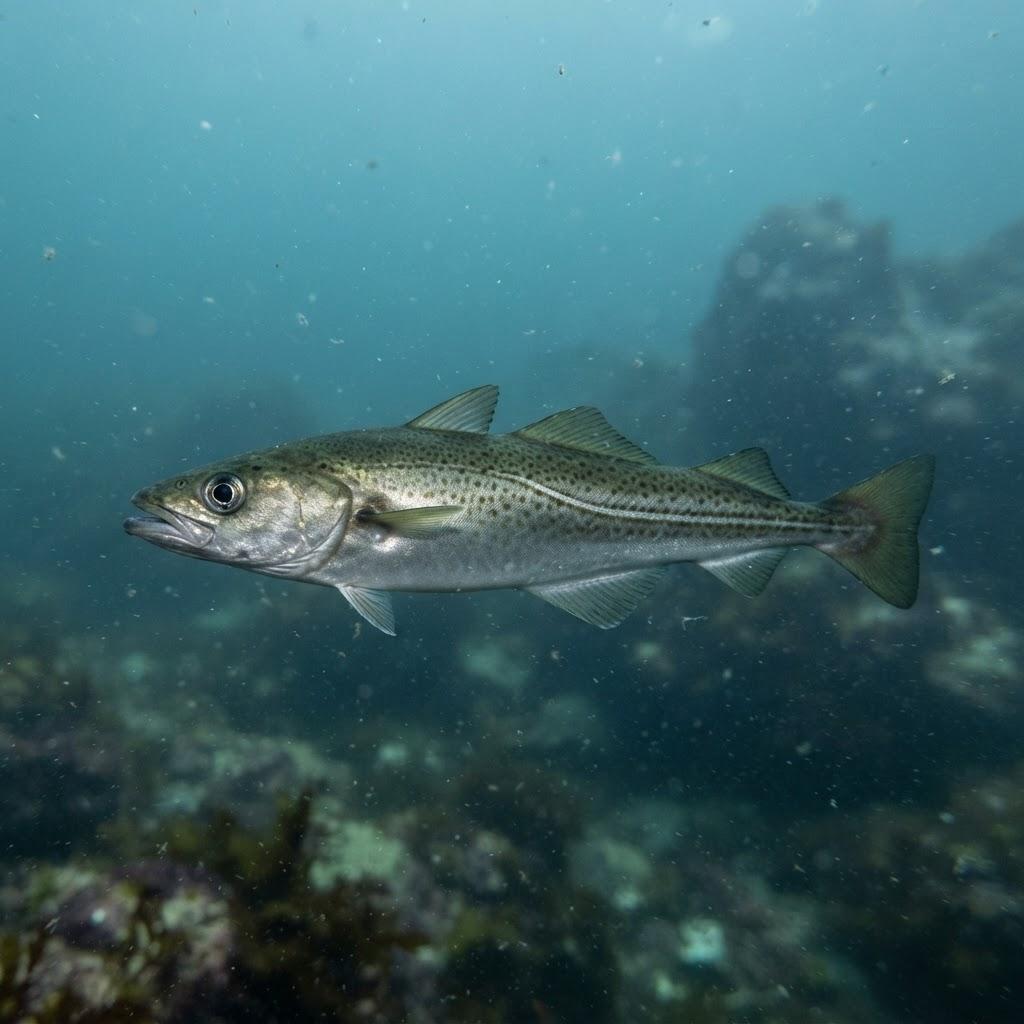
Gadus chalcogrammus
Alaska Pollock
You have definitely met the Alaska Pollock, likely inside a crispy fish stick or a fast-food sandwich, but this fish is a genuine celebrity of the chilly North Pacific. It is the ultimate team player of the ocean, moving in massive schools and keeping the entire ecosystem running on a high-protein diet of pure hustle.
Meet the Fish
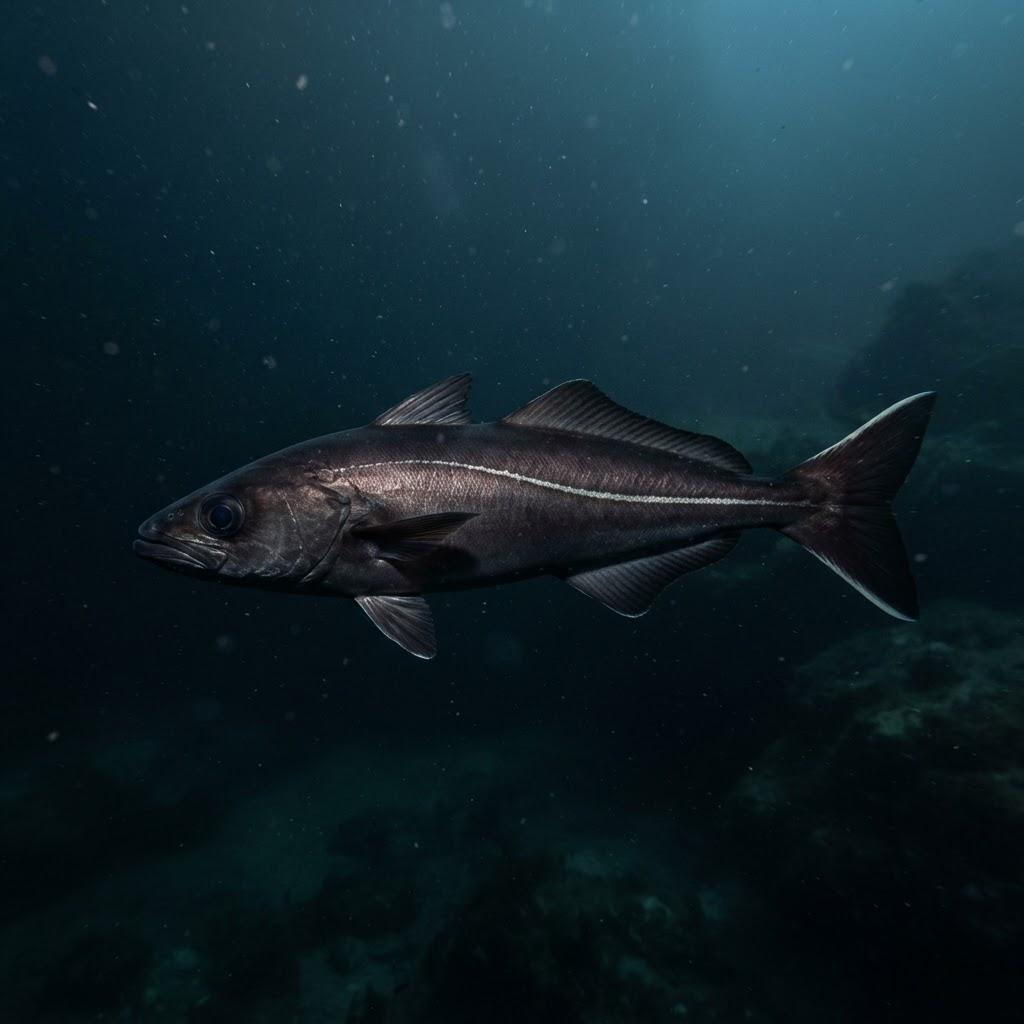
If the Alaska Pollock had a profile on a dating app, its bio would read: 'I am the most popular fish you have never actually heard of, but you have definitely eaten me for lunch.' This fish is the unsung hero of the frozen food aisle, the undisputed king of the fish stick, and a secret agent of the North Pacific. Visually, the Pollock is not exactly winning any underwater beauty pageants; it has that classic, 'I am a fish' look—streamlined, silvery-grey, and sporting three dorsal fins that give it the silhouette of a jagged mountain range. But do not let its humble appearance fool you. This fish is a logistical powerhouse. It moves through the freezing, pitch-black waters of the Bering Sea in schools so massive they could be mistaken for small, shifting islands from space. It is not looking for fame or glory; it is simply looking for the next swarm of krill to snack on while trying its best not to get turned into a filet-o-fish by a giant trawler. It is the working-class hero of the sea, possessing the kind of steady, reliable personality that says, 'I am just here to swim, spawn, and keep the food chain spinning.'
Weird Biological Superpowers Explained Simply
When you live in the bone-chilling waters of the North Pacific, you need to be made of sturdy stuff, and the Alaska Pollock has a trick that would make a cryogenics researcher weep with joy. These fish are absolute masters of temperature regulation, possessing special proteins in their blood that act as biological antifreeze. Think of it like the winter windshield wiper fluid you pour into your car so your lines do not turn into solid blocks of ice; the Pollock does this internally, naturally. This allows them to thrive in near-freezing temperatures where most other fish would essentially turn into a fish-flavored popsicle. They also have an incredibly sophisticated lateral line system, which is essentially a sensory superpower. It is a line of tiny, fluid-filled pores running down their sides that detect the slightest change in water pressure. This allows them to 'see' their neighbors in the dark. In a school of millions, they don't crash into each other because they are constantly sensing the micro-currents caused by their friends. It is like having a sixth sense for traffic, allowing them to zip through the ocean in a perfectly synchronized, liquid ballet.
Absurd Self-Defense Mechanisms
If you are an Alaska Pollock, life is basically one giant game of 'dodge the predator' where everyone else is faster and hungrier than you are. Since they aren't equipped with poison spikes, electricity, or giant teeth, their self-defense strategy is rooted in the philosophy of safety in numbers. And by numbers, I mean millions. When a seal or a whale comes lunging into a school of Pollock, the fish don't just scatter like frantic teenagers at a haunted house; they form a 'bait ball.' This is a massive, shifting sphere of millions of individual fish that moves as one entity. It is the aquatic version of a high-speed car chase where every car is trying to occupy the same space at the same time to confuse the pursuing police officer. The predator gets so overwhelmed by the flashing silver sides and the chaotic, shifting geometry that it struggles to pick out a single target. It is a dazzling display of teamwork where the goal is simply to be slightly less delicious than the fish swimming right next to you. It is not noble, but it works, and it keeps the species alive and swimming in the face of constant oceanic peril.
Fish Drama and Gossip
Inside a school of Alaska Pollock, the social hierarchy is surprisingly chill, mostly because everyone is too focused on the common goal of 'eat, don't get eaten' to worry about who is dating who. Unlike the high-maintenance clownfish, which are basically the Mean Girls of the coral reef, the Pollock is the ultimate 'go with the flow' buddy. However, there is definitely some subtle competition going on. During feeding frenzies, size matters. The bigger fish usually get the prime spots, meaning they get the first dibs on the freshest krill before the swarm reaches the smaller, hungrier youngsters in the back. There is no formal 'king of the school,' but there is a clear understanding that if you want the best buffet, you better keep up. It is less like a soap opera and more like the world's longest, most stressful commute where everyone is just trying to make it to the destination without getting cut off by a hungry shark. The gossip is purely about who just spotted a massive school of tiny shrimp drifting toward the surface. In the Pollock world, information is currency, and the news travels faster than a current.
The "Wait, That's Real?!" Deep-Sea Oddities
While the Alaska Pollock isn't a deep-sea creature in the sense that it spends its life in the midnight zone—where it's so dark you would need a flashlight to see your own tail—it definitely shares the neighborhood with some truly bizarre characters. Imagine, if you will, the barreleye fish, a creature with a head so transparent you can literally see its brain and its glowing green eyes through its own skull. Or consider the dragonfish, which has light-up teeth and a lure that looks like a miniature disco ball dangling from its chin. The Pollock is a bit more 'down to earth' by comparison, but it does dip into the twilight zone where the sunlight is merely a faint memory. When they travel to these depths, they are essentially the suburbanites visiting the alien planet of the abyss. They are not built for the crushing pressure and complete blackness of the ocean floor, but they are hardy enough to survive the transition. Compared to the glowing, gelatinous nightmares of the deep, the Pollock is a solid, reliable citizen of the water column, proving that you don't need bioluminescence to be a successful player in the grand theater of the sea.
Myth Busting
Let’s clear the air: there is a long-standing myth that fish have a three-second memory, making them the goldfish-brained victims of the ocean. This is completely false, and the Alaska Pollock is a living rebuttal to that nonsense. These fish demonstrate remarkable learning capabilities. They remember where the good feeding grounds were last season, they recall the patterns of migration that keep them safe from predators, and they can even learn to avoid areas where they have had bad experiences. They are not mindless silver tubes blindly drifting in the current; they are sophisticated navigators that have mapped the North Pacific in their tiny fish brains. Another myth is that all fish are cold, unfeeling machines. While they don't express love in the way humans do, they exhibit social intelligence by maintaining massive, cooperative groups. They are constantly communicating via vibrations and pressure changes, showing a level of awareness that puts most of our favorite pets to shame. Don't underestimate the Pollock; it is likely smarter than the average person who dismisses it as just a component of a fish stick.
Humorous Historical Tales or Folklore
While the Alaska Pollock hasn't starred in any epic Greek tragedies, its cousins—the cod family—have basically shaped the history of the modern world. For centuries, the entire economy of Northern Europe and North America was built on the back of the Gadidae family. Entire wars were fought over fishing rights, and explorers discovered new continents mostly because they were looking for more cod to salt and store. The Pollock, being a slightly smaller and more nomadic cousin, often escaped the headlines, but it was the silent partner in this maritime expansion. There is an old maritime folk belief that if you catch a Pollock with a certain pattern on its scales, it brings good luck to the ship's cook, ensuring the stew never runs dry. It’s the kind of superstition sailors invented to keep their spirits up during months of staring at the same grey horizon. Even if the 'luck' was mostly just a very large fish providing enough dinner for the entire crew, the myth persisted, turning the humble Pollock into a bit of a legendary figure in the galley of every ship brave enough to cross the Bering Sea.
Underwater Love Stories and Bizarre Romances
When it comes to romance, the Alaska Pollock is not exactly looking for a candlelit dinner or a sunset walk on the beach. Their idea of a date is a massive, chaotic, group-participation event that would make a frat party look like a knitting circle. During spawning season, the Pollock gather in numbers so large they turn the water into a cloud of eggs and milt. It is not romantic in the poetic sense; it is a numbers game. The males don't perform elaborate dances; they just push their way into the crowd and hope for the best. It is a frantic, high-stakes frenzy where millions of eggs are released into the water, and nature just hopes that enough of them will survive the gauntlet of hungry neighbors to keep the lineage going. It is the ultimate 'love for the many' strategy. They don't pick one partner and settle down in a cozy cave; they commit to the entire community, prioritizing the survival of the species over any individual romantic connection. It is messy, loud, and incredibly efficient, which is really the only way to succeed in the vast, unforgiving North Pacific.
Underwater Architecture and DIY Nesting
If you are looking for an architect who builds elaborate sandcastles or hidden stone fortresses, look elsewhere. The Alaska Pollock is a minimalist of the highest order. They don't build nests; they don't dig holes; they don't weave sea-grass blankets. Their 'nursery' is the entire North Pacific Ocean. They operate on a 'release and release' policy. By not anchoring their eggs to a specific spot, they prevent predators from discovering a single location and having an easy buffet of baby fish. Instead, they distribute their future offspring throughout the currents. This is actually a brilliant, if chaotic, survival strategy. If you place all your eggs in one basket, a single predator can wipe out your entire generation in one afternoon. By letting their eggs drift in the plankton-rich layers of the water, the Pollock ensures that their offspring have the best chance to find food and avoid being concentrated in a single, vulnerable area. It is DIY parenting at its most hands-off, a testament to the fish's trust in the ocean to provide for the next generation without needing any structural help from Mom or Dad.
The Chaos of Raising Tiny Swimmers
Being a baby Alaska Pollock is essentially being a snack-sized morsel in the biggest, hungriest restaurant on Earth. When the larvae hatch, they are tiny, transparent, and completely on their own. They don't have a parent guarding them or a mouth-brooding dad keeping them safe in his cheek pouch. They are literally drifting through the ocean currents, looking for microscopic plankton to eat while trying their hardest not to be eaten by everything from jellyfish to other, slightly larger fish. The survival rate is statistically terrifying—of the millions of eggs released, only a tiny fraction will make it to adulthood. But that is the beauty of their strategy. By releasing so many, they overwhelm the ecosystem's ability to eat them all. It is a numbers game that has worked for millions of years. As they grow, they move from being the smallest prey to the middle of the food chain, joining the massive schools that define their life. It is a rough start, but for those who make it, the reward is a life of endless travel, massive social circles, and a very sturdy set of survival skills.
How to Spot One & How It Is Doing
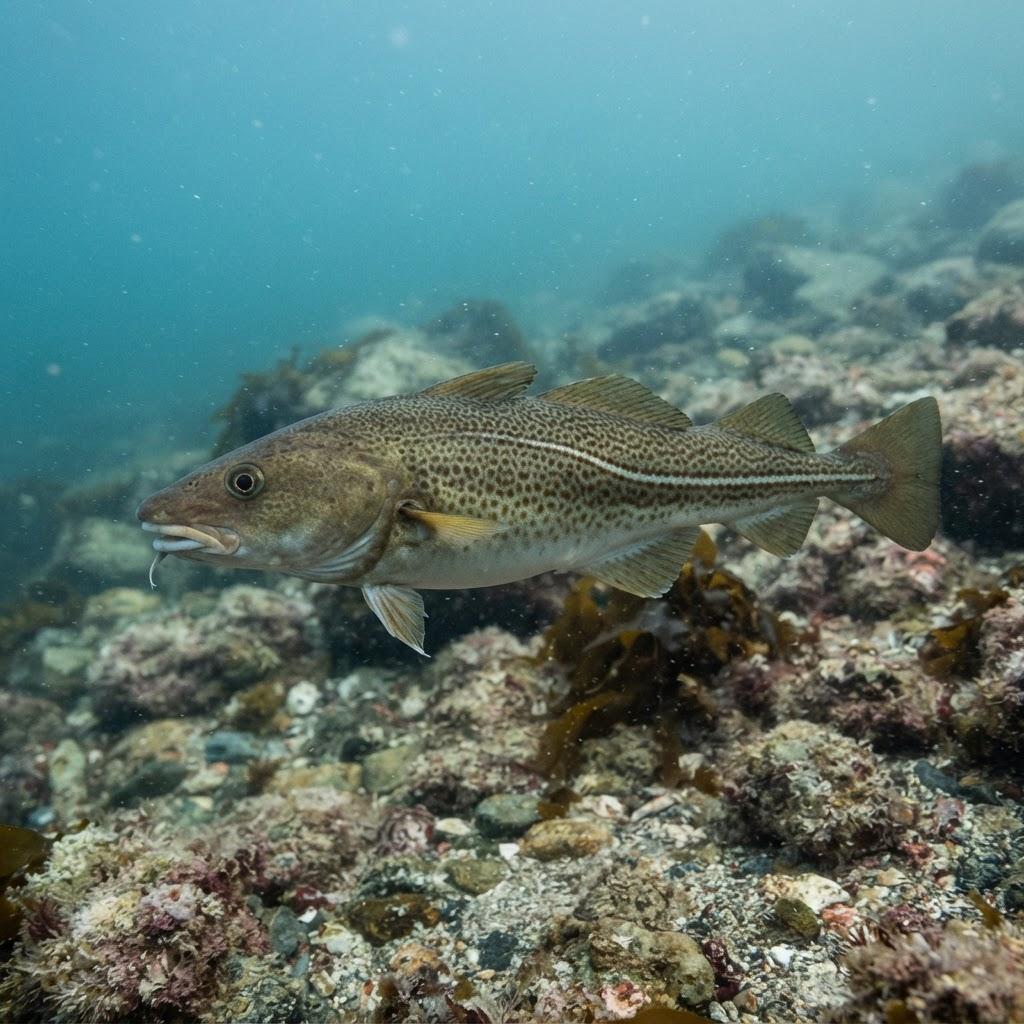
If you ever find yourself on a research vessel in the Bering Sea, spotting an Alaska Pollock is actually quite easy—mostly because they are everywhere. They are identified by that distinct trio of dorsal fins and the slightly protruding lower jaw that gives them a perpetual 'what are you looking at?' expression. They stay in the cooler waters, usually below the surface, so you won't see them jumping into your boat. As for how they are doing, the news is surprisingly good. Unlike many other species that are being overfished to the brink of extinction, the Alaska Pollock is managed with incredible care. Scientists and fishermen work together to ensure that the population remains stable, following strict quotas that make this one of the most sustainable seafood sources on the planet. This means you can enjoy your fish sticks with a clear conscience. You can help by supporting sustainable seafood certifications and staying curious about the ocean. The Pollock is a reminder that even the most 'common' fish are vital, fascinating, and worth protecting. Next time you see them on a menu, give a little nod of respect to the silvery, school-loving hero of the North Pacific.