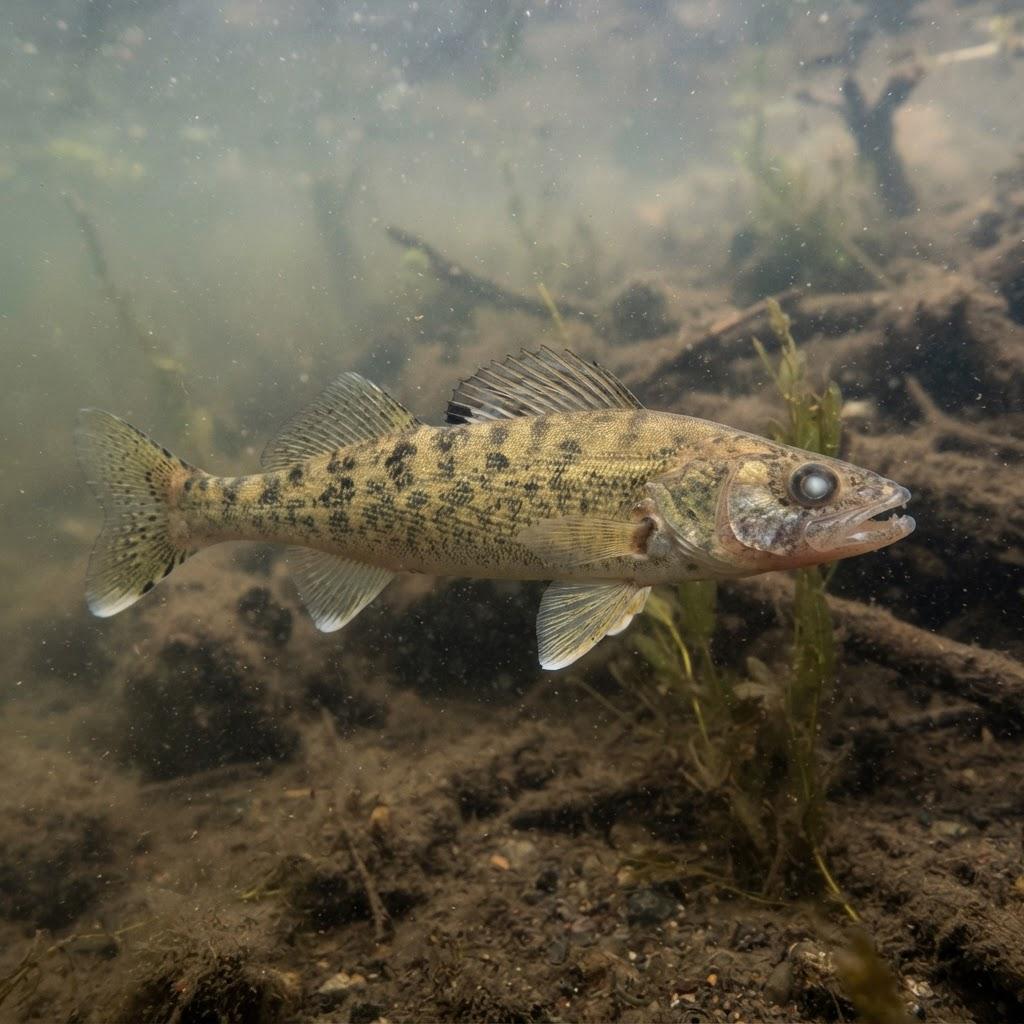
Sander canadensis
Sauger
Meet the Sauger, the undercover agent of the river world who treats muddy water like a luxury penthouse. This toothy, light-sensitive specialist is the moody teenager of the perch family, and honestly, we love the vibe.
Meet the Fish
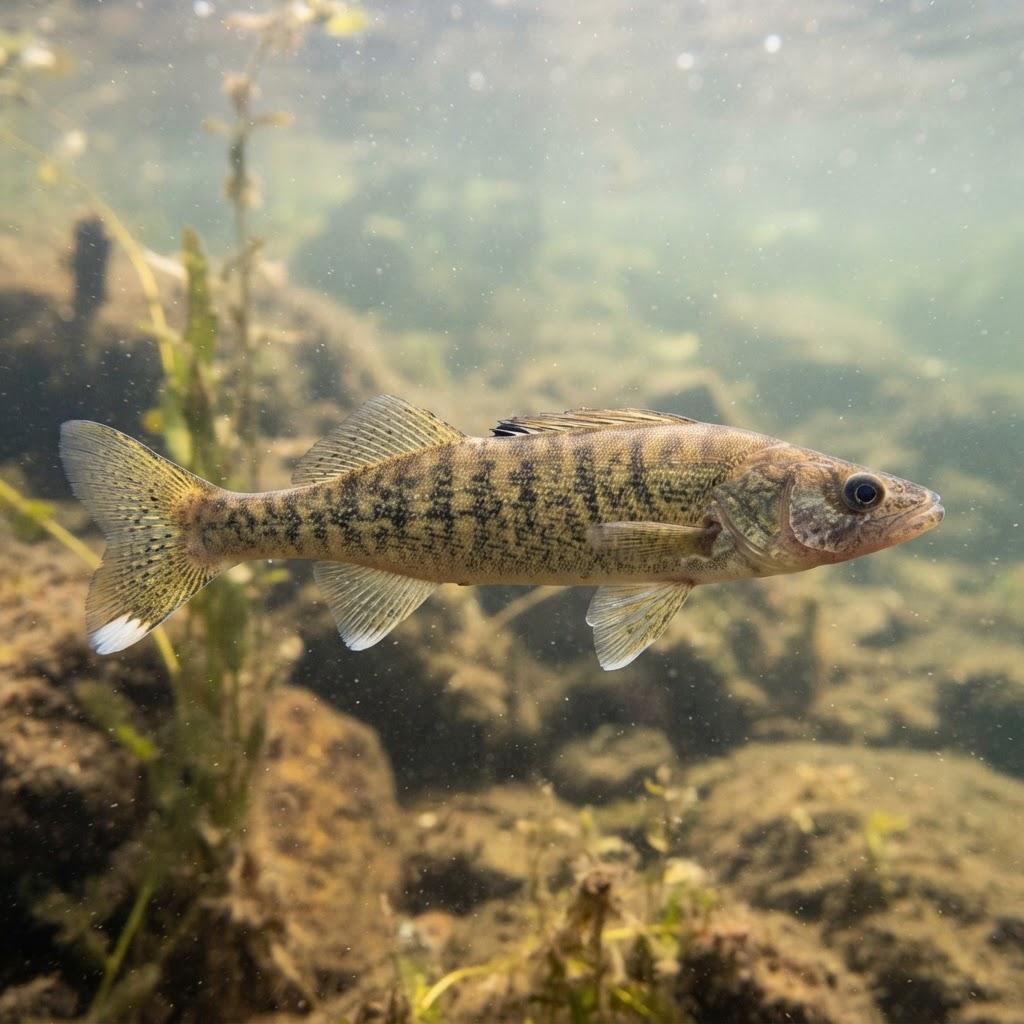
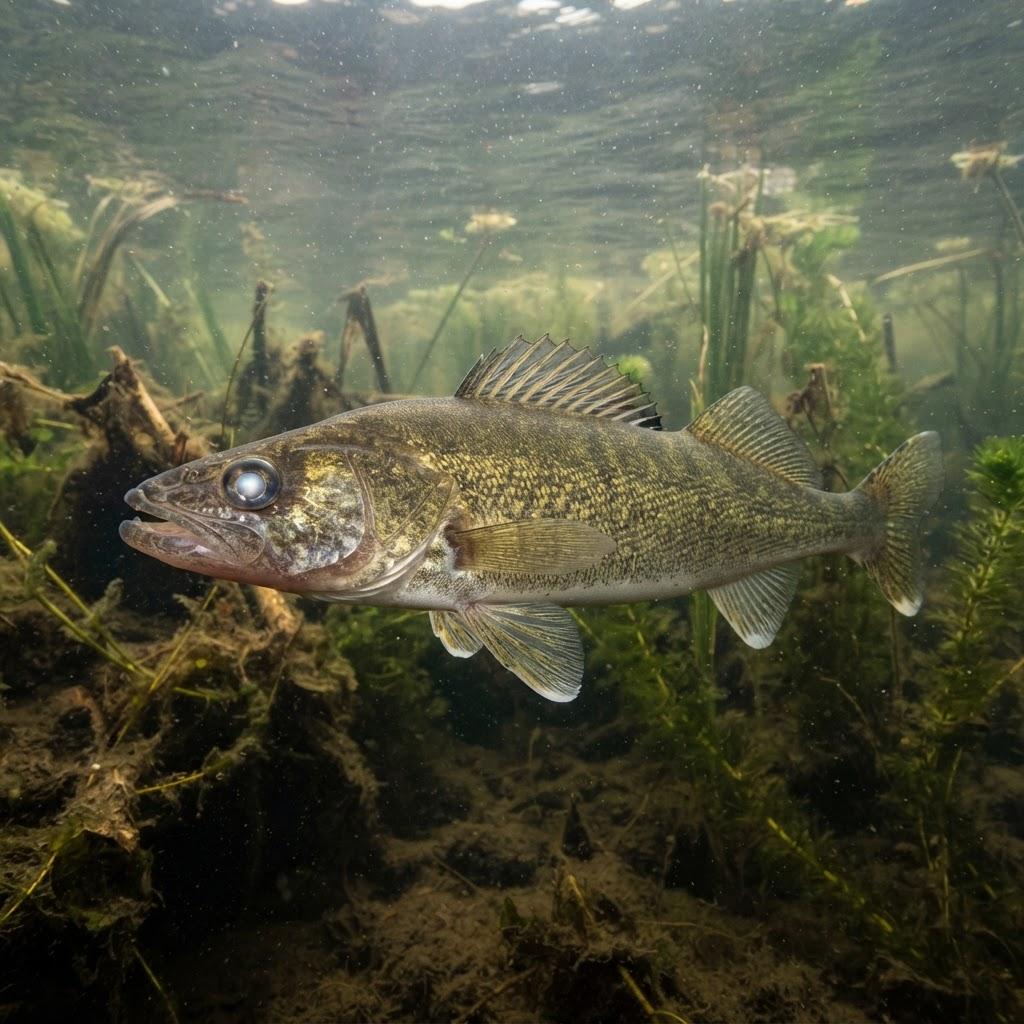
Enter the Sauger, the ultimate goth of the freshwater world. While other fish are out basking in the sun like influencers on a beach, the Sauger is strictly Team Night Owl. With its dark, mottled complexion and eyes that glow like headlights in the dark—thanks to a reflective layer called the tapetum lucidum—this fish doesn't just navigate the murky, chocolate-milk-looking rivers of North America; it thrives there. Imagine a fish that says, 'Sunlight is overrated, I prefer the gritty, sediment-heavy aesthetic of a turbulent river.' They aren't trying to be cool; they just have a very specific set of skills that make them the kings of the low-visibility lifestyle. If you see one, you’ll notice it looks like a Walleye that spent a little too much time at the local dive bar. They are sleek, toothy, and possess a level of 'don't talk to me before my first cup of coffee' energy that makes them the most relatable creature in the waterway. They aren't the biggest, the flashiest, or the fastest, but they are undeniably the most successful at playing the long, dark, and muddy game.
Weird Biological Superpowers Explained Simply
The Sauger is essentially equipped with built-in night vision goggles that would make a Navy SEAL jealous. We mentioned the tapetum lucidum earlier, but let’s break that down: it is a reflective layer of tissue located behind the retina of the eye. Think of it like the shiny backing on a flashlight; it bounces light back through the eyes a second time, allowing the fish to absorb every single photon of light available in even the muddiest, deepest, most claustrophobic river environments. This is why when you shine a light on them at night, their eyes glow like little demonic lanterns. But it goes beyond just seeing; they possess a lateral line system, which is a row of sensors running down their sides that detects vibrations in the water. They can 'feel' a minnow twitching from feet away, even if the water is so dark you couldn't see your own hand in front of your face. It is a sensory superpower that turns the entire river into their own private, high-definition arena.
Absurd Self-Defense Mechanisms
When you are a Sauger, you don't have the luxury of being a giant, armored tank like a sturgeon. Instead, the Sauger relies on being a master of the 'invisible ninja' act. If a predator comes looking for a snack, the Sauger doesn't try to inflate or produce slime; it simply leans into its camouflage. Their mottled, dark-brown patterns are specifically designed to blend perfectly with the shifting silt and rocky debris of the riverbed. It is the fish equivalent of wearing an expensive ghillie suit to a corporate meeting. If camouflage fails, they possess a spiny dorsal fin—the one on their back—that they can snap up like a trap door. These aren't just for decoration; they are sharp, stiff, and perfectly designed to make a predator regret trying to swallow them whole. It is a 'mess with me and you'll regret it' signal that most other fish respect immediately. They don't fight fair; they fight like they know exactly how to ruin your afternoon with a single, perfectly aimed spine.
Fish Drama and Gossip
If the river were a high school cafeteria, the Sauger would be sitting at the back table, wearing a leather jacket and ignoring everyone. They are notoriously social when it suits them, often hanging out in schools during the winter when the water turns into a giant ice cube. However, don't mistake this for them being friendly. It is more of an 'enemy of my enemy' situation where they congregate to save energy. When the spring thaw hits, the gossip gets wilder. The hierarchy is mostly decided by who can get to the best spawning gravel bars first. There is no elaborate dance here, just a lot of aggressive bumping and jockeying for position. It’s like a mosh pit at a concert where everyone is trying to find the best spot to secure their legacy. They are surprisingly competitive, and heaven help the fish that tries to sneak into a prime territory without paying the social tax. It is all very low-stakes drama that, to them, feels like the end of the world.
The "Wait, That's Real?!" Deep-Sea Oddities
While our Sauger friend prefers the shallow, turbulent rivers rather than the crushing depths of the deep sea, it is essentially the terrestrial equivalent of a deep-sea creature. Think about the barreleye fish with its see-through head or the viperfish with its needle-like teeth—these creatures live in an environment where light is a luxury. The Sauger shares a spiritual kinship with these deep-sea dwellers because they both operate in worlds where the sun is just a rumor. The deep sea is a place of bioluminescence, where fish create their own neon sign shows to attract mates or confuse predators. The Sauger doesn't have the internal glowing chemicals, but it compensates with that intense eye-sensitivity. It is fascinating to realize that whether you are five miles down in the crushing pressure of the Atlantic or swimming in a murky river in Ohio, the rules of survival are the same: if you can't see the world, the world will eventually eat you. Saugers are the shallow-water experts in a game meant for the deep.
Myth Busting
Let’s address the elephant in the room: the myth that Sauger are just 'lazy Walleyes.' People love to claim that Saugers are a degraded version of their cousin, the Walleye, simply because they don't get quite as big. This is absolute nonsense. Comparing a Sauger to a Walleye is like comparing a sprinter to a marathon runner; they are built for different conditions. A Walleye prefers the crystal-clear water of a large lake, while the Sauger is a river-dwelling specialist that can handle current speeds that would make a Walleye dizzy. Another myth is that all fish are mindless eating machines. Science has shown that Sauger are actually quite capable of learning and adapting to changes in their environment. They aren't just drifting along; they are observing, calculating, and waiting for the exact moment to strike. They recognize the patterns of the river, and they know exactly where to hide when the water levels shift or the temperature changes. They are basically the chess players of the riverine community.
Humorous Historical Tales or Folklore
History hasn't been overly kind to the Sauger, mostly because humans have always been obsessed with bigger, 'trophy' fish. In the old days, anglers would catch a Sauger and feel a sense of mild disappointment, like ordering a burger and getting a side salad instead of fries. There is a classic piece of regional folklore about the 'Great River Ghost,' which many historians believe was actually a massive, particularly old Sauger that had managed to evade capture for years. Locals would tell stories about a fish so dark and stealthy it could only be seen by the light of a full moon. While the truth is likely a bit more boring, there is something poetic about a fish that spent its life avoiding the hook becoming a local legend. Throughout history, these fish have been the quiet providers for families along the riverbanks, serving as a reliable food source when the flashier species were being elusive. They aren't the stuff of epics, but they are the bedrock of the river's story.
Underwater Love Stories and Bizarre Romances
When spring rolls around, the Sauger’s romantic life turns into a chaotic scramble. There are no grand gestures, no underwater serenades, and certainly no roses. Instead, it is a numbers game. Large groups of Sauger head toward shallow, rocky areas where the current provides plenty of oxygen for the future babies. The males wait patiently, acting like bouncers at a club, while the females arrive to drop their eggs. It is a mass event, a communal effort where thousands of eggs are fertilized in a flurry of activity. There is a certain charm to the lack of pretense; it is honest, straightforward, and incredibly effective. While other fish spend weeks building elaborate nests or grooming their partners, the Sauger prefers the 'let’s just get this done' approach. It might not be the most romantic story you've ever heard, but in the fast-moving, unpredictable world of a river, it is the most reliable way to keep the family tree growing strong.
Underwater Architecture and DIY Nesting
If you are looking for the Frank Lloyd Wright of the fish world, look elsewhere. The Sauger is not an architect. They don't build nests out of pebbles, they don't weave aquatic plants into fortresses, and they definitely don't dig elaborate tunnels. Their 'architecture' is essentially a giant hole in the gravel. They look for areas with current that will carry away debris, ensuring that their eggs don't get suffocated by silt. It is minimalist design at its finest. Why waste energy moving stones when the river will do the work for you? They are the ultimate pragmatists. They choose the perfect location, let the river current polish the rocks, and then abandon the site immediately after the eggs are laid. It is a 'set it and forget it' parenting style that allows them to move on to the next meal or a better patch of river. Sometimes, doing less really is doing more, especially when you are a fish living in a high-energy river environment.
The Chaos of Raising Tiny Swimmers
Parenting for a Sauger is basically non-existent. Once the eggs are laid and fertilized, the parents have a quick 'goodbye' and head back to their lives of wandering the river. There is no mouth-brooding, no guarding, and no teaching the kids how to hunt. The eggs are left to fend for themselves among the rocks. This sounds harsh, but it is actually a genius survival strategy. By spreading their eggs across a large area, they ensure that if a predator finds one spot, the rest of the brood might survive in another. The fry that hatch are tiny, almost invisible slivers of life that immediately have to start avoiding being eaten by everything from dragonflies to other fish. It is a trial by fire, or rather, a trial by water. Those that survive the first few weeks have essentially earned their stripes and are ready to join the school. It is survival of the fittest in its purest, most chaotic form, and honestly, the Sauger wouldn't have it any other way.
How to Spot One & How It Is Doing
To spot a Sauger, you need to be willing to get a little dirty. You’ll find them in large, murky rivers where the bottom is sandy or covered in loose rocks. Look for the 'Walleye face' but keep an eye out for the spots on the dorsal fin—if you see those black, splotchy spots, you've found a Sauger, not a Walleye. As for how they are doing, they are currently in a good spot. They are listed as 'Least Concern' globally, which is a rare win in the environmental world. They have proven to be incredibly resilient to changes in water clarity, as long as the rivers remain flowing and healthy. To help them out, the best thing you can do is be an advocate for clean rivers. Reducing runoff from farms and cities keeps the silt levels manageable and protects the spawning grounds these fish rely on. If you see a Sauger, take a moment to appreciate it; it’s a tough, moody survivor that deserves a little respect for thriving in the shadows.