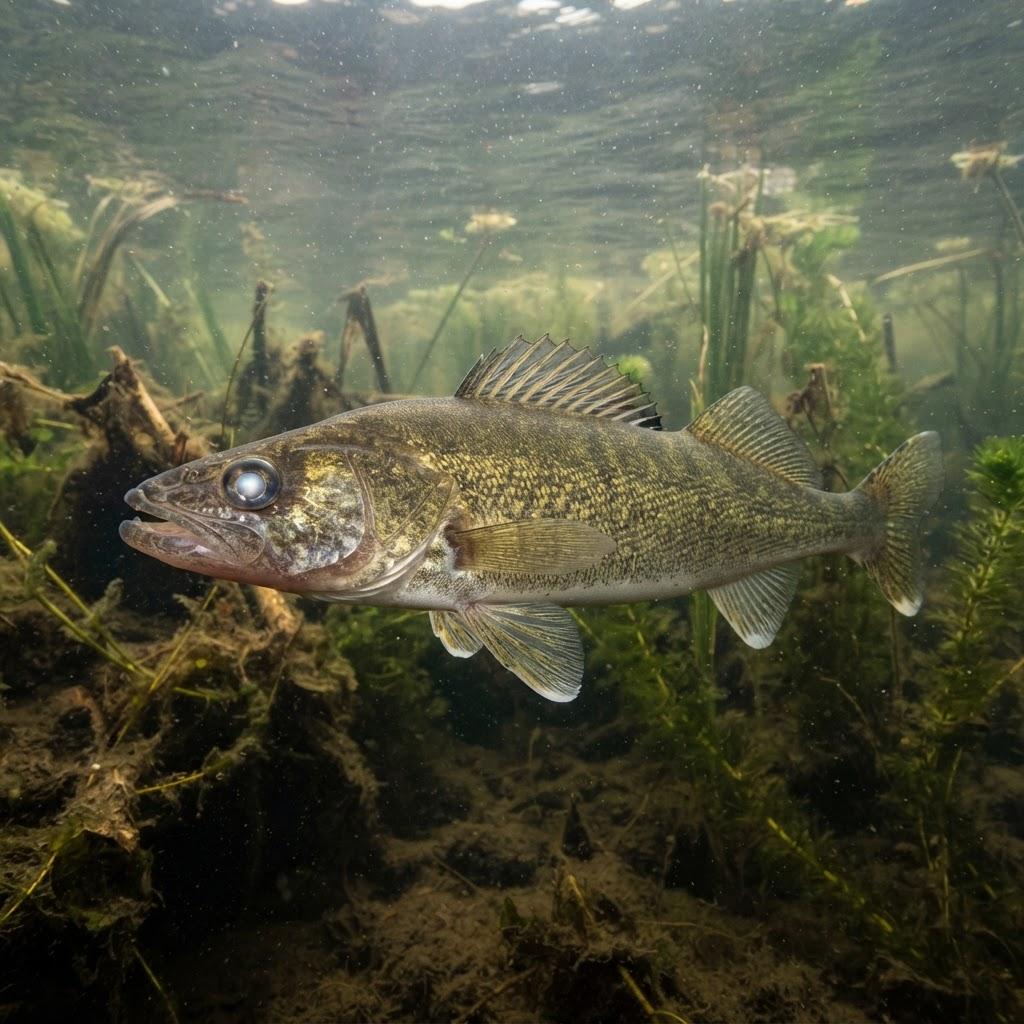
Sander vitreus
Walleye
Meet the Walleye, the freshwater world's champion of low-light stealth and late-night snacking. With glowing eyes and a shark-like appetite, this fish is the undisputed king of the murky deep.
Meet the Fish
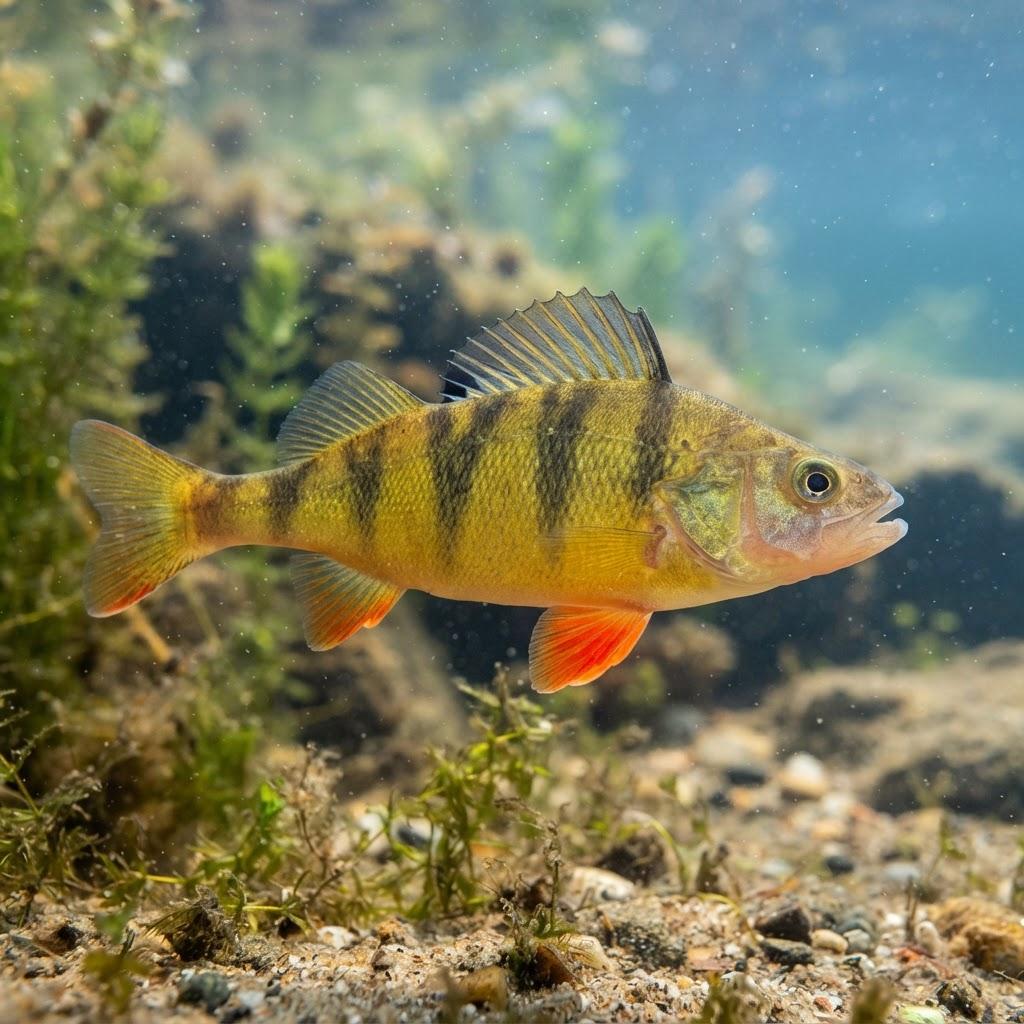
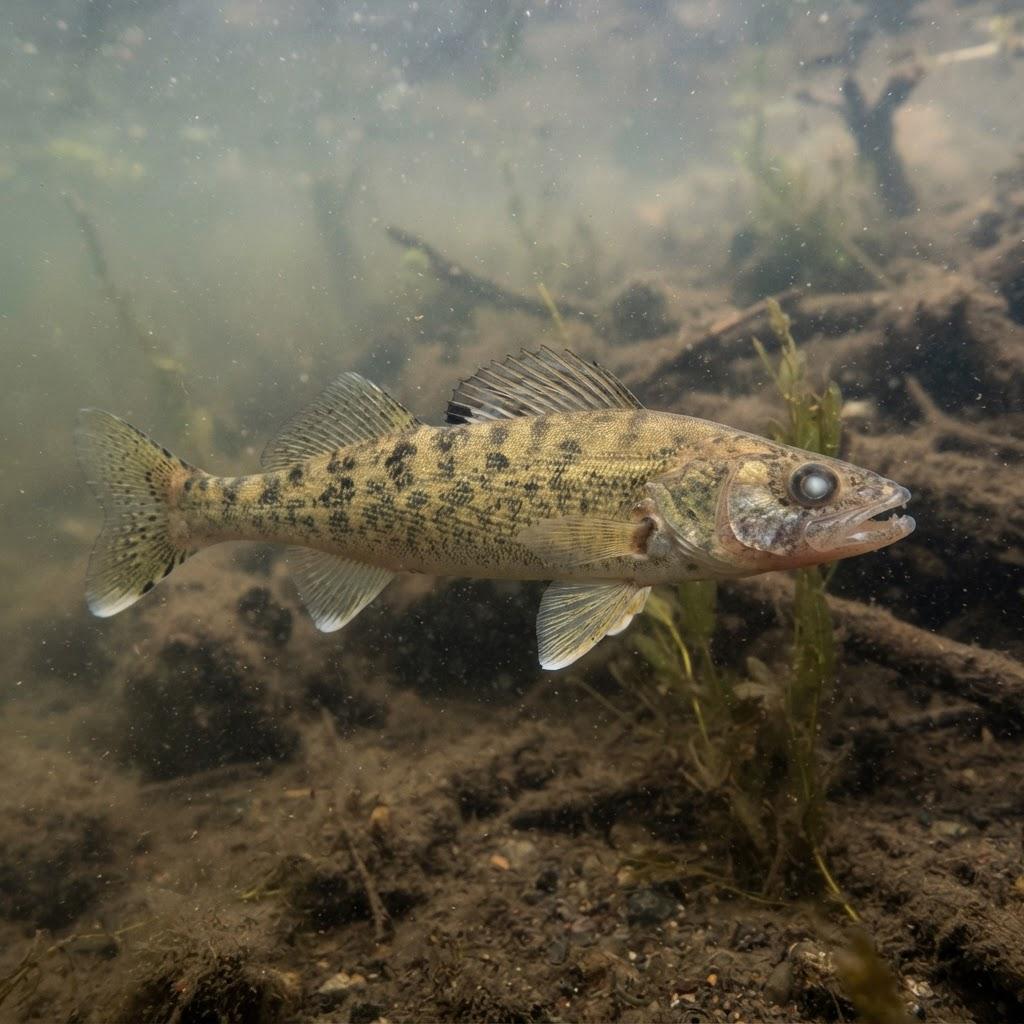
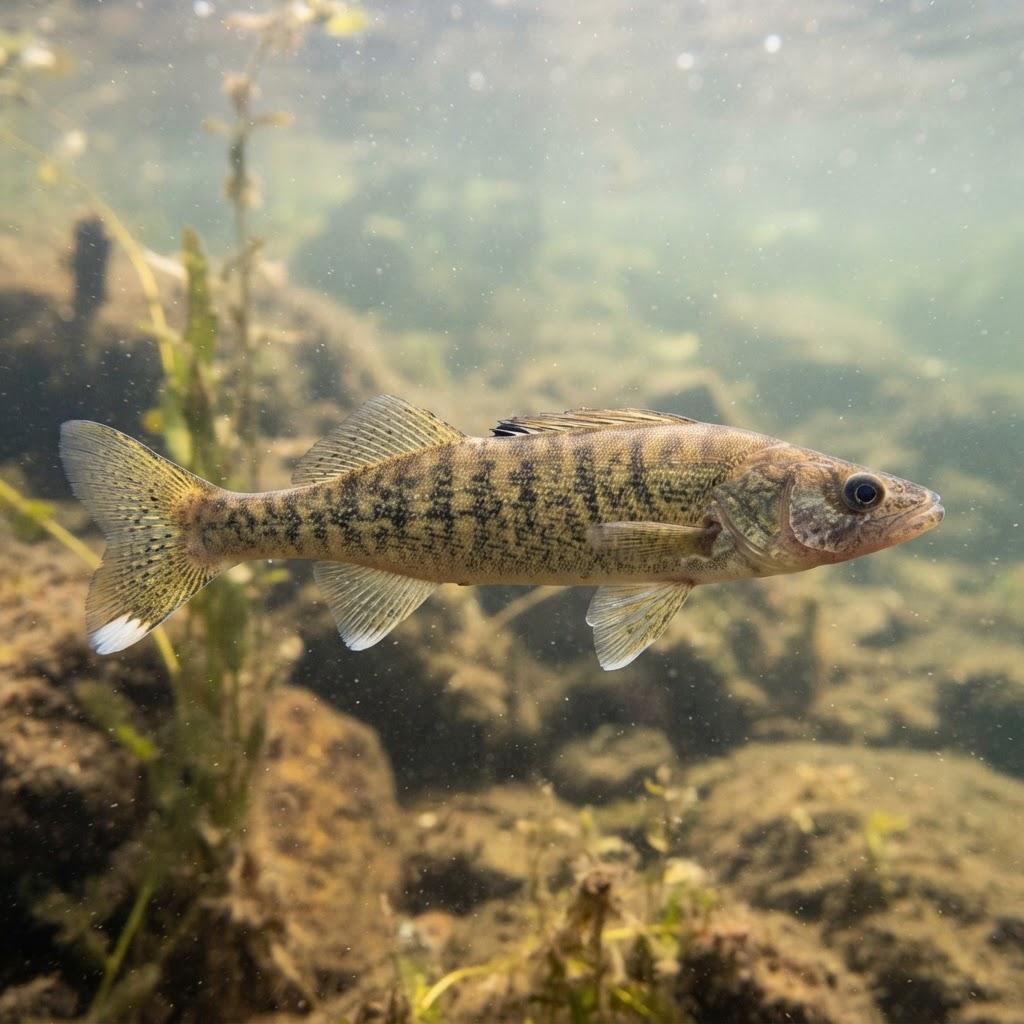
If you walked into a high school cafeteria, the Walleye would be the brooding, mysterious kid wearing dark sunglasses indoors who somehow knows exactly where the party is happening. They are the ultimate nocturnal detectives of the freshwater world, prowling the darkest corners of lakes and rivers with a vibe that screams 'I don't need the spotlight.' Unlike their flashy, golden-scaled cousins, these fish have a muted, olive-gold aesthetic that helps them vanish into the shadows of the weeds. They possess a pair of eyes that look like they belong in a horror movie, glowing with an eerie, reflective shine that makes them look like they are permanently surprised by the existence of gravity. They are the apex predators of the gloom, perfectly evolved to see what everyone else is missing. You might not see them coming, but rest assured, they have already checked out your entire itinerary for the evening before you even dipped your line in the water.
Weird Biological Superpowers Explained Simply
The secret to the Walleye’s dominance is a biological piece of hardware called the tapetum lucidum. Imagine if you had night-vision goggles permanently fused to your face; that is basically how these fish operate. This reflective layer behind the retina acts like a mirror, catching every stray photon of light and bouncing it back through the sensors of the eye, giving them a second chance to process images in near-total darkness. It is the same reason your house cat looks like a demon when you shine a flashlight at them in the hallway. Because of this specialized equipment, Walleye are naturally light-sensitive, which makes them hate the bright, blinding sun. They prefer the 'low-light' life, moving into the shallows when the sun goes down or staying in deep, murky water where they can hunt while everyone else is stumbling around blind. It is a superpower that essentially gives them a monopoly on the night shift.
Absurd Self-Defense Mechanisms
The Walleye does not rely on fancy tricks like inflating like a beach ball or spewing out a cloud of slime to escape trouble. Instead, they operate on the principle of 'if you can’t catch me, you can’t eat me.' They are built like a torpedo, streamlined and muscular, capable of sudden bursts of speed that leave most predators wondering if they just hallucinated a fish. Their secret weapon is a set of dorsal fins that are spiked and sharp enough to make a bass regret its entire life. When threatened, they flare these fins out like a set of serrated bayonets. Any predator—or unlucky human—that tries to grab them usually walks away with a nice set of puncture wounds as a souvenir. It is the aquatic equivalent of wearing a suit covered in sewing needles. Combined with their ability to retreat into depths that are too chilly or dark for most other fish to follow, they are effectively the untouchables of their ecosystem.
Fish Drama and Gossip
The social life of a Walleye is far less dramatic than the constant bickering of a reef fish colony, but it has its own kind of tense, tactical maneuvering. They are essentially the quiet, professional types who keep to themselves until it is time to feed. During the breeding season, however, the lake floor turns into a high-stakes bachelor pad competition. While they aren't forming complex social hierarchies like some territorial cichlids, they do participate in chaotic, late-night spawning parties where timing is everything. It is less of a soap opera and more of a synchronized flash mob that happens in the dead of night. They don't waste time on long-winded courtship rituals or showing off dance moves; it is all about finding a rocky area, getting the job done quickly, and then disappearing back into the abyss. If there is any gossip in the lake, the Walleye is far too busy scanning the horizon for dinner to listen to it.
The "Wait, That's Real?!" Deep-Sea Oddities
While the Walleye is a freshwater celebrity, it shares a certain 'alien' quality with deep-sea creatures like the barreleye fish. Both have evolved to exploit environments where light is a rare commodity. In the deep sea, fish use bioluminescence—essentially internal neon signs—to lure prey or confuse enemies. The Walleye doesn't need to generate its own light; it just captures whatever is available. Comparing them to their deep-sea cousins highlights the sheer adaptability of life on Earth. A deep-sea anglerfish might look like a nightmare from a submarine horror film, but it is just doing the same thing the Walleye does: using specialized hardware to dominate an environment that is totally inhospitable to the casual observer. The deep sea is a place of bioluminescent signaling and high pressure, whereas the Walleye's world is one of murky, tea-colored water and subtle vibration, but both are equally effective at surviving in the shadows.
Myth Busting
There is a long-standing myth that Walleye are unintelligent creatures that only eat when they are starving. This couldn't be further from the truth. In reality, these fish are highly tactical hunters. They don't just swim around hoping to bump into food; they are calculated, utilizing their lateral line—a sensory organ running along their side that detects tiny vibrations in the water—to pinpoint exactly where a minnow is twitching. Another common myth is that they are purely bottom-dwellers that never venture high in the water column. While they love the rocky floor, they are more than happy to patrol the mid-water regions if the baitfish are hanging out there. They aren't 'stupid' or 'lazy'; they are simply energy-efficient. They conserve their strength by waiting for the perfect moment to strike, and when they do, it is with the precision of a heat-seeking missile. They aren't just fish; they are master strategists.
Humorous Historical Tales or Folklore
Throughout history, the Walleye has been the silent provider for many cultures, though it hasn't always garnered the epic myths attached to giant squids or sea serpents. However, in the Great Lakes region, there is a deep sense of reverence for the 'Yellow Pike,' as they were sometimes called. Local legends often center on the 'ghostly' nature of the fish, with early explorers sometimes startled by the sudden, glowing appearance of a Walleye’s eyes staring back at them from a campfire’s edge as they pulled their nets from the black water. Some indigenous folklore suggests that the Walleye holds the secrets of the moon because of its connection to the night sky and the way its eyes seem to capture the lunar light. They have been the subject of countless tall tales among anglers, mostly involving 'the one that got away,' a tradition as old as fishing itself, proving that the human ego is the most active part of the fishing industry.
Underwater Love Stories and Bizarre Romances
When spring arrives, the Walleye’s love life becomes a surprisingly rowdy, cold-water affair. They don't do fancy nests or elaborate bow-and-arrow dances. Instead, they congregate in large groups at night, often near rocky shorelines or river rapids where the current provides a good, oxygen-rich environment for their future offspring. The 'romance' involves a lot of bumping and swimming in tight formations, with males and females releasing their contributions to the next generation simultaneously. It is essentially an aquatic rave that lasts until the sun starts to peek over the horizon, at which point everyone abruptly leaves. It is efficient, no-nonsense, and perfect for a fish that prefers to stay out of the limelight. They don't have time for long, drawn-out affairs; they have a lake to patrol and a very busy schedule of eating minnows, so they keep the romance short and move on.
Underwater Architecture and DIY Nesting
If you are looking for an architect, look elsewhere, because the Walleye is a minimalist. They don't bother with the elaborate sand castles or tunnels that some fish spend weeks constructing. Instead, they believe in finding a prime location—ideally a bed of clean, jagged rocks that will protect their eggs from being buried in silt or snatched up by hungry scavengers. They aren't builders; they are land developers who find the perfect plot and move in. This lack of construction means their eggs are scattered among the rocks, tucked into nooks and crannies. While it might seem a bit haphazard, it is an incredibly effective strategy. By placing their eggs in rugged, rocky terrain, they ensure that the next generation has plenty of hiding spots as soon as they hatch, effectively creating a natural fortress without having to lift a single fin to move a pebble.
The Chaos of Raising Tiny Swimmers
If you are looking for a fish that cradles its young or guards its nursery like a protective parent, look away now. The Walleye is the epitome of the 'lay and go' school of parenting. Once the eggs are deposited among the rocks, the adults consider their job done and immediately go back to the business of being top-tier predators. There is zero parental guidance, zero daycares, and absolutely no teaching the kids how to swim. The eggs are left to their own devices, relying entirely on the rocky environment to keep them safe from predators. When the fry finally hatch, they are essentially tiny, independent adventurers launched into a world that is actively trying to eat them. It is chaotic, it is brutal, and it is entirely successful. They produce so many eggs that, even with high attrition, enough survive to keep the population thriving, proving that quantity can be a very effective quality.
How to Spot One & How It Is Doing
Spotting a Walleye in the wild is mostly a matter of knowing where the shadows are. If you are fishing, focus on drop-offs, underwater points, or weed lines where the light starts to fade. Look for that signature dark-olive-to-gold color and the unmistakable, cloudy, light-reflecting eyes. If you manage to shine a light into the water at night, look for that glowing, eerie reflection—that is your giveaway. Conservation-wise, the Walleye is doing quite well. They are considered a species of 'Least Concern,' largely because they are masters of adaptation and reside in expansive freshwater networks across North America. To help them stay that way, just practice responsible angling—clean your gear to stop the spread of invasive species, respect catch limits, and ensure your local waterways are kept free of pollutants. By keeping their homes clean, you ensure that the ghosts of the lake keep swimming for generations to come.