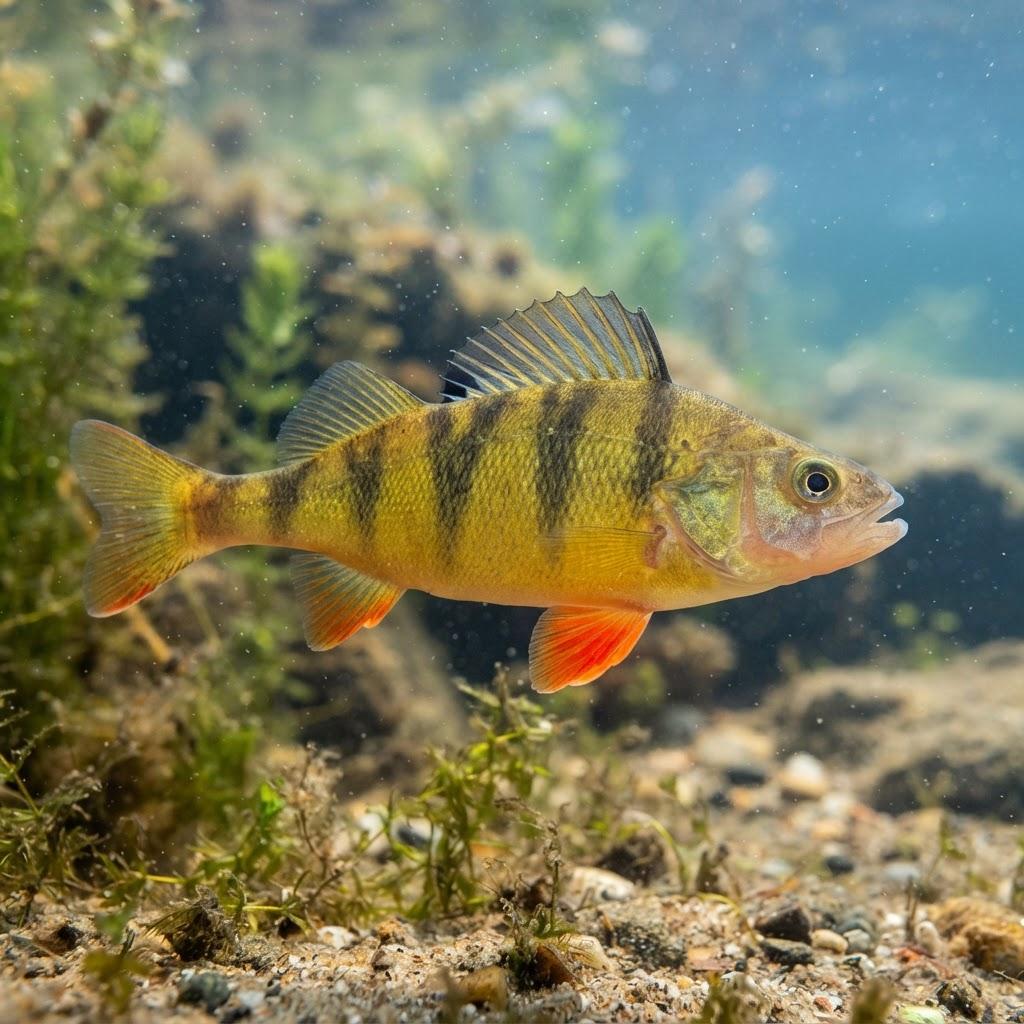
Perca flavescens
Yellow Perch
Meet the Yellow Perch, the aquatic equivalent of a golden-retriever-meets-professional-gladiator. This vibrant, brassy-colored speedster is the undisputed life of the freshwater party, turning every lake into a high-stakes, underwater game of tag.
Meet the Fish
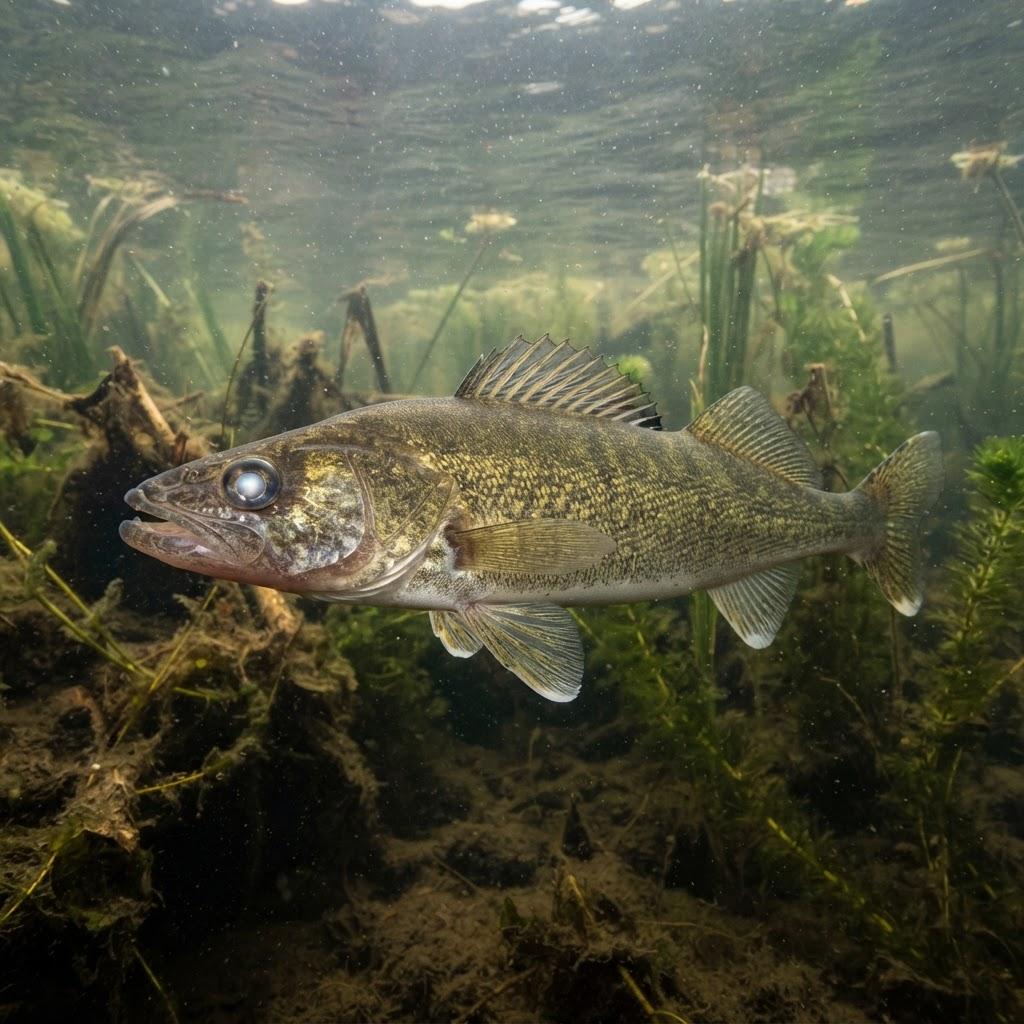
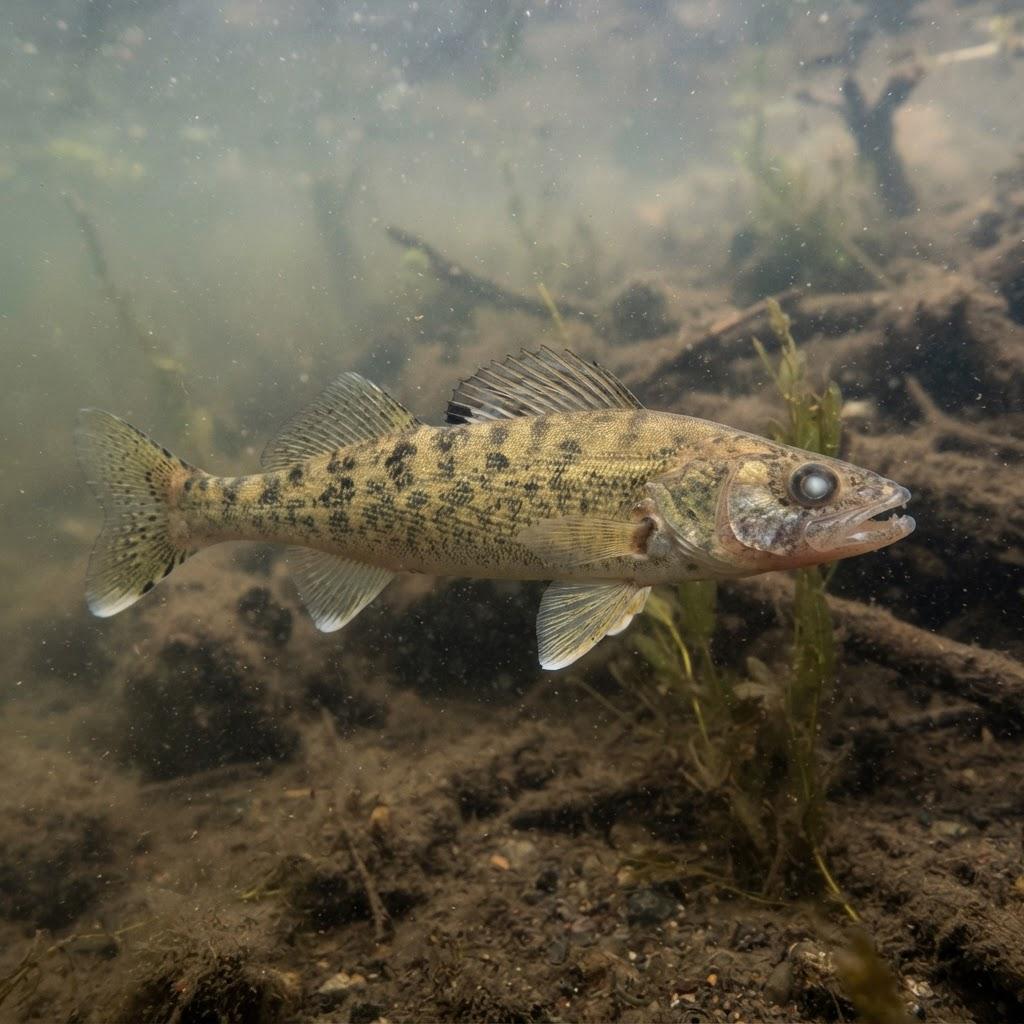
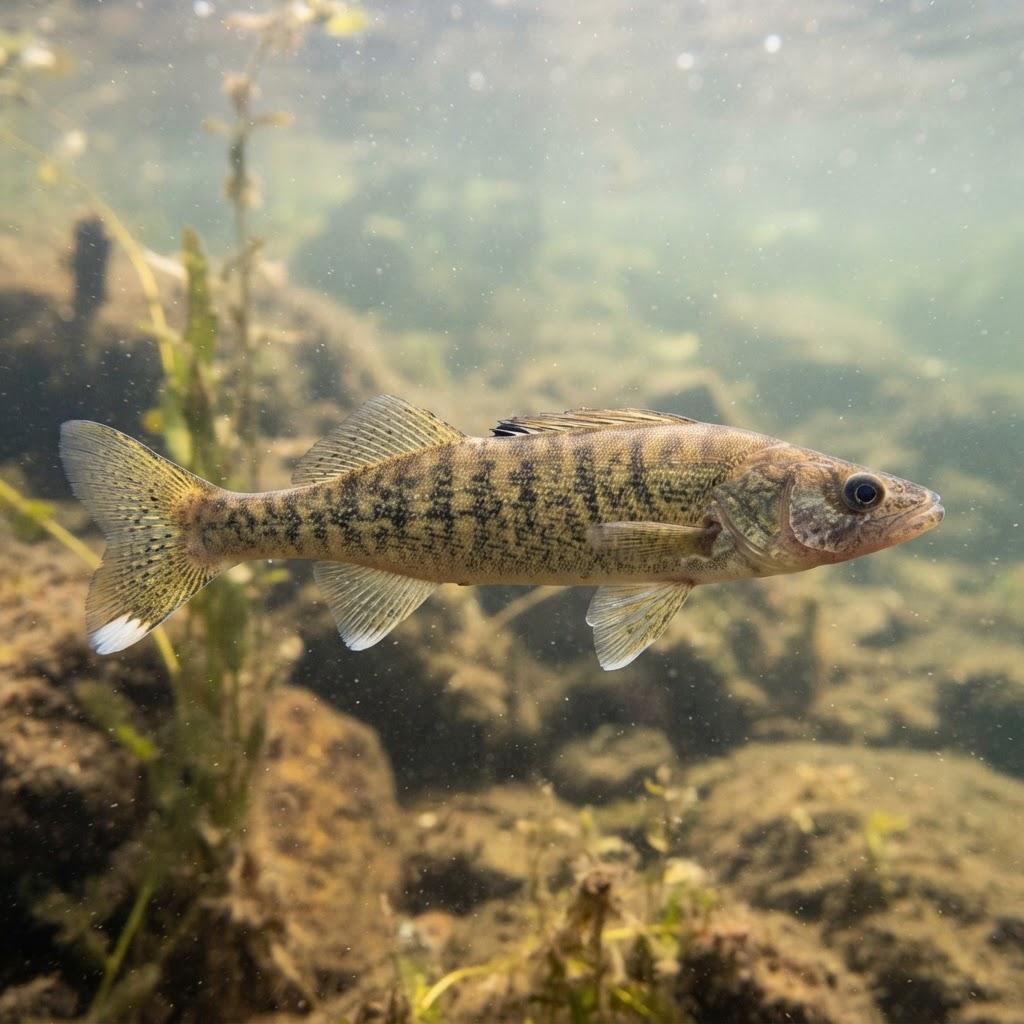
Imagine a fish that went to a fancy dress party wearing a vibrant, brassy-gold tracksuit with vertical dark stripes that scream 'I am ready for business.' That is the Yellow Perch. These fish are the ultimate everyday heroes of the freshwater world. They are not hiding in the shadows like a moody deep-sea hermit or trying to look like a dangerous rock. Instead, they are the socialites of the lake, constantly on the move and never afraid to show off their golden scales. Think of the Yellow Perch as the quintessential middle-child of the fish kingdom—not too big to be a monster, not too small to be ignored, and definitely too smart to get caught by every amateur angler with a worm and a dream. They possess a swagger that says, 'I know where the food is, and I probably know how to avoid your hook.' Their eyes are large and bright, giving them a perpetually surprised or highly alert expression, as if they are constantly scanning the horizon for the next big thing. This is a fish with a 'main character' energy that keeps the ecosystem buzzing with constant, golden-striped motion.
Weird Biological Superpowers Explained Simply
If you think your favorite superhero is impressive, look at the Yellow Perch’s internal navigation system. They possess something called a lateral line, which is essentially a biological version of high-definition sonar. Imagine having a row of sensors along your body that can detect the tiniest vibration or pressure change in the water—this allows the Yellow Perch to 'feel' the movement of a struggling water bug from several feet away, even in the middle of a dark, murky night. They also have a specialized swim bladder that acts like an internal floatie. By shifting gas in and out of this little internal balloon, they can achieve neutral buoyancy, which is just a fancy way of saying they can hover perfectly still without moving a muscle. It is essentially the underwater version of levitation. While they aren't shooting electricity or glowing in the dark, this hyper-awareness and precise control over their depth make them masters of the water column. They are effectively biological submarines equipped with state-of-the-art radar technology, making them far more technologically advanced than their simple, striped appearance suggests.
Absurd Self-Defense Mechanisms
When a hungry pike or a snapping bass decides that a Yellow Perch looks like an afternoon snack, the Perch pulls out its secret weapon: the dorsal fin. These fins are not just for steering; they are spiked with sharp, bony rays that can be locked into an upright position at a moment's notice. It is the aquatic version of a porcupine suddenly raising its quills. If a predator tries to gulp one down, the Perch simply flares its fins, creating a prickly, unswallowable nuisance that forces the attacker to spit them out immediately. It is an incredibly rude way to ruin someone’s lunch, but it works wonders for the survival rate of the school. Beyond the 'spiky surprise,' they also use their speed and unpredictable darting movements to confuse predators. They move like a glitching video game character, changing direction in a millisecond. By the time a predator calculates their position, the Perch has already teleported three feet to the left, leaving the larger fish confused and still very much hungry.
Fish Drama and Gossip
Life in a school of Yellow Perch is basically an endless episode of a high school drama series. They are intensely social creatures, meaning they are never truly alone, which leads to some serious competitive antics. Within these large groups, there is a constant, subtle hierarchy based on who is the biggest, fastest, and most alert. The 'cool kids'—the larger, older individuals—often claim the prime hunting spots where the currents bring the most delicious snacks right to their faces. Meanwhile, the smaller fish are constantly maneuvering through the weeds, trying to find their own morsels without accidentally bumping into a grumpy elder. It is all about positioning, timing, and showing off. There is a lot of posturing, fin-flaring, and quick, aggressive dashes to establish territory or claim a piece of prime real estate near a sunken log. If there were an underwater version of social media, their profiles would be full of 'flexing' pictures showing off their latest insect haul and bragging about how they narrowly escaped a lurking predator.
The "Wait, That's Real?!" Deep-Sea Oddities
While the Yellow Perch is busy living its best life in the sun-drenched shallows of a pond, their deep-sea cousins are living in a sci-fi nightmare. The Perch exists in a world of greens, browns, and sunlight. Down in the twilight zone, however, things get weird. Compare our golden friend to the barreleye fish, a creature with a transparent, fluid-filled dome head that lets it stare right through its own forehead. While the Perch uses its eyes to spot a juicy larvae, the barreleye is looking for bioluminescent scraps in a world where the only light comes from creatures that glow neon blue. The deep-sea inhabitants have to deal with extreme pressure that would crush a Yellow Perch like a soda can, and they often use bizarre tactics like luring prey with glowing tentacles or expanding their jaws to swallow things twice their size. The Perch is a master of the 'normal' freshwater realm, but compared to the alien-like, gelatinous horrors of the abyss, the Perch looks like a reliable, well-dressed accountant in a sea of eldritch nightmares.
Myth Busting
Let’s settle the score once and for all: fish are not the mindless, three-second-memory creatures that cartoons make them out to be. A common myth about the Yellow Perch is that they are just dumb, bait-munching machines that lack any real intelligence. This is completely false. Scientific research has shown that fish, including our striped friends, are quite capable of learning and adapting to their environment. They can recognize individuals in their school, remember which areas of a lake have provided food in the past, and even learn to avoid specific types of bait that have proven dangerous. They are far from the mindless automatons people think they are. If you visit the same pier every day at the same time to feed them, they will actually learn your schedule and start waiting for you. They have highly developed sensory inputs and, while they might not be solving math problems, they are excellent at solving the immediate, high-stakes puzzles of survival. The idea that they simply exist in a perpetual state of 'what just happened?' is a human-made insult to a very capable hunter.
Humorous Historical Tales or Folklore
Throughout history, humans have had a complicated relationship with the Yellow Perch. In many parts of North America, they were viewed as the 'fish of the people.' While the fancy noblemen were busy hunting for giant sturgeon or prize-winning trout, the common folk were stacking up buckets of Yellow Perch. There is a long-standing tradition of the 'Perch Fry,' a communal gathering that is almost sacred in some regions. Legend has it that in certain old-timey fishing towns, people believed that if you caught a Yellow Perch with a particularly bright gold hue, it was a sign of good fortune for the upcoming harvest. Conversely, if the fish were unusually skittish or hard to catch, it was considered a bad omen for the weather. While none of these superstitions hold up to scientific scrutiny, they highlight just how important this fish has been to the human story. It wasn't just food; it was a rhythmic part of the calendar, a sign of the seasons changing, and a reliable friend at the dinner table that never failed to provide.
Underwater Love Stories and Bizarre Romances
When spring rolls around and the water starts to warm up, the Yellow Perch shift their focus from eating to finding a date. This is not a subtle affair; it is a full-scale, underwater ballroom dance. Males become exceptionally active, scouting for the perfect, slightly hidden spot to attract a female. Unlike some animals that fight to the death, the Perch romance is more about numbers and stamina. A group of males will swarm a female in a chaotic, energetic parade, often nudging and swimming alongside her in a tight formation. It is a frantic, high-speed courtship where the goal is to be the one nearby when she finally decides to release her eggs. Once she releases them in long, gelatinous ribbons, the air turns electric with competition. It is less like a candlelit dinner and more like a crowded mosh pit where everyone is trying to make sure their genetic legacy is the one that gets tucked away in the weeds. It is loud, messy, and incredibly effective at getting the job done.
Underwater Architecture and DIY Nesting
While they aren't building castles out of sand like some other fish, the Yellow Perch are master interior decorators of the aquatic world. The 'nest' of a Yellow Perch is a masterpiece of tactical placement. The female deposits her eggs in long, accordion-folded ribbons that can be over a meter long! She doesn't just drop them on the mud; she carefully drapes these ribbons over aquatic vegetation, twigs, or submerged branches. This is genius engineering—by attaching the eggs to plants, she keeps them elevated off the silty bottom where they would otherwise suffocate or get eaten by bottom-dwellers. The texture of the egg mass acts like a protective cage, keeping the developing embryos safe while allowing water to flow through and provide oxygen. It is essentially a DIY nursery that uses the environment to maximize the safety of the next generation. It shows that even without thumbs or tools, these fish have a very clear understanding of how to use their surroundings to solve complex survival problems.
The Chaos of Raising Tiny Swimmers
Once those eggs hatch, it is absolute anarchy. The parents do not stick around to teach their children how to swim or where to find the best snacks. From the second they emerge, the tiny fry are on their own in a world that is essentially a giant buffet for everything else in the lake. It is a numbers game; by laying thousands of eggs, the Perch ensure that at least a few will make it to adulthood. The fry are transparent, nearly invisible little specks that spend their early days hiding in the microscopic shadows of pond weeds. They move in swarms, an amorphous blob of tiny fish trying to find microscopic plankton before they become plankton themselves. It is a high-stakes, rapid-fire maturation process. They are constantly dodging beetles, dragonfly nymphs, and larger fish. If they survive the first few months, they develop their signature stripes and start acting like miniature versions of their parents, joining the ranks of the school and starting the whole chaotic cycle over again.
How to Spot One & How It Is Doing
Spotting a Yellow Perch is easier than you think, provided you know where to look. Grab a pair of polarized sunglasses to cut through the water’s glare and head to a clear, vegetation-filled lake or pond. Look for those distinct vertical dark stripes and the brassy-gold shimmer near the edges of weed beds or around sunken docks. They love to hang out in loose schools, so if you see one, there are likely a dozen more lurking just out of sight. Conservation-wise, the Yellow Perch is doing fantastic. Because they are so adaptable and breed with such gusto, they are classified as 'Least Concern.' They are the survivors of the freshwater world! You can help keep their populations healthy by practicing 'catch and release' if you are fishing for sport, and by keeping our local waterways free of trash and chemicals. Clean water means healthy weeds, which means happy Perch. Protecting their habitat is the best way to ensure these golden-striped superstars stay the undisputed champions of our ponds for generations to come.