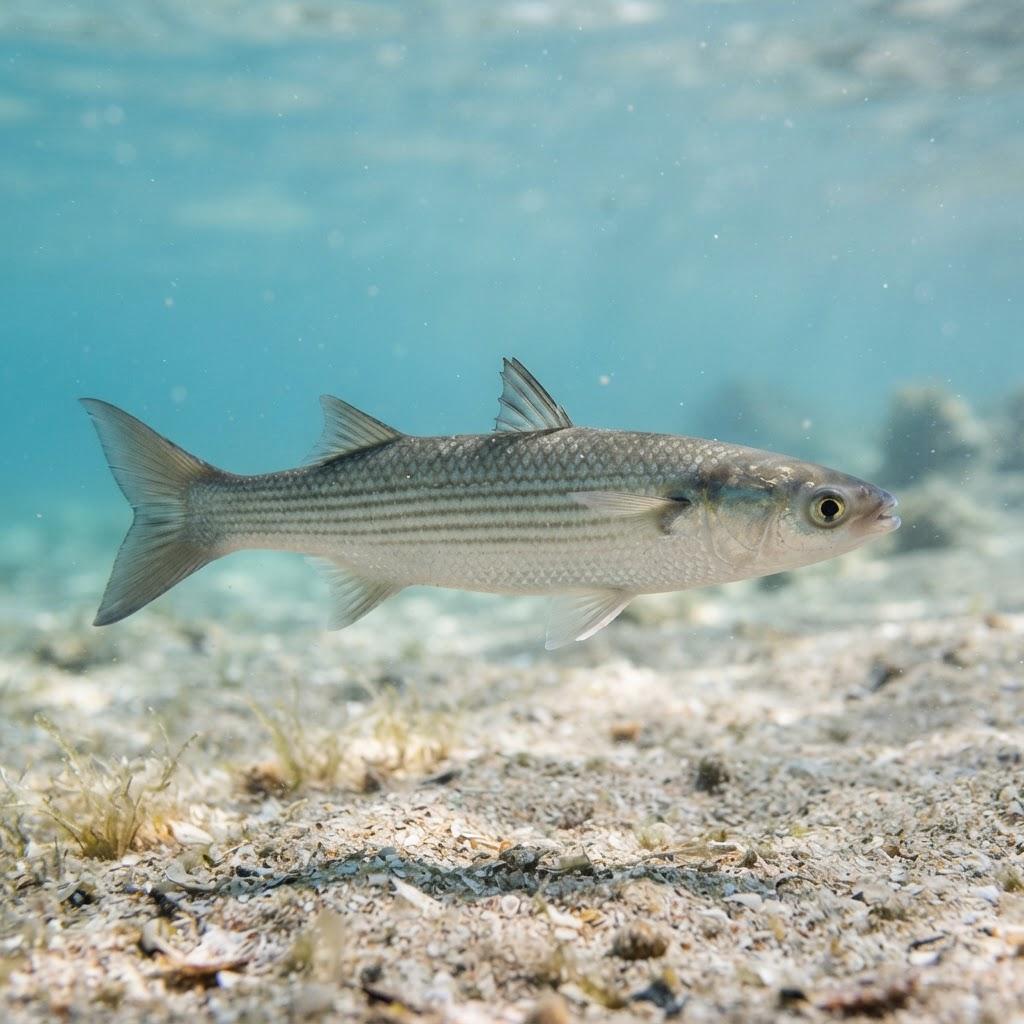
Mugil cephalus
Striped Mullet
Meet the Striped Mullet, the ocean's undisputed champion of high-speed acrobatics and bottom-feeding brilliance. This silver-scaled daredevil spends its days vacuuming the seabed and its nights perfecting the art of the perfect belly flop.
Meet the Fish
Imagine a fish that spent its entire childhood watching extreme sports videos and decided that jumping out of the water was the only way to live life to the fullest. That is the Striped Mullet. This torpedo-shaped socialite of the shallow seas is essentially the guy at the party who suddenly decides to do a backflip into the pool, but instead of attention, he is probably just trying to shake off some pesky parasites or confuse a predator. With his sleek, silver-toned suit and those iconic horizontal stripes running down his body like racing decals on a sports car, the Striped Mullet is the definition of understated cool. He is not trying to be the most colorful fish in the reef; he is too busy being the most athletic. He moves through the water with the grace of a professional swimmer, yet possesses the twitchy, high-energy vibe of a toddler on a sugar rush. He is a bottom-dweller with an attitude that says he is perpetually ready for his next big jump.
Weird Biological Superpowers Explained Simply
If you ever wondered how a fish manages to process a diet that is basically 'sandy dirt salad,' look no further than the Striped Mullet's secret weapon: a specialized gizzard. Yes, you read that right. This fish has a stomach that functions almost exactly like a chicken's. While most fish just swallow and hope for the best, the Striped Mullet has a muscular, thick-walled stomach that grinds up the detritus—the fancy word for the decomposing organic 'gunk' found on the seafloor—that it vacuums up. It is like having a blender built directly into your digestive tract. By slurping up mouthfuls of sediment, the mullet extracts the tiny bits of algae and nutrients, essentially turning the ocean floor into a buffet. It is a biological marvel of efficiency. When they are not busy using their gizzard to turn sand into dinner, they are using their specialized gill rakers to act as a living filtration system, ensuring that only the tastiest, most nutrient-dense particles make it into the belly.
Absurd Self-Defense Mechanisms
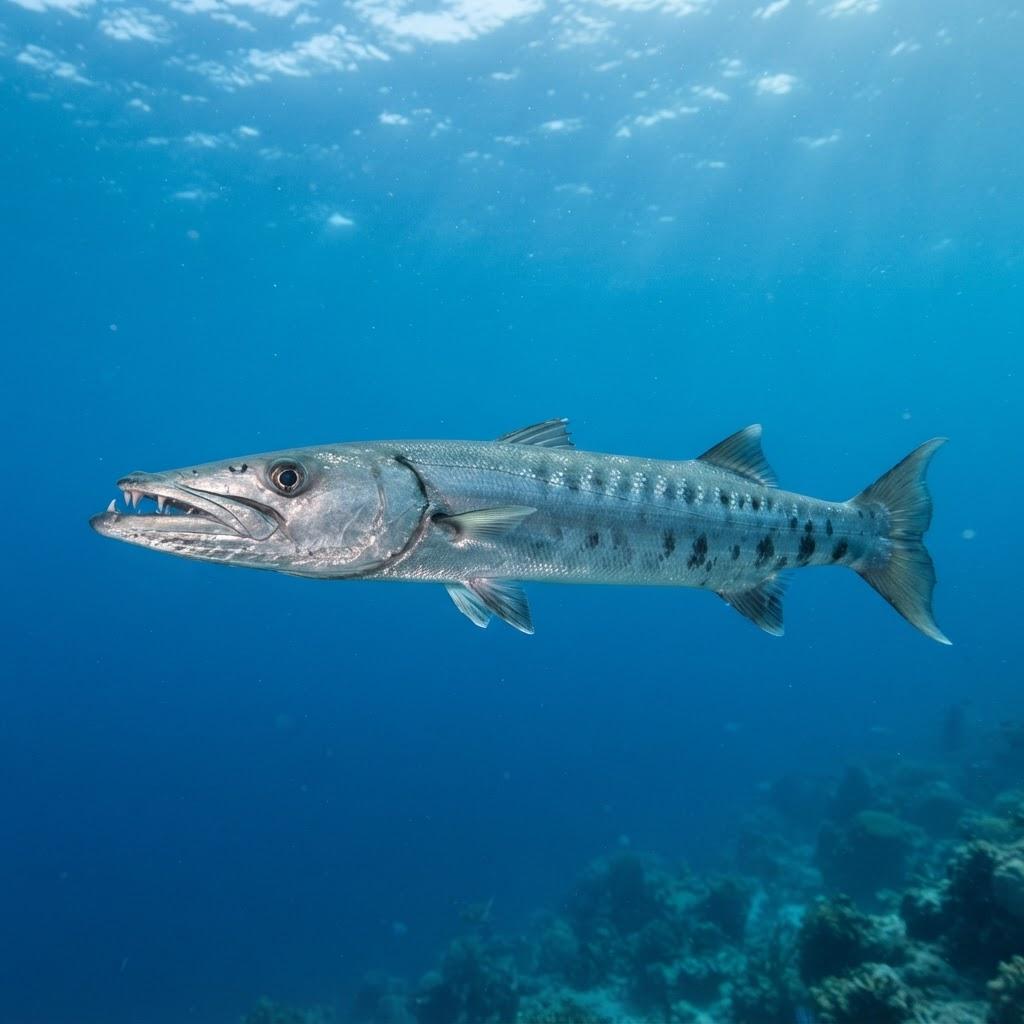
When you are a tasty, bite-sized snack for every larger fish in the neighborhood, you have to be clever. The Striped Mullet does not have toxic spines or camouflaged skin; instead, he has the 'Panic Jump.' When a predator like a shark or a barracuda comes sniffing around, the mullet does not just swim away; he launches himself into the air. This rapid-fire transition from water to air is confusing as all get-out for a predator that is built to hunt under the surface. It is the aquatic equivalent of someone running into a burning building by jumping out a third-story window—it is high risk, high reward, and guaranteed to leave the observer scratching their head. Furthermore, they school in massive numbers, creating a living wall of silver scales that makes it nearly impossible for a predator to lock onto a single target. It is a classic 'look over here' distraction technique, and it works remarkably well when your buddies are everywhere you look.
Fish Drama and Gossip
Living in a massive school of Striped Mullet is essentially like living in a never-ending, high-stakes HOA meeting where nobody knows who is in charge. There is constantly someone pushing, shoving, and jockeying for the best spot in the feeding zone. Because these fish are constantly filter-feeding on the bottom, the hierarchy is mostly dictated by who is the fastest to find the juiciest patch of algae-rich muck. If you were to eavesdrop on their school, you would likely hear a lot of chatter about who got the best spot near the estuary mouth today. It is all about access to the most fertile feeding grounds, and the social drama of who follows whom is intense. If one fish suddenly decides to dart in a different direction, the entire school ripples like a giant living ribbon, which is the mullet version of a sudden, dramatic exit during an argument. Everyone has to follow the trend, or risk looking like a total loner in the vast, dangerous ocean.
The "Wait, That's Real?!" Deep-Sea Oddities
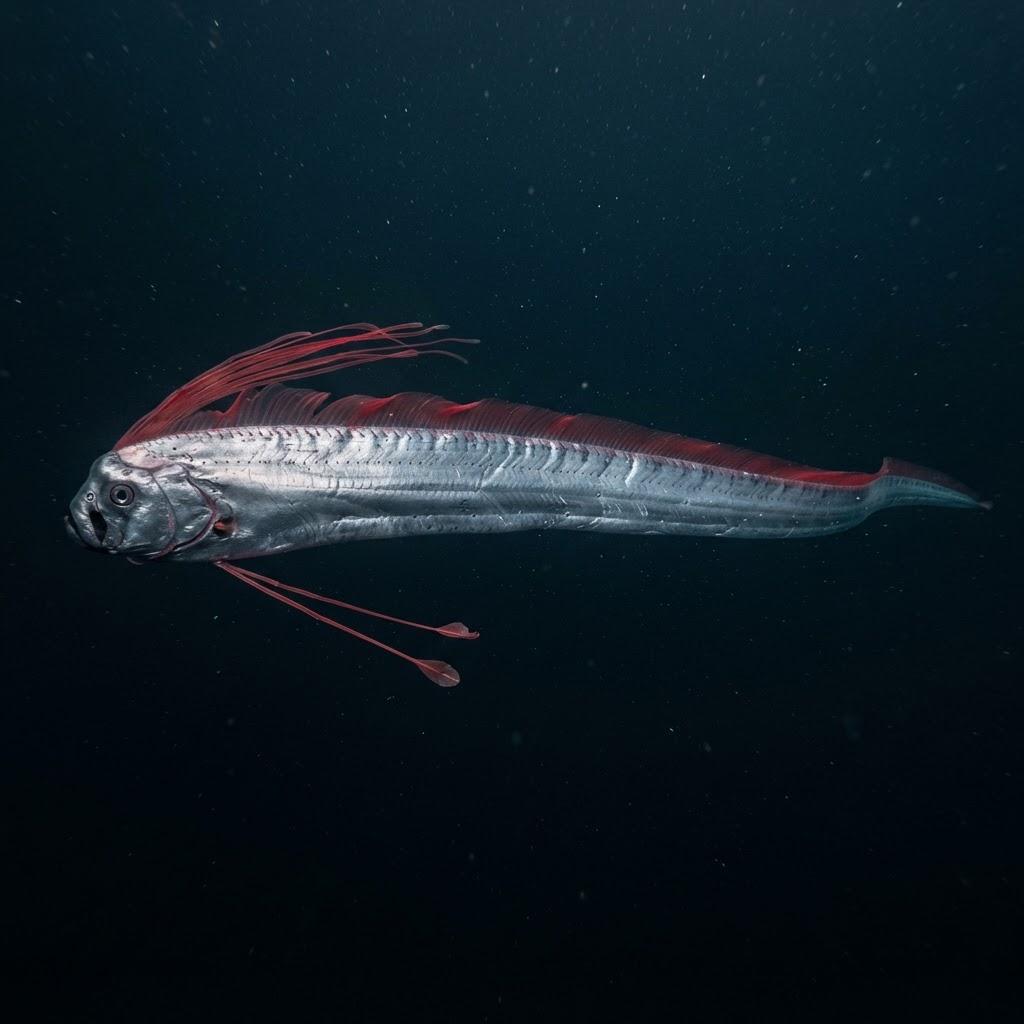
While the Striped Mullet prefers the comfortable, sun-drenched shallows of the coast, it is fun to imagine them hanging out with their weird deep-sea cousins. If a Striped Mullet were to take a trip down to the abyss, he would probably be shocked by the lack of sunlight and the sheer number of creatures that look like they were designed by a sleep-deprived artist. Down there, you have fish with glowing 'fishing poles' on their heads, others that are entirely transparent, and some that don't even have stomachs, opting to absorb nutrients through their skin like a sponge. The Striped Mullet’s gizzard-driven, floor-vacuuming lifestyle seems positively tame compared to an anglerfish that has to wait months for a snack to drift by. It is a reminder that the ocean is partitioned into wildly different neighborhoods: the mullet is the guy living in the bustling downtown, while the deep-sea critters are living in the quiet, mysterious bunkers at the edge of the map.
Myth Busting
There is a long-standing myth that Striped Mullet are somehow 'dirty' because they feed on the bottom of the ocean. People often turn up their noses at them, thinking they taste like mud. Let us set the record straight: the Striped Mullet is an incredibly clean eater. They are filtering the nutrient-rich organic matter from the surface layer of the sediment, not snacking on trash or sewage. This is a common misconception applied to many bottom-feeders, but it is entirely misplaced here. Another myth is that they are mindless drones in their schools, incapable of individual action. Research has shown that these fish actually exhibit a surprising level of individual spatial awareness. They are constantly checking their position relative to their neighbors, which is why their schools move with such synchronized, liquid precision. They aren't just 'following the leader'; they are actively participating in a complex, collective decision-making process that keeps the entire group safe from predators.
Humorous Historical Tales or Folklore
The Striped Mullet has a surprising amount of historical clout. In Ancient Rome, they were considered a massive luxury item. Wealthy Romans would host elaborate dinner parties where a particularly large, prize-winning mullet was presented on a platter with all the pomp and circumstance of a royal coronation. It was the ultimate 'flex' for a host to serve a fish that cost a small fortune. Imagine the drama: guests would gaze at the fish with awe, knowing that only someone with serious coin could command such a centerpiece. It is hilarious to think that today, this humble, jumper-happy fish is just as common as it was back then, yet it once had the status of caviar or gold. While the Romans obsessed over their culinary potential, other coastal cultures developed legends about the mullet’s jumping behavior, often citing it as a sign of coming weather changes or divine messages from the sea spirits.
Underwater Love Stories and Bizarre Romances
When it is time for romance, the Striped Mullet decides to take a road trip. These fish are famous for their massive, coordinated migrations toward the open sea to spawn. It is basically the world's most epic group date. Thousands of individuals gather together and perform elaborate, high-speed maneuvers that serve as the ultimate display of fitness and genetic quality. They are not into dim lighting or soft music; they prefer the wide-open, turbulent waters of the ocean offshore. Males and females release their eggs and sperm into the water column simultaneously, creating a literal cloud of potential offspring. It is chaotic, it is intense, and it is entirely focused on ensuring that the next generation has the best possible chance of survival. There is no coddling here; it is all about finding a partner who can keep up with the pace and contribute to the grand, swirling dance of life that happens under the waves.
Underwater Architecture and DIY Nesting
The Striped Mullet isn't exactly an architect. They are more like the minimalist nomads of the sea. They don't build elaborate sand castles or fortress-like nests because their strategy is volume, not protection. Why spend weeks building a house when you can just scatter millions of eggs into the vast, protective blue? They rely on the ocean’s sheer size to keep their offspring hidden. Their 'architecture' is the school itself—a constantly shifting, moving structure that functions as a protective shell for the group. They are the masters of the mobile home lifestyle. While other fish species might spend their lives protecting a specific hole in a rock or building elaborate tunnels in the reef, the mullet is perfectly content in the open water. They have decided that the best way to keep their future safe is to keep moving and never stay in one place long enough for a predator to find their front door.
The Chaos of Raising Tiny Swimmers
Once the eggs are released into the open ocean, the parents completely check out. There is no 'teaching them to hunt' or 'nurturing the fry.' It is pure survival of the fittest from the moment the eggs hatch. The tiny, microscopic larvae have to fend for themselves, feeding on plankton and dodging anything that has a bigger mouth than they do. It is a brutal, high-stakes game of hide-and-seek. Most of the millions of eggs released will never make it to adulthood, which is why the mullet’s strategy is to produce as many as humanly possible. It is a numbers game, plain and simple. The ones that do manage to survive the gauntlet of the open ocean will eventually make their way back to the coastal estuaries and marshes to start the cycle all over again. It is a chaotic, messy, and fascinating system that has worked perfectly for millions of years.
How to Spot One & How It Is Doing
If you want to see a Striped Mullet, head to your nearest coastal pier or estuary at high tide. Keep an eye out for silver flashes in the water or a sudden, loud 'splash' as one of them decides to perform an impromptu gymnastics routine. They are very common and are currently classified as Least Concern, which is excellent news. They are a hardy, adaptable species that has managed to thrive in changing environments. To help keep their populations healthy, you can do your part by keeping our coastal waters clean. Since these fish rely so heavily on healthy estuarine environments to grow up, reducing plastic waste and minimizing runoff from your lawn—like fertilizers that can cause algae blooms—goes a long way. They are the energetic, jumping spirit of the coast, and as long as we protect their watery neighborhoods, these silver acrobats will be around to put on a show for generations to come.