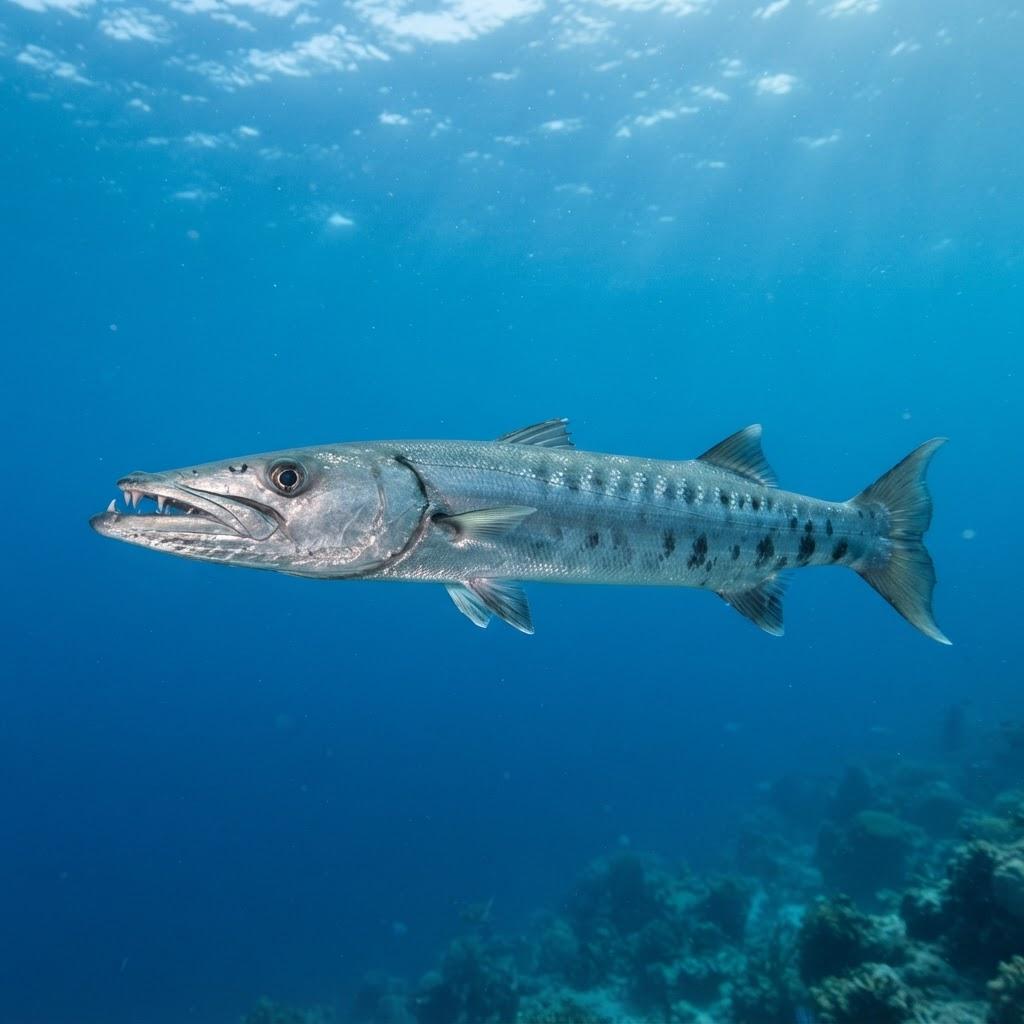
Sphyraena barracuda
Great Barracuda
Meet the Great Barracuda, the ocean's sleekest, toothiest fashionista who is always ready for a close-up. With a smile that could cut through steel and a penchant for stalking unsuspecting divers, this is one fish you definitely do not want to ignore.
Meet the Fish
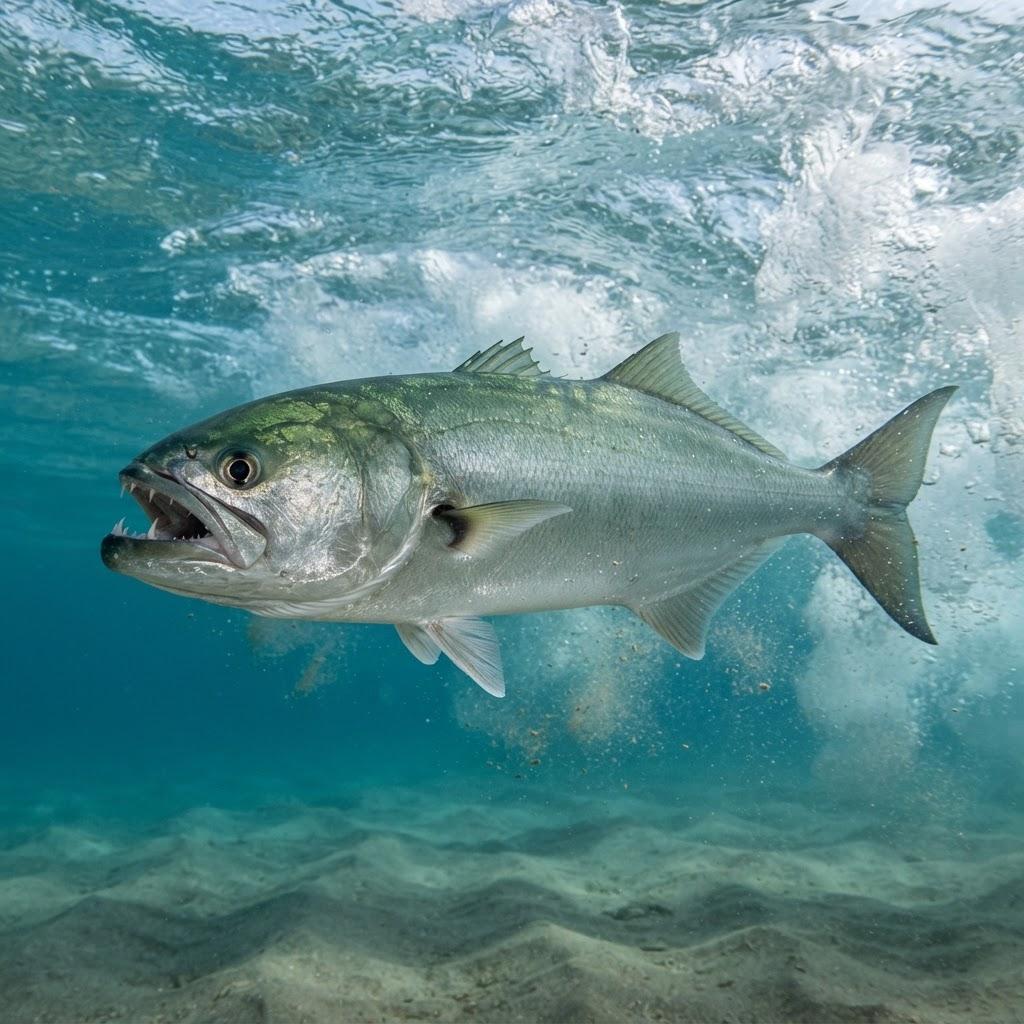
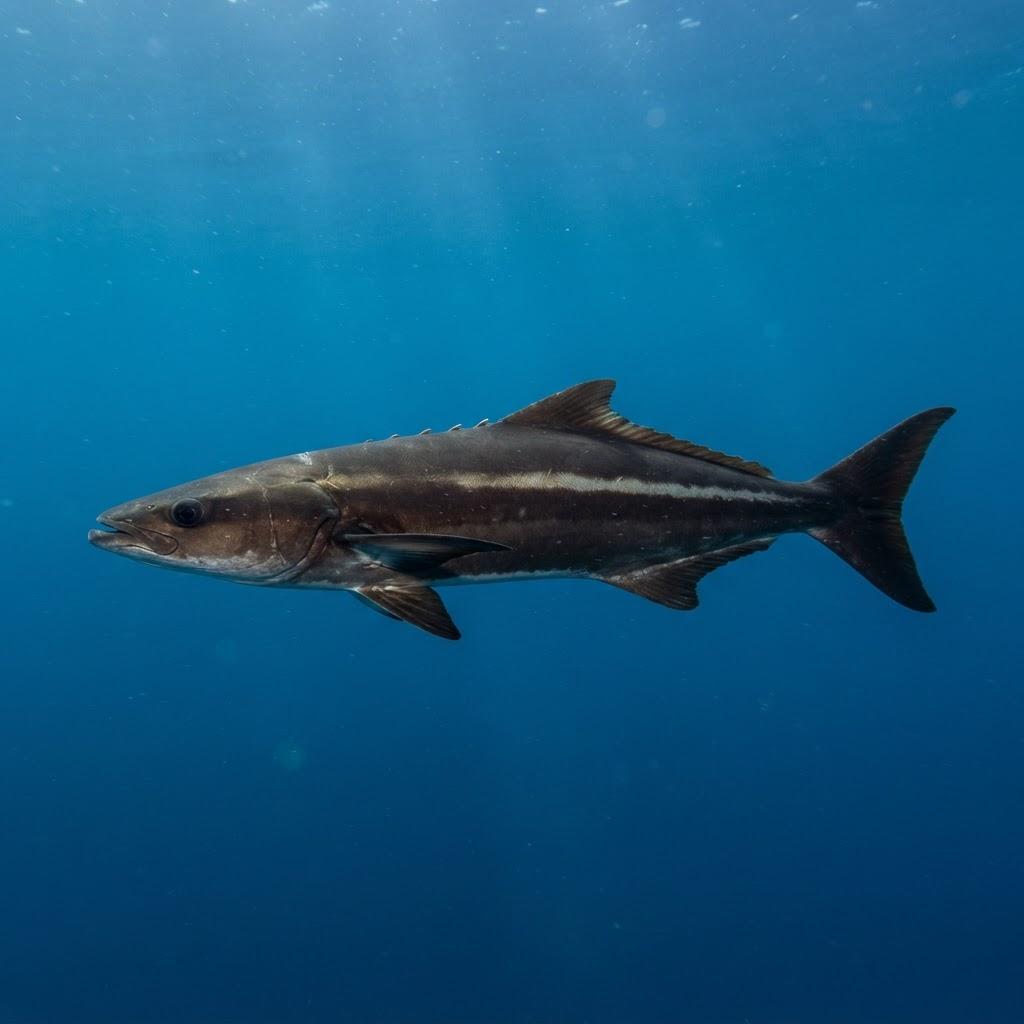
Imagine walking down the street and seeing a guy in a trench coat, wearing mirrored sunglasses, standing perfectly still while staring directly into your soul. That is the Great Barracuda. This fish is the ultimate 'cool guy' of the reef, possessing a vibe that says, I am faster than you, sharper than you, and frankly, I look better than you. With a body built like a polished torpedo and a jawline that could put a shark to shame, the Great Barracuda is the undisputed celebrity of the shallows. They do not just swim; they hover with the terrifying precision of a drone, watching the world with cold, calculating eyes. You might think they are just floating there, but in reality, they are playing a high-stakes game of red-light-green-light. They have a metallic silver sheen that makes them look like they were dipped in chrome, helping them vanish into the flickering sunlight like a watery ghost. This is not a fish that hides in the mud; this is a fish that owns the neighborhood and makes sure everyone else knows it.
Weird Biological Superpowers Explained Simply
While most fish have to work hard to get a meal, the Great Barracuda has biological gear that would make a Formula One car jealous. Its superpower is acceleration. We are talking about explosive, burst-speed movement that goes from zero to sixty in a fraction of a second. This is achieved through a specialized arrangement of white muscle fibers that are designed for high-intensity sprints rather than endurance marathons. Think of it like a professional athlete who skips the cardio and focuses entirely on explosive box jumps. They also possess a lateral line, a sensory organ that runs down the side of their bodies like a biological sonar system. This allows them to feel the displacement of water made by a tiny, panicked minnow from meters away. It is essentially having built-in vibration sensors that let them hunt in murky, dark water where they cannot even see their dinner. When they decide it is lunch time, they do not just chase; they launch.
Absurd Self-Defense Mechanisms
You might assume that a predator as terrifying as the Great Barracuda spends all its time worrying about bigger, meaner things, but it actually relies on a defense strategy rooted in pure arrogance: just be too fast and too scary to mess with. While a pufferfish might inflate into a spiky beach ball or a hagfish might turn the water into a sticky trap, the barracuda plays it cool. Their primary defense is their reputation. They are the neighborhood bullies that nobody wants to touch. When they are young and small, however, they are far more cautious, often hiding among mangroves where the tangled roots act as a natural fortress. They weave through the muddy, knotty tunnels that would baffle a larger pursuer. As they grow older and larger, they shed this timidity and adopt a 'come at me, bro' attitude. By the time they hit their prime, they are essentially the kings of the reef, and the only thing they really fear is another, much larger shark that is just having a really bad day.
Fish Drama and Gossip
If you could eavesdrop on the reef, you would hear the barracuda being the subject of constant, fearful hushed whispers. In the social hierarchy of the ocean, the barracuda is the kid who doesn't join the after-school clubs; it keeps to itself, but everyone is terrified of walking past its locker. They are largely solitary creatures, avoiding the constant drama of school-living fish like sardines or damselfish. But when they do encounter their own kind, it is less of a 'hey, how is your day' and more of a suspicious, side-eye standoff. They are incredibly territorial, often claiming a specific stretch of reef as their personal hunting ground. They will follow a diver for hundreds of yards, not out of friendship, but because they are waiting to see if you drop something tasty. They are the voyeurs of the ocean, constantly stalking the periphery of the action, watching the small fry run around while they wait for the perfect moment to break the peace with a quick, decisive strike.
The "Wait, That's Real?!" Deep-Sea Oddities
The Great Barracuda is a creature of the sunlight, a shallow-water prince who would likely find the crushing, cold, dark abyss of the deep sea utterly depressing. While deep-sea residents are out there sporting built-in glow sticks on their chins or having transparent skulls, the barracuda is obsessed with clarity and light. If you were to bring a barracuda down to the deep-sea zones, it would look like a person wearing designer sunglasses in a pitch-black coal mine. The deep sea is a place of alien biology, where creatures have to manufacture their own light to find mates or lure food because the sun gave up on them long ago. The barracuda, conversely, uses its vision as its primary weapon. It does not need bioluminescence when it has the sun shining through crystal-clear water to highlight the silver scales of its prey. It is the contrast between the high-speed, visual-based life of the surface and the slow, glow-in-the-dark madness of the deep that truly highlights how specialized our toothy friend really is.
Myth Busting
Let us clear the air: the idea that barracudas are mindless, man-eating monsters that hunt humans for sport is, well, mostly a product of Hollywood scripts. We have all seen the movies where a barracuda turns a diver into a snack, but in reality, they are curious, not carnivorous cannibals looking for a two-legged meal. They are actually quite visually driven, and they have been known to follow divers because they are attracted to shiny objects like watches or buckles, which look suspiciously like the scales of a silvery fish. It is not an attack; it is just a fish with bad eyesight and a love for bling. They are not waiting behind every rock to ambush you. They are essentially the neighborhood grump who is actually just checking to see if you have any snacks. The myth that they are vicious human predators has persisted for decades, but the numbers show that bites are incredibly rare and usually a case of mistaken identity when the water is murky.
Humorous Historical Tales or Folklore
Throughout history, sailors have held a bizarre, superstitious reverence for the barracuda. In the Caribbean, tales were spun of 'The Silver Scourge,' a phantom fish that could follow a ship for days, waiting for a sailor to fall overboard. While these stories were likely exaggerated by rum-soaked mariners bored on long voyages, they speak to the deep-seated fear this fish commands. There are even local legends that suggest the barracuda can sense the heartbeat of a nervous swimmer, leading to all sorts of colorful advice on how to remain 'calm and collected' in their presence. Some island traditions even viewed the barracuda as a guardian of the reef, a creature that punished those who were wasteful or greedy. Whether it was viewed as a demon of the deep or a noble sentry, humanity has always had a strange, slightly terrified fixation on this fish. We love to turn anything with a sharp tooth into a legend, and the barracuda, with its icy glare, fits the role perfectly.
Underwater Love Stories and Bizarre Romances
When it comes to romance, the Great Barracuda is surprisingly un-dramatic. There are no fancy underwater dance-offs or elaborate, color-changing light shows here. Instead, these fish engage in a process called broadcast spawning. It is basically the underwater equivalent of a massive, messy, neighborhood block party where everyone just tosses their genetic material into the current and hopes for the best. The males and females congregate in large groups, usually in open water, and release their eggs and sperm into the water column simultaneously. It is not exactly a candlelit dinner, but it is highly efficient. It ensures a wide distribution of the next generation, preventing all the eggs from being gobbled up by a single predator in one spot. It is the ultimate 'no strings attached' dating life. Once the business is handled, the parents swim off to go back to their solitary, brooding lives, having absolutely no interest in the chaos they just unleashed.
Underwater Architecture and DIY Nesting
If you are looking for an architectural masterpiece like the carefully curated nests of a damselfish or the intricate sand-circles of a pufferfish, you are going to be disappointed. The Great Barracuda is essentially the person who lives in a studio apartment with only a mattress on the floor. They do not build nests, they do not dig holes, and they definitely do not do interior design. Because they are open-water spawners, they rely on the ocean currents to do the heavy lifting of childcare. Their eggs are buoyant, meaning they float near the surface, drifting along with the plankton. This lack of a 'nest' is a brilliant, if risky, survival strategy. By not pinning their offspring to one specific, easily raided location, they avoid giving predators a localized buffet. They are the nomads of the reef, choosing mobility and dispersal over the static comfort of a traditional home. It is a messy, DIY existence, but it has kept their species thriving for millions of years.
The Chaos of Raising Tiny Swimmers
The lives of baby barracudas, or 'fry,' are nothing short of a high-speed thriller movie. Once they hatch from their drifting eggs, these tiny, vulnerable specks have to immediately figure out how to be apex predators while being roughly the size of a grain of rice. They spend their early days in shallow, protected environments like seagrass beds or estuaries, hiding among the blades of grass like tiny, silver needles. They are almost entirely on their own, learning to hunt by instinct. There is no parental guidance, no swimming lessons, and absolutely no protection. It is a brutal 'sink or swim' environment where the weak are weeded out within days. As they grow, they begin to mimic the predatory behaviors of the adults, darting at smaller prey and slowly moving out into more open water. Watching a tiny, inch-long barracuda try to ambush a tiny shrimp with the same seriousness as its giant, adult counterpart is both adorable and incredibly intense.
How to Spot One & How It Is Doing
If you want to catch a glimpse of this underwater celebrity, look for a long, cylindrical shape that seems to be flickering like a broken neon sign. They love hanging out near the edge of drop-offs, especially where the current is moving, as they wait for food to come drifting by. Keep an eye out for that signature, slightly parted jaw that reveals a set of needle-sharp teeth—it is their classic 'I am about to take a bite' look. Thankfully, the Great Barracuda is doing quite well in the wild. As a species of 'Least Concern,' they are not currently staring down the barrel of extinction, which is great news. However, they are still vulnerable to habitat loss and the health of the coral reefs they frequent. You can help by supporting marine conservation efforts that protect reef ecosystems and being mindful of sustainable seafood choices. If you spot one while snorkeling, just give it a little space, keep your shiny jewelry tucked away, and appreciate the fact that you are hanging out with one of the ocean's coolest, most efficient machines.