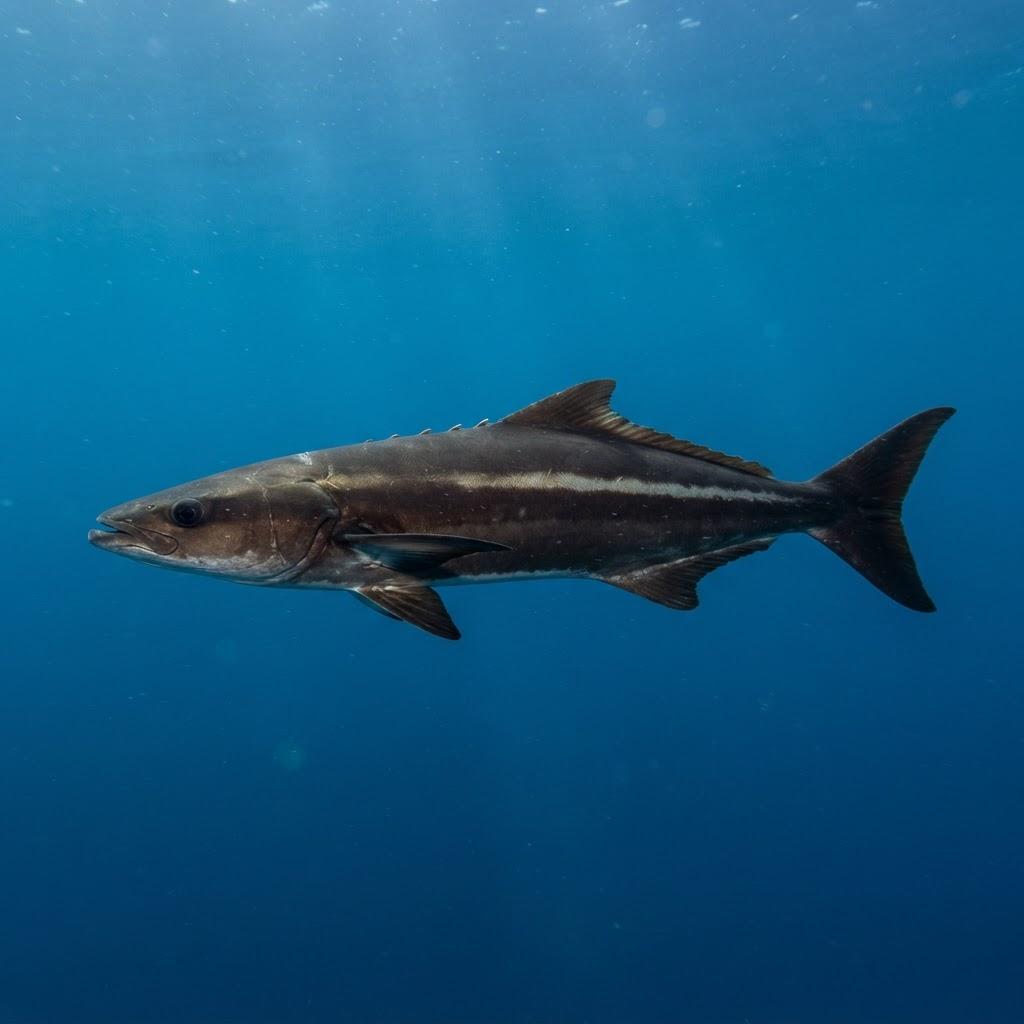
Rachycentron canadum
Cobia
The Cobia is the ocean's ultimate road-tripper, a rugged, shark-looking fish that loves hanging out under floating garbage like it's a VIP lounge. Dive into the world of this curious, tasty, and surprisingly chill wanderer of the deep.
Meet the Fish
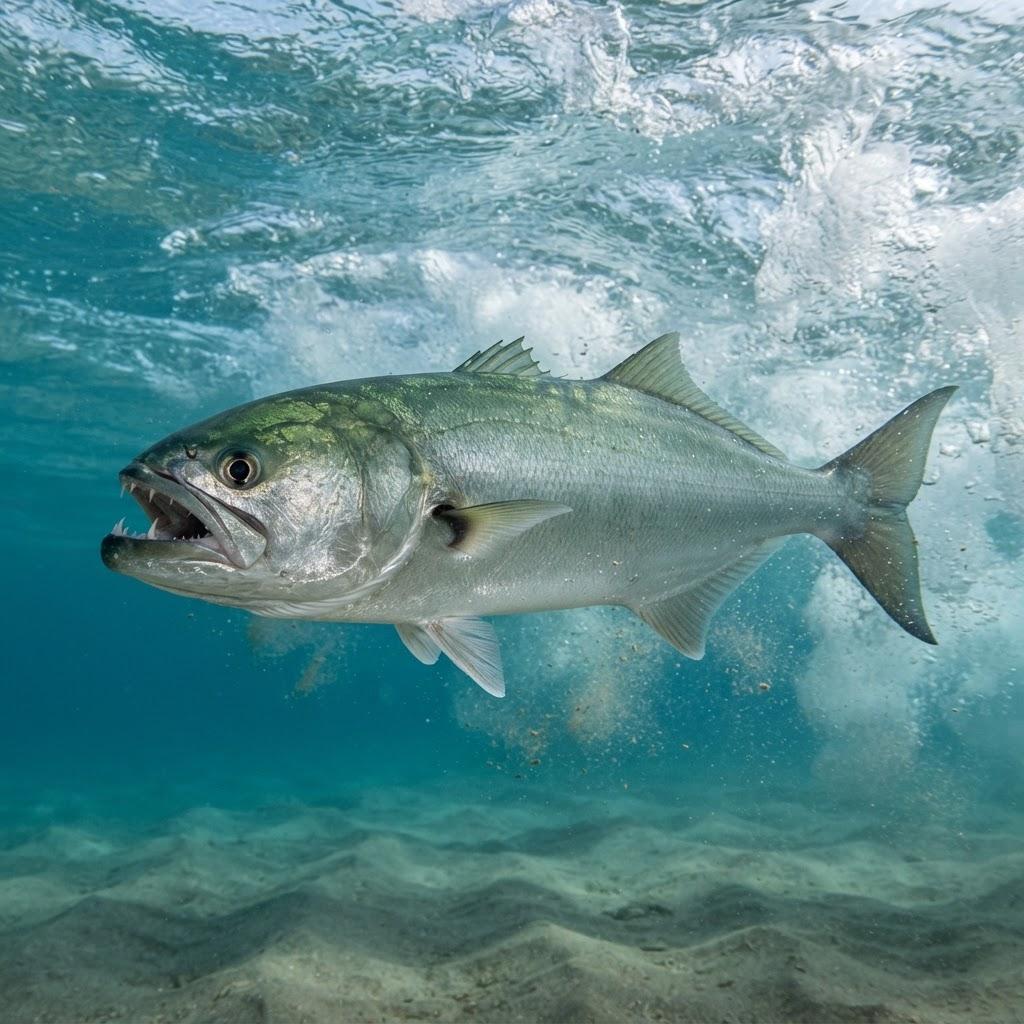
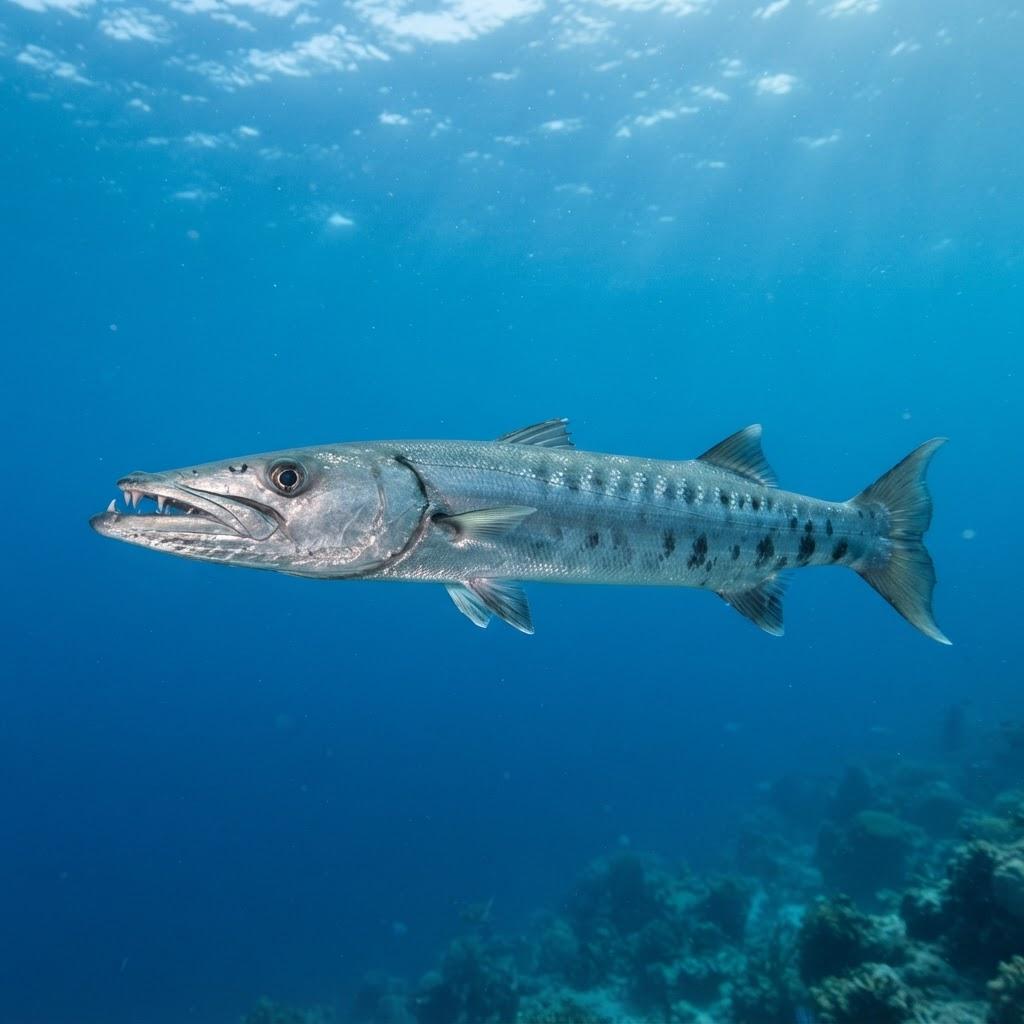
Imagine a fish that looks like a shark had a slightly confused weekend with a remora and decided to lean into the 'tough guy' aesthetic without actually being a mean predator. Meet the Cobia, the undisputed king of the 'I'm just chilling under this piece of floating plastic' lifestyle. With a head as flat as a pancake and a body that screams 'I could be a shark, but I choose peace,' the Cobia is the ultimate enigma of the coastal seas. It has a dark, chocolate-brown streak running down its sides like it's wearing a sporty racing stripe, which is perfect for looking fast even when it’s just lazily hovering around a buoy. Unlike the neurotic groupers who hide in rocks all day, the Cobia is a social butterfly, often found trailing behind sea turtles or giant rays, acting like a teenager following a celebrity just to see if they get into anything interesting. It is sleek, it is strong, and it carries an aura of supreme indifference that makes every other fish seem like they are trying too hard to look cool. When a Cobia decides to swim by, you notice it not because it’s sparkling with neon colors, but because it has the swagger of an apex predator that knows it doesn't need to prove anything to anyone. It is the fish equivalent of that guy in the leather jacket at the coffee shop who doesn't talk much but somehow owns the whole room.
Weird Biological Superpowers Explained Simply
While other fish are busy evolving glowing lures or poisonous spines, the Cobia has mastered the art of being a biological chameleon of the sea—sort of. Their primary superpower is a freakish level of sensory curiosity. Cobias are essentially high-performance underwater radar systems wrapped in muscle. They possess a lateral line system—a row of tiny sensors along their sides—so sensitive that they can detect the vibration of a crab walking three blocks away. Think of it like having superhuman hearing that lets you pinpoint a dropped pin in a crowded stadium. But the real magic is their 'trash-can' digestive system. They aren't picky eaters; they are opportunistic vacuum cleaners. Because they often hang out around floating debris or drifting seaweed, they have evolved to be incredibly agile at snagging whatever drifts by, from small crabs to unsuspecting baitfish. Their metabolism is so efficient that they can go from 'lazy drifter' to 'torpedo mode' in the blink of an eye. This rapid-fire muscle activation is powered by their dense white meat, which allows for sudden, explosive bursts of speed. They are basically biological sports cars that spend most of their time idling in neutral, waiting for the light to turn green, only to burn rubber the second they spot a snack.
Absurd Self-Defense Mechanisms
You might expect a fish this size to have some sort of nuclear-level defense, like a stinger or a poisonous cloud, but the Cobia is far too dignified for such histrionics. Instead, their self-defense mechanism is pure, unadulterated speed and camouflage. When a shark or a larger, meaner predator decides a Cobia looks like a delicious lunch, the Cobia doesn't puff up or release slime. It simply ceases to exist in the predator's immediate vicinity. With a flick of their powerful tail, they transform from a floating log into a blur of brown and white muscle. Their ability to blend into the murky, silty water of the coast is their real shield. They can shift their skin tone slightly to match the sandy bottom or the dark shadows of a wreck, making them the masters of the 'you didn't see me' maneuver. If they are feeling cornered, they have been known to use their sheer mass to bowl over smaller threats. It’s like a heavyweight boxer who doesn't use his fists but instead just walks through you, leaving you confused and winded while he keeps walking toward his next destination. It’s a passive-aggressive defense strategy, but hey, it keeps them alive long enough to grow to gargantuan sizes, so who are we to judge their style?
Fish Drama and Gossip
If the ocean were a high school, the Cobia would be the mysterious loner who shows up to the party with his own entourage of remoras and doesn't care if you notice him or not. However, beneath that cool exterior lies a soap opera of epic proportions. During the spawning season, the hierarchy of the Cobia world gets turned upside down. Males, usually content to drift and snack, suddenly get very territorial. Imagine a bunch of dudes arguing over the best spot at a concert, except the concert is an open patch of water and the prize is the chance to impress a female. They exhibit a behavior called 'shadowing,' where they will follow larger rays or sharks with such intensity that it borders on stalking. It’s like watching a reality show where the contestants are constantly checking to see if they are 'on camera.' They aren't actually fighting; they are just posturing. One male will puff out his gills to look bigger, and the other will swim circles around him, neither wanting to back down but neither wanting to actually throw a punch. It is high-stakes social climbing, performed entirely in silent, slow-motion circles, making it the most dramatic display of passive-aggressiveness in the Atlantic.
The "Wait, That's Real?!" Deep-Sea Oddities
The Cobia doesn't live in the abyss—they aren't fans of the crushing, lightless void where the nightmares live—but they are the neighbors who peek over the fence at the weirdos next door. If you look down from where the Cobia hangs out, you eventually hit the twilight zone, where the pressure is intense and creatures look like they were designed by a sleep-deprived graphic designer. Deep-sea fish use bioluminescence, which is basically living lightbulbs in their skin, to trick prey or find love in the dark. A Cobia, meanwhile, keeps its feet—or fins—firmly in the sunlit zone, where things are predictable. The contrast is jarring. In the deep, you have creatures like the barreleye fish, which has a transparent head so it can look through its own skull. In the Cobia’s neighborhood, everything is about visibility and speed. While the deep-sea denizens are busy trying to find a date in the permanent darkness using neon-glowing belly lights, the Cobia is looking at the sun, surfing the currents, and wondering why on earth anyone would want to live in a place where you can’t even see your own lunch. They represent the 'sun-drenched resort' lifestyle, standing in stark, sunny contrast to the alien, gothic horror movie happening just a few thousand meters below them.
Myth Busting
For years, there was a persistent myth among anglers that Cobia were essentially 'dumber' versions of sharks, roaming aimlessly and just waiting to be caught. This is completely false. Cobias are actually incredibly inquisitive. They have been documented checking out boats, investigating scuba divers, and showing a level of interest in their surroundings that suggests they are processing more information than your average goldfish. Another myth is that they are lazy because they follow sharks or rays around. People thought they were 'hitchhiking,' but in reality, they are playing a smart game of 'scavenger hunt.' By sticking to the shadows of a large, messy eater like a shark, they get first dibs on the scraps. It’s not laziness; it’s resourcefulness! They are the ultimate environmental opportunists. Furthermore, there is a belief that they are 'bottom feeders' with no personality. Spend five minutes watching one in the wild, and you will see a creature that reacts to its environment, shows preference for certain types of cover, and exhibits behavior that looks suspiciously like genuine boredom when the fishing gets slow. They are the thinking person's game fish, constantly analyzing the situation before deciding if a lure is worth the effort of a bite.
Humorous Historical Tales or Folklore
History hasn't been kind enough to the Cobia to give it a starring role in ancient mythology, probably because they were too busy being delicious to be considered mystical. However, in the annals of coastal lore, the Cobia—often called the 'ling' or 'crabeater'—has earned a reputation as the fish that drives fishermen crazy. There are countless tall tales from the 19th-century coastal towns about 'the brown ghost' that stole a rod right out of a man’s hand. One legend from the Florida keys suggests that a fisherman once caught a Cobia so large that he mistook it for a sunken log and tried to tie his boat to it for a nap. When the 'log' swam away, the boat was reportedly towed three miles out to sea before the line finally snapped. Whether this is true or just a story told over a few too many drinks, it highlights the Cobia's reputation as a fish that doesn't mess around. They are the 'monsters' of the inshore waters, the fish that broke the world record, the rod, and the fisherman's pride in one fell swoop. They may not have the fame of a kraken or a mermaid, but they have the historical street cred of being the one fish you definitely don't want to mess with if your gear is a little flimsy.
Underwater Love Stories and Bizarre Romances
Love in the life of a Cobia is a frantic, fleeting, and highly public affair. It’s less 'romantic candlelit dinner' and more 'chaotic spring break beach party.' When the water temperature hits that sweet spot, Cobias congregate in massive numbers to get their spawning on. The courtship ritual consists of a lot of rushing and tail-thumping, as males compete for the attention of the largest females. It is a spectacle of biological ego. The females, typically the bigger and more dominant of the group, are quite picky, forcing the males to put on a show of endurance. Once the decision is made, the pair swims in an upward spiral, releasing eggs and milt—the fish version of love juice—into the open water current. It is entirely unromantic by human standards, but it is incredibly effective. There is no pair-bonding, no long-term commitment, and certainly no 'till death do us part.' It is pure, high-speed genetic propagation designed to ensure that the next generation of road-tripping brown fish makes it into the wild. After the deed is done, they go their separate ways, presumably to go back to being the cool, lone rangers of the coastal shelf.
Underwater Architecture and DIY Nesting
The Cobia is a staunch opponent of the housing market. They don't believe in real estate, fixed addresses, or interior design. While other fish spend their entire lives carefully sculpting sand nests or rearranging coral to look like a French chateau, the Cobia is the ultimate minimalist. Their nest is... well, the entire ocean. They are broadcast spawners, which is the scientific way of saying they dump their genetic material into the water column and hope for the best. They see the vast, open ocean as their home and don't feel the need to build a fortress to protect their future lineage. This is a bold, high-risk strategy that says, 'I am so confident in my offspring's ability to survive that I don't need a nursery.' It’s the antithesis of the helicopter parent. By not anchoring themselves to one location, they remain free to follow the currents, moving from one region to another as the seasons change. They are the nomads of the sea, nomadic drifters who treat the entire coastal shelf as their living room, kitchen, and nursery all in one giant, watery sprawl.
The Chaos of Raising Tiny Swimmers
If you think your kids are a handful, just imagine raising a million of them at once, with absolutely no supervision, in an environment where everything wants to eat them. This is the reality for the Cobia. After the chaotic spawning event, the eggs are left to drift in the open currents, which is like sending your toddlers out into the middle of a busy highway and hoping they learn traffic safety by osmosis. These tiny, transparent larvae are effectively plankton for the first few weeks of their lives. They are fragile, nearly invisible, and entirely at the mercy of the tides. Most of them will end up as snacks for jellyfish or small baitfish, but the few that survive are the absolute champions of the ocean. They grow at an astronomical rate, gaining inches per month. By the time they reach a few inches in length, they are already mini-versions of their parents, miniature terrors of the shallow reefs. They don't need a mother's guidance or a father's protection; they are born with the instinct to find a piece of floating debris and hide under it. It’s a harsh, sink-or-swim reality, but it has worked for them for millions of years, proving that sometimes, a chaotic, free-for-all upbringing is exactly what you need to become a 150-pound giant.
How to Spot One & How It Is Doing
If you want to catch a glimpse of the elusive Cobia, don't look at the bottom—look for the weird stuff. Anything floating, like a piece of drift wood, a plastic bottle, or a large jellyfish, is a Cobia hotspot. They are the 'VIP room' frequenters of the sea. Keep an eye out for that distinctive, dark, horizontal racing stripe and a head that looks like it was flattened by a heavy textbook. In terms of conservation, the Cobia is doing surprisingly well. They are currently listed as Least Concern, mostly because they are incredibly good at adapting and their nomadic nature keeps them from being over-fished in any single spot. However, that doesn't mean we can act like they are invincible. The biggest thing you can do for them is keep their 'living rooms' clean. Since they love hiding under floating trash, they often ingest microplastics or get tangled in derelict fishing gear. Every piece of plastic you pick up from the beach is one less potential hazard for a fish that is just looking for a cool place to hang out. Supporting sustainable fishing practices and protecting coastal water quality keeps the party going for these rugged travelers. Next time you are near the coast, look for the 'brown ghost' hovering near a buoy—and give a little wave to the coolest fish in the ocean.