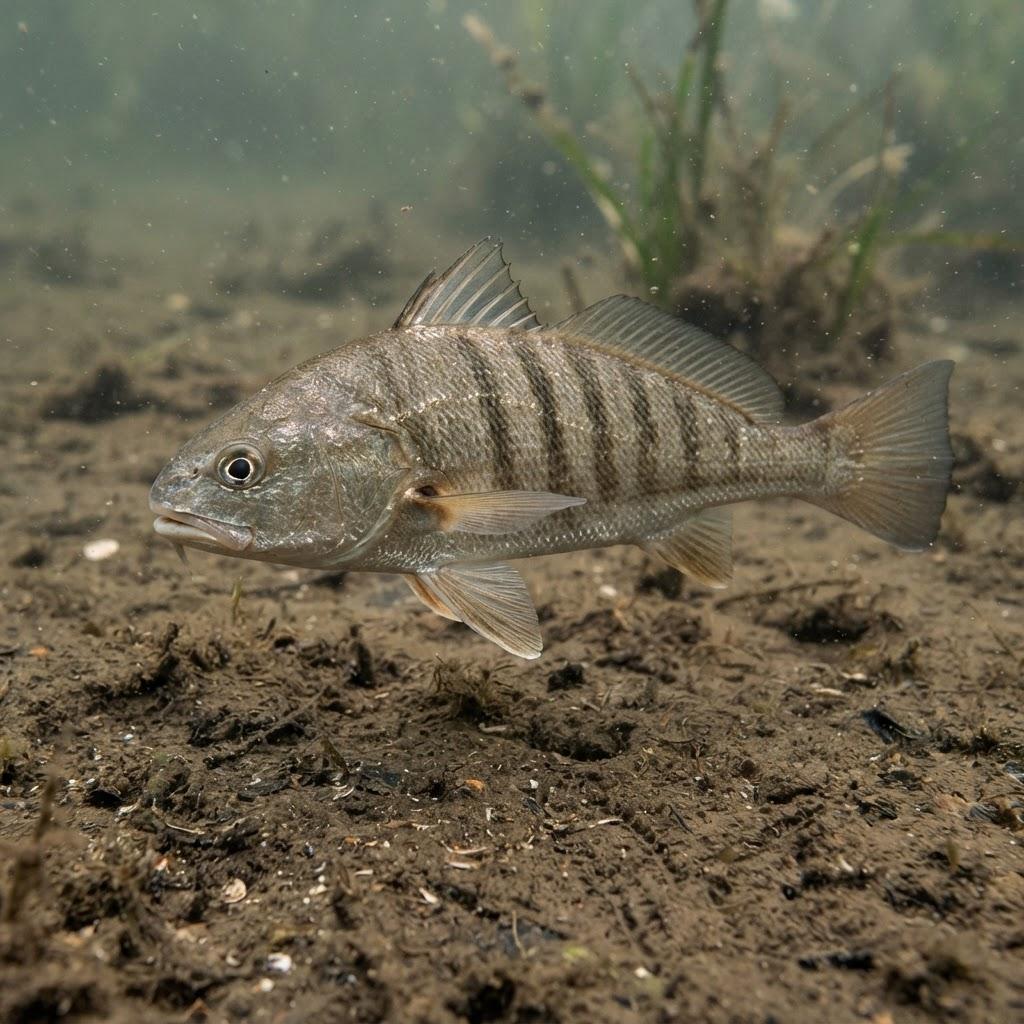
Micropogonias undulatus
Atlantic Croaker
Meet the Atlantic Croaker, the ocean's loudest party animal that literally drums its way through life. With a belly full of sass and a unique sound system, this golden-hued bottom feeder is the ultimate loudmouth of the coastal surf.
Meet the Fish
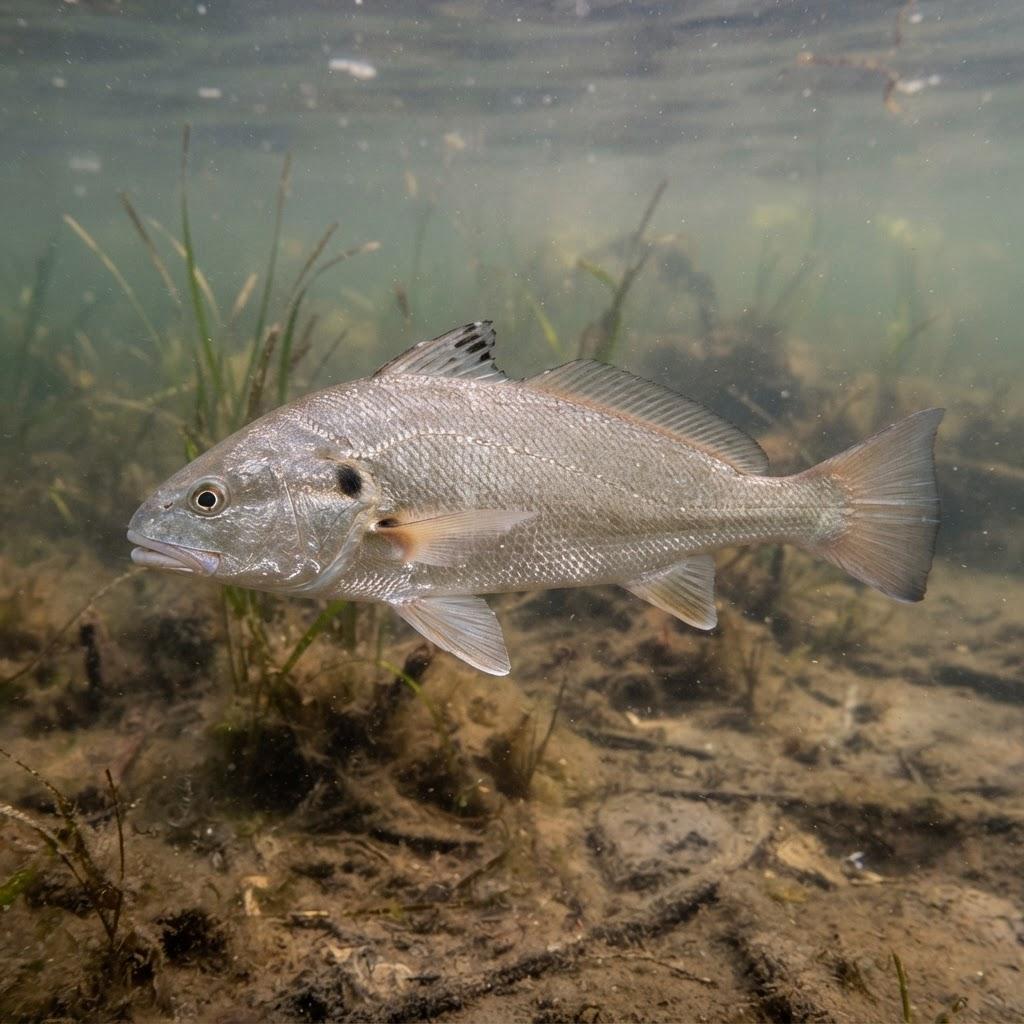
Imagine walking into a high-stakes, noisy neighborhood party where everyone is trying to out-shout the guy next to them, and you have finally met the Atlantic Croaker. This fish is not here to be quiet, subtle, or mysterious. With its iridescent, silvery-bronze scales that shimmer like a disco ball under the harsh sun, the Croaker is essentially the loud, life-of-the-party cousin of the drum family. They have a distinctively hunched-back profile that gives them the look of a grumpy old man who just realized he forgot to turn the stove off, but don't let that fool you—these fish are absolute social butterflies of the mudflats. Unlike the sleek, silent predators that glide through the deep ocean like ninjas, the Croaker is more of a clunky, enthusiastic breakdancer of the shallow waters. They spend their days moseying along the ocean floor, vacuuming up snacks with their underslung mouths and constantly chatting with anyone who will listen. They are the quintessential coastal neighbors, always present, slightly noisy, and impossible to ignore.
Weird Biological Superpowers Explained Simply
So, how does a fish become the undisputed drum god of the Atlantic? It is all thanks to a specialized set of muscles that vibrate against its swim bladder, which is basically an internal gas-filled balloon that helps them stay buoyant. Think of it like someone taking a drumstick and rapidly tapping on a hollowed-out log; the croaking sound comes from those muscles pulling on the swim bladder to create a resonating, drum-like thump. It is a biological subwoofer. When a Croaker gets excited, they flex these muscles at lightning speed, creating a rhythmic thumping that can be heard even by humans standing on the shoreline if the water is calm enough. While other fish use color or scent to signal their feelings, the Croaker uses percussion. It is basically the aquatic equivalent of an amateur garage band that refuses to turn down their amplifiers, and remarkably, they can keep this rhythm up for hours at a time during their group gatherings.
Absurd Self-Defense Mechanisms
When you are a small, golden fish living in the chaotic buffet line that is the Atlantic coast, you have to have a game plan for when a larger, hungrier neighbor decides you look like an appetizer. The Croaker doesn't rely on toxic spikes or the ability to turn into a giant, unswallowable beach ball. Instead, they rely on speed, camouflage, and the safety of the mob. Because they spend their lives hanging out in murky, silt-filled coastal waters where visibility is roughly the same as a London fog, they blend in perfectly with the sandy background. If a predator arrives, the Croaker uses a frantic, zig-zag swimming style that is enough to make any shark feel motion sick. They rely on their twitchy nature to dart into thick clouds of stirred-up sand, essentially creating a 'smoke screen' to vanish into the abyss. It is not exactly a martial arts move, but in the muddy world of the surf zone, being a disappearing act is just as good as being a warrior.
Fish Drama and Gossip
If you could translate the constant thumping of a school of Atlantic Croakers, you would probably hear the equivalent of a high-school cafeteria drama, but with more shouting. During the mating season, the males get into a literal volume war. It is not enough to just be a fish; you have to be the loudest fish in the neighborhood to get any attention. These territorial skirmishes are less about physical brawls and more about who can hold a beat the longest without getting winded. The biggest, loudest males sit at the center of the school like the popular kids at a lunch table, holding court while the smaller, quieter fish hover around the edges hoping to pick up some scraps. It is a constant cycle of ego, percussion, and positioning, where the social hierarchy is determined by who has the most stamina to keep the rhythm going. It is essentially an underwater reality show where the winner gets the girl, and the loser goes back to lurking in the shadows of the estuary.
The "Wait, That's Real?!" Deep-Sea Oddities
While our noisy little friend prefers the warm, shallow comfort of the estuary, their distant deep-sea relatives live in a world that makes science fiction movies look like documentaries. In the 'twilight zone' of the ocean, things get weird fast. While the Croaker uses its swim bladder to make thumping sounds, some deep-sea residents have evolved to make their own neon light shows to trick prey into swimming right into their mouths. Compare that to the Croaker’s simple, muddy existence, and you realize how different the pressures of life can be. While the Croaker has to worry about tides and oxygen levels in shallow water, deep-sea fish are dealing with crushing pressure that would turn a submarine into a soda can. It is a good reminder that while the Croaker is the loud jock of the beach, the deep ocean holds the truly bizarre creatures who have given up on sound entirely in favor of glowing lures and terrifying, oversized teeth.
Myth Busting
There is a long-standing rumor that fish are mindless, forgetful creatures that can barely remember the last five seconds of their existence. The Atlantic Croaker is here to officially bust that myth. These fish demonstrate remarkable learning abilities when it comes to finding food and avoiding dangerous currents. They do not just wander aimlessly; they map their surroundings using a mix of sensitive vibrations and a memory that rivals that of any small mammal. You might hear people say that the Croaker is just a mindless 'trash fish' that eats whatever it can find, but that is simply not true. They are incredibly picky about their feeding grounds, constantly patrolling the same stretches of sand because they remember where the food is most reliable. So, the next time someone tells you that fish have no memory, just point them toward a Croaker that knows exactly which tidal rip is going to bring in a feast of tiny shrimp and crabs.
Humorous Historical Tales or Folklore
For generations, fishermen have woven legends about the mysterious 'drums' of the ocean. In the old days, before scientists fully understood how the Atlantic Croaker made its signature noise, sailors would swear that they were hearing the ghosts of shipwrecks or massive, unseen sea monsters lurking beneath the hull. Imagine being a lone sailor in the middle of a dark, foggy night, and suddenly the hull of your ship starts vibrating with a rhythmic, low-frequency thumping. It is no wonder that folklore often painted these fish as mystical omens of storms. In some coastal communities, people believed that if the Croakers were unusually loud, it meant a hurricane was coming, which is actually a bit of a clever observation—often, changes in barometric pressure do influence fish behavior. So, while they weren't exactly prophetic wizards, they were definitely the local alarm system for anyone paying enough attention to the rhythm of the waves.
Underwater Love Stories and Bizarre Romances
Love in the world of the Atlantic Croaker is a noisy, crowded, and somewhat frantic affair. There is no gentle candlelight dinner or soft music; it is a full-blown concert. During the spawning season, the males gather in massive groups, all pumping their muscles at full blast to see who can produce the most seductive thump. The females, meanwhile, cruise through the cacophony, apparently looking for the 'gold standard' of rhythm. It is like being at a concert where every single person in the crowd is trying to lead the band, and the winner gets to go home with the most impressive suitor. Once a pair finds a rhythm that matches, they release their eggs and sperm into the water column in a chaotic, celebratory cloud. It is not romantic in the way we humans might define it, but it is certainly one of the most energetic and high-volume dating scenes on the entire planet.
Underwater Architecture and DIY Nesting
You might expect a fish as loud as the Croaker to put equal energy into building some kind of elaborate, architecturally significant nest, but the truth is actually quite a bit lazier. They are not the interior decorators of the ocean. They don't build sandcastles, woven seaweed forts, or stone-lined nurseries. They are the 'free-range' parents of the sea. Instead of spending time on construction, they channel all that energy into travel and spawning. They rely on the vastness of the open ocean and the protection of the estuary’s currents to scatter their eggs. It is a 'set it and forget it' approach to parenting. They figure that if they produce enough eggs, a few of them are bound to make it without needing a fancy house to hide in. It is a gamble, sure, but it is one that has kept their species thriving in the Atlantic for millions of years without a single permit needed from a building inspector.
The Chaos of Raising Tiny Swimmers
If you thought having a toddler was exhausting, spare a thought for the tiny fry of the Atlantic Croaker. There is no mouth-brooding, no protective father hovering over the eggs, and certainly no nursery school. Once the eggs hatch, these tiny, translucent specks are on their own in the big, wide, dangerous ocean. It is the aquatic version of being dropped into a forest with nothing but a map and a snack. The tiny fry move toward the estuaries, which act as massive, nutrient-rich cradles for them to grow in. They spend their early months dodging everything from tiny crabs to hungry birds, essentially living in a perpetual state of 'survive or be eaten.' It is absolute chaos, but it is also the reason they are so successful. By producing massive amounts of offspring that swarm into the protection of marshes and bays, they ensure that even if ninety-nine percent don't make it, the survivors are the toughest, fastest, and loudest ones left.
How to Spot One & How It Is Doing
If you want to catch a glimpse of the Atlantic Croaker, look for the gold-tinted, silvery fish with the slightly pointed, drum-like snout and the underslung mouth that looks like it is constantly searching for crumbs. They love sandy or muddy bottoms where the water is a bit murky, so if you are fishing in a coastal bay or an estuary, you are likely in their backyard. The best way to know they are nearby? Just listen. If you are standing on a dock at dusk and hear a low, rhythmic vibration through your boots, congratulations—you have found the neighborhood band. As for their health, these fish are doing quite well. Because they are hardy and have a high reproductive rate, they are currently listed as 'Least Concern.' They are a favorite for recreational anglers, and as long as we keep our estuaries clean and protect the mangroves and marshes where their fry grow up, these loudmouths will be thumping their way through the surf for generations to come.