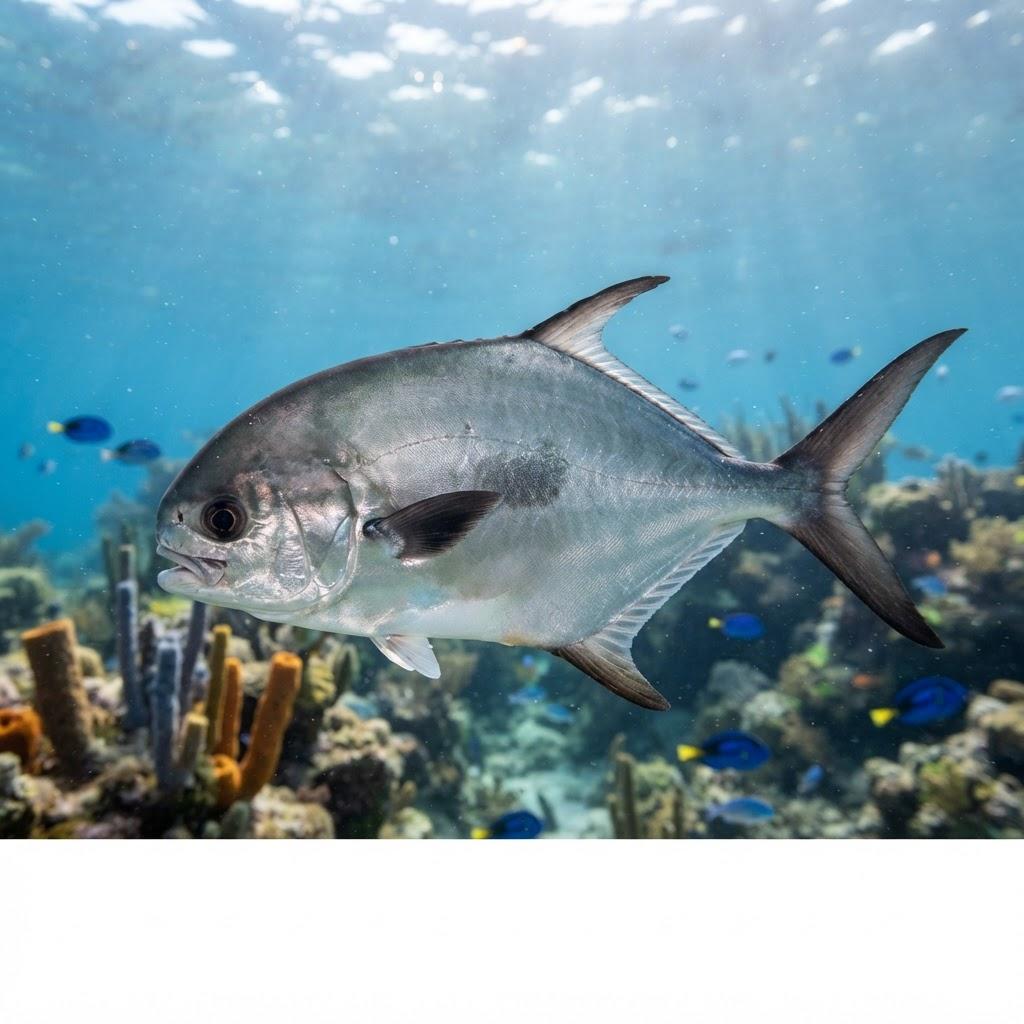
Trachinotus falcatus
Permit
Meet the Permit, the ocean's most elusive, silver-plated disco ball of the flats. It is the ultimate trophy for anglers and a master of playing hard-to-get in the shallowest of waters.
Meet the Fish
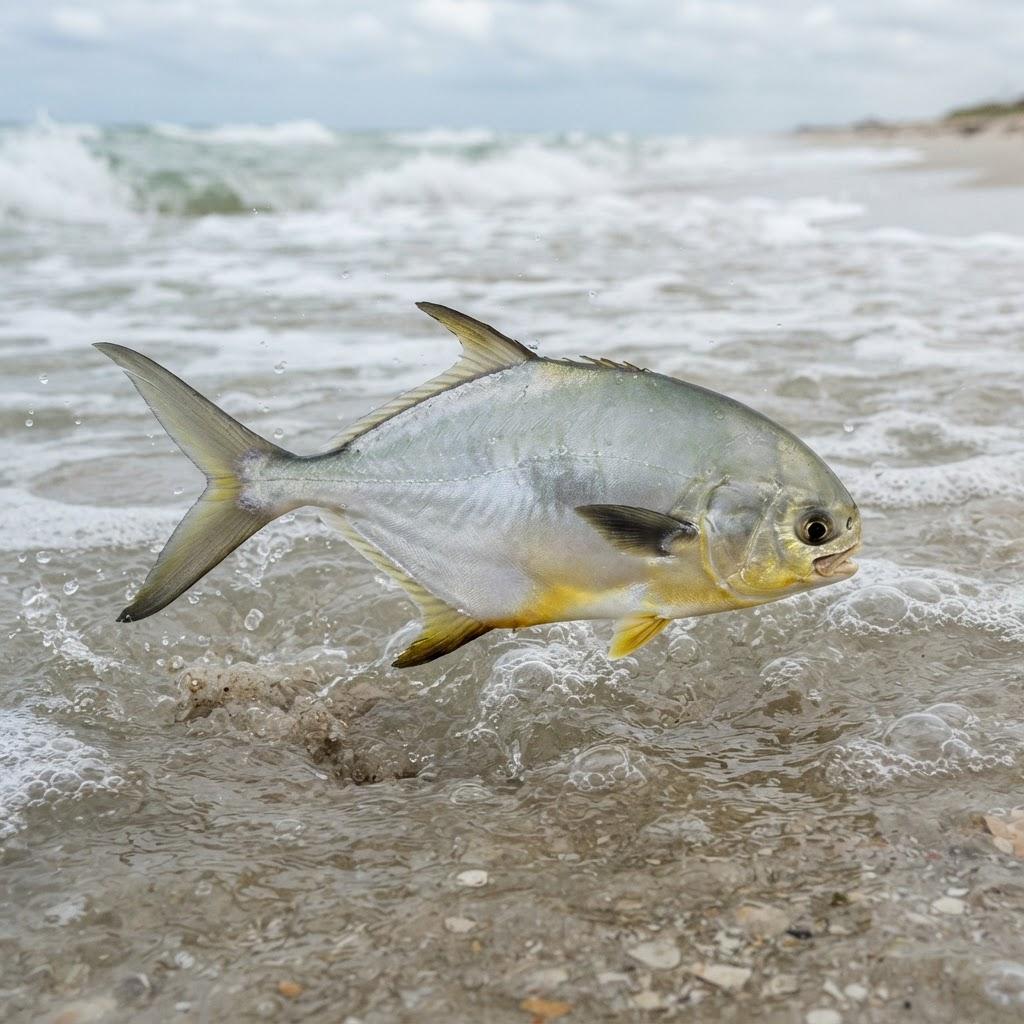
Imagine a fish that spent its entire youth studying at the School of Stealth and somehow graduated as a high-society socialite. That is the Permit. This isn't your average bottom-feeder looking for a scrap of seaweed; the Permit is the celebrity of the sandy flats, shimmering like a freshly polished hubcap in the sun. With a body shaped like a giant, metallic dinner plate tipped on its side, it is designed to slice through the shallowest water with the grace of a professional ballroom dancer. If the ocean had a VIP club, the Permit would be the guy standing at the door deciding who gets in and who doesn't, usually looking down his nose—well, if he had a nose—at everything else. It has this unmistakable vibe of 'I am far too busy and important to be seen by you,' which is exactly why people spend thousands of dollars and countless hours trying to find one. It is a fish with an attitude problem, a stunning wardrobe, and a knack for disappearing just when things get interesting.
Weird Biological Superpowers Explained Simply
While other fish are busy evolving weird teeth or glowing in the dark, the Permit decided to specialize in the art of being invisible in plain sight. They possess a silvery, compressed body that acts like a biological mirror, reflecting the exact texture and color of the sandy bottom beneath them. But their real trick is a sensory superpower called the lateral line. Think of this as a super-sensitive radar system that runs down the side of their body, allowing them to detect the tiniest change in water pressure caused by a crab sneaking through the mud three feet away. It is essentially like having a built-in earthquake sensor that can pinpoint a snack's location even if the water is murky. They also have a jaw structure designed specifically for crushing hard shells, acting like a pair of high-powered bolt cutters disguised as a cute little mouth. They don't just eat; they systematically dismantle their prey with surgical precision, turning a tough crab dinner into an easy snack.
Absurd Self-Defense Mechanisms
If you are a Permit, your primary defense mechanism is basically just being incredibly suspicious of everything. These fish have developed an internal alarm system that would put the most expensive home security devices to shame. The moment they sense a threat, they do not just swim away; they go into a state of 'high-alert velocity,' rocketing across the flats in a blur of silver. They are masters of the 'spook,' a sudden, violent burst of speed that leaves a predator—or an unlucky fisherman—staring at an empty patch of water. They also tend to hang out in groups when they are young, using the 'many eyes' strategy to spot danger before it gets anywhere close. If one fish decides that a nearby shadow is a shark, the entire group vanishes in a synchronized maneuver that looks less like a fish school and more like a high-speed teleporter malfunction. It is genuinely infuriating for anyone trying to watch them, but undeniably effective for staying off the dinner plate.
Fish Drama and Gossip
The social life of a Permit is pure high-school cafeteria drama, just set in a salty, shallow-water environment. These fish are surprisingly cliquey, often found in small groups that seem to have a strict set of rules about who is cool enough to hang out with. They spend their days patrolling the flats like they are checking on their investment portfolios, constantly checking on each other's status. There is a lot of posturing involved—flaring their fins and showing off their impressive silver flanks—to signal who is the toughest in the group. If a new, slightly smaller fish tries to join the party, you can bet there is going to be some serious fin-shoving and territorial maneuvering. It is essentially a perpetual game of 'who is in charge today?' where the currency is access to the best crab-hunting grounds. They are the ultimate snobs of the reef edge, always looking for a better spot to lounge while making sure their neighbors know they are definitely in a superior position.
The "Wait, That's Real?!" Deep-Sea Oddities
While the Permit lives its life in the sun-drenched shallows, its cousins in the deep sea make the Permit look downright boring by comparison. Think of the Permit as the guy who wears a tuxedo to the beach, while deep-sea fish are the ones wearing neon-colored space suits and using their own bodies as giant glow sticks. Deep-sea creatures have to deal with crushing pressure that would turn a human into a pancake in seconds, whereas the Permit deals with sunburn and bird attacks. While the Permit relies on its eyes to spot a delicious shrimp in the sand, creatures in the midnight zone are literally farming their own light using bacteria that live inside them. It is a completely different world where the rules of physics seem to be written in crayon. Comparing the Permit to a deep-sea dragonfish is like comparing a luxury sedan to a submarine designed by a mad scientist; both are engineering marvels, but one is meant for the red carpet and the other is built for the apocalypse.
Myth Busting
There is a massive rumor floating around that Permit are impossible to catch because they are 'too smart.' Let's set the record straight: these fish aren't reading books on strategy or watching YouTube tutorials on how to dodge fishing lures. They are just incredibly cautious creatures that evolved to avoid anything that looks even remotely like a giant, hungry bird or a massive shark. When they refuse to eat your bait, it isn't because they are outsmarting you; it is because their senses are so finely tuned that they noticed your line in the water, which looked totally wrong in their environment. Another myth is that they stay in one spot their whole lives. Nonsense! Permit are travelers, constantly moving along the coast like snowbirds heading south for the winter. They are driven by hunger and temperature, not by a deep, intellectual desire to outwit the local anglers. They are just fish trying to survive, not tactical geniuses plotting to ruin your weekend.
Humorous Historical Tales or Folklore
Humanity has been obsessed with Permit since we first figured out how to cast a line into the ocean, but the stories often veer into the bizarre. Old legends among coastal sailors used to claim that the Permit was a 'lucky charm' fish, and that if you managed to catch one, you were destined for a streak of good fortune that would last until the next full moon. There are even tall tales about Permit having magical scales that could cure a fever if placed under the tongue, which, to be perfectly honest, sounds like a great way to end up with a very fishy-tasting fever and a throat full of slime. While these stories are clearly fabricated, they highlight just how much respect these fish have earned over the centuries. They aren't just fish; they are symbols of the challenge, the ones that got away, and the ghosts of the shallow flats that every fisherman chases to prove their own grit.
Underwater Love Stories and Bizarre Romances
The dating scene for a Permit is less about romantic candlelight dinners and more about massive, aquatic dance parties. When the time comes for reproduction, they head offshore to deeper, spawning grounds where the water temperature is just right for a fishy wedding. It is a spectacle of epic proportions: thousands of Permit gather together in a shimmering, silver frenzy. They don't have fancy pickup lines; instead, they rely on a display of synchronization that would make an Olympic synchronized swimming team look like a bunch of toddlers. By gathering in such massive numbers, they increase the odds that the next generation will actually make it, which is the ultimate goal when you are a fish. It is not romantic in the way we think, but there is something beautiful about this massive, silver wave of life coming together in the deep blue to ensure the future of the species. It is a high-stakes, underwater mixer where everyone is looking for a partner to pass on their genes.
Underwater Architecture and DIY Nesting
If you are looking for a fish that builds a little house or a fancy nursery, you have come to the wrong neighborhood. The Permit doesn't believe in the DIY movement; they are 'minimalist travelers' who think furniture is for suckers. They don't build nests, they don't dig holes, and they certainly aren't interior decorators. Instead, they release their eggs into the open ocean, leaving them to fend for themselves in the vast, wide blue. It might sound like terrible parenting, but when you produce thousands of tiny potential fish at once, you play the numbers game. Their 'architecture' is the open water itself—a fluid, ever-changing environment where stability is a weakness. By not being tied to a specific nest or territory, they remain mobile and flexible, which is a massive survival advantage in an ocean that changes its mind about where the food is every single day. They are the ultimate digital nomads of the sea, packing light and moving fast.
The Chaos of Raising Tiny Swimmers
Raising a baby Permit is absolute, unadulterated chaos. Once the eggs hatch, these tiny, transparent specks are basically floating snacks for every other creature in the ocean. They have no parental guidance, no 'how-to-survive' guide, and no one to teach them how to avoid the big, hungry predators. They are just tiny, drifting blobs of potential that have to grow up lightning-fast to stay alive. The odds are stacked heavily against them from day one; it is a brutal game of survival of the fittest. The ones that do manage to find their way to the safety of the shallow grass beds become 'miniature masters' of the flats, hiding from danger and growing their signature silver armor. The fact that any of them survive into adulthood is a testament to the sheer, stubborn resilience of the species. It is a harsh, messy, and remarkably successful way to ensure that the Permit lineage continues, even if it means sacrificing most of the team to get there.
How to Spot One & How It Is Doing
If you want to see a Permit in the wild, you need to head to the sandy flats and look for that unmistakable, shimmering flash of silver. They usually travel in small groups, so if you spot one, keep your eyes peeled for the rest of the crew. They are easily identified by their tall, slender, and sickle-shaped fins that often poke out of the water like little shark fins—don't panic, it is just a Permit doing its thing. As for their future, things are looking pretty good! They are currently listed as 'Least Concern,' which is scientist-speak for 'they are doing just fine, thank you very much.' They are resilient, adaptable, and smart enough to keep their numbers healthy. To help them stay that way, just keep our beaches and flats clean. If you see plastic on the sand, pick it up! A clean habitat means a happy Permit, and a happy Permit means they will stick around for generations to come. Be a good guest in their home, and you might just get to see one of these silver ghosts in action.