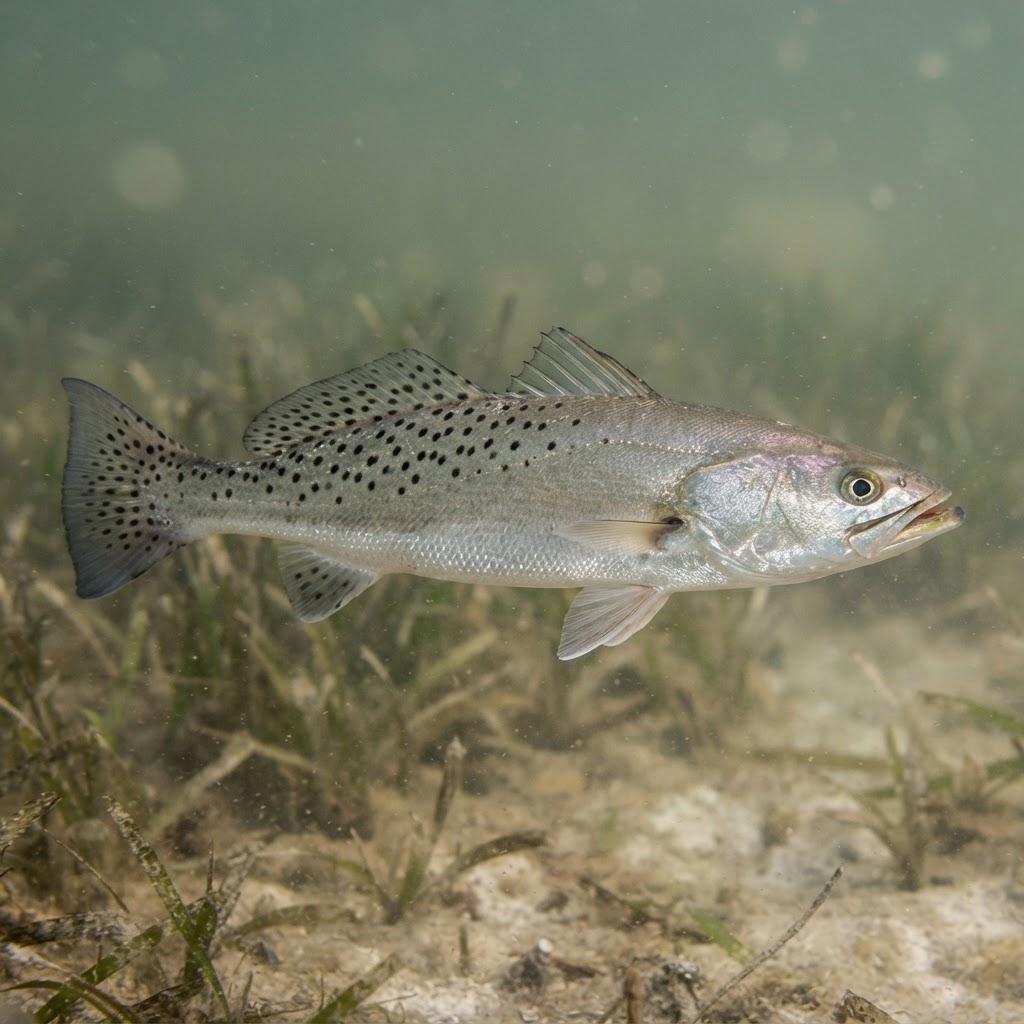
Cynoscion nebulosus
Spotted Sea Trout
Meet the Spotted Sea Trout, the undisputed celebrity of the salt marshes. With its stylish polka-dot pattern and an attitude that demands respect, this fish is the ultimate cool kid of the coast.
Meet the Fish
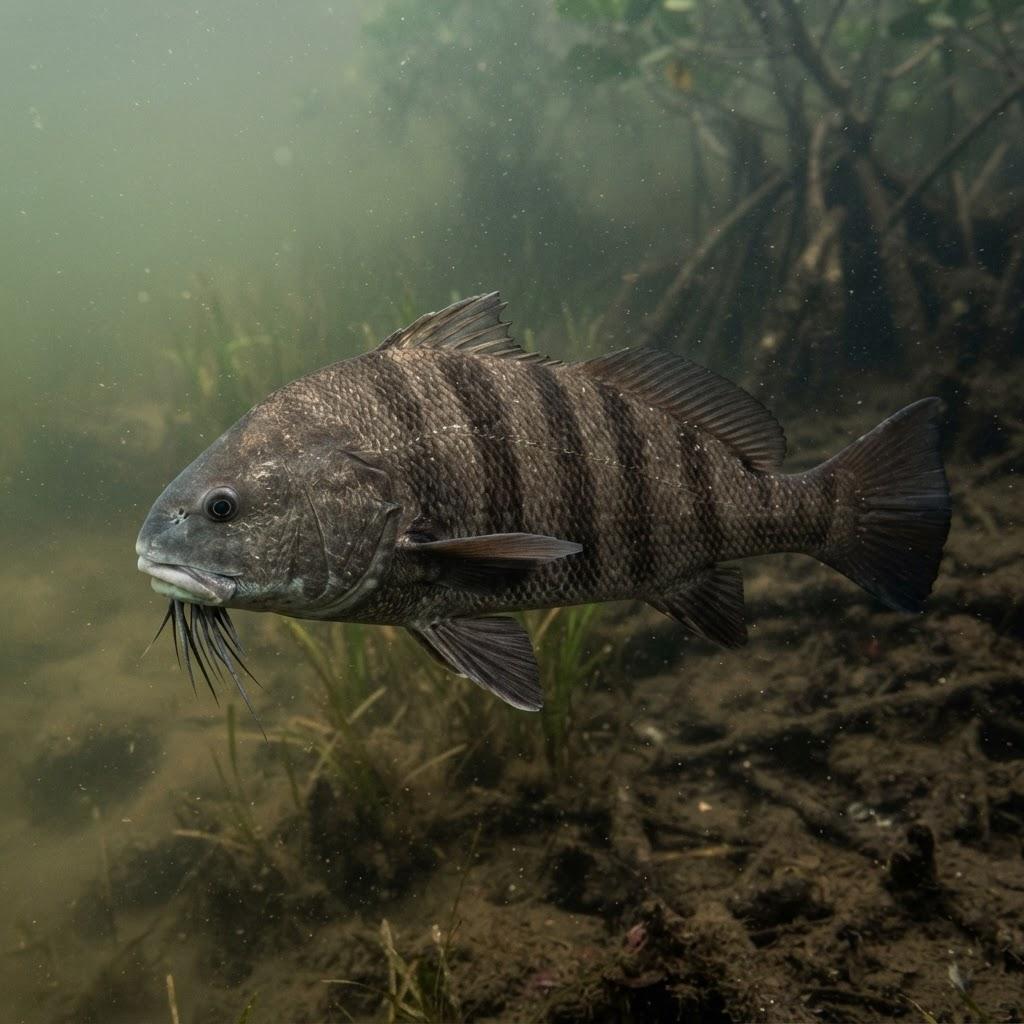
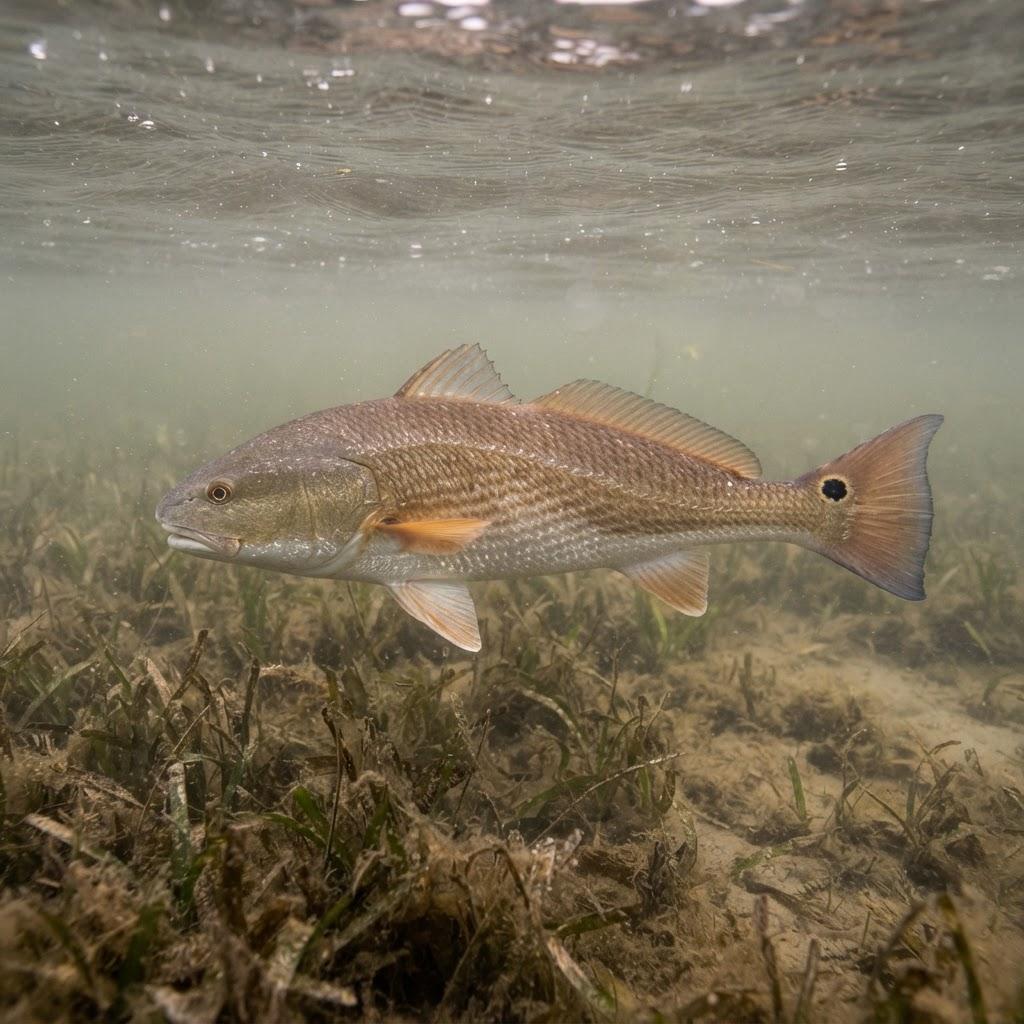
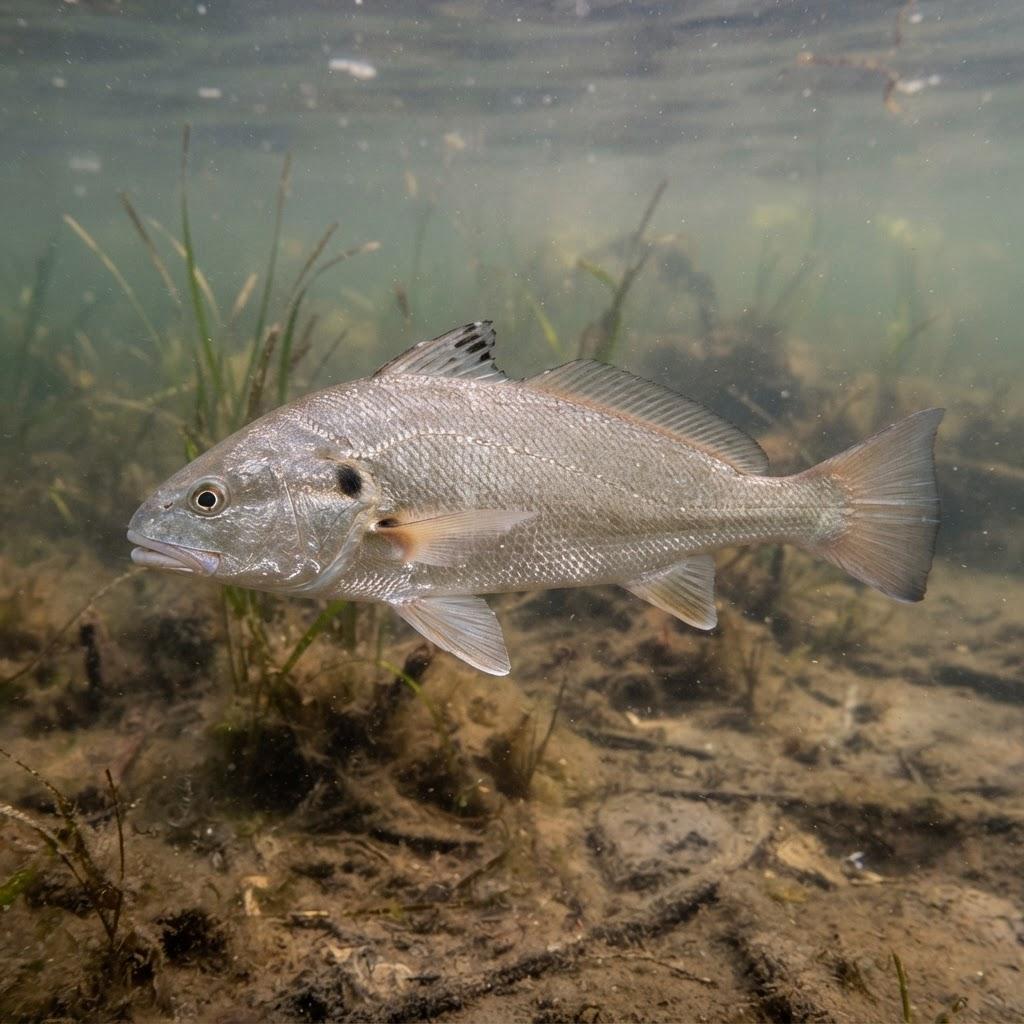
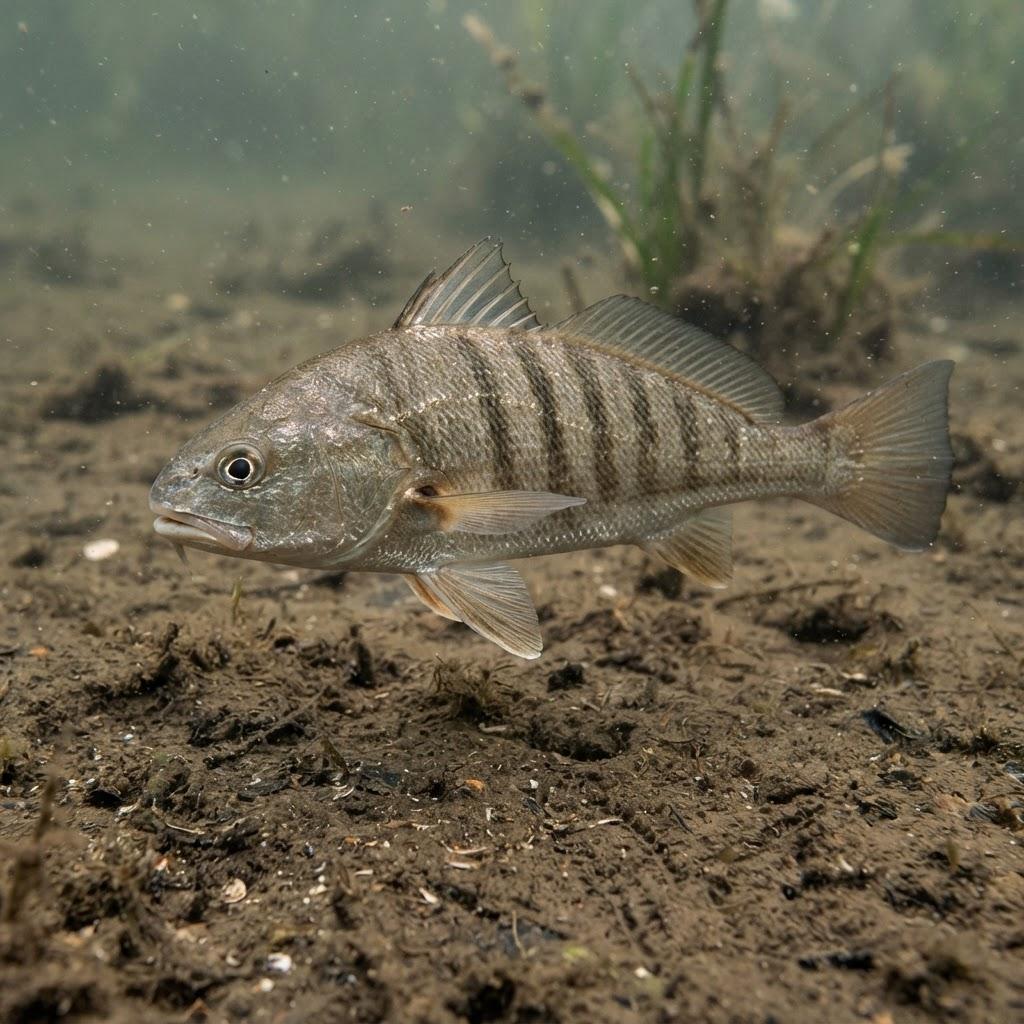
Imagine a fish that spent its entire morning at the local underwater salon getting a full makeover complete with airbrushed spots and a sleek, silvery-grey paint job. Meet the Spotted Sea Trout, or as the locals might call it, the speck, the spotted weakfish, or the diva of the seagrass flats. This isn't just another fish in the sea; it is a predator with a personality that suggests it belongs in a high-end action flick. With a lower jaw that juts out just enough to look perpetually unimpressed by everything around it, the Spotted Sea Trout commands the shallow waters of the Atlantic coast and the Gulf of Mexico like it owns the place. It is slender, fast, and sports a series of distinct black spots scattered across its back like ink droplets on a painter's canvas. While it is technically a member of the drum family, it does not spend its time lounging around a campfire. Instead, this fish is a lean, mean, snacking machine that seems to take great pleasure in patrolling the tidal flats while looking absolutely fabulous. It is not exactly the biggest fish in the ocean, but it has the charisma of a shark three times its size. If fish had high school yearbooks, this one would definitely be voted 'Most Likely to Start a Fight at Prom.' Whether it is darting through patches of turtle grass or hanging out in the darker, cooler waters of a channel, the Spotted Sea Trout carries itself with a level of confidence that is honestly pretty inspiring. It knows it is beautiful, it knows it is fast, and it knows exactly where the best shrimp are hiding.
Weird Biological Superpowers Explained Simply
If you think the Spotted Sea Trout is just a pretty face, you are in for a shock—literally. This fish belongs to the Sciaenidae family, also known as the 'drum' family, and for a very good reason. They have a secret sonic superpower that makes them sound like an underwater heavy metal band during a sound check. They possess special muscles called sonic muscles that vibrate against their swim bladder, which is basically an internal air-filled balloon used for buoyancy. By drumming these muscles against the bladder, they produce a low-frequency croaking or thumping sound. Think of it like a biological drum kit built directly into their torso. It is a fantastic way to communicate, find a mate, or tell other fish to stay out of their favorite hunting territory. Beyond the percussion skills, they have highly refined sensory systems. Their lateral line—that dark, mysterious stripe running down their sides—is essentially a long-distance radar system. It detects minute pressure changes in the water, allowing the trout to feel a shrimp's frantic fin-flutter from several yards away. They don't just see the world; they feel the very pulse of the water around them. It is essentially the underwater equivalent of having superpowers that allow you to sense exactly where your pizza delivery driver is without looking out the window. This combination of sonic drumming and hyper-sensitive pressure sensing makes them the ultimate stealthy, loud-mouthed stalkers of the seagrass meadow.
Absurd Self-Defense Mechanisms
When you are a tasty, bite-sized snack for larger predators like dolphins, sharks, or grumpy old barracudas, you have to be ready to run at a moment's notice. The Spotted Sea Trout relies on a classic 'hit-and-run' strategy that would make a getaway driver proud. They are built for explosive bursts of speed. Their muscular bodies are essentially coiled springs that can launch them from a resting position into a blur of motion before a predator can even process what is happening. If speed doesn't work, they use their environment as a cloak of invisibility. Those lovely black spots on their back are not just for aesthetics; they are a masterclass in camouflage. When sunlight filters through the surface of the water and dances across the seagrass, it creates a pattern of shadows and highlights that looks exactly like the back of a Spotted Sea Trout. By hanging out in these light-dappled zones, they effectively vanish into the background, making them look like part of the scenery rather than a delicious treat. It is a game of 'Where's Waldo?' played for keeps. Should they find themselves cornered, they have been known to use their aggressive posture and that iconic 'drumming' sound to startle attackers. It is like the fish version of shouting 'Hey, back off!' and then sprinting down an alleyway. It is not the most high-tech defense, but for an inhabitant of the shallow flats, it is usually just enough to survive another day of eating lunch instead of being it.
Fish Drama and Gossip
The social life of a Spotted Sea Trout is essentially a non-stop episode of an underwater soap opera. These fish are not exactly the 'join a big school and swim in perfect harmony' type; they are more like the 'I'm the king of this three-foot radius of sand' type. They are highly territorial, and the disputes that break out over prime real estate are legendary. Imagine a bunch of moody teenagers fighting over the best seat in the cafeteria. One trout sees a nice, shrimp-filled channel, and another one decides they want it. What follows is a display of puffed-out gills, aggressive posturing, and perhaps a series of low-frequency drumming grunts that act as a verbal 'get out of my house' warning. There is also plenty of gossip, though it mostly involves who is eating where. If a big school of mullet swims through, the trout will put aside their petty squabbles and form temporary alliances to engage in a feeding frenzy. It is a classic 'the enemy of my enemy is my friend' situation. They are constantly sizing each other up, checking out the competition, and making sure that no other fish dares to think they own the local seagrass patch. It is dramatic, it is petty, and it is absolutely essential for keeping their population spread out across the best hunting grounds in the estuary.
The "Wait, That's Real?!" Deep-Sea Oddities
While the Spotted Sea Trout enjoys the sun-kissed life of shallow flats, its distant cousins down in the deep-sea abyss are living in an entirely different reality. Down in the twilight zone, where the pressure is enough to crush a submarine, creatures don't just swim; they perform. There are fish like the anglerfish, which carries its own glowing fishing pole, or the barreleye fish, which has a transparent, liquid-filled head that lets you see its glowing green eyes looking straight up at the surface. Compared to these deep-sea aliens, our Spotted Sea Trout seems almost normal. But don't let the simplicity fool you; the shallow water environment is just as competitive as the deep. While deep-sea creatures focus on producing light to find mates or lure food in the pitch black, the Spotted Sea Trout relies on the clarity of the water and the camouflage of the weeds. Both environments share the same fundamental rule: eat or be eaten. Whether you are living in a neon-lit, high-pressure nightmare zone or a shallow, grassy suburban marsh, the basic biology remains a constant, impressive feat of evolution. The Spotted Sea Trout might not be able to light up like a disco ball, but it has mastered the art of being a silent, lethal ghost in the grass, which is arguably just as cool as any bioluminescent parlor trick.
Myth Busting
There is a long-standing myth among amateur anglers that Spotted Sea Trout are just mindless eating machines that will bite anything thrown into the water. This is a massive insult to their intelligence. Research has shown that these fish are actually quite picky eaters. They have preferences for specific types of prey based on the time of day, the tide, and the water temperature. They are not mindless; they are tactical. Another common myth is that they are constantly roaming around the ocean. In reality, many trout populations are homebodies. They stick to the same general stretch of estuary for much of their lives, knowing every dip in the sand and every patch of grass like the back of their fins. They are not wandering tourists; they are the permanent residents. Finally, let’s bust the idea that they are purely visual hunters. While they do look for food, they are just as reliant on their vibration-sensing lateral line. You could throw the most vibrant, life-like lure at a trout, but if it doesn't move with the right rhythm—the rhythm of a struggling, injured shrimp—they will ignore it completely. They are the critics of the ocean, and they have very high standards for what they are willing to put in their mouths.
Humorous Historical Tales or Folklore
Folklore surrounding the drum family is as old as the sea itself. In various coastal regions, the rhythmic drumming sounds made by trout and their cousins were once mistaken for everything from underwater monsters to the ghosts of sunken sailors. There are old fishermen's tales about boats being 'haunted' because the hull would start humming in the middle of the night, leaving the crew convinced they had offended some kind of aquatic spirit. In reality, they had just anchored over a very active spawning school of trout chatting away. These legends provided a delightful amount of drama to coastal life, turning a standard fishing trip into a potential supernatural encounter. There are also old, slightly ridiculous laws and beliefs from the early 20th century regarding 'trout wars,' where local factions would argue over which bait was the most 'gentlemanly' way to catch them. The idea that catching a fish should be subject to a code of etiquette is quite amusing, especially given that the trout itself is essentially a rowdy, aggressive bandit. These stories highlight how much this specific fish has been a part of human history along the coast, serving as both a source of food and a constant source of wonder and confusion for everyone with a fishing rod and an active imagination.
Underwater Love Stories and Bizarre Romances
When love is in the air, or rather, in the water, the Spotted Sea Trout really knows how to set the mood. Spawning season is a full-blown romantic production. The males, who usually spend their time being solitary tough guys, transform into melodic Casanovas. They gather in specific areas and start their famous drumming chorus. It is not just a random noise; it is a synchronized rhythmic performance meant to signal their fitness and dominance. Imagine a giant, underwater rave where the only music is a low, thumping base beat. Females swim through this sonic landscape, listening for the most impressive, robust-sounding males. The louder and more rhythmic the drum, the more desirable the male appears. It is the fish equivalent of a romantic serenade, but instead of a guitar, they are using their internal organs to vibrate the entire water column. The drama doesn't stop there; once the female selects her partner, the actual egg-laying process is a frantic, high-speed dash through the open water. It is a whirlwind romance that lasts for a few intense seconds before the two go their separate ways, having successfully passed on their genetic legacy to the next generation of spotted heartbreakers.
Underwater Architecture and DIY Nesting
While some fish are master architects, painstakingly building intricate sand castles or cleaning pebbles for days on end, the Spotted Sea Trout takes a more 'minimalist-chic' approach to parenting. They don't build nests in the traditional sense. Instead, they rely on the currents to do the heavy lifting for them. They scatter their eggs in areas with just the right amount of tidal flow, ensuring that the tiny, helpless eggs are kept oxygenated and swept safely into the protective cover of the seagrass beds. This is their version of urban planning. By choosing specific inlets and grass beds that act as natural nurseries, they are essentially picking the best gated community for their offspring to grow up in. It is an intelligent strategy that removes the need for physical construction but requires an incredible amount of knowledge about the local topography and water movement. They are like real estate experts who know exactly which neighborhood has the best schools and the lowest crime rates. They don't need a house when they can utilize the entire geography of the marsh to keep their children safe until they are big enough to join the ranks of the spotted elite.
The Chaos of Raising Tiny Swimmers
Raising a brood of tiny Spotted Sea Trout is less like a peaceful nature documentary and more like a chaotic action sequence in a summer blockbuster. Once the eggs hatch, the tiny fry are basically just floating morsels for everything in the water that has a mouth. They are incredibly vulnerable. They spend their early days hiding deep within the thick, tangled blades of seagrass, which serves as a giant, green fortress against hungry predators. This is their 'toddler' phase, where they learn the ropes of survival by eating microscopic plankton and trying not to get eaten by anything that swims by. The mortality rate is staggering—thousands of eggs are laid, but only a small fraction ever make it to adulthood. It is a numbers game, and the strategy is to flood the zone with so many fry that the predators simply can't eat them all. It sounds cruel, but in the world of the estuary, it is the only way to ensure the species continues. Watching a young trout grow from a tiny, transparent speck into a predator with its signature spots is a journey of epic proportions. They go from being the bottom of the food chain to the local king of the marsh, and they do it entirely on their own.
How to Spot One & How It Is Doing
If you want to spot a Spotted Sea Trout, you need to channel your inner detective. Look for calm, shallow waters with plenty of green seagrass—if you see birds diving or shrimp jumping, you are in the right neighborhood. Keep an eye out for that silvery-grey flash as they dart through the water. They are most active at dawn and dusk, so bring a cup of coffee and some patience. As for how they are doing, they are currently sitting pretty. Their populations are generally healthy, thanks to smarter fishing regulations and habitat restoration projects that keep our coastal estuaries clean and lush. They aren't in danger of vanishing, but they do need a clean home. You can help by supporting local organizations that protect seagrass and by being mindful of how you fish—always practice 'catch and release' if you don't plan on eating them, and make sure to take your trash home. Seeing a Spotted Sea Trout in the wild is a reminder that nature is thriving right under our noses, provided we give it the space it needs to be the cool, spotty, loud-mouthed celebrity of the marsh. Next time you are at the coast, pay attention to the water; you might just hear them drumming.