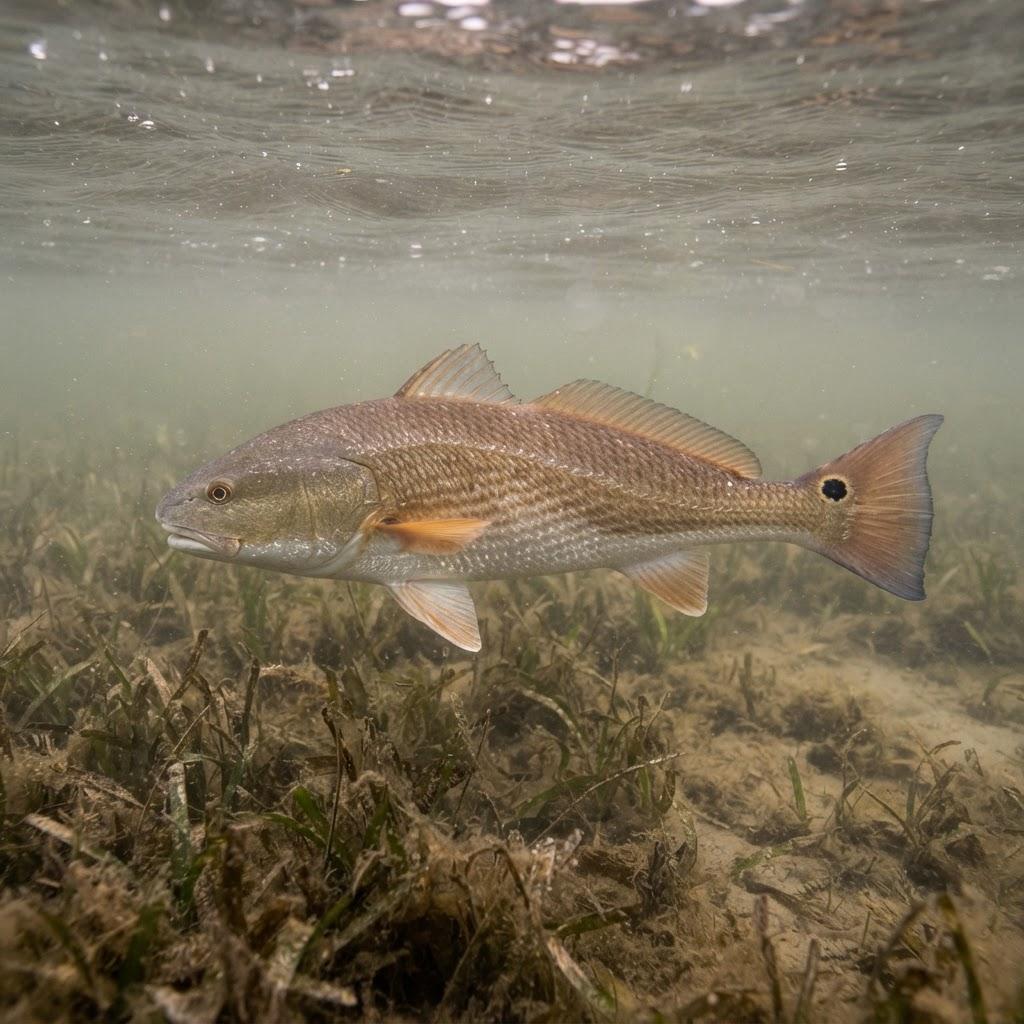
Sciaenops ocellatus
Red Drum (Redfish)
Meet the Red Drum, the undisputed heavy-weight champion of the coastal shallows. Famous for their iconic 'bullseye' tail spots and the ability to literally drum up a party, these golden-hued brawlers are the coolest fish you will ever encounter in the surf.
Meet the Fish
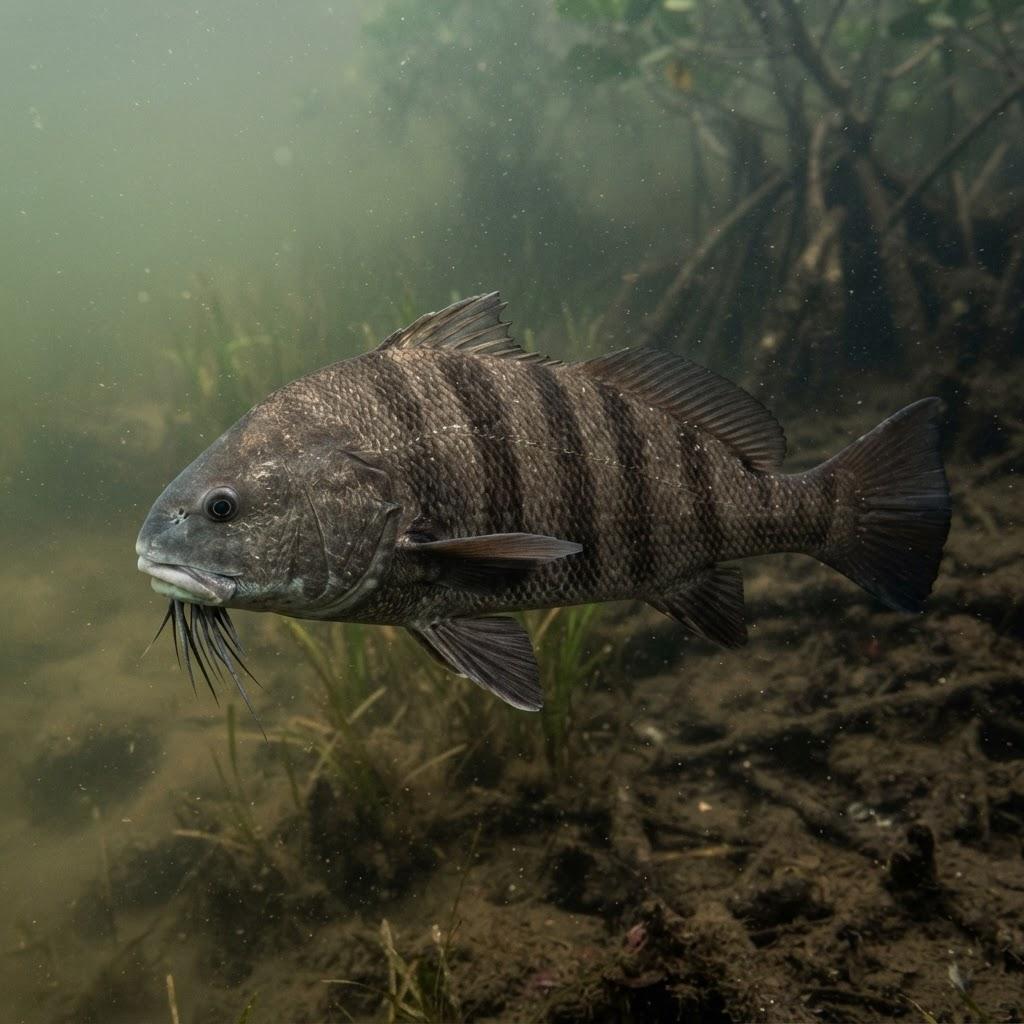
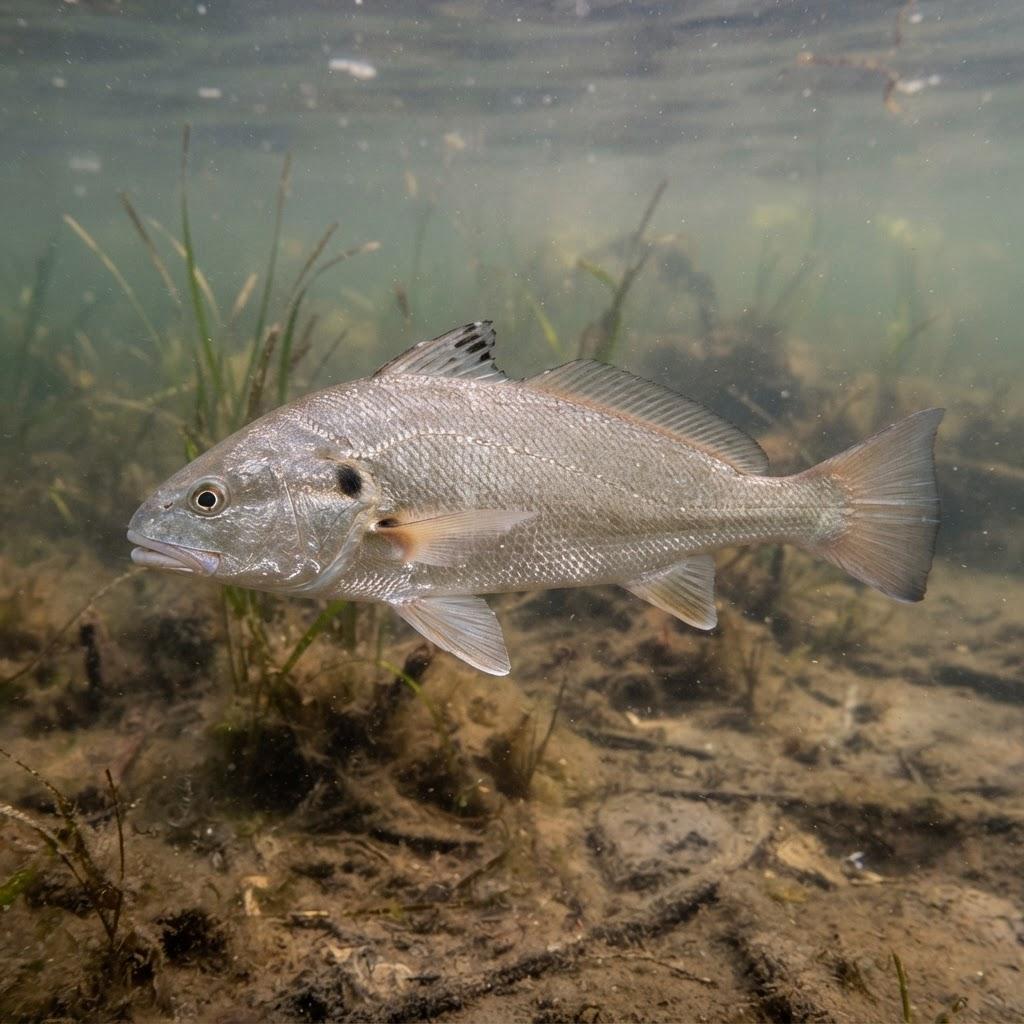
Imagine a fish that struts through the shallow, murky water like it owns the place, wearing a flashy copper-gold suit of armor and a single, stylish black spot near its tail that screams 'I am the main character.' This is the Red Drum, a creature that doesn't just swim; it patrols with the confidence of a seasoned bouncer at a high-end club. It is the kind of fish that walks into a sandbar and suddenly everyone else moves out of the way. With a slightly downturned mouth that gives it a perpetual look of someone trying to remember if they left the stove on, the Red Drum is as hilarious as it is imposing. It is not just another pretty face in the sea; it is a creature built for power, grit, and living in the chaotic, messy zones where rivers dump into the ocean. If Hollywood needed to cast a fish to play a tough-as-nails detective who plays by his own rules, the Red Drum would get the role every single time. It is rugged, it is stylish, and it has absolutely no time for your nonsense.
Weird Biological Superpowers Explained Simply
While other fish are busy evolving glow-in-the-dark eyes or suction cups, the Red Drum decided to go into the music industry. These fish possess a unique biological drumming apparatus that sounds exactly like a muffled motorcycle engine idling in your neighbor's driveway. Inside their body, they have specialized muscles called sonic muscles that vibrate against their swim bladder, which acts like a built-in bass drum. When they want to communicate or get a little romantic, they basically turn themselves into a living subwoofer. It is a party trick that puts every other fish to shame. Imagine trying to explain to your friends that you found a fish that can literally thump the water with its own insides. It is not just random noise, either; scientists believe they use these rhythmic thumps to coordinate group activities or find partners in the murky gloom of the marsh. It is essentially the underwater equivalent of texting your friends, except your entire body vibrates to send the message. This biological percussion section is what gives them their name, and honestly, it is the coolest party trick in the ocean.
Absurd Self-Defense Mechanisms
If you are a Red Drum living in a shallow marsh, your biggest problem is getting eaten by something bigger, meaner, and faster than you. To counter this, the Red Drum uses a strategy best described as 'the disappearing act of the muddy abyss.' Because they live in water that is often about as clear as a cup of coffee, they rely heavily on their ability to blend in with the bottom. When things get heated, they don't hide behind a rock; they essentially become part of the scenery. Their copper-colored scales are perfectly evolved to mimic the tannin-stained, tea-colored water of the estuaries. They also have an incredible ability to bolt into the smallest, shallowest puddles imaginable, leaving predators scratching their heads while the Drum casually swims away in three inches of water. It is a high-speed game of hide-and-seek where the fish is basically playing in the sandbox while the shark is left confused on the sidewalk. Their tough, armor-like scales provide a decent shield, but their real defense is just being too fast, too smart, and too well-hidden for anything to catch them without a map and a flashlight.
Fish Drama and Gossip
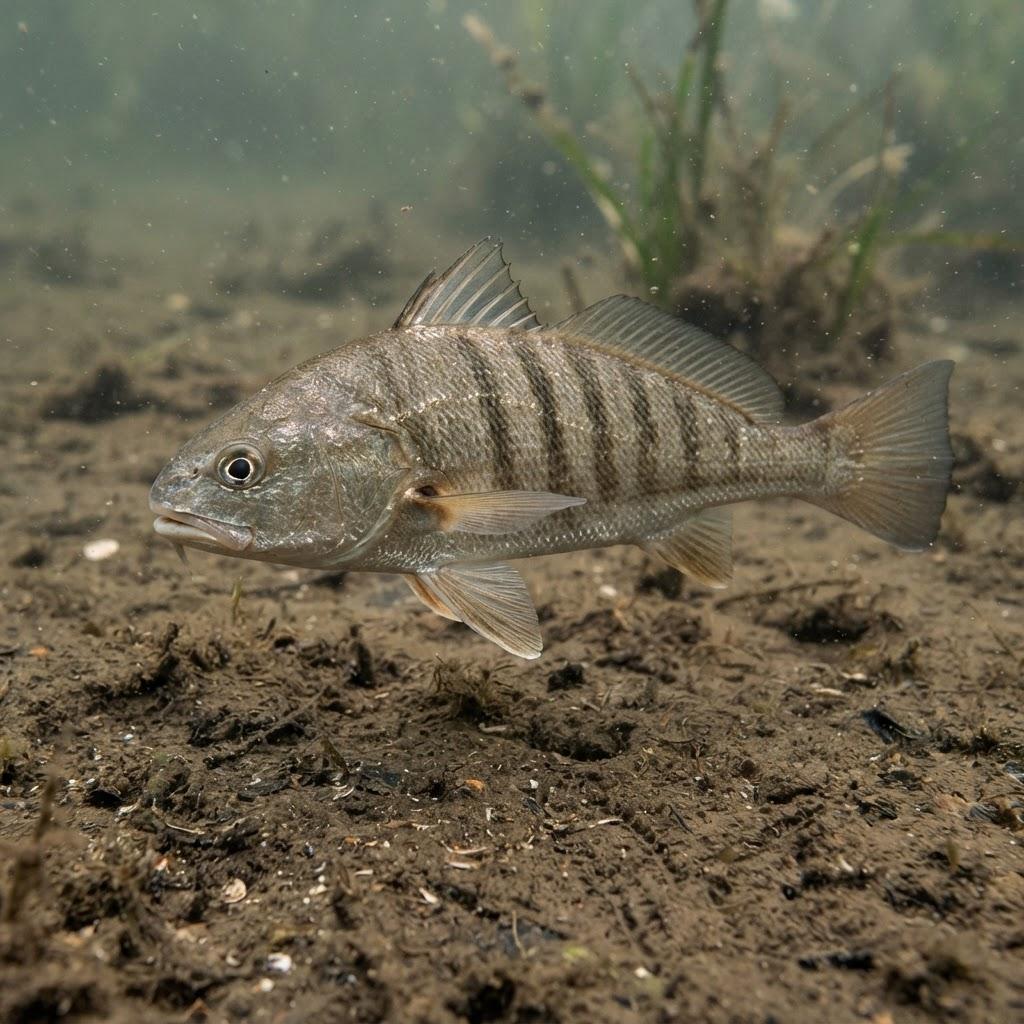
If you could eavesdrop on the local estuary, you would find that Red Drum social life is basically a soap opera set in a mud puddle. These fish are surprisingly social, hanging out in schools that operate like a high-intensity neighborhood watch. There is constant bickering over the best spots to feed, especially when the tide starts to turn and the shrimp buffet begins to move. Younger 'puppy drum' are known for their reckless, youthful energy, darting around in chaotic groups like teenagers at a mall, while the older 'bull reds' prefer to lurk in deeper channels, acting like the cynical, retired veterans of the group. The social hierarchy is intense, with the biggest, loudest drummers getting the most attention. You will see them posturing and vibrating, literally trying to out-drum each other for dominance. It is the underwater version of two guys at a gym trying to lift the heaviest weight to see who is the alpha. The gossip is rampant, the competition is fierce, and if you listen closely, you can hear them talking trash through the sediment.
The "Wait, That's Real?!" Deep-Sea Oddities
The Red Drum lives in the shallow end of the pool, but it is deeply aware that its cousins in the deep sea are living in a sci-fi horror movie. While the Red Drum is dealing with sunburns and tide changes, deep-sea dwellers like the Barreleye fish have transparent heads that let you see their internal navigation systems. The Red Drum is a creature of the sunlight, a golden beacon in the shallows, which makes it the polar opposite of the bioluminescent monsters that thrive in the crushing, eternal darkness of the abyss. If you took a Red Drum and dropped it into the Midnight Zone, it would be like bringing a beachgoer to a gothic rave. The Drum doesn't need to generate its own neon lights or develop a fishing pole growing out of its head to attract prey because it has something even better: it has speed, senses, and the ability to thrive in the chaotic, nutrient-rich soup of the coast. Comparing the two is like comparing a golden retriever to an alien lifeform from a distant galaxy; both are amazing, but one is much more likely to be found hanging out at the local dock.
Myth Busting
There is a persistent myth that if you catch a Red Drum and let it go, it will hold a grudge and avoid your fishing spot forever. People love to personify these fish as if they have the memory of an elephant and the spite of a jilted lover. In reality, while fish are much smarter than the 'three-second memory' trope suggests, they aren't exactly keeping a blacklist of local anglers. They are motivated by food, tide, and the need to not be eaten. If a Red Drum keeps showing up in the same spot, it is not because it enjoys the company of the person holding the rod; it is because the buffet is open. Another myth is that they are slow, sluggish fish because they live in shallow water. If you have ever had a Bull Red take a lure and strip a hundred yards of line off your reel in thirty seconds, you know exactly how false that is. They are sprinters, marathon runners, and heavy lifters all rolled into one, and they certainly don't care about the rumors floating around the fishing community.
Humorous Historical Tales or Folklore
History hasn't always been kind to the Red Drum, though it has certainly been fascinated by them. In the old days of the Atlantic coast, the Red Drum was viewed as the 'fish of the people.' While the fancy high-society crowd was chasing marlin and tuna, the locals were bringing home the Red Drum to feed their families. There are legends from the Southern marshes about how the spots on their tails were 'fingerprints of the gods,' placed there to help the fish know which way to swim during a storm. Of course, that is just a charming bit of local folklore to explain why a fish would evolve a giant bullseye on its butt. There is even a weird bit of history involving a 'Red Drum mania' in the late 1980s when a certain blackened fish recipe became so popular that restaurants were essentially wiping out entire populations just to keep up with the trend. It took a while, but people finally realized that you can't eat your way through a population without consequences, leading to the strict regulations that keep these guys thriving today.
Underwater Love Stories and Bizarre Romances
When a Red Drum decides it is time to find 'the one,' it turns into a massive, aquatic block party. They don't do subtle, and they certainly don't do quiet. During the spawning season, they migrate toward the inlets and coastal passes, congregating in massive schools that essentially turn into a giant, pulsating dance floor. The males puff up, vibrate their sonic muscles, and produce a chorus of deep, low-frequency thumping that can be felt through the hull of a boat. It is a deafening, underwater serenade meant to impress the ladies. The females, meanwhile, are just looking for the strongest, loudest, and healthiest partners to ensure their offspring have a fighting chance. It is a dramatic, noisy display of pure confidence. Once the pair is formed, the actual spawning happens in a flurry of movement and chaos, with eggs being released into the current to find their way. There is no long-term commitment here, just a wild night in the marsh and a lot of loud, vibrating music.
Underwater Architecture and DIY Nesting
Red Drum aren't the types to build elaborate sandcastles or hidden fortresses like some of their territorial neighbors. They are the nomads of the coastline. Instead of spending time building a house, they focus all their energy on finding the perfect current. They know that in the ocean, real estate is all about location, location, location. Their version of 'nesting' is simply finding a spot where the tide will whisk their eggs away from the hungry mouths of predators and into the safety of the backwaters. It is less about architecture and more about physics. They spend their energy on mastering the flow of the water, utilizing the natural tides as a delivery service for their young. Why build a house when you can just move to the nicest neighborhood in the inlet? They are the ultimate minimalists, valuing mobility and timing over material possessions, which is probably why they have survived so long in such a dynamic, ever-changing environment.
The Chaos of Raising Tiny Swimmers
If you think parenting is hard, try being a Red Drum. Once the eggs are fertilized, the parents pretty much wash their hands of the whole situation. They release thousands, sometimes millions, of tiny eggs into the current and hope for the best. It is a numbers game, and the 'best' in this scenario means 'maybe a few of you will survive.' The baby drum, or fry, are essentially tiny, transparent specks floating in a world filled with things that want to eat them. As they grow, they instinctively navigate toward the safety of the salt marshes, which act as a massive, green nursery filled with grass and protection. It is a brutal, high-stakes game of survival where the ones who don't get eaten by crabs or birds grow up to be the next generation of drum-thumping monsters. They don't have a daycare, they don't have a lunch box, and they certainly don't have a parent to drive them to school; they have instincts, speed, and the grace of the current.
How to Spot One & How It Is Doing
Spotting a Red Drum is like looking for a golden coin in a mud-filled fountain. Look for the copper-bronze glint in shallow, grassy water, especially near oyster bars or docks. If you see a tail poking out of the water like a periscope, you have found one. They are hardy, tough creatures, and thanks to some really smart conservation efforts, their populations are doing quite well. They are considered a success story in the world of marine management, showing that if we give nature a chance, it bounces back with incredible force. To help keep them going, the best thing you can do is support sustainable fishing practices and keep our coastal estuaries clean. Don't dump trash, respect the marsh grasses, and if you are out fishing, practice 'catch and release' with care to keep the big breeders in the water. We want these drum-playing brawlers to keep prowling our coastlines for generations to come, thumping out their bass-heavy beats for everyone to hear.