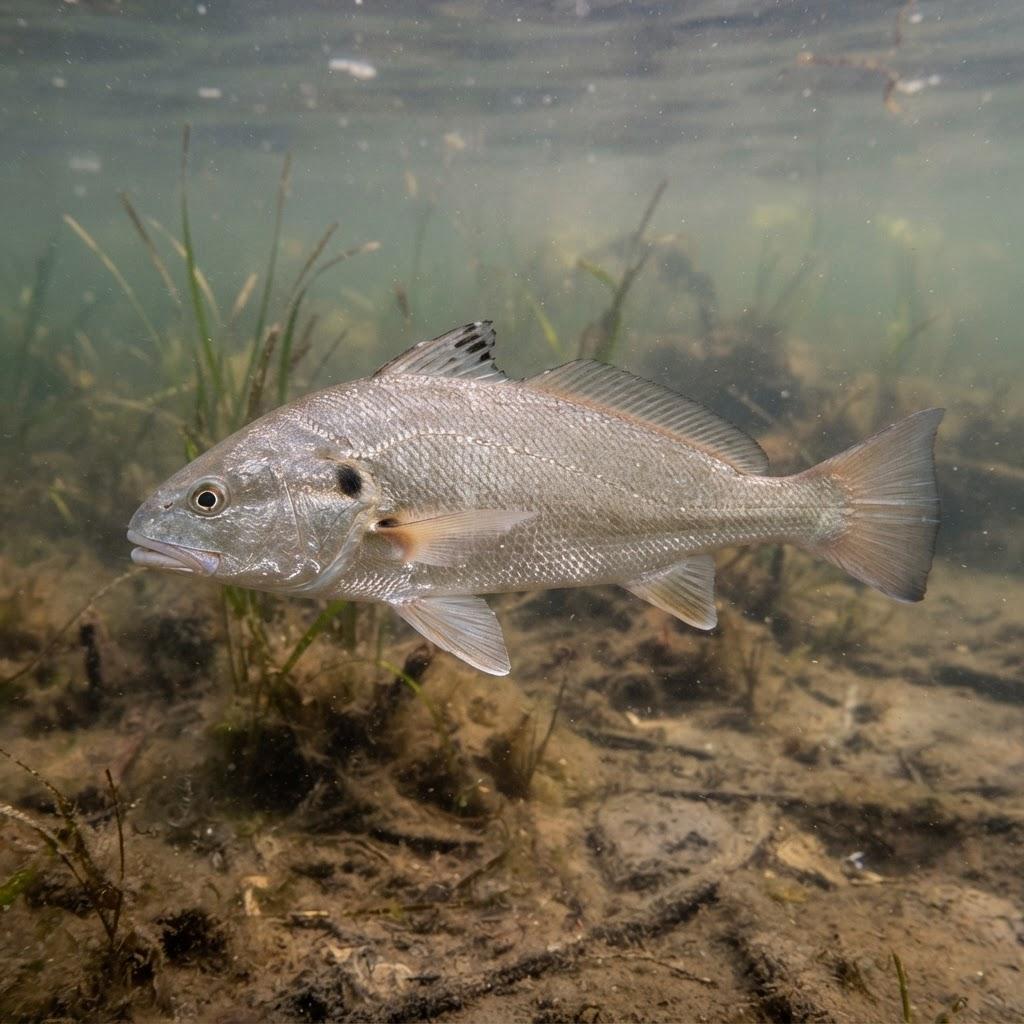
Leiostomus xanthurus
Spot
Meet the Spot, the ocean's most talented drummer who uses its own swim bladder as a private concert hall. This metallic-scaled wonder is the life of the estuarine party and a favorite for anglers and nature lovers alike.
Meet the Fish
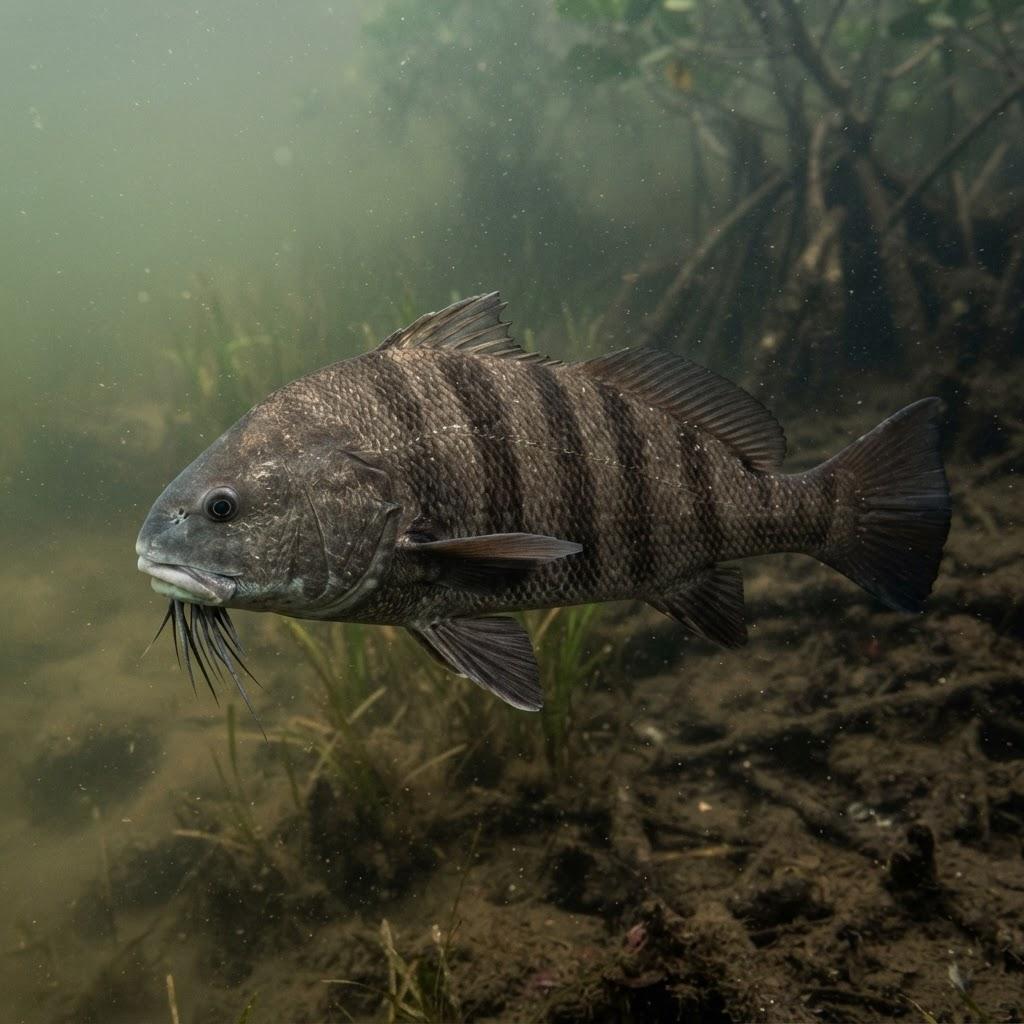
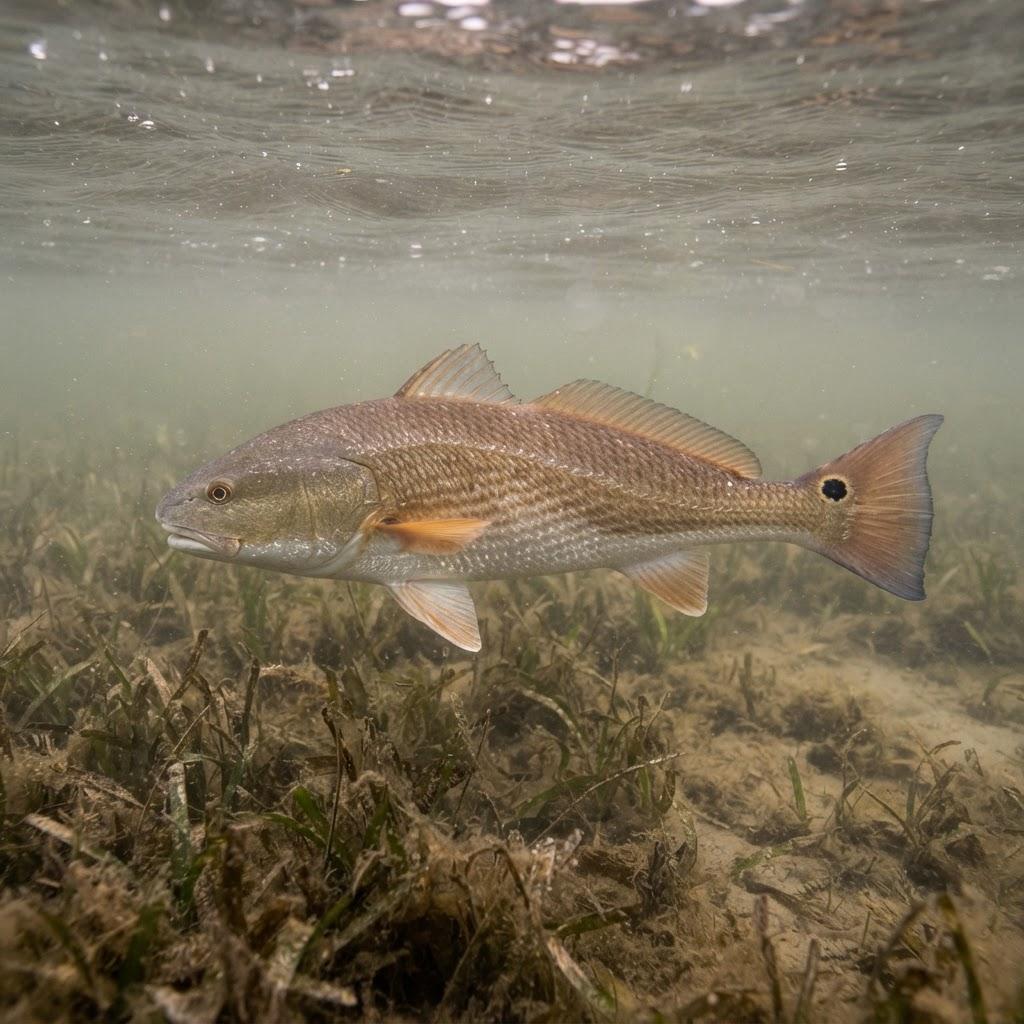
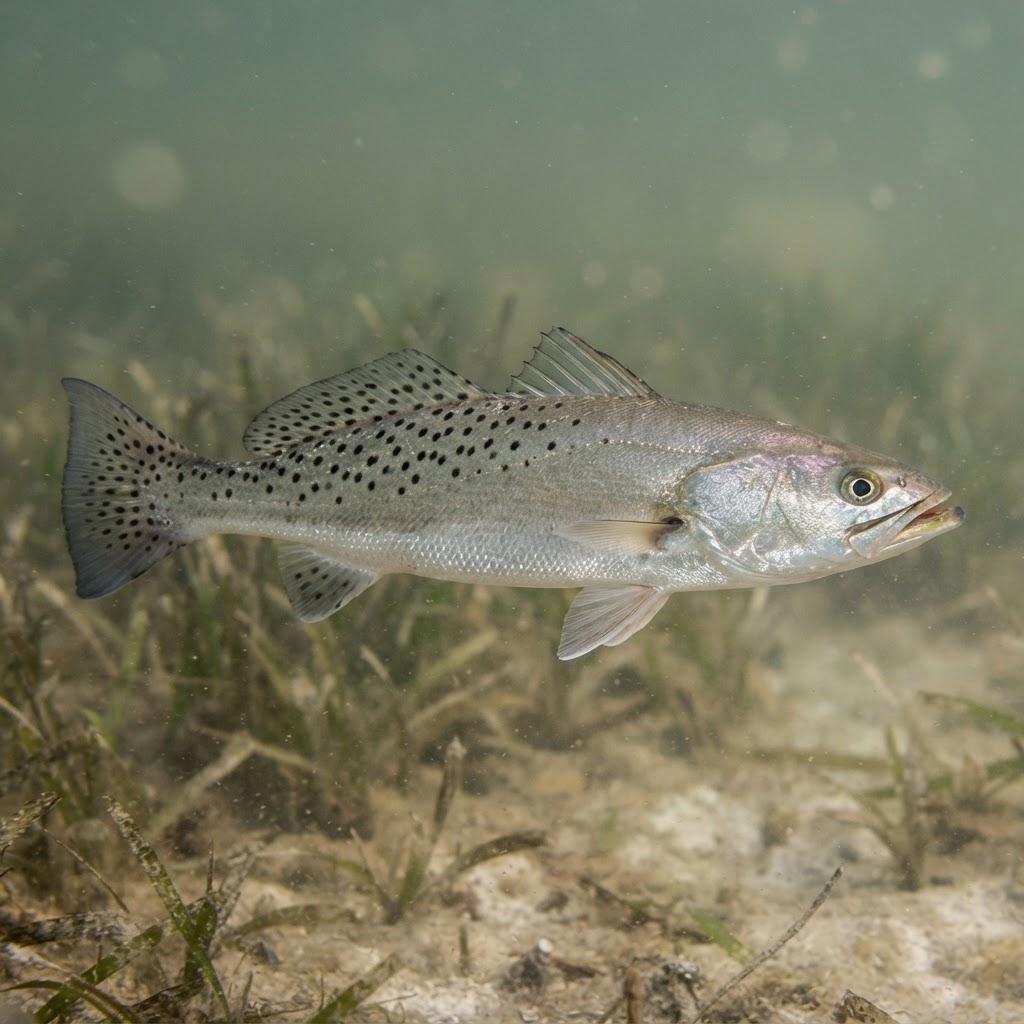
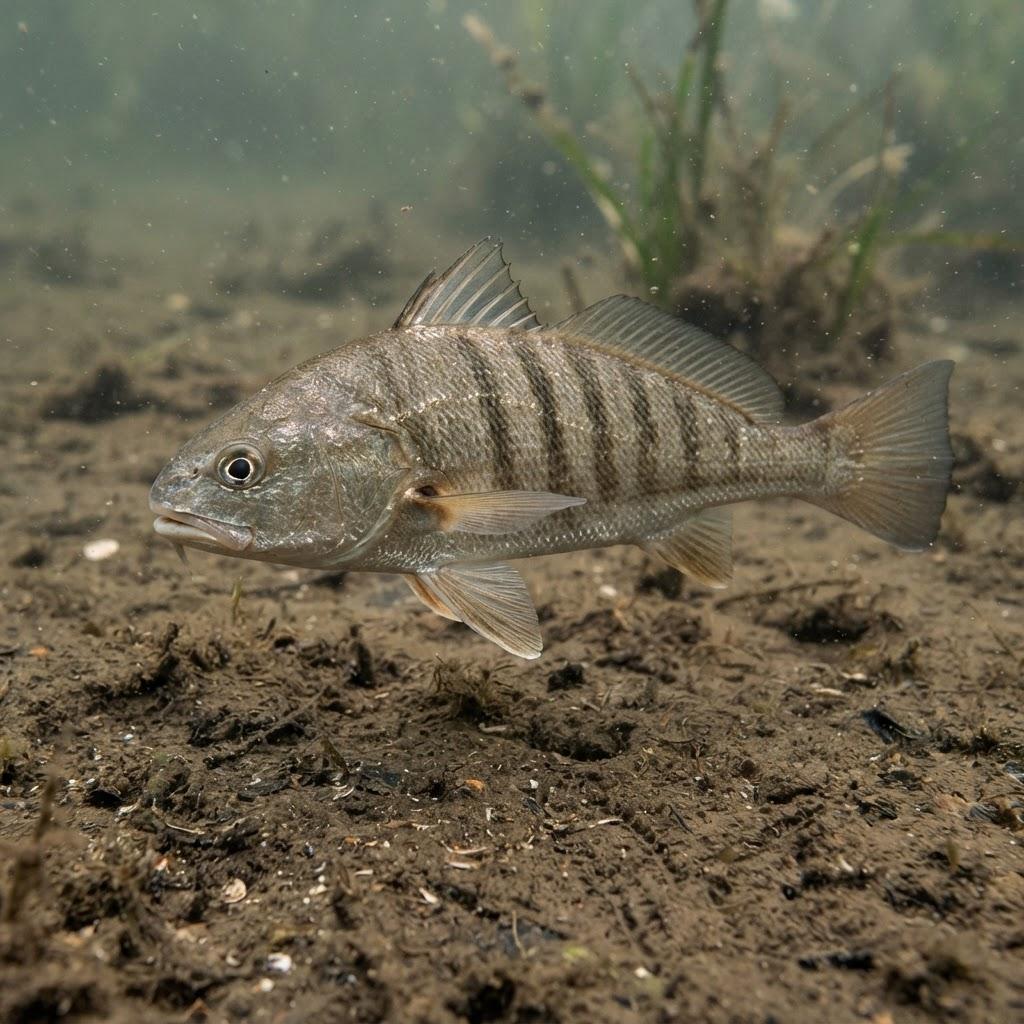
Imagine a fish that spent its formative years listening to a heavy metal playlist. Meet the Spot, the rockstar of the shallow coastal waters. At first glance, this fish looks like your average, silver-sided bottom-dweller, but there is a secret behind that metallic shimmer and that distinct black smudge right behind its gills. That little black dot is the namesake that gives the Spot its moniker, like a permanent, ink-stained beauty mark that makes it stand out in a crowd of generic-looking baitfish. This fish carries an aura of cool detachment, hovering near the sandy floor of estuaries as if it is waiting for the bass to drop. It is a member of the drum family, which basically makes it the ocean’s equivalent of a percussionist who never tires of practicing. While other fish are busy being stealthy or predatory, the Spot is just vibing, moving in schools that ripple through the water like a liquid ballroom dance troupe. It is a fish with a personality that says, I am here for a good time and maybe a snack, and it does not take itself too seriously.
Weird Biological Superpowers Explained Simply
The true superpower of the Spot lies in its ability to turn its own body into a musical instrument. Most people think of fish as silent creatures, but the Spot is loud, proud, and rhythmic. It possesses a specialized muscle setup around its swim bladder, which is basically an internal air-filled balloon that helps the fish stay buoyant. When the Spot gets excited—perhaps it is defending its territory or just feeling the need to vent—it vibrates these muscles against the swim bladder. This creates a low-frequency drumming sound that resonates through the water. Imagine carrying a bass drum inside your ribcage and being able to thump it just by clenching your abs. That is the daily life of a Spot. While we humans are stuck using our vocal cords to make noise, the Spot uses physics and muscle tension to hold underwater jam sessions. It is a biological marvel of vibration that proves you do not need lungs to have a voice, just a very clever internal drum set.
Absurd Self-Defense Mechanisms
When a predator decides that a Spot looks like a delicious afternoon snack, the fish does not just run away. It relies on a combination of safety in numbers and some serious acrobatic maneuvering. Because they hang out in schools, they create a 'confuse-a-predator' effect that would make any hungry sea trout dizzy. If you are a predator, trying to focus on one single, shimmering, wiggling Spot in a school of thousands is like trying to count individual snowflakes in a blizzard. They are the masters of the 'swarm strategy.' Beyond that, they have those sharp, prickly fins that can be quite an unpleasant surprise for any fish or bird attempting to take a bite. These fins act like a sudden, prickly wall of 'no, thank you' that discourages even the most determined hunters. If the drumming doesn't scare the predator off, the sheer annoyance of poking their mouth on a sharp fin is usually enough to convince the hunter that there are easier meals to be found elsewhere.
Fish Drama and Gossip
The social life of the Spot is pure high school drama, except the hallways are filled with salt water and the lockers are piles of seagrass. Within the school, there is a constant, subtle hierarchy being negotiated. While they do not have formal offices or social media, they definitely have an unwritten code of conduct. If a Spot decides to start drumming, it might be the equivalent of posting a status update that everyone else needs to acknowledge. They operate as a collective, but if you watch closely, you can see the social dynamics at play. When the tide changes, the school shifts, and there is always that one fish that thinks it is the leader, darting ahead only to be quickly put in its place by the rest of the pack. It is a constant game of follow-the-leader mixed with 'who gets the best spot in the current.' They are surprisingly social creatures that thrive on the constant validation of being surrounded by their peers, constantly adjusting their position to ensure they are not left alone in the cold, dark, and dangerous outskirts of the group.
The "Wait, That's Real?!" Deep-Sea Oddities
While our buddy the Spot prefers the shallow, sandy life of estuaries, its deep-sea cousins are living in a world that feels more like a science fiction movie set. Deep-sea fish often have to deal with crushing pressures and total darkness, which leads to some truly bizarre evolutionary choices. Take the barreleye fish, for example, which has a transparent head so you can see its brain and eyes directly, or the lanternfish, which has its own built-in light-up marquee to find dates or lure prey. The Spot, in comparison, is a creature of the 'light' world, but it shares the same ancestral drive to navigate the dark. While the deep-sea guys are making their own light, the Spot uses its drumming to communicate in the murky, sediment-filled waters where visibility is poor. It is like the difference between someone using a neon sign to advertise a club and someone using a booming sound system. Both are effective ways to say, 'Look at me,' just adapted to very different living rooms.
Myth Busting
Let’s clear the air: there is a long-standing myth that fish are mindless automatons that just swim in circles and forget their names every three seconds. That is simply not true, and the Spot is the living, swimming proof of intelligence. People often assume that because they live in schools, they are just blindly following the fish in front of them, but recent studies suggest that fish have complex spatial awareness and can recognize individual members of their group. The idea that the Spot is a 'simple' fish is just a failure of human imagination. They are highly attuned to environmental cues—changes in water temperature, salinity, and the vibrations of approaching predators or prey. They are constantly processing information, making decisions, and adapting to a dynamic environment. They are not mindless; they are highly specialized experts in their field. If you think they are just swimming blindly, you are missing the intense, constant calculations they are making to survive and thrive in a world that is always changing.
Humorous Historical Tales or Folklore
Humanity has had a complicated relationship with the Spot for centuries. Because they are so abundant and readily available, they have been the backbone of many a coastal feast. Historical records from the American colonies mention these fish as a staple that kept communities fed during the lean times. There is a fun bit of folklore that suggests hearing the 'drumming' of the Spot near a pier was a sign of impending weather changes or a shift in the tide, leading local fishermen to develop a superstitious reverence for the noise. Sailors would joke that the fish were having a debate about the captain's navigation skills. While it is obviously just the fish looking for a mate or establishing territory, it is easy to see why ancient folks thought the ocean was full of hidden drummers and underwater gossips. These stories have been passed down through generations of dockside wisdom, turning a simple, rhythmic, small-time fish into the protagonist of many a tall tale told over a sunset beer.
Underwater Love Stories and Bizarre Romances
The courtship ritual of the Spot is basically an underwater prom where everyone is trying to out-drum each other to win a dance. During the mating season, the males really turn up the volume. The drumming becomes more intense, more rhythmic, and arguably more 'musical.' They are trying to create a sonic footprint that screams, 'I am the most vigorous and healthy fish in the entire bay.' It is not just about the noise; it is about the performance. The females are the judges in this high-stakes audition, listening for the most complex and consistent beat. If a male is off-rhythm or just plain weak, he is going home alone to his seagrass patch. It is a loud, competitive, and remarkably intense scene that would fit right into a reality dating show. Once the beat is accepted, the spawning process happens in a flurry of movement, releasing clouds of eggs into the water column where the ocean currents take over the parenting duties.
Underwater Architecture and DIY Nesting
Unlike some species that spend their whole lives building intricate fortresses out of shells or pebbles, the Spot takes a more minimalist, nomadic approach. They are not architects; they are explorers. They rely on the natural structures of the estuary—the hidden crevices in the mud, the protective canopy of seagrass, and the shifting sandbars—to act as their 'home base.' They understand that in a world where the tide is always moving things around, building a permanent structure is a losing game. Instead, they master the art of finding the perfect 'nook.' They know exactly where the current will deposit the best nutrients, and they know where to hide when a larger predator comes prowling. Their architecture is conceptual; they 'build' their lives around the most advantageous spots in the estuary, treating the entire coastal shelf like a shifting, modular apartment complex that they update in real-time as the seasons change.
The Chaos of Raising Tiny Swimmers
If you thought human parenting was stressful, try being a Spot. There is absolutely zero 'helicopter parenting' here. After the dramatic, music-filled courtship and the subsequent spawning, the parents say their goodbyes and leave the eggs to their own devices. The eggs and the resulting larvae—tiny, transparent, drifting specks—are at the mercy of the ocean currents. This is a numbers game; they release thousands of eggs, knowing full well that only a tiny fraction will survive the gauntlet of predators, changing water conditions, and the sheer randomness of the sea. It is a chaotic, sink-or-swim reality. The larvae, or 'fry,' must instantly adapt to a life of perpetual motion. They start out eating microscopic bits of organic matter and eventually graduate to slightly larger snacks, all while dodging anything with a mouth. It is a brutal, high-stakes startup world where the survival rate is low, but the potential to eventually become a rhythmic, drumming adult keeps the cycle going strong.
How to Spot One & How It Is Doing
If you are heading to the coast to find a Spot, look for the silver shimmer in the shallows. They are a favorite of recreational anglers because they are common and have a feisty attitude. Keep an eye out for that iconic black spot right behind the gill cover—it is the signature look that gives them away. You will find them cruising along sandy or muddy bottoms, usually in schools that look like a shimmering, shifting silver curtain. As for how they are doing, the Spot is currently listed as 'Least Concern.' That is fantastic news! It means their populations are healthy and they are handling the current state of our coastal environments well. However, they are still reliant on clean estuaries, so we can all help by keeping our waterways free of trash and excess chemicals. When we protect the bays and estuaries, we are protecting the concert halls of the ocean, ensuring that the Spot can keep drumming for generations to come. Be a friend to the coast, and you are a friend to the Spot.