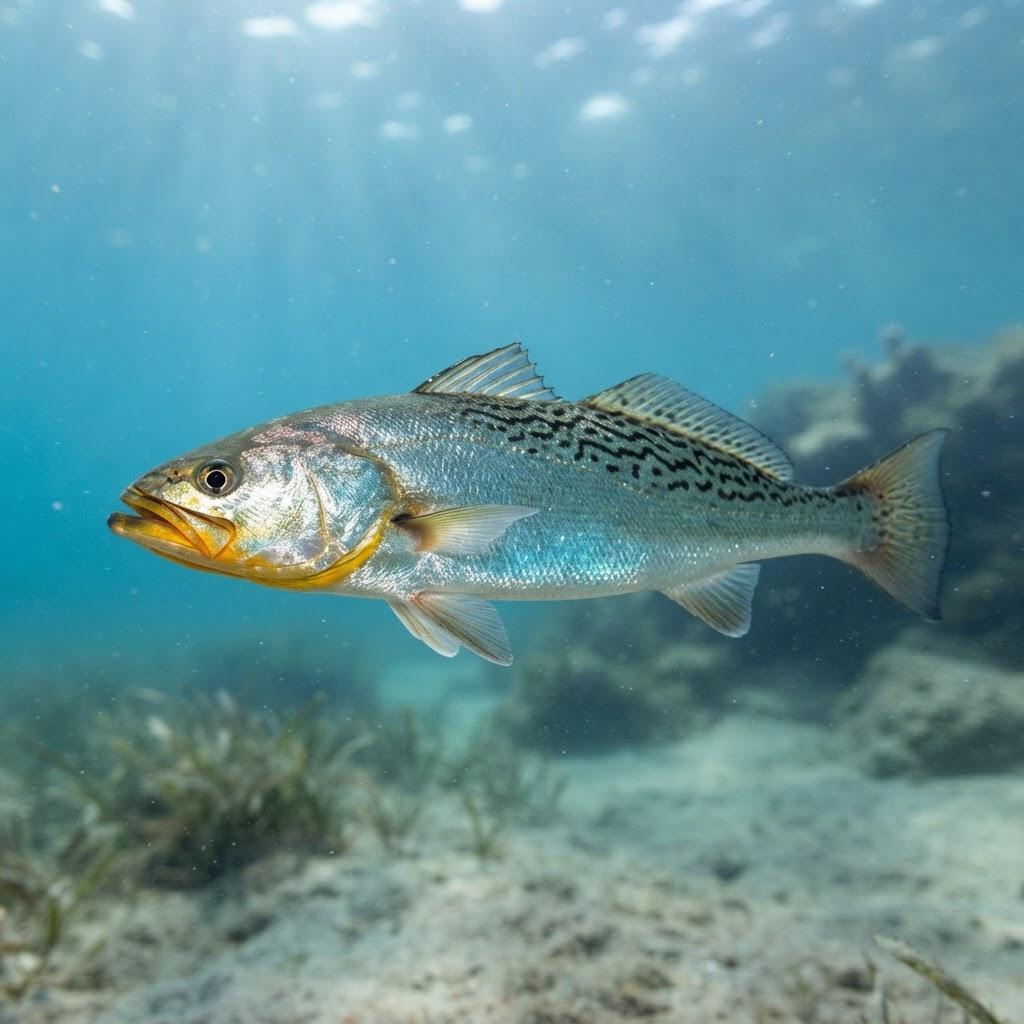
Cynoscion regalis
Weakfish
Meet the Weakfish, the ocean's own pop star that literally sings to find love. It is flashy, fast, and has a reputation for being a bit of a diva when it comes to the dinner menu.
Meet the Fish
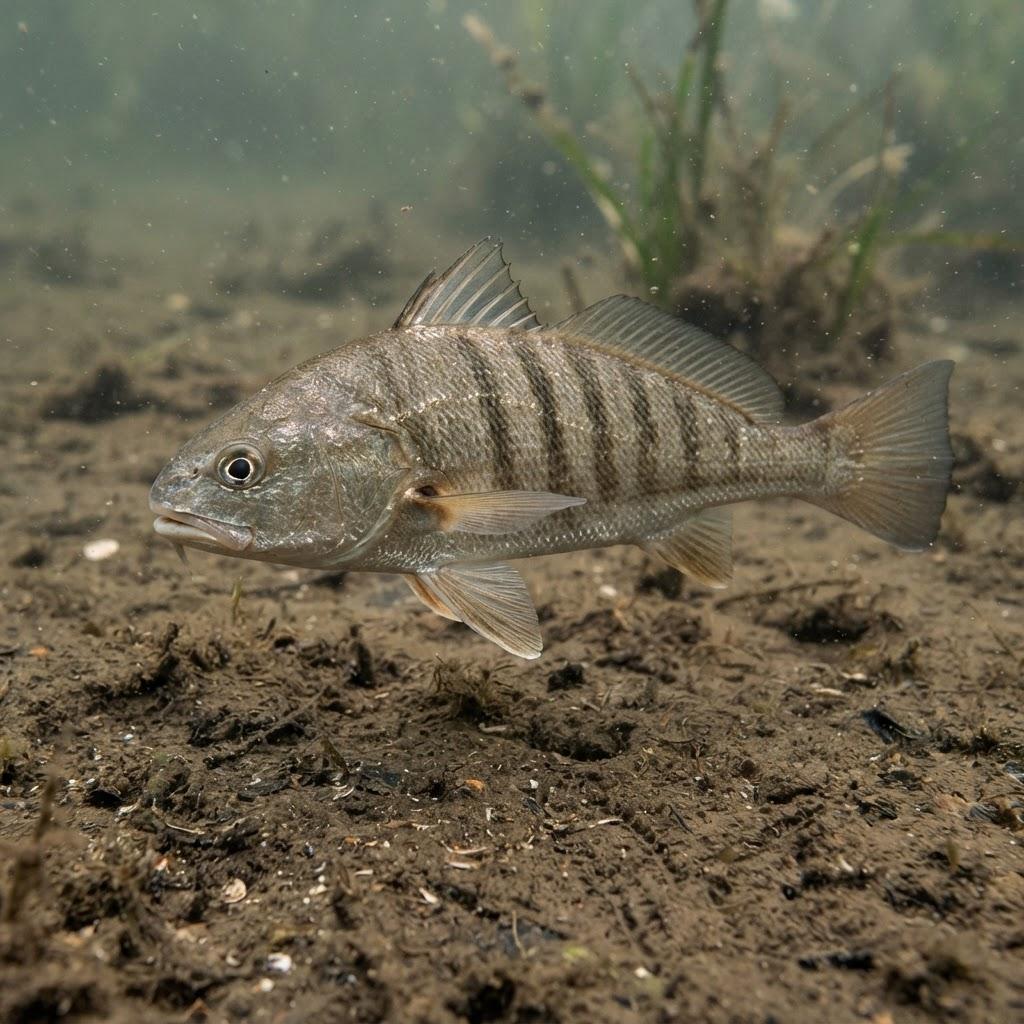
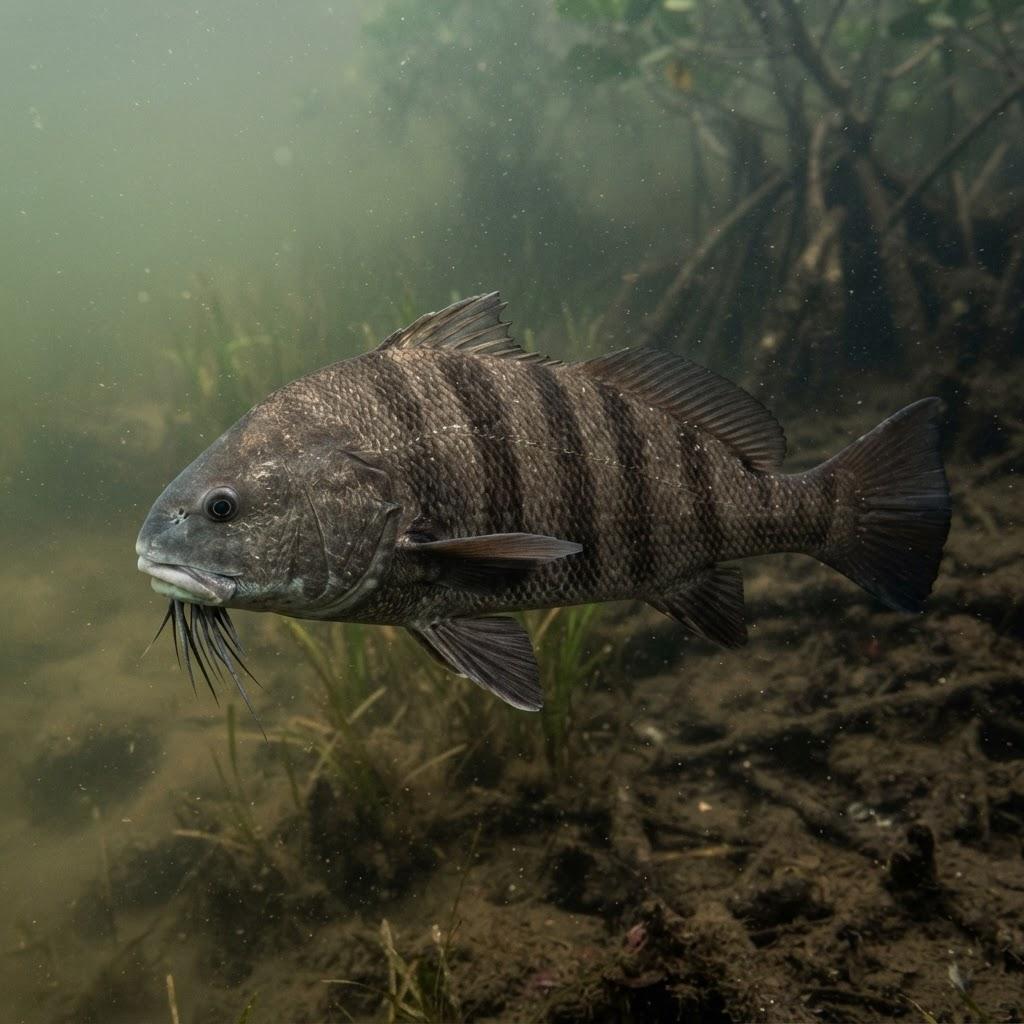
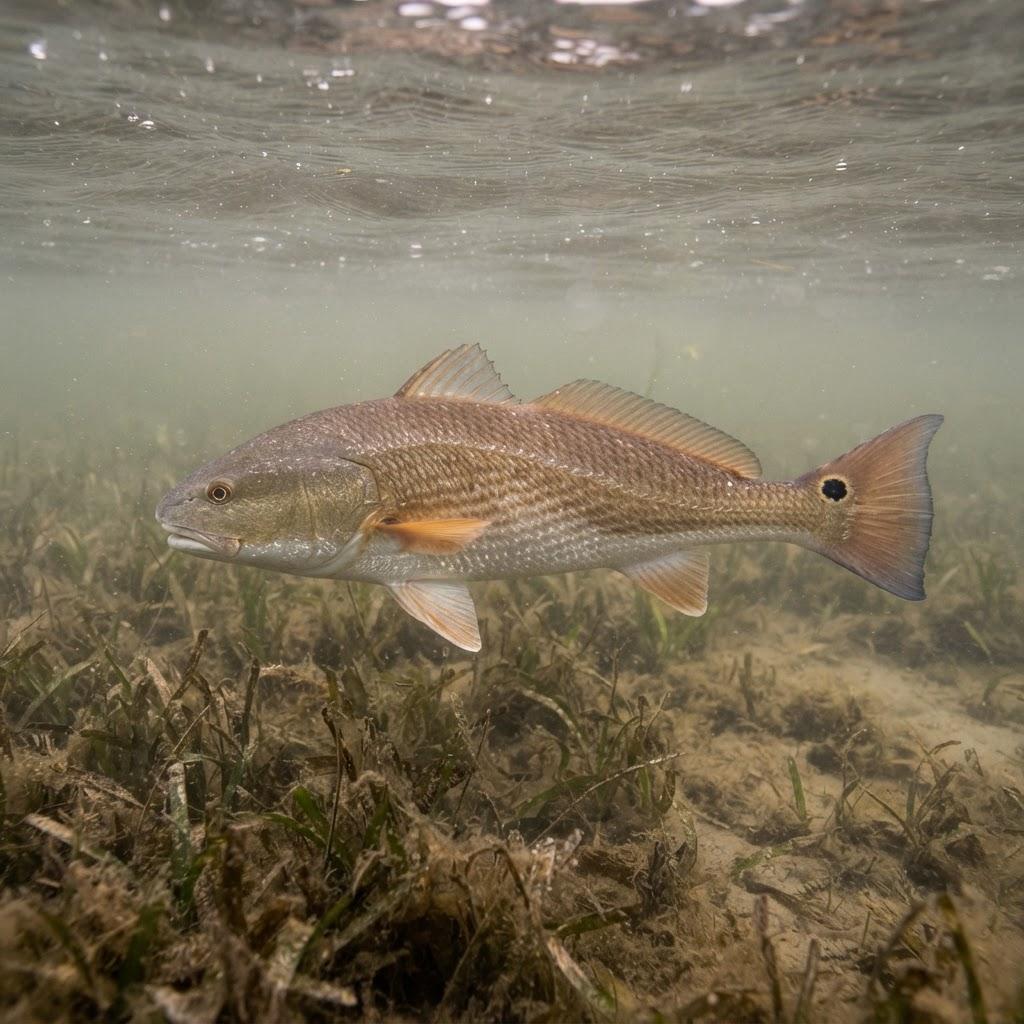
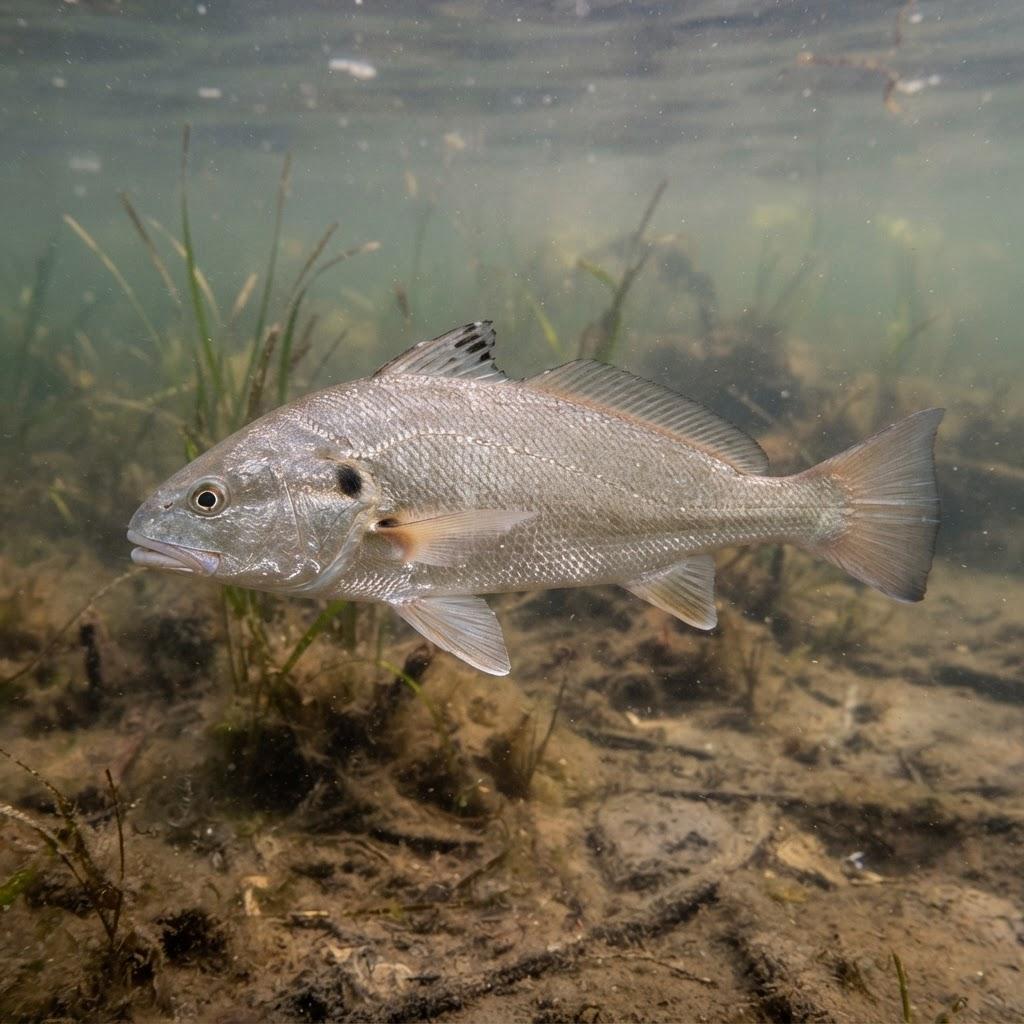
Imagine a fish that spent its high school years as the captain of the track team and the lead singer in the school band. That is the Weakfish. Scientifically known as Cynoscion regalis, this silvery-blue speedster looks like it was designed by a car manufacturer obsessed with aerodynamics. It has a sleek, streamlined body covered in iridescent spots that shimmer like a disco ball under the Atlantic sun. The name 'Weakfish' is a bit of a smear campaign—it refers not to their personality or athletic ability, but to the delicate nature of their mouths, which can tear easily if a fisherman is too aggressive with the hook. In reality, they are formidable predators that zip through coastal waters with the grace of a sports car. They have a permanent expression of mild surprise, likely due to their large, dark eyes which are perfectly adapted for spotting snacks in murky estuary waters. If you met one at a party, it would be the guy confidently telling stories while effortlessly balancing a drink, fully aware of how dashing he looks in his metallic, spotted coat.
Weird Biological Superpowers Explained Simply
The Weakfish possesses a superpower that puts your average karaoke star to shame: it has a built-in drum set. This fish belongs to the croaker family, and they literally drum their way through life. Located against their swim bladder, which is basically an internal air balloon used for buoyancy, are specialized 'sonic muscles.' When the fish wants to communicate—or perhaps announce his presence at a party—these muscles vibrate against the swim bladder like a thumb hitting a snare drum. It creates a rhythmic, thumping sound that can travel through the water for surprising distances. Think of it as the original underwater bass drop. They use this acoustic capability primarily to call out to potential mates, turning the murky depths of a salt marsh into a cacophonous concert hall. It is a biological engineering marvel that allows them to cut through the ambient noise of the ocean, ensuring that even in a crowded estuary, their 'Here I am!' message comes through loud and clear.
Absurd Self-Defense Mechanisms
If you are a fish whose name literally translates to 'delicate mouth,' you have to be clever to avoid being turned into a calamari appetizer. The Weakfish doesn't rely on spikes, venom, or electric shocks like some of its more dramatic cousins. Instead, it relies on being impossibly fast and perpetually twitchy. They are the ultimate escape artists of the Atlantic, utilizing a 'hit and run' defensive strategy that would make an action movie hero jealous. When threatened, they use their powerful tails to produce a sudden burst of speed that makes them look like a silvery blur, vanishing into the shadows of a seagrass bed before a predator can even compute what happened. Because they have such high-metabolism, 'go-go-go' lifestyles, they are essentially the jittery coffee-drinkers of the sea. By maintaining a constant state of situational awareness and staying near the safety of current-swept structures, they avoid the 'wrong place, wrong time' scenario that leads to becoming a shark’s lunch.
Fish Drama and Gossip
If the ocean were a high school, the Weakfish would be the group of guys huddled in the corner whispering about where the best food is. They are schooling fish, which sounds friendly, but it is actually more like a cutthroat team sport. Within these schools, there is a constant, subtle tug-of-war for the prime feeding positions. As they move through the tides, the 'in-crowd' of the school occupies the front lines where they get the first crack at incoming shrimp and baitfish, while the rest of the school tries to maneuver for a better spot. It is a social hierarchy dictated entirely by speed and hunger. If an individual starts to lose its rhythm or can't keep up with the collective turns, the rest of the school leaves it in the dust—or rather, the silt. They don't have deep emotional bonds; they have 'I'll stick with you as long as you lead me to food' bonds, which is really just basic survival disguised as a social club.
The "Wait, That's Real?!" Deep-Sea Oddities
While the Weakfish enjoys the shallow, sun-drenched life of the coast, its distant deep-sea relatives are busy living in a sci-fi novel. If you dropped a Weakfish into the midnight zone, it would be absolutely baffled by the lack of sunlight and the sheer number of creatures that have turned themselves into living glow-sticks. Deep-sea fish often utilize bioluminescence—making their own light through chemistry—to signal, lure, or scare. The Weakfish has no need for such pyrotechnics because it stays in the shallows where sunlight filters through the water. However, it is fascinating to think about how different their sensory worlds are. While the deep-sea abyss is a world of silent, glowing ghosts, the Weakfish’s world is a loud, bustling marketplace of sound, current, and light. It is like the difference between living in a dark, quiet cave and the middle of a neon-lit city center; both have their own rules, but the Weakfish would definitely feel like a fish out of water in the abyss.
Myth Busting
There is a persistent myth that the Weakfish is 'weak' because it is a lazy swimmer. This is entirely incorrect and likely started by anglers who lost their catch because their tackle was too heavy-handed. People assume that because the fish has a fragile jaw, it must be fragile everywhere else, but that is like saying a person with a sensitive nose is physically weak. In reality, these fish are incredibly athletic, built for long-distance migrations and rapid strikes. Another myth is that all 'sea trout' (a common nickname for them) are the same species. In the angler world, people often confuse them with Spotted Seatrout or other drum-family members. While they are related and share the 'drumming' capability, they have distinct personalities and preferred hangouts. Don't believe everything you hear at the bait shop; the Weakfish is a distinct, high-performance machine that deserves respect for its speed and its sonic ability, not judgment for its jaw structure.
Humorous Historical Tales or Folklore
Throughout history, the ocean’s inhabitants have been the stars of many a tall tale, and the Weakfish, often grouped into the 'sea trout' folklore, has had its fair share of local legend. In the early colonial days of the American Atlantic, these fish were so abundant that they were essentially the fast food of the coast. Legend has it that the sounds made by the drumming of massive schools of Weakfish were so loud they could be heard through the hulls of wooden ships, leading early sailors to believe their vessels were being haunted by underwater spirits or that the ship was being hit by phantom currents. Imagine being a 17th-century sailor, already nervous about sea monsters, and suddenly hearing a rhythmic, thumping 'dub-dub-dub' vibrating through the wood beneath your feet. It’s no wonder they thought the ocean was alive with mysterious, thumping creatures. It wasn't ghosts—it was just a massive party of fish having a conversation about dinner.
Underwater Love Stories and Bizarre Romances
Romance for the Weakfish is less about candlelight dinners and more about the ultimate sonic battle of the bands. During the spawning season, the males gather in designated 'arena' areas. Each male tries to out-drum his neighbor. The females, swimming nearby, are essentially the judges of this underwater 'American Idol.' They are listening for the most robust, consistent, and rhythmic thumping. It is a high-stakes competition where the best drummer gets the most attention. The males that put on the most impressive performance demonstrate their health and genetic fitness. Once a female is satisfied with a suitor’s performance, they release their eggs and sperm into the water column simultaneously. It is a chaotic, mass-production event. There is no long-term partnership or nesting here; it is purely a 'love the one you hear' situation, where the most energetic performer wins the prize and then moves on to the next night’s show.
Underwater Architecture and DIY Nesting
If you are looking for a fish that builds elaborate sand castles or secret underwater fortresses, the Weakfish is going to disappoint you. They are the minimalists of the sea. They don't do nests; they don't do secret bunkers; they don't even bother with a 'nursery.' Their architecture is the open water. By spawning in the water column, they let the tides and currents handle the 'real estate' work. Their eggs are planktonic, meaning they drift freely with the ocean’s currents. It is a risky business strategy—throwing your genetic future into the hands of the tide—but it is highly efficient. By not being tied to a single spot, they avoid being wiped out by localized storms or predators lurking in a specific territory. Their nesting strategy is essentially to use the entire ocean as a nursery, which is both daring and incredibly effective for a species that covers so much ground.
The Chaos of Raising Tiny Swimmers
Parenting is not on the agenda for the Weakfish. Once the eggs are fertilized, the parents bid them a fond farewell and go back to their busy lives of hunting shrimp and avoiding bigger predators. The tiny fry that hatch from these eggs are effectively on their own from minute one. They start as microscopic specks, drifting along the currents and eating tiny plankton, trying their best not to be eaten by everything else in the ocean. It is a brutal 'survival of the fittest' bootcamp. By the time they are small fingerlings, they head into the protected, nutrient-rich environments of salt marshes, which serve as their hideouts. These marshes are like a giant daycare center with a buffet, providing safety and food while they grow their strength. It is chaotic, high-mortality, and absolutely essential for the species' survival. They put all their energy into quantity rather than individual childcare, ensuring that enough offspring survive to keep the drumming going.
How to Spot One & How It Is Doing
If you want to catch a glimpse of this Atlantic superstar, look for coastal areas with plenty of moving water—they love the action of tidal inlets. You can spot them by their distinct silver sides, greenish backs, and those classic small, dark spots that look like someone took a paintbrush and tapped it against their scales. They are active hunters, so they’ll be near schools of baitfish, often making a splash when they hit the surface. Currently, Weakfish populations have had their ups and downs due to changing ocean temperatures and historical overfishing, but they are generally doing okay and are considered a species of Least Concern. To help them thrive, practice responsible fishing by using gear that prevents injury to their delicate mouths, and support the health of our coastal marshes, which are their nurseries. Keeping our estuaries clean and free of pollutants ensures that the next generation of drum-playing, shimmering speedsters can keep the Atlantic’s rhythm alive for decades to come.