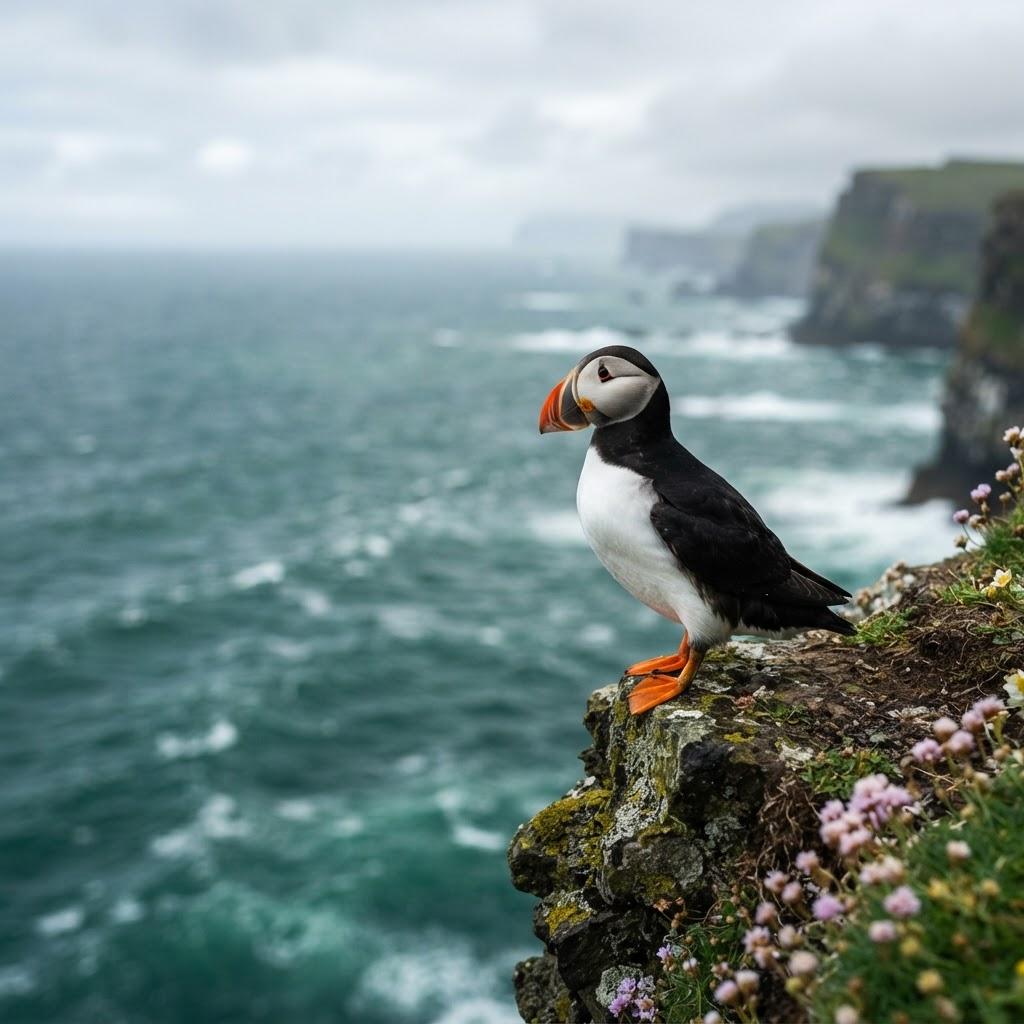
Fratercula arctica
Atlantic Puffin
The Atlantic Puffin is nature's most lovable clown, sporting a neon-bright beak and a waddling gait that suggests it just stepped off a comedy stage. Despite their silly appearance, these rugged little seafarers are master divers who treat the icy North Atlantic like their personal backyard playground.
Meet the Bird
Imagine a penguin that accidentally wandered into a neon-colored paint shop, slapped on a bright orange vest, and then decided to take up flying. That is the Atlantic Puffin, the avian equivalent of a fancy-dressed scuba diver who never quite figured out how to walk in a straight line. Often called the 'sea parrot' because of that oversized, technicolor beak, the puffin has a vibe that sits somewhere between a sophisticated tuxedo-wearing aristocrat and a goofy toddler learning to walk. They are chunky, round, and incredibly dense, built more like a football with wings than a sleek, aerodynamic jet. When they take off, they look like they are working harder than a bicycle with a flat tire, flapping their little wings at a frantic pace just to keep their rotund bodies from plummeting into the sea. Their expression is permanently bemused, as if they are constantly asking why life is so serious, making them the ultimate star of any nature-watching trip.
Superpowers & Weird Abilities
While they look like they might trip over their own feet, the puffin is actually an Olympic-level athlete when it gets into its element: the water. Think of them as aquatic jet-skis. They possess the supernatural ability to 'fly' underwater, using their stiff, short wings to row through the ocean currents with incredible grace. They can dive down to 200 feet deep and stay under for nearly a minute, which is the equivalent of a human holding their breath while sprinting through a house. Their secret weapon is their beak, which is lined with special backward-pointing spines that allow them to hold onto a dozen slippery fish at once without losing a single one—a feat that would put any professional waiter to shame. It is a biological marvel of grip strength and structural engineering, all packed into a mouth that looks like a plastic toy. They don't just swim; they hunt with the surgical precision of a highly trained underwater ninja.
Drama, Personality & Feathered Chaos
Don't let the cute, wide-eyed stare fool you; puffin colonies are the soaps operas of the bird world. These birds live in massive, noisy cities of rock and dirt where personal space is a foreign concept. They are notoriously suspicious of their neighbors, constantly bickering over prime real estate near the cliff edges. You will frequently witness 'puffin road rage,' where two birds lock beaks and tug at each other in a bizarre wrestling match just because one strayed too close to the other's burrow. They are not the type to share, and their colonies are filled with petty squabbles, loud croaking, and a general air of dramatic tension. If you want to see a bird have a total meltdown because another bird looked at its favorite rock the wrong way, a puffin colony in late spring is the place to be. It is pure, unfiltered, winged chaos at the edge of the world.
Bizarre Rituals & Quirky Habits
Puffins have a way of doing things that defy normal bird logic. One of their most charming habits is the 'puffin pose'—a tense, head-tucked display used to signal to others that they are currently stressed or territorial. When they are not busy being dramatic, they spend a massive amount of time preening, which looks like a frantic grooming session done in double-time. They are also incredibly fastidious about their appearance, carefully cleaning their feathers with a specialized oil from a gland near their tail. During the winter, they actually undergo a major fashion makeover, shedding the colorful, showy parts of their beaks to reveal a duller, smaller version underneath. It is the ultimate 'off-duty' look. They are effectively shedding their flashy exterior to survive the harsh winter, only to grow the bright colors back once the dating season rolls around in the spring. It is a seasonal costume change that would make any celebrity stylist jealous.
Legends, Folklore & Human Stories
Humans have been obsessed with these quirky birds for centuries. In some coastal cultures, they were once viewed as the spirits of departed sailors, watching over the waves from the safety of the cliffs. Because they spend so much time tucked away in underground burrows, early observers thought they were hiding away from the world to contemplate the secrets of the deep ocean. There are countless folktales from Iceland to Scotland where the puffin appears as a trickster figure or a harbinger of changing weather. In more modern times, they have become the unofficial mascots of the Atlantic, appearing on everything from souvenir coffee mugs to high-end travel brochures. They represent the rugged, untamed spirit of the north, and their presence is often seen as a sign of a healthy, vibrant ocean. Stories of puffin rescues and colony restorations are legendary in conservation circles, proving that humans are just as charmed by these little guys as they were hundreds of years ago.
Mating: The Ridiculous World of Avian Dating
If you think your last first date was awkward, consider the plight of a male puffin looking for love. The courtship process is a choreographed spectacle of vanity and nerves. The male will approach a female and perform the 'billing' ritual, where two puffins rub their massive, colorful beaks together in a motion that looks like a weird, aggressive kiss. If the female is impressed by his beak-work and his ability to hold his ground, they will waddle in tight circles around each other, showing off their best angles. If she isn't interested? She will simply walk away without a backward glance, leaving the male to stand there in the grass looking like he just missed the bus. It is a high-stakes game of 'does this bird pass the vibe check,' and it usually takes several sessions of beak-knocking before a pair officially decides to commit to a burrow for the season.
Nesting: Master Architects and Lazy Slumlords
Puffins are not interested in the 'twig-in-a-tree' lifestyle. They are burrow-dwellers, preferring to dig deep tunnels into the soft, grassy soil at the top of jagged cliffs. Think of them as the apartment developers of the bird world. They use their feet and beaks to excavate a cozy, underground living space that provides protection from both the biting wind and hungry gulls. Sometimes, if they are feeling particularly lazy, they will simply evict a rabbit or a petrel from an existing burrow and move in, lock, stock, and egg. It is the avian equivalent of finding a pre-furnished house and changing the locks. Inside the burrow, they create a simple nest of feathers and grass, but the real engineering is in the tunnel itself, which is designed to keep their single egg warm and safe. It is a dark, damp, and secure subterranean fortress that keeps the chick safe from the chaos of the outside world.
Raising Babies: The Screaming Food Disposals
The baby puffin, known adorably as a 'puffinling,' enters the world in a dark burrow and immediately starts a campaign of non-stop screaming. Parenting a puffinling is a grueling job that requires the adults to act as high-speed delivery drivers. Because the chick is hidden away, the parents must fly back and forth from the ocean, returning with their beaks stuffed to capacity with tiny fish like sand eels. The parents effectively dump this pile of seafood in front of the chick, which then inhales the fish in seconds. This goes on for weeks, with the parents working until they are physically exhausted. The puffinling grows fast, becoming a round ball of fluff that eventually gets too big for the burrow entrance. It is a race against time to pack on enough weight to survive the first solo trip to the sea, where they will live independently for several years before ever stepping back on land.
Bird-Watching Travel & Local Hotspots
If you want to see these guys in person, you need to head to the northern latitudes during the breeding season, which typically runs from May through mid-August. One of the absolute best places in North America is Eastern Egg Rock off the coast of Maine, which is famous for being the site of a decades-long restoration project. If you are feeling more adventurous, Iceland is essentially the world capital of puffins, with massive colonies at the Westman Islands or the Dyrhólaey cliffs. In the UK, the Farne Islands off the coast of Northumberland are a dream location, allowing you to walk on paths right through the middle of the colony. The key is to bring a decent pair of binoculars and a very wind-proof jacket, because these birds prefer habitats that are essentially giant, breezy, ocean-side wind tunnels. Aim for a boat tour to get the best views from the water, as the birds often fly right alongside the vessels.
Food, Feeder Hacks & DIY Projects
Here is the reality check: you are not going to attract a wild Atlantic Puffin to your backyard bird feeder, unless you happen to live on a remote cliff edge in the middle of the North Atlantic. Their diet is strictly 'ocean-to-table,' consisting of small, oily fish that you cannot buy at the local hardware store. However, you can still celebrate them by setting up a 'Puffin-Inspired' bird bath. Use a wide, shallow basin to mimic the rocky pools they frequent. If you want to attract local sea-birds or shorebirds, focus on native coastal plants that provide cover and shelter, like sea thrift or various salt-hardy grasses. Keep your bird bath clean and fresh, as birds of all kinds rely on these water sources during the hot summer months. Skip the cheap, dust-filled seed mixes that only attract invasive sparrows and instead look for high-quality, oil-rich sunflower seeds that will actually help your local feathered visitors thrive.
Seasonal Guides & "Crisis" Management
Puffins live by a very rigid seasonal clock. In the winter, they are true nomads, living out on the open ocean and barely touching land for months. When spring hits, they return to the cliffs like commuters heading back to the office. If you are visiting a colony, please remember the 'leave no trace' rule—these birds are incredibly sensitive to disturbance. Regarding the 'fledgling panic': if you happen to find a baby bird on the ground near the coast, do not immediately assume it is abandoned. Often, the parents are just a few feet away, working hard to bring food. Observe from a distance for a while. If the bird appears injured or is in an obviously dangerous place like a busy road, contact a local wildlife rehabilitator. Never try to feed a wild bird human food; it can cause severe health issues. Let the professionals handle the emergencies, and keep your hands off the wildlife.
Backyard Tech & Gadget Reviews
Even if you can't have a puffin in your yard, you can still use modern tech to bring the bird-watching experience home. AI-powered smart feeders are great for identifying local birds, but for the true nature enthusiast, a simple, motion-activated trail camera is a game changer. Set it up near a bird bath or a sheltered garden corner to catch the secret night-time movements of owls or curious mammals. If you are worried about birds flying into your home windows, the best solution is to break up the reflection. Use non-toxic window decals or simple, decorative UV-reflective film that is invisible to humans but acts like a giant stop sign for birds. These tools don't just keep birds safe; they help you build a deeper connection to the creatures that visit your patch of earth, even if it is just a common robin instead of an exotic Atlantic Puffin.
How to Spot One & How It Is Doing
To identify an Atlantic Puffin, look for the 'three-tone' coloration: black back, white belly, and the unmistakable, clown-like orange beak. In flight, they look like a blurry, fast-moving football. They are most active in the early morning and late evening, so plan your trips accordingly. Conservation-wise, the puffin is currently listed as 'Vulnerable.' They face significant challenges from climate change, which affects the temperature of the ocean and, in turn, the availability of their favorite fish. You can help by supporting organizations that protect coastal habitats and promote sustainable fishing practices. When you buy seafood, look for certified sustainable options to ensure the fish that puffins rely on stay plentiful. Every bit of awareness helps, and by simply learning about these birds and sharing their story, you become part of the collective effort to keep our oceans wild and our cliffs full of colorful, waddling clowns.