Thryomanes bewickii
Bewick's Wren
Meet the Bewick's Wren, a pocket-sized bundle of boundless energy and a voice that could headline a rock concert! This tiny feathered dynamo will wag its tail into your heart, leaving a trail of cheerful melodies and a burning desire for more insects in its wake. Get ready to laugh, learn, and maybe even build it a five-star bug buffet!
Meet the Bird
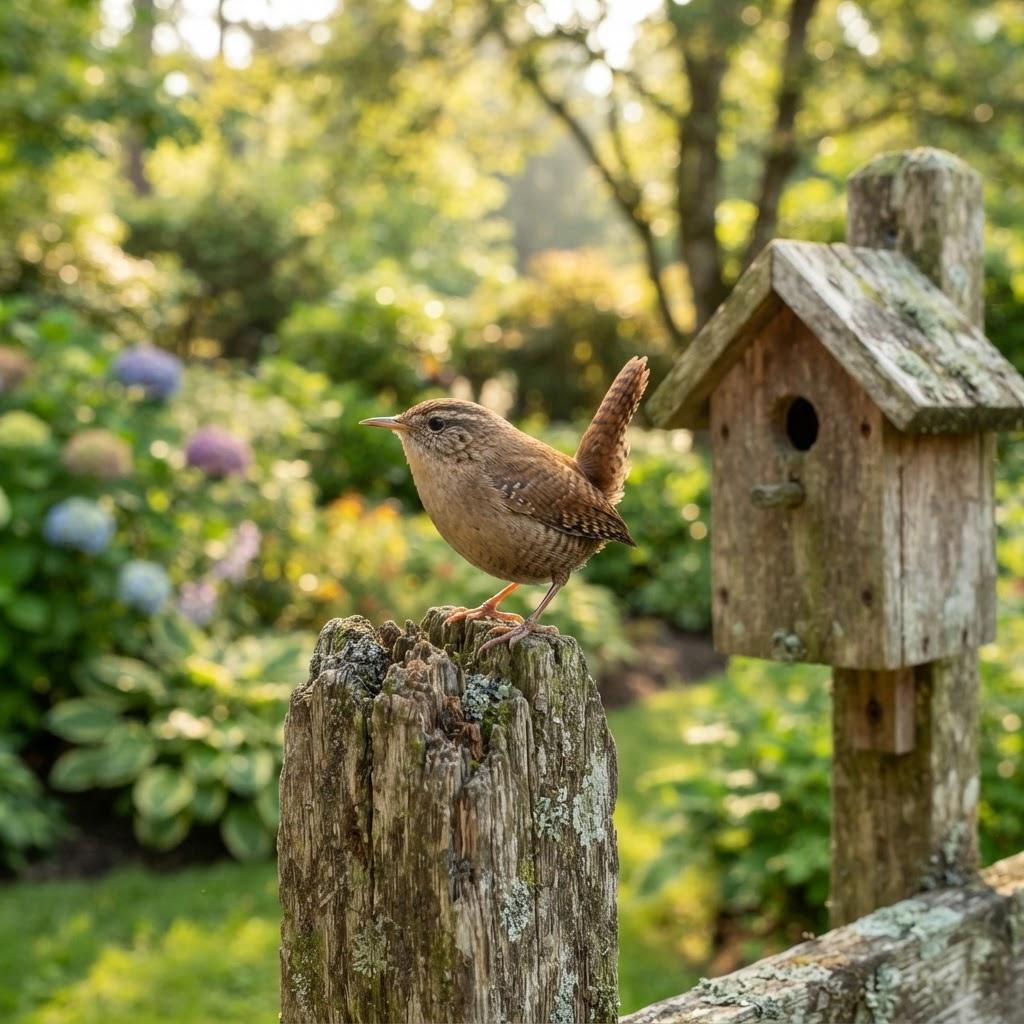
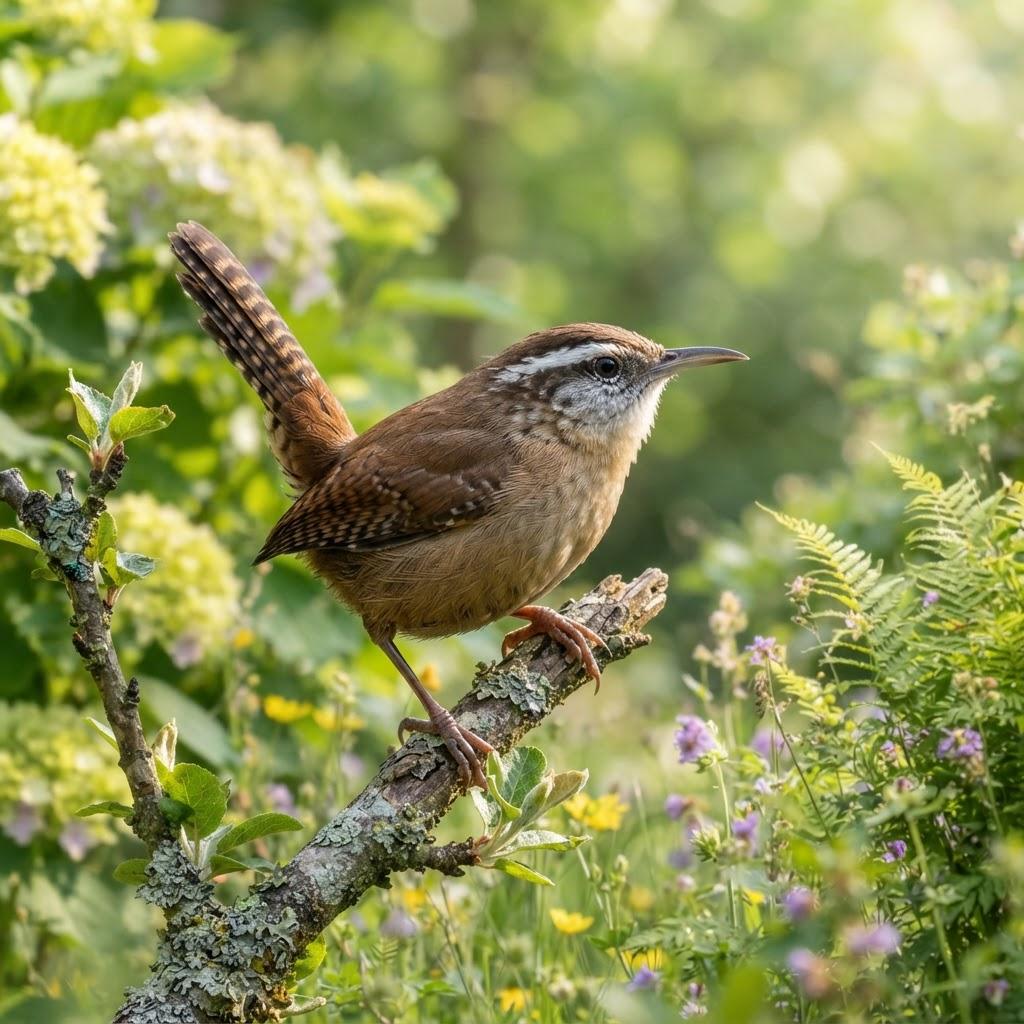
Imagine a tiny, caffeine-fueled feathered ninja, perpetually on the hunt for snacks and always ready to bust out a tune. That, my friends, is the Bewick's Wren. Don't let its diminutive stature fool you; this bird packs more personality into a few ounces than most humans manage in a lifetime. Think of it as the spunky underdog of the avian world, a plucky hero with a distinctive white eyebrow that screams, 'I'm here, I'm fabulous, and I'm probably judging your gardening choices.' This isn't just a bird; it's a living, breathing exclamation point, darting through underbrush with the speed of a hummingbird and the determination of a squirrel after the last acorn. Its tail, perpetually cocked high and flicking like a metronome set to 'hyperdrive,' is its signature move, an avian mic drop that says, 'Yes, that was me, and yes, I'm amazing.' If birds had theme songs, the Bewick's Wren's would be an upbeat, slightly chaotic jazz number played at double speed. It’s the kind of bird that, once you meet it, you can't help but fall a little bit in love with its feisty charm and boundless energy. So, buckle up, because getting to know this little powerhouse is going to be a wild, tuneful ride.
Superpowers & Weird Abilities
For a bird that barely tips the scales, the Bewick's Wren wields a superpower that would make any pop star green with envy: a vocal range that's truly astonishing. This isn't just a bird that sings; it's a feathered maestro with a repertoire so diverse, it's like it has a dozen different radio stations all playing simultaneously in its tiny throat. Its song is a complex, bubbly, and often buzzy medley, starting with a few clear whistles, transitioning into a buzzy trill, and then finishing with some more whistles or a warble. It's as if it's telling a whole epic saga in less than five seconds. How does such a small creature produce such a powerful and varied sound? It’s all thanks to a super-cool avian voice box called the syrinx, which in wrens, is an incredibly intricate piece of biological engineering. Unlike us, birds can sing with two independent halves of their syrinx, meaning they can essentially sing harmony with themselves! It’s like having two separate vocal cords that can operate independently, allowing for incredible complexity. Beyond its vocal prowess, the Bewick's Wren is an acrobatic marvel. Its small size and short, rounded wings allow it to navigate the densest thickets with the grace of a tiny, feathered tightrope walker. It can cling to vertical surfaces, squeeze into the tiniest crevices, and dart through brambles without so much as a ruffled feather. This isn't just movement; it's an advanced form of three-dimensional parkour, performed flawlessly in pursuit of a tasty bug. Its ability to perform these aerial feats while simultaneously scanning for prey and belting out a complex melody is nothing short of a biological marvel, making it a true superhero of the undergrowth.
Drama, Personality & Feathered Chaos
If you're looking for a bird that minds its own business, the Bewick's Wren is NOT it. This little firecracker is the avian equivalent of that one neighbor who knows everyone's business and isn't afraid to chirp about it. Despite its small size, it possesses a titanic personality, often acting as the self-appointed neighborhood watch captain. It’s fiercely territorial, and if another bird (or even a squirrel looking a bit too shifty) encroaches on its turf, you’ll hear about it. The wren will unleash a torrent of scolding chirps and chattering, chasing away intruders with a vigor that belies its dainty frame. It's not a bully in the traditional sense, but it definitely owns the stage. Imagine a very enthusiastic, slightly overprotective stage manager for the local theater; that’s the Bewick’s Wren for its patch of shrubs. It’s also incredibly curious, practically bursting with an insatiable desire to investigate every nook, cranny, and forgotten garden gnome in your backyard. Don’t be surprised if one peeks into your garage, explores a hanging basket, or even tries to build a nest in your old gardening boot. This isn't just curiosity; it’s an avian form of extreme home makeover, where every potential cavity is a design opportunity. Their daily routine is less about quiet contemplation and more about a rapid-fire series of observations, pronouncements, and the occasional spirited chase scene. They're never still, always flitting, exploring, and announcing their presence with a jaunty tail flick. So, if you're ever feeling a bit bored in your backyard, just invite a Bewick's Wren over; it’ll bring all the drama and entertainment you could possibly want.
Bizarre Rituals & Quirky Habits
The Bewick's Wren has a few quirks that make it stand out in the crowded bird world, and chief among them is its iconic tail-flicking habit. This isn't just a random nervous twitch; it’s a full-body expressive language. The wren will hold its tail cocked high, almost vertically, and then flick it downward or from side to side with surprising rapidity. It's a bit like a human shrugging or throwing their hands up in exasperation, but with feathers. Scientists believe this constant tail action serves multiple purposes: it's a visual signal to other wrens (a 'I'm here, this is my territory, step off' kind of message), it can help flush out hidden insects from dense foliage, and it might even be a way to express excitement or agitation. Imagine trying to talk without moving your hands; that’s how integral the tail flick is to a Bewick’s Wren’s daily life. Another charmingly odd habit is their almost obsessive inspection of potential nest sites. While the female is the ultimate decision-maker for the nursery, the male will proudly present multiple 'bachelor pads' to her, often ridiculously unsuitable ones. He might show her a hole in a tree, then a forgotten flowerpot, then a crevice in your porch, as if saying, 'Behold, my queen, the possibilities are endless!' This isn't just house-hunting; it's an elaborate, slightly frantic real estate tour. They also have a habit of roosting in sheltered cavities during cold weather, sometimes even communally, which is a cozy sight. Picture a tiny, feathered slumber party, all huddled together for warmth in an old birdhouse. These little rituals add layers of character to an already charming species, transforming them from mere birds into endearing, eccentric neighbors.
Legends, Folklore & Human Stories
While the Bewick's Wren might not have ancient myths woven around its specific name like some European birds, the larger 'wren' family has a surprisingly rich history in folklore, and our North American cousin certainly carries that spirited torch. In many cultures, wrens are seen as symbols of wit, cunning, and even royalty – particularly in Celtic traditions where the wren was sometimes called the 'king of birds.' This stems from an old fable where birds competed to fly highest, and the clever wren hitched a ride on an eagle's back, then soared just a tiny bit higher at the last moment. Our Bewick's, with its assertive personality and powerful song, definitely embodies that 'king of birds' energy, even if it's reigning over a tangled thicket rather than the heavens. The bird gets its name from Thomas Bewick, an 18th-century English engraver and naturalist who famously illustrated a similar European wren. It's a nice nod to the long tradition of humans connecting with and documenting the natural world, showing how even a tiny bird can inspire scientific and artistic endeavors. Sadly, the Bewick's Wren also carries a modern cautionary tale. Historically, it was widespread across much of the eastern United States, a common backyard visitor. However, for reasons still debated – including habitat loss, pesticide use, and competition with the highly adaptable House Wren – its eastern populations have dramatically declined, even disappearing from some areas. This makes it a poignant symbol of environmental change and the delicate balance of ecosystems. For those living in the West, the sight of a Bewick's Wren is a common joy; for those in the East, it's a nostalgic memory, a testament to what we can lose when we're not paying attention. Thus, this bird isn't just a feathered creature; it's a living link to natural history, a testament to human curiosity, and a quiet reminder of ecological shifts.
Mating: The Ridiculous World of Avian Dating
Forget swiping right; for the Bewick's Wren, the dating game is all about vocal prowess and real estate showings. When spring rolls around, the male Bewick's transforms into an avian serenader, unleashing a relentless torrent of song. He's not just singing; he's performing a full-on, multi-movement symphony, each note a declaration of his virility and prime genetic material. He will perch prominently, tail flicking like a tiny conductor's baton, and belt out his intricate melodies, hoping to impress a discerning female. Imagine a bachelor trying to win a date solely through an opera performance from his front porch – that's essentially the male wren's strategy. But a good song isn't enough; he also has to prove his homemaking potential. The male will diligently scout out numerous potential nest cavities – a hole in a fence post, a cozy nook in a shed, even a discarded coffee can (seriously, they're not picky about the container, just the cavity). He’ll then try to entice the female to each of these locations, probably puffing out his chest and chirping, 'Look, darling! Rustic charm! Excellent ventilation!' The female, however, is the ultimate judge. She’ll visit his carefully selected (and often slightly ridiculous) collection of potential nurseries, critically assessing each one. If she’s not impressed by his vocal range, his housing options, or his overall vibe, she simply moves on, leaving him to continue his solo concert for the next potential suitor. There's no awkward text message ghosting; she just flies away. This leaves the male to either up his singing game, find better real estate, or resign himself to another season of bachelorhood, perhaps pondering where he went wrong in his architectural choices. It’s a high-stakes, melodious game of love, where only the most persistent and charming crooners win the heart (and nest) of a Bewick's Wrenette.
Nesting: Master Architects and Lazy Slumlords
When it comes to nesting, the Bewick's Wren falls somewhere between 'ingenious scavenger architect' and 'opportunistic squatter with an eye for unusual real estate.' They aren't building delicate, woven masterpieces like orioles, nor are they slinging together three sticks and a prayer like a dove. Instead, Bewick's Wrens are cavity nesters, which means they prefer to find an existing hole or crevice rather than excavating one themselves. But here's where their creativity shines: they're not picky! You might find a Bewick's Wren nest in the hollow of a tree, a discarded tin can, an old boot, a forgotten toolbox, a hanging planter, a mail slot, or even the engine compartment of a rarely used car. If it's enclosed and offers protection, it's fair game. Once a suitable (and often quirky) cavity is chosen, typically by the female after inspecting the male's 'showings,' she gets to work. The nest itself is a cozy, cup-shaped affair, built primarily by the female with a foundation of twigs, bark, leaves, and grass. She then lines this with softer materials like feathers, hair, moss, and sometimes even spider silk. It's a surprisingly robust structure, especially considering the often-unconventional locations they choose. Imagine finding a perfectly formed, feather-lined sanctuary inside your old garden watering can! This resourcefulness is both endearing and a little comical, as if the wrens are constantly challenging us to find a place they *wouldn't* consider a prime nesting spot. Their approach is less about grand design and more about practical, cozy comfort, often incorporating whatever odd bits they can find nearby. It’s a testament to their adaptability and their talent for turning everyday clutter into a nursery.
Raising Babies: The Screaming Food Disposals
Once the Bewick's Wren pair has successfully navigated the avian dating scene and built their wonderfully peculiar nest, the real work begins: raising babies. This isn't a serene, picture-perfect experience; it's a full-throttle, insect-delivery service that would make any DoorDash driver rethink their career choices. The female typically lays between 5 to 7 small, white eggs, sometimes speckled with brown. After about 14 days of incubation, tiny, naked, utterly helpless chicks hatch. And from that moment on, they transform into miniature, insatiable food disposal units. These little bundles of fluff and gaping mouths are seemingly always hungry, emitting a constant chorus of high-pitched chirps and open-mouthed demands. The parents, meanwhile, become tireless foraging machines. They flit frantically through shrubs and across lawns, snagging caterpillars, spiders, beetles, and any other juicy insect they can find. They return to the nest every few minutes, stuffing their latest catch down a hungry throat. Imagine trying to feed five to seven ravenous teenagers who never stop growing and demand a fresh meal every five minutes – that’s pretty much the daily grind for wren parents. The chicks grow astonishingly fast, often doubling their weight in just a few days. After about 14-16 days, they're ready to fledge, tumbling out of the nest as clumsy, but incredibly determined, versions of their parents. Even after fledging, the parents continue to feed and guide them for several weeks, teaching them the ropes of foraging and survival. It’s a marathon of dedicated parenthood, fueled by an endless supply of insects and an innate drive to ensure the next generation of feisty, tail-flicking wrens thrives.
Bird-Watching Travel & Local Hotspots
If you're eager to witness the tail-flicking antics and hear the bubbly melodies of a Bewick's Wren in person, you'll want to set your sights primarily on Western North America. Think of it as a West Coast celebrity, with a historical presence in the East that, sadly, has largely faded. Your best bets for spotting this energetic avian character are throughout California, the Pacific Northwest (Oregon, Washington), and extending east into the drier scrublands and riparian areas of the Southwest (Arizona, New Mexico, Texas). It also ranges south into Mexico. These areas provide the perfect blend of dense shrubbery, open woodlands, and even suburban gardens that wrens adore. For a truly immersive experience, consider a trip to iconic locations like California's Point Reyes National Seashore, where its varied habitats offer excellent birding opportunities. National parks and wildlife refuges across the aforementioned states, such as the Kern National Wildlife Refuge or Arizona's Madera Canyon, are also prime destinations. The key is to look for areas with good undergrowth – think thickets, hedges, brush piles, and streamside vegetation. Unlike some birds that prefer pristine wilderness, Bewick's Wrens are quite comfortable sharing space with humans, making them surprisingly accessible in parks, greenbelts, and even your own backyard if you live in the right region and have suitable habitat. The best time to spot them is often in the spring and early summer when males are most vocal, proudly belting out their complex songs to attract mates and defend territory. However, since they are largely year-round residents in their western range, you can enjoy their spirited presence throughout the seasons. So, pack your binoculars, put on your most comfortable walking shoes, and head west for your chance to meet this feisty, feathered friend!
Food, Feeder Hacks & DIY Projects
The Bewick's Wren is, first and foremost, a passionate insectivore. Think of it as your garden’s personal pest control service, expertly vacuuming up bugs from every leaf and crevice. Caterpillars, spiders, beetles, grubs, ants – if it crawls and wiggles, it’s probably on the wren’s menu. This means the absolute best way to attract them is not necessarily with a traditional seed feeder, but by creating a bug-friendly habitat. Embrace native plants in your yard! Native shrubs and flowers support a much wider variety of insects, turning your garden into a five-star, all-you-can-eat buffet for wrens. Think dense, shrubby plants that provide both food and shelter. While insects are their primary sustenance, Bewick's Wrens are not above supplementing their diet, especially in colder months. They will occasionally visit feeders for suet (a high-energy fat block that mimics insect fat), chopped peanuts (unsalted, please!), and even live or dried mealworms. Skip the cheap millet; it’s mostly just filler for aggressive starlings and squirrels and offers little nutritional value for wrens. For a fun DIY project, you can make a simple suet feeder by melting suet (store-bought or rendered beef fat) with peanut butter and cornmeal, then pressing it into pinecones or spreading it onto logs with drilled holes. Hang these near dense shrubs, and you might just entice a wren. Another great option is a ground-level dish for mealworms, as wrens often forage closer to the ground. Money-saving tip: buying mealworms in bulk online is significantly cheaper than small packs at pet stores, and rendering your own suet from beef fat is practically free! By providing both natural insect habitats and high-energy supplements, you’ll be rolling out the red carpet for these delightful, bug-munching maestros.
Seasonal Guides & "Crisis" Management
Unlike many long-distance champions of the bird world, the Bewick's Wren is mostly a homebody, largely remaining in its western territories year-round. This means its seasonal strategies are less about epic migrations and more about adapting to local conditions. In spring, as breeding season kicks off, males become exceptionally vocal, belting out their complex songs from prominent perches. This is the perfect time to listen for them and watch their courtship displays. Ensure your yard offers dense cover for nesting and plenty of insects – native plants are your best friends here. Summer is all about raising those hungry chicks, so keep those bug populations thriving! As autumn approaches, the intense territoriality might ease slightly, and you might notice them exploring different parts of your yard. Winter is the toughest season for such a small, insectivorous bird. While they don't migrate south, they do need help finding food and shelter. Providing suet and mealworms can be a lifesaver, as insects become scarce. Ensure there are brush piles or dense evergreen shrubs for roosting, offering protection from cold winds and predators. You can also provide an open water source – a heated birdbath can be crucial when natural water sources freeze. Now, for the inevitable 'fledgling panic' of late spring/early summer: every year, well-meaning humans discover fluffy, awkwardly hopping baby birds on the ground and immediately assume they're orphaned. For Bewick's Wrens, like many songbirds, this is completely normal! Fledglings spend several days on the ground, learning to forage and fly, all while their parents are nearby, diligently feeding and watching over them. Unless the bird is visibly injured or in immediate danger from a predator (like a cat lurking nearby), the best thing you can do is leave it alone. The parents are usually hidden in nearby foliage, waiting for you to leave before they resume their duties. Resist the urge to 'rescue' them; you'd be kidnapping them from their expert parents. Remember, a grounded fledgling is rarely an abandoned fledgling.
Backyard Tech & Gadget Reviews
Want to get closer to your backyard wrens without scaring them away? Modern tech has some fun solutions! While a tiny Bewick's Wren might not be the star of an AI-powered smart feeder like a Bird Buddy (those are often better for larger, seed-eating birds), having one can still indirectly benefit your wren-watching. A smart feeder allows you to observe other birds, attracting them to a specific spot, which in turn might draw the curious wren into the vicinity to check out the action or glean dropped seeds/mealworms. Plus, seeing what other birds visit your yard gives you a fuller picture of your local avian community. Now, for a truly impactful gadget: window collision solutions. It's a sad reality that millions of birds die annually from flying into windows. For a small, zippy bird like the Bewick's Wren, windows are a major hazard. Forget those tiny decals that rarely work; you need something more effective. Products like 'Feather Friendly' window markers, Acopian BirdSavers (a series of hanging cords), or even installing window screens can dramatically reduce collisions. The goal is to make the glass visible to birds without ruining your view. Consider applying a pattern of dots or lines to the *outside* of your windows. If you’re really serious about documenting your backyard residents, setting up a cheap trail camera or camera trap can be a game-changer. Position it near a suet feeder, a brush pile, or even a potential nesting site (from a respectful distance!) to capture candid moments. You might catch a Bewick's Wren exploring, foraging, or even a nocturnal visitor you never knew you had. These gadgets aren't just toys; they're tools that enhance your birding experience, help protect birds, and turn your backyard into a living nature documentary.
How to Spot One & How It Is Doing
Spotting a Bewick's Wren is an absolute delight, and with a few pointers, you'll be identifying these energetic characters in no time. First, listen! Their song is complex, often starting with clear, sweet whistles, followed by a buzzy trill, and ending with more whistles or a warble. It's distinctive and often sung from a prominent perch. Visually, look for a small, slender bird, brownish-gray on its back, with a lighter, whitish belly. The most striking field mark is that bold, bright white stripe above its eye, called a supercilium – it's like a perfectly applied eyebrow that gives it a perpetually alert expression. And, of course, watch that tail! It's usually cocked upwards and constantly flicking, a tell-tale sign. You'll find them in dense shrubbery, thickets, brush piles, hedges, and low branches in open woodlands and suburban areas. They're often seen foraging low to the ground or zipping through dense vegetation. Regarding its conservation status, the Bewick's Wren is currently listed as 'Least Concern' globally by the IUCN. This sounds like good news, and for its western populations, it largely is; they are widespread and relatively common. However, and this is a crucial nuance, its eastern populations have suffered a catastrophic decline, practically vanishing from many parts of the eastern United States where they were once common. The exact reasons are complex, but factors like habitat loss, increased pesticide use (reducing their insect food source), and competition with the highly adaptable House Wren (which can be aggressive towards other cavity-nesting birds) are thought to be major contributors. So, while not globally endangered, this bird serves as a stark reminder of localized extinctions and the fragility of ecosystems. What can you do to help? If you live in its western range, plant native shrubs and create brush piles for shelter and foraging. Reduce or eliminate pesticide use in your yard to protect their insect food source. If you’re in the East, restoring suitable habitat could, perhaps one day, help this charismatic little bird make a comeback. Every backyard habitat makes a difference, turning your space into a vital refuge for these feisty, feathered friends.