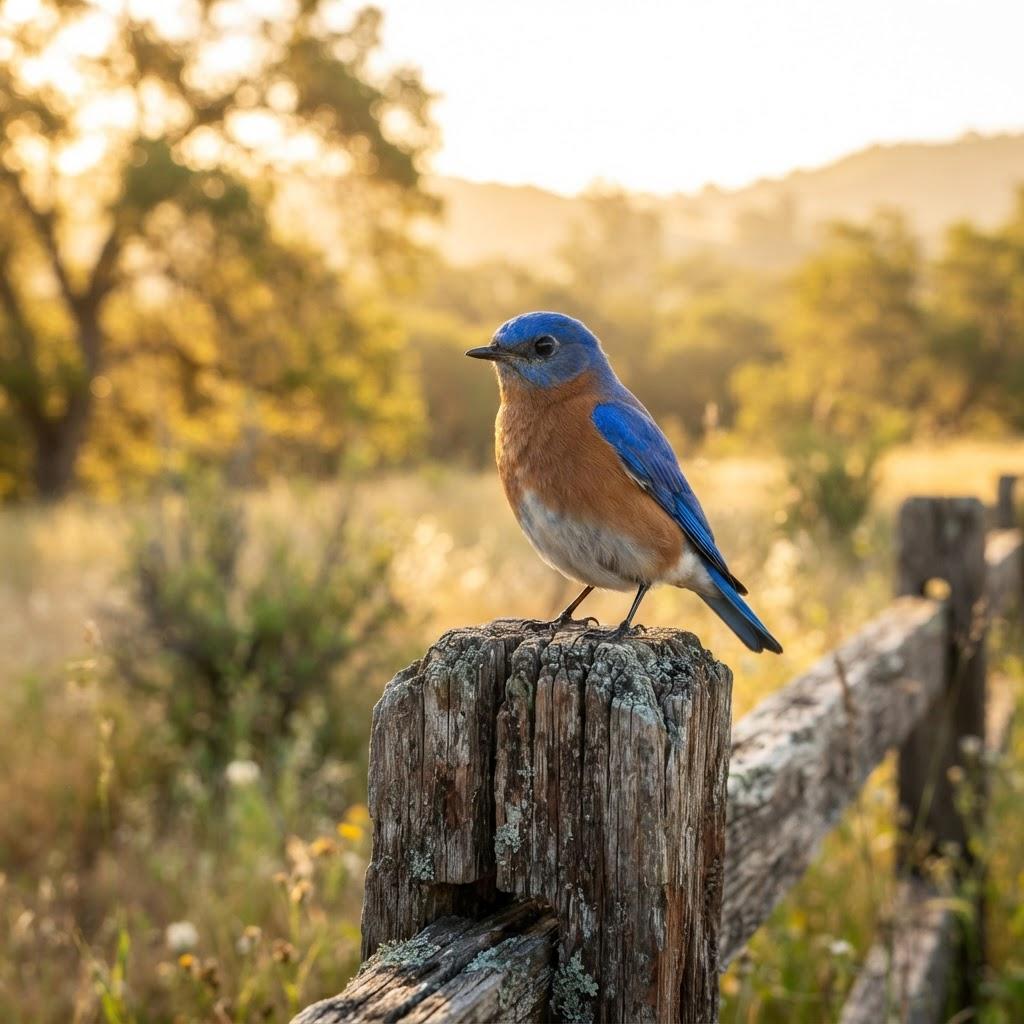
Sialia mexicana
Western Bluebird
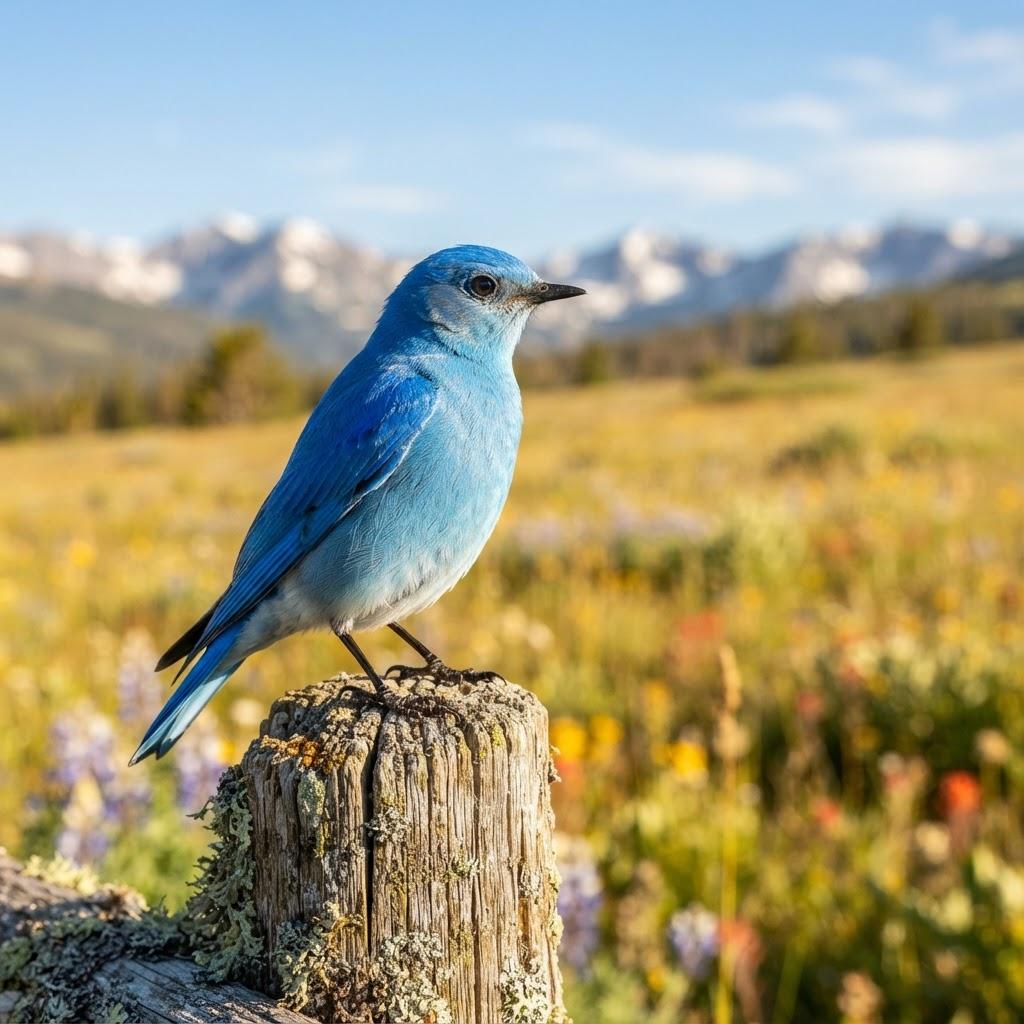
Meet the Western Bluebird, a dazzling flash of electric blue that acts like the neighborhood watch captain of the bird world. This charming, insect-hunting dynamo is a must-have resident for any backyard wishing to trade dull lawns for vibrant, feathered entertainment.
Meet the Bird
Imagine a bird that looks like a jewelry designer went wild with a sapphire and sunset-orange palette, then gave the whole package an attitude that says, I own this fence post. The Western Bluebird is the avian equivalent of that cool, slightly judgmental neighbor who actually turns out to be a total sweetheart once you offer them the right snacks. With a male sporting iridescent blue feathers that seem to glow even on cloudy days, and a breast the color of a fresh apricot, they are visual icons of the West. They aren't the kind of birds to lurk in the shadows. They prefer to perch prominently on high wires or the tops of trees, scanning their kingdom with a look of intense, comedic focus. If a movie featured a bird that could narrate its own life with a sarcastic inner monologue, the Western Bluebird would definitely be cast as the fast-talking protagonist who thinks he's bigger than he really is.
Superpowers & Weird Abilities
While they might not have the sonic speed of a peregrine falcon or the night vision of an owl, Western Bluebirds possess a sensory superpower that is essentially a built-in GPS tracker for high-protein snacks. Their vision is so precise that they can spot a tiny, motionless insect from thirty feet away. This is like a human standing in a parking lot and being able to identify a single grain of rice on the pavement from the top floor of a skyscraper. Beyond their eagle-eyed vision, these birds possess a specialized digestive system that acts like a biological chemistry lab. They can process tough, fibrous wild berries that would make other small birds feel like they just ate a lead brick. They effectively convert winter forest forage into pure, high-octane energy, allowing them to remain active even when the frost starts to creep across the meadow and other, less ambitious birds have already called it a day.
Drama, Personality & Feathered Chaos
Do not let the pretty colors fool you; the Western Bluebird is a professional agitator when it comes to territory. They are aggressively hospitable—meaning they want everyone to know that this specific box, this specific tree, and this specific stretch of air belong entirely to them. Watching two male bluebirds have a territorial dispute is like watching a low-budget wrestling match where the only prize is a particularly good view of the meadow. They engage in stiff-legged dancing, wing-fluttering, and high-pitched insults that would make a sailor blush. They are known for 'nest-site fidelity,' which is a fancy way of saying they are stubborn house-hunters who will return to the same real estate year after year, even if the neighbors (like competitive Tree Swallows or invasive House Sparrows) have tried to stage a hostile takeover. They are the feathered equivalent of that person who refuses to move out of their first apartment because of the rent-controlled view.
Bizarre Rituals & Quirky Habits
The Western Bluebird engages in a behavior known as 'anting,' which sounds like a niche dance craze but is actually a bizarre hygiene routine. They will occasionally settle down onto an ant hill and allow the startled insects to crawl all over their feathers. Why? Because the ants release formic acid, which acts as a natural pesticide and mite-remover. It is the bird version of taking a spa day using bugs as the shampoo. Aside from their bug-related grooming, they have a habit of 'pro-social' behavior that is surprisingly heartwarming. They have been observed bringing food to other bluebird nests to help feed unrelated chicks. It is the avian version of a neighborhood potluck where the parents are just too exhausted to cook, and the aunties and uncles decide to drop off a casserole. This cooperative spirit is a weirdly charming quirk that sets them apart from more selfish backyard inhabitants.
Legends, Folklore & Human Stories
Throughout the history of Western indigenous cultures and settler narratives, the bluebird has almost always been cast as the herald of spring and the bearer of joy. For many, seeing a bluebird was a sign that the harshness of winter was finally packing its bags. In the world of folklore, they were seen as the 'sky birds,' linking the heavens to the earth. There is a classic trope in literature where the 'Bluebird of Happiness' is always just out of reach, representing the elusive nature of joy. Yet, in reality, these birds are quite content to hang out on your clothesline. Humans have spent centuries romanticizing them, often forgetting that these little icons are actually quite tough, scrappy survivors. They are the reality-check version of the bluebird legend—not a delicate, ethereal spirit, but a hardened, sapphire-colored brawler that actually helps keep your garden pest-free.
Mating: The Ridiculous World of Avian Dating
The courtship of the Western Bluebird is less 'dinner and a movie' and more 'watch me perform a high-stakes aerial gymnastics routine.' The male spends his spring days puffing out his chest, vibrating his wings, and singing a song that is intended to sound like a romantic serenade but mostly sounds like a repetitive, enthusiastic demand for attention. He will fly around the female, showing off his plumage like a model on a runway, and if she isn't impressed, she simply flies away, leaving him looking like a discarded blue ribbon. If she stays, he performs a 'nest-proffering' act, where he brings her bits of nesting material to prove he is a provider. It is the bird equivalent of a guy trying to prove he is 'husband material' by showing up with a handful of sticks and a very nervous look. If he fails the vibe check, he has to start the entire song-and-dance routine over again.
Nesting: Master Architects and Lazy Slumlords
When it comes to real estate, Western Bluebirds are strictly 'fixer-upper' types. They are secondary cavity nesters, meaning they lack the heavy-duty equipment to carve their own holes in hard wood. Instead, they rely on abandoned woodpecker holes or, more commonly, your helpful intervention via a nesting box. Once they secure a cavity, they build a nest that is functional, if not exactly architectural high art. It is a cup of dried grasses, pine needles, and feathers—simple, cozy, and efficient. They are not like those messy pigeons who just toss a twig on a ledge and pray for the best. The bluebird takes pride in a tidy nursery. However, they are also prone to 'slumlord' tendencies if they find a box that is already slightly occupied. They will happily evict the previous tenants, clean out the trash, and rebrand the space as their own luxury suite before the eggs are even laid.
Raising Babies: The Screaming Food Disposals
Raising a clutch of Western Bluebird chicks is the avian equivalent of running a frantic, understaffed diner that never closes. Once those eggs hatch, the chicks transform into tiny, perpetually hungry, featherless blobs with mouths that seem to take up eighty percent of their face. The parents become blur-inducing machines, flying back and forth from dawn until dusk with a beak full of insects. Every trip is a mission to keep their little food-disposal units silent. The chicks, meanwhile, are not exactly appreciative. They vibrate and scream with a intensity that suggests they have not eaten in weeks, despite having just been fed ten minutes ago. It is a cycle of exhaustion for the parents, who must maintain a strict schedule to ensure every beak gets its fair share. If you ever watch a nest, you will realize that 'gratitude' is a concept not found in the vocabulary of a fledgling bluebird.
Bird-Watching Travel & Local Hotspots
If you are on a quest to see these sapphire wonders in their natural habitat, head to the vast, open forests of the American West. Places like Yosemite National Park in California or the ponderosa pine forests of Arizona are gold mines for sightings. Look for areas where the trees are spaced out, allowing for that classic mountain meadow aesthetic they love. During the spring, anywhere with a high density of wooden fence posts is prime real estate for spotting a male bluebird perched like a sentry. In the Pacific Northwest, visit the Willamette Valley, where bluebird trails—rows of man-made nest boxes—have been set up to help boost their numbers. The best time to go is mid-morning, right when the air begins to warm up and the insects start their own daily commute, providing the bluebirds with a reason to be out and about.
Food, Feeder Hacks & DIY Projects
Stop wasting your money on that bargain-bin mixed seed that is mostly filler corn and red milo. Western Bluebirds are insectivores with a refined palate for fruit. If you want them in your yard, you need to cater to their love for suet and mealworms. A simple DIY suet log—drill holes into a piece of untreated wood and fill them with a mix of lard and bird-safe peanut butter—is a bluebird magnet. Better yet, plant native berry-producing shrubs like serviceberry or mountain ash. These plants are the bluebird's natural candy store. If you want a quick hack, purchase a small hanging dish specifically for dried mealworms. It is like putting out a neon sign that says 'Five-Star Restaurant' for a bluebird. Keep the feeder clean, and you will soon have a regular local family making your garden their daily pit stop, saving you from having to travel far to see them.
Seasonal Guides & "Crisis" Management
As the seasons shift, so do the bluebird’s needs. In winter, survival is the name of the game. If you live in an area where they don't migrate, provide a heated birdbath. When water freezes solid, the bluebird’s metabolism struggles to maintain heat. If you see a 'fledgling' hopping on your lawn in early summer, do not panic and do not call the local animal rescue immediately. These are likely 'branchers'—teenagers who have left the nest but are still being fed by their parents. They are awkward, flightless, and look like they’ve seen a ghost, but they are exactly where they are supposed to be. The parents are usually watching from a nearby branch, ready to dive-bomb any cat that approaches. Unless the bird is clearly injured or in the middle of a busy road, the best strategy is to look, smile, and keep your dog inside for a few days.
Backyard Tech & Gadget Reviews
If you want to live out your National Geographic dreams, smart feeders like the Bird Buddy are absolute game changers for bluebird fans. These feeders use AI to identify the bird and send a notification to your phone, complete with a high-definition photo. It is the perfect way to document the 'Bluebird of Happiness' without having to sit in the bushes for four hours. For those worried about the 'thud' of a bird hitting a window, consider 'window film' or UV-reflective decals. These are invisible to humans but look like a giant neon stop sign to a bird. For the more adventurous, a cheap trail camera pointed at your nest box can capture the hilarious reality of the 'screaming food disposal' stage. Just remember that technology should enhance your birding, not replace the simple joy of watching them through a pair of binoculars on a sunny Saturday.
How to Spot One & How It Is Doing
Spotting a Western Bluebird is all about checking the high ground. Look for that signature dark blue back and warm, rust-colored breast. Their flight pattern is a distinctive, undulating wave, dipping and rising as they zip between perches. If you hear a soft, musical 'chur-wi,' you have found your target. Regarding their status, these birds are holding steady, but they rely heavily on our help. Habitat loss and competition for nesting holes are their biggest enemies. The best way to help? Put up a simple, weather-resistant nesting box in an open area. It is a small gesture that turns your backyard into a critical habitat fragment. They are the tough little survivors of the West, and with a little support, they will continue to bring their vibrant color and chaotic, charming energy to our landscape for generations to come. Your yard is their refuge—make it count.