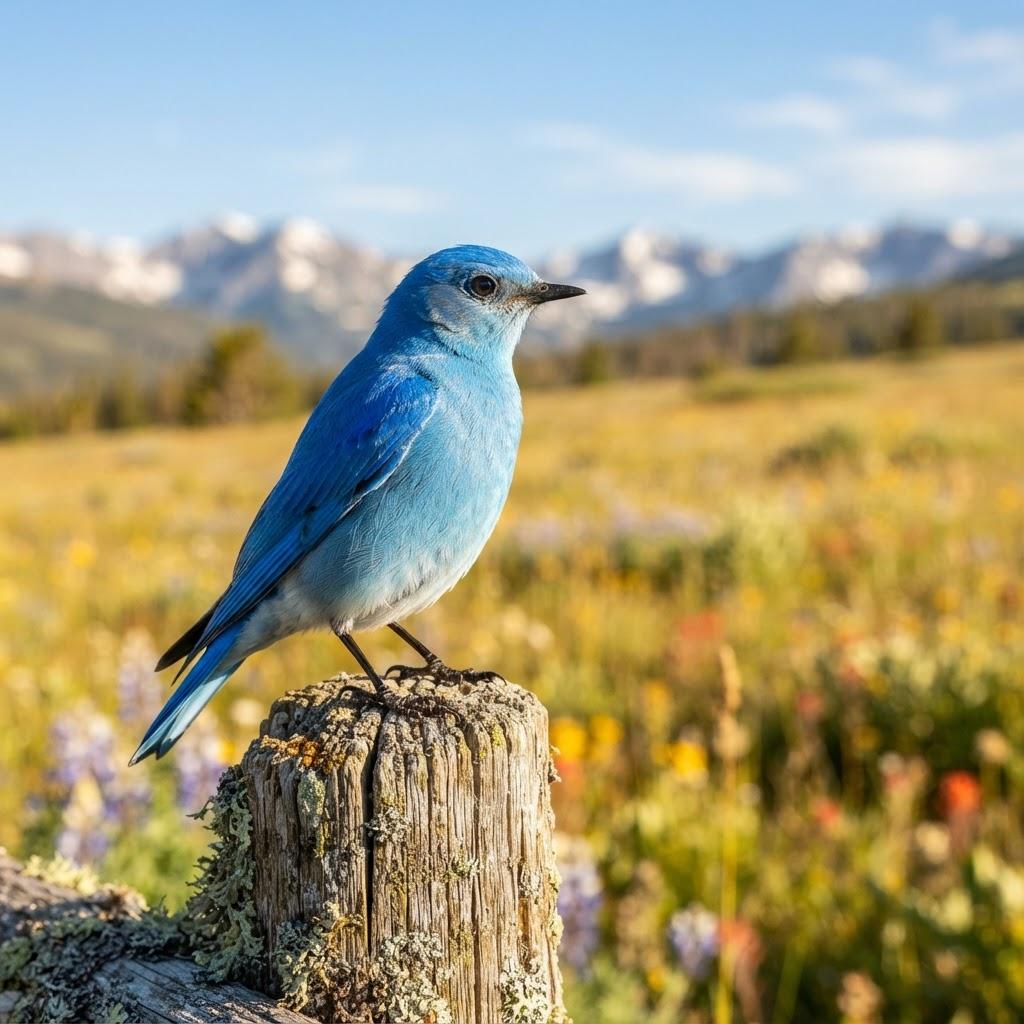
Sialia currucoides
Mountain Bluebird
The Mountain Bluebird is essentially a flying piece of the sky, boasting an electric blue coat that makes other birds look like they dressed in the dark. This high-altitude adventurer is the ultimate mountain climber of the avian world, bringing vivid color to the roughest, windiest landscapes.
Meet the Bird
Imagine a bird that decided the forest floor was too pedestrian and the suburbs were simply beneath its pay grade, so it packed its bags and moved to the literal top of the world. Meet the Mountain Bluebird, a creature that looks less like a bird and more like a neon sign flickering against the jagged teeth of the Rockies. Unlike its cousin, the Eastern Bluebird, which is perfectly content hanging out on a fence post in someone’s manicured backyard, the Mountain Bluebird is the high-altitude elite. Its plumage is a shade of blue so intense it looks like it was photoshopped by an overly enthusiastic social media influencer. This bird doesn’t just fly; it glows. When you see one, you don't just see a bird; you see a sapphire-colored daredevil that thrives in places where the air is thin and the wind makes humans want to hide in a warm car. It is the ultimate mountain-dwelling diva with a temperament as cool as the peaks it calls home, and it demands your attention simply by existing in environments that would give most other songbirds a severe case of vertigo.
Superpowers & Weird Abilities
The Mountain Bluebird possesses a superpower that sounds like a line from a low-budget sci-fi movie: the ability to hover in place with the precision of a high-tech drone while scanning the ground for snacks. While most birds of its size are busy flitting from branch to branch, the Mountain Bluebird has mastered the art of the 'hover-glide.' It uses this technique to lock onto a tasty insect hiding in the grass below, adjusting its tail and wing feathers with microscopic accuracy to stay perfectly still against a 20-mile-per-hour gust. Its vision is another marvel; these birds have eyes that are basically super-powered telescopic lenses. They can spot a tiny, motionless caterpillar from over fifty yards away while sitting on a fence post, a feat that would be the equivalent of a human identifying a specific grain of sand from the top of a skyscraper. Furthermore, their ability to withstand the harsh, unpredictable temperature swings of the mountains is legendary. They possess a metabolic thermostat that keeps them going long after other species have packed up and flown south for a milder climate.
Drama, Personality & Feathered Chaos
Behind that angelic, sapphire-blue exterior lies a bird that is essentially the landlord from hell. Mountain Bluebirds are cavity-nesters, which is a polite way of saying they are obsessed with real estate. They don’t build their own homes from scratch; they scour the landscape for the perfect hole—usually an old woodpecker hollow—and then they defend that hole with the ferocity of a dragon guarding a hoard of gold. They are not shy about kicking out previous tenants, and they will engage in epic aerial dogfights with swallows or other bluebirds to secure the prime mountain-view real estate. If a sparrow dares to show interest in their chosen property, the Mountain Bluebird transforms from a serene mountain dweller into a feathered buzzsaw, dive-bombing the interloper until it retreats in terror. It’s a drama-filled soap opera played out in the rafters of the wilderness, where a single hollow tree can be the site of more territorial shouting matches than a neighborhood homeowners association meeting.
Bizarre Rituals & Quirky Habits
When they aren't busy fighting over prime real estate, Mountain Bluebirds have some truly eccentric habits that suggest they might just be living life to the fullest. One of the strangest things you might witness is 'wing-waving.' A male will stand on a high perch and slowly stretch one wing out to the side like a yoga enthusiast trying to work out a cramp, then slowly retract it. Scientists think this is a way to show off their vibrant plumage to potential mates, but to the casual observer, it looks like the bird is trying to hail a mountain taxi. They also exhibit an almost obsessive behavior regarding water. While most birds are happy with a quick dip in a puddle, Mountain Bluebirds will repeatedly dive into birdbaths with such enthusiasm that they practically soak the entire neighborhood. Perhaps they are just washing off the dust of the high peaks, or perhaps they simply enjoy the sheer chaos of a splashing frenzy, but watching them do a cannonball into a backyard fountain is a hilarious reminder that even the most elegant birds have a wild, messy side.
Legends, Folklore & Human Stories
In the folklore of the indigenous peoples of the American West, the Mountain Bluebird has long been regarded as a herald of spring and a symbol of enduring joy. Because they appear when the snow begins to melt from the alpine meadows, they were seen as little blue messengers sent by the earth to announce that the long, brutal winter was finally retreating. Some tribes viewed the blue color of the male as a reflection of the sky itself, believing the bird could travel between the heavens and the earth, acting as a bridge between the physical and spiritual realms. Humans have always been fascinated by their persistence; there is something incredibly humanizing about a creature that chooses to live in the toughest terrain, refusing to succumb to the cold. Modern-day hikers often report feeling a sense of immense luck upon spotting a male in the middle of a desolate landscape, as if the bird is a little sapphire talisman blessing their journey through the wilderness.
Mating: The Ridiculous World of Avian Dating
The courtship ritual of the Mountain Bluebird is a masterclass in aerial acrobatics that would make a stunt pilot blush. The male starts his campaign by finding a few prospective 'bachelor pads'—cavities in trees or fence posts—and then spends his days singing his lungs out while performing elaborate, fluttering flights around these spots. He isn't just singing; he is practically shouting, 'Look at this amazing hole! It has a great view, no drafts, and it’s right next to the best insect buffet in the valley!' When a female finally deigns to inspect his work, the pressure is immense. If she likes the house, the pair begins a synchronized dance, chasing each other in tight, graceful loops through the air. If she thinks the house is a dump, however, she doesn't mince words; she simply flies away, leaving the male alone on his perch. The poor guy usually sits there for a while, looking bewildered, before starting the whole exhausting process over again with a new nest site.
Nesting: Master Architects and Lazy Slumlords
If you are looking for an intricate, woven masterpiece of a nest, you have come to the wrong bird. The Mountain Bluebird is arguably the laziest architect in the avian kingdom. They are 'cavity-nesters,' which means they outsource the construction of the home to nature (or, more accurately, to woodpeckers). They don't weave grass, they don't use spider silk, and they certainly don't bother with fancy exterior decorations. They simply find a hole, drag in a few bits of dried grass, a stray feather or two, and call it a day. The 'nest' is really just a loose, unorganized pile of debris shoved into a hollow space. It’s essentially the college dorm room of the bird world: disorganized, slightly smelly, and thrown together with very little care. Yet, for all their lack of architectural flair, they are incredibly protective of their chaotic little piles. It seems they know the value of the location far outweighs the need for a well-designed interior, proving that in the real estate market, it really is location, location, location.
Raising Babies: The Screaming Food Disposals
Once the eggs hatch, the Mountain Bluebird parents stop being cool, high-altitude explorers and turn into full-time food delivery drones. The chicks are, to put it mildly, terrifyingly efficient at being hungry. They are essentially bald, wrinkled, oversized beaks attached to a stomach that has no 'full' setting. Every few minutes, the parents zoom back and forth between the nesting hole and the nearby meadows, hauling grasshoppers, beetles, and caterpillars that are often almost as big as the chicks themselves. The sound coming from the nest is a rhythmic, high-pitched screeching that basically translates to 'MORE, NOW!' It is a frantic, exhausting schedule that lasts for about three weeks until the chicks fledge. The parents look like they haven't slept in a month, their feathers are slightly bedraggled, and they are constantly on edge. It is the ultimate test of endurance, and watching the parents manage the chaos with such single-minded focus is both impressive and a little bit sad for their social lives.
Bird-Watching Travel & Local Hotspots
If you want to catch a glimpse of these azure wonders, you need to head where the air is thin and the scenery is dramatic. The absolute best time to go is late spring or early summer when they are actively raising their broods. Excellent spots include the sprawling meadows of Glacier National Park in Montana, where the open, high-altitude landscape is perfect for them. If you are in Colorado, head to the Rocky Mountain National Park and look for open areas near the timberline. The Great Basin region, particularly parts of Nevada and Utah, is also a prime location, as these birds love the high, arid basins where they can sit on fence lines and survey their kingdoms. The key is to look for 'edge' habitats—areas where forest meets open meadow. They aren't deep-forest birds; they need the open sky to spot their prey. Bring your best binoculars, a pair of sturdy boots, and a very good windbreaker, because these birds do not hold their meetings in the tropics.
Food, Feeder Hacks & DIY Projects
Forget the cheap, dusty bags of millet at the grocery store; the Mountain Bluebird will laugh at that stuff. These birds are insectivores by trade, which makes them tricky to lure to a standard feeder. They want the good stuff. If you want to make your yard a bluebird destination, you need to provide mealworms—fresh, dried, or live, it doesn't matter, just make them easy to find. A specialized bluebird feeder with a roof is essential to keep the rain off. For a DIY project that is actually effective, try a 'mealworm station' made from a clear plastic container with a small hole. It protects the worms from the wind and gives the bluebird a specific place to target. Native plants are your secret weapon, too. Planting native shrubs that attract beetles and caterpillars will do more for them than any store-bought feeder ever could. Avoid pesticides like the plague; if you kill the bugs, you kill your chances of seeing the birds. Keep it natural, keep it buggy, and you will eventually have a blue family move in.
Seasonal Guides & "Crisis" Management
The Mountain Bluebird is a seasonal traveler that follows the thaw. In the spring, they return to the mountains as soon as the snow recedes enough to expose the ground. If you have nest boxes, clear them out in early March to ensure the 'tenants' have a clean place to move into. Summer is all about food; keep your mealworm feeders full, especially when the chicks are screaming for food. When you see a fluffy, awkward-looking bird sitting on the ground in July, do not panic! This is a fledgling. It is supposed to be out of the nest, learning how to exist in the world. The parents are watching from a nearby tree, even if you can't see them. Keep your cats inside, keep your dogs on a leash, and leave the bird alone. It might look helpless, but it is actually in the 'teenager' phase of learning to fly. Trying to 'rescue' it usually does more harm than good, so give it some space to figure out how gravity works.
Backyard Tech & Gadget Reviews
Technology has changed the game for birders, and if you want to get high-quality photos of your local Mountain Bluebirds without spending hours in a blind, it is time to invest. Modern AI-powered cameras, such as the Bird Buddy, are fantastic for capturing the subtle shades of blue that are hard to see with the naked eye. They snap photos as soon as the bird lands, which is a life-saver for capturing those quick-as-a-wink visits. However, a word of caution: the mountains are windy and harsh, so make sure any tech you put outside is rated for weather. Window collisions are a major issue in the mountains; if you have large windows, use UV-reflective decals. They are invisible to you but look like giant, scary patterns to birds, effectively preventing them from flying into your living room. A simple trail camera pointed at a pile of mealworms is another budget-friendly way to see what's happening in your yard when you aren't looking. You might be surprised to see who stops by for a snack when you're busy with dinner.
How to Spot One & How It Is Doing
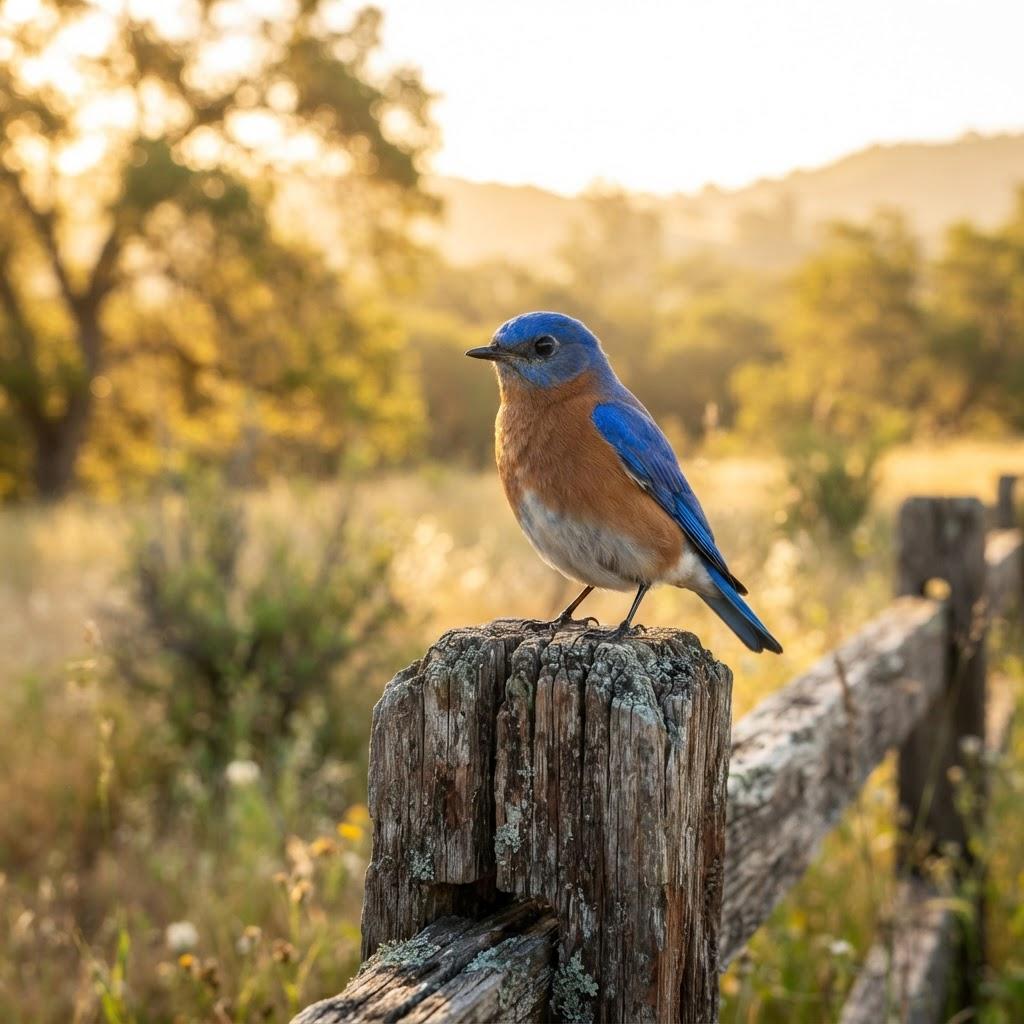
To identify a Mountain Bluebird, look for the 'glowing' effect. Males are bright, sky-blue all over, while females are a more subtle, grayish-blue with a touch of tan on the chest. They don't have the rusty orange breast of the Eastern Bluebird, which is your primary clue. Their song is a soft, melodic warble that sounds like a bubbling brook, usually heard in the early morning. They are doing quite well overall, as they are adaptable birds that have actually benefited from the creation of hiking trails and clearings that open up their hunting grounds. You can help them by installing a bluebird nest box on a metal pole—don't use wood if possible, as it tends to attract unwanted predators like snakes. Keep your local habitat as natural as possible, reduce your lawn space, and provide clean, fresh water. By helping them with housing and skipping the chemical sprays, you ensure that these sapphire-colored mountain legends continue to paint the sky for generations to come.