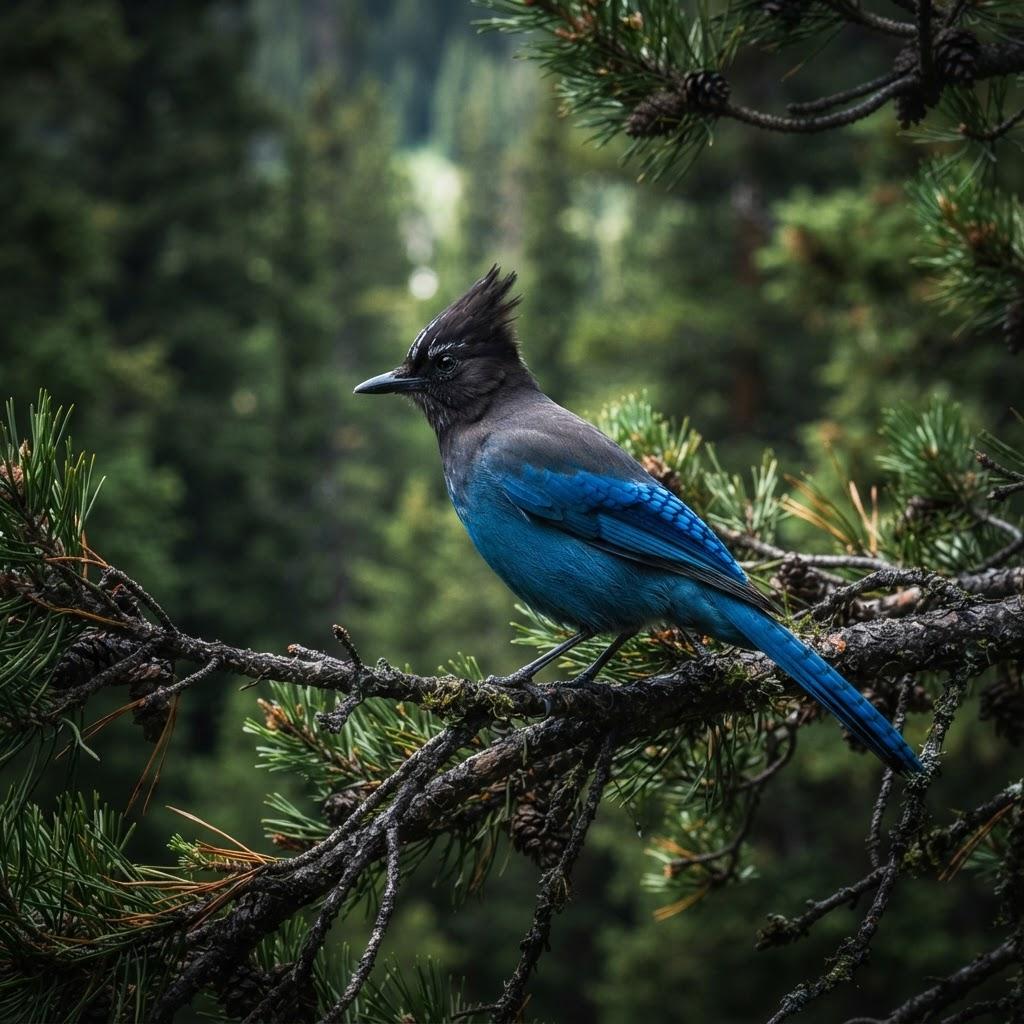
Cyanocitta stelleri
Steller's Jay
Meet the Steller's Jay, the punk rocker of the bird world with a sassy crest and a flair for the dramatic! This intelligent, bold, and brilliantly blue bird rules the Western forests with a squawk and a mischievous glint in its eye, making it the most entertaining (and sometimes infuriating) neighbor your backyard could ever have. Get ready for feathered chaos and learn how to befriend this feathered trickster without losing all your birdseed.
Meet the Bird
Imagine a feathered character that struts into the room, announces its presence with a fanfare of squawks, and then proceeds to eye your snacks with a bold, calculating gaze. That, my friends, is the Steller's Jay, the undisputed punk-rock monarch of the Western North American forests. This isn't your grandma's demure little songbird. Oh no. The Steller's Jay arrives on the scene looking like it just stepped out of a highly exclusive, avian fashion show, sporting a dramatic, inky-black crest that fades into a shimmering, iridescent blue body. It's a bird that demands attention, and it usually gets it. From its piercing black eyes to its powerful beak, every inch of this creature screams 'personality' — often at the top of its lungs. If birds were movie stars, the Steller's Jay would be the charismatic anti-hero, stealing every scene, probably with a witty one-liner and a pilfered peanut. Prepare to be entertained, slightly annoyed, and utterly captivated by this intelligent, audacious, and utterly unforgettable avian personality.
Superpowers & Weird Abilities
Forget capes and laser vision; the Steller's Jay possesses powers far more intriguing than anything dreamt up in a comic book. Its primary superpower? A brain that functions like a highly advanced, feathered supercomputer. These birds are renowned for their incredible intelligence and problem-solving skills, capable of figuring out complex feeder puzzles that leave other birds scratching their heads. But wait, there’s more! Steller’s Jays are master mimics, capable of perfectly imitating the calls of other birds, especially raptors like Red-tailed Hawks. Why? To scare off rivals from a prime food source, of course! Imagine trying to enjoy your morning coffee when suddenly a 'hawk' screams from the bushes, sending all the other birds scattering, only for a smug Steller's Jay to swoop in and claim the entire suet feeder for itself. It’s like a feathery con artist, using psychological warfare to get ahead. Their other astonishing ability is their memory. Steller's Jays are champion hoarders, or 'cachers' as the pros say, burying thousands of seeds and nuts each fall. They don't just randomly stash them; they have an incredible spatial memory, allowing them to retrieve their treasures months later, even under a blanket of snow. It’s like having a mental GPS for every single acorn they’ve ever buried, ensuring they survive the lean winter months. Truly, a bird with brains and a flair for theatrical deception.
Drama, Personality & Feathered Chaos
If the bird world had a social hierarchy, the Steller's Jay would be the charismatic but undeniably bossy alpha at the top of the pecking order, especially when it comes to the backyard buffet. These birds are not shy, they are assertive, and they are masters of the dramatic entrance. Imagine a peaceful scene at your feeder, small finches politely pecking, doves cooing softly, when suddenly, a flash of brilliant blue and a raucous squawk shatter the tranquility. The Steller's Jay has arrived, and it expects a red-carpet welcome and immediate access to the best nuts. They'll muscle out smaller birds with a determined flap of their wings and a pointed stare, establishing dominance with the ease of a seasoned bouncer. While some might label them 'feeder bullies,' it's more accurate to see them as highly efficient, self-serving opportunists. They're smart enough to learn your routines, recognize your face, and even differentiate between vehicles, knowing which ones bring the good stuff. They're the kind of bird that, if they were human, would probably be running a highly successful, slightly shady, but undeniably brilliant enterprise. Their intelligence allows them to adapt, exploit, and often dominate their immediate environment, turning your quiet backyard into their personal dramatic stage, complete with squawking soliloquies and daring food raids.
Bizarre Rituals & Quirky Habits
The Steller's Jay is a creature of many quirks, and watching their daily routines can feel like peeking into a wonderfully eccentric, feathered soap opera. One of their most peculiar habits is 'anting.' No, this isn't some strange avian form of self-flagellation. Sometimes, these jays will pick up live ants and rub them all over their feathers. Scientists aren't entirely sure why, but the leading theory is that the ants release formic acid, a natural insecticide, which helps rid the bird of parasites or soothe irritated skin. So, next time you see a Steller's Jay doing a weird little dance with an ant, know that it's likely performing its own DIY spa treatment! Another fascinating, if slightly unsettling, habit is their penchant for raiding other birds' nests. While it might sound villainous, it's just a part of their omnivorous diet. They are not above making off with an egg or a nestling, much to the dismay of the original feathered parents. This makes them a complex character – beautiful, intelligent, but undeniably ruthless when it comes to survival. They also love to take dust baths, vigorously flapping and rolling in dry dirt to keep their feathers clean and free of mites, looking like tiny, feathered children playing in a sandbox. And of course, their caching behavior, burying food items for later retrieval, is a quirky testament to their foresight and excellent memory, turning your backyard into a secret pantry full of hidden treasures.
Legends, Folklore & Human Stories
Across the vast landscapes of western North America, where the Steller's Jay reigns, various Indigenous cultures have woven this striking bird into the rich tapestry of their folklore and beliefs. For some, like certain Pacific Northwest tribes, the Steller's Jay, with its bold crest and clever demeanor, was seen as a trickster figure, much like its cousin the Raven or Crow. These were beings of great intelligence, capable of both creation and mischief, often disrupting the status quo or challenging established norms through their cunning. Its loud, varied calls, sometimes mimicking other birds or even human sounds, likely contributed to its reputation as a shapeshifter or a messenger from the spirit world. Imagine hearing the distinct call of a hawk, only to find a blue jay perched smugly nearby – it’s easy to see how such observations could lead to stories of avian deception and magical abilities. While not often considered a 'good-luck charm' in the traditional sense, its constant presence and vibrant plumage certainly make it a notable character in the forest. Early European settlers, often encountering these jays during their westward expansion, frequently noted their striking beauty and bold nature, sometimes likening them to 'blue crows' or 'crested magpies,' testament to their intelligence and assertive personality, which often left a strong impression on human observers. The Steller's Jay, therefore, is not just a bird; it's a living legend, a character deeply embedded in the narratives of the land it inhabits, reflecting the very spirit of the wild and untamed West.
Mating: The Ridiculous World of Avian Dating
When it comes to dating in the Steller's Jay world, it's less about candlelight dinners and more about coordinated squawks and strategic food offerings. These intelligent birds are generally monogamous, forming pair bonds that last at least for a breeding season, and often longer. The courtship isn't a flamboyant, acrobatic dance-off like some species; instead, it's a more subdued, yet equally intricate, display of commitment and provision. The male Steller's Jay proves his worth by, you guessed it, feeding the female. He'll bring her choice morsels—a plump insect, a juicy berry, or a prized nut—offering them with a deferential posture and a soft, often bell-like call, far less raucous than his usual pronouncements. This 'nuptial feeding' is a critical part of convincing the female that he's a reliable provider, capable of helping raise a brood of demanding chicks. She'll assess his offerings, his persistence, and his overall fitness, not unlike a human evaluating a potential partner’s financial stability and ability to assemble IKEA furniture. There's also a lot of quiet chattering and mutual preening involved, a delicate bonding ritual that solidifies their partnership. If the male's offerings aren't up to snuff, or his commitment seems shaky, the female can, and will, simply move on. No hard feelings, just a broken-hearted male left to practice his 'I'm a good provider' routine for the next potential mate. The stakes are high, and the right snack can mean the difference between starting a family and flying solo for another season.
Nesting: Master Architects and Lazy Slumlords
When it comes to building a home, Steller's Jays fall firmly into the 'master architect' category, though with a decidedly rustic, art-project vibe. These birds don't do minimalist; they do sturdy and well-hidden. Their nests are typically robust, cup-shaped structures built high up in coniferous trees, often close to the trunk where dense foliage provides excellent camouflage from prying eyes and hungry predators. The construction materials are a delightful hodgepodge of natural treasures: twigs, bark, mud, rootlets, pine needles, and even moss. Imagine a bird meticulously weaving together all these bits, reinforcing the structure with mud, which acts like avian cement, to create a surprisingly strong and insulated cradle for their future offspring. Sometimes, they'll even add a touch of human-made flair, incorporating bits of paper, string, or even fabric if they find it. They're not the lazy slumlords who just toss a few sticks together and call it a day, like some of their avian counterparts. Oh no, a Steller's Jay nest is built with intention and a clear understanding of what it takes to protect precious cargo. The female usually takes the lead in construction, with the male helping gather materials, transforming their chosen tree into a cozy, camouflage-clad nursery, a testament to their dedication to family life despite their often boisterous public persona.
Raising Babies: The Screaming Food Disposals
Once those meticulously constructed nests are complete, the real chaos begins: the raising of Steller's Jay babies. These aren't delicate, quiet little things; they are, in essence, screaming food disposal units. The female typically lays 2 to 6 eggs, which are a lovely pale blue or greenish with brown speckles, incubating them for about 16-18 days. Once the eggs hatch, the parents enter a grueling, 24/7, all-you-can-eat buffet service for their hungry brood. Imagine having four or five tiny, demanding mouths, wide open and perpetually squawking, each one growing at an alarming rate and seemingly always hungry. Both parents are on constant duty, flying back and forth, bringing a steady stream of insects, berries, seeds, and whatever else they can forage to shove down those insatiable gullets. The chicks, for their part, show absolutely zero gratitude, just an endless, high-pitched plea for 'MORE FOOD, FASTER, NOW!' They grow incredibly fast, transforming from helpless, naked hatchlings into fluffy, inquisitive fledglings in just about three weeks. The nest quickly becomes a bustling, noisy daycare center, a whirlwind of tiny wings, open beaks, and parental exhaustion. Even after fledging, when they clumsily leave the nest, they still rely on their tireless parents for food, following them around with insistent cries, turning the forest into a cacophony of demanding squeaks. It's a true test of parental endurance, transforming the bold Steller's Jay into an overtired, but utterly devoted, feathered fast-food delivery service.
Bird-Watching Travel & Local Hotspots
If you're eager to witness the magnificent, mischievous Steller's Jay in its natural element, pack your bags for the stunning landscapes of Western North America. These brilliant blue birds are practically the official avian mascot of coniferous and mixed evergreen forests from Alaska all the way down to Central America. For prime viewing opportunities, aim for places like California's Redwood National Park, where their striking blue plumage contrasts beautifully with the towering green trees. The Pacific Northwest, encompassing states like Washington and Oregon, along with British Columbia in Canada, is another fantastic region, particularly in mountain parks like Mount Rainier National Park or Garibaldi Provincial Park, where they often frequent campsites and picnic areas (always keep your snacks secure!). They're also quite common in the Rocky Mountains, so places like Yellowstone National Park or Colorado's Estes Park are excellent choices. The best times to spot them are generally year-round, as they don't migrate, but they can be especially noticeable in late fall and winter when they're actively caching food and often visit feeders. Look for them in forests, especially near the edges, and don't be surprised to find them in suburban areas with mature trees and bird-friendly gardens. If you hear a loud, varied squawking or an impressive imitation of a hawk, you're likely in the right place. Just follow the sound of feathered drama, and you'll find your Steller's Jay.
Food, Feeder Hacks & DIY Projects
To truly roll out the red carpet for a Steller's Jay (and accept their inevitable feeder domination), understanding their diet is key. These birds are omnivorous opportunists, meaning they eat practically anything! In the wild, their diet consists of a healthy mix of acorns, pine seeds, berries, insects, spiders, small rodents, and even eggs or nestlings of other birds. To attract them to your yard, you’ll want to cater to their sophisticated palate. Their absolute favorite? Peanuts – in the shell, out of the shell, chopped, whole, you name it. Sunflower seeds (especially black oil sunflower) are also a hit. Avoid cheap millet; it's mostly filler that aggressive birds like House Sparrows or Starlings might gobble up, but Steller's Jays prefer the good stuff. For a fun DIY project you can do with kids, try a pinecone feeder: spread peanut butter generously over a large pinecone, then roll it in shelled peanuts and sunflower seeds. Hang it from a sturdy branch, and watch the jays go wild! Suet cakes, particularly those with nuts and seeds, are also a fantastic high-energy treat, especially in colder months. To turn your yard into a Steller's Jay magnet, consider planting native trees and shrubs that produce nuts or berries, such as oaks, pines, or elderberry bushes. These provide natural food sources and valuable cover. Remember, bird food can get expensive, so buying in bulk when sales hit can save you a bundle, making your feathered guests (and your wallet) much happier.
Seasonal Guides &
The Steller's Jay is a year-round resident in most of its range, meaning its antics and appetite don't take a seasonal vacation. In spring, as nesting season approaches, you might notice them being a bit more secretive, focusing on courtship feeding and nest building. Keep your feeders stocked with high-protein options like peanuts and suet to support the hardworking parents. During summer, their diet leans heavily towards insects and berries, so if you've planted native berry-producing shrubs, you'll be their best friend. Fall is when their 'caching superpower' really kicks into gear; they'll be frantically burying acorns and seeds, so keep those shelled peanuts coming! Winter is perhaps when they're most visible at feeders, as natural food sources become scarcer. High-fat suet and abundant nuts are crucial for them to maintain their energy in freezing temperatures. Consider a heated birdbath to provide a vital water source when everything else is frozen solid. As for 'fledgling panic' season in late spring/early summer, if you see a fluffy, awkward young Steller's Jay on the ground, resist the urge to 'rescue' it. It's very likely a fledgling, still learning to fly but perfectly fine, with its parents nearby watching and supervising its clumsy first flights. Unless it's in immediate danger from a cat or car, or looks injured, the best thing to do is observe from a distance. The parents are usually close by, even if you can't see them, guiding their noisy, demanding offspring through the first challenging weeks of independence.
Backyard Tech & Gadget Reviews
For the truly dedicated Steller's Jay enthusiast, technology can elevate your birding game from passive observer to active participant. Smart feeders, like the popular Bird Buddy or similar AI-powered devices, are an absolute game-changer. Imagine getting a notification on your phone: 'A Steller's Jay just visited your feeder!' complete with a high-resolution photo or even a short video. These gadgets are fantastic for identifying visitors, cataloging species, and just generally making you feel like a secret agent of avian observation. However, an honest take: while brilliant, they can sometimes struggle with very fast-moving birds or in low light, and the Steller's Jay's dominance might mean it's the only one you capture for a while! Another essential piece of tech for any backyard birder is window collision prevention. Those stunning blue visitors are often oblivious to transparent glass. Simple, yet effective solutions include applying 'Feather Friendly' tape (tiny dots that birds see but are nearly invisible to humans), hanging decorative suncatchers, or using UV window decals. These break up reflections and make the window visible as an obstacle. For truly capturing their caching antics or nocturnal visits, consider a motion-activated trail camera. They're affordable, weatherproof, and can catch that sneaky jay burying its treasure or even identify what other creatures are visiting your yard after dark. Setting one up near a feeder or a known caching spot can provide fascinating insights into their secret lives.
How to Spot One & How It Is Doing
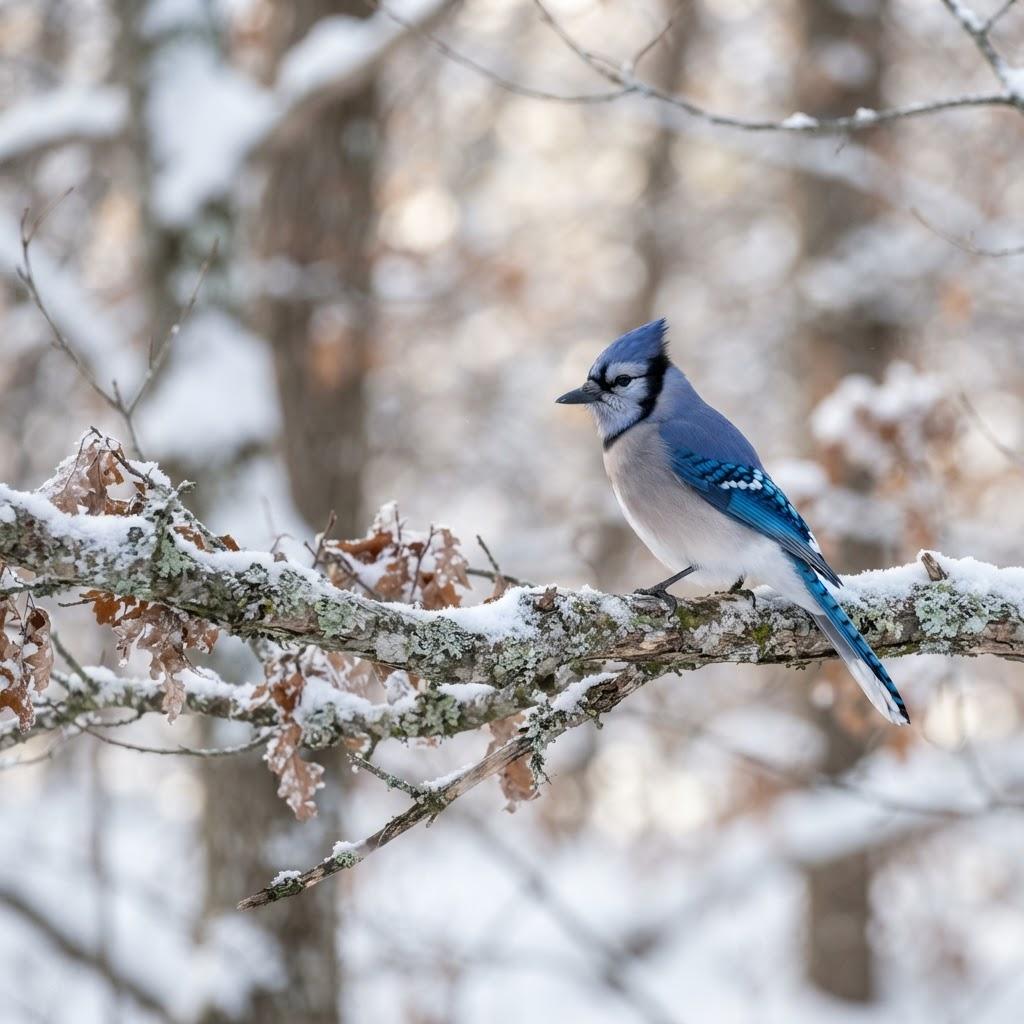
Spotting a Steller's Jay is often less about searching and more about reacting to a sudden, dramatic declaration of its presence. To recognize this feathered character, look for its unmistakable black crest, which often looks like a tiny, spiky crown, topping a head that's deep black or dark brownish-black, gradually fading into a brilliant, iridescent blue on its back, wings, and tail. The contrast is striking, like a perfectly styled punk haircut. They are large for a passerine, roughly the size of a robin but much more substantial, with a long tail. Their calls are equally distinctive: a loud, harsh 'shook-shook-shook' or a variety of squawks and chirps, often interspersed with surprisingly melodious, bell-like notes or impressive imitations of other birds, particularly raptors. Listen for the sound of a forest being announced by its resident loudmouth, and you'll likely find a Steller's Jay. Where to look? High in coniferous or mixed forests, but don't limit yourself; they are frequent visitors to campgrounds, picnic areas, parks, and suburban backyards, especially if there's a feeder involved. As for its well-being, the Steller's Jay is currently listed as 'Least Concern' by conservation organizations. Their population is widespread and stable, adapting well to a variety of habitats, including those altered by humans. What can you do to help? Continue to provide food and water responsibly, maintain native plant species in your yard, and help reduce window collisions. By simply appreciating and observing this magnificent, boisterous bird, you're contributing to its continued story in our wild spaces.