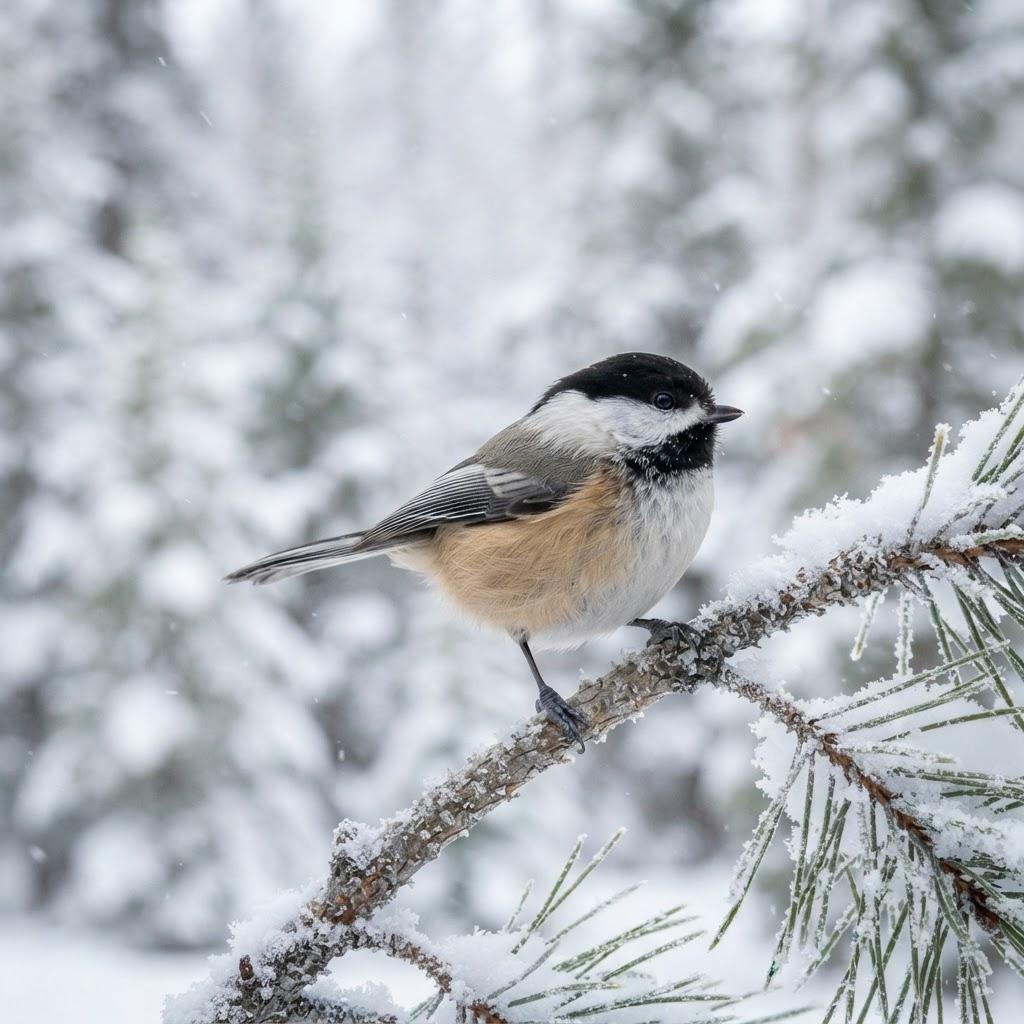
Poecile atricapillus
Black-capped Chickadee
The Black-capped Chickadee is essentially a tiny, acrobatic daredevil dressed for a formal gala. These hyperactive woodland ninjas possess a brain that grows every year, making them one of the smartest and most charming backyard neighbors you could ask for.
Meet the Bird
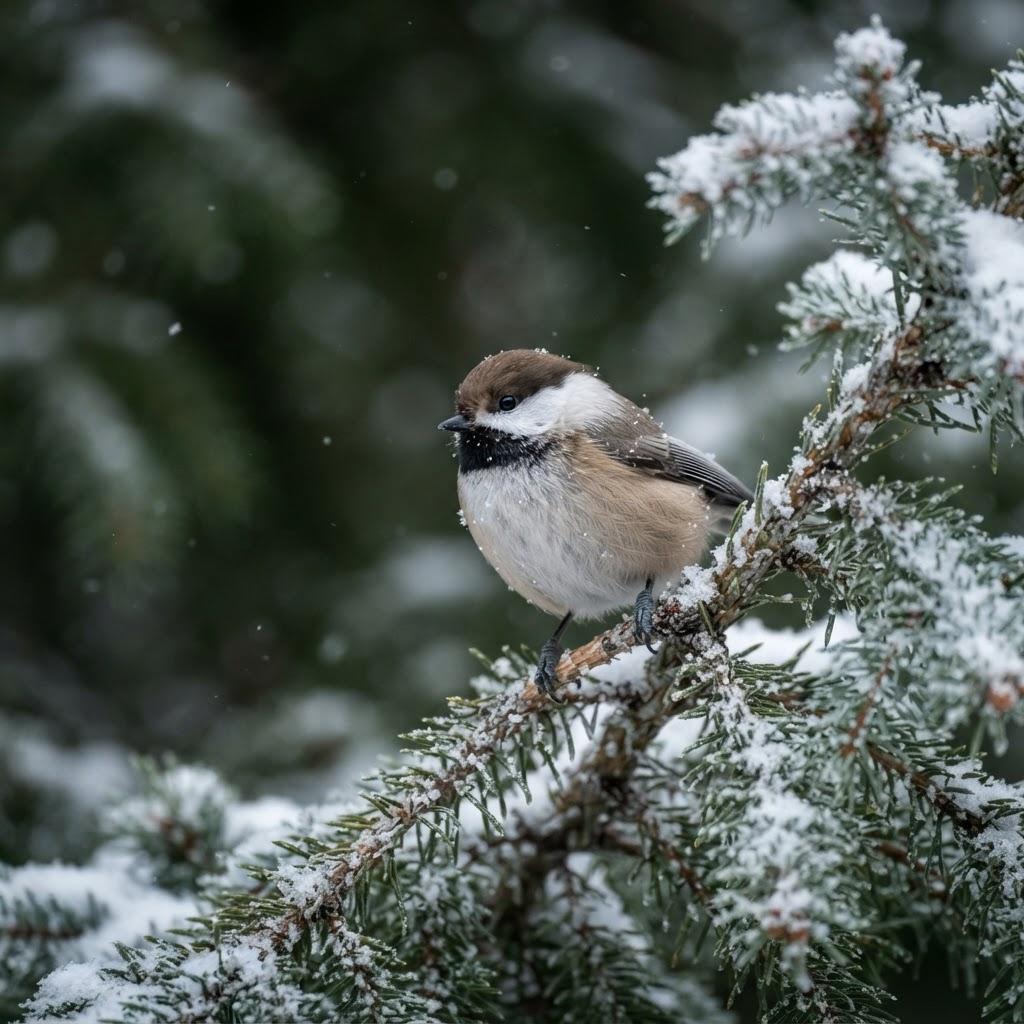
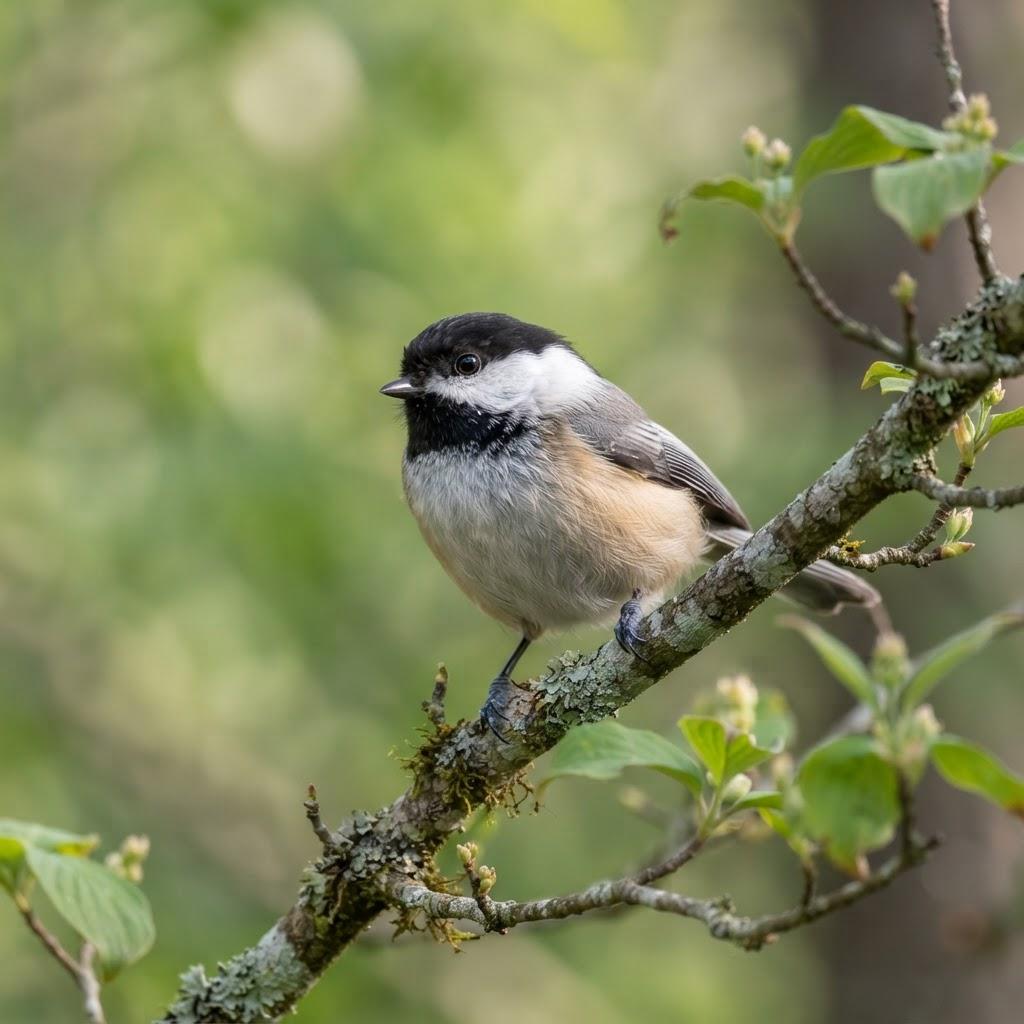
Imagine a bird that looks like it just stepped out of a tuxedo shop but has the high-octane energy of a toddler on a sugar rush. That is the Black-capped Chickadee. With its signature solid black cap and matching throat bib, this bird is perpetually dressed for a fancy dinner party it has absolutely no intention of attending. Instead, it prefers to hang upside down from the thinnest twigs of an oak tree, screaming its own name at the top of its lungs. Chickadees are the quintessential backyard characters, characterized by a bold, inquisitive nature that makes them seem far larger than their actual size. While most birds flee in terror at the sight of a human, the chickadee often flits in closer to investigate, seemingly judging your choice of garden accessories or wondering if that giant moving object has any sunflower seeds hidden in its pockets. They are the feathered equivalent of that overly friendly neighbor who pops over unannounced to borrow a cup of sugar but ends up telling you their life story for three hours.
Superpowers & Weird Abilities
If you think your brain is impressive, consider the fact that the Black-capped Chickadee has a superpower that sounds like something out of a science fiction novel: seasonal brain expansion. During the autumn, the hippocampus—the part of the brain responsible for spatial memory—literally grows in size. This isn't magic; it is an evolutionary masterpiece. These birds spend months caching thousands of individual seeds in hidden crevices across a massive territory. To survive the brutal winter, they need a mental map of their pantry that would put a GPS to shame. If they couldn't remember where they hid that one specific pine nut behind a piece of loose bark in September, they would be toast come January. It is like having a photographic memory that physically upgrades your hard drive every single year to accommodate a new set of data. When spring rolls around and the need for intense memory retrieval wanes, the brain shrinks back down to its normal size to save energy, because even a genius bird needs to cut overhead costs.
Drama, Personality & Feathered Chaos
Despite their adorable appearance, do not be fooled: Black-capped Chickadees are the ultimate social climbers. They operate in complex social hierarchies that would put a high school drama to shame. Every winter, they form loose flocks, and there is a very strict pecking order—literally. The dominant males get first dibs on the best feeding spots, while the subordinates have to hover nervously on the periphery, waiting for a gap in the security fence. However, the most chaotic part of their personality is their role as the forest’s neighborhood watch alarm system. When they spot a predator, they start a frantic 'chick-a-dee-dee-dee' call. The more 'dees' they add to the end of the call, the higher the threat level. A hawk might elicit one or two 'dees', but a tiny, angry owl might cause the bird to descend into a full-blown, multi-syllable panic attack. They are dramatic little gossipers who love to announce exactly what is happening in the woods to everyone within earshot.
Bizarre Rituals & Quirky Habits
Chickadees engage in a practice known as 'anting,' which is just as weird as it sounds. Occasionally, you might catch one of these birds lying on an anthill or holding an ant in its beak and rubbing it all over its feathers. This isn't a strange grooming fetish; it is a desperate attempt to use the formic acid produced by the ants to repel parasites. It is essentially nature’s version of a medicated spa treatment. They also exhibit a habit of 'sun-bathing' where they drop their wings, puff out their chest, and tilt their heads back as if they are trying to absorb cosmic energy. While it looks like they are having a bit of an existential crisis, they are actually just regulating their body temperature and using the sun’s rays to help keep their feathers in top condition. They are constantly tinkering with their plumage, making sure that every black and white feather is perfectly aligned for the next flight.
Legends, Folklore & Human Stories
Across many Native American cultures, the chickadee is seen as a harbinger of truth and a messenger. Because of its persistent, inquisitive nature, it is often viewed as a spirit that encourages people to pay attention to the small things in life. Folklore often characterizes them as clever and bold, sometimes even playing the part of a trickster who manages to outsmart larger animals through sheer speed and agility. In more modern lore, they have become the unofficial mascots of the 'backyard birding' movement. There are countless stories of patient humans who spent weeks sitting silently in their yards, holding a handful of sunflower seeds, until a brave, curious chickadee finally landed on their hand. This moment of inter-species trust is often described as a life-changing epiphany. The chickadee is a bridge between the wild, untamed forest and our manicured suburban backyards, serving as a reminder that wildness is never really that far away.
Mating: The Ridiculous World of Avian Dating
The courtship of the Black-capped Chickadee is a masterclass in subtlety. There are no garish displays or long, complicated dance numbers here; instead, it is all about the 'fee-bee' song. The male whistles a high, clear, two-note song that sounds like he is announcing his availability to the entire neighborhood. If a female finds the performance satisfactory, she will perform a 'wing-flutter,' a cute little gesture where she crouches down and rapidly vibrates her wings. If the male is unimpressed or if she finds someone with a slightly higher-pitched, more authoritative whistle, she moves on. The competition is fierce, and the males spend hours every morning just practicing their pitch to ensure they sound like the most eligible bachelor in the woodlot. It is the avian equivalent of an endless round of 'The Voice,' but with much higher stakes and a lot more whistling in the cold morning air.
Nesting: Master Architects and Lazy Slumlords
When it comes to housing, chickadees are strictly 'fixer-upper' types. They are cavity nesters, which means they do not build nests out in the open like a common robin. They prefer to find a hollowed-out space in a rotting tree or, if they are feeling ambitious, excavate their own home in a piece of soft, decaying wood. Once they find the right hole, they treat it like a luxury interior design project, lining it with a soft mixture of moss, hair, and plant down. It is a cozy, insulated bunker designed to keep the cold out. If they cannot find a hole, they are not above moving into an old woodpecker apartment that has been abandoned. They are the ultimate DIY enthusiasts of the bird world, constantly adjusting the size of the entrance and the thickness of the insulation to make sure the nest is perfectly suited for a growing family.
Raising Babies: The Screaming Food Disposals
Once the eggs hatch, the parents are essentially trapped in an endless cycle of labor. Chickadees can lay anywhere from six to eight eggs, and once they hatch, the nest becomes a chaotic, chirping mass of hunger. The chicks are born blind and helpless, but they grow at an alarming rate. Within a few weeks, they are essentially vibrating balls of fluff that spend the entire day shouting for food. The parents work with military efficiency, flying back and forth from dawn until dusk, delivering caterpillars, spiders, and insects to the screaming mouths. It is a high-pressure environment where one mistake could mean the end of the brood. The level of parental dedication is staggering; these tiny birds will literally lose weight and exhaust themselves just to ensure their chicks have the fuel to grow their flight feathers. By the time the chicks fledge, the parents look like they have aged three years in three weeks.
Bird-Watching Travel & Local Hotspots
If you are on a quest to see a Black-capped Chickadee, you are in luck because they are basically everywhere in the northern half of North America. However, if you want to see them in their natural, rugged glory, head to the boreal forests of Canada, particularly in areas like Algonquin Provincial Park in Ontario or the vast woodlands of the Adirondacks in New York. These spots provide the classic, moss-covered, towering-tree habitat that these birds love. In the winter, they are especially active near frozen lakes and around the feeders of visitor centers. For a truly magical experience, visit the Rocky Mountain National Park during the autumn. The golden aspen leaves contrasted against the stark black and white of the chickadees makes for some of the best bird-watching photography you will ever encounter. They are present in almost every public park, so you rarely need to travel far to see one in action.
Food, Feeder Hacks & DIY Projects
Forget the cheap, dusty bags of millet from the big-box store. If you want to be a chickadee hero, stick to black-oil sunflower seeds. These are the gold standard—high in fat, high in calories, and easy for their tiny beaks to crack open. For a DIY project, take a pinecone, slather it in high-quality suet or a mixture of natural peanut butter and lard, and roll it in sunflower seeds. Hang it from a branch with a bit of twine, and you will have a chickadee magnet within twenty minutes. To truly level up your yard, plant native shrubs like serviceberry or dogwood. These provide the natural 'fast food' that chickadees rely on during the migration transition. Keep your feeders clean and dry; a wet, moldy feeder is a death trap for small birds. By focusing on high-quality fat sources, you are helping them build the energy reserves they need to survive the freezing nights.
Seasonal Guides & "Crisis" Management
Seasonal changes are a big deal for a bird that weighs less than a standard-sized AA battery. In the winter, your primary job is to keep that feeder full. During a massive snowstorm, a reliable supply of high-fat food can be the difference between life and death. When spring hits, you might find a 'fledgling' on the ground—a bird that looks like a clumsy, confused ball of fluff. Do not panic and do not 'rescue' it. These are usually just teenagers taking their first awkward flight lessons. The parents are almost certainly nearby, watching from the trees and calling out instructions. As long as the bird is not injured and is not in the middle of a busy road, leave it alone. The best thing you can do for a bird in crisis is to provide a safe, undisturbed environment where nature can take its course without human interference.
Backyard Tech & Gadget Reviews
Modern technology has brought us closer to birds than ever before. Smart feeders that use AI to identify species and snap photos are incredible, though they can be addictive—you will find yourself checking your phone every time a chickadee lands just to see their funny expressions. To stop window collisions, which are a major danger for these active birds, you don't need ugly tape. Try using patterned window film or hanging decorative ultraviolet decals that are visible to birds but barely noticeable to humans. If you are feeling adventurous, a trail camera set up near a suet feeder can reveal the 'night shift' of your backyard, showing you which nocturnal creatures are trying to steal the leftovers. Just make sure your tech doesn't distract you from the simple pleasure of grabbing a pair of binoculars and actually sitting outside to watch them in real-time.
How to Spot One & How It Is Doing
Spotting a Black-capped Chickadee is easy because they are rarely still for more than a second. Look for the black cap, the white cheeks, and that little black bib. Their flight pattern is bouncy and erratic, like they are riding invisible rollercoasters through the air. Listen for the 'chick-a-dee-dee-dee' alarm call or the clear 'fee-bee' whistle. Their population is currently stable, which is great news, but they face constant threats from habitat loss and climate change. You can help by keeping your backyard natural—leave the dead trees standing if they are safe, as these are the perfect 'apartments' for nesting. By creating a chemical-free environment with plenty of native plants, you are ensuring that these tiny, tuxedo-clad characters have a place to call home for generations to come. They are a common bird, but they are a constant, joyful reminder that the wild is always thriving, right outside your window.