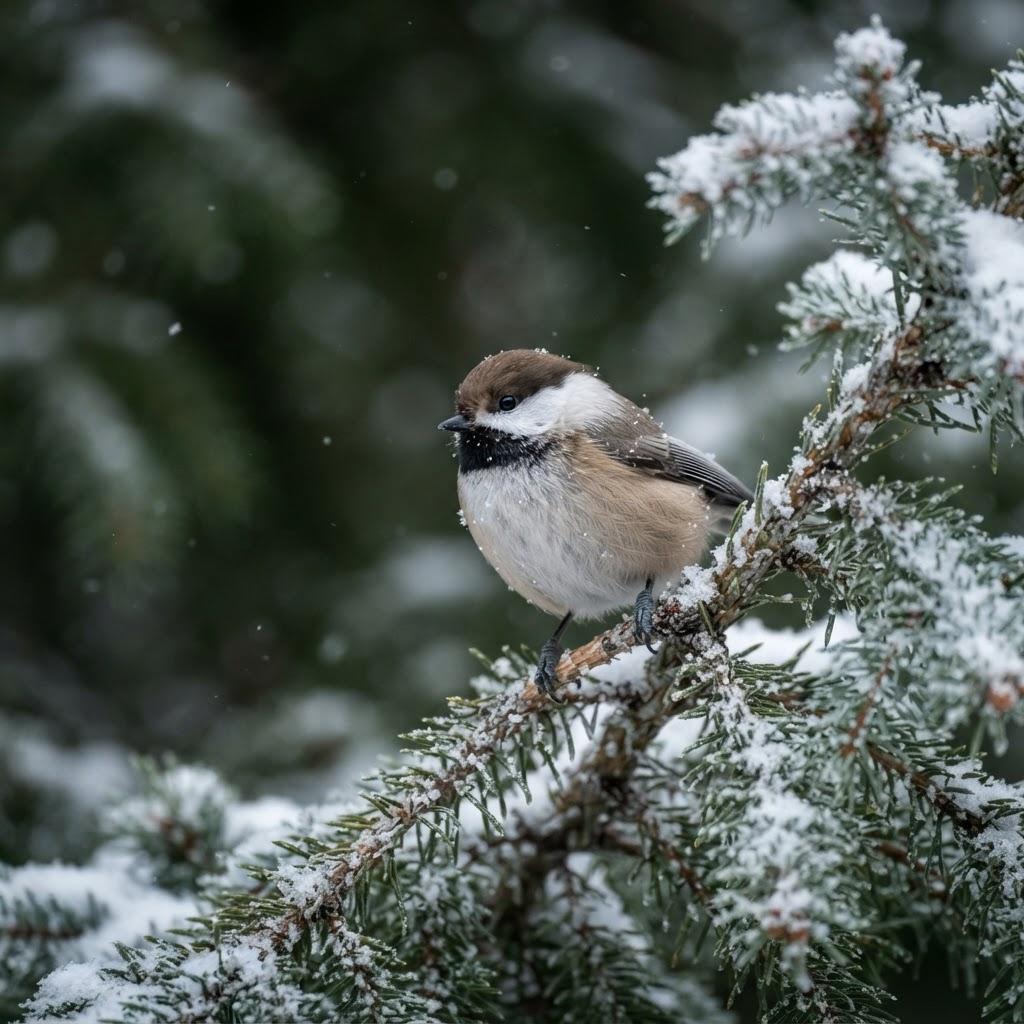
Poecile hudsonicus
Boreal Chickadee
Meet the Boreal Chickadee, the fluffy, cinnamon-flanked rebel of the northern woods! This pint-sized powerhouse laughs in the face of arctic winds and remembers where every single cached seed is buried, even under a meter of snow. Forget your flashy tropical birds; this little survivor is the true action hero of the avian world, ready to steal your heart (and maybe a sunflower seed or two).
Meet the Bird
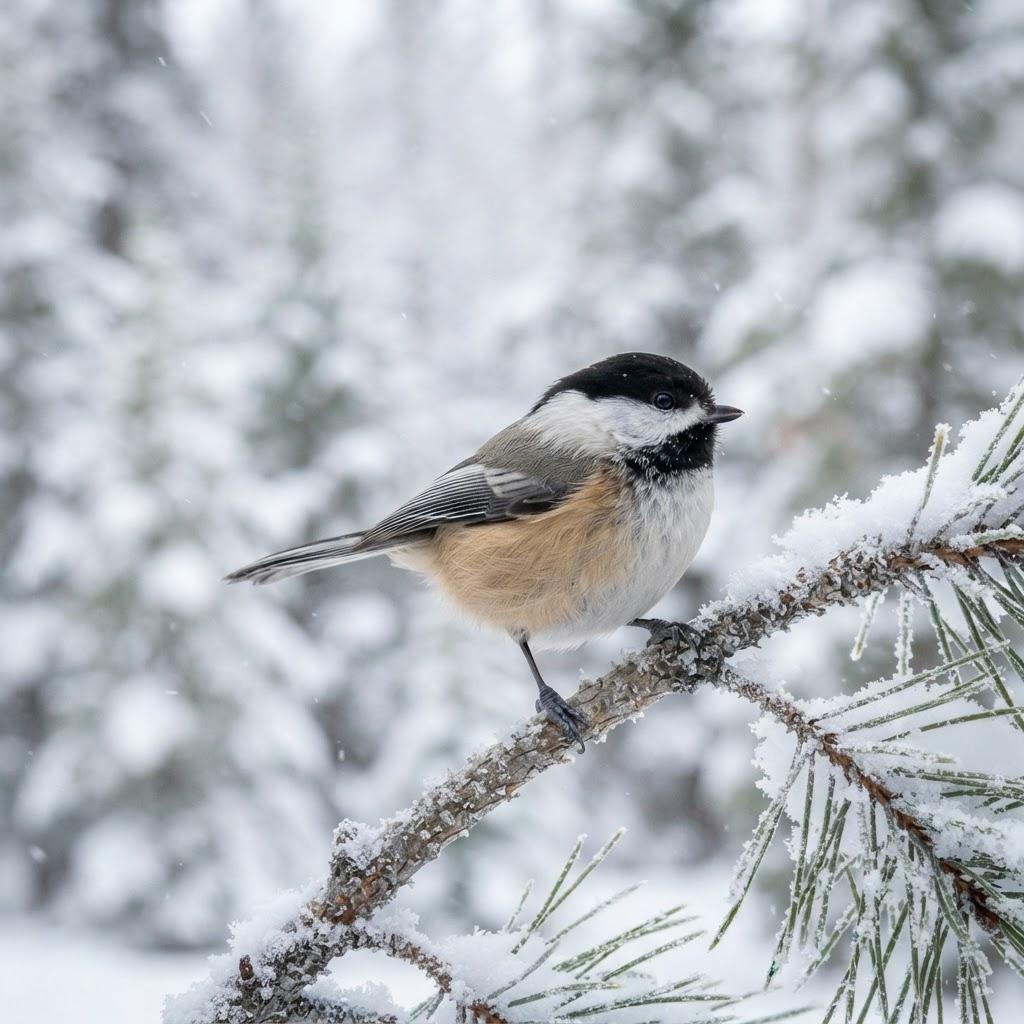
Imagine a tiny, feathered snow elf, clad in a jaunty brown cap and a cozy, cinnamon-colored sweater, flitting through a winter wonderland. That, my friends, is the Boreal Chickadee, the undisputed monarch of the frozen north, and arguably the most charmingly resilient bird you’ve never heard of (unless you’re a certified bird nerd, in which case, high-five!). Unlike its more common Black-capped cousin, who's always buzzing about in suburban backyards, the Boreal Chickadee is the quiet, mysterious stranger at the party, preferring the deep, dark, and often bone-chillingly cold confines of the boreal forest. It’s like the elusive Bigfoot of the bird world, but instead of blurry photos, you get fleeting glimpses of a fluffy, cinnamon-flanked acrobat hanging upside down from a spruce cone. These little bundles of fluff are not just cute; they are bona fide survivalists, turning their tiny noses up at temperatures that would make a polar bear shiver. Their call, a nasal, almost wheezy 'chick-a-dee-dee,' is less a boisterous announcement and more a whispered secret, adding to their air of adorable mystery. Get ready, because we're about to delve into the fascinating, frosty world of this undersung avian hero, who proves that big personalities can absolutely come in small, feathery packages.
Superpowers & Weird Abilities
If the Boreal Chickadee were a superhero, its origin story would involve being exposed to sub-zero temperatures and gaining the ability to laugh in the face of frostbite. Seriously, these birds are like tiny, fuzzy heat furnaces. How do they do it? For starters, they're masters of hypothermia, but not in a bad way! They can intentionally lower their body temperature by up to 10-12 degrees Celsius at night, slowing their metabolism and conserving precious energy, like hitting a feathered 'snooze' button on their internal thermostat. This is called regulated hypothermia, and it's a game-changer when you're trying to survive a -40 degree night. They also grow extra, super-insulating feathers in winter, essentially donning a bespoke down jacket that puts yours to shame. But their real superpower, the one that makes them worthy of a Marvel movie, is their memory. Boreal Chickadees are prodigious food cachers, stashing thousands of seeds, insects, and berries across their territory. Then, with a memory that would make an elephant blush, they can recall the precise location of these hidden treasures months later, even when they're buried under a thick blanket of snow. It’s like having a mental GPS for every single snack they’ve ever hidden, ensuring they never go hungry even when the freezer aisle of nature is completely snowed in. Forget super strength; this is super brain power in action, allowing them to thrive where other birds would simply freeze.
Drama, Personality & Feathered Chaos
The Boreal Chickadee isn't exactly the life of the party, or at least, not the rowdy kind. While their Black-capped cousins are often found in bustling mixed flocks, chattering away like a clique of high school students, the Boreal Chickadee tends to be a bit more... reserved. Think of them as the quiet, contemplative artists of the avian world, content with their own thoughts and a small, select group of equally chill friends. They often forage alone or in small family groups, occasionally joining a quiet mixed flock with kinglets or nuthatches, but rarely dominating the conversation. They don't engage in the dramatic squabbles and territorial feuds that define some backyard birds. Instead, their drama is internal, a constant, silent battle against the elements, a testament to quiet perseverance. They're not going to be the ones dive-bombing the feeder or bullying a smaller bird off a prime perch. In fact, their very shyness and preference for the deepest parts of the forest make them seem almost aloof, the 'too cool for school' birds who prefer intellectual pursuits (like remembering where they buried that one particular spruce seed from last autumn) over petty squabbles. Their personalities are less 'Feathered Chaos' and more 'Quietly Competent Survivalist,' a refreshing change from some of the more boisterous avian characters out there. It’s the kind of subtle drama that unfolds quietly, often unseen, in the vast, silent wilderness.
Bizarre Rituals & Quirky Habits
While not prone to flamboyant dances or strange displays, the Boreal Chickadee has its own set of quirky habits that are endearing in their practicality. One of their most consistent rituals is their almost obsessive food caching. They are hoarders of the highest order, stashing away every edible morsel they find. They’ll grab a single seed or insect, fly off, wedge it into a bark crevice, under a lichen, or beneath a patch of moss, and then meticulously cover it up. They then perform a quick 'check' flight around the spot, perhaps to commit it to memory from multiple angles, like a tiny, feathered cartographer. This isn't just a haphazard drop-and-go; it's a strategic, location-based food storage system. Another quirky habit, especially noticeable in deep winter, is their ability to spend incredibly long periods hunkered down in sheltered cavities. When a blizzard hits, or the temperatures plummet to truly absurd levels, these birds aren't out frolicking. They're tucked away in tree holes, under thick branches, or even in snow roosts, conserving every last calorie. It's like they've perfected the art of the winter 'staycation,' knowing precisely when to brave the elements and when to simply chill out (literally). Their quiet, almost furtive foraging style, constantly investigating every nook and cranny of a tree trunk with intense focus, also sets them apart. They’re less about flashy aerial maneuvers and more about methodical, almost surgical precision in their search for sustenance, embodying the mantra 'slow and steady wins the race' when it comes to winter survival.
Legends, Folklore & Human Stories
Given their elusive nature and preference for the remote, often uninhabited boreal forests, the Boreal Chickadee hasn't accumulated the rich tapestry of folklore and human stories that some of its more urban-dwelling relatives have. You won't find them leading honey-hunters to hives or being portents of doom in ancient sagas. However, their story is interwoven with a more modern kind of legend: the legend of the dedicated birder. For many bird enthusiasts, spotting a Boreal Chickadee is a rite of passage, a badge of honor that signifies a deep dive into the world of cold-weather birding. It's not just a bird; it's a quest item, a symbol of perseverance through icy winds and snowy trails. The human stories surrounding this chickadee are less about ancient myths and more about the exhilarating 'aha!' moment when its soft, nasal call finally breaks the silence of a frigid forest, signaling its presence. People travel hundreds, sometimes thousands of miles, bundle up in layers that would shame an arctic explorer, and brave conditions that would send lesser mortals indoors, all for a fleeting glimpse of this cinnamon-flanked treasure. The Boreal Chickadee, therefore, embodies a modern legend: the reward for the intrepid, the prize for the patient, and the quiet muse for those who truly appreciate the untamed beauty of the northern wilderness. It’s a testament to the fact that sometimes, the most profound connections are found not in grand narratives, but in the personal triumphs of discovery.
Mating: The Ridiculous World of Avian Dating
When it comes to avian dating, the Boreal Chickadee keeps things decidedly low-key, preferring quiet intimacy over flamboyant displays. You won't find them engaging in elaborate synchronized dances or building intricate bachelor pads like some tropical show-offs. Their courtship is more akin to a subtle, yet deeply meaningful, exchange of vows in a snow-covered chapel. The male will often woo his chosen female with soft, churring calls and perhaps an offering of food – a choice insect or a plump seed, presented with all the gravitas of a diamond ring. It's less about flashy moves and more about demonstrating his provisioning skills and his ability to find sustenance even in the harshest environments. This practical approach makes perfect sense in a world where survival is paramount; a male who can consistently find food is a male who can help raise successful chicks. He might also engage in a quiet 'pursuit flight,' following the female closely through the branches, a gentle aerial ballet rather than an aggressive chase. The female, ever practical, will assess his foraging prowess and his general fitness. If he’s a good provider and seems capable of helping her through the grueling process of nesting and chick-rearing, she’ll accept his subtle advances. There are no dramatic rejections or heartbroken male chickadees left to pine away; it’s a pragmatic partnership forged in the quiet resilience of the boreal forest, proving that true love sometimes just looks like a really good snack.
Nesting: Master Architects and Lazy Slumlords
Boreal Chickadees, bless their little, industrious hearts, are definitely not the 'lazy slumlord' type when it comes to nesting. They're more like diligent, if not always perfectly neat, interior designers who prioritize coziness and warmth above all else. These birds are cavity nesters, meaning they prefer to set up home in the pre-existing holes in trees. They’re not usually master excavators like woodpeckers, but they are opportunistic, happily enlarging a rotting knot hole, a deserted woodpecker cavity, or even a soft spot in a decaying stump. The female does most of the interior decorating, meticulously lining the cavity with a plush carpet of soft materials. We're talking moss, lichens, animal fur (sometimes even from large mammals like moose or deer, making for a truly luxurious nursery), and soft plant fibers. The goal? To create a perfectly insulated, snug little abode that will protect her precious eggs and future chicks from the brutal cold of the northern spring. It’s less about architectural grandeur and more about practical, bomb-proof engineering for extreme weather. Imagine a tiny, perfectly insulated igloo, but made of natural fibers instead of ice. The entrance is often just big enough for a chickadee, acting as a natural deterrent to larger predators. It’s a testament to their survival instincts that they dedicate so much energy to crafting a secure, warm environment, ensuring their progeny have the best possible start in their challenging world.
Raising Babies: The Screaming Food Disposals
Once the Boreal Chickadee eggs hatch, usually a clutch of 5-9 tiny, helpless chicks, the quiet dignity of the parents transforms into a frantic, round-the-clock catering service. These little fluffballs are, indeed, the screaming food disposals of the forest. They are born naked and blind, utterly dependent on their parents, and their hunger is insatiable. The parents, both male and female, become a blur of activity, darting in and out of the nest cavity, stuffing their babies with a constant stream of caterpillars, spiders, and other soft-bodied insects. These high-protein snacks are crucial for rapid growth. Imagine trying to feed a dozen ravenous toddlers who somehow manage to double their body weight every few days – that’s pretty much the chickadee parents' reality. The chicks grow at an astonishing rate, transforming from fragile blobs into feathered, demanding bundles of energy in just about two weeks. The parents work themselves to the bone, often visiting the nest hundreds of times a day, tirelessly shuttling food. The cacophony emanating from the nest is a testament to the efficiency of these tiny stomachs and the dedication of their exhausted parents. After about 14-18 days, the chicks, now fully feathered but still a bit clumsy, fledge and leave the nest. But the parental duties aren't over! For several more weeks, the family stays together, with the parents continuing to feed their still-learning offspring, teaching them the crucial skills of foraging and survival in the unforgiving boreal environment. It’s a masterclass in avian teamwork and self-sacrifice, all fueled by tiny, insect-fueled bellies.
Bird-Watching Travel & Local Hotspots
If you're aching to add the elusive Boreal Chickadee to your life list, you'll need to pack your warmest gear and set your GPS for the great white north. These are not your backyard feeder birds, unless your backyard *is* a vast, uninterrupted expanse of spruce and fir forest. The Boreal Chickadee is a specialist of the boreal zone, thriving in the dense, often boggy coniferous forests that stretch across Canada, Alaska, and into the northernmost fringes of the continental United States. Think places like the vast wildernesses of **Algonquin Provincial Park** in Ontario, Canada, or the remote forests of **Maine's North Woods**. In the US, look for them in places like **Voyageurs National Park** in Minnesota, **Upper Peninsula of Michigan**, or the high elevations of the **Adirondacks in New York**, particularly in areas dominated by black spruce and balsam fir. The best time to find them is typically in the winter when they might be a bit more conspicuous (comparatively speaking) as they forage more actively for cached food, and their soft calls carry further in the crisp air. Plus, winter birding offers the added bonus of fewer bugs! Look for areas with mature, dense stands of conifers, especially near bogs or wetlands. While there aren't many 'hotspots' for this bird in the traditional sense – it's more about finding the right habitat – a visit to the **Sax-Zim Bog** in northern Minnesota is a fantastic winter birding destination where Boreal Chickadees are regularly encountered by patient observers. Be prepared for cold, snow, and the absolute thrill of tracking down one of the north's most charming residents.
Food, Feeder Hacks & DIY Projects
The Boreal Chickadee’s natural diet is a smorgasbord of the tiny critters and seeds found in its coniferous habitat: spiders, insect eggs, larvae, spruce and fir seeds, and occasionally berries. They are masters at gleaning these morsels from bark crevices and under scales of cones. Attracting them to a feeder is a bit like luring a hermit out of their cave – it requires a specific, high-value offering. Forget the cheap millet; that's just squirrel bait. Boreal Chickadees, being cold-weather survivalists, are all about fat and protein. Your best bet is **black oil sunflower seeds** (the shells are thin, so they’re easy to crack) and, even better, **suet**. Suet is pure fat, a calorie bomb that these birds desperately need to fuel their internal heaters. Look for high-quality suet cakes, or even better, make your own. A fantastic DIY project is a **suet log**: drill several 1-inch holes into a small log or branch, then pack them with a mixture of melted beef suet, peanut butter, and a few sunflower seeds or chopped nuts. Hang it from a sturdy branch. You can also make a classic **pinecone feeder** with kids: slather a large pinecone with peanut butter (unsalted, natural kind is best!), roll it in black oil sunflower seeds or finely chopped nuts, and hang it. While native plants aren't a direct feeder hack for this species in the same way they are for fruit-eating birds, maintaining a healthy, natural boreal landscape with native conifers like spruce, fir, and tamarack around your property (if you live in their range) will provide essential natural food sources and nesting sites. Remember, buying in bulk can save you money on seeds, and making your own suet is often much cheaper than buying it pre-made, ensuring your tiny, feathered friends stay well-fed without breaking the bank.
Seasonal Guides & "Crisis" Management
The Boreal Chickadee’s year is a relentless cycle of survival against the elements, with each season presenting its own unique challenges. In **spring**, as the snow reluctantly melts, their focus shifts from pure survival to reproduction. This is when territories are established and nests are built. If you're hoping to observe them, listen for their soft calls as they start foraging for insects to feed their young. **Summer** is a time of relative abundance, though still busy, as they raise their families. The dense foliage provides excellent cover, making them even harder to spot. As **autumn** arrives, the urgency to cache food for winter becomes paramount. This is their frantic 'squirrel-mode' season, where every edible find is squirreled away for future use. For the Boreal Chickadee, **winter** is the ultimate test, and it’s when they truly shine as survivalists. Your role in 'crisis management' during winter can be crucial: ensuring high-fat food sources like suet and black oil sunflower seeds are available. Keep a birdbath from freezing solid by using a heater to provide a source of fresh water, which is surprisingly hard to come by in frozen landscapes. As for 'fledgling panic,' if you encounter a fluffy, awkwardly hopping juvenile Boreal Chickadee on the ground in late spring or early summer, resist the urge to 'rescue' it. It’s almost certainly a fledgling, learning to fly, with its parents nearby, frantically keeping an eye on it and bringing it food. Unless it's in immediate danger from a predator or clearly injured, the best thing you can do is observe from a distance, keep pets away, and let nature take its course. The parents are usually the best 'rescuers' for their own babies, even if the scene looks a bit chaotic to human eyes.
Backyard Tech & Gadget Reviews
While Boreal Chickadees are not exactly flocking to suburban smart feeders, the right tech can still enhance your experience if you're lucky enough to have them visit your remote cabin or a feeder placed strategically in their habitat. AI-powered smart feeders like Bird Buddy, which snap photos and send notifications, are fantastic for common feeder birds, but for the elusive Boreal Chickadee, they might be overkill unless you've got a very regular visitor. However, a good **trail camera or motion-sensor camera** can be an absolute game-changer. Set one up near a suet log or a natural foraging area in your boreal forest property. These cameras can capture those fleeting, precious moments you might otherwise miss, providing photographic evidence of their visits without disturbing their natural caution. Many models are affordable, weather-resistant, and have good battery life. For those seeking to prevent window collisions, a common and heartbreaking issue, there are excellent solutions that don't involve ruining your view. Options include **Acopian BirdSavers**, which are vertical cords hung outside windows, or **Feather Friendly® window markers**, which are small, discreet decals that break up reflections, making the window visible to birds. Ultraviolet decals, visible to birds but not humans, are also available. These are crucial not just for Boreal Chickadees (who might be less prone to window strikes due to their habitat but are still susceptible if they wander into areas with structures) but for all avian visitors. Even a simple pair of quality **binoculars** (8x42 or 10x42) remains the top 'gadget' for birdwatching, allowing you to appreciate the Boreal Chickadee's subtle beauty from a respectful distance, truly connecting with this northern gem.
How to Spot One & How It Is Doing
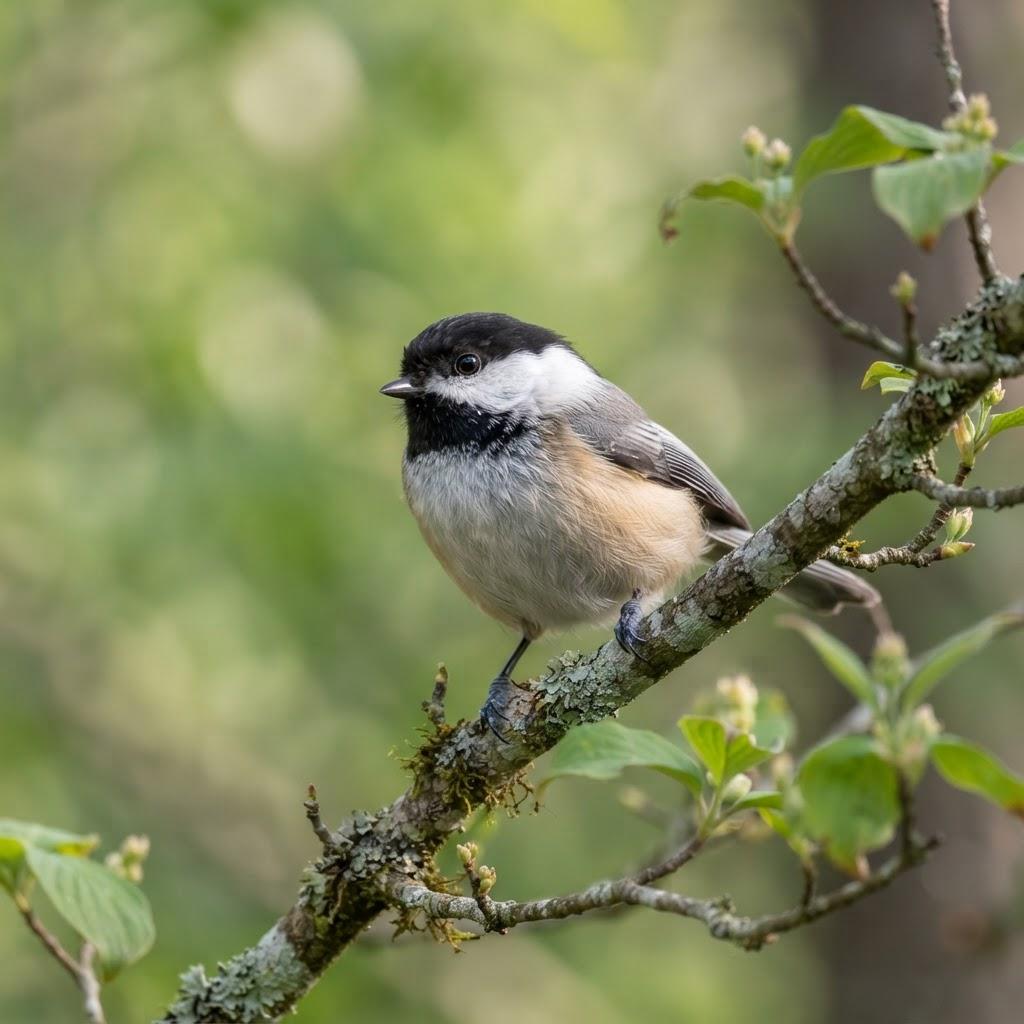
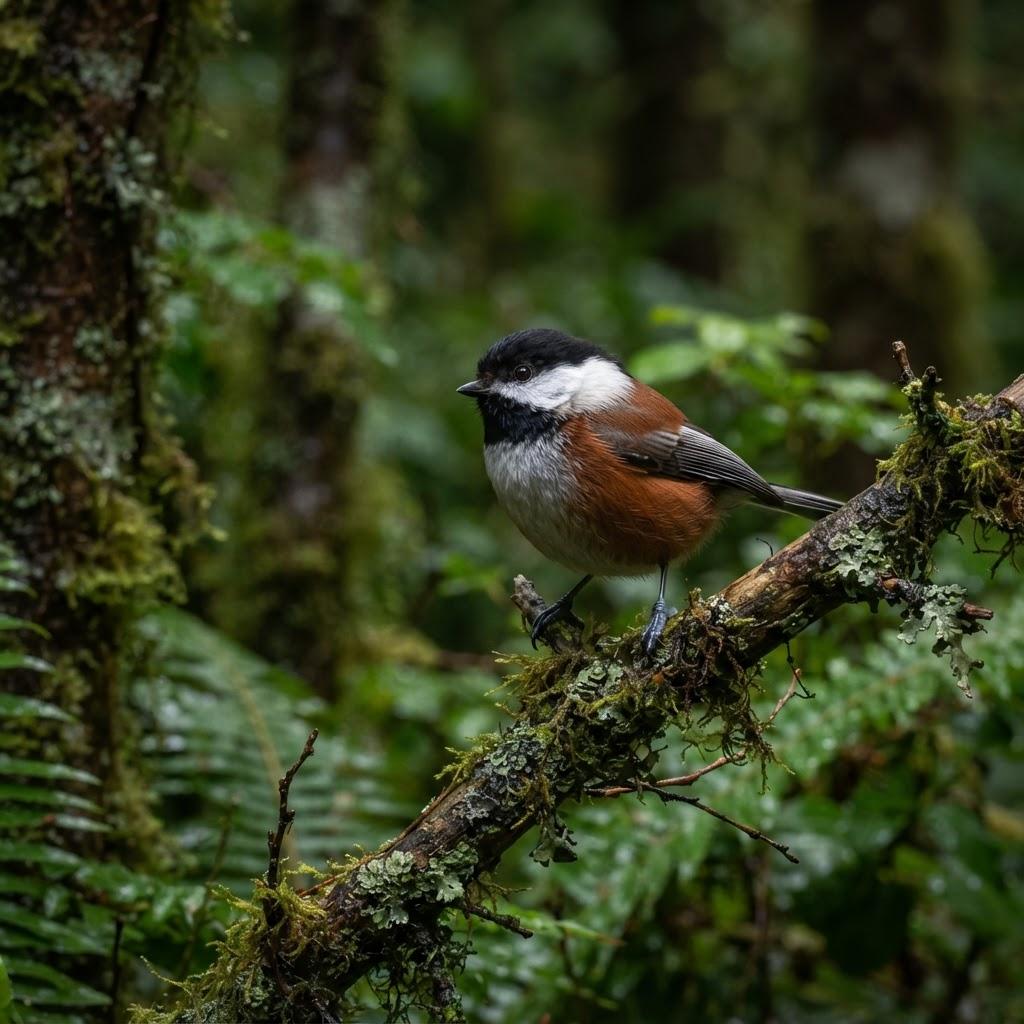
Spotting a Boreal Chickadee is a special triumph, a prize for patience and perseverance. First, listen for its distinctive, slightly nasal, slower 'chick-a-dee-dee' call, which sounds a bit more wheezy or sluggish than its Black-capped cousin’s bright, snappy version. Visually, look for a small, fluffy bird with a sooty-brown cap (not jet-black), a whitish cheek patch that contrasts with its cap, and most importantly, warm, cinnamon-rufous flanks that run from just under its wings down to its tail. Its back is brownish-gray. Compared to the Black-capped, it generally looks 'duller' in overall contrast but 'warmer' in color due to those lovely flanks. Look for them methodically foraging on conifer branches, often high up, sometimes hanging upside down like a tiny acrobat. They can be quite confiding, allowing close approaches, especially in winter. In terms of conservation, the Boreal Chickadee is currently listed as 'Least Concern' by the IUCN, which is generally good news. This means its global population is considered stable and widespread, largely due to its vast, relatively undisturbed boreal forest habitat. However, like all forest specialists, localized threats such as habitat degradation from logging, climate change impacting their preferred forest types, and increased frequency of severe forest fires are always concerns. So, what can ordinary people do to help? Support responsible forestry practices, advocate for the protection of boreal forests, and minimize your own carbon footprint to combat climate change. If you live within their range, providing high-quality suet and black oil sunflower seeds, especially during harsh winters, can make a direct, tangible difference to individual birds. By appreciating and understanding this resilient little survivor, we contribute to its ongoing well-being and the health of the incredible ecosystems it calls home.