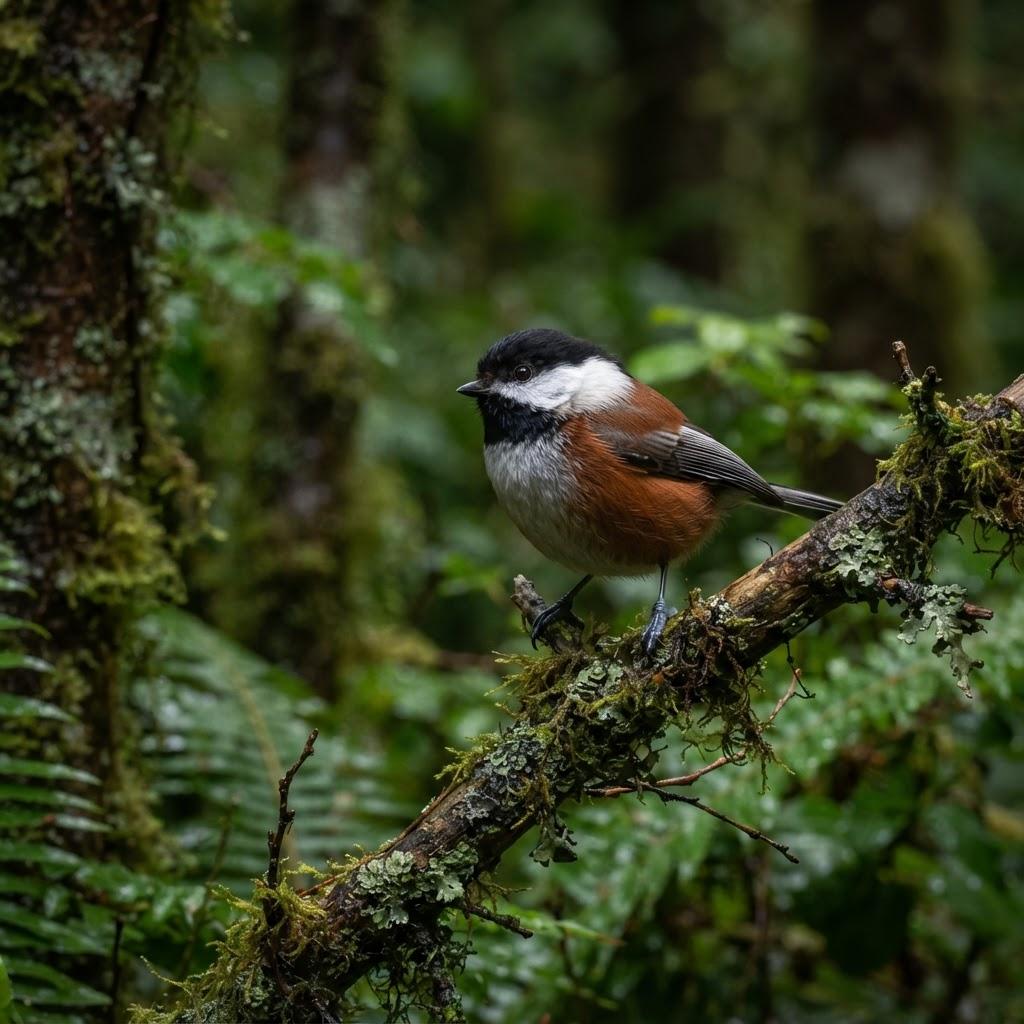
Poecile rufescens
Chestnut-backed Chickadee
Meet the Chestnut-backed Chickadee, a tiny, energetic ball of fluff with a personality bigger than its britches! These Western woodland dwellers are the ultimate acrobatic snack fiends, always upside down and always looking for their next gourmet grub. Get ready to discover why this pint-sized dynamo is a must-have character in your feathered backyard drama.
Meet the Bird
Imagine a tiny, feathered ninja who moonlights as a circus performer and has a serious caffeine addiction, but for seeds. That's the Chestnut-backed Chickadee for you! These little powerhouses are the whirling dervishes of the Western forest, a blur of activity from dawn till dusk. They've got this perpetually surprised look on their faces, like they just remembered they left the oven on back at the nest. Their signature move? Hanging upside down. Seriously, these birds treat gravity like a suggestion, not a rule. One minute they're a blur of brown and gray, the next they’re a perfectly poised acrobat, beak-deep in a pinecone, looking like a miniature, feathery Santa Claus who’s lost his reindeer. They’re not just cute; they’re *boldly* cute, strutting around with an air of confidence that’s frankly adorable. If your backyard has been feeling a bit… uninspired, this is the character you need. They don't just visit; they make an entrance, usually by doing a mid-air pirouette before landing on a feeder in a way that suggests they’ve been practicing that particular maneuver for years. Forget your brooding ravens or your flashy jays; the chickadee is the understated cool kid who’s secretly the most interesting one at the party, always found upside down, of course.
Superpowers & Weird Abilities
When you’re as small as a Chestnut-backed Chickadee, you need to pack some serious superpowers just to survive. First up, the 'super-clinging' ability. These guys are the undisputed champions of inversion, capable of hanging upside down for extended periods. It’s not just for show; this allows them to access food sources, like the tasty seeds tucked deep inside pinecones or beneath sturdy branches, that are completely inaccessible to birds who prefer to keep their feet firmly planted on the right side up. Think of it as their aerial yoga pose, but with higher stakes. Then there’s their incredible memory for food caches. They are masters of 'scatter-hoarding,' meaning they collect food items and then hide them in hundreds, even thousands, of different locations. It sounds like a recipe for forgetting where you parked your car, but they have an uncanny ability to remember where they stashed their treasures, even months later. Scientists believe they use landmarks and possibly even their magnetic sense, but honestly, it just seems like pure bird-brain genius. Finally, their vocalizations are surprisingly complex. While their ‘chick-a-dee-dee-dee’ call is famous, they also have a variety of other songs and calls that convey specific information, from alarm signals to contact calls that help them stay together in their social flocks. It’s like they have their own secret language, and we’re only just beginning to decipher the footnotes.
Drama, Personality & Feathered Chaos
Don't let their tiny size fool you; Chestnut-backed Chickadees are tiny titans of personality, and their social lives are a non-stop soap opera. They are often seen in mixed-species flocks, acting as the energetic, slightly bossy ringleader. Imagine a tiny general rallying troops of nuthatches and warblers, all while hanging upside down and chattering instructions. They’re not afraid to stand up for themselves, even against much larger birds, especially at the dinner table. A chickadee might confront a jay for hogging the feeder, darting in with fearless aggression before zipping away to safety. It’s the avian equivalent of a pint-sized boxer delivering a flurry of jabs before dancing out of range. While they are generally gregarious and friendly with their own kind, forming tight-knit family groups outside the breeding season, they can also be fiercely territorial when it comes to their nest sites. This leads to squabbles and chases, tiny feathered skirmishes that are surprisingly intense. They also have a strong drive to investigate anything new or unusual, which can sometimes get them into trouble, but also makes them incredibly fun to watch. They're the curious cats of the bird world, always peeking into potential danger or opportunity with wide, innocent-looking eyes, ready to turn any mild inconvenience into a full-blown feathered drama.
Bizarre Rituals & Quirky Habits
One of the most fascinating, if slightly squirmy, habits of chickadees is 'anting.' Now, before you picture them wearing tiny little ant-adorned hats, 'anting' is when a bird picks up a live ant and rubs it all over its feathers. Why would they do this? It's thought to be a form of self-medication or feather maintenance. Ants produce formic acid, which can act as a pesticide or de-louser. So, our chickadees are essentially giving themselves a DIY spa treatment, using live insects as their personal exfoliating scrubs. It looks utterly bizarre, like they're having a wrestling match with an ant and the ant is winning, but it’s a vital part of their grooming. Another quirky habit is their love for exploring cavities. They are cavity nesters, meaning they seek out holes in trees or other structures to build their nests. This can extend to investigating things like old woodpecker holes, fence posts, or even discarded garden tools. If there’s a small, dark space, a chickadee is likely to investigate it, peering in with an insatiable curiosity. Sometimes, this leads them to human-made nest boxes, which is great for them and for us. They’re basically tiny, feathered spelunkers, always looking for the next hidden gem, or in their case, the next safe, cozy spot to raise a family or stash a tasty seed.
Legends, Folklore & Human Stories
While not as prominent in ancient mythology as eagles or owls, the Chestnut-backed Chickadee holds its own place in the folklore and hearts of those who share its territory. In many Indigenous cultures of the Pacific Northwest, the chickadee is seen as a cheerful messenger, a bringer of good news or a sign of good fortune. Its persistent call was sometimes interpreted as a whisper of wisdom from the forest. There are stories of its tireless nature, how it never seems to stop working or foraging, which made it a symbol of diligence and resilience. For settlers and early naturalists, the chickadee was often a welcome companion on long, solitary journeys through the dense forests of the West. Its cheerful, familiar calls could break the monotony and isolation, a tiny spark of life in the vast wilderness. Some anecdotal accounts speak of chickadees becoming unusually tame around people who were consistently kind and generous with food, almost like trusted friends. While there aren't grand, epic legends about them, their consistent presence, their bright personality, and their bold curiosity have woven them into the fabric of regional folklore, a small but beloved character in the grand story of Western landscapes, a constant reminder of the vibrant life buzzing just beyond our doorstep.
Mating: The Ridiculous World of Avian Dating
The dating scene for Chestnut-backed Chickadees might not involve candlelit dinners, but it’s got its own brand of awkward charm and high-stakes performance. When a male chickadee is looking to impress a potential mate, he doesn't just show up with a bouquet of wildflowers; he unleashes his inner performer. While not as flashy as some other birds, he will engage in what can only be described as a series of energetic, if slightly frantic, displays. This often involves puffing up his chest feathers, flicking his wings, and hopping around the female, all while vocalizing with a series of soft, trilling songs. It’s a subtle, yet earnest, plea for attention. Think of it as a tiny, feathered speed-dating session where the guy has to prove he’s not just good-looking (with his rich chestnut flanks) but also a capable provider and nest-builder. The female, ever the discerning critic, will observe his every move. Is his song sweet enough? Is he showing proper respect? Does he seem like he can handle the stresses of parenthood? If she’s not impressed, she’ll simply turn away, leaving the male to try his luck with another potential partner. It’s a stark reminder that in the avian world, love is often earned through persistence, enthusiasm, and a willingness to look just a *little* bit silly in front of your crush. And if he’s rejected? Well, he just shakes it off, puffs up his chest again, and hits the dating circuit, ready for his next audition.
Nesting: Master Architects and Lazy Slumlords
When it comes to building a home, the Chestnut-backed Chickadee is decidedly not a lazy slumlord. These birds are cavity nesters, meaning they don't build a traditional cup-shaped nest from scratch. Instead, they seek out pre-existing holes in trees, old woodpecker excavations, or even man-made nest boxes. But don't mistake this for a lack of effort! Once they find a suitable cavity, they transform it into a cozy nursery. The interior is meticulously lined with soft materials like animal fur, moss, plant down, and even human-made fibers like cotton or wool. Imagine lining your living room with the plushest carpeting and the softest throws – that’s the chickadee equivalent. They are particularly fond of using fur from animals like rabbits or deer, which they often pluck directly from live animals, a rather daring feat for such small birds. The female does most of the lining work, creating a warm, insulated cup that is perfectly sized for her eggs and eventually, her growing brood. This strategy is smart: it provides excellent protection from predators and the elements, and it’s much more energy-efficient than constructing an elaborate structure from scratch. They are, in essence, the interior decorators of the avian world, turning a simple hole in a tree into a five-star bird hotel, complete with custom bedding.
Raising Babies: The Screaming Food Disposals
Once the eggs hatch, the Chestnut-backed Chickadee household becomes a non-stop, high-energy food delivery service run by utterly exhausted parents. A clutch typically consists of 5 to 11 tiny, pink, featherless marvels that, upon hatching, transform into miniature screaming machines. Their primary, and arguably only, skill at this stage is to open their mouths as wide as humanly possible and emit a sound that could rival a small jet engine, demanding sustenance. The parents, particularly the female who incubated the eggs, immediately switch gears into overdrive. They embark on a relentless round of foraging, often flying hundreds of times a day, each trip bringing back small insects, spiders, or seeds to satisfy the insatiable appetites of their offspring. It's a true testament to parental dedication. The chicks grow at an astonishing rate, doubling their weight within days, their tiny bodies rapidly filling with the energy needed to eventually take flight. This period is incredibly vulnerable; a single mistake could be disastrous, and the parents are constantly vigilant against predators. After about 16-21 days in the nest, the chicks are ready to fledge, tumbling out of the cavity to begin their awkward, wobbly journey into the world, still dependent on their frazzled parents for a few more weeks. It’s a whirlwind of chirps, cheeps, and ceaseless demands, a true feat of endurance for the grown-ups.
Bird-Watching Travel & Local Hotspots
If you’re eager to witness the acrobatic antics of the Chestnut-backed Chickadee firsthand, you’ll want to head to the misty, magnificent forests of the Pacific Northwest. These birds are essentially year-round residents throughout their range, which hugs the coast from Northern California up through Oregon, Washington, and into British Columbia and parts of Alaska. While they can be found in parks and even suburban gardens, for the quintessential chickadee experience, you can’t beat venturing into their natural habitat. Olympic National Park in Washington is a prime location; wander through its temperate rainforests, and you’re bound to hear their cheerful calls and see them flitting through the canopy. Further south, the redwood forests of California, like Muir Woods National Monument or Redwood National and State Parks, offer fantastic opportunities. In British Columbia, Pacific Rim National Park Reserve on Vancouver Island is a glorious place to look. The key is to find mature coniferous or mixed forests, especially those with plenty of undergrowth and snags (dead trees) which provide cavities for nesting and insects to forage on. Look for them particularly in the early morning or late afternoon when they are most active. Keep an ear out for that distinctive 'chick-a-dee-dee-dee' call – it's your sonic passport to finding these delightful little birds.
Food, Feeder Hacks & DIY Projects
Attracting these energetic acrobats to your yard is easier than you might think, and a lot more rewarding than filling feeders with cheap filler seeds that only attract pigeons and squirrels. Chestnut-backed Chickadees are primarily insectivores, but they also have a penchant for seeds and suet, especially in colder months. For feeders, think small and accessible. They love sunflower seeds (especially black oil sunflower seeds), but they will also happily munch on nyjer (thistle) seeds, safflower seeds, and millet. However, avoid cheap mixes that are loaded with milo or cracked corn – these are mostly wasted and attract unwanted visitors. Suet cakes are a massive hit, providing essential fats for energy, particularly during winter. A no-melt suet cake is ideal. Now for the fun part: DIY projects! You can create a simple chickadee delight by smearing a pinecone with suet or peanut butter (unsalted, no additives is best for the birds) and rolling it in sunflower seeds or finely chopped nuts. Hang it from a branch, and watch the magic happen. For a more natural approach, plant native trees and shrubs that produce seeds or attract insects. Evergreens like Douglas fir or Western Hemlock provide natural food sources and shelter. Their absolute favorite food in the wild? Caterpillars and other juicy insects. So, a garden that attracts beneficial insects is a chickadee buffet! Remember, variety is key, and keeping feeders clean is crucial for bird health. A clean feeder means happy, healthy chickadees lining up for their next upside-down snack.
Seasonal Guides & "Crisis" Management
The Chestnut-backed Chickadee is a year-round resident, but their lives, and how we can best enjoy them, shift with the seasons. In **spring**, as days lengthen and temperatures rise, they become intensely focused on breeding. This is a great time to offer high-energy foods like suet and mealworms, which help fuel their nesting and chick-rearing efforts. Ensure your feeders are clean to prevent disease spread. As **summer** progresses, young birds begin to fledge, and families remain together. They’ll be busy foraging for insects and small seeds. Continue with regular feeding, and perhaps start planning your fall planting of native shrubs that offer berries or seeds. **Autumn** is a critical time for fat storage. They’ll be busy caching food and preparing for the colder months. This is when suet becomes incredibly important again. Consider adding a different variety of suet, perhaps one with fruit or nuts. **Winter** is the ultimate test. Their metabolic rate skyrockets to stay warm, and they rely heavily on high-fat foods. Keep feeders filled with suet and a good quality seed mix. Ensure there’s a source of unfrozen water if possible; a heated bird bath is a lifesaver. The
Backyard Tech & Gadget Reviews
In the age of smart homes and AI, our bird feeders are getting pretty savvy too! For the Chestnut-backed Chickadee enthusiast, there are a few gadgets that can seriously up your birding game. **Smart Bird Feeders** (like the popular Bird Buddy) are the hot new thing. These feeders have built-in cameras that detect when a bird lands, snap a photo, and send it to your phone with an identification attempt. Imagine getting a ping on your phone that says, "A Chestnut-backed Chickadee is dining!" It’s a fantastic way to learn about the birds visiting your yard and to capture stunning close-up shots, even if you’re not always home. They can be a bit pricey, but the joy of a personalized bird gallery is immense. Now, for a more serious backyard issue: **window collisions**. Birds, especially fast-moving ones like chickadees, can easily mistake reflections for open sky. Solutions range from high-tech decals that break up reflections to DIY methods like using tempera paint to create patterns on the outside of your windows. A simple, yet effective, trick is to hang old CDs or aluminum foil strips that dangle and flash, deterring birds. For the truly dedicated, a **trail camera** placed near a feeder or a particularly active area can capture incredible footage, including nocturnal visitors or interesting behaviors you might otherwise miss. While not specifically designed for birds, these motion-activated cameras can provide surprising insights into your yard's secret life. These gadgets can transform a passive backyard bird-watching experience into an interactive, data-rich adventure.
How to Spot One & How It Is Doing
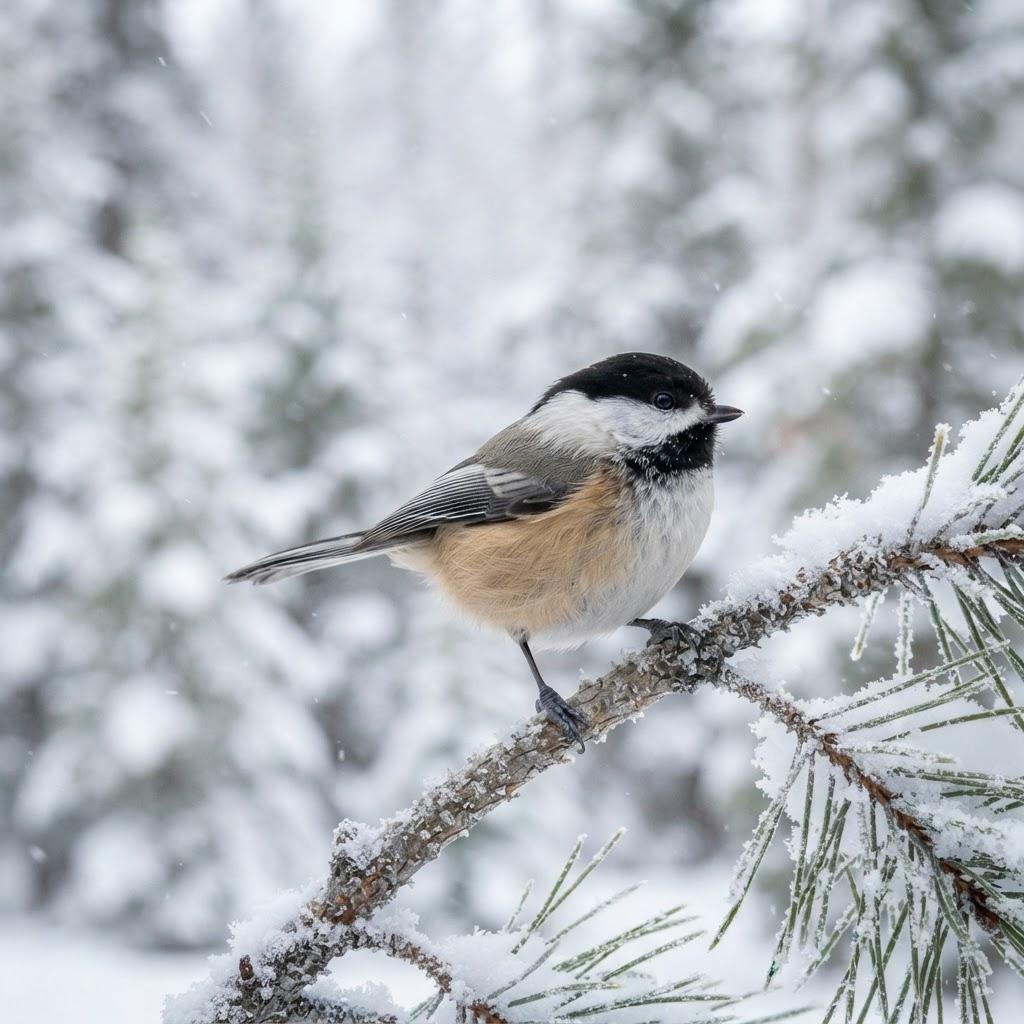
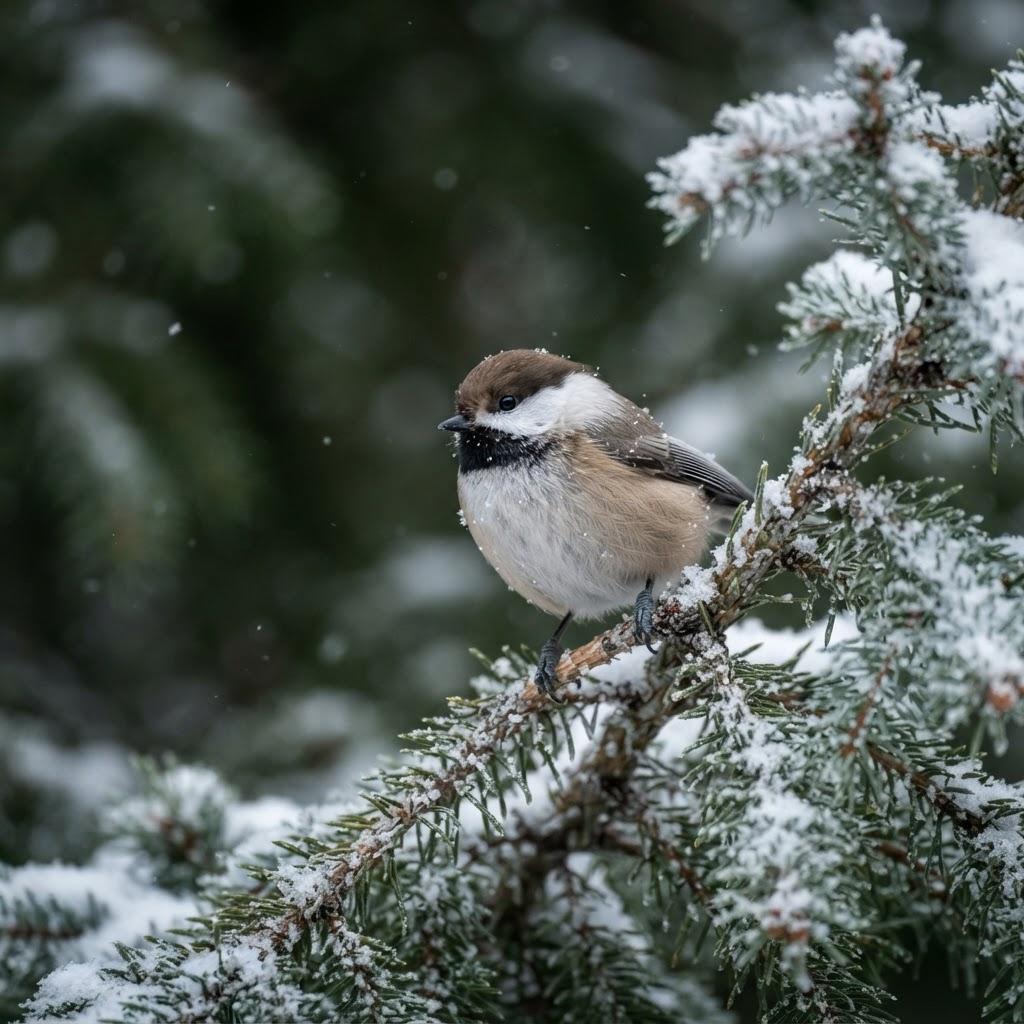
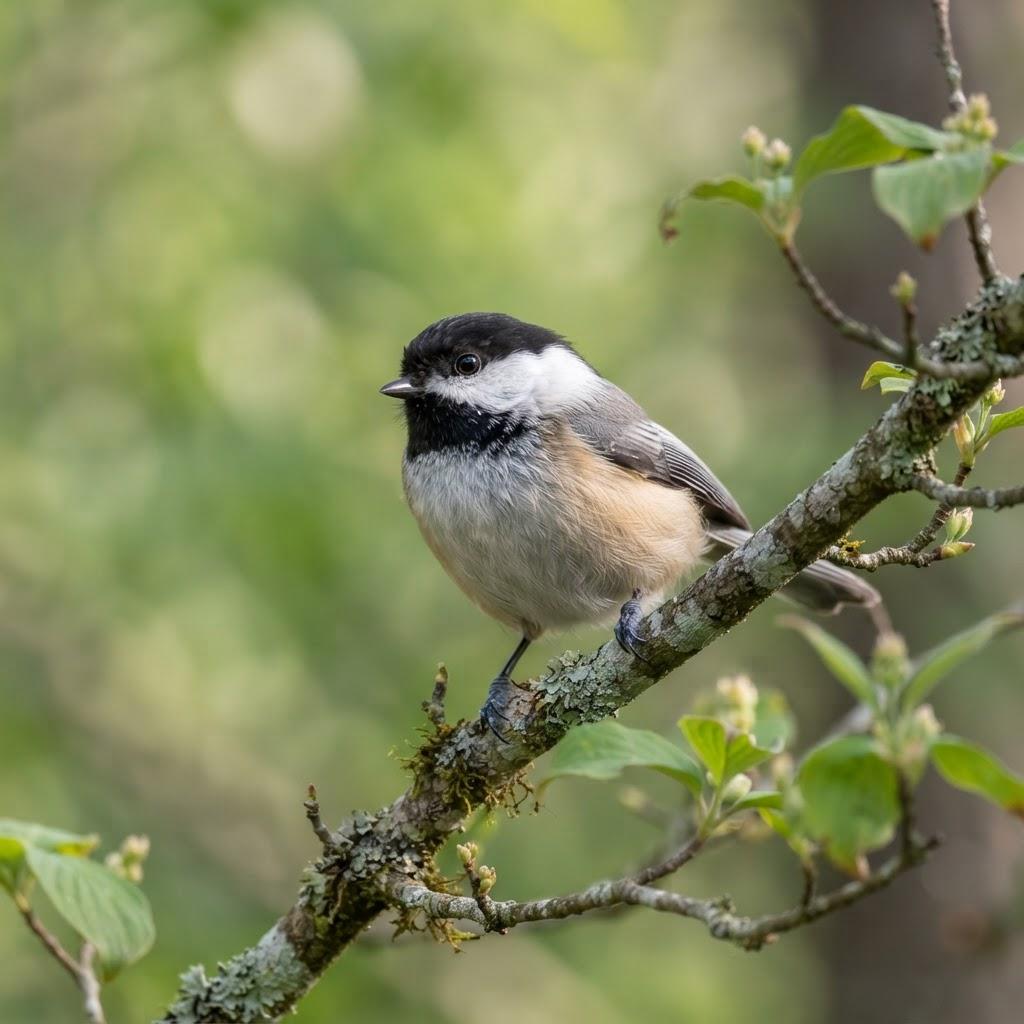
Spotting a Chestnut-backed Chickadee is usually a delightful experience, as they are quite active and often vocal. Look for a tiny, energetic bird, about the size of a large thumb, with a small black bill, a dark cap, and a white cheek. The distinguishing feature, of course, is the rich chestnut or rusty wash across its back and flanks. They are almost always on the move, flitting through the branches of coniferous and mixed forests, often hanging upside down to inspect bark for insects or to get at seeds. Their common call is a rapid, buzzy 'chick-a-dee-dee-dee,' which is often the first clue to their presence. Listen for this distinctive sound, and then scan the trees and shrubs. They are often found in mixed flocks with other small birds like Bushtits, Nuthatches, or Downy Woodpeckers, so if you see any of those, keep an eye out for the chestnut-backed charmer. In terms of how they are doing, the Chestnut-backed Chickadee is currently listed as **Least Concern** by conservation organizations. This means their populations are generally stable and widespread across their range. However, like many species, they are not immune to threats. Habitat loss due to logging and development, particularly the loss of mature coniferous forests, can impact their breeding and foraging success. The good news? You can help! By planting native trees and shrubs in your yard, providing clean feeders with high-quality food and water, and reducing pesticide use, you create a mini-habitat that supports these delightful birds and countless other wild creatures. Every little effort makes a difference in ensuring these energetic acrobats continue to grace our forests for generations to come.