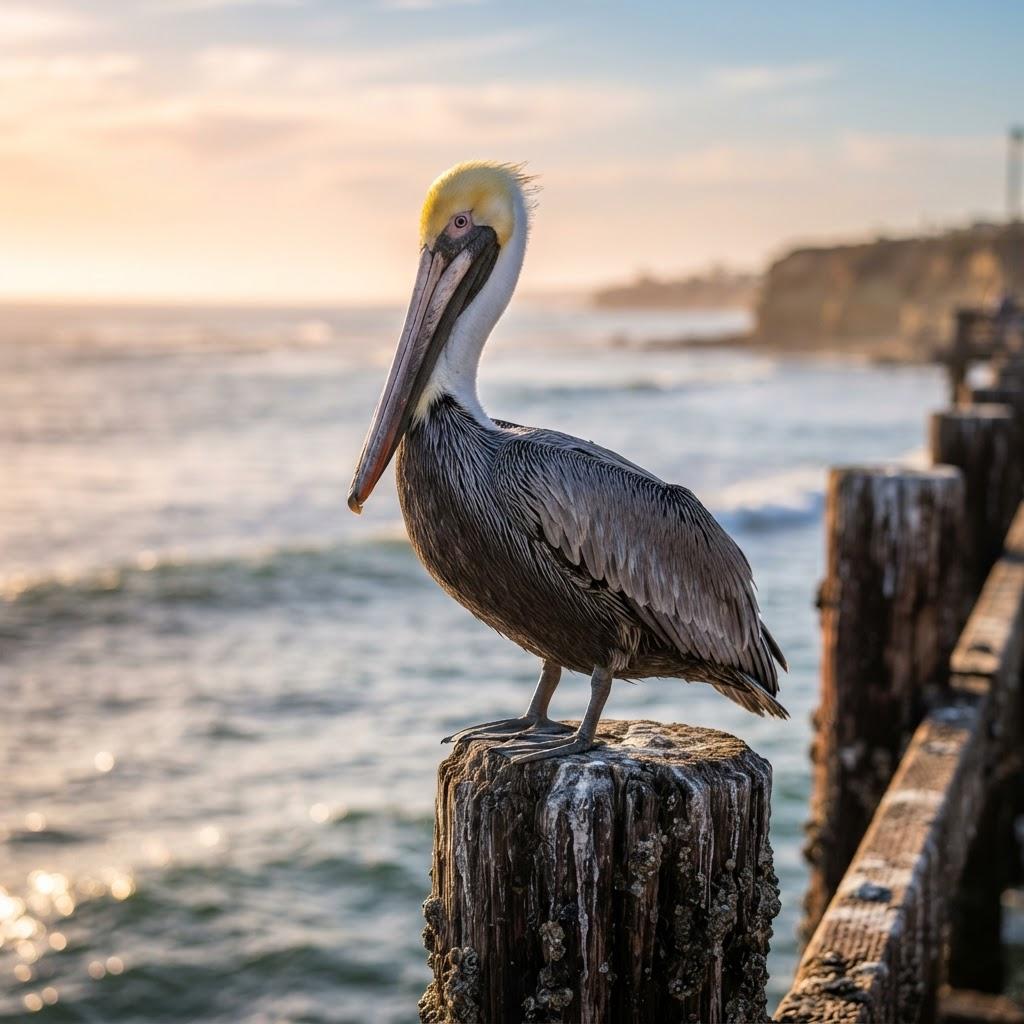
Pelecanus occidentalis
Brown Pelican
The Brown Pelican is nature's most aerodynamic dive-bomber, possessing a massive throat pouch and a flair for the dramatic. Whether they are plummeting from the sky like feathered missiles or begging for scraps at a seaside pier, they are the undisputed kings of coastal comedy.
Meet the Bird
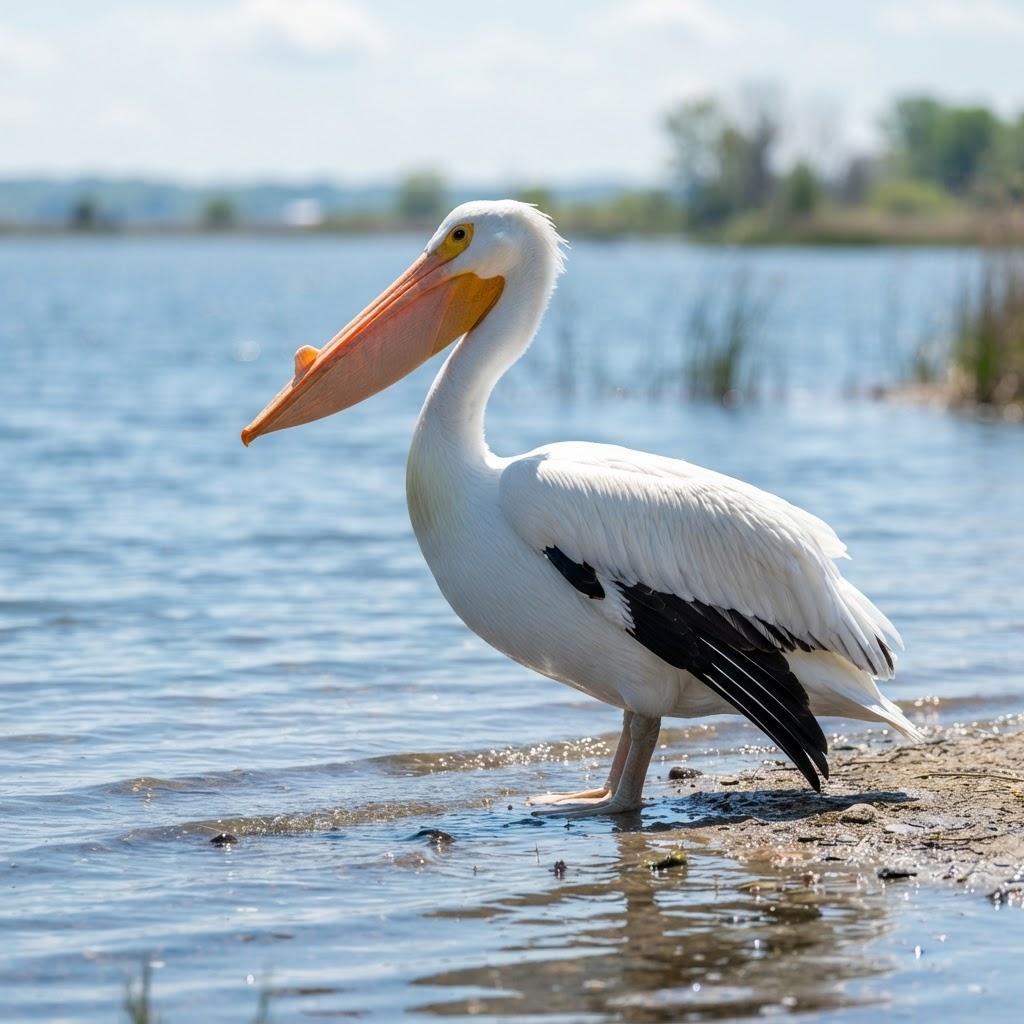
If you imagine a prehistoric pterodactyl decided to retire to a Florida beach and pick up a hobby in fishing, you have effectively visualized the Brown Pelican. This bird is the living embodiment of the 'cool uncle' vibe: slightly disheveled, always looking for a snack, and possessing a face that only a mother could love, yet somehow endearingly iconic. With a massive, rubbery throat pouch that looks like it should be holding a spare tire rather than fish, the Brown Pelican is the clown of the coastline. They spend their days patrolling the surf, flapping their wings with a slow, deliberate grace, only to suddenly tuck their wings and transform into a gravity-defying missile. Their vibe is one of rugged confidence. They do not care if they look silly with their oversized bills; they are busy perfecting the art of the belly-flop dive. Seeing one standing on a dock, hunched over with its bill resting on its chest, is like seeing a tired fisherman taking a well-deserved break after a double shift at sea. They are masters of coastal life, proving that you do not need to be elegant to be effective.
Superpowers & Weird Abilities
The Brown Pelican possesses a superpower that puts most military tech to shame: the ability to plunge into the ocean from heights of up to 60 feet without shattering their own skulls. When they hit the water, they are traveling at speeds that would make a human swimmer think twice, yet they come out perfectly fine. How? They have special air sacs beneath their skin—essentially built-in bubble wrap—that cushion the impact. It is a biological shock-absorption system that allows them to turn into living torpedoes. Furthermore, their throat pouch is an engineering marvel. It is not just a snack storage unit; it is a giant dip net capable of holding up to three gallons of water and fish. They have a unique method of clearing the water out: they tilt their heads down to drain the liquid before gulping down the fish head-first. They also possess incredible eyesight, allowing them to spot schools of fish from high in the sky through the refraction of the water, making them the ultimate precision anglers of the avian world.
Drama, Personality & Feathered Chaos
While they look like stoic masters of the sea, Brown Pelicans are actually absolute masters of the shakedown. They are the neighborhood bullies of the fishing pier. If a human fisherman catches a fish, the pelican is right there, staring with unblinking eyes, waiting for a 'donation.' They are not above stalking the fisherman back to their car or aggressively demanding a share of the catch. They are also incredibly lazy when they can get away with it; they have been known to wait for other birds to do the hard work of fishing, only to swoop in and steal the meal the moment the other bird breaks the surface. This 'piracy' is just another day at the office for a pelican. Their personality is a weird mix of profound patience—waiting for hours on a piling—and sudden, frantic, high-stakes thievery. They are the drama queens of the marina, constantly honking and grunting at one another during squabbles over the best perch, making sure everyone knows exactly who owns that particular wooden post.
Bizarre Rituals & Quirky Habits
One of the most peculiar habits of the Brown Pelican is its constant bill-grooming and throat-stretching. Because their pouch is so massive and stretchy, they have to constantly 'yawn' and manipulate it to keep it from getting stiff or tangled. If you watch a group of pelicans, you will often see them all performing a synchronized, weird mouth-opening ritual that looks like they are trying to swallow a watermelon. Additionally, they are surprisingly obsessed with tidiness. Despite their messy eating habits—often involving flying fish scales and salty water—they spend a significant amount of time preening their feathers to keep them waterproof. They take their waterproofing seriously; without it, they would sink like a stone. Another quirky habit is their sun-basking. They will stand on a pier with their wings fully outstretched like a sunburned tourist trying to get an even tan. This isn't just for style, though; it helps them dry their feathers and regulate their body temperature after a long day of frigid ocean diving.
Legends, Folklore & Human Stories
The Brown Pelican has been a mascot of coastal life for centuries, appearing in everything from heraldry to children's books. In the lore of some coastal cultures, the pelican was once believed to be a symbol of self-sacrifice. Ancient myths claimed that a mother pelican would tear open her own breast to feed her starving chicks with her own blood. While this is scientifically incorrect—what people actually saw was the mother pressing her bill against her chest to regurgitate food, which creates a red stain—the sentiment persists as a powerful symbol of parental devotion. Today, they are the official state bird of Louisiana, a position they wear with pride. They have a deep, symbiotic relationship with human coastal communities. Fishermen often tolerate the 'pelican tax'—the fish stolen from their lines—because they are considered an essential part of the maritime landscape. Without the raggedy, honking presence of the pelican, a pier just doesn't feel like a proper place to spend a sunny Saturday afternoon.
Mating: The Ridiculous World of Avian Dating
Pelican romance is a bizarre, high-stakes dance that happens on the shore. To attract a mate, the male starts his 'bachelor pad' phase, claiming a prime spot of territory and turning it into his fortress. Once he has a spot, he performs an elaborate display. He will puff out his chest, stretch his neck to the sky, and rhythmically sway back and forth while emitting a series of low-frequency grunts that sound like a malfunctioning bass guitar. It is essentially an avian version of a slow-motion head-banging session. If a female decides he is worthy, she joins him, and they engage in a ritual of head-tossing and bill-clapping. It looks like a high-speed game of synchronized Simon Says. If the female decides the male is not quite up to snuff—maybe his nest site is too drafty or his dance moves are off-rhythm—she simply walks away. The male is then left standing there, chest puffed and neck extended, looking absolutely devastated as he realizes his solo show didn't land the lead role.
Nesting: Master Architects and Lazy Slumlords
When it comes to nesting, Brown Pelicans are not winning any architecture awards, but they are certainly industrious. They choose nesting sites on remote, offshore islands, often building stick platforms in mangroves or even on the ground if the local predators are low in number. The male gathers the sticks, and the female does the actual construction. Their nests are essentially piles of twigs, seaweed, and debris held together by hope and a bit of guano—the polite term for bird poop. Over the course of the breeding season, these nests accumulate so much filth that they become quite distinct and aromatic. It is a 'slumlord' aesthetic where the goal is utility over beauty. They aren't trying to build a castle; they are trying to build a bowl that won't fall apart before the chicks fledge. It is rugged, it is messy, and it is perfectly functional for raising a giant, screaming, fish-hungry ball of feathers in the middle of a salt-sprayed colony.
Raising Babies: The Screaming Food Disposals
Once the chicks hatch, they are essentially pink, naked, screeching aliens. They start off helpless and blind, and they quickly develop an appetite that would frighten a teenager. Parenting for a pair of pelicans is a non-stop, high-stress endurance test. The parents take turns flying to the sea, catching fish, and returning to the colony to deliver the goods. The chicks, meanwhile, are not patient. They shove their entire heads into the parents' throat pouches, digging for the half-digested fish within. It is a scene of utter chaos. The noise level in a pelican rookery is deafening, with hundreds of chicks screaming at their parents, demanding more sustenance. As they grow, they become slightly more recognizable as pelicans, but they remain essentially giant, flapping, food-obsessed monsters. The parents work themselves into the ground, losing body weight while the chicks grow at a rapid pace, preparing for the day they are finally large enough to stop screaming and start diving for their own dinner.
Bird-Watching Travel & Local Hotspots
If you want to see a Brown Pelican, you do not need to go to a remote wilderness; you need to go to a pier, a marina, or a coastal park. The Gulf Coast of Florida, particularly places like Sanibel Island or the J.N. 'Ding' Darling National Wildlife Refuge, is a goldmine for pelican enthusiasts. On the West Coast, the Monterey Bay area in California is spectacular, with pelicans often seen diving just yards off the shore of Cannery Row. During the winter, head to the piers in Galveston, Texas, or the coastal towns of South Carolina. The key is to find a place where people are fishing. Pelicans have learned that humans are essentially giant, clumsy, unintentional fishing guides, so they congregate wherever the action is. Look for the wooden pilings at sunset; you will almost certainly find a lineup of them resting, acting as the perfect silhouette for your vacation photos. Just bring a camera and prepare for some hilarious photobombing.
Food, Feeder Hacks & DIY Projects
Let’s be clear: you cannot really 'feed' a pelican in your backyard, unless you live on a pier and want to be a local celebrity. They are strictly fish-eaters. Attempting to lure them with bread or birdseed is not only useless, it is harmful, as these foods can cause digestive issues and malnutrition. If you want to support them, the best thing you can do is participate in beach cleanups. Pelicans often get tangled in discarded fishing line, which is a major hazard for them. A DIY project for the family? Create a 'fishing line recycling' station for your local dock. Get a PVC pipe, mount it on a post with a sign, and encourage anglers to drop their old, tangled monofilament line inside instead of leaving it on the beach. You are essentially building a safety net that protects the pelicans from their own accidental run-ins with human trash. It is the most impactful way to turn your interest into real-world conservation.
Seasonal Guides & 'Crisis' Management
Pelican behavior follows the cycles of the ocean. During the winter, you will see more of them crowding together on piers to stay warm and conserve energy. Spring and summer are all about the breeding season, where the drama in the colonies reaches a fever pitch. If you are near the coast, you might occasionally spot a 'fledgling'—a younger, browner, and perhaps slightly more uncoordinated pelican—resting on the ground. Do not panic! Often, they are just tired and are taking a break from their first attempts at flight. Keep your distance, keep dogs away, and watch from afar. If the bird is clearly tangled in fishing line or has a hook stuck in its pouch, contact a local wildlife rehabilitation center immediately. Do not try to play vet yourself, as a stressed pelican has a very sharp, hooked bill and a lot of pent-up frustration. Leave the heroic rescues to the professionals who have the proper equipment and the experience to handle a grumpy bird.
Backyard Tech & Gadget Reviews
While you won't be setting up a smart feeder for a pelican, modern tech is changing how we monitor their habitats. Trail cameras with motion sensors, placed at a respectful distance near coastal nesting sites by conservationists, are providing us with incredible, intimate footage of their family lives. If you have a seaside home, a high-quality weather-resistant camera can help you document the local pelican population without disturbing them. For the home birder, window collisions are a risk for many species, but for coastal birds, the danger often comes from boat strikes or power lines. If you are near the water, consider using window film or decals to make your glass visible to local shorebirds. Apps like 'eBird' are also fantastic; by logging your pelican sightings, you contribute to a massive global database that helps scientists understand where these birds are thriving and where they might need a little extra help.
How to Spot One & How It Is Doing
Spotting a Brown Pelican is the easiest task in birding. Look for the massive bill, the S-shaped neck, and the habit of diving head-first into the surf. Adults have a distinctive white head with a yellow crown, while younger birds are a drab, earthy brown all over. They are not shy; they will often perch right next to you on a railing, waiting for you to move so they can claim your space. As for their status, they are a massive conservation success story. Decades ago, the use of pesticides like DDT caused their eggshells to become so thin that they were effectively wiped out in many parts of their range. Thanks to the ban on these chemicals, they have made a triumphant comeback. Their population is healthy and stable, making them one of the great wins of the environmental movement. To help them stay that way, just keep the oceans clean, support sustainable fishing practices, and enjoy the show as these feathered dinosaurs continue to dominate the coast.