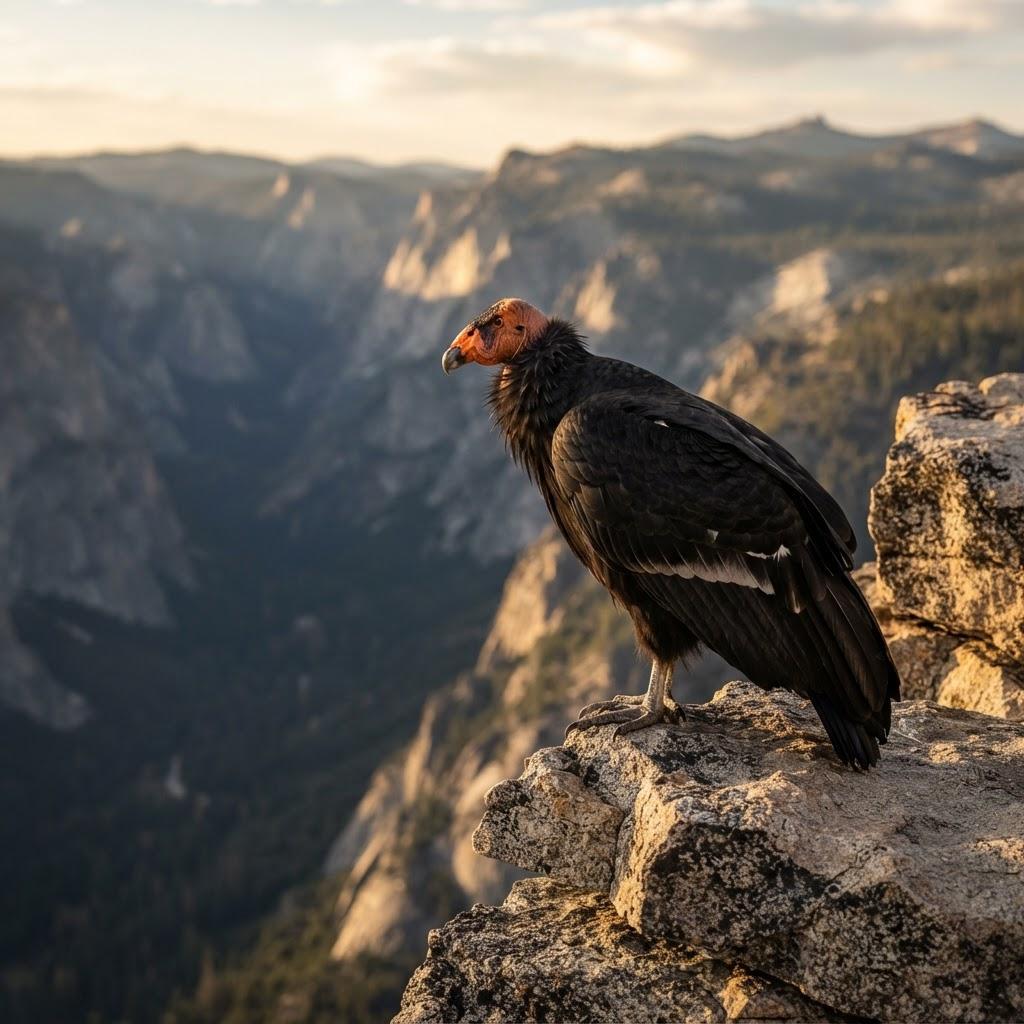
Gymnogyps californianus
California Condor
Meet the California Condor, a prehistoric giant that looks like it just stepped out of a pterodactyl movie set. This massive, bald-headed scavenger is a comeback story of epic proportions, proving that even nature’s most awkward-looking cleanup crew deserves a standing ovation.
Meet the Bird
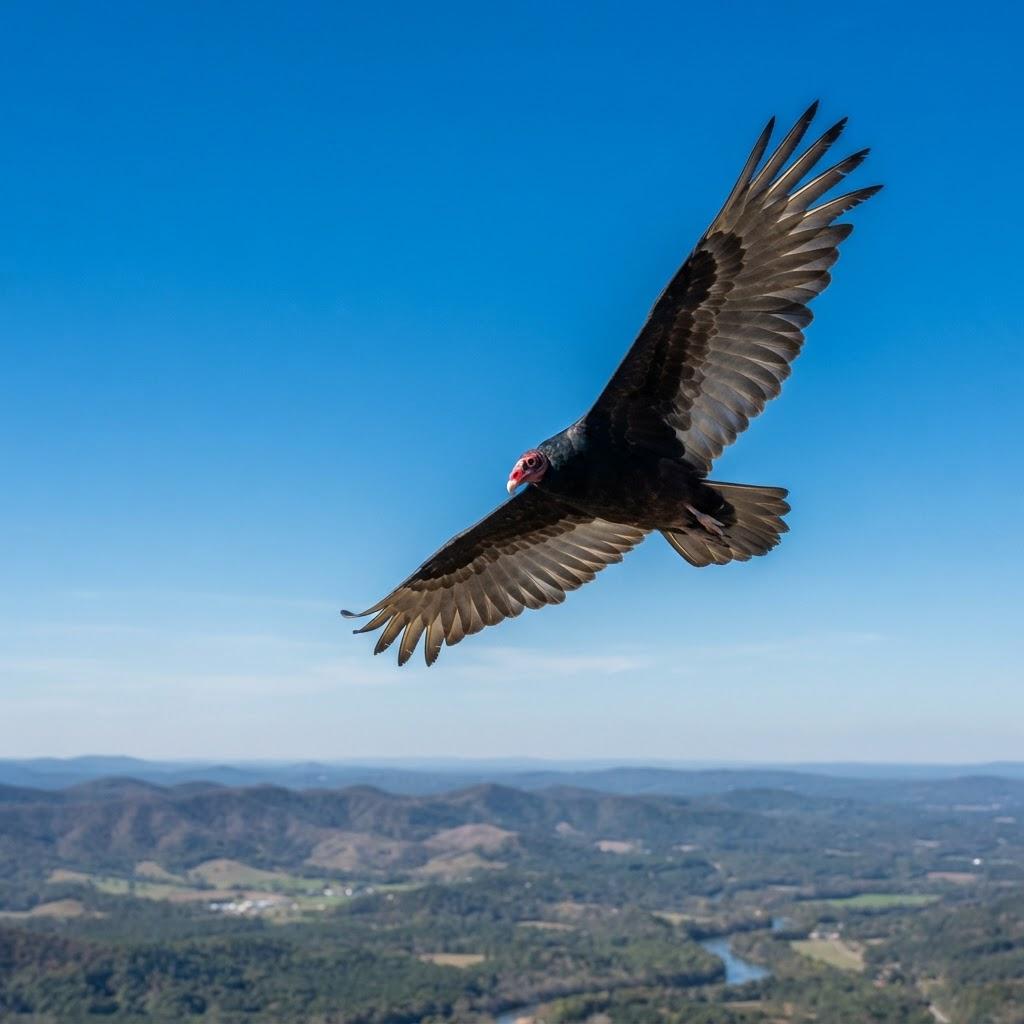
Imagine a bird so large that when it spreads its wings, it practically eclipses the sun. The California Condor is the avian equivalent of an oversized, leather-clad biker who looks menacing but actually performs a vital civic duty. With a wingspan that stretches nearly ten feet, this bird doesn't just fly; it rules the thermals with the stoic confidence of a king. Its head is bald, wrinkled, and often turns a vibrant, traffic-light shade of pink or orange depending on its mood or temperature. While some might call it an acquired taste, the condor carries its look with the gravitas of a creature that has been soaring over the continent since the Ice Age. It doesn't sing, it doesn't dance for crumbs, and it certainly doesn't care if you think its face is funny. It is the ultimate survivalist of the skies, a feathered gargoyle that has survived near-extinction to remind us that being a scavenger is actually a very prestigious profession.
Superpowers & Weird Abilities
The California Condor is basically a high-efficiency hang glider equipped with internal GPS. Its superpower isn't speed or strength; it is the mastery of the invisible. Condors utilize thermal currents—rising columns of warm air—to travel hundreds of miles without flapping their wings more than a handful of times per day. They are the ultimate masters of energy conservation, gliding effortlessly at speeds that would make a human skydiver jealous. Furthermore, their sense of smell is remarkably sharp, which is a rare trait in the bird world. While most vultures rely on sight, the condor can detect the scent of decaying matter from miles away, navigating the complex air currents of a canyon like a veteran pilot dodging mountains. They possess a digestive system that is a biological miracle, designed to process bacteria that would send any other animal straight to the hospital. They are literally the clean-up crew of the wild, breaking down organic waste before it causes issues for the rest of the ecosystem.
Drama, Personality & Feathered Chaos
Don't let the noble profile fool you; the condor social scene is pure, unadulterated high school drama. When multiple condors gather around a meal, the pecking order is established with the intensity of a boardroom brawl. They are incredibly inquisitive and notoriously mischievous. Younger birds, in particular, are known as the troublemakers of the group, often interacting with human equipment or playing 'tug-of-war' with branches just for the sake of entertainment. They are not shy about shoving their roommates out of the way to get the best spot on a rock, and they possess a social intelligence that allows them to learn from one another. Watching a group of condors interact is like observing a group of coworkers who have been stuck in the same conference room for a week; there is plenty of posturing, grumbling, and occasional full-blown arguments over who gets the final piece of the buffet.
Bizarre Rituals & Quirky Habits
One of the most peculiar things you might see a condor do is something called 'urohidrosis.' In plain English, they have a habit of urinating on their own legs. Before you label them as uncouth, there is a scientific reason for this: it is an evaporative cooling system. When the hot sun of the desert hits their legs, the moisture helps regulate their body temperature, acting like a natural air conditioner. Additionally, they have a strange obsession with keeping their plumage pristine, often performing meticulous preening sessions where they obsess over every feather. They are also known for sunning themselves in the morning, spreading those massive wings wide to absorb warmth, looking like a bunch of cloaked monks gathering for a sunrise meeting. Their habits are deeply tied to managing the harsh environmental extremes of their home, proving that looking strange is often just a byproduct of being perfectly adapted to a tough neighborhood.
Legends, Folklore & Human Stories
For many Indigenous tribes in California and the American Southwest, the condor is a creature of immense spiritual significance, often representing a messenger between the living and the spirit world. In various legends, the condor appears as a wise, ancient observer of human affairs, capable of carrying prayers to the heavens. These stories have helped ground the species in the culture of the region for millennia. In modern times, the relationship has shifted, with humans going from hunters to saviors. The story of the California Condor is perhaps the most famous 'rescue mission' in history, where the entire remaining population was brought into captivity in the late 1980s to prevent extinction. It is a rare case where the bird has become a symbol of human redemption and environmental stewardship. Every time a condor soars over a canyon today, it is a living ghost telling the story of a culture that realized it was worth fighting for.
Mating: The Ridiculous World of Avian Dating
The courtship ritual of a California Condor is a slow-burn romance that would make a soap opera producer cringe. It begins with the male puffing out his feathers and turning his skin a brilliant red to show off his vitality. He will perform a dance that involves heavy bowing, rhythmic wing-flicking, and a 'follow-the-leader' routine across the canyon floor. The female plays hard to get, often testing the male's dedication by making him jump through metaphorical flaming hoops. If the dance isn't up to her standards, she simply flies off, leaving the male alone on a cliff to contemplate his life choices. However, once a pair bond is formed, it is one of the most stable relationships in the animal kingdom, often lasting for the duration of their long lives. They are true partners, sharing the responsibilities of domestic life with a level of commitment that many human couples would envy.
Nesting: Master Architects and Lazy Slumlords
When it comes to interior design, the condor keeps things rustic and low-key. They aren't interested in building elaborate twig castles. Instead, they seek out deep, inaccessible rock cavities, caves, or massive old-growth redwood hollows. There is no 'nest' in the traditional sense; they simply find a comfortable ledge or a dark corner of a cliff and say, 'This will do nicely.' The female lays a single, massive, greenish-white egg directly on the dirt or rock floor. It is a 'minimalist' approach that works perfectly for their lifestyle. The parents don't need to worry about high-maintenance structural repairs; they only need to worry about keeping the location secret from predators. It is the architectural equivalent of buying a fixer-upper, except the 'fixer-upper' is a hole in a cliff that has been functioning perfectly for centuries.
Raising Babies: The Screaming Food Disposals
Raising a condor chick is a marathon, not a sprint. Once that single egg hatches, the parents are locked into a parenting cycle that lasts for over a year. The chick is a fluffy, awkward, and extremely vocal bundle of appetite. It stays in the nest cavity for months, demanding constant food deliveries. Because condors are scavengers, the parents must fly great distances to bring back high-quality, nutrient-dense meals. The chick grows at an incredibly slow rate compared to songbirds, spending months just practicing how to stand up and flap its wings. By the time it finally decides to leave the nest, it is nearly the size of an adult. It is a long, expensive process for the parents, who show a level of patience that is truly admirable given that their 'child' is effectively a giant, demanding teenager who refuses to move out of the basement.
Bird-Watching Travel & Local Hotspots
If you want to catch a glimpse of this prehistoric king, you need to head to where the thermals meet the mountains. The most famous spot is undoubtedly the Grand Canyon in Arizona; specifically, the South Rim viewpoints provide excellent opportunities to see them soaring above the abyss. In California, the Pinnacles National Park is a fantastic place to look, as the park is actively involved in the release and monitoring of these birds. Look for them during the mid-morning, when the air starts to heat up and the thermals become active. Bring binoculars, but honestly, a bird with a ten-foot wingspan is hard to miss even without gear. Remember, you are visiting their home, so stay on the trails and be patient. They aren't going to show up on a schedule; you have to put in the time, but the reward of seeing a condor glide silently past a canyon wall is worth every minute of waiting.
Food, Feeder Hacks & DIY Projects
Here is the reality check: you are never going to attract a California Condor to your backyard feeder. These are birds that require thousands of acres of open landscape to hunt for carrion. If a condor lands in your backyard, you have much bigger problems than a lack of sunflower seeds! Their natural diet consists entirely of large animal carcasses—think deer, elk, or marine mammals. Trying to feed them would be a logistical nightmare and a biological catastrophe. Instead of building a feeder for them, the best way to 'support' their diet is to support healthy, wild ecosystems. If you want to help, focus on keeping your local environment clean of lead ammunition, as accidental ingestion of lead from carcass fragments is the leading threat to their survival. Keep your own yard safe for smaller birds, and leave the big-game cleanup to the professionals.
Seasonal Guides & "Crisis" Management
Condors don't really do 'seasons' like migratory warblers do; they stay within their home range year-round, regardless of the weather. However, the spring is a time of high activity as nesting season hits its peak. If you are out in their habitat during this time, keep your distance—disturbing a nesting site is a major 'no-go.' As for the 'fledgling panic' you see with other birds, you will rarely see a condor fledgling on the ground in your neighborhood. If you ever find a massive, dark bird that looks like it is struggling, do not try to feed it, cover it with a towel, or play hero. These birds are endangered and under constant observation by wildlife biologists. Contact the local park rangers or wildlife authorities immediately. They have the expertise and the specialized equipment to handle these rare, critically endangered animals safely and effectively.
Backyard Tech & Gadget Reviews
While smart feeders are a fun way to capture photos of house finches, they are completely useless for condors. However, for those interested in the tech behind the conservation efforts, there is a fascinating world of telemetry. Every wild California Condor is fitted with a specialized GPS tag and a numbered wing tag. Scientists use these gadgets to track their movements, monitor their health, and ensure they are finding food. You can actually go online to various conservation websites and see maps of where these birds have been traveling! If you want to replicate this in your own backyard for smaller birds, a simple motion-activated trail camera is the best way to see what is happening when you aren't looking. You might not see a condor, but you will definitely see the secret lives of the owls, foxes, or squirrels that roam your space, which is a great way to stay connected to your local ecosystem.
How to Spot One & How It Is Doing
To spot a California Condor, look for a dark, massive silhouette against the sky. If the bird appears to have 'fingertips'—the splayed flight feathers at the end of their wings—and exhibits a steady, gliding flight path with very little flapping, you have likely found one. If you see white triangles on the undersides of their wings, that is a classic giveaway for an adult. Currently, their status is Critically Endangered, which sounds dire, but their numbers are slowly and steadily climbing thanks to intense, dedicated conservation efforts. Every single bird is precious. To help, simply spread the word about lead-free hunting and support organizations that manage their habitat. You don't need to be a scientist to be a part of their success story. By respecting their space and advocating for clean environments, you are helping ensure that this ancient, gargantuan icon continues to shadow the canyons for generations to come.