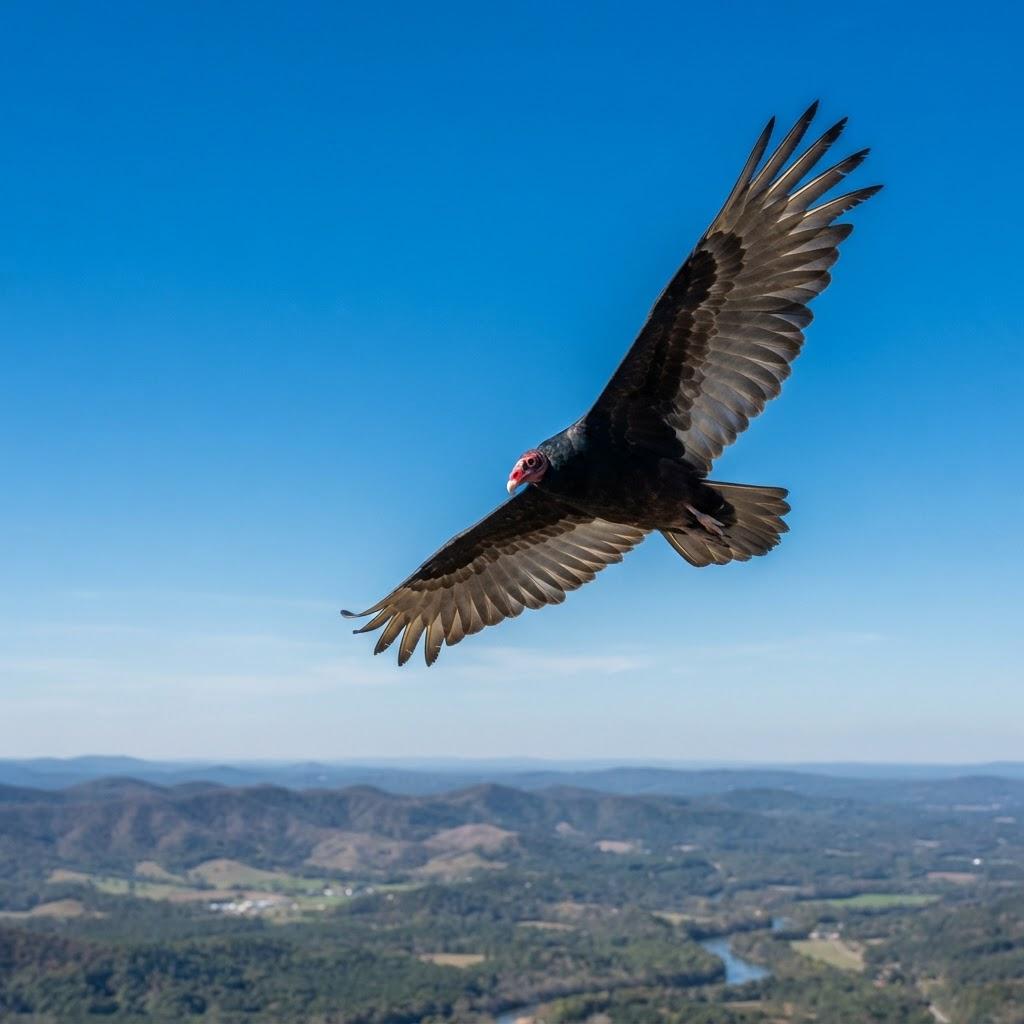
Cathartes aura
Turkey Vulture
Meet the Turkey Vulture, the master of the sky and nature’s most efficient cleanup crew. With a face only a mother could love and a nose that can smell a snack from miles away, this bird is the ultimate misunderstood icon of the avian world.
Meet the Bird
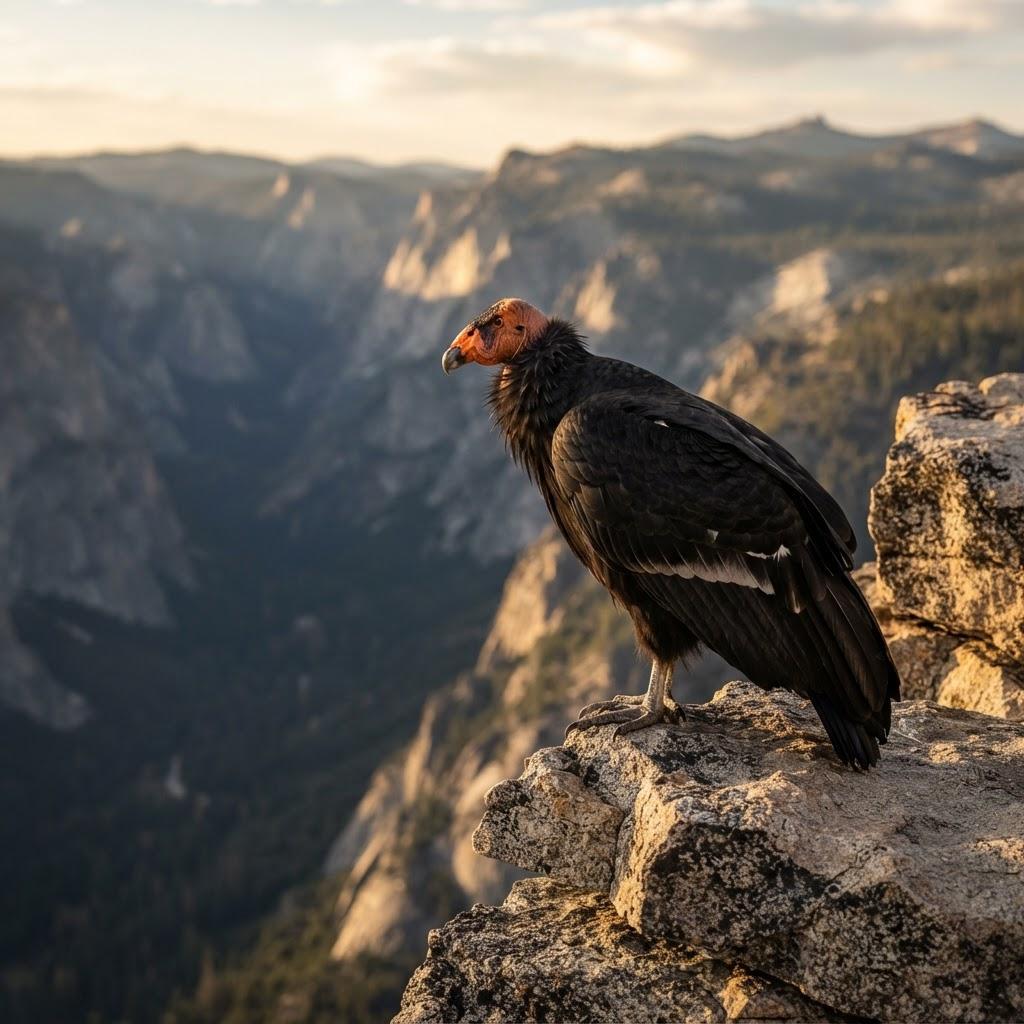
Picture a creature that moves like a graceful ballroom dancer in the sky, soaring with effortless, wobbly elegance, yet looks like a grumpy, featherless goblin when it touches down. That is the Turkey Vulture, the undisputed king of the roadside buffet. While other birds are busy singing for attention or showing off flashy, iridescent feathers, the Turkey Vulture has opted for a more practical, goth-inspired aesthetic: dark, somber robes and a vivid, wrinkly red face that looks like a thumb that has been soaking in the bathtub for too long. They do not hunt with sharp talons or lightning-fast dives; instead, they are the quiet, dignified sanitation engineers of the animal kingdom. They spend their days riding warm air currents, waiting for nature to provide a feast, and they do it with a level of patience that would put a meditative monk to shame. When you see one circling above, you are witnessing a master of energy efficiency who has turned the act of hovering into an art form.
Superpowers & Weird Abilities
While eagles show off with their eyesight, the Turkey Vulture has evolved a secret weapon that is frankly disgusting but incredibly effective: an elite sense of smell. These birds can detect the scent of ethyl mercaptan—a chemical compound associated with decay—from over a mile away, even when the source is hidden under a dense canopy of trees. It is essentially a biological super-sniffer that can find lunch through miles of forest floor. Beyond their nose, they are masters of thermal surfing. They hold their wings in a distinct 'V' shape, known as a dihedral, which acts like a built-in stabilizer. This allows them to tip and tilt with the slightest change in air pressure without flapping their wings. They are the ultimate low-energy travelers, spending hours in the sky on nothing but warm rising air, conserving calories while scanning the landscape for their next meal. It is a masterclass in aerial physics that keeps them at the top of the food chain.
Drama, Personality & Feathered Chaos
If there were a high school for birds, the Turkey Vulture would be the quiet, misunderstood loner who keeps to himself but definitely knows where all the bodies are buried. They aren’t aggressive bullies like the Blue Jay or the kleptomaniac magpie; they are remarkably tolerant of other vultures and even other scavenger species. They avoid conflict with a grace that is almost suspicious, often preferring to wait their turn at a carcass rather than start a scrap. However, they do have a sense of boundary. When threatened, they don’t try to fight back with claws or pecks. Instead, they turn to chemical warfare. They will projectile vomit their own stomach contents at a predator. It is a highly acidic, foul-smelling liquid that essentially turns the predator's day into a nightmare. It is the ultimate 'leave me alone' move, and it works flawlessly every single time because nobody, and I mean nobody, wants to deal with that level of grossness.
Bizarre Rituals & Quirky Habits
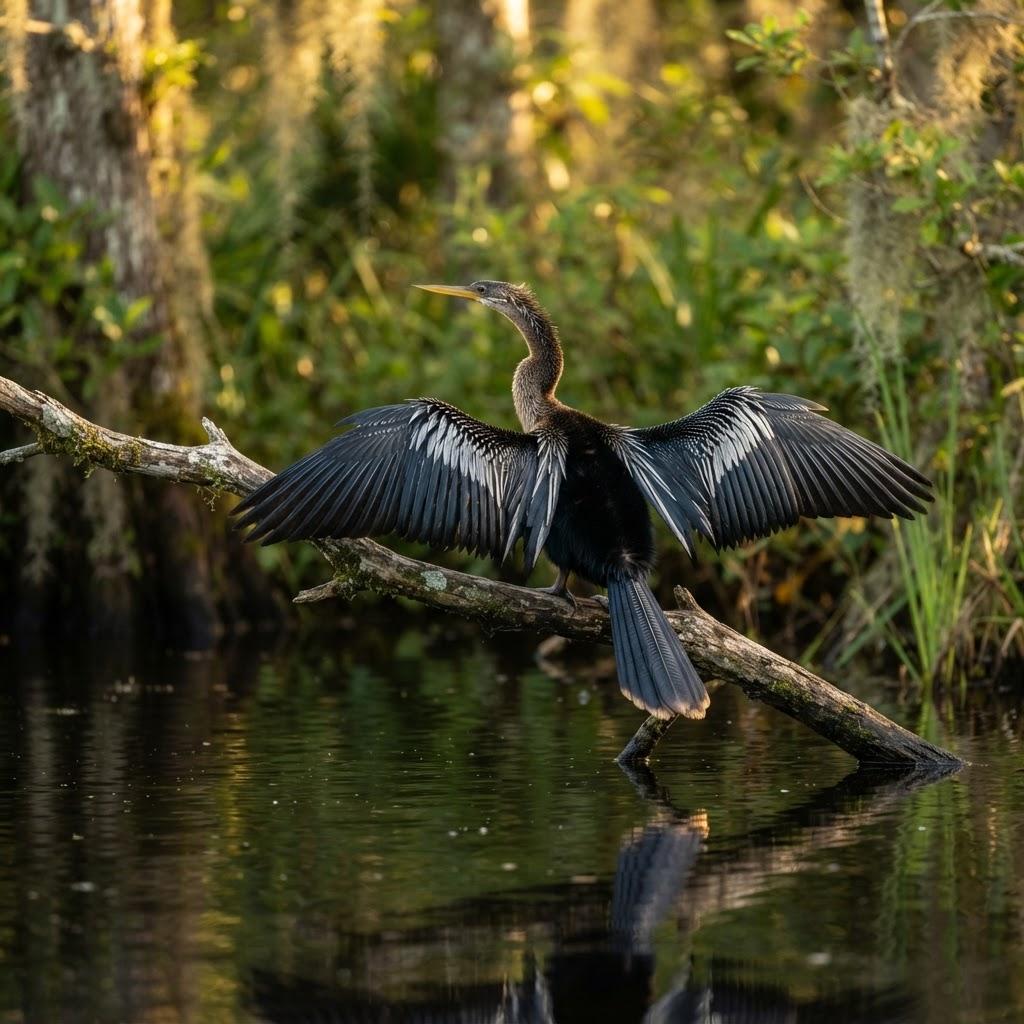
One of the most peculiar sights in nature is the 'horaltic pose.' You might look out your window on a cool morning and see a Turkey Vulture standing on a post or a dead branch with its wings spread wide open, looking like a giant, sun-worshipping gargoyle. This isn't a religious experience; it is a thermal recharge. Because they don’t spend energy flapping, they need to regulate their body temperature after a cold night. By spreading their wings, they expose their dark feathers to the sun, absorbing heat to get their metabolism moving before they take off. It is essentially a solar-powered wake-up call. They also have a habit of defecating on their own legs. It sounds like a bad day at the park, but it’s actually a brilliant hygiene hack. Their waste contains bacteria that kills off the gross microbes they pick up from their meals, and the evaporation of the liquid helps cool them down. It’s disgusting, but it’s science.
Legends, Folklore & Human Stories
Humans have had a complicated relationship with the Turkey Vulture for centuries. In many cultures, they are seen as ominous harbingers of death, largely because they are always hanging around when something has gone wrong in the woods. However, in various indigenous cultures, the vulture is celebrated as a powerful purifier, a spiritual traveler that helps transition spirits from the physical world. In the southern United States, they are often colloquially called 'buzzards,' and locals have developed a deep respect for their role in keeping the countryside clean. They are the silent guardians of the pasture. If a cow passes away in a remote field, the vulture ensures the cycle of life continues without disease spreading. While some early settlers found them ugly, modern birders have started to recognize their beauty. They aren’t symbols of doom; they are the unsung heroes who keep our world from being buried in trash and decay.
Mating: The Ridiculous World of Avian Dating
When it comes to romance, Turkey Vultures don’t bother with fancy singing or colorful plumage. Instead, they hold a group dance party that is as awkward as a middle school prom. A dozen or more vultures will gather in a circle on the ground and begin a rhythmic, hop-and-skip dance, often with wings partially spread and heads tucked low. They circle each other, performing a slow-motion shuffle that looks like a very serious, very confused interpretive dance routine. It is a communal test of endurance and social status. The female is watching carefully, not for the best singer, but for the bird that can keep up the rhythm the longest and look the most dignified while doing something that is fundamentally silly. Once a pair is formed, they are generally monogamous for the long haul, proving that sometimes, two weirdos finding each other in a circle of dancers is the beginning of a beautiful, lifelong partnership.
Nesting: Master Architects and Lazy Slumlords
If you are looking for a masterpiece of weaving and engineering, you are looking at the wrong bird. Turkey Vultures are the absolute masters of the 'I guess this will do' approach to architecture. They do not build nests in the traditional sense. They do not bother with twigs, mud, or spider silk. Instead, they look for a spot that is dark, quiet, and off the beaten path. This could be a hollow log, a secluded cave, an abandoned shed, or even just a thick pile of debris on the forest floor. The female simply lays her two eggs on the bare ground or whatever detritus happens to be lying around. It is the ultimate low-effort nesting strategy. By skipping the construction phase, they avoid drawing attention to their home, keeping their future chicks safe from predators that might be looking for a fancy, visible nest structure.
Raising Babies: The Screaming Food Disposals
Once the eggs hatch, the parents switch into high-gear service mode. The chicks start out looking like fluffy, white, oversized cotton balls with a face that only a parent could love—which, fortunately, the parents do. Both mom and dad share the duties, which is a rare display of equality in the avian world. They spend the next few months flying back and forth, bringing back partially digested meals. The chicks are notoriously loud, emitting a series of hisses and squeaks that sound like a deflating balloon combined with a hungry vacuum cleaner. They grow rapidly, and by the time they are a few weeks old, they are nearly the size of their parents but still demanding to be fed. The parents are incredibly patient, tolerating the constant begging and the chaotic mess that the chicks make, proving that even a bird that eats roadkill can be a devoted, soft-hearted parent to its unruly, screaming offspring.
Bird-Watching Travel & Local Hotspots
If you want to see Turkey Vultures in their natural environment, you don’t need to go to the remote wilderness. They are everywhere, but to see them in spectacular numbers, you should head to places like the Santa Ana National Wildlife Refuge in Texas or the various hawk watches along the Appalachian Mountains during the fall migration. Locations like Hawk Mountain Sanctuary in Pennsylvania are legendary for observers who want to see thousands of them riding the thermals southward in massive, swirling kettles. If you are in the Midwest, check out large, old-growth forests near rivers; these areas provide perfect roosting trees. The best time to go is mid-morning, once the sun has warmed the ground and created the thermals that these birds rely on to start their day. Look up, scan the horizon for that signature V-shape, and prepare to be impressed by their effortless, gliding endurance.
Food, Feeder Hacks & DIY Projects
Here is the reality check: you cannot put a bird feeder in your yard to attract a Turkey Vulture. They are not interested in sunflower seeds, suet blocks, or nectar. They are obligate scavengers, which is just a fancy way of saying they only eat meat that has already met its maker. Trying to feed them from a tube feeder is a recipe for disappointment and probably a very messy backyard. However, you can create a 'vulture-friendly' environment by leaving dead trees standing, as these provide essential resting spots and lookout points. If you have land and want to support them, keep your property natural and avoid using pesticides. By maintaining a healthy ecosystem, you support the animals they rely on. They aren't garden birds, but they are nature's essential cleanup crew. Let them do their job from the sky, and keep your feeders for the chickadees and cardinals.
Seasonal Guides & "Crisis" Management
During the spring, Turkey Vultures are busy finding nesting sites and raising their young, while in the fall, they gather in large groups to begin their migration. If you happen to find a baby vulture on the ground in the summer, don’t panic. It is common for young birds to practice climbing and hopping before they are fully flighted. If the bird is uninjured, leave it alone; the parents are almost certainly watching from nearby. If you see a Turkey Vulture acting weird in the winter, it is often just managing the cold by staying sedentary and riding out the freeze. They are incredibly hardy, but like all birds, they benefit from accessible water. If you keep a heated birdbath, you might be surprised to see a vulture stop by for a drink or a rinse, especially in regions where they stick around through the colder months.
Backyard Tech & Gadget Reviews
Technology for observing Turkey Vultures is best utilized at a distance. Since they are large, cautious birds, high-powered binoculars or a spotting scope are your best gadgets. If you want to see what is happening in a remote part of your woods without disturbing them, a trail camera—the kind used by deer hunters—is a fantastic investment. Place it near a natural landmark where you have seen them perch. You will get amazing, motion-triggered photos without having to stand in the brush all day. When it comes to window collisions, the best tech is a simple physical barrier. Use window decals or UV-reflective film to make the glass visible to birds. While vultures are generally too big and smart to hit a window, it is a good practice for the whole ecosystem, ensuring that your backyard remains a sanctuary for every species that drops by, from the smallest sparrow to the largest, wrinkly-faced scavenger.
How to Spot One & How It Is Doing
Spotting a Turkey Vulture is easy once you know what to look for. Watch for the 'dihedral'—that V-shaped wing profile—and notice the constant, rocking motion as they tilt to catch the wind. Unlike hawks, which might dive or flap frequently, the vulture is the epitome of relaxed gliding. Their plumage is dark brown to black, contrasting with the silver-grey lining on the undersides of their wings, which catches the light when they turn. Their conservation status is 'Least Concern,' which is wonderful news; they are a species that has successfully adapted to human-altered landscapes, and their populations are stable. To help them, simply advocate for the preservation of open spaces and support clean-up efforts in your community. By keeping our roads and fields free of toxic waste, you help the vulture do the work that keeps the environment healthy for everyone. They are an essential part of the wild, and they deserve a little bit of appreciation for being exactly who they are.