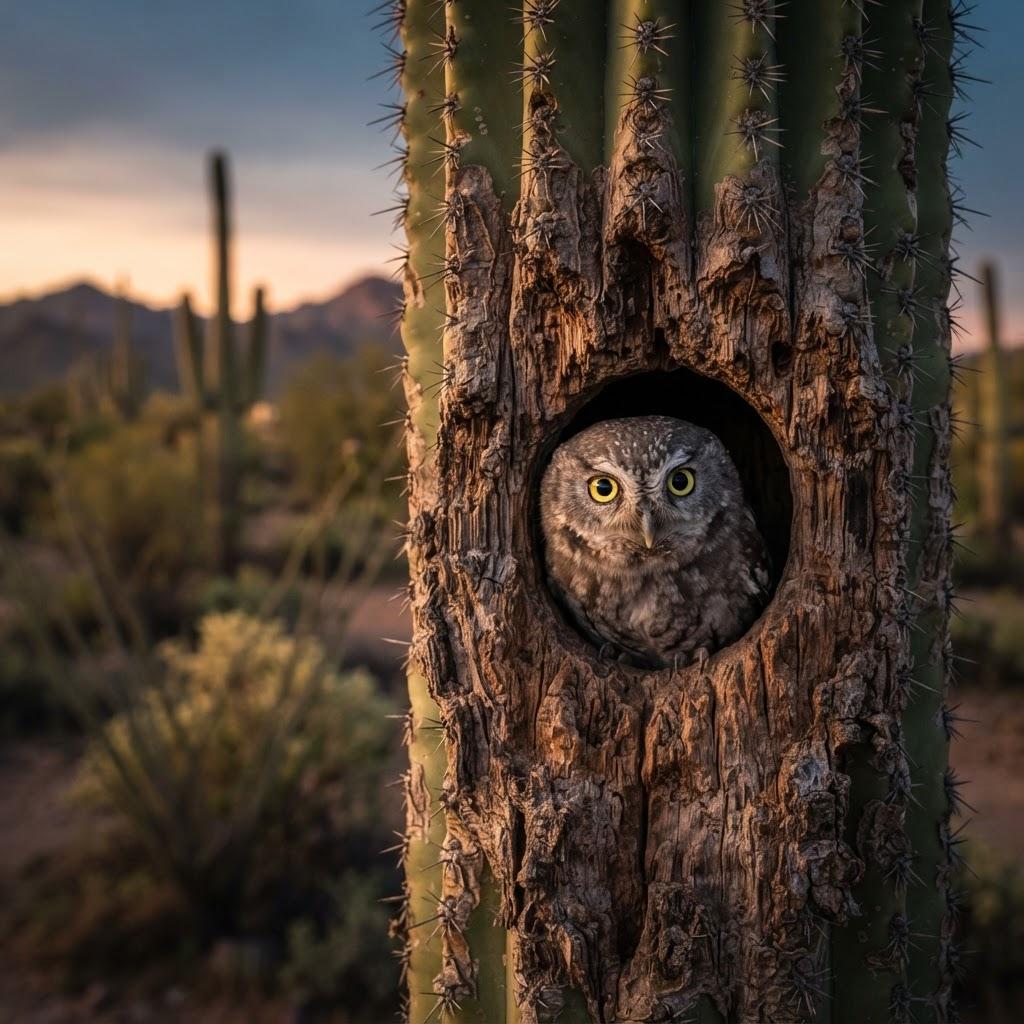
Micrathene whitneyi
Elf Owl
Meet the Elf Owl, the world's smallest owl that proves good things truly do come in tiny, bug-eating packages. This pint-sized predator is the ultimate desert nomad with a big attitude and an even bigger appetite for adventure.
Meet the Bird
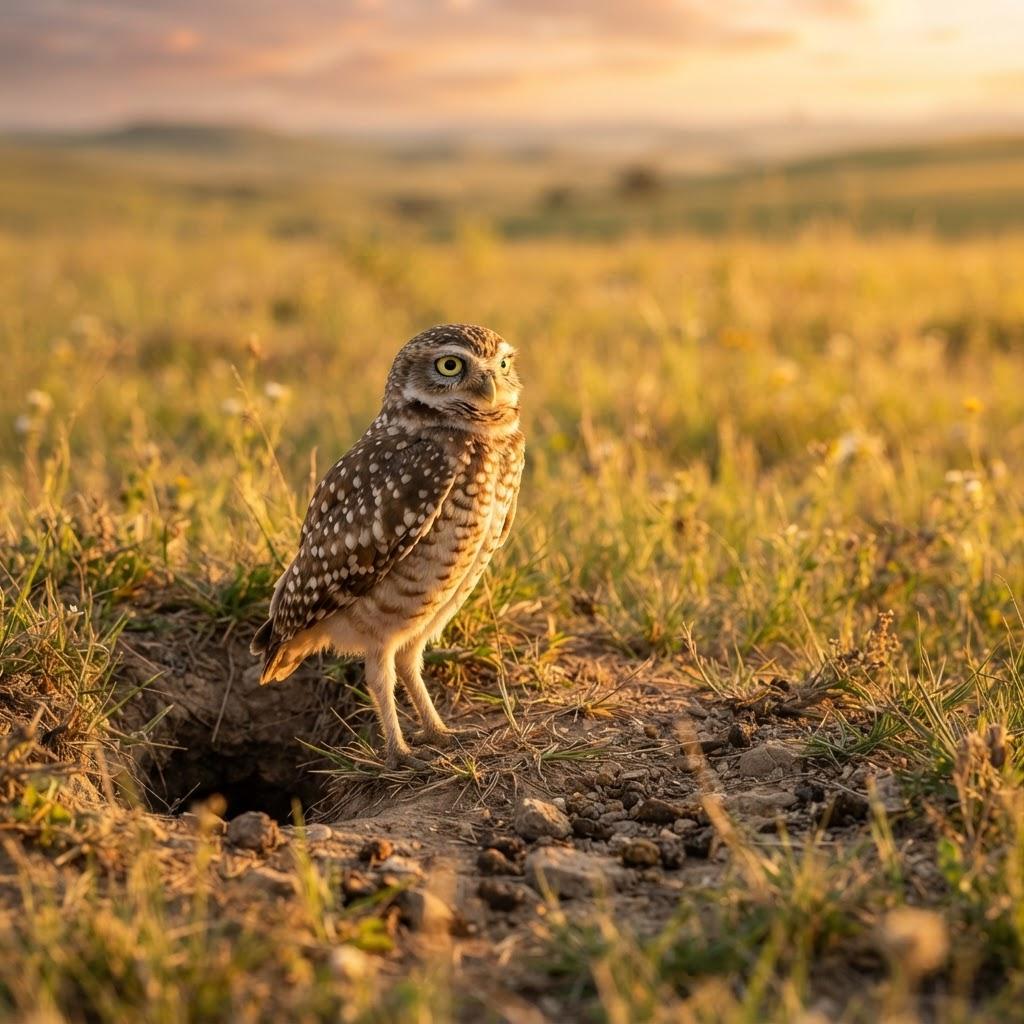
Imagine a bird that fits inside a soda can but has the soul of a grizzled, nocturnal gladiator. That is the Elf Owl. Standing at a mere five to six inches tall, this creature is essentially a sentient tennis ball with gold-rimmed eyes and a very serious expression. While other owls are busy being brooding, mysterious forest hermits, the Elf Owl is the life of the desert party, flitting around like a hyperactive hummingbird with an attitude problem. These tiny titans do not hunt rodents or large prey; they are dedicated insectivores, patrolling the night sky like miniature air-force pilots looking for unsuspecting moths, beetles, and crickets. It is arguably the most adorable apex predator on the planet, assuming your definition of an apex predator involves something that weighs less than a standard golf ball. If you were casting a movie about a plucky underdog who saves the world from a plague of grasshoppers, the Elf Owl would be your lead actor every single time.
Superpowers & Weird Abilities
Being tiny in a desert filled with hungry snakes, hawks, and coyotes requires some serious tactical advantages. The Elf Owl’s main superpower is its absolute mastery of the nocturnal environment, fueled by night vision that puts our latest tech to shame. These birds have eyes that are proportionally enormous compared to their heads, acting like massive light-gathering buckets that can pick up the slightest movement in near-total darkness. They also possess an internal flight-stabilization system that allows for near-silent flight. Their feathers have special soft, frayed edges that break up the air current, preventing the characteristic 'whoosh' sound that would normally betray a predator. Think of it as stealth-mode technology straight from Mother Nature’s workshop. Because they cannot rotate their eyes like we do, they have the classic owl ability to swivel their heads nearly 270 degrees, essentially looking behind themselves without ever moving their bodies. It is like having a rear-view camera integrated into your neck, which is a massive help when you are a bite-sized snack looking to avoid becoming lunch.
Drama, Personality & Feathered Chaos
Do not let the cute exterior fool you; the Elf Owl is a bird with a temperament. They are fiercely territorial, despite being the size of a sparrow, and they will not hesitate to give a 'get off my lawn' warning to any other bird that wanders too close to their cactus condo. They are the ultimate squatter-tenants of the desert, often moving into abandoned woodpecker holes in giant saguaro cacti. The drama begins when they realize they have to share their habitat with Gila woodpeckers or other feathered neighbors. They are famously sassy, often engaging in high-pitched, vocal arguments that sound like a series of rapid, rhythmic yips. If they were human, they would definitely be the neighbor who calls the HOA the second your grass grows a quarter-inch too tall. They are not bullies, but they are certainly confident in their own space, holding their ground against creatures ten times their size by puffing up their feathers to look like a much larger, angrier ball of fluff.
Bizarre Rituals & Quirky Habits
One of the most hilarious things about the Elf Owl is their absolute obsession with 'decorating' their homes. While they rely on woodpeckers to do the hard labor of excavation, the owls are the interior designers of the avian world. They have been observed dragging various items into their nesting cavities, which serves as a sort of makeshift security system or perhaps just a quirk of their nesting psyche. They also engage in a behavior similar to anting, though it is less about parasites and more about a strange, twitchy energy. When threatened, they are known to go completely limp, playing dead in a way that is almost unnervingly convincing. If you find one on the ground, it might look like a tragedy, but the second you turn your back, it may well pop up and fly away. It is the avian equivalent of an 'I give up' act designed to confuse predators long enough for them to make a break for it. Their whole life is a series of frantic, energetic bursts punctuated by long periods of stoic silence.
Legends, Folklore & Human Stories
In the lore of the desert Southwest, the Elf Owl is often seen as a silent watcher of the night. Unlike the Great Horned Owl, which is sometimes cast as a dark omen in various cultures, the tiny Elf Owl is usually viewed as a companion of the saguaro forests—a secret guardian of the desert night. There is a charm to them that has endeared them to generations of desert dwellers, from indigenous tribes to modern-day naturalists. They are the 'little people' of the avian world, and many tales describe them as spirits of the saguaro. While they do not have the same fame as the larger, more imposing owls, their presence is considered a sign of a healthy, functioning ecosystem. If you are lucky enough to hear one on a warm desert evening, it is treated almost like a blessing from the land itself. Humans have long been fascinated by their ability to thrive in such an unforgiving environment, turning them into symbols of resilience and quiet, understated power.
Mating: The Ridiculous World of Avian Dating
Dating for an Elf Owl is essentially a test of who can produce the most persistent and rhythmic chirping. In the spring, males establish their territories and begin a vocal serenading campaign that could put a lovesick teenager to shame. They sit near their chosen nest site—usually a cozy hole in a saguaro—and unleash a series of calls that are meant to show off their fitness and, more importantly, the quality of their real estate. The female acts as the ultimate judge, flying from site to site to inspect the housing conditions. If the male’s song is too weak or his cactus hole is damp or drafty, she simply flies off to the next suitor, leaving the poor guy to continue his solo concert for hours on end. It is a harsh, meritocratic system where the best 'landlord' wins the girl. Once a pair bonds, they reinforce their relationship with soft, gentle chirps, creating a temporary, exclusive power couple of the cactus forest.
Nesting: Master Architects and Lazy Slumlords
Elf Owls are the definition of 'why build it yourself when someone else has already done the work?' They are secondary cavity nesters, which is a fancy way of saying they are professional house-thieves. They wait for Gila woodpeckers or gilded flickers to hammer out a perfect, insulating hole in a saguaro cactus. Once the woodpeckers leave, the Elf Owl moves in, often adding a few tweaks to the decor but ultimately inheriting a masterpiece of desert architecture. They do not carry twigs or mud in their beaks; they are strictly 'move-in ready' kind of birds. This makes their nesting strategy incredibly efficient, as they save all that energy for raising chicks instead of construction. However, it does lead to some interesting neighborhood dynamics. You will occasionally see an Elf Owl trying to hold onto a prime spot while a curious woodpecker returns to check on its old handiwork. It is a perpetual game of desert musical chairs, and the Elf Owl is usually the one sitting down when the music stops.
Raising Babies: The Screaming Food Disposals
Once the eggs hatch, the nest becomes a chaotic, high-stakes food delivery hub. Elf Owl chicks are born looking like tiny, helpless, grey-fuzzed aliens, and their only goal in life is to grow as fast as possible. This requires a staggering amount of protein, mostly in the form of moths and crickets. The parents work themselves to the bone, flying back and forth throughout the night to keep the hungry maws satisfied. The chicks, for their part, show absolutely zero appreciation for the hard work, simply opening their beaks wide and demanding more. It is a grueling, sleepless three to four weeks before the young ones are ready to fledge, or leave the nest. During this time, the nest hole can get quite crowded and rather messy. The parents have to manage the waste and the constant chirping, all while avoiding predators who might be attracted to the noise. It is a testament to their parenting skills that these tiny birds manage to raise a brood successfully in such a hostile landscape.
Bird-Watching Travel & Local Hotspots
If you are dying to see an Elf Owl, you need to head toward the Sonoran Desert. Saguaro National Park in Arizona is basically the 'Mecca' for these little guys. Specifically, look for areas with dense clusters of saguaros during the breeding season, which typically runs from late spring through mid-summer. Organ Pipe Cactus National Monument is another fantastic location where you can find these birds at night. The key to spotting them is patience and silence. Most birders head out after dark with a good pair of binoculars and a flashlight—though you should use a red filter to avoid spooking them. Look for the silhouettes near the tops of the cacti. If you are in southern Texas, the Santa Ana National Wildlife Refuge is another hotspot where you might catch a glimpse of this elusive species. Always remember to respect the birds; never use loud playback calls to force them out, as this stresses them out during their peak feeding and nesting times.
Food, Feeder Hacks & DIY Projects
Attracting an Elf Owl to your actual backyard is a bit of a long shot unless you live in the heart of their range and have a very 'wild' yard. Because they are insectivores, they do not care about your birdseed or suet cakes. Instead, they want an environment that mimics a healthy, insect-rich desert. The best way to attract them is to stop using pesticides. If you have a garden full of native plants, you will naturally host more moths, beetles, and cicadas, which are the primary items on the Elf Owl menu. For a DIY project, consider installing a specialized owl nesting box designed for small cavity nesters. While they prefer natural cactus holes, a well-placed box in a quiet, undisturbed corner of a desert garden can sometimes act as a substitute. Keep a birdbath with a shallow edge; they need water to drink and bathe in, just like any other bird. Remember, the goal is to create a habitat, not just a snack bar, because these guys are looking for a place to live, not a quick takeout meal.
Seasonal Guides & "Crisis" Management
Elf Owls are migratory, moving south into Mexico for the winter to avoid the cold, which is a smart move for an animal that weighs as much as a chocolate bar. During the spring migration, they return to the desert with a singular purpose: finding a home and starting a family. If you find a 'fledgling' on the ground in early summer, don't panic! It is common for young owls to spend a few days on the ground or in low shrubs while they learn to fly. Unless it is clearly injured or in immediate danger, leave it alone. The parents are almost certainly nearby, watching from the shadows and still feeding the youngster. If you find a truly injured bird, contact a local wildlife rescue center immediately. Never attempt to feed or keep a wild bird yourself; they have very specific nutritional needs, and you could inadvertently cause harm. Winter is the time to clean out your nesting boxes and prepare them for the next season's arrivals, ensuring everything is free of parasites or debris.
Backyard Tech & Gadget Reviews
If you want to know what is happening in your yard while you sleep, a trail camera is your best friend. Look for models with 'no-glow' infrared sensors, which capture footage in the dark without alerting the birds to your presence with a bright light. It is a fantastic way to document the nightlife of your garden. As for smart feeders, they are great for seed-eaters, but they won't do much for the insect-loving Elf Owl. However, a motion-activated camera pointed toward a potential nesting site can give you incredible insights into their behavior. Regarding window collisions, these are a major threat to all birds. Use window films or decals that make the glass visible to them, especially during their active hours. It is a cheap, easy fix that saves lives. Investing in a good pair of binoculars with night-vision capabilities is the ultimate upgrade for any serious owl enthusiast; look for something with decent light transmission specs to help you spot these masters of camouflage.
How to Spot One & How It Is Doing
Spotting an Elf Owl is all about listening before you look. Their call is a very distinct, high-pitched, stuttering hoot that sounds almost like a puppy barking in fast-forward. If you hear that, turn your red-filtered light toward the nearest tall cactus. Look for a small, round shape perched near a hole. Their plumage is a mottled grey and brown, which acts as incredible camouflage against the bark of desert trees or the spines of a cactus. The good news is that the Elf Owl is currently listed as 'Least Concern' globally. They are doing relatively well, although they do face threats from habitat loss and climate change affecting their food sources. The best thing you can do for them is to support local conservation efforts that preserve the native desert landscapes they call home. By protecting the saguaro forests and keeping our night skies dark and free of invasive species, we ensure that these tiny, feathered desert comedians will continue to haunt our nights with their chirpy, chaotic charm for generations to come.