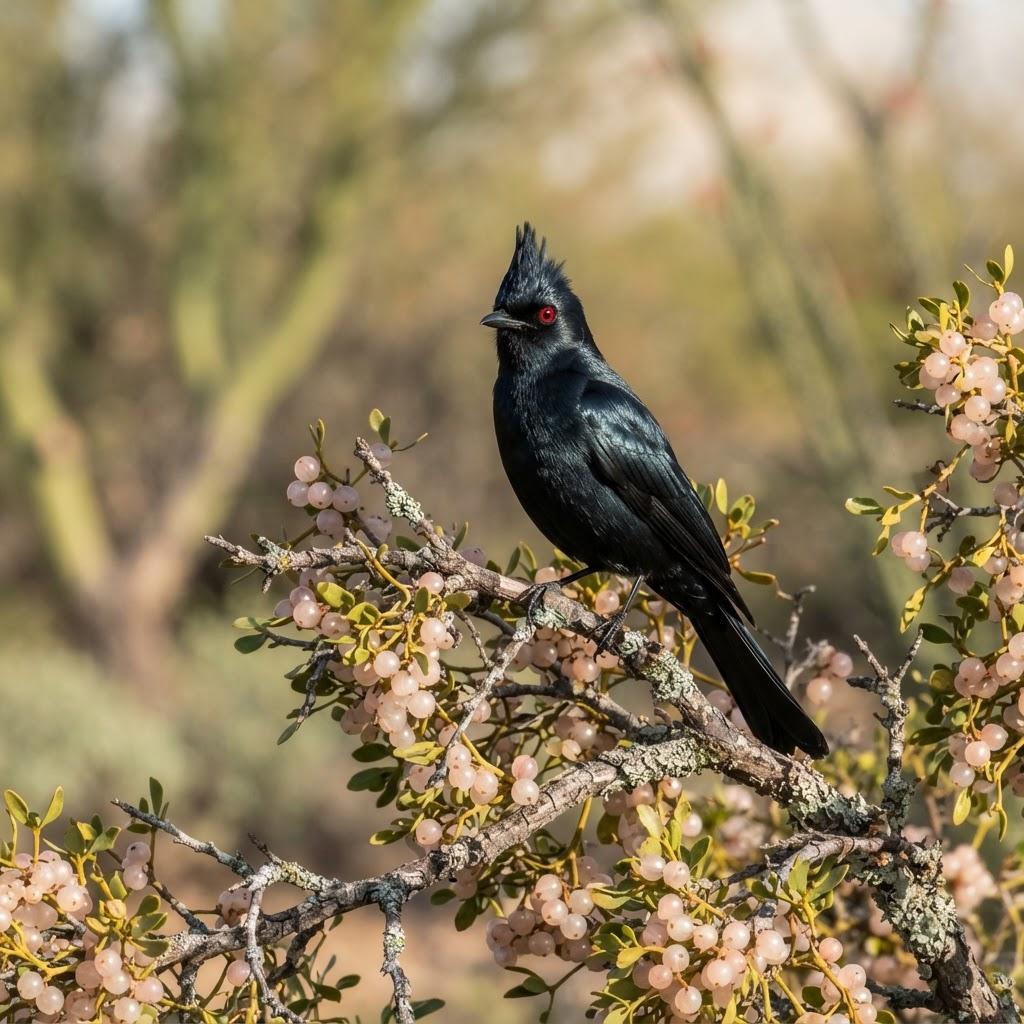
Phainopepla nitens
Phainopepla
Meet the Phainopepla, a suave, midnight-black desert dandy with a crest that says 'I own this shrub.' Part bird, part berry-obsessed hermit, this silky wonder is the only one of its kind in North America and arguably the most stylish creature in the desert.
Meet the Bird
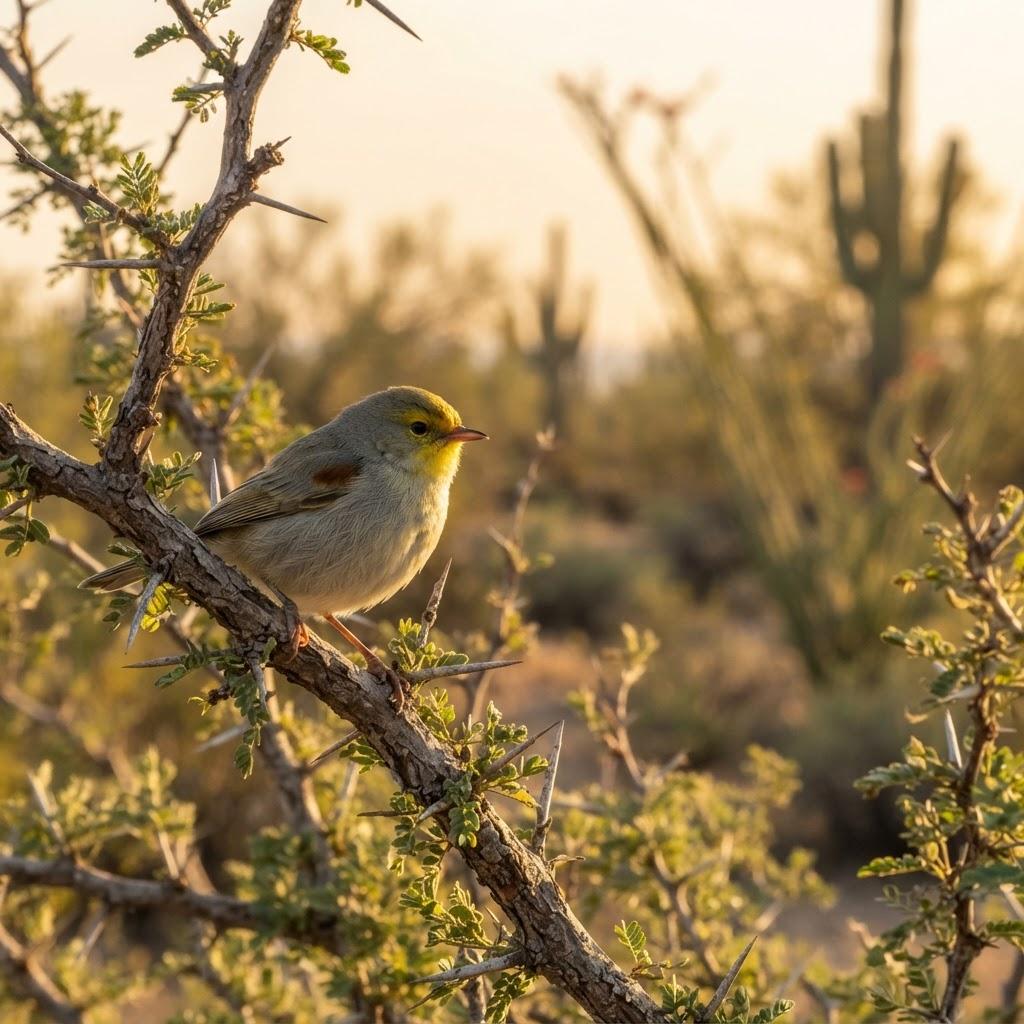
Imagine a film noir detective from the 1940s, but instead of a fedora, he has a jaunty, swept-back crest of midnight-blue feathers. That is the Phainopepla. They are the definition of avian cool, sporting a slick, glossy black tuxedo that makes other birds look like they are wearing gym clothes. When a male Phainopepla perches on a desert shrub, he does not just sit; he poses. He is lean, long-tailed, and possesses eyes so red they look like they have seen things no other bird could handle. They are the only member of the silky-flycatcher family to grace North America, which basically makes them the mysterious international exchange student who shows up at your local desert hangout and makes everyone else feel like they are missing a crucial social cue. They are solitary, sophisticated, and entirely unimpressed by the frantic fluttering of the common sparrow.
Superpowers & Weird Abilities
The Phainopepla possesses a digestive superpower that would make a human nutritionist faint. They are extreme mistletoe specialists. While you might think of mistletoe as that plant you hide under during holiday parties, for the Phainopepla, it is the staff of life. They have evolved a specialized gut that allows them to process the sticky, gooey pulp of mistletoe berries with incredible efficiency. Here is the kicker: they do not just eat these berries; they are the desert’s primary mistletoe-spreading machine. The sticky seeds pass through their system and stick to the branches of the next tree they land on, essentially planting the next generation of their favorite snack. It is a biological partnership so tight that if the Phainopepla ever decided to go on strike, the desert mistletoe population would likely throw a tantrum and vanish.
Drama, Personality & Feathered Chaos
Do not let the suave appearance fool you; the Phainopepla is a territorial jerk of the highest order. While they may look like refined aristocrats, they are actually petty tyrants when it comes to their personal berry stash. If another bird—even one twice its size—dares to approach a prime mistletoe clump that a Phainopepla has claimed, the show begins. They will launch themselves into the air, wings flashing bright white patches like a neon sign, and aggressively chase away the interloper with high-pitched alarm calls that sound like a tiny, angry alarm clock. They are the ultimate gatekeepers of the desert canopy. You will often see them perched atop a dead branch, surveying their kingdom with the unblinking intensity of a security guard who has not had his coffee, ready to dive-bomb anyone who so much as looks at his lunch.
Bizarre Rituals & Quirky Habits
One of the most peculiar habits of the Phainopepla is their split-personality migratory life. Instead of just heading south for the winter like every other sane bird, they actually breed twice in two completely different habitats. They start the year nesting in the low-elevation desert during the spring, then, once the heat starts to bake the landscape, they pack their metaphorical bags and move up to the cooler, higher-elevation oak woodlands to breed all over again. It is essentially the avian equivalent of owning a winter condo in Palm Springs and a summer cottage in the mountains. This nomadic existence is rare among North American birds and keeps researchers constantly on their toes. When they aren't migrating, they spend a large portion of their day engaging in 'sallying,' which is bird-speak for flying out from a perch to snatch a bug and returning to the exact same spot.
Legends, Folklore & Human Stories
Because they are so visually striking—the black bird with the red eye—the Phainopepla has long held a place in the cultural memory of the desert Southwest. In various Indigenous cultures, they are sometimes depicted as clever spirits or figures associated with the mysterious abundance of the desert. They are not the kind of bird that features in bedtime fables as a 'good luck charm' or a 'bad omen' in the way crows or owls are, but their presence is a reliable indicator of health in the desert ecosystem. To see one is to know you are in a place where the water is flowing and the plants are thriving. They are the 'quiet professionals' of the avian world, rarely mentioned in high-drama folklore, but always respected by the local desert-dwellers for their sheer tenacity in a landscape that actively tries to kill everything living within it.
Mating: The Ridiculous World of Avian Dating
Courtship for a Phainopepla is a high-stakes aerial ballet that would make a fighter pilot blush. The male doesn't just sit and sing; he turns into a blur of black and white. He will perform these dramatic 'flutter-flights,' soaring upward with his wings pumping rhythmically and his white wing patches flashing like semaphore signals. It is a very 'look at me, I am the fittest, strongest, and best-dressed male in this canyon' kind of display. If the female is impressed, she sticks around to help with the nest, but if she decides he is just not providing enough mistletoe-based luxury, she is gone. The male is often left doing his flight routine to an empty sky, which is arguably one of the most pathetic sights in nature. It is pure, unadulterated vanity meeting the brutal reality of natural selection.
Nesting: Master Architects and Lazy Slumlords
When it comes to home-building, the Phainopepla is a surprisingly decent architect, especially given that they have to build two separate homes per year. They create a small, neat cup-shaped nest, usually wedged into the fork of a tree. They are not quite the master masons that swallows are, but they are far from the 'let's just throw some sticks together and hope for the best' attitude of a mourning dove. They use bits of plant down, spider webs, and lichen to bind the whole thing together. It is a sturdy, functional bachelor pad meant to keep their eggs safe from the prying eyes of snakes and scrub-jays. They are intensely protective of this structure, often picking locations that are hidden well enough that a human hiker would walk right past them without ever knowing a tiny nursery was just a few feet away.
Raising Babies: The Screaming Food Disposals
Raising a brood of Phainopepla chicks is a relentless test of stamina. Once the eggs hatch, the parents enter a state of high-alert, high-speed delivery service. Those chicks are essentially screaming, gaping maws that demand constant fueling. The parents must fly back and forth from their mistletoe patches to the nest, shuttling berries that are mashed up into a sort of desert porridge. It is a lot of work for a bird that spends so much of its energy looking cool. The babies grow fast, and the pressure is on to get them out of the nest before a hawk or a coyote realizes what is going on. Watching them feed is a study in parental desperation; the chicks flap, poke, and scream until they are finally satiated, usually for about three minutes before they start demanding another round.
Bird-Watching Travel & Local Hotspots
If you are ready to witness the majesty of the Phainopepla in person, set your GPS for the Sonoran Desert. Specifically, places like Joshua Tree National Park in California or the Saguaro National Park near Tucson, Arizona, are absolute gold mines. During the spring, look for the 'ironwood' trees—these are the Phainopepla's favorite real estate. If you are in the Anza-Borrego Desert State Park, head out in the early morning; the air is cool, the light is soft, and the Phainopeplas will be out in force, perched on the highest tips of the scrub, looking like little black daggers against the blue sky. Always bring binoculars, as these birds tend to be just far enough away that you will want to see those piercing red eyes. It is the kind of travel that rewards patience, silence, and a good sun hat.
Food, Feeder Hacks & DIY Projects
Here is the honest truth: the Phainopepla is a tough bird to attract to your standard backyard sunflower seed feeder. They are not interested in your generic seed mix. To get them to visit, you need to cater to their sophisticated palate. They love berries and insects. If you want them, you have to go native. Plant mistletoe, hackberry, or desert elderberry in your yard. If you want a DIY project, skip the plastic store-bought feeders. Instead, create a 'natural suet log.' Take a piece of untreated wood, drill some holes in it, and pack it with a high-quality, berry-infused suet block. It simulates a dead branch where insects hide, which is exactly where a Phainopepla wants to hunt. Avoid the cheap, dusty millet feeders; you will only end up with a yard full of English sparrows and aggressive starlings, which will scare off your elegant black visitor before he ever lands.
Seasonal Guides & "Crisis" Management
Spring is when the Phainopepla magic really happens. As the temperatures rise, watch for them moving from the valley floors up into the higher foothills. This is also when people get stressed out by the 'fledgling panic.' If you see a young, fluffy Phainopepla on the ground that looks like it is failing at life, do not touch it! It is probably a fledgling—a bird that has left the nest but is still being fed by its parents, who are hovering nearby. They look awkward because they are, quite literally, learning to be birds. Leave them alone. Unless they are clearly injured or in the middle of a busy highway, they are doing fine. In winter, keep your water features from freezing. A heated birdbath is the absolute best way to keep a Phainopepla hanging around when the nights get chilly, as they are not built for freezing temperatures.
Backyard Tech & Gadget Reviews
Modern tech has turned birdwatching into a spectator sport, and for a species like the Phainopepla, it is a game-changer. Smart feeders with AI cameras, like the ones that identify visitors, are fantastic for capturing the exact moment a Phainopepla decides to swoop in for a berry. Just remember, these cameras need a good view, so place them near native berry bushes to increase your odds. For window collisions, which are a major threat to these guys when they get disoriented, use simple window film or decals. It creates a pattern that they can see and avoid. If you want to go the extra mile, a motion-activated trail camera pointed at a patch of native shrubs can give you a documentary-level view of their behavior without you having to stand outside in the desert heat for eight hours straight.
How to Spot One & How It Is Doing
Spotting a Phainopepla is all about the silhouette. Look for that sharp, upright crest and the long, thin tail. When they fly, look for the big white patches on their wings—they look like white flashes against the black body. If you hear a soft, conversational 'whurp' or 'quirt' call, stop and look up; that is usually them. They are currently doing quite well, with stable populations across their range. They are the beneficiaries of well-preserved desert habitat, so the best way to help them is to advocate for wild, untamed spaces. Protect the native plants, leave the dead trees standing, and keep the desert wild. Every time you plant a native bush, you are helping build a future where this dapper, berry-snacking, crest-sporting icon continues to rule the desert canopy with effortless, midnight-black charm.