Chaetura pelagica
Chimney Swift
The Chimney Swift is a literal cigar with wings that spends its entire life airborne, never touching the ground. They are the ultimate masters of the sky who traded walking for pure, unadulterated aerial agility.
Meet the Bird
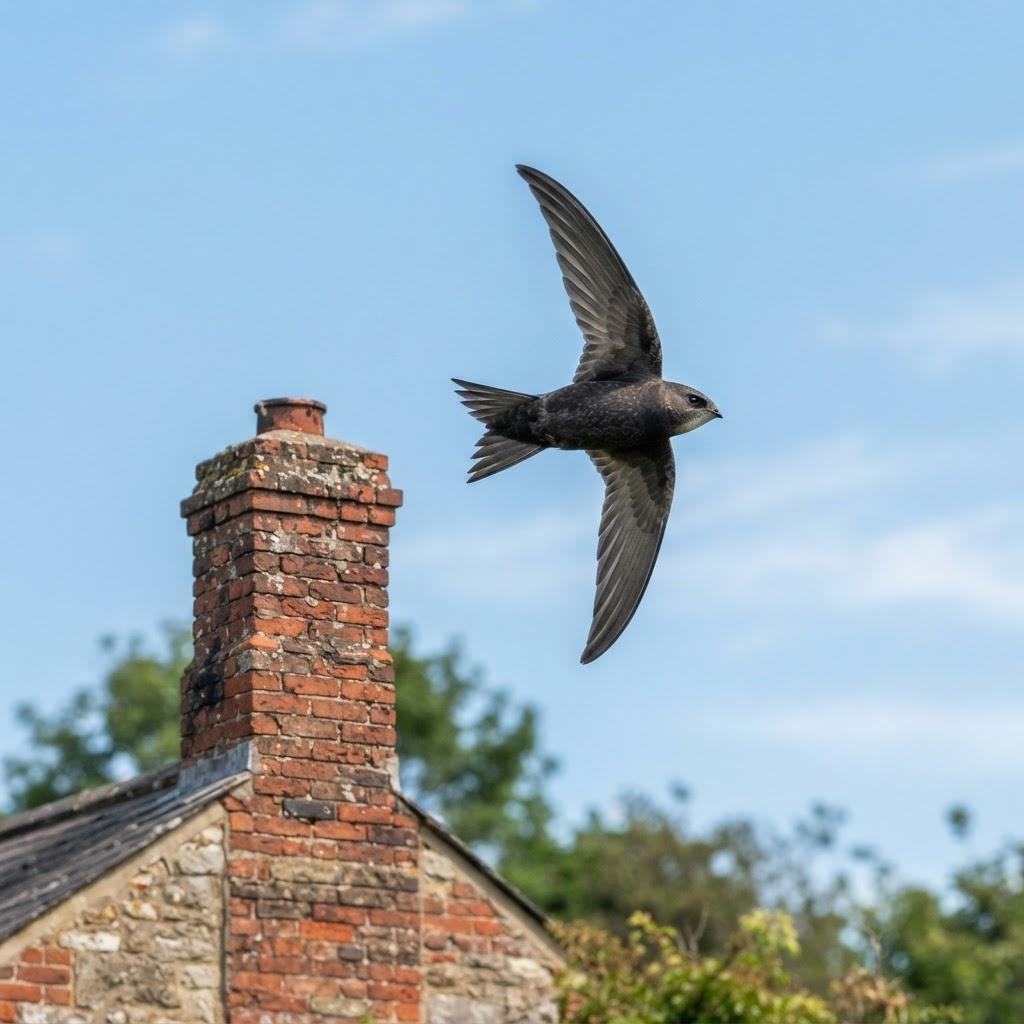
Meet the Chimney Swift, the daredevil of the backyard skies. If a cigar decided it wanted to become a fighter pilot, it would look exactly like this bird. They have short, stubby tails, tiny needle-like beaks, and wings that seem way too long for their aerodynamic little bodies. They don't hop, they don't strut, and they certainly don't stroll through the park. In fact, these birds are so committed to the aviation lifestyle that their feet are essentially vestigial claws designed for gripping vertical surfaces, not for standing on flat ground. They are the avian equivalent of an Olympic gymnast who never leaves the high bar. You will likely spot them as a blurry, fluttering silhouette against the evening sky, chattering like a bunch of caffeinated gossips while they snatch mosquitoes out of the air with surgical precision. They are the ultimate sky-dwellers, and honestly, they make every other bird look like a pedestrian by comparison.
Superpowers & Weird Abilities
The Chimney Swift is the closest thing nature has to a perpetual motion machine. Their greatest superpower is the ability to spend nearly their entire life in the air. They eat while flying, they drink while flying, and they can even nap while flying by letting one half of their brain snooze while the other half keeps the wings flapping. Imagine trying to sleep while you are running a marathon—that is just a Tuesday for a swift. Their wings are powered by super-strong muscles that allow them to twist and turn with the agility of a paper airplane caught in a hurricane. Because their feet are specialized solely for clinging to the insides of chimneys or hollow trees, they have completely lost the ability to perch on a wire or walk on a lawn. If they ever find themselves on the ground, it is a genuine disaster, like a fish out of water, because they simply don't have the anatomical hardware to take off again.
Drama, Personality & Feathered Chaos
While they look like sleek, professional aviators, Chimney Swifts are secretly the neighborhood hoarders. During migration, they gather in massive groups to roost in large chimneys, creating a swirling vortex of thousands of birds that looks like a living, breathing tornado. This is where the drama happens. While they usually pair up to nest, they often utilize 'helpers'—extra, non-breeding birds that hang around the nest to help feed the chicks. It is basically the feathered version of a village raising a child, except the village is composed of highly caffeinated aerial acrobats. They are incredibly territorial when it comes to their personal chimney real estate; if a rival swift tries to move into their hollow tree or flue, prepare for a high-speed, screeching dogfight that would put any action movie to shame. They aren't just birds; they are a highly organized, slightly erratic flying society with very strict rules about who gets to sleep where.
Bizarre Rituals & Quirky Habits
One of the most peculiar habits of the Chimney Swift is their obsession with vertical surfaces. You might think they would want a nice, comfy nest in a fork of a sturdy oak tree, but no. They prefer the dark, soot-covered interior of an old-fashioned brick chimney. They don't use soft materials like downy feathers or moss to build their homes; instead, they use their own saliva. That is right—they are the MacGyvers of the bird world, using their super-sticky, glue-like spit to bond twigs directly to the side of a chimney wall. It is a structural engineering marvel, if you can get past the gross factor. They also perform these insane, high-speed 'stutter-flight' maneuvers during courtship where they fly in tight formation with their wings held in a V-shape, looking like they are vibrating through the air. It is a display that says, 'Look at my wings, they are very aerodynamic,' which apparently works wonders with the ladies.
Legends, Folklore & Human Stories
For centuries, humans have watched these mysterious birds swirl into chimneys at dusk and assumed they were up to something magical. In some older folklore, Chimney Swifts were viewed as messengers between the heavens and the earth because they were never seen touching the soil. In the days of the Old World, people actually welcomed the 'soot-birds' into their chimneys, believing they brought good fortune and pest control by consuming the clouds of gnats and mosquitoes that plagued early settlements. There is something deeply poetic about a bird that essentially uses our own homes as their luxury high-rise apartments. While modern homeowners might be a bit less enthusiastic about the scratching noises coming from the flue at night, these birds have been our silent, flying roommates for hundreds of years. They represent a unique partnership, a wild creature that decided the best place to raise a family was inside the chimney of a human house.
Mating: The Ridiculous World of Avian Dating
Dating for a Chimney Swift is an extreme contact sport. It starts with a breathtaking aerial display where the male and female fly together in a synchronized 'V' formation, gliding and diving in perfect harmony. It is like watching a choreographed ballroom dance performed at sixty miles per hour. If the male makes one wrong turn or fails to maintain the correct distance, the female will simply break away and look for someone more capable of handling the high-G forces. They don't give second chances. If the performance goes well, the pair sticks together for the season, bonded by the shared trauma of mid-air acrobatics. They don't exchange gifts or bring flowers; they exchange flight paths and aerial stability. Once the pair is formed, they are inseparable, often sticking together throughout the long, arduous migration to South America and back. It is a romance forged in the clouds, fueled by adrenaline and the sheer necessity of perfect timing.
Nesting: Master Architects and Lazy Slumlords
The nesting strategy of the Chimney Swift is not for the faint of heart. They don't build a bowl or a cup; they build a half-moon shaped shelf of twigs, all glued together with a hardened, cement-like saliva that they produce in massive quantities during the breeding season. This structure is stuck directly onto the vertical surface of a chimney or a cave wall. It is incredibly strong, yet it looks like a half-collapsed basket you might find in a craft supply store gone wrong. The nest is just deep enough to hold the eggs before they hatch. As the babies grow, the nest doesn't necessarily get bigger, so the chicks end up clinging to the wall of the chimney with their sharp little claws, huddled together like a bunch of feathery bats. It is efficient, utilitarian, and perfectly suited for a life lived vertically. They aren't trying to win an interior design award; they are just trying to keep their babies from sliding down the flue.
Raising Babies: The Screaming Food Disposals
Once those eggs hatch, the chimney suddenly sounds like a busy daycare center. A typical brood consists of three to five chicks that are essentially hungry, high-pitched sirens. The parents are absolute machines, working from dawn until dusk to snatch thousands of tiny insects from the sky to keep their brood alive. The chicks are notoriously loud, emitting a constant, raspy chattering sound that echoes up the chimney flue and often surprises unsuspecting homeowners. These babies grow at an astonishing rate, fueled by the sheer volume of flies, beetles, and wasps the parents drag into the roost. The parents often recruit 'helpers' to join the feeding frenzy, which is a rare and lovely piece of avian cooperation. Watching a parent dive-bomb into a chimney at top speed to deliver a mouthful of bugs to a bunch of screaming fluff-balls is enough to make any human parent feel like their own struggles with breakfast cereal are a total breeze.
Bird-Watching Travel & Local Hotspots
If you want to see the Chimney Swift in all its glory, you don't need a fancy birding vest or a six-thousand-dollar lens. You just need a sunset and an old building. During the migration season in the fall, head to towns that still maintain older, large-diameter brick chimneys. There are legendary 'swift watch' events in cities across the United States, such as the famous brick tower in Portland, Oregon, or various historic schoolhouses across the Midwest. The best time to see them is in the late afternoon, about thirty minutes before sunset. Find a comfortable chair, bring a beverage, and watch the sky. Suddenly, they will appear, seemingly out of nowhere, swirling in a massive, hypnotic funnel that slowly descends into the chimney. It is a spectacle that rivals any nature documentary, and you can witness it right in the middle of a bustling downtown district. It is urban wildlife viewing at its absolute, most dramatic peak.
Food, Feeder Hacks & DIY Projects
Here is the honest truth about feeding Chimney Swifts: you can't. They are strictly aerial insectivores, which means they exclusively hunt bugs in flight. You cannot put out a tray of suet, seeds, or jelly and expect them to drop by for a snack. They are the snobs of the avian world who only eat what they catch on the wing. However, you can make your backyard a five-star dining destination for them by encouraging more bugs. Stop using pesticides, stop clearing away dead leaves, and consider installing a small backyard pond. A healthy, bug-friendly ecosystem is the only way to attract these aerial acrobats to your airspace. If you want to help, focus on native plantings that attract moths, beetles, and gnats. Think of your yard as a 'bug buffet' for the swifts. You are essentially growing their favorite lunch, and they will pay you back by keeping the local mosquito population in check without you ever needing a bug zapper.
Seasonal Guides & "Crisis" Management
In the spring, Chimney Swifts return from the Amazon and start looking for prime real estate. If you hear frantic scratching in your chimney, don't panic! It is likely just a nesting pair. Avoid using your fireplace during these months. As for the 'fledgling panic' season, people often find young swifts on the ground and assume they have fallen from a nest. Because these birds cannot fly from the ground, finding one is a genuine emergency. If you see a swift on the ground, do not try to feed it. Gently pick it up (wearing gloves if possible) and place it back on a vertical surface like a wall or a tree trunk where it can cling. If it is injured, contact a licensed wildlife rehabilitator immediately. These birds are specialized for flight, not life on the dirt, so they need a bit of a helping hand to get back to the sky where they belong.
Backyard Tech & Gadget Reviews
You probably aren't going to get a Chimney Swift to land on a smart bird feeder, but you can certainly track them using technology. If you have an old chimney, a simple, cheap trail camera pointed inside the flue can provide some of the most fascinating footage you will ever own. You will see the parents coming and going, the babies stretching their wings, and the incredible aerial stunts performed in the dark. As for window collisions, swifts are generally high-altitude flyers, but it is always good practice to keep your windows clear with decals or bird-safe films if you live near their nesting sites. Avoid high-intensity security lights that point straight up, as these can disorient the birds during their evening roosting flights. The best 'tech' for a Chimney Swift enthusiast is a good pair of binoculars and a local weather app to track the front systems that drive their migration patterns.
How to Spot One & How It Is Doing
Spotting a Chimney Swift is all about watching the silhouette. Look for the 'cigar with wings' shape and the rapid, fluttering, erratic flight pattern that looks like they are constantly chasing invisible gnats. If you hear a series of high, chattering, squeaky chips, you have found them. Their conservation status is currently a concern due to the loss of old chimneys and the decline in the insect populations they rely on. You can help by keeping your own chimneys in good repair or, better yet, installing a custom-built 'swift tower' in your backyard—a vertical wooden chimney designed specifically for them to roost and nest in. By maintaining healthy, bug-friendly environments and preserving the structures they call home, we can ensure these amazing little aeronauts continue to fill our summer skies with their incredible, chaotic energy. They are a treasure of the skies, and with just a little effort, they can remain a constant part of our natural landscape.