Sturnus vulgaris
European Starling
Meet the European Starling, a bird that's less of a songbird and more of a feathered rockstar with a flair for the dramatic! These iridescent acrobats are known for their incredible mimicry, their dazzling synchronized flights, and their rather bold personalities. Prepare to be charmed, slightly annoyed, and utterly fascinated by this ubiquitous charmer.
Meet the Bird
Picture this: a bird that struts into town like it owns the place, covered in a shimmering, iridescent tuxedo that changes color with every flick of its wrist. This is the European Starling, a true character with a personality as flashy as its plumage. Forget shy and retiring; this bird is the life of the party, the swaggering showman, the feathered impresario who’s always got a trick up its sleeve. They arrive not with a gentle chirp, but with a bold, often noisy, announcement that they’ve landed, ready to claim their spot in the pecking order. Their vibe? Think of a charismatic but slightly chaotic performer who can sing, dance, and mimic better than anyone else in the neighborhood. You might not always agree with their methods, but you certainly can’t ignore them. They’ve got this way of looking at you, a bead of an eye that seems to say, 'Yeah, I know I’m fabulous. What are you going to do about it?' They are the ultimate scene-stealers, capable of turning an ordinary backyard into a Broadway stage, with themselves as the undisputed headliner. So, buckle up, because meeting a European Starling is never just a casual encounter; it’s an event, a performance, a feathered spectacle you won't soon forget.
Superpowers & Weird Abilities
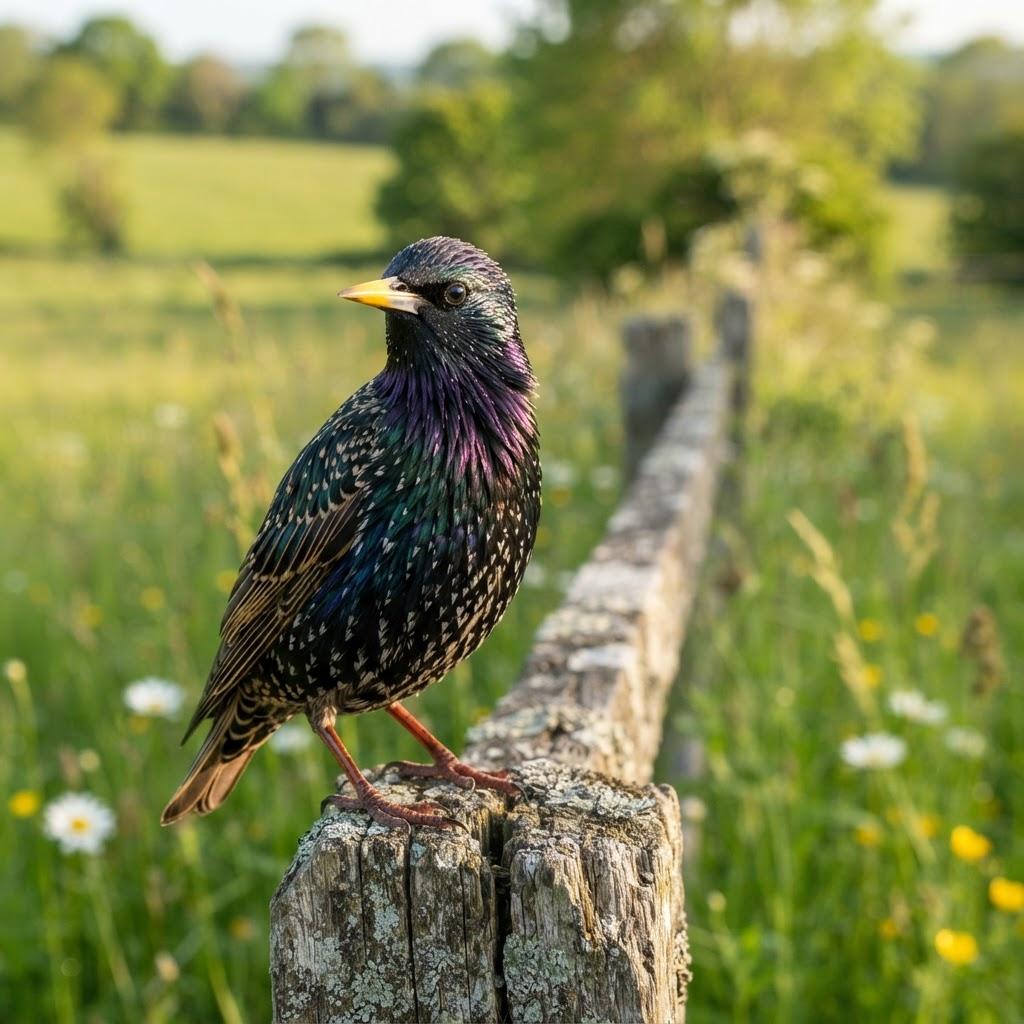
These birds aren't just pretty faces with a penchant for dramatics; they possess a suite of biological superpowers that would make any comic book hero jealous. First off, their vocal cords are basically nature's synthesizers. They aren't content with just their own song; oh no. Starlings are master mimics, capable of replicating almost any sound they hear. This includes the squeak of a rusty gate, the beep of a car alarm, the whistle of a referee, and, most impressively, the songs of other birds. Imagine hearing the distinct call of a cardinal followed immediately by the whirring of a photocopier – that’s a Starling show for you. This mimicry isn't just for laughs; it's a sophisticated communication tool, helping them integrate into flocks, deter rivals, and maybe even impress a potential mate with a medley of their favorite tunes. Beyond their vocal gymnastics, they have an uncanny ability to navigate. While they might not be migrating across continents like some of their avian cousins, they possess a remarkable sense of direction, always knowing their way back to roosts, even from miles away. They also have incredibly sharp eyesight, allowing them to spot tiny insects buried in the grass from a considerable height, like feathered ninjas on a culinary hunt. Their iridescent feathers, which seem to change color from purple to green to black, aren't just for show either; they’re actually structural. Tiny structures within the feathers scatter light, creating these dazzling, shifting hues that help with camouflage in certain lights and, of course, impress their friends and potential partners. It’s a combination of vocal genius, navigation prowess, and visual trickery that makes them evolutionary powerhouses.
Drama, Personality & Feathered Chaos
Let's talk about personality, because the European Starling is a full-blown diva, a tiny feathered soap opera unfolding in your backyard. These birds are not for the faint of heart. They arrive in flocks, and when they do, things get… lively. Imagine a boisterous group of teenagers storming into a quiet library – that's the energy. They’re loud, they’re demanding, and they’re incredibly social, which often translates to a lot of noisy chatter and squabbling. At the bird feeder, they can be absolute bullies. They don't just peck politely; they descend like a feathered tidal wave, shoving smaller birds aside with sheer numbers and audacious confidence. They're not malicious, just incredibly determined to get their share, and then some. They have a unique way of foraging, often walking around with their beaks held open, probing the ground for insects and worms, which looks incredibly comical and slightly unnerving, as if they’re about to confess a deep, dark secret to the earthworms. Their social structure is complex, with elaborate roosting flocks that can number in the thousands, even millions. These massive gatherings are where the real drama unfolds – a cacophony of squawks, whistles, and mimicry, all happening under the cloak of twilight. It’s a feathered reality show, full of alliances, rivalries, and constant chatter. They’re the birds that will try to sneak food from your picnic, that will loudly complain if their favorite feeder is empty, and that will perform synchronized aerial ballets just because they can. They bring an undeniable energy, a certain *je ne sais quoi* of feathered chaos that makes watching them utterly captivating, even if you do occasionally wish for a moment of quiet.
Bizarre Rituals & Quirky Habits
The European Starling is not just a bird; it's a performance artist, and its life is filled with bizarre rituals that are both perplexing and hilarious. One of their most famous quirky habits is 'anting,' but before you imagine them rubbing tiny insect repellent on their feathers, think again. 'Anting' is when birds pick up ants, often formic acid-producing ones, and rub them on their wings and feathers. Why? Scientists are still debating, but the prevailing theory is that the formic acid acts as a pesticide, de-lousing their plumage and keeping pesky mites at bay. Some birds even seem to get a little buzzed from the formic acid, appearing to get 'drunk' and more relaxed, which frankly sounds like a spa treatment gone wild. Another peculiar habit is their love for fermented fruit. Come autumn, when berries begin to ferment on the branches, starlings are notorious for gorging themselves. This can lead to some rather wobbly flyers and even birds that are too intoxicated to escape predators effectively, making for some rather slapstick moments in the avian world. Imagine a bird trying to fly in a straight line after a few too many fermented elderberries – it’s a miracle they survive! They also have a rather odd way of drinking. Instead of lapping up water like mammals, they have to scoop it up with their beaks and then tilt their heads back to let the water run down their throats. It looks like a very inefficient, somewhat undignified way to quench a thirst, like trying to drink from a tilted cup with your nose. These rituals, from their chemical spa treatments to their boozy berry binges, paint a picture of a bird that’s not afraid to experiment and embrace the weird, adding layers of fascinating oddity to their already complex personalities.
Legends, Folklore & Human Stories
For a bird that can seem so commonplace today, the European Starling has a surprisingly rich history woven into human stories and folklore. In ancient Rome, they were prized for their ability to mimic human speech, and wealthy Romans would keep them as pets, much like we might keep a parrot. Imagine a stilted Latin conversation with a feathered friend! Pliny the Elder even wrote about starlings, noting their intelligence and mimicry skills. This association with speech and intelligence led to them being sometimes seen as omens or messengers. In some European traditions, a large flock appearing suddenly was considered a sign of impending change, sometimes good, sometimes bad, depending on the context and the mood of the observer. However, as their populations boomed, particularly after their introduction to North America, their image shifted. They became less of a mystical messenger and more of a common, sometimes even troublesome, urban bird. In modern times, their impressive murmuration displays – those breathtaking, synchronized aerial ballets involving millions of birds – have captured the imagination of photographers and nature enthusiasts, inspiring awe rather than fear or superstition. These murmurations are so vast and intricate, they look like living clouds, shifting and swirling against the sunset, a natural spectacle that feels almost supernatural. While not usually the subject of grand myths or legends like eagles or ravens, the starling’s persistent presence, its striking appearance, and its remarkable mimicry have ensured its place in the human narrative, from ancient homes to modern skies, a testament to its enduring impact on our world.
Mating: The Ridiculous World of Avian Dating
Bird mating rituals are rarely subtle, and for the European Starling, it's a performance art piece with a lot at stake. Forget flowers and chocolates; this is about nest construction, vocal prowess, and dazzling displays. When a male starling decides it's time to find a mate, he doesn't just sit around waiting. Oh no. He becomes a busy, slightly manic architect, building multiple 'display nests' – essentially bachelor pads designed to impress. He'll line these potential homes with soft materials, sometimes even shiny trinkets he finds, hoping to catch a female's eye. It's like he's saying, 'Look at this crib! It's got great ventilation, premium lining, and a killer view... from the inside of this hole.' But that's not all. He also needs to show off his vocal talents. He’ll puff up his chest, extend his wings, and launch into a complex song and dance routine. This isn't just a simple tune; it's a medley of whistles, clicks, chirps, and, crucially, mimicry. He’ll pepper his song with impressions of other birds, alarm calls, or even human-made sounds he's picked up, all to demonstrate his intelligence and adaptability. The female, meanwhile, is the ultimate discerning critic. She’ll watch his nest-building efforts, listen critically to his serenades, and might even check out his display nests herself. If she's not impressed by his architectural skills or his vocal repertoire, she can simply turn around and walk away, leaving the hopeful Romeo to start all over again. It's a high-stakes game of avian real estate and talent show, where rejection can mean a lonely season and a desperate scramble to build another nest and belt out another song. The pressure is immense, and the auditions are relentless.
Nesting: Master Architects and Lazy Slumlords
When it comes to nesting, the European Starling falls somewhere in the middle, leaning towards 'efficient and opportunistic' rather than 'divine architect' or 'utter disaster.' They don't build elaborate cup nests woven with spider silk like some hummingbirds, nor do they construct sprawling, intricate structures like the weavers. Instead, they are cavity nesters, meaning they look for pre-existing holes – think natural tree hollows, abandoned woodpecker holes, or, very commonly, nooks and crannies in human-made structures like attics, eaves, and even ventilation shafts. Once they find a suitable spot, they’re not exactly shy about renovating. They line their chosen cavity with grass, leaves, twigs, and sometimes even softer materials like feathers or bits of trash they find. It’s not the most aesthetically pleasing nest; it's more functional than fancy, a cozy, somewhat messy arrangement designed to hold eggs and keep chicks warm. The key is speed and efficiency. They’re not looking to win any architectural awards; they’re looking to get the job done so they can raise the next generation. Their willingness to nest in almost any available hole, from a forest tree to the side of your house, is a big part of their success. They’re also not above a bit of territorial competition. If a male finds a prime spot, he might aggressively defend it against other starlings or even other bird species. While they might not be building nests of pure artistry, their ability to find and adapt to nesting sites, combined with their prolific breeding, makes them incredibly effective parents and masters of avian real estate.
Raising Babies: The Screaming Food Disposals
Once the eggs hatch, the European Starling parental unit transforms into a high-speed, non-stop fast-food delivery service, and the babies are the insatiable customers. A clutch usually consists of four to six eggs, and from the moment those tiny, helpless chicks emerge, it’s go time. These young birds are essentially just mouths with a lot of attitude, and their primary job is to be as loud and demanding as possible. They possess an incredible capacity for sound, opening their gaping maws and letting out ear-splitting peeps and squawks the moment they sense any movement or vibration, hoping it signals food delivery. The parents, meanwhile, are running on fumes. They work tirelessly, flying back and forth to the nest, carrying insects, worms, seeds, or whatever else they can find to satisfy the ravenous appetites of their brood. This can mean hundreds of feeding trips a day. The male and female share the duties, but it’s still an exhausting marathon. Imagine trying to feed a small army of incredibly loud toddlers who never stop asking for more – that's the life of a parent starling. The chicks grow astonishingly fast, their downy fluff giving way to pin feathers and then a full, albeit slightly messy, juvenile plumage. Within about three weeks of hatching, they are typically ready to fledge, meaning they’ll leave the nest and begin their awkward transition to independent life. Even after they leave the nest, the parents often continue to feed them for a while, teaching them the ropes of foraging and survival. It’s a chaotic, noisy, and utterly exhausting period, but it’s a testament to the starling’s drive to perpetuate its species, a whirlwind of activity fueled by tiny, screaming demands and immense parental effort.
Bird-Watching Travel & Local Hotspots
If you're looking to witness the sheer spectacle of the European Starling, you're in luck – they are practically everywhere! However, for a truly breathtaking experience, especially their famous murmurations, you'll want to know where to go and when. The most iconic starlings are found in their massive winter roosts, which form as the weather cools and flocks gather for warmth and safety. Prime locations for observing these avian mega-events include the United Kingdom, especially areas around coastal wetlands and estuaries like those in the Somerset Levels, where hundreds of thousands, sometimes millions, of starlings gather. In mainland Europe, look towards large agricultural plains and wetlands in countries like the Netherlands, Belgium, France, and Denmark. Places like the Wadden Sea in Denmark or the Oostvaardersplassen in the Netherlands are renowned for their spectacular displays. For North American birders, while starlings are ubiquitous, finding truly massive murmurations is less common than in Europe, but they do occur. Look for large open fields, marshes, or agricultural areas in late fall and winter, particularly in the midwestern United States. Cities themselves can often host large roosts, with buildings providing shelter. The best time to witness these murmurations is typically from late autumn through winter, usually just before sunset as the birds gather before settling down for the night. The sheer scale is mind-boggling, a constantly shifting, three-dimensional cloud of birds that can cover miles of sky. It’s a natural phenomenon that rivals any fireworks display and is well worth a special trip.
Food, Feeder Hacks & DIY Projects
Attracting the European Starling to your yard is, let's be honest, not usually the challenge. These birds are opportunistic omnivores with a palate that ranges from insects and berries to literally anything you put out. Their natural diet consists of insects, earthworms, spiders, snails, and also fruits, seeds, and grains. They’re foragers extraordinaire, with a knack for finding food in diverse environments. At feeders, they’re fond of suet, cracked corn, and mixed seeds, though they’ll happily raid feeders intended for other birds. If you want to attract them without inadvertently becoming a super-spreader of their aggressive tendencies, consider offering foods that are less appealing to smaller songbirds but still satisfy the starlings. Cracked corn is a good option, as it's large and harder for smaller birds to manage. Suet blocks, especially those with added fruit or nuts, are also a hit. However, be warned: if you put out cheap 'wild bird seed' mixes loaded with millet and milo, you'll basically be putting out a five-star buffet for starlings and squirrels, while the finches and chickadees might just starve. For DIY projects, you can make a simple suet feeder by tying a suet cage or even a mesh bag filled with suet to a tree branch. A classic pinecone feeder is also a hit: smear a pinecone with peanut butter (make sure it's the natural kind without xylitol, which is toxic to birds), roll it in birdseed, and hang it up. Starlings will definitely find it, but so will other delightful birds. To be more selective, focus on native plants that offer berries and insects, like serviceberry, dogwood, or viburnum. These provide natural food sources that are less likely to attract only the most boisterous visitors.
Seasonal Guides & "Crisis" Management
The European Starling is a year-round resident in many areas, but its behavior certainly shifts with the seasons, and knowing these changes can help you manage your bird-feeding strategy and avoid unnecessary panic. In spring, as they begin nesting, they might become a bit more territorial, but they remain constant visitors to feeders, especially for protein-rich foods like suet and mealworms. Keep feeders clean and well-stocked to support their nesting efforts. As summer progresses, fledglings will emerge, and you might witness a 'crisis' where you find fluffy, seemingly abandoned young birds on the ground. Don't panic! This is normal. Fledglings often leave the nest before they are fully capable of flying, and their parents are usually nearby, watching and providing food. Unless the fledgling is in immediate danger (like a cat approaching or in a high-traffic area), the best course of action is often to leave it be. Observe from a distance. If it truly is in trouble, contact a local wildlife rehabilitator. In autumn, starlings begin to form larger flocks, and their foraging becomes more intense as they prepare for winter. This is when murmurations start to become noticeable in some regions. Winter is when they truly shine as a feeder bird. They appreciate high-energy foods like suet and seeds. Keeping a bird bath from freezing can be a lifesaver; a simple heater or even frequently replacing water can make a difference. If you notice a sudden influx or decrease in starlings, don't worry too much; their large flocks are often nomadic, following food sources and weather patterns. They are adaptable survivors, and understanding their seasonal rhythms helps appreciate their constant, dynamic presence.
Backyard Tech & Gadget Reviews
In the modern age, enjoying backyard birds has gotten a high-tech upgrade, and European Starlings are often the stars (or sometimes the gatecrashers) of these new gadgets. Take smart feeders, like the popular Bird Buddy. These AI-powered feeders have built-in cameras that snap photos and identify birds visiting your feeder, sending notifications right to your phone. It’s fantastic for getting close-up shots of the iridescent starlings, though you might get a lot of notifications if they decide your smart feeder is their personal all-you-can-eat buffet. Be prepared for them to hog the spotlight – and the seeds. For window collisions, a persistent problem for birds, especially in urban areas where starlings are common, solutions are evolving. Beyond simple decals, consider applying UV-patterned window films, which are visible to birds but often invisible to us, or using exterior screens that break up the reflection. If you want to truly go behind the scenes, a simple motion-activated trail camera or wildlife camera placed near a feeder or a water source can capture fascinating footage of starlings and other nocturnal or shy visitors. You might be surprised by who shows up after dark! While some of these gadgets can be pricey, they offer a unique way to engage with bird behavior, observe subtle details, and understand the daily lives of birds like starlings, turning your backyard into a living nature documentary. Just remember, high-tech doesn't always mean high-efficiency when a determined starling is involved.
How to Spot One & How It Is Doing
Spotting a European Starling is usually as easy as looking out your window, especially in urban, suburban, and agricultural areas. They are medium-sized birds, about the size of a robin but stockier, with short tails and long, pointed bills that are yellow in breeding season and dark the rest of the year. What really sets them apart, especially in good light, is their stunning iridescent plumage. In summer, their black feathers are glossed with vibrant purple and green, and they’re often speckled with white spots, which become more prominent in winter. Listen for their calls: they have a complex repertoire of whistles, clicks, buzzes, and surprisingly accurate imitations of other birds and even artificial sounds. They are often seen walking on lawns, probing the ground with their bills, or gathered in noisy flocks. Conservation-wise, the European Starling is doing remarkably well, classified as 'Least Concern' globally. In fact, their populations have exploded, particularly after their introduction to North America in the late 1800s, where they quickly became one of the most common birds. While their success is undeniable, it does present challenges, as they can compete with native species for food and nesting sites. The good news is that their widespread presence means they are a fantastic bird for people to learn about and enjoy. To help support a healthier bird population overall, consider planting native plants in your garden that provide natural food and habitat, reduce pesticide use which can harm insects they feed on, and be mindful of keeping feeders clean and stocked with appropriate food. Even for a bird as common as the starling, a healthy ecosystem benefits us all.