Passer domesticus
House Sparrow
Meet the House Sparrow, the ultimate urban survivor that treats city streets like its own private gated community. With a flair for neighborhood drama and an unrivaled ability to move into your backyard uninvited, this bird is the feathered neighbor you never knew you needed.
Meet the Bird
Imagine a bird that acts like it owns the place, even if that place is a concrete parking lot in the middle of a bustling metropolis. That is the House Sparrow. If birds were characters in a heist movie, the House Sparrow would be the scrappy, fast-talking guy who knows every shortcut, pickpockets your crumbs, and somehow manages to stay one step ahead of the law. They are the ultimate urban dwellers. While other birds are busy pining for pristine forests or untouched wetlands, the House Sparrow is perfectly content hovering around your café table, waiting for a stray crust of sourdough. They are not shy, they are not subtle, and they certainly do not care if you find them charming. With their sturdy, compact bodies and a gaze that suggests they are calculating exactly how much French fry they can carry back to the nest, they are the undisputed kings of the sidewalk. They have successfully hitched a ride on human expansion, following us across the globe like a persistent fan at a rock concert.
Superpowers & Weird Abilities
The House Sparrow might look like a simple brown blur, but under that dusty plumage lies a biological powerhouse. Their primary superpower is their incredible adaptation to human-modified landscapes. They possess a highly developed cognitive ability to solve problems, specifically regarding food acquisition in complex urban environments. Think of them as the parkour masters of the bird world. They have an exceptional visual system that allows them to process motion at speeds that make human vision look like a slideshow. Furthermore, their skeletal structure is built for rapid, high-frequency wing beats, allowing for quick escapes from predators like neighborhood cats or heavy traffic. They also exhibit something called 'behavioral plasticity,' which is a fancy scientific way of saying they are incredibly good at learning new tricks. Whether it is figuring out how to trigger an automatic sliding door at a grocery store or navigating the complex geography of a massive city skyline, these birds are essentially running a perpetual mental marathon that keeps their brains as sharp as a tack.
Drama, Personality & Feathered Chaos
If you want to witness a soap opera, skip the television and head to your nearest park bench. House Sparrows are the ultimate drama queens of the avian world. Their social structure is a tangled web of squabbles, strategic alliances, and blatant theft. At a communal feeder, you will often see them engaging in loud, chirpy arguments over who gets the premium sunflower seeds. They are notoriously territorial, and they do not mind picking a fight with someone twice their size if they feel their nesting spot is under threat. They have this 'all for one and one for all' attitude, except when it comes to the last crumb of a cookie, in which case all bets are off. Watching them is like observing a small, hyper-caffeinated society where every bird is trying to climb the social ladder. They don't just exist in your yard; they hold committee meetings on your gutter and start shouting matches on your windowsill before the sun has even officially cleared the horizon.
Bizarre Rituals & Quirky Habits
Beyond the noise and the theft, House Sparrows have some genuinely strange hobbies. Take their obsession with dust bathing, for instance. A group of sparrows will gather in a patch of dry dirt, fluff their feathers up until they look like tiny, angry balls of cotton, and start shimmying frantically. It looks like they are having a collective fit, but they are actually cleaning their feathers and managing parasites. It is essentially a dry shower with extra attitude. Then there is the matter of their social chattering, which can last for hours. They also have a habit of 'anting,' though they do it less than other species, which involves picking up ants and rubbing them on their wings. Scientists think this might be a way to use the formic acid from the ants to get rid of mites and lice. It is essentially a primitive, six-legged chemical warfare technique designed to keep their wardrobe in tip-top shape while they spend their days judging everyone else.
Legends, Folklore & Human Stories
House Sparrows have been our roommates for thousands of years, so it is no surprise that they feature prominently in our history. In ancient Greece, the sparrow was associated with Aphrodite, the goddess of love, representing passion and companionship. However, as they became more common, they transitioned from symbols of romance to symbols of the common person—ubiquitous, resilient, and utterly inescapable. In some European cultures, they were seen as carriers of the souls of the deceased, leading to folk beliefs that capturing a sparrow could bring misfortune upon a household. In more modern times, they have been viewed as both pests and beloved symbols of the persistent spirit of nature in the concrete jungle. They are the background characters of our lives who refused to be written out of the script. Whether they are considered good luck or a sign of an impending rainstorm, their presence in our myths is a reflection of how deeply they have woven themselves into the fabric of human civilization.
Mating: The Ridiculous World of Avian Dating
When it comes to the dating game, the House Sparrow male turns into a frantic, chest-puffing exhibitionist. He will seek out a female and begin his routine, which essentially consists of hopping around her in a circle, wings drooping, tail fanned out, and chirping his lungs out like he is performing at a sold-out stadium tour. He is trying to show off his vitality and his ability to hold down a good territory. The female, meanwhile, plays it cool, often appearing completely unimpressed by his theatrics. If she does not like his moves or decides his real estate portfolio—usually a hole in a building or a sturdy hedge—is subpar, she will simply fly away, leaving him to continue his solo dance performance for an audience of zero. It is high-stakes drama played out in your garden shrubbery, where one wrong move means the difference between a successful family legacy and a very lonely spring season spent eating leftover birdseed by himself.
Nesting: Master Architects and Lazy Slumlords
If you are looking for a masterpiece of fine art, look elsewhere. House Sparrow nests are the equivalent of a DIY project gone wrong in the best possible way. They are messy, chaotic piles of straw, feathers, bits of string, plastic wrappers, and whatever else they can scavenge from the local trash pile. They are not striving for minimalism or aesthetic perfection; they are looking for pure, unadulterated utility. They prefer enclosed spaces, which is why your attic vents or the decorative eaves of your roof are their dream mansions. They will cram their nests into the tiniest, most inconvenient spaces, creating a tangled web of debris that somehow stays put. They are not above stealing nesting material from other birds or taking over an existing birdhouse, proving that they are the ultimate real estate squatters. It is a 'good enough for government work' approach to architecture that somehow manages to keep their offspring warm and dry through the most turbulent weather.
Raising Babies: The Screaming Food Disposals
Once those eggs hatch, the peace and quiet of your neighborhood officially comes to an end. The baby House Sparrows are born looking like little, pulsating, featherless aliens with mouths that seem to take up seventy percent of their total body mass. Their parents go into overdrive, turning into high-speed food delivery drones. They spend their entire day ferrying insects to the nest, trying to keep up with the insatiable, screeching demands of the brood. The chicks are constant, vibrating fountains of noise, screaming whenever a parent comes near, just in case the parent forgot who they were feeding. It is an exhausting routine that lasts until the fledglings can finally venture out into the world. During this period, the parents are stressed, tired, and remarkably efficient, essentially treating the upbringing of their young as a military operation where the only goal is to turn tiny, helpless screeching machines into fully functioning, independent, and slightly annoying adults.
Bird-Watching Travel & Local Hotspots
If you want to see a House Sparrow, you don't need a plane ticket to the Amazon or a hiking permit for the Rockies. You need to head to the local coffee shop, the city park, or your own front porch. They are the quintessential 'gateway bird' for any aspiring birder. If you want to witness them in their absolute element, try the busy public plazas in major cities like New York, London, or Tokyo. Sit on a bench for five minutes with a croissant, and you will have a front-row seat to their natural behaviors. If you prefer a slightly more traditional setting, visit almost any farm or rural homestead during the harvest season. They congregate in massive, bustling flocks around barns and grain silos. These are not rare birds that require a guide or a tripod; they are the reliable, ever-present heartbeat of our own neighborhoods, waiting for you to notice their intricate patterns and endless, frantic energy.
Food, Feeder Hacks & DIY Projects
House Sparrows are not picky eaters, but they have their preferences. They love cracked corn, sunflower seeds, and millet, but they are also known to steal suet and mealworms if they get the chance. To attract them without inviting every squirrel in the county, use a tray feeder that prevents large seeds from spilling. For a fun DIY project, you can make a 'sparrow tower' by stacking a few hollowed-out gourds in a safe, high location; they love enclosed nesting sites. Avoid the cheap, dusty 'filler' seed bags sold at discount stores, as these often contain red milo, which most birds—including sparrows—will kick to the ground, creating a mess that just attracts rodents. Instead, buy high-quality black oil sunflower seeds in bulk. To turn your yard into a haven, plant native shrubs that provide both cover and natural food, such as serviceberry or wild rose. This gives them a place to hide from hawks while snacking, turning your garden into the neighborhood's most popular sparrow tavern.
Seasonal Guides & "Crisis" Management
As the seasons turn, the House Sparrow adapts. In spring, they are hyper-focused on real estate, so if you want to keep them out of your vents, screen those areas early. When winter hits, their focus shifts to staying warm. They are tough little survivors, but they appreciate a heated birdbath during a deep freeze. A crucial tip for summer: if you find a fluffy, flightless bird on the ground, don't panic! It is likely a fledgling, a teenager in the process of learning how to fly. It is normal for them to be out of the nest and stumbling around. Unless it is clearly injured or in the middle of a busy road, leave it alone. The parents are almost certainly nearby, watching from a tree and bringing food. If you intervene unnecessarily, you might be 'kidnapping' a bird that was just moments away from its first successful flight, which is a tragedy for both the baby and the stressed-out parents.
Backyard Tech & Gadget Reviews
Modern technology is a game-changer for bird watching. AI-powered feeders like the Bird Buddy are fantastic for House Sparrows because their persistent nature ensures you get hundreds of high-definition photos. These gadgets are perfect for capturing their grumpy facial expressions and their high-speed social interactions. If you have issues with birds hitting your windows, do not just put up a single hawk sticker; it does not work. Use UV-reflecting window film or patterned decals that cover the entire glass. It makes the glass visible to the birds while keeping your view relatively clear. Additionally, a cheap trail camera pointed at a bird bath or feeder can capture incredible, high-speed footage of the birds' behaviors that you would miss with the naked eye. Tech doesn't just help us enjoy the birds; it gives us a window into their chaotic, secret lives, allowing us to appreciate the complexity behind every chirpy, sidewalk-hopping sparrow.
How to Spot One & How It Is Doing
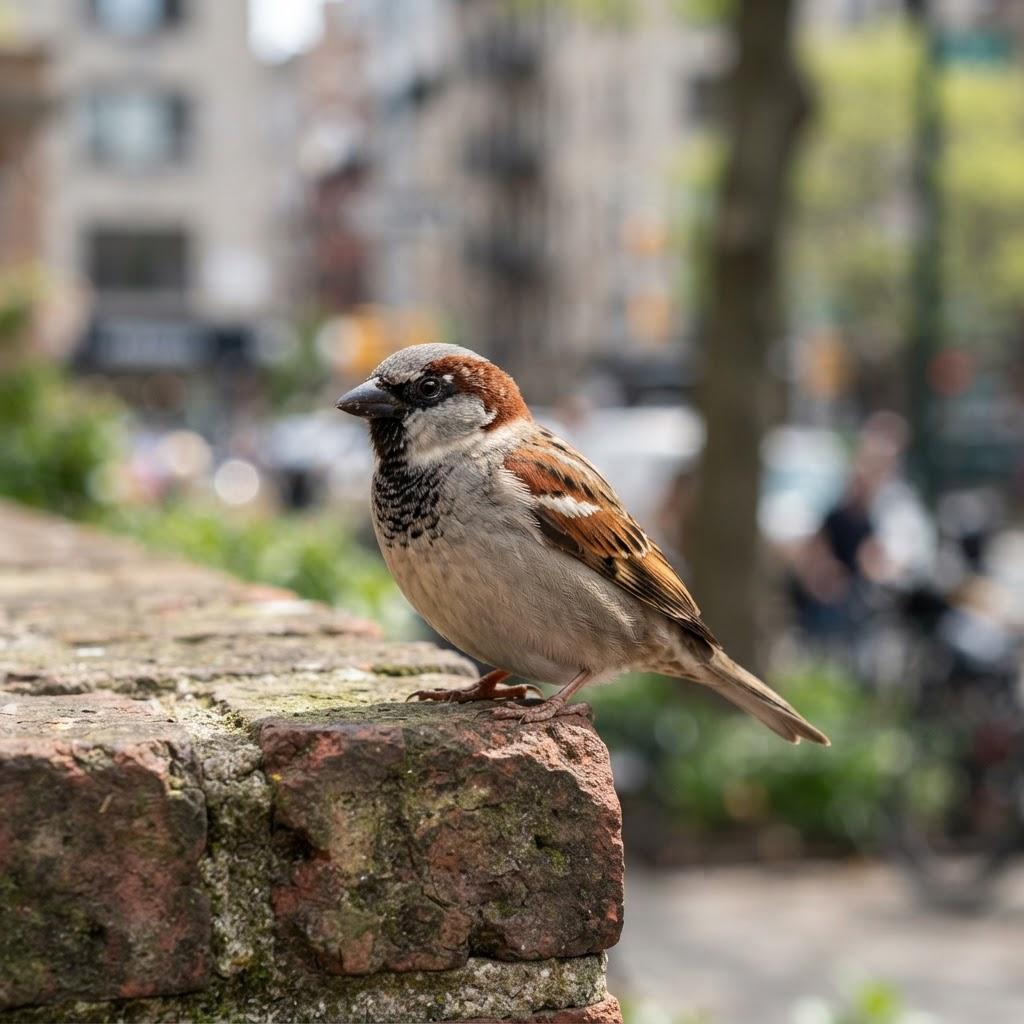
Recognizing a House Sparrow is easy once you know what to look for. Males sport a dapper grey crown, a black bib under the chin, and chestnut markings behind the eyes. Females are more understated, wearing a uniform of buffy-brown streaks that act as perfect camouflage against urban brick and pavement. They are small, stout, and move with a hopping gait rather than a smooth walk. Their call is a rapid, repetitive 'cheep-cheep-cheep' that is as iconic as a car horn in the city. Currently, they are doing exceptionally well. They are one of the most successful avian species on the planet, thanks to their ability to live alongside humans. They do not need our help to survive, but you can help them thrive by keeping your yard clean, providing native plants, and ensuring your feeders are filled with quality seeds. They are a constant reminder that nature doesn't need to be wild to be wonderful; sometimes, it just needs a little bit of space on our own front porches.