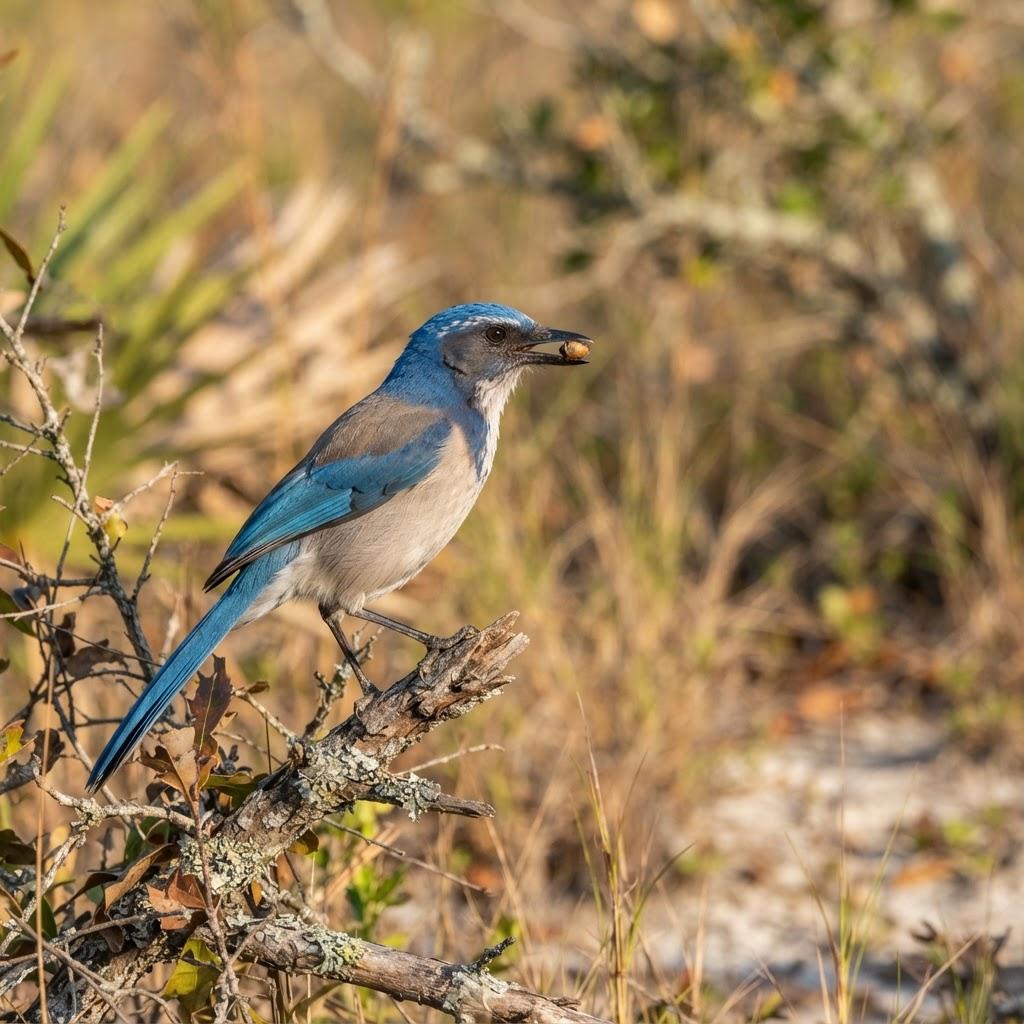
Aphelocoma coerulescens
Florida Scrub-Jay
Meet the Florida Scrub-Jay, a bird so fiercely localized and famously bold that it considers your presence a personal favor. This brilliant blue, non-migratory rebel is the only bird species exclusive to the Sunshine State, and it has absolutely no interest in moving anywhere else.
Meet the Bird
Imagine a bird that acts like it owns the neighborhood and has the vibrant, electric blue suit to back up the attitude. That is the Florida Scrub-Jay. This avian celebrity does not migrate, does not do subtle, and definitely does not take 'no' for an answer when a peanut is on the line. While other birds are busy fleeing the winter or blending into the background, the Scrub-Jay stands out in the sandy scrublands like a sapphire dropped in a dust bin. These birds are not just pretty faces; they are highly intelligent, notoriously curious, and incredibly social, living in complex family groups that would put a dysfunctional reality TV show to shame. They are essentially the neighborhood busybodies of the Florida scrub, keeping a watchful eye on every caterpillar, lizard, and wandering tourist who enters their sandy dominion. They don't just exist in their habitat; they rule it with a mix of charisma and occasional theft.
Superpowers & Weird Abilities
If you think being a bird is all about flying and chirping, the Florida Scrub-Jay is here to prove you wrong with a brain that basically acts like a high-end GPS system. Their most impressive superpower is an incredible spatial memory that borders on the clairvoyant. Scrub-Jays are obsessive hoarders of acorns; in a single season, a single jay might bury up to 8,000 acorns in the sandy soil. You might think they would lose half of them, but these birds remember the exact location of each buried treasure with pin-point accuracy for months. It is the avian equivalent of hiding your keys in a field the size of a football stadium and finding them blindfolded three months later. They are also masters of the 'caching' maneuver, which is basically an elaborate shell game where they check if another jay is watching them before hiding food. If they detect a spy, they will feign a hiding spot to trick the observer, only to move the food to a truly secret location once the coast is clear.
Drama, Personality & Feathered Chaos
The social life of a Florida Scrub-Jay is essentially a soap opera written by a bird. Unlike many species that kick their kids out the moment they can fly, Scrub-Jays are the ultimate helicopter parents and supportive relatives. They live in family units where older siblings stay behind to help the parents raise the new 'nestlings,' which is basically the bird version of living in your parents' basement but actually contributing to the household chores. This cooperative breeding structure leads to massive amounts of drama, as family territories are defended with the ferocity of a royal guard. If a rival group of jays dares to cross the property line, the local clan will erupt into a cacophony of shrieks and swooping dives. They are not shy about their opinions, and they will absolutely hold a grudge against humans who have proven to be 'unreliable' peanut suppliers. They are the feathered equivalent of that friend who is fiercely loyal to their inner circle but will start a fight with anyone else who breathes the wrong way near their lawn.
Bizarre Rituals & Quirky Habits
One of the most peculiar habits of the Florida Scrub-Jay is the practice of 'anting.' You might see a jay suddenly flop onto an anthill and start writhing around like it is having a dance-off with the ground. It looks like a birdy breakdown, but it is actually a smart, if weird, hygiene hack. They allow the ants to crawl all over their feathers, which forces the ants to spray formic acid in self-defense. This acid acts as a natural disinfectant and pesticide, killing off any nasty mites or lice that might be bugging the bird's plumage. It is essentially a DIY spa day involving aggressive insects. They also have a habit of 'sun-bathing' by spreading their wings out wide and leaning their bodies to catch the rays, looking like a beachgoer working on a tan, but really they are just warming up their muscles and getting their feathers into position for better parasite control. It is strange, it is gross, and it is entirely effective.
Legends, Folklore & Human Stories
Because the Florida Scrub-Jay lives exclusively within the unique, harsh landscape of the Florida scrub, it has become the unofficial mascot of the state's most misunderstood ecosystem. While they aren't plastered on ancient hieroglyphs, they have become legends in the hearts of Florida naturalists. There is a long-standing human connection born of the bird's extreme curiosity. Because they are so bold, they have historically been known to land on people's heads or hands, especially in areas where humans have historically offered them snacks. This created a folklore of the 'friendly bird of the scrub,' a reputation that has become a double-edged sword. While it makes them easy to spot and adore, it has also led to conservationists begging the public to stop feeding them. Their story is now one of a species caught between being a beloved local legend and a fragile creature that needs to remain wild to survive. They are the ghosts of the old Florida landscape, stubbornly holding onto their territory even as the world around them changes rapidly.
Mating: The Ridiculous World of Avian Dating
The courtship ritual of the Florida Scrub-Jay is a masterclass in 'playing hard to get' and 'proving your worth.' Unlike birds that just squawk until someone pays attention, the male Scrub-Jay has to audition for the role of lifetime partner. The male will often engage in 'mate feeding,' where he brings offerings of food to the female to show he is a capable provider. If he brings a pathetic, shriveled acorn, she might just ignore him entirely. If he brings a high-quality treat, she will act like a hungry teenager, fluttering her wings and begging for the food like a baby bird to test his commitment. It is a strange, infantile-looking display that actually serves as a vital test of his ability to feed not just her, but their future offspring. If the male passes the test, they form a lifelong bond that would make a Hallmark movie look cold and distant. They are partners in every sense of the word, defending their turf together until death does them part.
Nesting: Master Architects and Lazy Slumlords
When it comes to nesting, the Florida Scrub-Jay is more of a 'solid suburban contractor' than a 'fanciful architect.' They don't mess around with flashy, dangling nests that would attract the attention of every predator in the scrub. Instead, they build a sturdy, bowl-shaped structure tucked deep within the thick, tangled branches of scrub oaks. They use a practical blend of twigs, roots, and grasses, lining the interior with finer material to ensure the eggs aren't rolling around on jagged bark. It is not going to win any home design awards on HGTV, but it is built to survive windstorms and keep their babies hidden from the prying eyes of hawks and snakes. The nest is a fortress of utility. They are very protective of this construction site, and once they pick a spot, they hold onto that location with a tenacity that suggests they have already signed a multi-year lease on the branch.
Raising Babies: The Screaming Food Disposals
Raising baby Scrub-Jays is a full-contact sport. When the eggs hatch, the nest becomes a chaotic hub of constant motion. The chicks are basically oversized, hungry mouths attached to tiny, fuzzy bodies that exist for one purpose: to scream at their parents for more food. Because the parents have a whole team of 'helpers'—those older siblings we mentioned earlier—the workload is actually shared. The parents and the helpers fly back and forth with a relentless stream of caterpillars, insects, and bits of food, effectively running a high-speed catering service for the nest. It is truly hilarious to watch an older brother bird land on the nest with a succulent bug, only to be swarmed by three younger siblings trying to vibrate their way into getting the morsel first. The noise is constant, the pace is exhausting, and the level of parental dedication is frankly enough to make any human parent feel like a total slacker by comparison.
Bird-Watching Travel & Local Hotspots
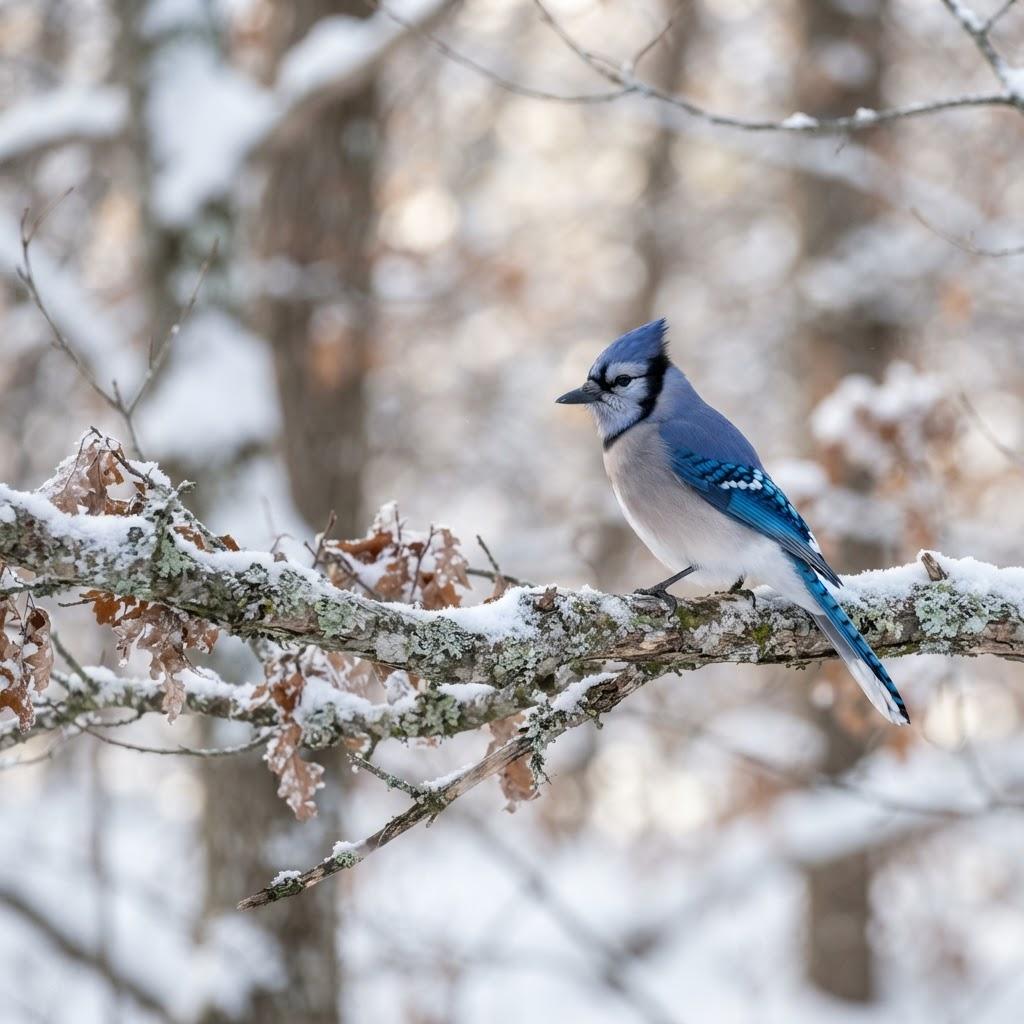
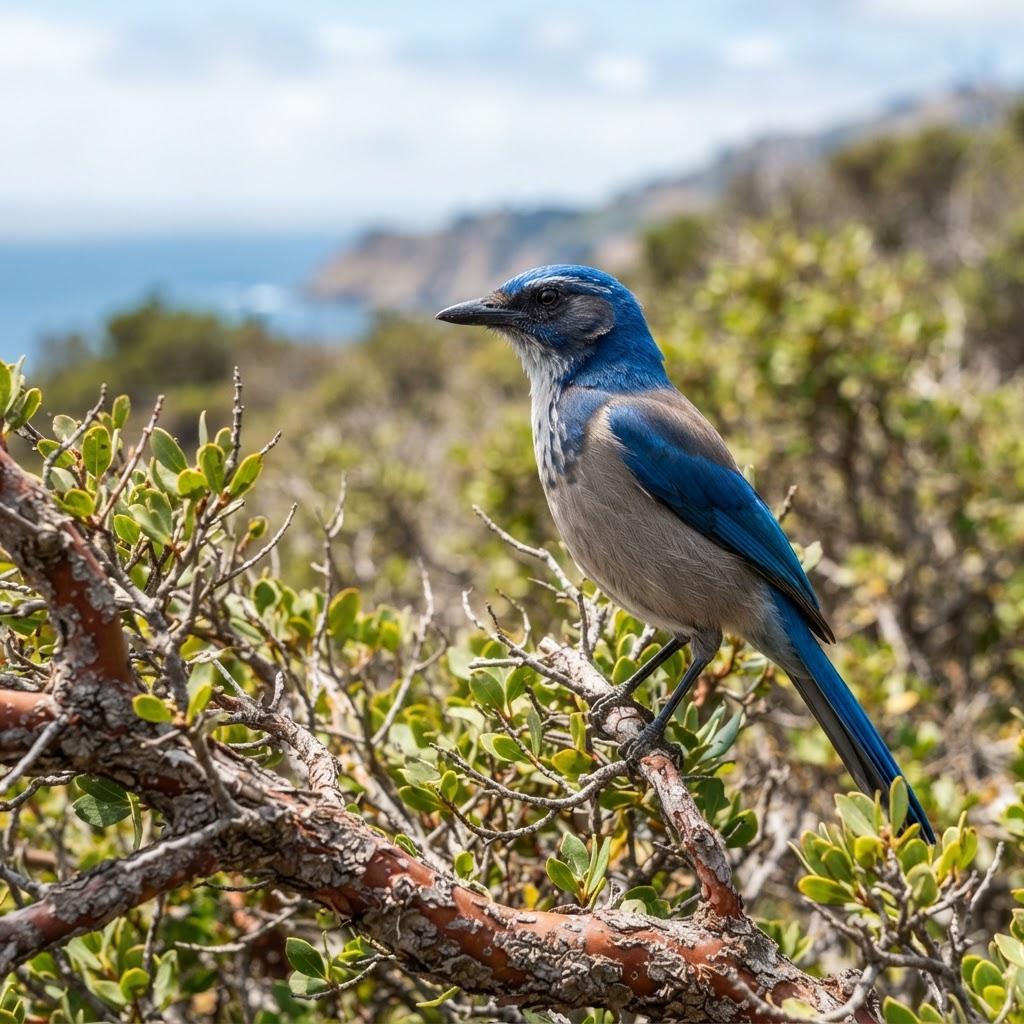
If you are on a quest to see these sapphire-hued residents, you have to go to the scrub. Scrub-Jays cannot live in your standard suburban backyard with a manicured lawn; they need the specialized habitat of ancient, sandy dunes that have been stripped of dense forest. Your best bet is to head to places like the Merritt Island National Wildlife Refuge or the Oscar Scherer State Park. These spots are basically the Five-Star resorts for Scrub-Jays. The best time to spot them is early in the morning, right as the sun hits the sand, when the families are most active and vocal. Look for the distinct patches of white on their foreheads and the lack of a crest—unlike the common Blue Jay, which has that sassy 'I want to speak to the manager' head feather, the Scrub-Jay’s head is sleek and rounded. If you are quiet and keep a respectable distance, you might just get to see a family clan patrolling their sandy streets.
Food, Feeder Hacks & DIY Projects
Let’s be clear: you should not be feeding Florida Scrub-Jays in your backyard. They are a protected, vulnerable species that thrives on a wild diet of acorns, insects, and small lizards. If you introduce them to a diet of processed peanuts or birdseed, you are basically turning a wild predator into a junk-food addict, which makes them less likely to hunt the insects that help keep their ecosystem healthy. However, if you want to support them, the best thing you can do is 're-wild' your yard. Plant native scrub oaks or saw palmettos. These plants provide the natural, high-fat acorns they love and the hiding spots they need to feel safe from predators. If you are desperate to see them, consider building a simple, ground-level bird bath with natural rocks. They don't need fancy plastic feeders; they need the original, native landscape that has been vanishing due to development. Support your local wildlife by giving them a home, not a drive-thru.
Seasonal Guides & "Crisis" Management
Life for a Scrub-Jay is pretty consistent year-round since they don't migrate, but they do have a 'fledgling panic' season that causes human heart rates to spike. In late spring, you might see a clumsy, slightly ragged-looking ball of fluff hopping around on the ground. Please, for the love of all that is feathered, do not touch it or put it in a box. That bird is a fledgling, a teenager in the process of learning how to be a bird. It is not 'abandoned'—it is just going through a messy, uncoordinated phase while its parents watch from a nearby tree, ready to dive-bomb you if you get too close. Your job is to walk away and let the parents handle the training. If you see it near a busy road, you can gently nudge it toward the bushes with a stick, but otherwise, leave the 'teenager' alone. They are learning the ropes, and their parents are the best instructors for the job.
Backyard Tech & Gadget Reviews
If you are trying to capture the Scrub-Jay on camera, skip the fancy AI feeders. These birds are too smart for a box of millet. Instead, invest in a motion-activated trail camera. These are the same gadgets hunters use, and they are perfect for catching the secret lives of jays in your native landscaping. Set it up low to the ground near a patch of scrub oak or a natural water feature. You don't need a high-tech phone notification; you need the surprise of reviewing footage of a family of jays having a morning bath or a sibling squabble. As for window collisions, which are a nightmare for all birds, use simple, external adhesive decals that break up the reflection of the sky on your glass. If the bird thinks the window is a wall of trees rather than a mirror of the clouds, they won't try to fly through it. It is cheap, effective, and much kinder than the 'oops' moment of a bird hitting your breakfast nook.
How to Spot One & How It Is Doing
Spotting a Florida Scrub-Jay is fairly easy if you are in the right place: look for a bird that looks like a Blue Jay that decided to skip the crest and go for a more aerodynamic look. They have a distinct blue head, a gray back, and a blue tail, but their most defining feature is that lack of a 'topknot' hairstyle. If you hear a series of harsh, raspy 'jree-jree' calls coming from the scrub, you are in the right neighborhood. As for their status, they are currently listed as Vulnerable due to habitat loss. Every acre of sandy scrub turned into a parking lot is a potential home lost for these birds. The best way to help is to support the conservation of Florida’s remaining scrub lands and advocate for native plant gardening. These birds are not just pretty; they are the heart and soul of the Florida scrub, and as long as we protect their sandy homes, they will keep running their hilarious, chaotic family soap operas for generations to come.