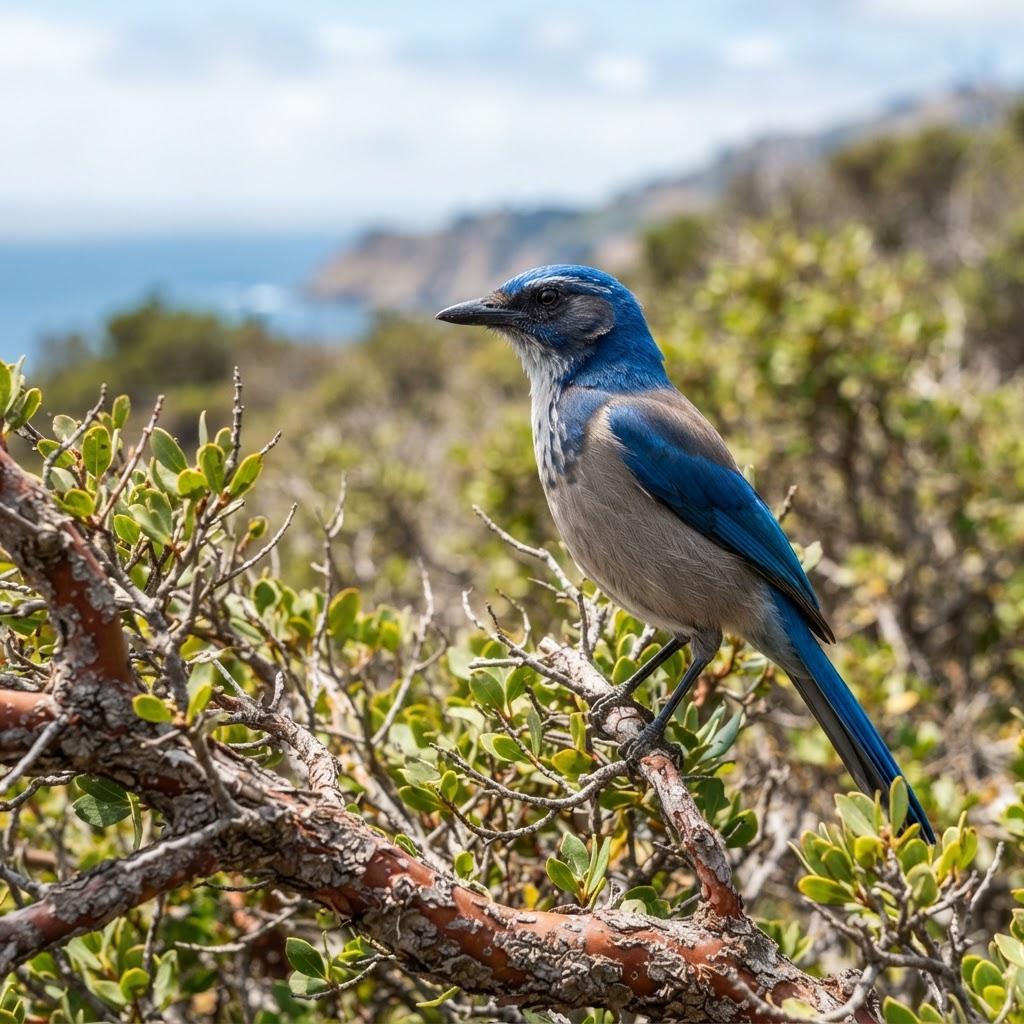
Aphelocoma insularis
Island Scrub-Jay
Meet the island-dwelling legend that is essentially a feathered, blue-tinted mastermind with a penchant for stealing snacks. The Island Scrub-Jay is an exclusive VIP of Santa Cruz Island, boasting a personality as large as its oceanic home.
Meet the Bird
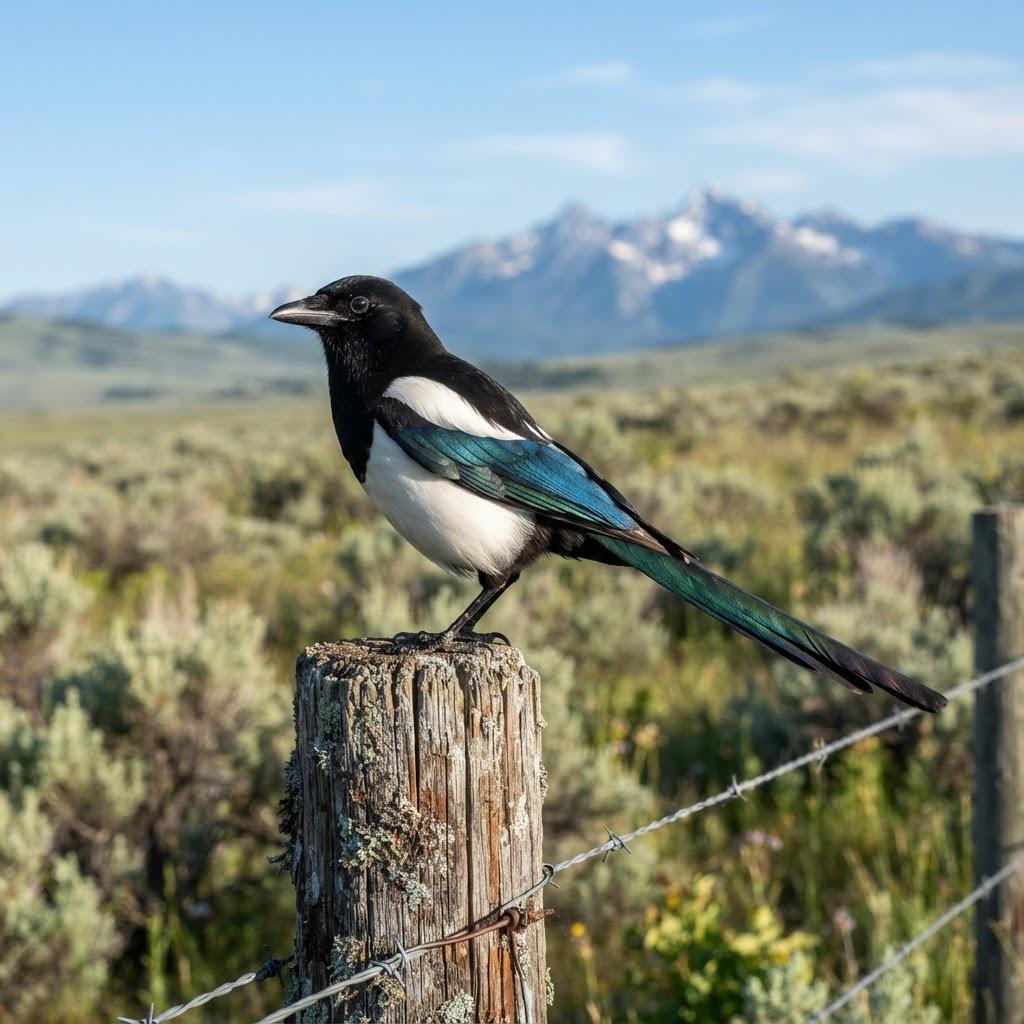
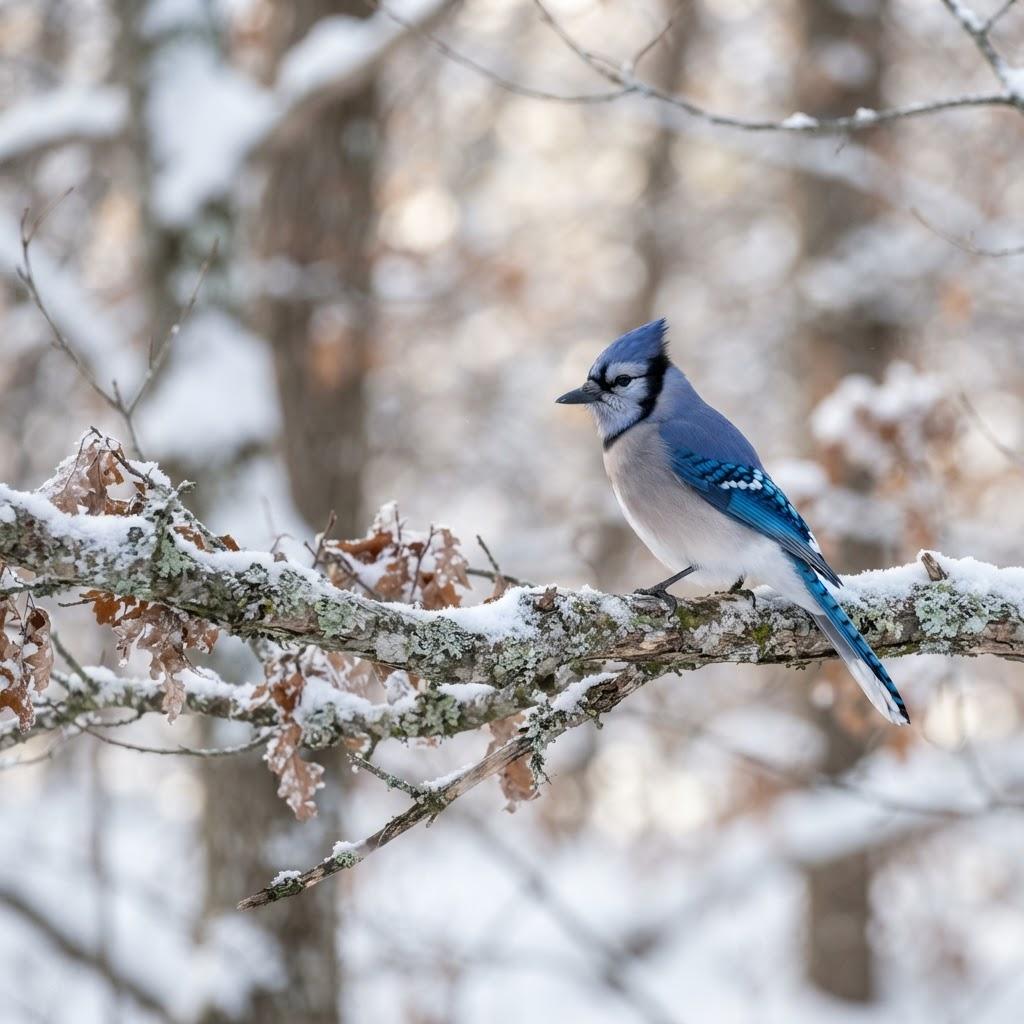
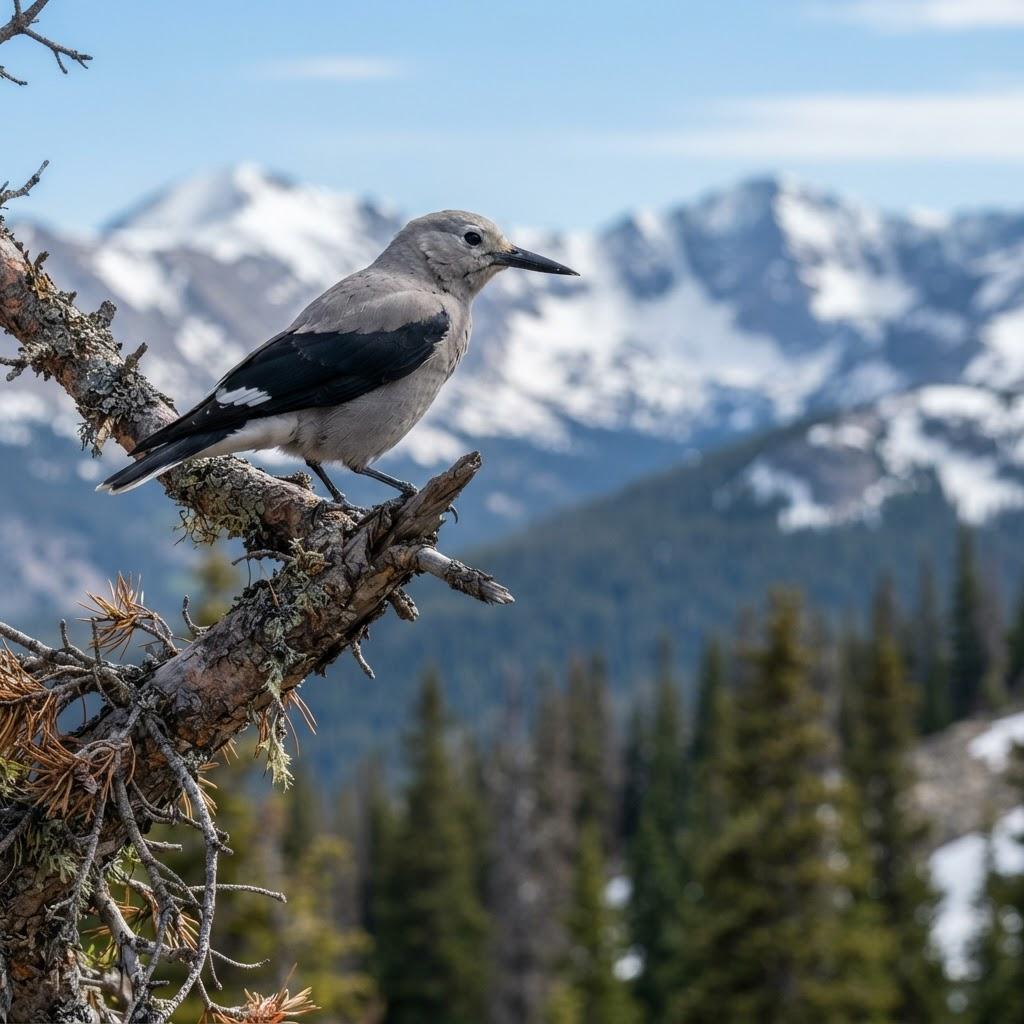
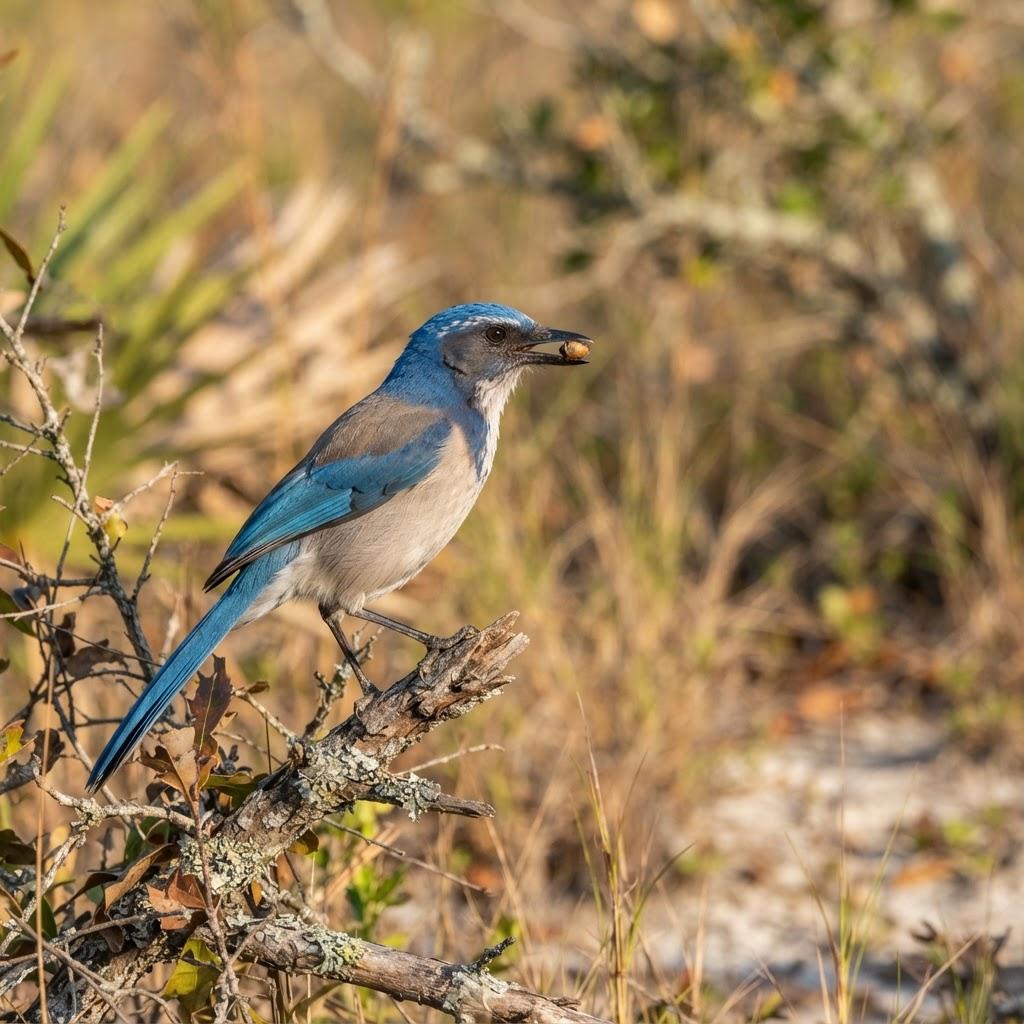
Imagine a bird that treats an entire island like its personal kingdom, wearing a permanent look of mischievous curiosity. The Island Scrub-Jay is the charismatic, blue-hued celebrity of the Channel Islands, specifically the rugged, oak-studded terrain of Santa Cruz Island. If this bird were a character in a high-stakes heist movie, it would be the brilliant mastermind who never gets caught and always keeps a secret stash of loot hidden in the walls. With its brilliant cobalt-blue wings, a crisp white throat, and a personality that screams 'I own this mountain,' this jay is an evolutionarily distinct powerhouse. It doesn't just hang out; it patrols. It is larger, bolder, and significantly brighter in color than its mainland cousins. While most birds are busy worrying about neighborhood cats or competing for crumbs, the Island Scrub-Jay is busy being the undisputed king of its own isolated, Pacific-kissed fortress, looking down at the mainland with a 'you wish you were this cool' attitude.
Superpowers & Weird Abilities
The Island Scrub-Jay possesses a brain that functions more like a supercomputer than a pile of feathers and hollow bones. Its most impressive trick is something scientists call 'episodic-like memory.' This isn't just knowing where food is; it is knowing what kind of food was hidden, when it was hidden, and whether that specific food has gone rotten by now. If you think your 'Where are my keys?' struggle is bad, imagine having to remember the location of thousands of individual acorns buried across an entire island. They also have an uncanny ability to calculate social risk. They possess a high degree of 'social intelligence,' meaning they can tell if a competitor is watching them hide their hoard. If they spot a sneaky neighbor lurking nearby, they will literally fake them out, pretending to bury an acorn in one spot while secretly tucking it away somewhere else. It is a psychological game of chess played with nuts.
Drama, Personality & Feathered Chaos
In the world of bird social dynamics, the Island Scrub-Jay is the neighborhood bully, the gossip columnist, and the local crime boss all rolled into one. They are incredibly territorial. If you were a stray lizard or a smaller, less confident bird, you would be well-advised to steer clear of a Scrub-Jay's favorite oak tree. They don't just defend their space; they make sure everyone within earshot knows they are being evicted. They are known to scream, dive-bomb, and generally cause a scene if they perceive a threat to their stash of acorns. They hold long-term grudges, too. If a researcher or a curious hiker annoys one, they will remember that face for years. It is essentially a feathery 'don't tread on me' flag. This chaotic energy isn't just for show; it maintains their grip on the limited resources of an island that doesn't have much room for drama-free living.
Bizarre Rituals & Quirky Habits
One of the most peculiar habits of the Island Scrub-Jay is something called 'social caching.' While most birds are hoarders, the jays are remarkably tactical about it. But the real weirdness happens when they decide to organize their world. They are obsessed with cleaning and rearranging their surroundings. If you leave a shiny object near a trail, don't be surprised if your 'property' is suddenly investigated, inspected, and potentially relocated by an inquisitive jay. They also engage in 'anting,' which sounds like a dance but is actually a weird grooming ritual. They will purposefully find ants, squish them, and rub the acidic contents onto their feathers. Scientists believe this acts like a natural pesticide or deep-conditioner, helping them get rid of parasites while keeping their feathers in top shape. It is a gross, brilliant way to stay clean, showing that even the smartest birds have some truly strange beauty routines.
Legends, Folklore & Human Stories
Because this bird lives only on one specific island, its folklore is a localized treasure. For the Chumash people, who have inhabited these islands for thousands of years, the jay was more than just a bird; it was a constant, vocal companion in the landscape. While it doesn't have the grand, cinematic mythology of an eagle, it occupies a space as the 'watcher of the oaks.' Early European explorers were often baffled by the bird's audacity, noting that it seemed entirely unbothered by human presence, sometimes approaching boats or campsites with zero fear. Stories persist of early ranchers on Santa Cruz Island who found themselves in a bizarre, unspoken rivalry with these birds, as the jays would relentlessly raid supplies and move personal items. They have become the unofficial mascot of island resilience, representing the scrappy, survivalist spirit of life in a secluded, harsh, and beautiful environment.
Mating: The Ridiculous World of Avian Dating
Dating for an Island Scrub-Jay is less about romance and more about a high-stakes performance audit. The male needs to prove that he is not just a pretty face, but a capable provider who can defend a territory worth having. He performs elaborate flight displays that are designed to show off his agility, swooping through the dense chaparral like a fighter jet. But the real test is the 'gift.' The male will bring the female various food items, acting like a feathered door-dash driver. If the female accepts, it is a good sign. If she looks unimpressed by the quality of the acorn or the vigor of his performance, she flies off, and he is back to square one, left sitting on a branch feeling like a teenager who just got stood up at the school dance. Once they pair up, it is usually a lifelong commitment to territorial dominance.
Nesting: Master Architects and Lazy Slumlords
When it comes to home construction, the Island Scrub-Jay opts for function over fashion. They don't have the artistic flair of a weaver bird, nor the laziness of a dove. They are the practical contractors of the bird world. They build a sturdy, cup-shaped nest, usually tucked deep into the safety of a scrub oak or a dense patch of manzanita. It is a solid, multi-layered construction involving twigs, bark, and a soft interior lining made of moss or animal hair. They are very protective of this 'manse,' patrolling the area to make sure no snakes or other potential egg-thieves get too close. It is not designed to win an architecture award, but it is designed to survive heavy coastal winds and the occasional island storm, which is a much more important feature than curb appeal when you're raising a family.
Raising Babies: The Screaming Food Disposals
Once the eggs hatch, the peace and quiet of the oak woodland is officially over. The chicks are, for the first few weeks, nothing more than vibrating, hungry, screeching bags of feathers. They have one job: to scream until food is deposited into their gaping yellow mouths. The parents are absolute machines of efficiency, flying back and forth across the territory to bring high-protein snacks to the nest. It is an exhausting, round-the-clock shift. The parents have to balance keeping the nest clean, feeding the brood, and defending their territory from rivals who might try to exploit the parents' distraction. As the chicks grow, they become even more demanding, eventually hopping around the nest like caffeinated teenagers, testing their wings and squabbling over who gets the next bite. It is a chaotic, noisy, high-energy environment that proves parenting is truly the hardest job on the island.
Bird-Watching Travel & Local Hotspots
If you are on a quest to spot the Island Scrub-Jay, you are embarking on an island adventure. Your main destination is Santa Cruz Island, part of the Channel Islands National Park off the coast of California. You will need to take a ferry or a small plane to get there. Once you arrive, head for the 'Prisoners Harbor' area or the hiking trails around the central valley where the oak woodlands are thickest. The best time to visit is during the spring when the birds are most active and vocal. They are not shy, so if you walk quietly and listen for their distinct, harsh, 'jay-jay-jay' calls, you will likely find them fairly quickly. Do not forget your binoculars and a sturdy pair of hiking boots, because this isn't a parking-lot birding experience; you are going to be walking through rugged, beautiful landscapes to find this blue gem.
Food, Feeder Hacks & DIY Projects
The Island Scrub-Jay is an opportunist. In the wild, they survive on a diet of acorns, insects, and small lizards. If you were lucky enough to live in their habitat, you wouldn't need a fancy feeder; they are experts at scavenging. However, if you want to attract them, do not waste money on 'bargain' seed mixes that are mostly fillers. They love peanuts—in the shell, of course. A simple, DIY feeder can be made by drilling a few holes into a piece of wood and pushing some peanuts into them, forcing the jay to work a little bit for their reward. This keeps them active and prevents them from getting lazy. You can also plant native oak trees or native shrubs like manzanita in your yard. These provide a natural food source and shelter, which is much better for the bird than relying on artificial feeding stations. Money saved on birdseed is better spent on good native plants.
Seasonal Guides & "Crisis" Management
Seasons on an island are subtler than on the mainland, but the life of a jay still ebbs and flows. In the spring, you are in 'fledgling panic' season. If you are hiking on Santa Cruz and see a young, fluffy, awkward-looking bird on the ground, do not scoop it up. It is almost certainly a fledgling that has left the nest but hasn't mastered flight yet. The parents are likely watching from a nearby branch, ready to dive-bomb you if you get too close. Leave it alone. If it is clearly injured, contact a ranger. During the winter, when resources get tighter, keep an eye out for how they hoard. They are constantly moving their stash around, so the bird you see in November might be working the same tree as in January. It is a great time to observe their memory in action as they return to 'forgotten' food stores.
Backyard Tech & Gadget Reviews
If you are a tech-loving birder, there are some great ways to monitor your feathered visitors. Smart feeders that use AI to identify species can be fascinating, but for an Island Scrub-Jay, the best tech is a simple, motion-activated trail camera. Because these birds are so active and territorial, a trail camera placed near a known cache or a reliable food source can capture incredible footage of them burying nuts or interacting with their neighbors. As for window collisions, don't rely on those cheap, single-decal hawks. They don't work. The best solution is to use 'window film' or 'UV-reflective tape' that breaks up the reflection for the bird. It keeps your view clear but makes the glass visible to the jays. These birds are intelligent, but they can't always tell the difference between a reflection of an oak tree and the real thing, especially when they are distracted by a fight.
How to Spot One & How It Is Doing
To identify an Island Scrub-Jay, look for that bold, royal-blue crown and back, contrasted against a brownish patch on the back and a white throat. They have a stout, black bill designed for cracking hard acorn shells. If you hear a loud, grating, and rhythmic 'caw-caw-caw,' you have found your target. Regarding their status, they are currently listed as Vulnerable. Being stuck on one island makes them extremely susceptible to threats like disease, invasive species, or habitat loss. However, the good news is that people are watching out for them. The National Park Service and conservation groups work hard to manage the island's health, protecting the oak trees and keeping the environment stable. You can help by simply being a responsible visitor: stay on trails, leave no trash behind, and never feed the wildlife your own snacks. Your respect for their space is the best way to ensure this blue mastermind keeps ruling the island.