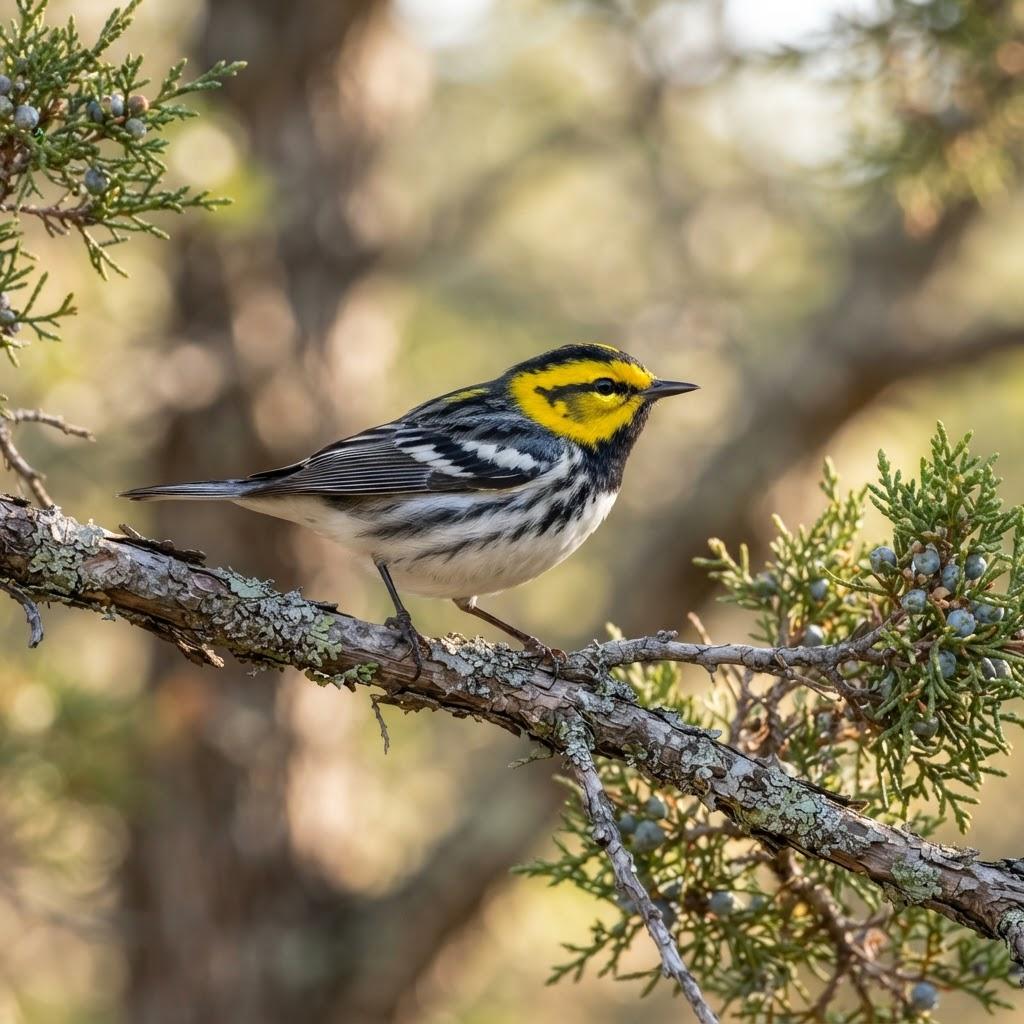
Setophaga chrysoparia
Golden-cheeked Warbler
The Golden-cheeked Warbler is the only bird species that nests exclusively in Texas, rocking a bright yellow mask that makes it look like it is ready for a masquerade ball. This tiny, high-maintenance diva is a master of the juniper tree and a must-see for anyone who loves a bird with a very specific sense of style.
Meet the Bird
Imagine a bird that treats real estate like a high-end luxury developer, but with a color palette inspired by a highlighter and a tuxedo. The Golden-cheeked Warbler is the only bird in the entire world that builds its nest exclusively within the borders of Texas. It is the pride of the Hill Country, sporting a vibrant, glowing yellow cheek patch that looks like it just stepped out of a salon session. If this bird had a personality, it would be the one at the party who is impeccably dressed but refuses to leave its favorite corner of the room. It is small, it is fast, and it is incredibly picky. Unlike birds that wander the continent like nomadic backpackers, this bird has a very specific set of requirements for its life, making it a local celebrity that knows exactly who it is and where it wants to be at all times.
Superpowers & Weird Abilities
While it doesn't have laser vision or the ability to teleport, the Golden-cheeked Warbler possesses a biological superpower that is truly impressive: it is a structural genius. It has the innate ability to recognize the perfect nesting material in a landscape that looks like a jumble of leaves to the untrained human eye. These birds utilize strips of shedding bark from old-growth Ashe juniper trees, which they weave together with spider silk. This creates a flexible, camouflaged masterpiece that can withstand the wild wind gusts of a Texas spring. It is essentially building a suspension bridge made of bark and glue. Think of it as if you had to build a mansion using nothing but loose wallpaper and superglue found in a forest. It is a feat of engineering that requires a level of architectural precision that would make a human contractor sweat with pure envy.
Drama, Personality & Feathered Chaos
Behind that cute, bright yellow mask lies the heart of a territorial titan. If you are another male warbler and you stumble into the wrong patch of juniper, you are in for a serious attitude check. These birds are not the type to share their backyard pool; they defend their territory with the intensity of a suburban neighbor patrolling the property line with a tape measure. They are known to engage in high-speed aerial chases, zooming through the branches like fighter pilots in a dogfight. They aren't particularly interested in the drama of other species, but they absolutely do not tolerate intruders of their own kind. It is a classic case of 'I spent all this time decorating my juniper tree, and you are not invited.' They are the ultimate gatekeepers of the Texas Hill Country, keeping their private forests strictly for their own exclusive social circle.
Bizarre Rituals & Quirky Habits
The behavior of the Golden-cheeked Warbler is less about wild, fermented-berry-fueled parties and more about a rigid, almost OCD-level adherence to quality control. They are constantly 'anting' in a sense—though not always with ants—by meticulously inspecting the bark of the trees they inhabit. They are obsessed with finding the perfect, peeling strips of juniper bark. If a piece of bark isn't sufficiently weathered or flexible, they drop it with a flick of the head that practically screams, 'This is substandard!' It is a funny sight to watch a tiny, vibrant bird reject piece after piece of construction material. They are like a master chef discarding ingredients that are even slightly off-color. This behavior isn't just a quirk; it is a vital part of their survival strategy, ensuring their home stays dry, hidden, and structurally sound against the elements.
Legends, Folklore & Human Stories
In the folklore of Texas, this bird has become a symbol of the wild, rugged beauty of the Hill Country. While it doesn't have a long history of being featured in ancient Greek myths, it has carved out a permanent spot in the heart of modern conservationists. It is often regarded as the 'canary in the coal mine' for the Texas landscape—wherever this bird is thriving, the ecosystem is usually healthy. People who live in the Hill Country treat these birds with a kind of sacred reverence, often telling stories about the first time they heard that distinctive, buzzy, 'zee-zee-zee-zoo-zee' call. It is the sound that signals the beginning of spring in the heart of Texas. The lore surrounding this bird is all about protection and stewardship, with entire communities rallying to ensure that this tiny, yellow-cheeked marvel never disappears from the woods.
Mating: The Ridiculous World of Avian Dating
Dating in the world of the Golden-cheeked Warbler is an exercise in performance art. The male, feeling the pressure to impress, will puff out his chest and unleash a series of buzzy songs that are supposed to sound like the ultimate pick-up line. He will flit through the branches, showing off his best angles and flashing those signature golden cheeks. The female, however, is the ultimate judge of the competition. She watches with a skeptical, unimpressed gaze as the male performs his aerial acrobatics. If his song isn't pitch-perfect or his dance moves are a bit clunky, she simply ignores him and keeps foraging for snacks. It is a harsh reality for the male, who has to keep auditioning until he lands the perfect partner. It is basically the avian equivalent of an intense, high-stakes dating show where the prize is a shared juniper tree.
Nesting: Master Architects and Lazy Slumlords
When it comes to nesting, this bird is definitely in the Master Architect category. Forget the slapdash piles of twigs you see in a typical gutter; the Golden-cheeked Warbler creates a cup-shaped palace. It uses that magical combination of cedar bark strips, fine grasses, and copious amounts of spider silk to weave a nest that is both sturdy and flexible. The spider silk acts as a stretchy binding agent that allows the nest to expand as the baby birds grow. It is a high-end, bespoke housing project hidden deep within the leafy branches of a mature Ashe juniper tree. The female does the heavy lifting, while the male usually sticks around to offer moral support or to chase away any rival suitors who dare to get too close to the construction site. It is the architectural equivalent of a luxury yurt.
Raising Babies: The Screaming Food Disposals
Once the eggs hatch, the nest becomes a chaotic hub of nonstop food deliveries. Baby Golden-cheeked Warblers are, quite frankly, just little pink mouths with a desperate need to be filled. The parents fly back and forth with military precision, bringing caterpillars and spiders to the nest every few minutes. The chicks, meanwhile, haven't learned the concept of 'thank you' yet; they just open their beaks wide and scream until they get another mouthful. It is a grueling, 24-hour-a-day job that pushes the parents to their physical limits. The goal is to get the chicks big enough to fledge before something else in the forest decides they look like a tasty snack. Watching the parents return with a beak full of bugs is like watching a delivery driver who never gets a tip but keeps working for the pure love of the job.
Bird-Watching Travel & Local Hotspots
If you are on a quest to see this elusive, yellow-cheeked celebrity, you need to head to the heart of the Texas Hill Country. The Balcones Canyonlands National Wildlife Refuge is arguably the gold standard for birding when it comes to this species. Another fantastic spot is the Government Canyon State Natural Area in San Antonio or the Lost Maples State Natural Area. You want to go during the peak nesting season, which is typically from late March through May. The best time of day to catch them is early in the morning when the males are most active in their singing and territorial disputes. Wear comfortable shoes and bring a good pair of binoculars, because these birds prefer to hang out in the canopy, and you will be spending a lot of time looking up into the leafy tops of the junipers.
Food, Feeder Hacks & DIY Projects
You aren't going to find these birds at your typical sunflower seed feeder. They are insectivores, meaning they want the good stuff: caterpillars, spiders, and other small bugs. While you cannot exactly put a 'Caterpillar Buffet' out in your backyard, you can attract them by cultivating a native garden that supports a huge population of bugs. Planting native shrubs and trees that host native insects is the ultimate backyard hack. Avoid all pesticides; they are the enemy of your bird-attracting dreams. If you want to get creative, try installing a birdbath with a dripper feature. The sound of moving water is like a magnet for birds. It is a simple, cheap, and effective way to turn your property into a high-end spa for birds, making it a much more attractive stop-over for a tired warbler looking for a quick drink.
Seasonal Guides & "Crisis" Management
Spring is the big season for the Golden-cheeked Warbler, as that is when they arrive from their wintering grounds in Mexico to start the breeding process. It is a time of high energy and big drama. If you ever find a 'fledgling'—a baby bird that looks like a fluffy, confused ball of feathers on the ground—do not panic! Nine times out of ten, the parents are nearby, watching you with intense suspicion while they wait for you to leave. Unless the bird is clearly injured or in immediate danger from a cat, the best thing you can do is back away and leave it alone. The parents are trained professionals and know exactly how to handle their own offspring. During the winter, these birds are far away, but you can prepare your yard for their return by cleaning up dead brush and keeping your native trees healthy.
Backyard Tech & Gadget Reviews
If you want to get a close-up look at what is happening in your trees, a trail camera is your best friend. Unlike the fancy AI bird feeders that require the bird to land on a perch, a motion-sensor camera can be mounted to a trunk to catch candid moments in the canopy. It is like having a private investigator for your backyard. For window collisions, don't use those cheesy plastic bird stickers. Instead, invest in UV-reflective window decals or screens. They are subtle enough that you won't even notice them from the inside, but the birds will see them clearly as a giant 'No Entry' sign. It is a small price to pay to ensure your yard remains a sanctuary rather than a hazard. Technology should be a bridge to nature, not an obstacle to its well-being.
How to Spot One & How It Is Doing
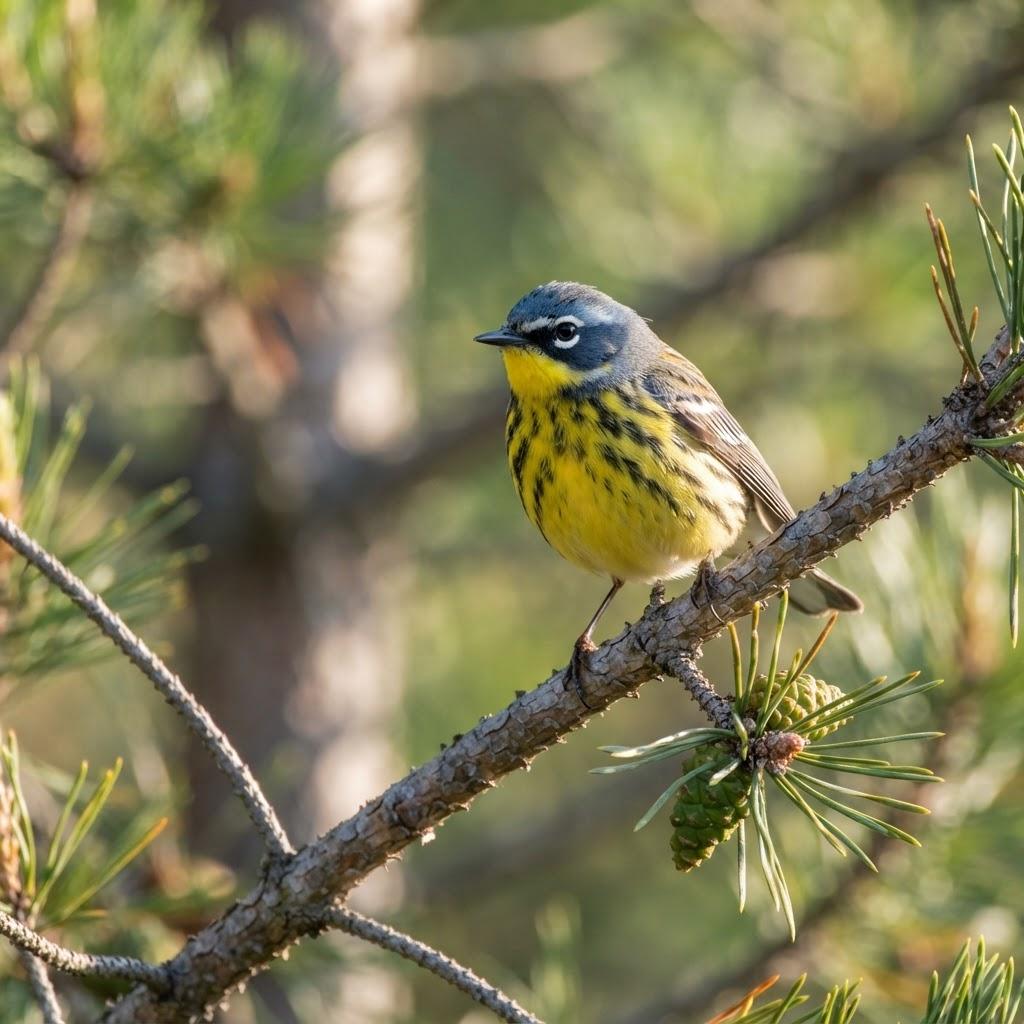
To spot a Golden-cheeked Warbler, listen for that rapid, buzzy, 'zee-zee-zee-zoo-zee' call that sounds almost like a tiny electric saw. Visually, look for that bold yellow face, the black throat, and the black stripes running down the back. They are the only birds that nest in the Texas juniper trees, so if you are in the right habitat at the right time, you are already halfway there. Sadly, this species is endangered due to habitat loss. Every acre of mature juniper woodland that is destroyed is a loss for these birds. You can help by supporting conservation organizations like the Nature Conservancy or your local Audubon chapter, and by planting native trees on your own land. These birds are a living piece of Texas history, and keeping them around is a team effort that relies on all of us caring just a little bit more.