Dumetella carolinensis
Gray Catbird
Meet the Gray Catbird, the feathered master of mimicry with a voice like a rusty gate and a personality to match! This avian enigma is a backyard Houdini, a garden guru, and a feathered comedian all rolled into one. Prepare to be charmed, amused, and utterly captivated by this common yet extraordinary bird.
Meet the Bird
Imagine a bird that sounds like a cat trying to yodel, then immediately switches to whistling like a tiny, very pleased butler. That, my friends, is the Gray Catbird. It's the feathered equivalent of that one quirky friend who can flawlessly imitate anyone but also might just stare at you intently for a full minute before bursting into song. These are not your average, flit-and-flutter-away birds. Oh no, the Catbird has a *presence*. They saunter through the underbrush with a certain swagger, like they own the place, which, in their shrubby domain, they pretty much do. Their vibe? Think of a curious, slightly mischievous detective who’s always on the case, even if the case is just figuring out what that shiny thing in your garden is. And that sound! That initial, unmistakable 'mew' that gives them their name? It’s less a majestic bird call and more a question mark made audible. They’re not afraid to be weird, and honestly, we’re here for it. This is a bird that doesn’t just fly; it makes an entrance. So, keep your ears perked and your eyes peeled, because the Gray Catbird is about to become your new favorite feathered enigma.
Superpowers & Weird Abilities
Forget capes and laser eyes; the Gray Catbird’s superpowers are far more subtle, and frankly, way more practical for its everyday life. Their most astonishing ability? Mimicry on an Olympic level. This bird can perfectly imitate the songs of other birds, and not just in a 'copy-paste' kind of way. They can blend and remix, creating entirely new melodies from borrowed bits, like a DJ spinning tracks from nature’s greatest hits album. Scientists think they do this for a variety of reasons, from attracting mates to warding off rivals, and maybe just because they’re bored. It’s like having a feathered soundboard in your backyard! Beyond vocal acrobatics, they possess an uncanny knack for aerial acrobatics. While they aren’t hummingbird-level aerialists, they are masters of navigating dense thickets. Think of them as the parkour athletes of the avian world, able to weave through thorny branches and dense foliage with incredible agility, often using short, jerky flights that allow them to dodge obstacles with precision. And their vision? It’s not X-ray, but for spotting ripe berries and tasty insects hidden amongst leaves, their eyesight is top-notch. It’s not about seeing through walls, but seeing *through* the chaos of a busy shrub, which is a superpower in its own right when your life depends on finding food and avoiding predators. They’re not just singing; they’re composing symphonies and performing espionage, all while looking deceptively ordinary.
Drama, Personality & Feathered Chaos
The Gray Catbird is not just a pretty (or rather, gray and rather melodious) face; it’s a full-on personality with a dash of drama. These birds are the neighborhood watch captains, the gossip columnists, and the resident comedians of the avian world. They’re known for their territorial nature, and while not exactly a feathered Godzilla, they will let other birds know in no uncertain terms that this particular patch of berry bushes is *their* stomping ground. You might witness a Catbird puffing up its chest, flicking its tail, and letting loose a volley of scolding calls, often accompanied by that signature ‘mew,’ as if to say, “Excuse me, sir or madam, you seem to have wandered into the wrong shrubbery!” They’re also incredibly curious, which often leads them into comical situations. You might see one peering intently into a window, as if trying to solve the mystery of the 'glass-eating monster' inside, or cocking its head as it observes your every gardening move. They can be bold, especially around feeders, and sometimes they’ll engage in a bit of playful chasing with their own kind, turning a peaceful garden into a miniature avian soap opera. They aren’t afraid to show their opinions, whether it's with a loud scolding or a dramatic display of flight. They are the everyday actors, living out their lives with flair and a hint of theatricality, making our backyards a more entertaining place.
Bizarre Rituals & Quirky Habits
Prepare yourself, because the Gray Catbird is no stranger to the wonderfully weird. One of its most peculiar habits is something called 'anting.' Now, this isn't about gardening; it's about *personal hygiene*, avian style. Birds will often pick up live ants, not to eat, but to rub them on their feathers. The ants, you see, secrete formic acid, which is a natural insect repellent and maybe even a feather conditioner. So, the Catbird is essentially giving itself an ant-induced spa treatment, a sort of natural pesticide bath that leaves its plumage pristine and perhaps a bit tingly. Think of it as a bird doing a full-body chemical peel, but with ants. Another quirk is their fondness for berries, which can sometimes lead to... well, let’s just say 'altered states.' Birds, including Catbirds, will sometimes feast on overripe or fermented berries. This can lead to a mild intoxication, making them a bit wobbly, clumsy, and perhaps more prone to singing slightly off-key. It’s the avian equivalent of a few too many drinks at happy hour, leading to some delightfully uninhibited behavior. They also engage in 'wing-flicking' and 'tail-cocking' displays that can seem utterly bizarre to us, but are crucial communication signals for them. It’s their own secret language, a flurry of movements that tells another bird, 'Hey, look at me!' or 'Stay away!' It’s a world where ants are beauty products and fermented fruit is a party favor.
Legends, Folklore & Human Stories
While the Gray Catbird might not have ancient myths woven around its name like some grand eagles or wise owls, it has certainly carved out its own niche in the human imagination, often as a familiar, if somewhat odd, companion. In many rural areas, its distinctive 'mew' call is a quintessential sound of summer, a part of the auditory tapestry of country living, as natural as the buzzing of bees or the creak of a porch swing. It’s the bird you hear from the tangled berry bushes at the edge of the yard, the one that seems to be watching you with an almost human curiosity. There aren't many dramatic legends about the Catbird, no stories of it guiding heroes to treasure or predicting the weather with cryptic pronouncements. Instead, its folklore is more subtle, rooted in everyday observation. It's the bird that 'calls' to you from the thickets, the one that might be imitating your own garden sounds, blurring the lines between the wild and the domestic. Some cultures might have associated its varied vocalizations with communication, perhaps believing it was trying to relay messages or warnings, though not in a dramatic, omens-of-doom sort of way. Its 'mystery' lies not in grand tales, but in its constant, often unseen presence, a performer in the background of human lives, its songs and antics becoming part of the gentle, anecdotal history of many a garden and meadow.
Mating: The Ridiculous World of Avian Dating
When it comes to avian romance, the Gray Catbird doesn’t mess around with fancy restaurants or awkward small talk. Their dating scene is a complex symphony of song, dance, and dramatic displays. The male Catbird is the star of the show, and his primary weapon? His voice. He will perch in a prominent spot, puff up his chest, and launch into an elaborate performance. This isn't just a simple tune; it's a complex medley, a medley that can include snippets of other birds' songs, frog croaks, even mechanical sounds he's heard, all woven together into a unique serenade. He’s essentially a feathered rapper, dropping beats and rhymes to impress the lady. But it’s not just about the singing. He’ll also engage in visual courtship, flicking his wings and tail in precise, rhythmic patterns, almost like he’s practicing for a solo dance routine. The female, being the discerning critic, will observe this entire performance. She’s listening for vocal prowess, watching for energetic displays, and essentially deciding if this guy has the goods. If she’s not impressed, if his song is off-key or his dance moves are too sloppy, she’s free to just… walk away. Yep, no second dates. He’s left to refine his act and try again with the next potential partner. It’s a high-stakes game of love where the soundtrack is as crucial as the choreography, and a single wrong note could mean flying solo for the season.
Nesting: Master Architects and Lazy Slumlords
The Gray Catbird approaches nesting with a serious, no-nonsense attitude, and the result is a surprisingly sturdy, yet understated, home. Unlike the flamboyant bowerbird who builds elaborate bachelor pads or the hummingbird who crafts a thimble-sized masterpiece, the Catbird is more of a functionalist. They don't aim for Instagram-worthy architecture; they aim for 'won't fall down' and 'hides the evidence.' Their nests are typically cup-shaped, woven from twigs, bark strips, grass, and often lined with finer materials like rootlets or animal hair for extra cushioning. The exterior might look a bit haphazard, a tangle of natural debris that blends seamlessly into the surrounding shrubbery, making it incredibly difficult for predators (and nosy humans) to spot. The interior, however, is neat and tidy, a cozy cradle for future generations. They usually build these nests in dense shrubs, thickets, or young trees, anywhere that offers good concealment and protection from the elements. It’s not a sprawling mansion, nor is it a hastily thrown-together pile of sticks. It’s a practical, well-built, discreet dwelling that prioritizes safety and functionality. They are the suburban homeowners of the bird world – solid, reliable, and not one to draw unnecessary attention. They are neither master architects of the avant-garde nor lazy slumlords; they are simply pragmatic builders ensuring their offspring have a secure place to grow.
Raising Babies: The Screaming Food Disposals
Once the eggs hatch, the Gray Catbird household transforms into a 24/7, high-octane food-delivery service. Forget peaceful mornings; this is a symphony of squeaks and demanding chirps from the moment the sun peeks over the horizon. A clutch of Catbird eggs, usually 2-5 of them, quickly turns into a nest full of tiny, gaping mouths. These little guys are essentially screaming food disposals, equipped with an insatiable appetite and a remarkable ability to be heard from miles away, or at least from the next bush over. Parent Catbirds embark on a relentless quest for nourishment. They’ll forage for insects, spiders, and small fruits, carrying beakfuls back to the nest with astonishing speed. It’s a full-time job, often involving hundreds of trips a day. They don’t have time for leisurely baths or singing practice; it’s all about fuel for the growing masses. The chicks themselves are not much to look at initially – mostly pink skin and a few wisps of down – but their primary talent is yelling. They jostle for position, stretching their necks to the sky, their tiny bodies quivering with the effort of their demands. There's no 'thank you' or 'excuse me'; it’s just a continuous, high-pitched demand for more. This period lasts about 9 to 14 days until the fledglings are finally ready to leave the nest, usually still a bit clumsy and dependent, but no longer confined to the demanding chaos of the nursery.
Bird-Watching Travel & Local Hotspots
If you've caught the Gray Catbird fever and want to see one in its natural, dramatic habitat, you're in luck! These birds are widespread and adaptable, making them a delight for birders across North America. During the breeding season, from late spring through summer, you'll find them throughout the eastern half of the United States and southern Canada. They absolutely adore shrubby edges, overgrown fields, parks with dense undergrowth, and, of course, your neighbor's prize-winning (and slightly unkempt) hedge. Excellent places to seek them out include national wildlife refuges known for their wetlands and riparian areas, such as the Montezuma National Wildlife Refuge in New York or the Great Creek National Wildlife Refuge in Michigan. State parks with mature forests and thick understory are also prime real estate. For those venturing west, keep an eye out in the shrubby canyons and riparian zones of the Rocky Mountain states. Even urban areas with well-maintained parks and extensive backyard shrubbery can be surprisingly good Catbird territory. When it comes to timing, late spring and early summer are fantastic because they're actively singing and establishing territories. Migratory periods in spring and fall also bring them through diverse habitats. The key is to look for dense, tangled vegetation – the kind of place that looks just a little bit wild and untamed. They might not be the flashy prize of a rare birding expedition, but their presence is a sign of a healthy, vibrant ecosystem.
Food, Feeder Hacks & DIY Projects
The Gray Catbird is a bit of a gourmand, enjoying a varied diet that shifts with the seasons. In spring and summer, they’re all about the protein, feasting on insects like beetles, ants, grasshoppers, and caterpillars, along with spiders. They're also fond of small fruits and berries. As fall approaches, their diet leans more heavily towards fruit, making them frequent visitors to berry-producing plants. To attract these feathered drama queens to your yard, think 'all-you-can-eat buffet with a sophisticated palate.' While they aren't big seed eaters, they absolutely adore fruit. Offering suet (especially fruit-flavored suet in winter) is a major draw. They also appreciate mealworms, a protein-rich treat that’s like bird gourmet food. Forget cheap millet mixes; these are often ignored by Catbirds and just feed the squirrels. Instead, focus on high-quality suet, fruit pieces (like grapes, blueberries, or chopped apple), and maybe a mealworm feeder. Native plants are your best friends here: elderberry, serviceberry, raspberry, blueberry, and multiflora rose all provide natural food sources and cover. For a DIY feeder, try a simple suet cage feeder and stuff it with a mix of suet, peanut butter, and birdseed, or hang a mesh bag filled with dried fruit. A shallow dish of water is also a must; they love to bathe in it, especially on hot days. Remember, variety and natural offerings are key to winning over the discerning Gray Catbird.
Seasonal Guides & 'Crisis' Management
The Gray Catbird's life is a carefully choreographed dance with the seasons, and knowing their rhythm helps you be the best host. In **spring**, as they return from their wintering grounds, put out that suet and fruit immediately. This high-energy food is crucial after their long journey. Ensure your berry-producing shrubs are healthy, as these are their primary food sources. They often arrive back looking a bit bedraggled and hungry, so a welcoming feeder can make all the difference. **Summer** is peak parenting season. While they’re busy feeding their demanding brood, they’ll appreciate continued access to feeders, especially mealworms and suet. This is also prime time for fledglings, which brings us to the 'fledgling panic.' If you find a young Catbird on the ground, fluffy and looking lost, resist the urge to 'rescue' it! Its parents are almost certainly nearby, keeping a watchful eye and bringing food. Unless the fledgling is in immediate danger (like on a busy path or being stalked by a cat), the best action is usually to leave it be. Interfering can do more harm than good. **Autumn** sees them gorging on fruits to prepare for migration. Keep those berry bushes stocked or offer dried fruit. Finally, **winter** is when they truly shine for us observers, as many remain in areas with sufficient cover and food sources, making them a welcome splash of gray and song against the stark winter landscape. Keep suet feeders full, especially fruit-flavored ones, as this high-fat food is vital for surviving freezing temperatures. A heated bird bath is a luxury, but a life-saver for birds in winter, providing essential hydration.
Backyard Tech & Gadget Reviews
In the modern bird-watching world, technology can be your feathered friend or just a fancy distraction. For the Gray Catbird enthusiast, consider the AI-powered bird feeders like the Bird Buddy. These gadgets snap photos and videos of visiting birds, sending alerts to your phone. While they can be fun for identifying species and capturing cute moments of your Catbird pecking at a mealworm, they aren't always the most robust feeders for birds that prefer fruit or suet. You might need a separate, more traditional feeder for them. For window collisions, a common danger for any bird, think practical. Static window decals depicting birds of prey or just simple black stripes spaced closely together can break up the reflection. The **Feather Friendly** line offers discreet, effective solutions that are barely noticeable from inside your home. Avoid shiny, reflective tape that can be a hazard itself. Regarding cameras, a simple, inexpensive trail camera or motion-activated wildlife camera placed near a fruit feeder or a suet log can be surprisingly effective. You might just catch your Catbird engaging in its secret ant-rubbing spa treatments or observe nocturnal visitors. The key is to find tech that enhances your enjoyment and understanding of the birds without disrupting their natural behavior or creating new hazards.
How to Spot One & How It Is Doing
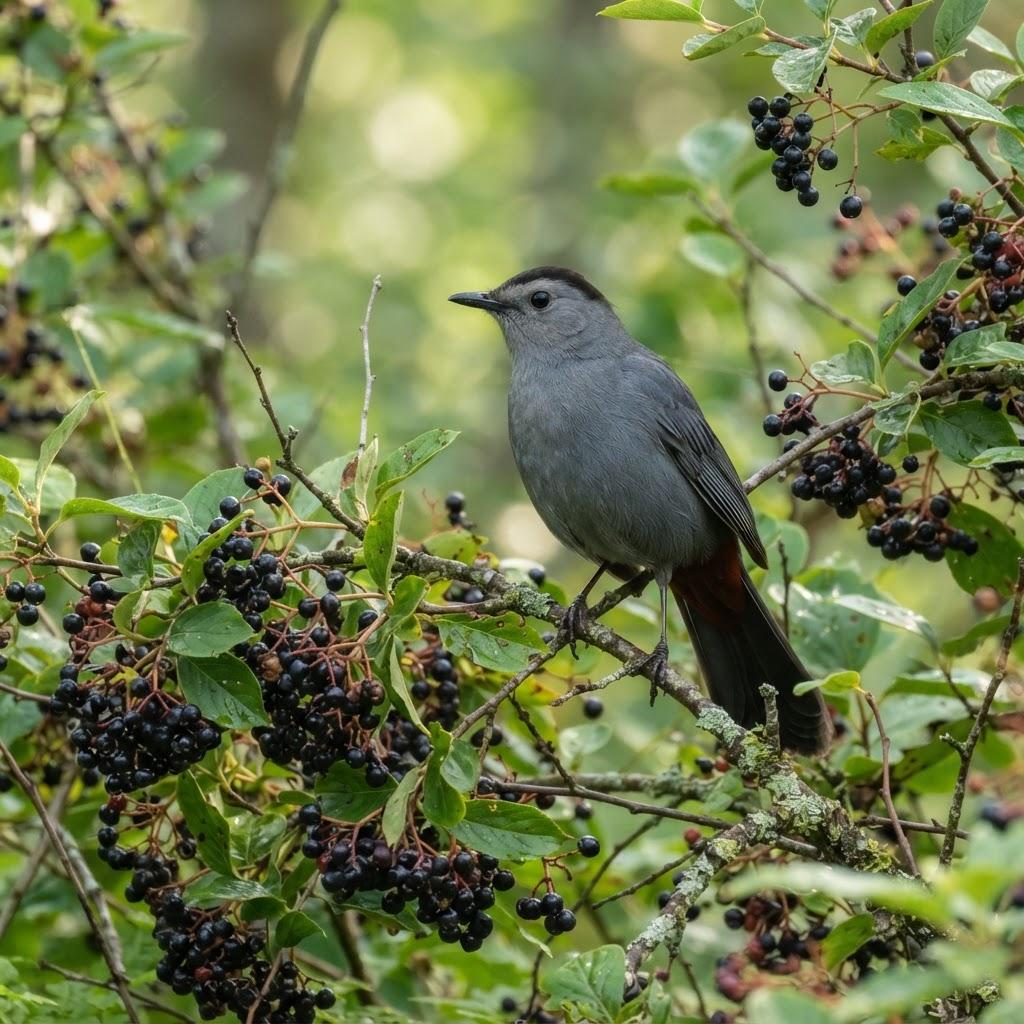
Spotting a Gray Catbird is like finding a feathered riddle wrapped in a mystery inside an overgrown shrub. Listen first! That distinctive 'mew' sound is your best clue, often uttered from deep within dense foliage. They are primarily gray birds, with a darker, blackish cap on their head and a blackish tail, giving them a somewhat distinguished, if slightly somber, appearance. Their underside is lighter gray, and their undertail coverts are often a rusty or cinnamon color, a subtle but key identifying mark. They are medium-sized songbirds, roughly the size of a robin but more slender. When you do see one, it often behaves with a characteristic flick of its tail and wings, a nervous energy that belies its quiet appearance. They love to perch in thickets, hedgerows, and the edges of woodlands. Look for movement in the underbrush, especially near berry-producing plants. As for how they're doing, the news is generally good! The Gray Catbird is currently listed as **Least Concern** by conservation organizations. Their populations are relatively stable, and they have shown an ability to adapt to human-modified landscapes, thriving in gardens and parks as much as in wilder areas. This adaptability is a strength, but it doesn't mean they're invincible. Continued habitat preservation, especially maintaining those dense shrubby areas they love, and planting native berry-producing plants in our yards are simple, effective ways to support them. By providing food, water, and shelter, we can ensure these quirky, melodious characters continue to grace our landscapes for generations to come.