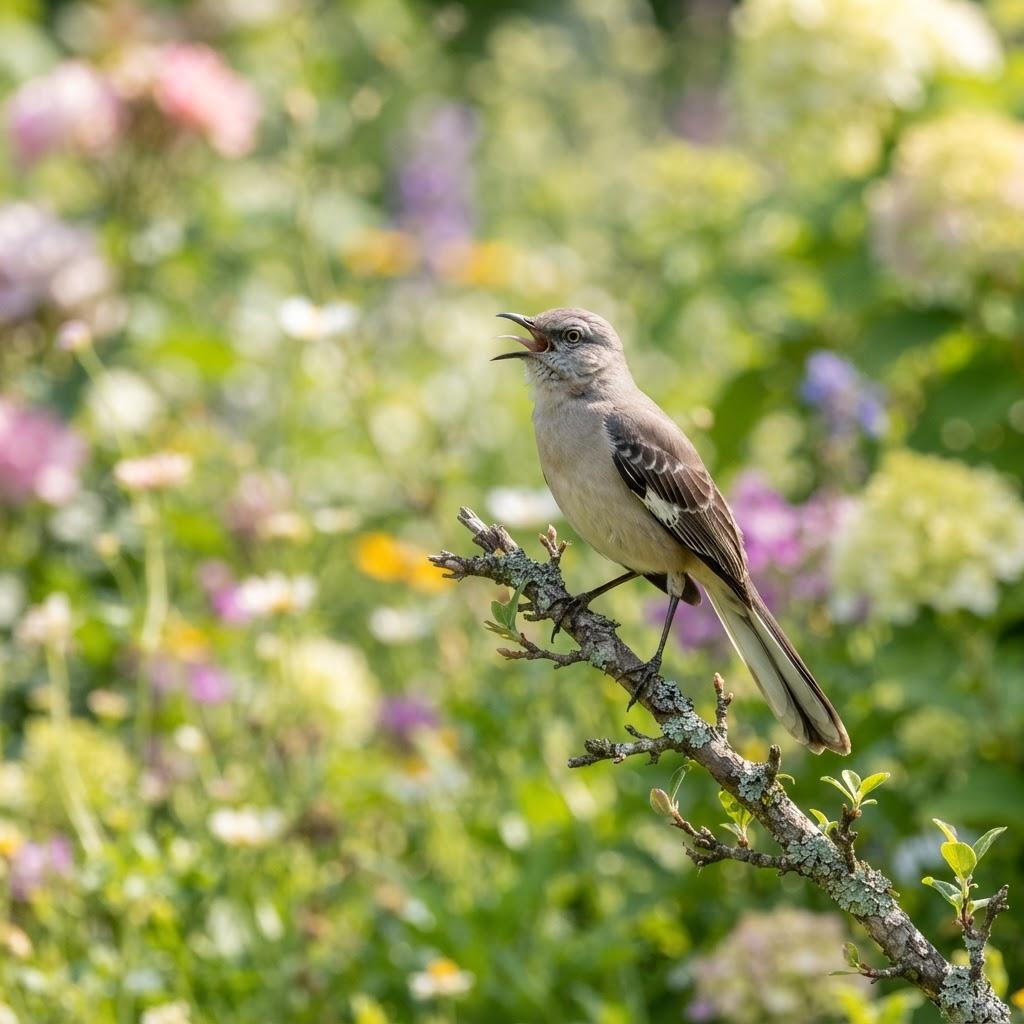
Mimus polyglottos
Northern Mockingbird
Meet the Northern Mockingbird, the feathered world's most talented impersonator and neighborhood bouncer. This bird turns your backyard into a nonstop concert and an intense drama series all rolled into one.
Meet the Bird
Imagine a bird that walks into a karaoke bar and proceeds to sing every song on the jukebox, not just in the original key, but with the exact vibrato of every artist who ever recorded them. That is the Northern Mockingbird. This bird is the definitive neighborhood character, the kind of neighbor who is always watching from the fence line, ready to report any suspicious activity to the entire block. With a sleek gray tuxedo and dashing white flashes on its wings that look like a fancy business suit, the Mockingbird carries itself with an air of immense importance. It doesn't just hang out; it patrols. You will find them perched on the highest point of a roof, a chimney, or a telephone wire, scanning their domain with a gaze that says, 'I saw what you did with that lawn mower, and I am not impressed.' They are the punk rockers of the avian world, unapologetic and bold, acting as the self-appointed security guard for every shrub they consider home.
Superpowers & Weird Abilities
If you think the Mockingbird is just a pretty face, think again. Their superpower is, quite literally, a massive brain for audio processing. A single male Mockingbird can learn up to 200 different songs in its lifetime. We are not talking about just bird songs; they are notorious for incorporating the sounds of barking dogs, car alarms, squeaky gates, and even sirens into their daily repertoire. The science behind this is fascinating: they have a highly developed syrinx, which is the bird equivalent of a voice box, but it is far more complex than human anatomy. It allows them to produce two different sounds simultaneously. Think of it like a human trying to whistle a melody while humming a bass line at the same time—only the Mockingbird does it with the clarity of a high-fidelity studio recording. They do this to advertise their intellectual superiority and to confuse rival males, who probably get tired of hearing their own songs played back at them better than they can sing them.
Drama, Personality & Feathered Chaos
If there were a reality television show for birds, the Northern Mockingbird would be the star, the producer, and the contestant who starts all the fights. They are notoriously territorial and possess the backbone of a heavyweight boxer. It is not uncommon to see a Mockingbird chase away a hawk, a cat, or even a human who gets too close to its nest. They don't just flutter around; they dive-bomb, flick their wings aggressively to show off those brilliant white patches, and let out a series of harsh, scolding rattles that sound like a tiny machine gun. This isn't just toughness; it is a full-blown ego trip. They have been known to spend hours defending a single berry bush, making sure that every other bird in the neighborhood knows exactly who the boss is. If a Blue Jay tries to sneak into their territory, the Mockingbird handles it with a swift, decisive eviction notice that leaves the Jay looking embarrassed and confused.
Bizarre Rituals & Quirky Habits
The Mockingbird has a habit that looks like a dance move gone wrong: the wing flash. While foraging for insects on the ground, they will suddenly stop, spread their wings wide, and then fold them back in. To the untrained eye, it looks like they are doing a quick warm-up stretch, but it is actually a tactical maneuver. The flash of white is designed to startle insects, making them scramble for cover and reveal their location. It is essentially a hunting trick that plays on the bugs' fight-or-flight response. Additionally, you might catch them during the peak of summer appearing a bit, well, unhinged. They have been observed snacking on fermented fruit, leading to the avian version of a very happy hour. A tipsy Mockingbird might sing off-key or stumble around, acting as a hilarious reminder that even nature's best singers need a break from the pressure of maintaining a high-performance reputation.
Legends, Folklore & Human Stories
Throughout history, the Mockingbird has occupied a special place in the American cultural tapestry. Because they sing through the night, especially during the spring, they have been the subject of countless poems and stories. In the Southern United States, the Mockingbird is almost a mascot, representing persistence and a connection to the landscape. Unlike birds that have been labeled as omens of doom, the Mockingbird is generally seen as a cheerful, if somewhat loud, companion. They have appeared in literature as symbols of innocence and truth, most notably in the works of authors like Harper Lee, where their 'mocking' nature serves as a metaphor for the complexities of society. There is a certain comfort in hearing a Mockingbird at 2:00 AM; it is a sign that no matter how dark or quiet the night gets, there is always someone nearby who isn't afraid to belt out a tune and keep the world moving forward.
Mating: The Ridiculous World of Avian Dating
Dating in the world of the Northern Mockingbird is an elaborate, high-stakes performance that would make a Broadway director weep with envy. The male starts by creating a 'display territory,' where he spends his days singing with such passion that he effectively turns his entire neighborhood into a soundstage. He puts on an aerial show that involves flapping straight up into the air, hovering for a moment like a helicopter, and then diving back down to his branch. It is a show of physical fitness, stamina, and vocal range. If a female decides to swing by, he will follow her around in a fluttering flight pattern, showing off his wings. If she is not impressed, she simply flies off to the next guy. If she approves, they bond, but only after she confirms that his territory has enough resources to keep them fed. It is cold, calculated, and absolutely mesmerizing to watch from your porch.
Nesting: Master Architects and Lazy Slumlords
When it comes to construction, the Mockingbird is the contractor you actually want to hire. They don't mess around with flimsy, half-baked stick piles. They build substantial, cup-shaped nests tucked away in the thickest, thorniest shrubbery they can find. Using a sturdy foundation of twigs, they line the interior with finer materials like rootlets, grass, and occasionally bits of string or yarn stolen from someone's garden. They build these nests to last, which is a good thing considering how much time they spend defending them. They are not like the lazy mourning dove, who treats nesting like an afterthought; the Mockingbird is a perfectionist. They favor thick, dense bushes because they know their offspring are going to be noisy, and they need a fortress that can hide the sound and offer protection from wandering predators. They are essentially building a private, fortified nursery designed to withstand the chaos of summer storms.
Raising Babies: The Screaming Food Disposals
If you ever wondered what the definition of a 'bottomless pit' is, look no further than a nest of baby Mockingbirds. Once the eggs hatch, the parents enter a phase of pure, caffeinated exhaustion. The chicks are naked, blind, and loud—truly professional-grade screamers. They stretch their long necks upward, opening their bright-colored beaks to reveal what looks like a cavernous tunnel, demanding the next delivery of insects, berries, or whatever the parents can scrounge up. The parents spend their entire day in a blurred cycle of hunting and feeding, zipping back and forth with the speed of a jet plane. It lasts for about 12 to 14 days before the youngsters fledge, or leave the nest. During this time, the parents become even more aggressive, attacking anything that passes within twenty feet of the bush. It is a loud, chaotic, and incredibly dedicated parenting style that ensures the next generation of song-thieves survives.
Bird-Watching Travel & Local Hotspots
If you are on a quest to see a Northern Mockingbird in its natural element, you really don't have to look too far. They are everywhere in the suburbs, but if you want a premium birding experience, head to coastal areas in the Southeastern United States. Places like the Everglades in Florida or the barrier islands along the Carolinas are fantastic hotspots where their populations are dense and their behavior is peak entertainment. If you are in the Midwest, visit local nature preserves with varied shrub-steppe habitats during the spring. The best time to see them is early morning, when the males are staking their claims and singing at the top of their lungs. Don't worry about hidden trails or remote wilderness; the Mockingbird loves humanity, so a quiet morning walk in a local community park that features plenty of native hedges is often the best place to find them performing.
Food, Feeder Hacks & DIY Projects
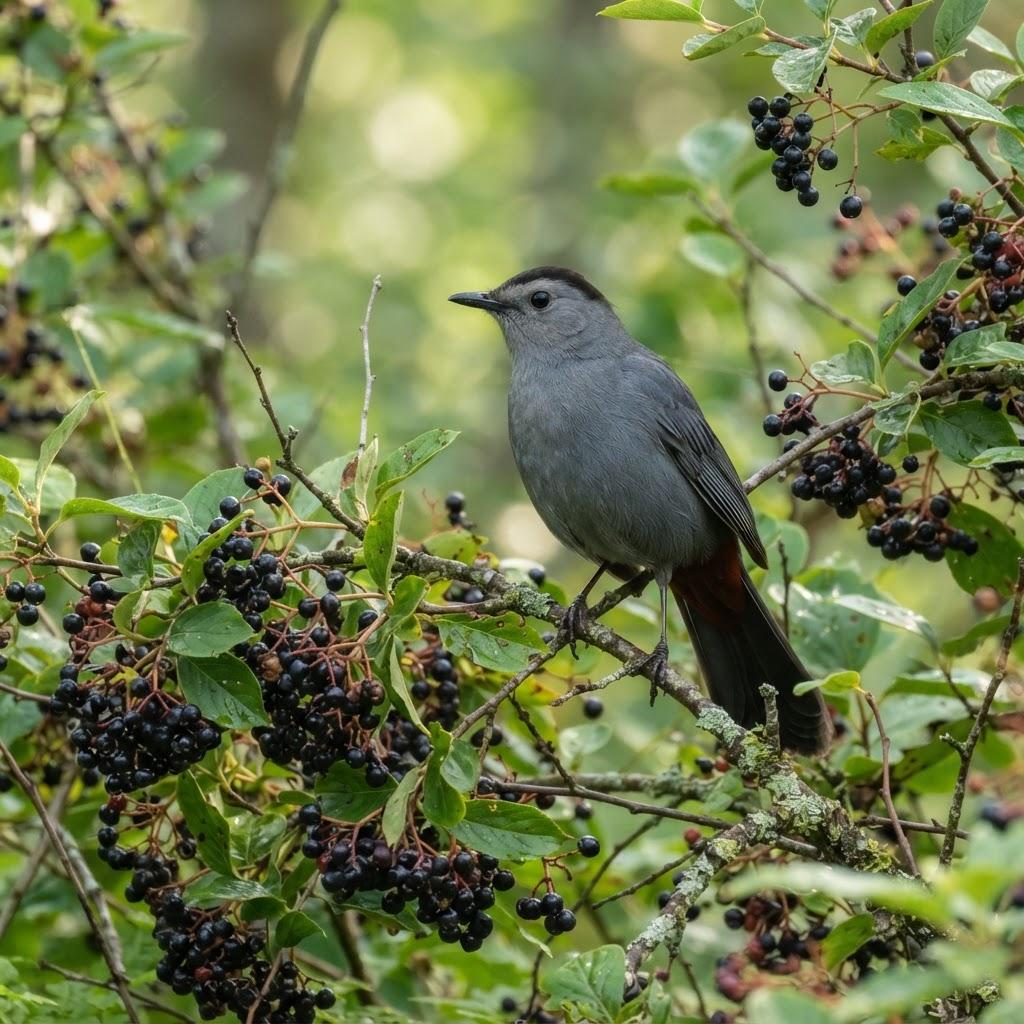
Mockingbirds have a sophisticated palate that changes with the season. In the summer, they are insect-killing machines, helping you out by clearing your yard of grasshoppers, beetles, and caterpillars. In the fall and winter, they switch to fruit. If you want them in your yard, skip the cheap bags of mixed seed from the hardware store; they will look at that filler millet and roll their eyes. Instead, invest in high-quality suet, dried mealworms, or better yet, plant native shrubs like holly, dogwood, or serviceberry. These plants act as a natural, sustainable pantry. For a fun DIY project, create a 'suet log' by taking a small piece of wood, drilling holes into it, and filling the holes with a mix of peanut butter and suet. Hang it near a tree trunk, and you will give your resident Mockingbird an easy, high-energy snack that keeps them fueled for their daily patrols.
Seasonal Guides & "Crisis" Management
Spring is the season of the Mockingbird, which means it is also the season of the 'fledgling panic.' You will be walking through your yard and find a bird that looks like a miniature, slightly disheveled version of an adult, sitting on the grass. You might think it fell out of the nest and is dying. Stop! Breathe. In 99% of cases, that bird is a fledgling. It is supposed to be on the ground. Its parents are likely in the tree above, watching it closely and bringing it food. Unless the bird is bleeding, shivering, or clearly injured, leave it alone. In the winter, Mockingbirds stay in their territories, which makes them easy to spot against the stark branches. Keep your birdbath clean and consider adding a small heater to prevent the water from freezing, as they rely on those baths to keep their feathers in top condition for insulation against the cold.
Backyard Tech & Gadget Reviews
Technology has made observing these little dramas much easier. Smart feeders are a game-changer for Mockingbird enthusiasts because these birds are intelligent enough to quickly learn the ropes of a new feeding station. An AI-powered camera feeder can give you clear, close-up shots of their wing-flashing behavior, which is a detail you often miss with the naked eye. For window safety, because Mockingbirds are so territorial, they often see their reflection in a clean window and decide that the 'other bird' is a rival that needs to be fought. This can lead to them constantly tapping or flying into your glass. To fix this, use window film or decals that break up the reflection. It turns the glass from a mirror into a visible barrier, saving the bird from a headache and saving your windows from a daily, frantic beak-tapping session.
How to Spot One & How It Is Doing
Spotting a Northern Mockingbird is easy because they want to be seen. Look for a medium-sized bird with a long tail, a gray back, and those iconic white wing patches that appear as two white bars when they are sitting still. Their chest is a paler gray, almost white. If you are unsure if you have found one, listen for the music. If you hear a series of repeated phrases that change every few seconds, you have found your culprit. They are doing quite well across their range, thriving alongside humans as long as we keep providing shrubs and natural food sources. To help them out, focus on planting native vegetation in your yard rather than just grass. A lawn with diverse native plants is a buffet and a fortress for the Mockingbird, ensuring that this charismatic, noisy little genius will continue to keep the neighborhood on its toes for generations to come.