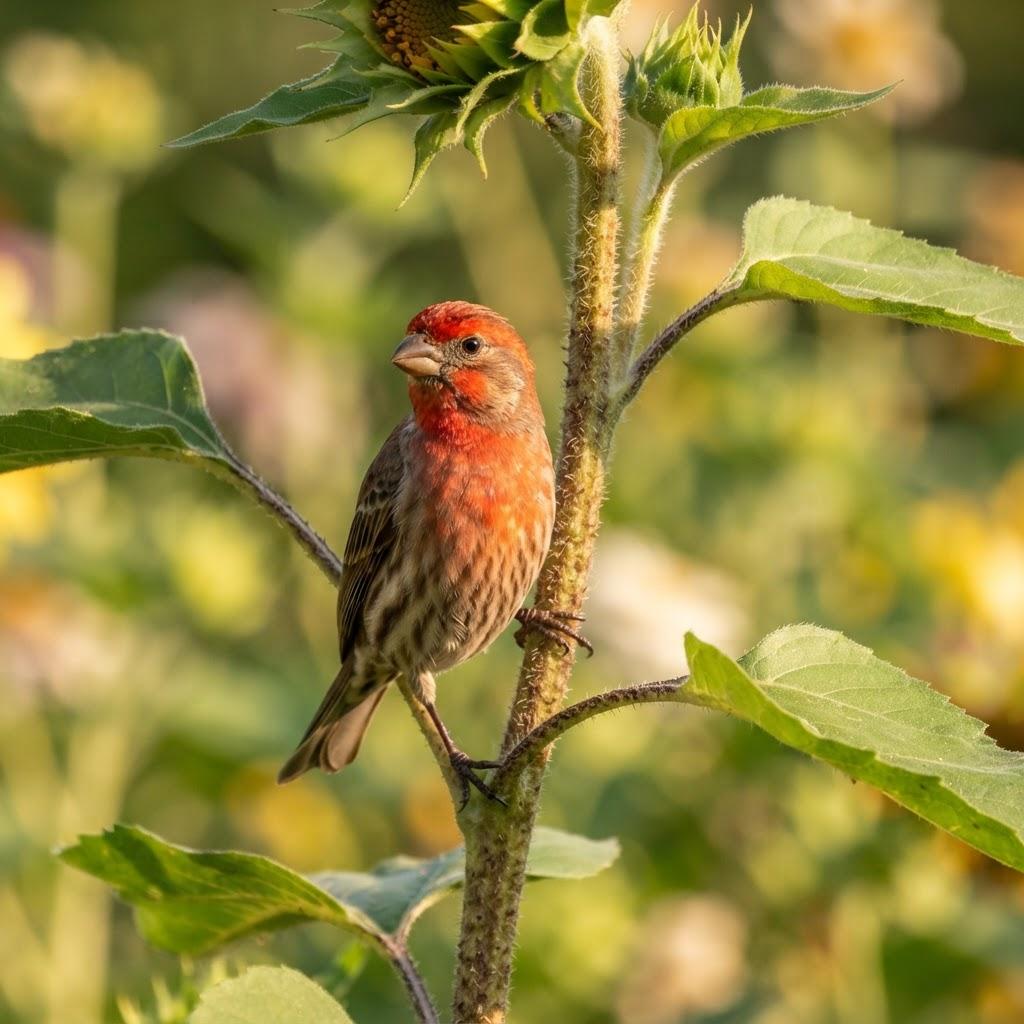
Haemorhous mexicanus
House Finch
The House Finch is the ultimate backyard success story, a feathered urbanite that loves your bird feeder almost as much as it loves showing off its vibrant, sunset-colored head. It is the cheery, chatty roommate you never knew you needed, turning every suburban spruce into a bustling avian social club.
Meet the Bird
Meet the House Finch, the avian equivalent of that one neighbor who is always outside, chatting up the mail carrier and hanging out on their porch. If birds had social media accounts, the House Finch would be the influencer constantly posting selfies from the top of your gutter. This bird is a classic American success story, moving from a small patch in the West to colonizing nearly every city and suburb on the continent. They are small, streaky, and undeniably charming, with the males sporting a splash of red or orange across their heads and chests that looks like they spent a little too much time near a paint shop. They are the quintessential backyard bird—unfussy, energetic, and seemingly convinced that your sunflower seed feeder was installed specifically for their personal catering needs. They don't mind the noise, they don't mind the cars, and they certainly don't mind you watching them from your kitchen window while you drink your morning coffee.
Superpowers & Weird Abilities
While they might not possess the ability to fly backward like a hummingbird or see through the dark like an owl, House Finches have a secret weapon: they are dietary chameleons. The secret to their flashy red plumage is actually tied to what they eat. House Finches consume carotenoids, which are pigments found in berries and fruits. If a male eats enough of these natural dyes, his feathers turn a brilliant, show-stopping red. If he has a bad diet, he might end up looking like a faded salmon or even a dingy yellow. It is essentially like wearing a permanent suit that changes color based on how well your grocery shopping went that week. Furthermore, they are masters of the urban ecosystem. Their ability to adapt to human-altered environments—where natural food sources disappear and are replaced by bird feeders and exotic ornamental plants—shows a level of biological flexibility that would make a suburban raccoon jealous. They aren't just surviving; they are thriving in the concrete jungle.
Drama, Personality & Feathered Chaos
Do not let their cute, sparrow-like appearance fool you. When it comes to the bird feeder, House Finches operate with the organizational skills of a frantic rush-hour commute. They are rarely seen alone, preferring to roll in boisterous gangs that swarm the feeder like a group of hungry teenagers hitting a pizza buffet. While they aren't necessarily bullies, they are relentless. If a goldfinch dares to occupy their favorite perch, a House Finch will often simply nudge them out or stand there with an attitude that says, I am not moving until you do. They are noisy, constantly twittering, and seem to exist in a perpetual state of 'Hey! Look at me! Is there more food over here? How about now?' They bring a chaotic, joyful energy to any yard, treating your garden like a busy town square where gossip is shared and sunflower hearts are the local currency.
Bizarre Rituals & Quirky Habits
One of the most peculiar things about House Finches is their version of a party. You might spot them engaging in a behavior that looks like a heated argument but is actually a vital piece of social bonding. They will sometimes perform a 'bill-touching' dance where two birds touch their beaks together, which is part of their courtship and social maintenance ritual. It’s essentially a high-stakes, avian version of a polite handshake that lasts for way too long. Also, they are notorious for their love of birdbaths, not just for drinking, but for what can only be described as extreme splashing. They will dive into a basin, soak themselves completely, and then sit on a nearby branch looking like a soggy, angry tennis ball. It’s an exercise in vanity that seems entirely counterproductive, yet they repeat it daily with the same level of enthusiasm that a toddler brings to a puddle.
Legends, Folklore & Human Stories
In the world of folklore, the House Finch doesn't have the heavy, mystical baggage of a raven or an owl, which is perhaps a blessing. Instead, they represent the comfort of home. Because of their history of moving from the West to the East—partly due to the 'Hollywood Finch' incident in the 1940s, where pet store owners released birds to avoid legal trouble—they are seen as survivors. Their story is a modern one, reflecting the way humans change the landscape and how nature ripples in response. They are often viewed as signs of good fortune simply because they are so reliable. In many cultures, the presence of a songbird near the house is a harbinger of spring and prosperity, and the House Finch fits this role perfectly. They don't require fancy wilderness to exist; they just need us, making them the most 'human-adjacent' birds we have.
Mating: The Ridiculous World of Avian Dating
If you ever wanted to see a display of desperate, high-energy devotion, watch a male House Finch trying to impress a female in early spring. The male will puff up his chest to show off his red color, bob his head, and sing a long, warbling song that sounds a bit like a squeaky gate opening and closing. He doesn't just sing; he performs a little dance, vibrating his wings and hopping around the female like he’s trying to sell her a timeshare in a particularly nice spruce tree. The female acts entirely unimpressed, often flying away just to see if he will follow her. If she does stay, she might beg for food like a baby bird, a test to see if he is capable of being a good provider. If he passes the test and brings her a tasty seed, she accepts, and their bond is formed. It is a hilarious, frantic process of trial and error.
Nesting: Master Architects and Lazy Slumlords
House Finches are not particularly picky when it comes to real estate. While some birds spend weeks weaving intricate, waterproof masterpieces, the House Finch is more of a 'fixer-upper' enthusiast. They will nest in hanging planters, dense shrubs, building ledges, or even in the pockets of old garden aprons left on a porch. Their nests are simple cups made of twigs, leaves, and bits of grass, often lined with softer material like hair or fuzz. They are practical rather than pretty. What makes them fascinating is their persistence; they will often nest in the exact same spot year after year, even if that spot is on a busy front porch where the door slams ten times a day. They seem to have decided that human activity is just part of the local scenery, and they are perfectly happy to raise their families while you walk in and out of your house with your groceries.
Raising Babies: The Screaming Food Disposals
Raising a brood of House Finches is a full-time job that requires enough energy to power a small city. Once the eggs hatch, the parents are essentially glorified delivery drivers, ferrying seeds back and forth from dawn until dusk. The chicks are blind, naked, and have one singular setting: 'FEED ME.' They open their bright yellow-rimmed beaks and let out a persistent, buzzing whistle that can be heard from across the yard. The parents show incredible stamina, ignoring their own needs to keep the screaming mouths filled. After about two weeks, the chicks fledge, which is a polite way of saying they fall out of the nest and spend a few days hopping around the ground looking confused. During this time, they are still loud, demanding, and utterly clueless, essentially teenagers who expect to be served breakfast in bed until they finally learn the ropes of being a bird.
Bird-Watching Travel & Local Hotspots
You don't need a plane ticket to see a House Finch; you just need to step outside. They are so ubiquitous in North America that you can find them in the parking lot of almost any strip mall, the local park, or your own backyard. However, if you want to see them in a particularly 'birdy' setting, head to botanical gardens or fruit orchards during the autumn months. These spots offer a cornucopia of seeds and berries that attract huge, buzzing flocks. In the Western United States, they are practically the mascots of desert scrub landscapes. If you are in New York City, look for them in Central Park; in Los Angeles, they are the background noise to every patio lunch. They are the most accessible birds on the continent, turning every local patch of green into a perfect viewing station for anyone with a pair of binoculars and a little patience.
Food, Feeder Hacks & DIY Projects
To become a House Finch's favorite human, skip the cheap 'filler' seeds found in bulk bags. Millet and cracked corn are often left in the dust by these picky eaters, who much prefer black oil sunflower seeds or sunflower hearts. Sunflower hearts are the gold standard because they don't leave a messy shell husk behind, which keeps your patio clean. For a fun DIY project, try making a simple feeder by coating a pinecone in organic peanut butter and rolling it in black oil sunflower seeds. Hang it from a branch with twine, and you will have a front-row seat to the local finch drama. Another tip: plant native berry-producing shrubs like serviceberry or elderberry. Not only are these plants beautiful, but they provide the natural carotenoids these birds need to stay vibrant and healthy, which is far better for them than any store-bought supplement.
Seasonal Guides & "Crisis" Management
Spring is the 'fledgling panic' season. You will see fluffy, short-tailed little balls of feathers hopping on your lawn, and your first instinct might be to rescue them. In 99 percent of cases, this is a mistake. These are fledglings, and their parents are watching from a nearby branch, ready to swoop down with food. Unless the bird is visibly injured or in immediate danger from a cat, leave it alone. The parents know exactly where their baby is. During winter, these birds turn into little balls of fluff to trap heat. Keep your birdbath from freezing by using a small birdbath heater—this is a life-saver for birds during the coldest weeks. The House Finch doesn't migrate long distances, so they are year-round residents that will rely on your high-fat suet feeders to survive the nights when the mercury drops and the ground turns to concrete.
Backyard Tech & Gadget Reviews
If you are obsessed with tracking your House Finches, the new wave of AI-powered feeders is a game-changer. Devices like the Bird Buddy use a built-in camera and recognition software to send photos of visiting birds straight to your phone, identifying the species and keeping a digital logbook for you. It’s perfect for seeing which individual bird keeps stealing all the seeds. For window safety, which is a major concern with these high-energy birds, avoid those cheap silhouette decals that rarely work. Instead, opt for UV-reflective window film or 'bird tape.' These products are nearly invisible to humans but look like a solid wall to a bird. If you want to see what happens in your yard after dark, a cheap motion-activated trail camera is a fantastic way to catch nighttime visitors that you might otherwise never know exist, providing hours of footage for a relatively low investment.
How to Spot One & How It Is Doing
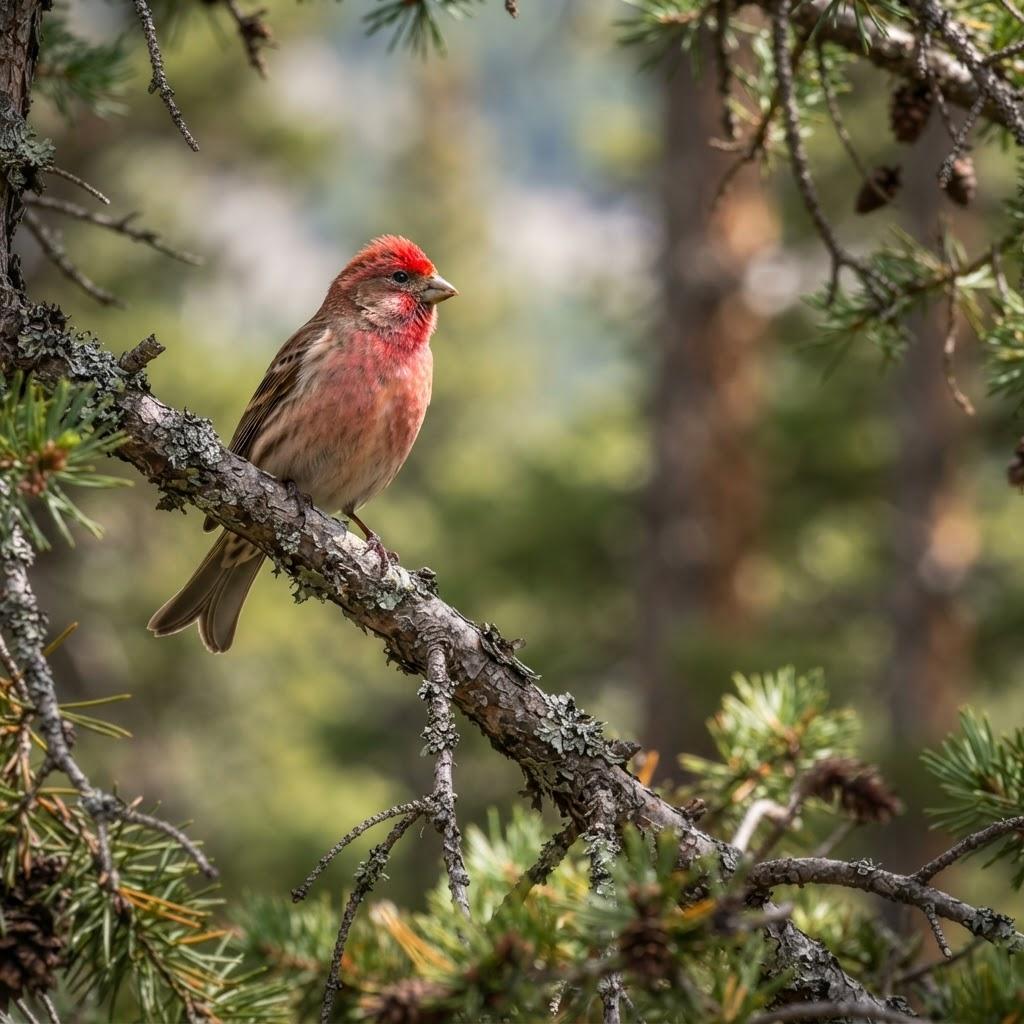
Spotting a House Finch is easy once you know the clues. Look for a bird with a slightly flat head, a stout, conical beak perfect for cracking seeds, and brown, streaky wings. The males are the flashy ones, with that signature red or orange wash on the forehead, breast, and rump. The females are a more subtle, streaky grey-brown, masterfully camouflaged to keep them hidden while nesting. They are doing exceptionally well. In fact, they are one of the most successful bird species in North America, having adapted to our world with remarkable speed. Their conservation status is 'Least Concern,' meaning they are thriving. To help them continue to flourish, keep your bird feeders clean—this prevents the spread of avian conjunctivitis, an eye infection that can be common in finch populations. Regularly washing your feeders with a mild bleach solution is a small, easy action that keeps your backyard visitors healthy, happy, and ready for their next snack.