Tachycineta bicolor
Tree Swallow
Meet the Tree Swallow, a dazzling aerial acrobat with a personality as bright as its iridescent plumage. These fast-flying, insect-chasing dynamos are masters of the sky, turning open fields and watery edges into their personal, high-speed chase zones. Get ready to be charmed by their aerial ballets and learn how to make your backyard their favorite hangout!
Meet the Bird
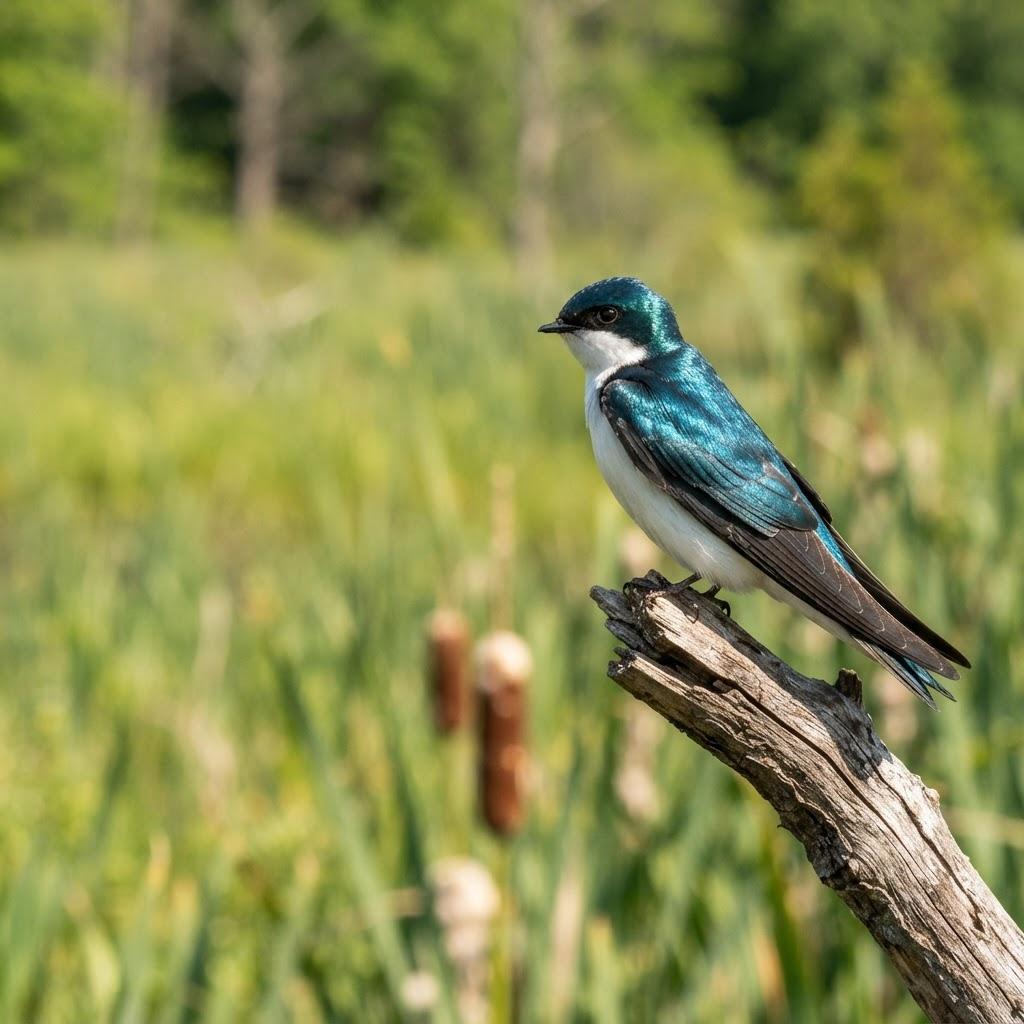
Imagine a tiny, feathered bullet train, but instead of tracks, it’s got wings, and instead of a destination, it’s got an insatiable appetite for flying insects. That, my friends, is the Tree Swallow, or as we like to call it in the Avian Archive, 'Sky Dancer Supreme.' This bird doesn't just fly; it *owns* the air. With a sleek, iridescent blue-green back that shimmers like an oil slick on a sunny day and a crisp white belly that looks like it just stepped out of a feather spa, the Tree Swallow is undeniably one of nature's fashion icons. But don't let the good looks fool you; this bird is all about action, darting and diving with a grace that would make Olympic gymnasts weep with envy. Its favorite pastime? Zooming through open spaces, snatching bugs mid-air with a precision that suggests it’s got tiny aerial radar. It’s the bird equivalent of a smooth operator, gliding through its day with effortless cool, making us mere ground-dwellers stare upwards in awe and mild snack envy. They’re like the cool kids of the bird world, always in motion, always looking fabulous, and always, always catching their lunch without breaking a sweat. Prepare to be smitten with this aerial artist.
Superpowers & Weird Abilities
The Tree Swallow is basically a biological superhero disguised in a sleek, metallic suit. Forget capes; these guys have wings that are pure aerodynamic genius. Their primary superpower is their incredible aerial agility, allowing them to perform G-force-defying maneuvers to snatch insects out of the air. Think of it like playing a high-speed video game, but the stakes are survival and the controller is their entire body. They can twist, turn, and dive with such velocity and precision that they’re basically insect-seeking missiles. But it gets weirder. Tree Swallows, like many migratory birds, possess a secret navigation system that sounds like it's straight out of a sci-fi novel. They can sense the Earth's magnetic field, acting as a built-in compass that guides them thousands of miles during their epic journeys. Scientists believe they might have tiny magnetic particles in their beaks or eyes, allowing them to 'see' the magnetic field lines. Imagine being able to navigate by just… feeling the planet's magnetic pull! It's like having GPS built into your DNA, but way cooler. They also have remarkably efficient respiratory systems, allowing them to fuel their high-octane lifestyle of constant flight and bug hunting without getting winded. It’s this combination of aerodynamic mastery, magnetic navigation, and biological efficiency that makes the Tree Swallow a true marvel of avian evolution, capable of feats that would leave us humans puffing and wheezing after a brisk walk.
Drama, Personality & Feathered Chaos
While the Tree Swallow appears to be all grace and effortless flight, beneath that shimmering exterior lies a surprisingly complex social dynamic, and yes, plenty of drama. These birds are not solitary performers; they often nest in colonies, and where there are neighbors, there's bound to be gossip, territorial disputes, and the occasional squabble over prime real estate. Tree Swallows can be quite assertive, especially when it comes to defending their nest sites or the airspace around them. Imagine a tiny, iridescent bouncer telling other birds, 'Sorry, this air is taken!' They’re known to chase off much larger birds, like grackles or even hawks, with impressive aerial displays of defiance. It’s like watching a tiny David take on Goliath, but with more flapping. And speaking of drama, these birds are also surprisingly adaptable and can become quite accustomed to human presence. They might even develop a sort of personality, becoming bolder around people they recognize, especially if those humans have a habit of putting out food or providing well-placed nest boxes. However, this boldness can sometimes border on territorial aggression, making them seem a bit bossy to other, less assertive bird species trying to share their feeding grounds. They’re not necessarily bullies, but they certainly know what they want and aren't afraid to make a scene to get it, proving that even the most beautiful birds can have a bit of a temper when their feathers are ruffled.
Bizarre Rituals & Quirky Habits
The Tree Swallow, despite its elegant appearance, isn't above a bit of odd behavior. One fascinating habit, shared by many bird species but particularly notable in swallows, is their incredible aerial acrobatics purely for courtship. These aren't just clumsy attempts at romance; they are highly choreographed displays of skill and stamina. Males will perform intricate, synchronized flight patterns, often involving spectacular dives, upward swoops, and even what looks like mid-air somersaults, all to impress a potential mate. It’s a high-stakes performance art where a single missed maneuver could mean a broken heart and another season of single-bird-dom. Another quirky habit is their tendency to be *very* particular about their nest sites. While they readily accept man-made nest boxes, they have strong preferences. They’re often observed engaging in what appears to be thorough ‘site inspections’ by multiple individuals, hovering, peering into openings, and even engaging in brief aerial tussles over the most desirable locations. It's like a feathered real estate boom, with birds aggressively bidding for the best bungalows. Furthermore, during particularly hot weather, Tree Swallows have been observed engaging in a peculiar cooling-off ritual: they will land on exposed branches or even directly on water, spreading their wings and panting, an adaptation to keep their super-charged bodies from overheating during their demanding aerial pursuits. It’s a stark reminder that even these masters of the sky need to take a break and cool down sometimes.
Legends, Folklore & Human Stories
While the Tree Swallow might not have the thunderous mythic presence of an eagle or the widespread folklore of a raven, its story is deeply intertwined with human history and rural landscapes. Historically, the arrival of swallows, including the Tree Swallow, was often seen as a harbinger of spring and good luck. Their return from wintering grounds signaled the end of cold months and the beginning of warmer, more productive times. In many farming communities, they were welcomed visitors because of their voracious appetite for insects, essentially acting as free, flying pest control. This symbiotic relationship was so valued that people would go out of their way to encourage them to nest nearby, often by leaving out materials or providing structures. There are stories of old barns being specifically designed with swallows in mind, featuring openings to allow easy access for nesting pairs. While there aren't many grand myths about the Tree Swallow, their quiet persistence and reliable return each year made them a comforting, familiar presence. Their aerial acrobatics were sometimes interpreted by indigenous peoples as playful spirits of the air or messengers between the sky and earth, adding a touch of the mystical to their everyday flight. Their story is less about grand legends and more about a gentle, ongoing partnership, a testament to how humans and nature can coexist, with the bird’s presence bringing a sense of renewal and natural balance.
Mating: The Ridiculous World of Avian Dating
Forget candlelight dinners and Shakespearean sonnets; the mating rituals of the Tree Swallow are a high-octane, airborne spectacle that would make even the most jaded rom-com writer blush. The male Tree Swallow is essentially an aerial choreographer auditioning for the role of 'Most Impressive Flyer Ever.' His routine involves a dizzying array of dives, swoops, and synchronized flight patterns, often performed in plain view of potential mates. It’s not just about looking good; it's about demonstrating peak physical condition, agility, and stamina – all crucial traits for a bird that spends its life chasing bugs at breakneck speeds. Imagine a ballet dancer performing triple axels and backflips while simultaneously juggling tiny insects; that's the level of skill we're talking about. The female, meanwhile, plays the discerning critic. She’ll observe these aerial displays, probably with a critical eye, weighing the male's performance against his fitness for survival and his potential as a father. If his routine is lackluster, his dives aren't deep enough, or his swoops lack that certain *oomph*, she might just decide he's not partner material and fly off to find a male with more pizzazz. It’s a brutal, beautiful, and utterly hilarious display of nature’s matchmaking service. Sometimes, multiple males will perform for the same female, creating a feathered competition that’s as dramatic as any reality dating show, but with far more elegance and considerably less manufactured drama. The stakes are high, and only the most airborne athletes need apply.
Nesting: Master Architects and Lazy Slumlords
When it comes to nesting, the Tree Swallow falls somewhere between a meticulous architect and a surprisingly resourceful opportunist. Unlike birds that build elaborate cup-shaped nests from twigs and mud, Tree Swallows are cavity nesters. This means they don't build a nest from scratch in the traditional sense; instead, they seek out pre-existing holes or structures. Their preferred real estate? Anything from natural tree cavities (hence the name!) to abandoned woodpecker holes, and, most popularly, man-made nest boxes. Once they find a suitable bachelor pad or apartment, they get to work. They line the cavity with soft materials, primarily grasses and plant down, creating a cozy little cradle for their future offspring. This lining is often surprisingly substantial, a fluffy, well-insulated cup that perfectly cradles their eggs and growing chicks. However, they're also known to incorporate feathers into their nests, which they meticulously collect from their flights. Some researchers believe these feathers, especially from specific species, might play a role in parasite control, adding a layer of biological sophistication to their domestic arrangements. While they aren't building from raw materials like some birds, their ability to find and enhance suitable cavities, turning them into warm, safe nurseries, demonstrates a clever form of nesting strategy. They’re not lazy; they’re just incredibly efficient at finding and decorating the perfect pre-fab housing.
Raising Babies: The Screaming Food Disposals
The moment Tree Swallow eggs hatch, it’s like opening the gates of a tiny, feathered fast-food joint that never closes. The baby birds, known as altricial chicks (meaning they are born helpless and dependent), are essentially little more than gaping mouths on legs, and they’re *loud*. From the instant they can lift their heads, they’re demanding food with an intensity that suggests they haven't eaten in weeks, even though their parents are working overtime. A clutch typically consists of 4 to 7 eggs, and for about 18 to 22 days after hatching, both parents engage in a non-stop feeding frenzy. They’ll fly in and out of the nest box or cavity, each trip bringing a beak-full of insects – flies, mosquitoes, beetles, and whatever else they can snatch mid-air. Imagine a delivery service operating at speeds of up to 30 miles per hour, with each 'customer' screaming for more. The parents are true workhorses, their own energy reserves depleted as they cater to the insatiable appetites of their brood. They’ll bring food, clean out the nest, and fend off any potential predators or rivals. The chicks, meanwhile, are practicing their own skills: growing rapidly, developing their first downy feathers, and preparing for the day they’ll fledge, or leave the nest. It's a period of intense growth and constant demand, a testament to the parents' dedication and the chicks’ remarkable ability to consume vast quantities of food to fuel their own rapid development.
Bird-Watching Travel & Local Hotspots
If you’re looking to witness the aerial artistry of the Tree Swallow firsthand, your best bet is to head to open country with access to water. These birds are practically synonymous with wide-open spaces where they can perform their insect-catching ballets. Think large meadows, marshes, lakeshores, riverbanks, and even well-managed agricultural fields. They are also quite adaptable and can be found in suburban areas with ponds or open lawns. One of the best places to find them during their breeding season (roughly April through August) is in national parks or wildlife refuges that protect these types of habitats. For example, the Bosque del Apache National Wildlife Refuge in New Mexico, while famous for cranes, also hosts swallows in its wetlands. Many state parks across the Midwest and Northeast, particularly those with large bodies of water like the Great Lakes region or along rivers like the Mississippi, are prime Tree Swallow territory. During their migratory journeys, they can be found in similar habitats but often in larger, more concentrated flocks. Coastal areas, especially salt marshes and estuaries, are excellent places to look during spring and fall migration. The key is open visibility and the presence of water, which attracts the flying insects that form their primary diet. So, pack your binoculars, find a spot with a good view of the sky over water, and prepare for a dazzling aerial display.
Food, Feeder Hacks & DIY Projects
Tree Swallows are insectivores, meaning their diet consists almost entirely of flying insects caught on the wing. This makes them fascinating to watch but presents a challenge for backyard feeders. They aren't seed-eaters, so traditional bird feeders filled with sunflower seeds or millet won't attract them. However, if you're dedicated to becoming a 'swallow-summoner,' you can offer them specially prepared foods. The most effective way to attract them to your yard is to create an environment rich in the insects they love. This means planting native flowers and shrubs that attract a diverse insect population. Think plants with small flowers that bees and other pollinators frequent, as well as plants that serve as host plants for caterpillars, which then become tasty bug snacks for adult swallows. If you want to go the extra mile, some people offer 'mealworm buffets' or specialized insectivore blends in shallow dishes or tray feeders. You can buy dried insects or even live mealworms from pet stores or online bird food suppliers. Place these in a shallow dish feeder, ideally elevated and in an open area, to mimic their natural foraging environment. A simple DIY project is to create a 'bug bar' by filling a shallow tray with a mix of dried crickets, mealworms, and perhaps some unsalted suet bits. Place this out during the breeding season, and you might just see your Tree Swallows become regular visitors, treating your yard like their personal, all-you-can-eat buffet. Remember, a healthy insect population in your yard is the ultimate attractant.
Seasonal Guides & "Crisis" Management
The Tree Swallow's life is a whirlwind of seasonal activities, each with its own set of opportunities and challenges. In **Spring**, their return from southern climes is a joyous occasion. This is the time to put up any new nest boxes, as they are avid cavity nesters and appreciate readily available housing. Ensure any feeders offering mealworms or insectivore blends are clean and ready, as they need high-energy food to fuel nesting and egg-laying. **Summer** is peak family season. You'll see adults constantly feeding fledglings, which can be confusingly clumsy. If you find a young swallow on the ground that looks fluffy and uncoordinated, the 'fledgling panic' crisis management kicks in: *do not* try to rescue it unless it's in immediate danger (like in a road or accessible to a cat). The parents are almost certainly nearby, watching and waiting for you to leave so they can continue feeding their youngster. Interfering can do more harm than good. Just observe from a distance. As **Autumn** approaches, you’ll notice Tree Swallows congregating in larger flocks, often near water, preparing for their long journey south. It’s a spectacular sight, sometimes forming huge aerial swirls called murmurations, though less dramatic than starlings. For **Winter**, they are long gone from most of North America, having migrated to warmer regions. If you're in their wintering grounds, you'll find them in similar open habitats, still feasting on insects, though the variety might differ. The key takeaway is to support their breeding season by providing habitat and suitable nesting sites, as that’s when they face their biggest 'crises' related to finding a home and raising young.
Backyard Tech & Gadget Reviews
Enhancing your Tree Swallow viewing experience can be a lot of fun, and the world of backyard tech offers some intriguing gadgets. Let's talk about those fancy AI-powered bird feeders, like the popular 'Bird Buddy.' These smart feeders have built-in cameras that snap photos and send notifications to your phone when a bird visits. For a Tree Swallow, which doesn't typically use seed feeders, this might mean capturing them visiting a feeder offering mealworms or perhaps snatching a stray insect near your garden. The novelty of getting instant photos and identification can be immense, turning your yard into a personalized nature documentary. However, they can be pricey, and the AI isn't always perfect, sometimes misidentifying birds or focusing on squirrels. Another essential gadget, especially for urban or suburban dwellers, is a solution for window collisions. Tree Swallows, with their fast flight patterns, can be susceptible. Window decals, UV-reflecting stickers, or even applying tempera paint in a pattern can break up reflections and prevent them from flying into glass. It’s a simple, often DIY solution that’s far more effective and humane than any tech gadget. Finally, for the truly dedicated observer, a motion-activated trail camera placed near a nest box or a known foraging area can capture amazing footage of their daytime activities and even nocturnal visitors to your yard. While not specifically for Tree Swallows, these cameras can provide a secret glimpse into the lives of your feathered neighbors, revealing who visits when you're not looking.
How to Spot One & How It Is Doing
Spotting a Tree Swallow is like trying to catch a glimpse of shimmering lightning. Look for rapid, acrobatic flight over open water or fields during daylight hours, especially from spring through summer. Their most distinctive feature is their iridescent, deep blue-green upperparts that gleam in the sun, contrasting sharply with their pure white belly and throat. They are medium-sized swallows, smaller and sleeker than a robin, with pointed wings that make them look like they're constantly in motion. Their flight is characteristically fast and direct, with brief, sharp turns as they snatch insects. Listen for their cheerful, chattering calls, a series of rapid, metallic 'chip' notes often delivered in flight. They’re not shy about nesting near humans, so keep an eye on birdhouses or the eaves of buildings near open spaces. As for how they're doing, thankfully, the Tree Swallow is currently listed as 'Least Concern' by conservationists. This means their populations are relatively stable and widespread across North America. However, like many birds, they face challenges such as habitat loss and pesticide use, which reduces their insect prey. To help these aerial acrobats thrive, continue to provide nesting opportunities by installing nest boxes, reduce pesticide use in your garden to maintain a healthy insect population, and support conservation efforts for wetlands and open spaces. Every little bit helps keep these dazzling birds gracing our skies.