Passerina versicolor
Varied Bunting
Meet the Varied Bunting, a tiny, kaleidoscopic gem that looks like it was painted by a psychedelic sunset. This pocket-sized firecracker is a master of blending into the brush before flashing colors that would make a neon sign jealous.
Meet the Bird
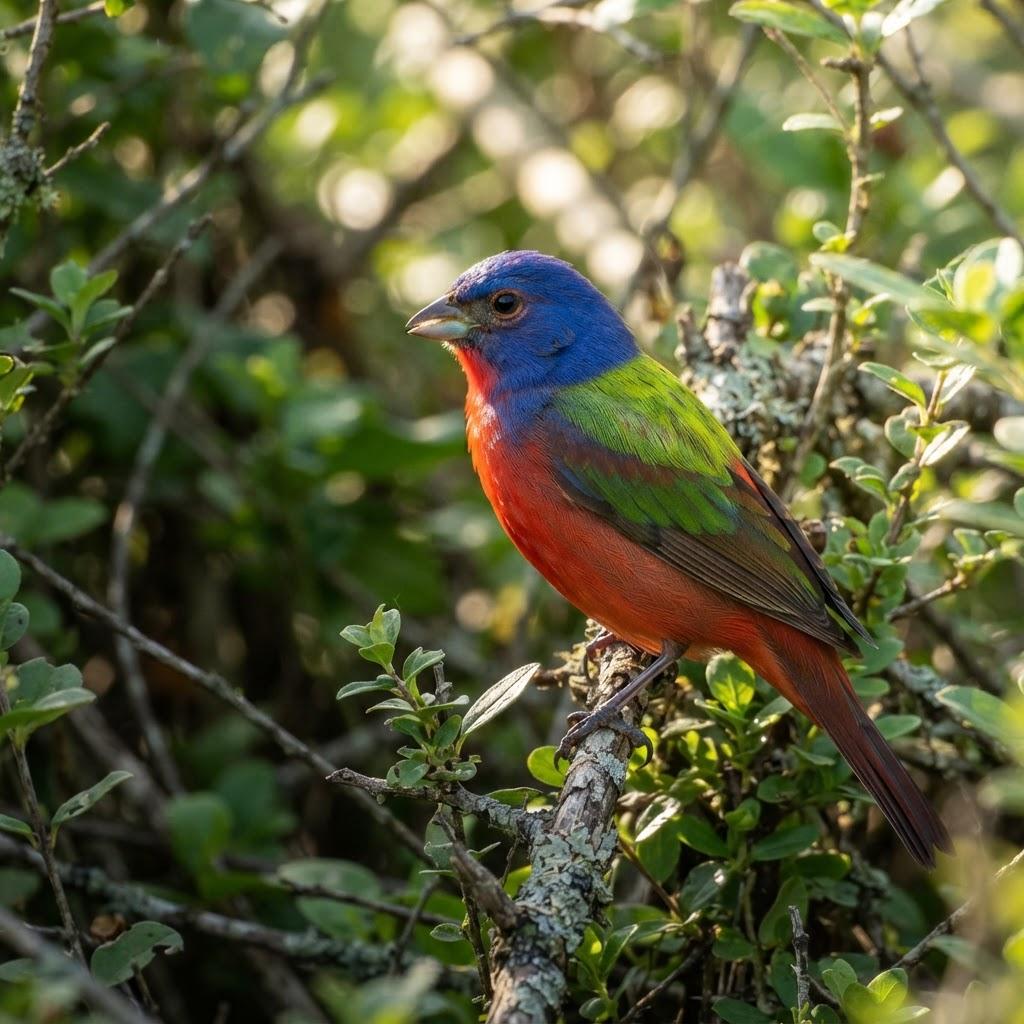
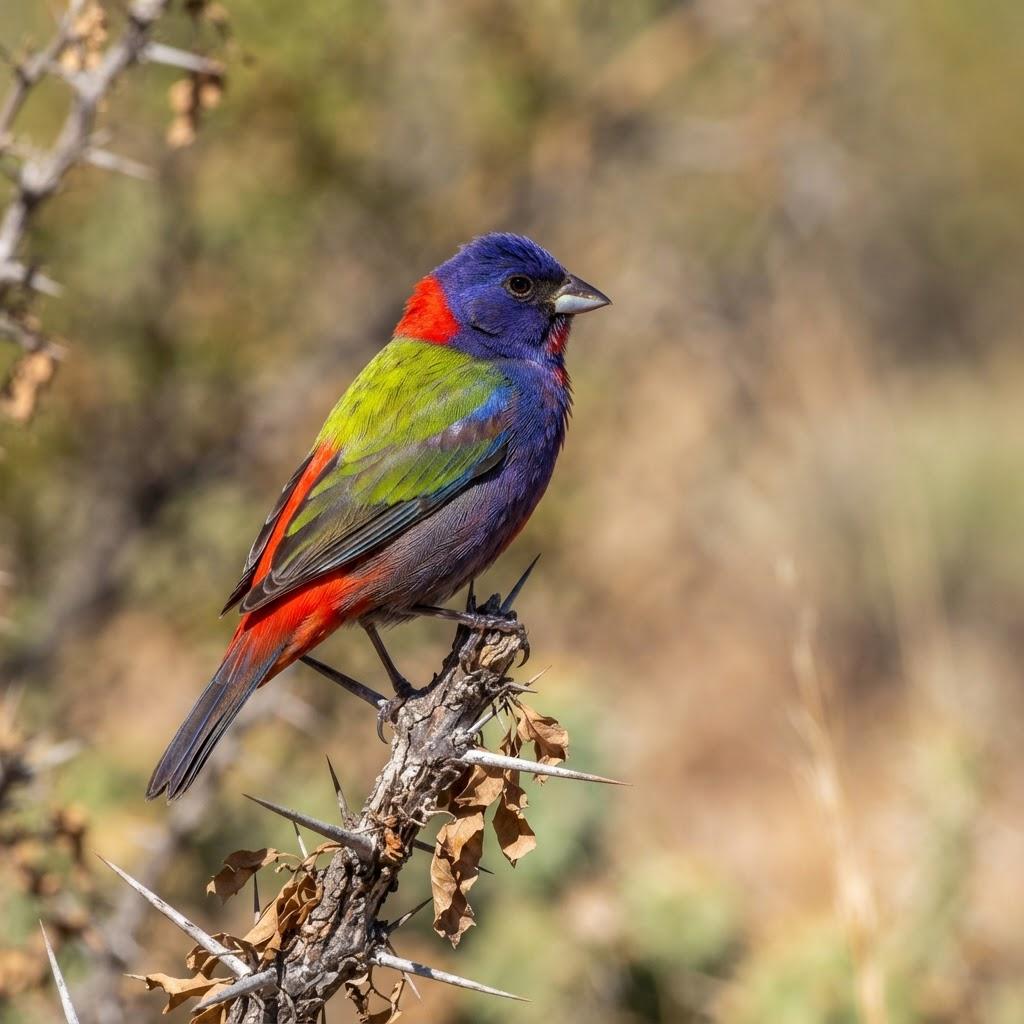
Imagine a bird that decided to wear a suit made of crushed velvet, iridescent indigo, and a splash of sunset red, all while hanging out in the dusty, prickly heat of the desert. That is the Varied Bunting. If there were a pageant for the most stylishly dressed bird in the North American scrublands, this little guy would be strutting down the runway with effortless confidence. It is not just another sparrow-looking creature; it is a riot of color that defies the drab brown stereotype of desert birds. When the sun hits a male in full breeding plumage, he practically glows, changing from deep purple to shimmering red depending on the angle of the light. He is the avian equivalent of a fancy sports car parked in a dusty gravel driveway, looking completely out of place and yet absolutely belonging there. The vibe is sophisticated, slightly secretive, and undeniably cool, making him the birding equivalent of the mysterious stranger sitting in the corner of a dimly lit bar, nursing a drink and looking far too handsome to be ignored.
Superpowers & Weird Abilities
The Varied Bunting possesses a superpower that sounds like something out of a high-end physics textbook: structural coloration. While most birds get their colors from pigments—like you getting a tan from the sun—this bunting uses physics to trick your eyes. Their feathers have tiny, microscopic structures that scatter light, causing interference. Think of it like the way an oil slick on a rainy street creates a rainbow, or how a holographic sticker changes color when you tilt it. This means the bird is essentially a living, breathing light prism. While other birds are stuck with the colors they were born with, the Varied Bunting is constantly shifting its appearance based on the environment. It is a biological chameleon that doesn't need to change its pigment to change its look. Couple this with the fact that they are master navigators of extremely dense, thorny thickets without losing a single feather, and you have a creature that is as much a marvel of mechanical engineering as it is a visual delight.
Drama, Personality & Feathered Chaos
Don't let the dapper suit fool you; the Varied Bunting is a territorial tyrant in a very small package. These birds operate with the intensity of a soap opera star who just discovered their co-star is stealing the spotlight. When two males meet at the edge of their overlapping territories, the drama is palpable. They don't just politely agree on boundaries; they engage in a high-stakes staring contest followed by acrobatic aerial chases that would make a fighter pilot dizzy. They are incredibly defensive of their patch of scrub, often chasing away birds twice their size with a bravado that is both hilarious and impressive. They are not 'backyard bullies' in the sense of being aggressive to other species, but they are absolutely the kings of their own domain. If you are another Varied Bunting, you know the score: keep your wings to yourself, or expect a very loud, very purple lecture on property rights delivered at top speed through the mesquite.
Bizarre Rituals & Quirky Habits
One of the most peculiar habits of the Varied Bunting is the way it treats the mid-day heat. While most sane creatures are hiding in the deepest shade possible, these birds take advantage of the desert's thermal dynamics. They have been observed in strange, static poses for long periods, which looks to the uninitiated like they are contemplating the meaning of life. In reality, they are engaging in complex thermoregulation rituals, fluffing specific patches of feathers to trap cool air against their skin or angling themselves to radiate excess heat. Furthermore, they have a weird penchant for selecting nesting materials that seem utterly impractical to human eyes, yet they swear by them. They are also known for being surprisingly quiet when they are not displaying, turning into little ninjas of the brush. You might hear the distinct, metallic 'tink' of their call note, but finding them in the foliage is a game of patience that often leaves the observer wondering if the bird simply teleported away.
Legends, Folklore & Human Stories
In the folklore of the arid regions of the Southwest, the Varied Bunting has long been associated with the arrival of the summer rains. Known in some circles as a bringer of vibrant life to the parched earth, the appearance of these colorful songsters is often seen as a sign that the landscape is about to turn from dusty brown to lush green. People living in these rural borderlands have stories of the birds acting as 'rain-callers,' singing with extra gusto just before a monsoon storm rolls over the mountains. They aren't just birds; they are the desert's tiny, feathered weather reporters. There is a sense of protective admiration for them among locals—a feeling that these birds hold the spirit of the desert canyons within them. It is a shared secret between the land and the people, where spotting the first male of the season is a celebrated milestone that marks the true beginning of the most transformative time of the year.
Mating: The Ridiculous World of Avian Dating
The dating life of a Varied Bunting is a masterclass in 'go big or go home.' When it is time to impress a potential mate, the male doesn't just whistle a tune; he puts on an entire Broadway production. He will engage in a rhythmic, high-energy flight display, fluttering upward in a stiff, dramatic fashion before parachuting down to a perch with his wings spread wide to show off every iridescent hue in his arsenal. It is the avian version of a slow-motion car commercial, minus the smooth jazz. If the female seems unimpressed, he does not just give up; he cycles through a repertoire of warbling, complex songs designed to prove he is the strongest, healthiest, and most vibrant suitor in the canyon. It is an exhausting process for him, but for the female, it is a screening test. She is looking for the bird that can survive the heat, feed himself, and still have the energy to put on a dazzling show, all while looking like a million bucks.
Nesting: Master Architects and Lazy Slumlords
When it comes to the nursery, the Varied Bunting is a surprisingly diligent architect. They don't just throw a few twigs together and hope for the best like some of their cousin species might. Instead, they build a compact, sturdy cup-shaped nest tucked deep into the safety of dense shrubs or vine tangles. They weave together spider webs, grass stems, and leaf fragments into a tight structure that acts as a fortress against predators. It is an impressive bit of engineering that demonstrates a keen eye for camouflage; from the outside, the nest often looks like just another clump of leaves or detritus caught in the branches. While they aren't 'slumlords' by any stretch, they are very particular about location. If a spot doesn't provide enough shade or cover, they will abandon the project and start over elsewhere. This level of quality control ensures that when the chicks arrive, they are well-insulated and hidden from the prying eyes of snakes and hawks.
Raising Babies: The Screaming Food Disposals
Once the eggs hatch, the peace of the desert canyon is shattered by the arrival of the screaming food disposals. Baby Varied Buntings are essentially bundles of hunger wrapped in down, demanding constant attention from parents who are running on fumes. Both parents work in a frantic tag-team operation, scouring the nearby brush for insects to keep the brood satisfied. It is a high-octane job. The chicks grow with astonishing speed, and within a week, they look less like fragile hatchlings and more like miniature, ruffled versions of their parents. The drama occurs during the final days before they fledge; the nest becomes a crowded, squawking mess of flapping wings and over-excited siblings. It is a chaotic, loud, and incredibly endearing period where the parents prove that their earlier dance moves were worth it, as they successfully transition their demanding offspring into the world of independent flight.
Bird-Watching Travel & Local Hotspots
If you are planning to cross the Varied Bunting off your life list, you need to head toward the borderlands. The canyons of Southeast Arizona are the holy grail for this species. Places like Madera Canyon or the Patagonia-Sonoita Creek Preserve are legendary among birders for a reason. These areas provide the perfect blend of scrubby desert, riparian corridors, and thick brush that the bunting calls home. The best strategy is to arrive in late spring or early summer, when the males are at their most vocal and active. Don't look for them in the open; look for the densest thickets near water sources. Many seasoned birders suggest finding a comfortable spot, sitting dead-still for thirty minutes, and letting the birds get used to your presence. Patience is your best friend here, as the movement of the wind in the brush is often the only thing that will give away the presence of a resting bunting. Bringing a good pair of binoculars is essential, as these guys are experts at staying just out of focus.
Food, Feeder Hacks & DIY Projects
Attracting the Varied Bunting to your yard is less about fancy store-bought feeders and more about creating a 'living pantry.' These birds are primarily seed-eaters, but they go crazy for high-protein insects during the breeding season. Forget the cheap, dust-filled millet mixes from the big-box store; the birds will just sift through it and leave a mess. Instead, invest in high-quality white proso millet and black oil sunflower seeds, which provide the fat and energy they need. For a DIY project, try a simple 'brush pile' feeder: gather fallen branches and pile them in a corner of your yard. It mimics their natural habitat perfectly. If you want to go the extra mile, plant native flowering shrubs like desert willow or hackberry. These plants act as a natural buffet and also provide the safety they crave. Keep the area around your feeders dense and shrubby rather than manicured, and you will find that these colorful visitors are much more likely to stick around for a while.
Seasonal Guides & "Crisis" Management
The life of a Varied Bunting is defined by the seasons of the desert. In early spring, your focus should be on cleaning your feeders and providing fresh water, which is a rare commodity in their habitat. As summer hits, you might encounter the 'fledgling panic'—the moment when a well-meaning human finds a young, uncoordinated bird on the ground and assumes it is an orphan. Unless the bird is clearly injured or in immediate danger, leave it alone! Its parents are likely watching from the canopy, ready to swoop down as soon as you turn your back. In the winter, these birds often move southward to warmer climates, so don't be surprised if your yard goes quiet. During the cold snaps, keeping a birdbath ice-free using a simple heating element can be a lifesaver, as even desert-dwelling birds need reliable hydration when temperatures drop. It is all about maintaining the habitat consistently so that when they do arrive, they feel like they have come home.
Backyard Tech & Gadget Reviews
If you want to get high-tech with your Varied Bunting observation, a smart feeder can be a game-changer. These AI-powered cameras are like having a professional nature photographer in your yard 24/7. They can capture those lightning-fast movements that the human eye often misses. However, make sure to look for models that offer 'night vision' or 'motion-sensitive' recording, as these birds are most active during the cooler, earlier parts of the day. For window collisions, which are a major danger for all small birds, don't just rely on stickers; use window film or external screens that break up the reflection. It turns your glass into a clearly marked barrier for the birds without blocking your view. Trail cameras are another fantastic tool for capturing footage of them visiting a ground-level water feature, allowing you to witness their behavior without being physically present to disturb them.
How to Spot One & How It Is Doing
To identify a Varied Bunting, look for the 'flash of color' in the deep brush. The male is unmistakable with his dark, deep-purple head and bright, crimson-red back. The female, while less flashy, has a soft, warm brown tone that provides perfect camouflage. Listen for their song—a musical, cascading melody that stands out against the buzzing heat of the desert. Currently, these birds are categorized as 'Least Concern' globally, which is fantastic news. Their populations are stable, but they still rely on the preservation of sensitive, thick-scrub habitats. You can help by supporting local land trusts and bird conservation organizations that work to protect these unique, arid ecosystems. By turning your backyard into a tiny, native, shrub-filled sanctuary, you are doing your part to ensure that the beautiful, shimmering ghosts of the desert continue to thrive for generations to come. Keep watching the brush, stay patient, and enjoy the show.