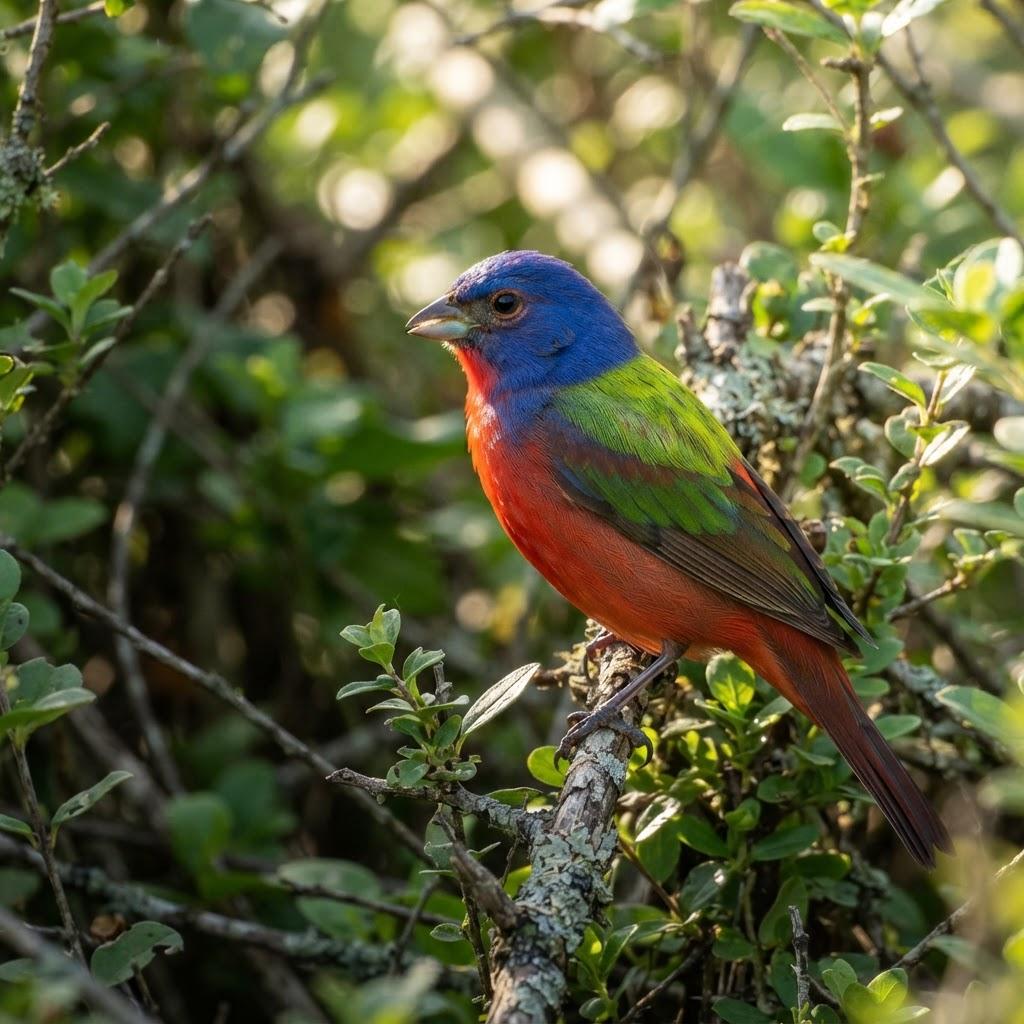
Passerina ciris
Painted Bunting
Imagine a bird that looks like a neon sign exploded in the forest. The Painted Bunting is a living, breathing stained-glass window that brings high-fashion drama to the otherwise drab shrubbery of the American South.
Meet the Bird
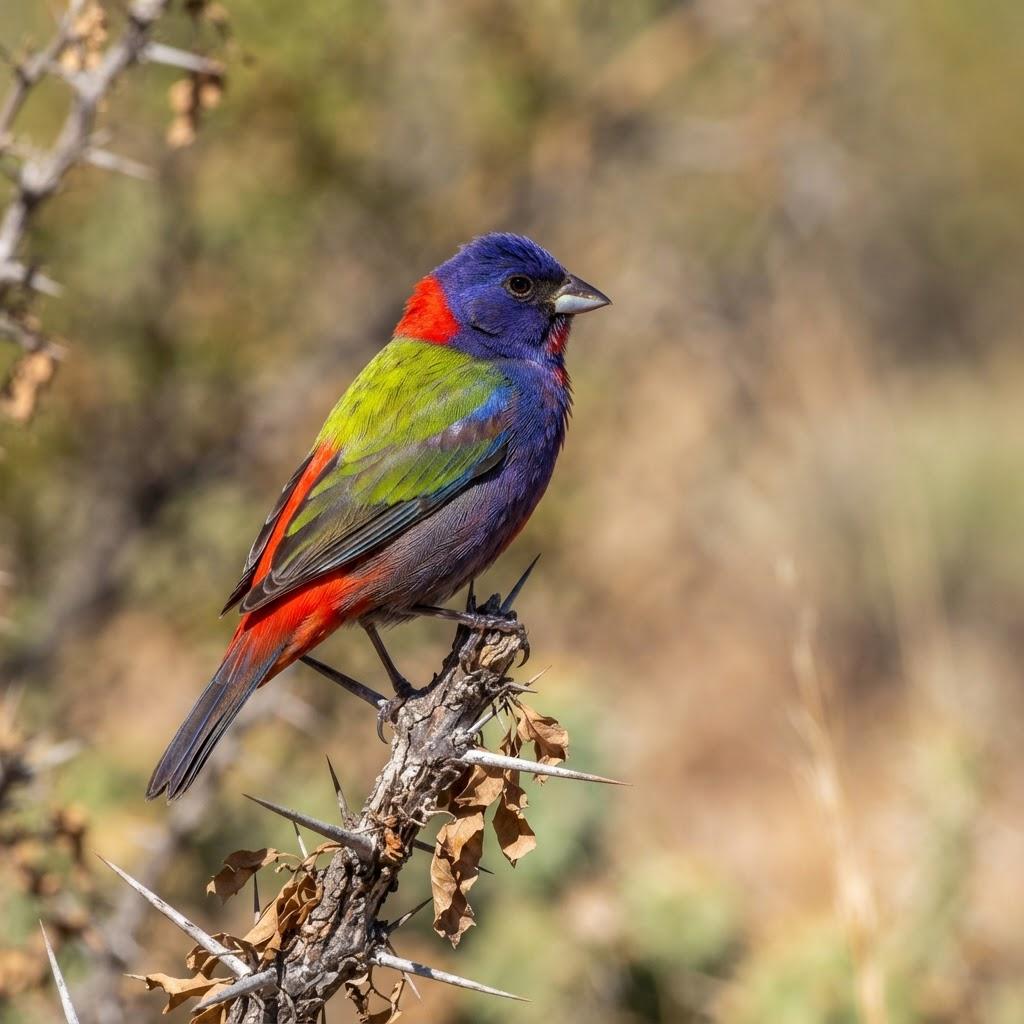
If you walked into a cocktail party wearing a neon blue, red, and lime green tuxedo, you might get a few raised eyebrows. The Painted Bunting, however, pulls it off daily without a hint of irony. This bird looks like a box of Crayola crayons decided to host a rave on a twig. The males are walking works of art, possessing a color palette so vibrant it borders on suspicious. You might wonder if they dipped themselves in a vat of tropical punch when no one was looking, but no, this is all-natural genetic flair. They are the flamboyant rockers of the bird world, appearing in the thickets of the South like a splash of technicolor paint on a grayscale canvas. While the females and juveniles are a more subtle, camouflage-conscious shade of lime green, the males are the showstoppers, strutting through the brush with the confidence of a model on a runway who knows they are the only thing worth looking at in the entire room.
Superpowers & Weird Abilities
Beyond their flashy fashion sense, these birds possess an internal GPS that makes your smartphone look like a dusty sundial. During migration, Painted Buntings perform a feat of endurance that puts professional athletes to shame, crossing the Gulf of Mexico in a single, gut-wrenching flight. They navigate by sensing the Earth's magnetic field—essentially carrying an internal compass in their heads—while also keeping one eye on the stars to ensure they do not accidentally end up in the middle of the Atlantic. They can also shift their metabolic rate into overdrive, essentially turning their bodies into high-performance engines that burn fat at an alarming rate to fuel these long-distance marathons. It is essentially the equivalent of a human sprinting a marathon while solving a complex trigonometry problem without stopping for a bathroom break. Their ability to survive such a grueling journey across open ocean water with nothing but a few grams of fat and a internal map is nothing short of biological wizardry.
Drama, Personality & Feathered Chaos
Don't let the pretty colors fool you; the Painted Bunting has the personality of a caffeinated toddler who just discovered the concept of personal space. During the breeding season, the males are notoriously territorial, acting like tiny, feathered bouncers guarding a VIP section that consists entirely of thorny bushes and weeds. They will puff themselves up, zip around like a feathered pinball, and sing at the top of their lungs to let every other male know that this specific patch of dirt belongs to them and them alone. They are the kings of the hedgerow, often getting into high-speed chases that would make a fighter pilot break into a cold sweat. It is a world of constant, high-stakes drama where a slightly off-key note or a misplaced feather can lead to a literal brawl. They are essentially the neighborhood grumps of the bird world, deeply committed to protecting their favorite shrubbery from any perceived rivals, no matter how small or inconsequential those rivals might be.
Bizarre Rituals & Quirky Habits
The Painted Bunting has a peculiar way of dealing with the stress of being so fashionable. One of their most interesting habits is their relationship with molting. Unlike many birds that lose feathers gradually, some buntings seem to go through a mid-life identity crisis where they look like they’ve been dragged through a hedge backward before emerging in their full glory. They are also known for being surprisingly cryptic despite their bright colors, often vanishing into dense brush the moment they sense a camera lens. They don’t just fly; they dart, weave, and vanish like a magician pulling a disappearing act. During the late summer, they become almost invisible, hunkering down in thick vegetation to replace their feathers. It is as if they realize they are too fabulous to be seen in a state of disarray and decide to go on a self-imposed sabbatical until their wardrobe is back to tip-top shape, proving that even nature's most flamboyant characters understand the importance of a private spa day.
Legends, Folklore & Human Stories
For centuries, the Painted Bunting has been the subject of awe and unfortunate obsession. In some regions, they have been dubbed the 'nonpareil'—French for 'without equal'—because people literally could not believe that a bird could be that colorful. This led to a dark period where these birds were trapped and sold as cage birds because people wanted to own a living piece of art. Thankfully, those days are largely behind us, and today they are viewed as a symbol of the wild, untamed beauty of the Southern landscapes. Their presence is often seen as a sign of a healthy, functioning ecosystem. If you have Painted Buntings, you have a garden that is truly alive. They have become the poster children for bird conservation in the southern United States, representing the intersection of human appreciation and the need to protect the wild places where these tiny, rainbow-colored wonders choose to reside.
Mating: The Ridiculous World of Avian Dating
Avian dating is less 'romantic dinner' and more 'death-defying performance art.' When a male Painted Bunting decides it is time to find a partner, he stops playing the tough guy and turns on the charm. He will launch himself into the air, singing a complex, warbling song while performing an aerial acrobatics display that looks like he is trying to outfly a stiff breeze. He flutters, he dives, and he shows off his vibrant plumage in the sunlight, hoping to convince a female that he is the most genetically superior bachelor in the county. The female, ever the pragmatist, sits back and judges the performance with a critical eye. She is looking for the best singer, the best territory owner, and the healthiest bird. If his dance isn't quite up to snuff, she flies off, leaving him to scream his frustration at a cactus. It is a brutal, high-stakes audition where the only prize for the winner is the responsibility of raising a family.
Nesting: Master Architects and Lazy Slumlords
When it comes to building a home, the Painted Bunting female is the true hero, while the male usually sits on a nearby branch looking important and occasionally keeping watch. She constructs a neat, cup-shaped nest hidden deep within the safety of thick shrubs or vines. She uses a clever mix of spider silk, grass, rootlets, and bits of bark to create a structure that is both sturdy and flexible. It is a masterclass in structural engineering that would make a contractor weep with envy. Once the frame is built, she lines it with soft materials like animal hair or fine grass to ensure the eggs are cushioned. It is a cozy, well-hidden bunker designed to withstand the elements and hide from hungry predators. Compared to the 'pile of sticks' approach favored by some other species, the bunting's nest is a luxury apartment tucked away in the most secure part of the neighborhood, ensuring that her future babies are safe and sound.
Raising Babies: The Screaming Food Disposals
Once those eggs hatch, the nest becomes a 24/7, high-volume dining facility. The chicks arrive as tiny, bald, helpless blobs that exist for one purpose only: to turn insects into feathers. The parents transform into exhausted, jittery delivery workers, constantly flying back and forth with a beak full of caterpillars or seeds. The chicks respond to this tireless labor by opening their beaks wide and screaming, creating a cacophony of sound that essentially tells the parents to 'hurry up and bring more food.' It is a chaotic, messy, and loud process that lasts about two weeks before the chicks are ready to fledge. Watching the parents frantically balance their own nutritional needs with the bottomless appetites of their offspring is a reminder that being a bird parent is not all singing and beauty; it is a grueling, thankless job that would exhaust anyone who isn't fueled by the primal drive to keep the next generation alive.
Bird-Watching Travel & Local Hotspots
If you are dying to see a Painted Bunting, you need to head to the southern United States during the warmer months. Places like the Bentsen-Rio Grande Valley State Park in Texas are legendary for their bunting sightings. These birds love the dense, scrubby habitat near water sources. If you find yourself in Florida or the Carolinas, look for thick, tangled edges of woodlands where people don't usually go—they prefer the spots that are a bit of a mess. The best time to look is early in the morning when the sun is hitting the bushes; the males will be out on the tops of the branches claiming their territory. Don't waste your time in the middle of a manicured lawn; they want the wild, untamed bushes where they can hide their nests. If you find a spot that looks like it hasn't been trimmed in ten years, that is exactly where you want to be standing with your binoculars.
Food, Feeder Hacks & DIY Projects
If you want these birds to grace your backyard, you need to cater to their specific culinary tastes. While they are seed eaters by nature, they have a particular fondness for white millet. Forget those cheap, dusty bags of birdseed mix filled with fillers that just attract squirrels and sparrows. If you want a Bunting, offer a high-quality white millet. Another great way to entice them is by planting native shrubs like beautyberry or wax myrtle, which provide both natural food and the cover they crave. For a DIY project, create a 'natural suet log' by drilling holes in a cedar branch, filling them with peanut butter mixed with oats, and hanging it near a thicket. It provides an excellent, high-energy snack that helps them through the breeding season. Remember, they are shy creatures, so keep your feeders near the edge of a garden or a patch of brush where they feel safe enough to hop out for a bite.
Seasonal Guides & "Crisis" Management
The life of a Painted Bunting is dictated by the turning of the calendar. In the spring, they return with a singular focus on breeding, making it the best time to see the males in their full, vibrant glory. As summer heats up, they become more reclusive as they begin their molting phase, which is a great time to learn their calls rather than looking for their colors. If you happen to find a fledgling on the ground—a fuzzy, clumsy-looking bird—do not panic! This is the 'fledgling panic' season. Nine times out of ten, the parents are watching from a nearby branch, scolding you for being near their baby. The best thing you can do is back away, keep your pets inside, and give the little bird space to figure out how to fly. They are just in that awkward teenage phase, and they don't need a human 'rescue'—they need the quiet, expert training of their actual bird parents.
Backyard Tech & Gadget Reviews
The world of birding has been revolutionized by technology. If you are struggling to spot these elusive birds, a motion-activated camera trap placed near a brush pile can capture hours of footage without you having to stand perfectly still for three hours. Modern smart feeders that use AI to recognize birds are fantastic for keeping a digital record of who is visiting your patch of the world. However, the most important piece of 'tech' for a bird-friendly yard is a simple window decal. Painted Buntings are fast, zippy flyers, and they often misjudge the reflection in a glass pane. Apply UV-reflective window film or simple stick-on decals to your windows to break up the reflection. It is a low-cost, high-impact way to ensure that your backyard remains a sanctuary rather than a hazard. Watching a bright, neon-colored bird land on your feeder because you made it a safe, high-tech haven is one of the most rewarding experiences a backyard enthusiast can have.
How to Spot One & How It Is Doing
To identify a Painted Bunting, look for that unmistakable explosion of color—the blue head, red breast, and green back on the male is the birding equivalent of a neon sign. If you see something that looks like a lime-green finch, you are likely looking at the female. Their song is a sweet, rolling warble that sounds a bit like a rapid-fire version of a house finch. Currently, they are listed as 'Least Concern,' which is great news, but they still face threats from habitat loss and the ongoing battle against invasive species. The best thing you can do to help is to stop trimming your hedges so perfectly. Leave the 'messy' corners of your yard alone, plant native berry-producing shrubs, and support land conservation efforts in your local area. By keeping the wild spaces wild, you ensure that these little living rainbows have a place to call home, allowing the next generation to experience the joy of seeing a bird that truly defies belief.