Oncorhynchus apache
Apache Trout
Meet the Apache Trout, the golden-hued aristocrat of the Arizona high country that nearly vanished from the map. This feisty survivor is basically the mountain stream's version of a punk-rock legend who came back from the dead to reclaim its golden throne.
Meet the Fish
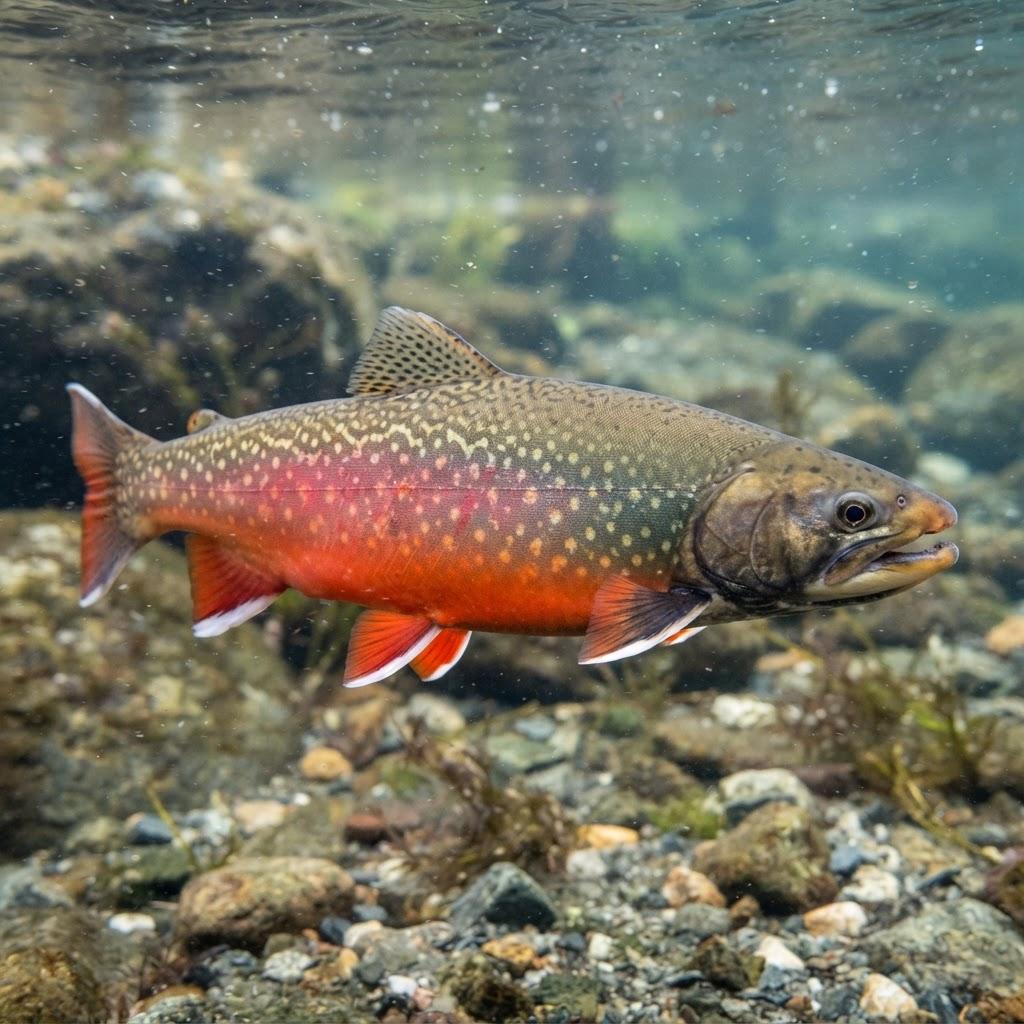
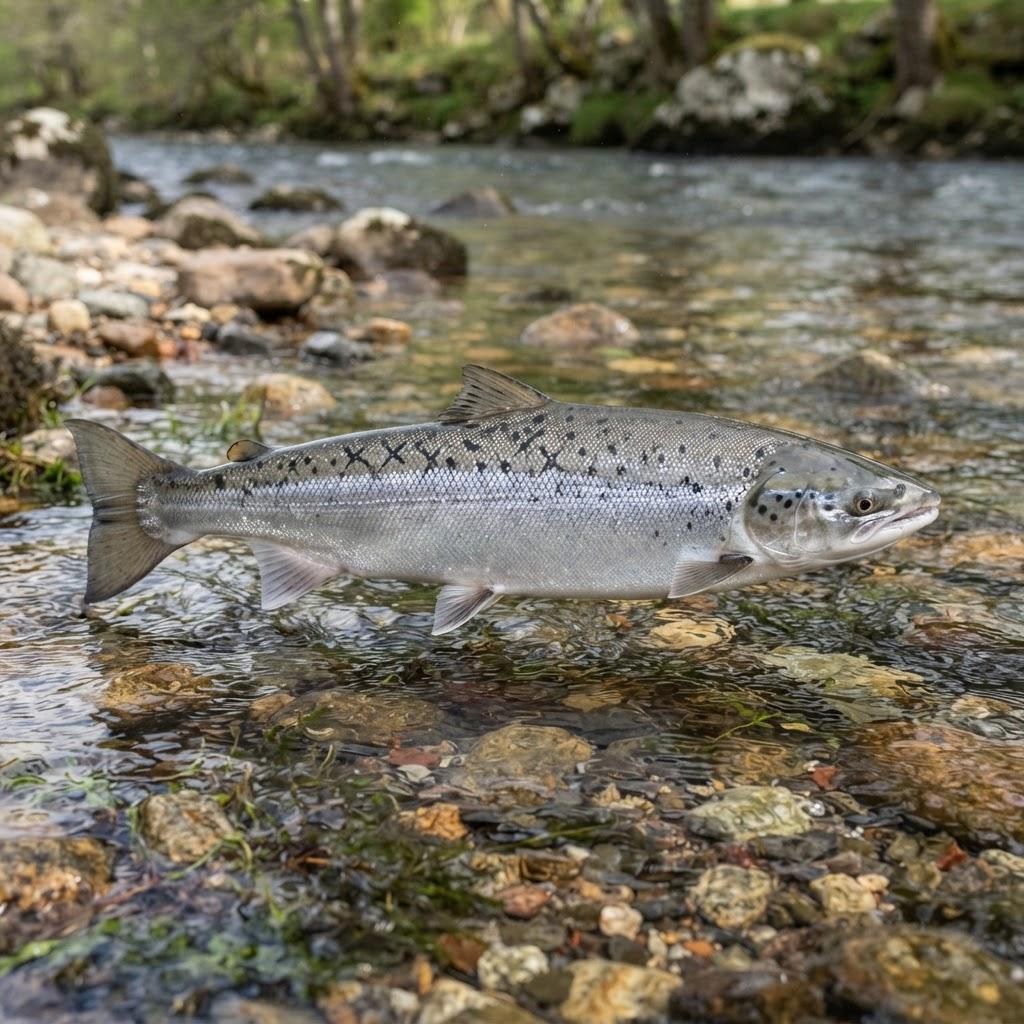
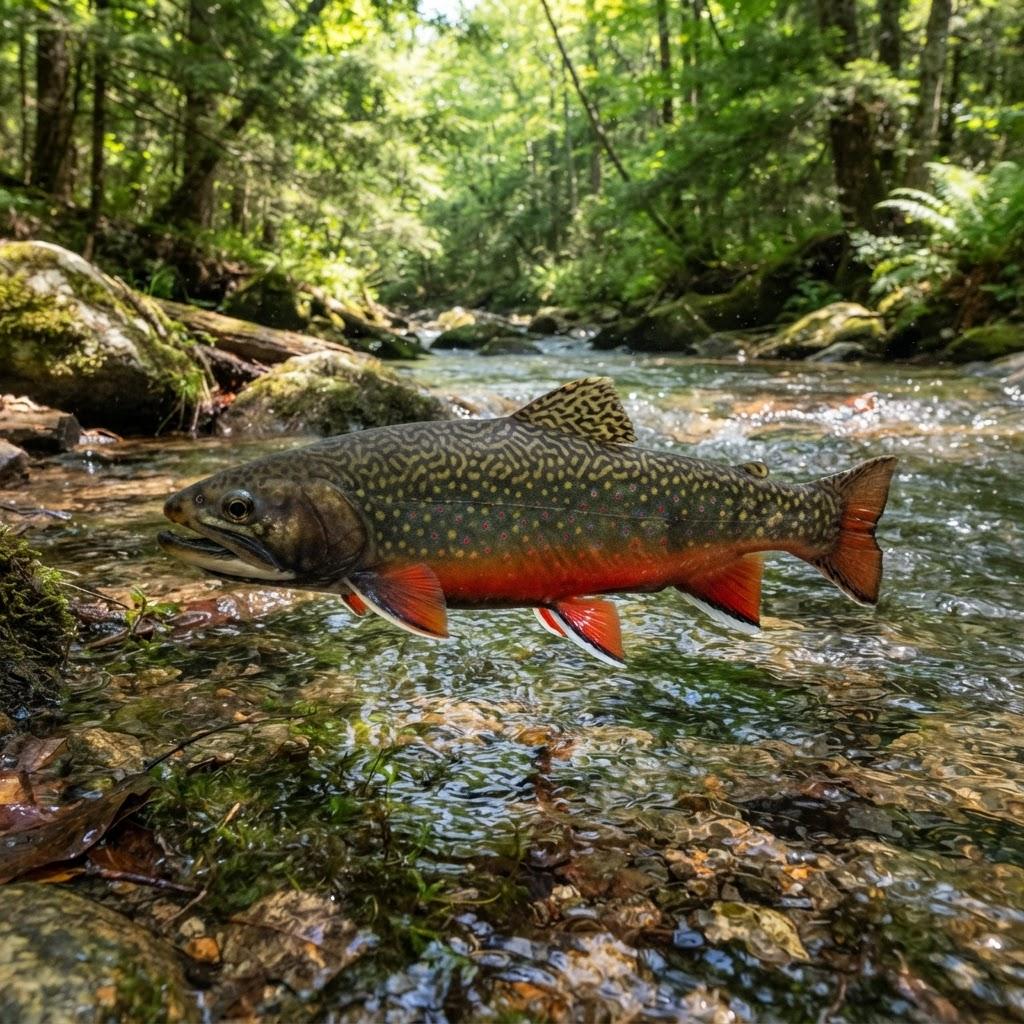
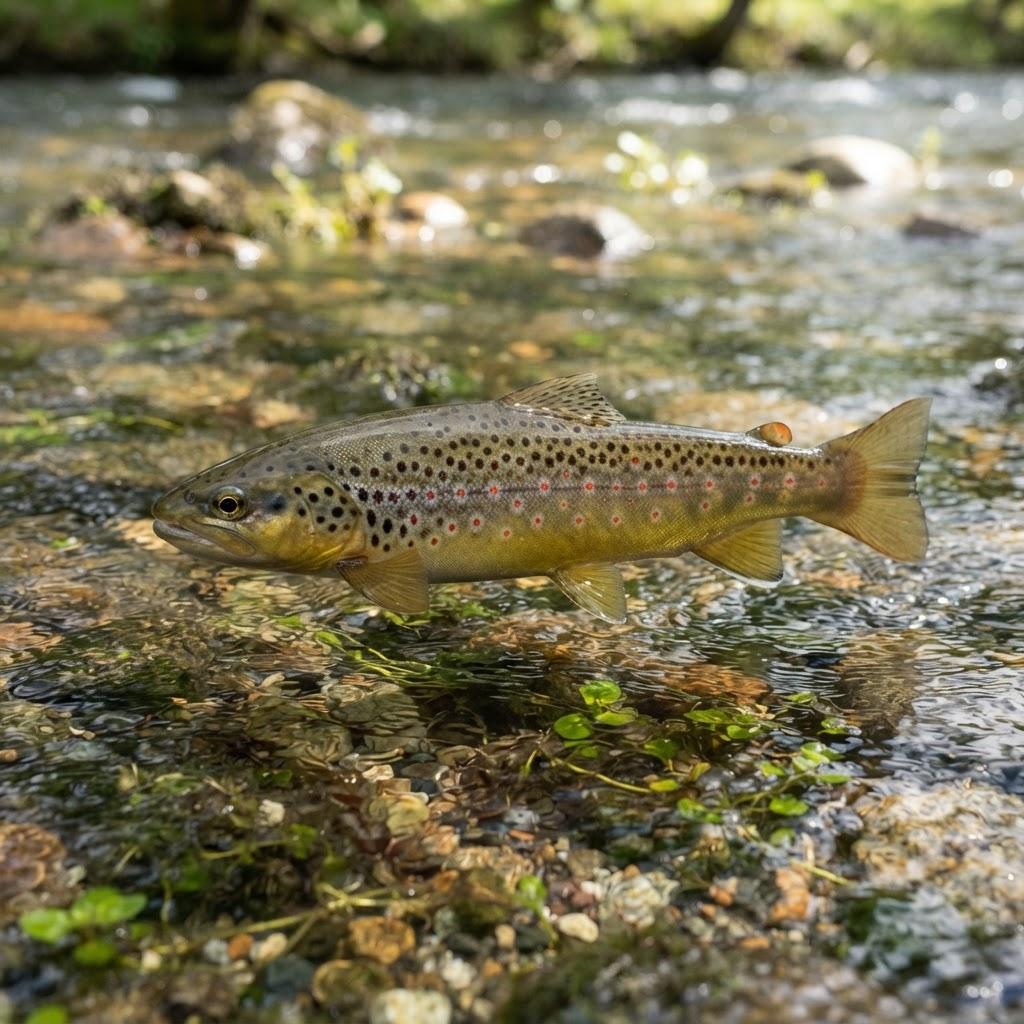
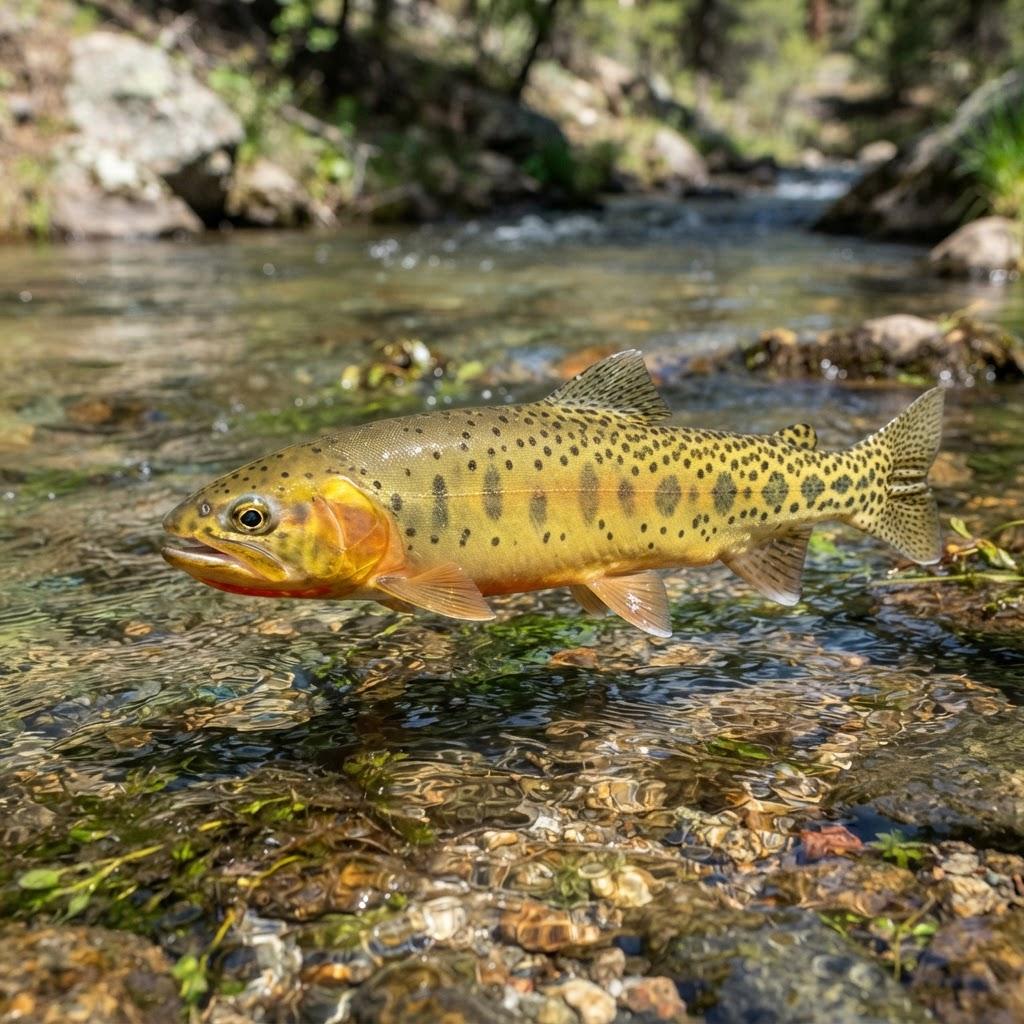
Imagine a fish that looks like it got dressed for a fancy gala, draped itself in liquid gold, and then decided to go hiking in the wilderness. The Apache Trout is the James Bond of the salmonid world—dashing, rugged, and possessing an air of exclusivity that makes it the most sought-after guest at any mountain stream party. Dressed in a coat of shimmering gold with dark, prominent spots that look like they were applied with a sophisticated calligraphy brush, this fish doesn't just swim; it patrols its territory with the confidence of a king. What makes the Apache Trout truly special is its unique look, featuring golden-yellow cheeks and a distinct jawline that screams 'I belong in the high country.' While most fish are content to hide in the shadows, the Apache Trout radiates a glow that suggests it might have been catching some sun even underwater. It is the official state fish of Arizona, and it wears that title like a bespoke tuxedo, proving that you can absolutely look like a million bucks while living in a cold, rushing mountain stream. If the world of fish had a high-fashion runway, this guy would be walking the catwalk every single morning.
Weird Biological Superpowers Explained Simply
While it might not have the electric zap of an eel or the glowing neon lights of a deep-sea creature, the Apache Trout possesses a biological superpower that is just as impressive: the ability to live on the absolute edge of survival in high-altitude conditions. Think of it like a professional mountain climber who never needs an oxygen tank. These trout have adapted their internal machinery to thrive in water that is often barely above freezing, where oxygen levels are thin and resources are scarce. Their secret weapon is a highly efficient cardiovascular system that treats cold water like a brisk morning jog. While you would be shivering in your boots, the Apache Trout’s blood is pumping through its gills with specialized hemoglobin that grabs oxygen molecules out of the icy water like a world-class receiver catching a Hail Mary pass. It is an evolutionary masterclass in 'staying cool' literally and figuratively. They also have an incredible lateral line system—a sensory organ running down their sides—that detects the tiniest vibrations in the water, allowing them to spot a snack or a predator from yards away. It is basically having a built-in radar system that never stops pinging.
Absurd Self-Defense Mechanisms
When you are a golden snack living in a crystal-clear stream, you learn pretty quickly that camouflage isn't just a suggestion; it is a lifestyle. The Apache Trout doesn't have spikes, slime, or electric shocks, so it relies on the classic, high-stakes game of 'Where did I go?' Its spots aren't just for show; they are nature's version of a pixelated camouflage pattern. When it holds perfectly still against the gravelly bottom of a creek, it essentially disappears into the background, making it impossible for a swooping osprey or a hungry bear to distinguish fish from rock. This is the ultimate hide-and-seek move. Furthermore, if things get really hairy, this fish uses the sheer speed of its burst swimming to turn into a golden blur. They are masters of the 'dart and vanish,' utilizing the swirling currents of their rocky homes to break up their silhouette. It is like being a ninja who uses the sunlight refracting off the water surface to blind anyone trying to track them. Who needs armor when you can literally disappear in plain sight by tricking the eyes of your enemies with the help of a few pebbles and some sunbeams?
Fish Drama and Gossip
If you peeked into the social life of an Apache Trout, you would realize that these golden beauties are the definition of high-stakes, small-town drama. These fish are strictly territorial, and they guard their patches of stream like homeowners-association presidents obsessed with lawn maintenance. If a rival trout dares to drift into the 'private' pool of a dominant male, the reaction is immediate and intense. We are talking about chest-pumping, fin-flaring, and side-swiping maneuvers that would put a reality TV argument to shame. They don't just swim away; they engage in intense stand-offs, showing off their brightest colors to intimidate the intruder into retreating back to his own section of the creek. It is a constant cycle of ego, real estate acquisition, and posturing. Everyone knows who the local alpha is, and everyone is trying to make sure their specific chunk of the stream has the best flow, the coolest temperatures, and the highest concentration of tasty aquatic bugs. It is basically the underwater equivalent of neighbors arguing over who gets to use the good part of the beach.
The "Wait, That's Real?!" Deep-Sea Oddities
While our golden friend prefers the sunny, bubbly world of mountain streams, it is worth looking at its weird cousins who dwell in the absolute darkness of the ocean to understand why the Apache Trout is actually quite 'normal' by comparison. In the deep sea, you have creatures like the Barreleye fish, which has a transparent head that lets you look straight through to its brain and upward-facing green eyes. Contrast that with the Apache Trout, which looks like a normal, handsome fish. The deep-sea crowd uses bioluminescence to light up the dark like a disco ball, essentially talking to potential mates through neon Morse code. The Apache Trout, meanwhile, keeps it simple, relying on the classic, tried-and-true method of having actual eyeballs that look forward and a body that reflects the natural light of the sun. While deep-sea fish look like they were designed by an artist on a fever dream, the Apache Trout is the polished, sensible version of nature's design. It serves as a reminder that not every creature needs to be an alien-looking nightmare to be incredibly cool; sometimes, the best look is the one that fits perfectly into a sparkling, oxygen-rich mountain home.
Myth Busting
Let’s squash some rumors that have been floating around the riverbanks for decades. One of the biggest myths about trout is that they are 'dumb' and only care about eating. Science has proven that trout are actually quite smart, with excellent memories for locations and potential threats. They don't just swim around randomly; they map their streams in their heads like a GPS navigation system. Another common misconception is that trout will bite at anything shiny or colorful without thinking. While they do have predatory instincts, they are actually incredibly picky eaters, often ignoring perfectly good bait because it doesn't match the specific hatch of insects they are looking for that day. It is like a food critic refusing a meal because the seasoning is off by a fraction. They are also widely misunderstood as being 'weak' because they are endangered, but the truth is they are absolute tanks when it comes to physical endurance. They navigate rushing, freezing torrents that would exhaust an Olympic swimmer in seconds. These fish are neither dim-witted nor fragile; they are tactical, precise, and physically demanding athletes.
Humorous Historical Tales or Folklore
The history of the Apache Trout is a bit of a tragic comedy that transformed into a success story. For years, these fish were the undisputed rulers of the White Mountains, existing long before anyone came around with a fishing rod. Folklore from indigenous cultures in the region often speaks of the waters being guarded by spirits, and there is an ancient reverence for the 'golden fish' that defined the essence of the high-altitude life. Fast forward to the 20th century, and humans basically did everything wrong—bringing in non-native species, damming streams, and polluting the water. There is a somewhat dark, ironical history where people realized the Apache Trout was on the verge of vanishing and scrambled to protect it, essentially trying to save the treasure after they had already set the vault on fire. The irony is that the same people who overfished these streams for fun later became the very ones spending thousands of hours and millions of dollars trying to bring them back. It is the classic human 'oops, we broke it, let’s glue it back together' narrative, but in this case, the glue actually held, and the fish made a legendary comeback.
Underwater Love Stories and Bizarre Romances
When it comes time to find a partner, the Apache Trout turns the stream into the most romantic—and competitive—location on the planet. The mating dance isn't exactly a ballroom waltz; it is more of a high-energy, synchronized swimming competition. The males develop even brighter, more intense colors, basically trying to outshine their competition to prove they have the best genes. They perform a 'vibration display,' swimming alongside the female and shimmying their bodies to show off their strength and health. It is the underwater version of showing off the luxury car in the driveway to get a second date. If the female is impressed, she will lead the way to a pre-chosen spot, and the two will get down to the business of spawning. It is a dramatic, high-stakes moment where every wiggle and fin-flick matters. There is no swiping left or right here—it is all about who has the best stamina and the most radiant, healthy glow. It is essentially a high-pressure, underwater speed-dating event where only the most capable swimmers walk away with a successful match.
Underwater Architecture and DIY Nesting
If you thought humans were the only ones who cared about good interior design for their future offspring, think again. The female Apache Trout is a literal construction worker, spending hours using her tail to clear a space in the stream gravel. She creates what is known as a 'redd,' which is essentially a perfectly circular, clean gravel nest that acts as a fortress for her future babies. She isn't just dumping eggs anywhere; she carefully shifts rocks to ensure that the water flow is just right, moving stones with her powerful body until the nest is perfectly aerated. She creates a flow-through system that keeps the eggs supplied with clean, oxygenated water while protecting them from being swept away by the current. It is an engineering marvel that she manages entirely on her own, without blueprints or a contractor. She makes sure the gravel is just the right size so the eggs can nestle into the gaps, protected from the worst of the stream's turbulence. She is essentially building a nursery that would make an interior designer weep with envy.
The Chaos of Raising Tiny Swimmers
Raising a family is hard enough on land, but try doing it in a rushing mountain stream where everything is a potential predator. Once the eggs are safely tucked into their gravel fortress, the real chaos begins. The female guards the nest with the ferocity of a dragon protecting a gold pile, chasing away any fish that gets too close. Once the tiny fry hatch, they are essentially the size of a sewing needle and have absolutely no concept of danger. They are essentially 'living snacks' for every other fish in the creek. The parenting strategy is simple: hope for the best and hide in the cracks. The fry must learn to navigate the water currents immediately, or they become lunch for a dragonfly larva or a larger trout. It is a world of pure survival, and the amount of energy they expend just staying in one place is massive. Watching them hatch is like watching a confetti cannon go off in a windstorm; they are tiny, frantic, and trying their hardest to find a nook in the rocks before the current whisks them away to doom.
How to Spot One & How It Is Doing
Spotting an Apache Trout in the wild is like finding a golden nugget in a pile of gray stones. You want to look for the cold, clear headwaters of the White Mountains, specifically in areas where the water is moving quickly over gravel. Look for that signature golden-yellow body and the deep black spots that are concentrated towards the back half of the fish. If you see a fish that looks like it is wearing a highlighter-yellow suit, you have found the right one! As for how they are doing, they are currently listed as Vulnerable. While they aren't extinct, they are still living on a tightrope, thanks to climate change and habitat loss. But don't despair! There are huge conservation efforts to restore their streams, remove invasive species, and keep the water clean. You can help by supporting local wildlife organizations, practicing 'leave no trace' principles when you visit their mountain homes, and spreading the word about why these golden wonders are worth saving. Every little bit of awareness helps ensure these high-country legends stay in their rightful home, shimmering in the sun for generations to come.