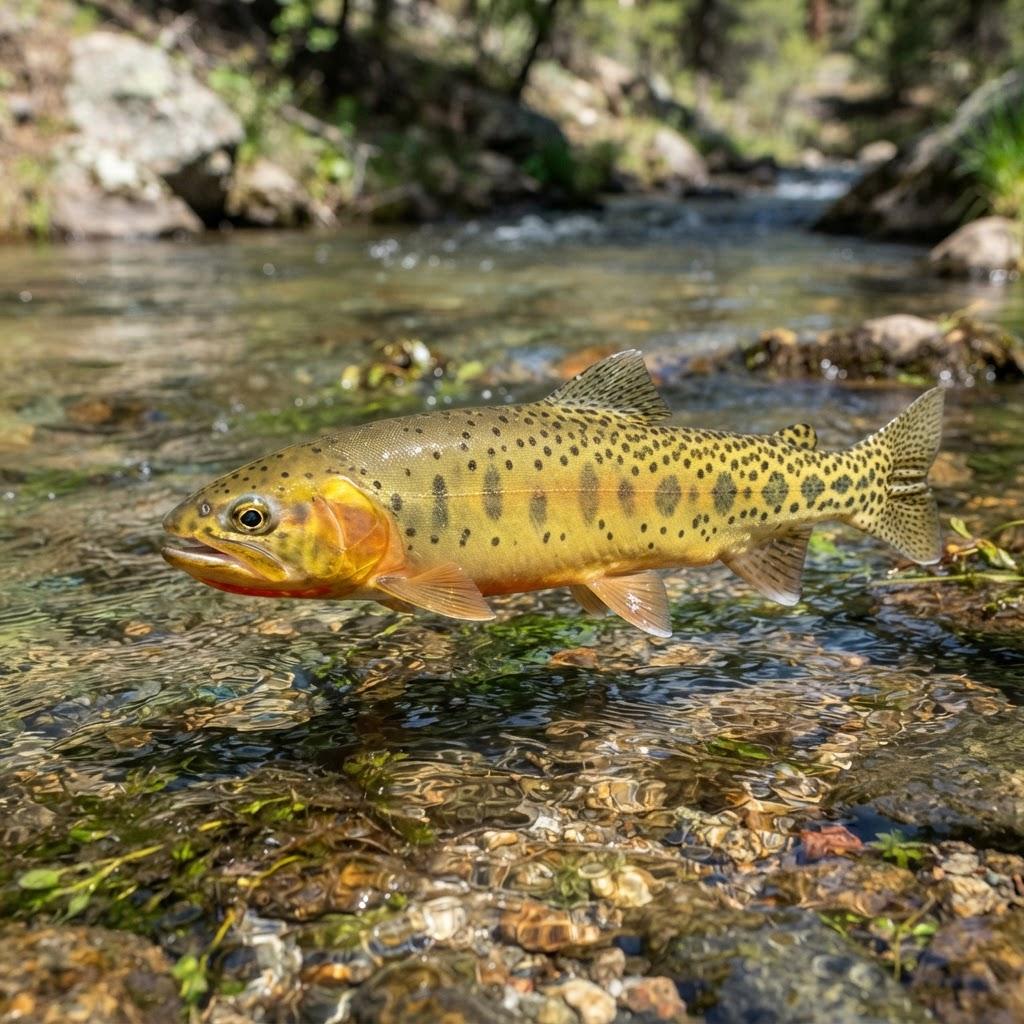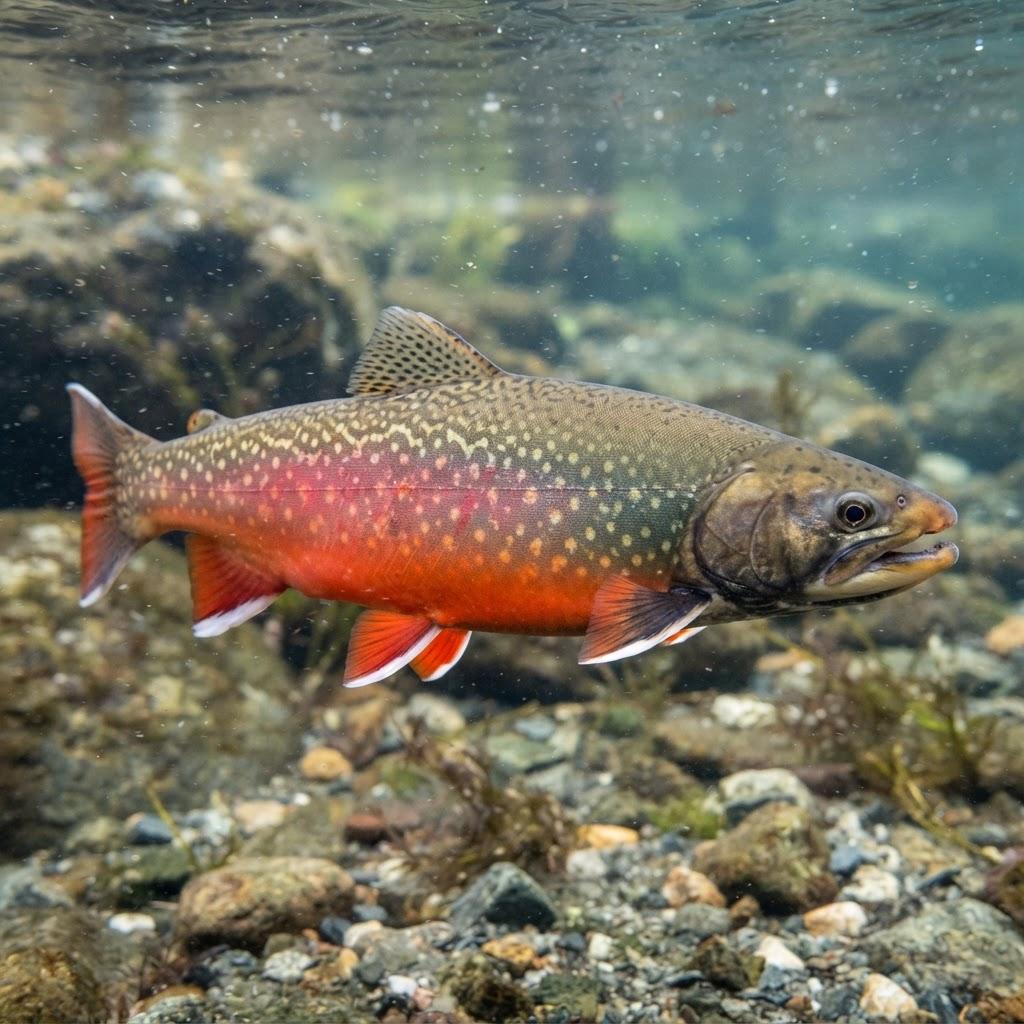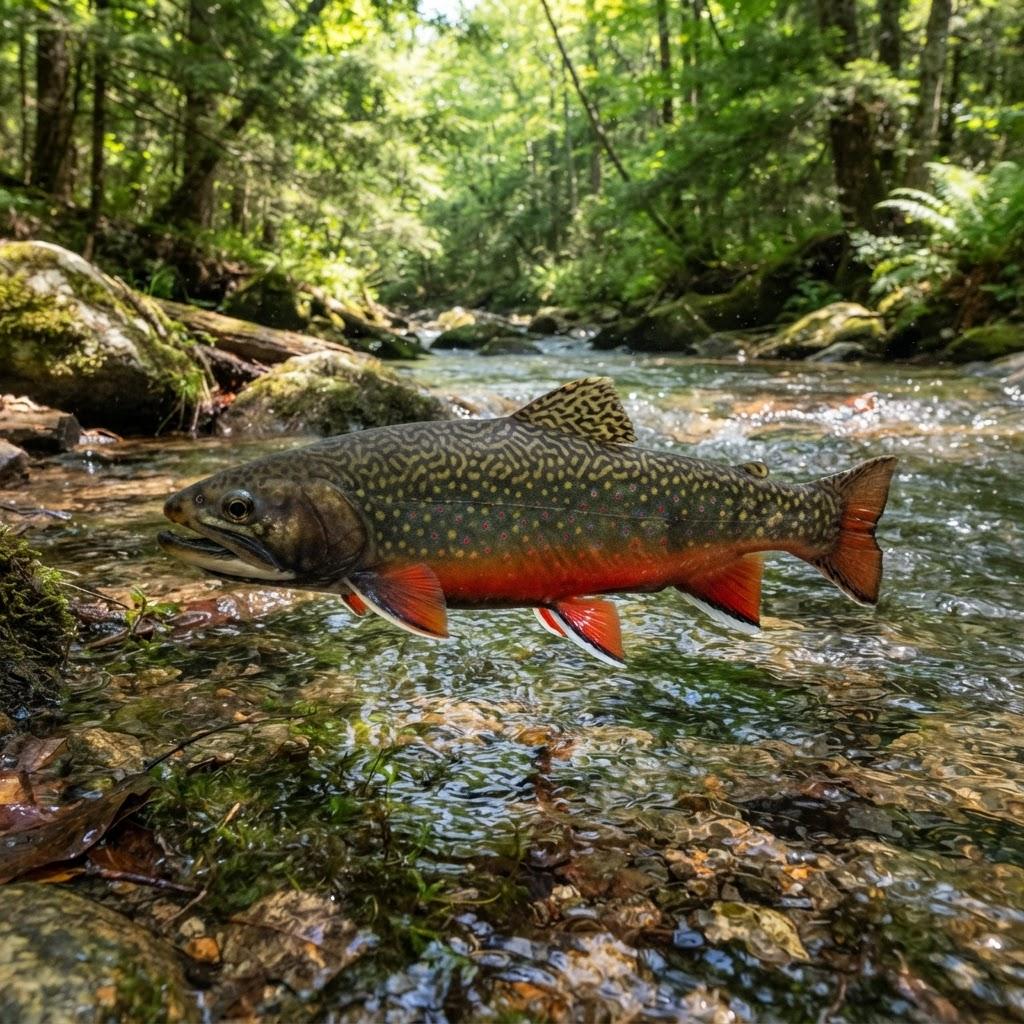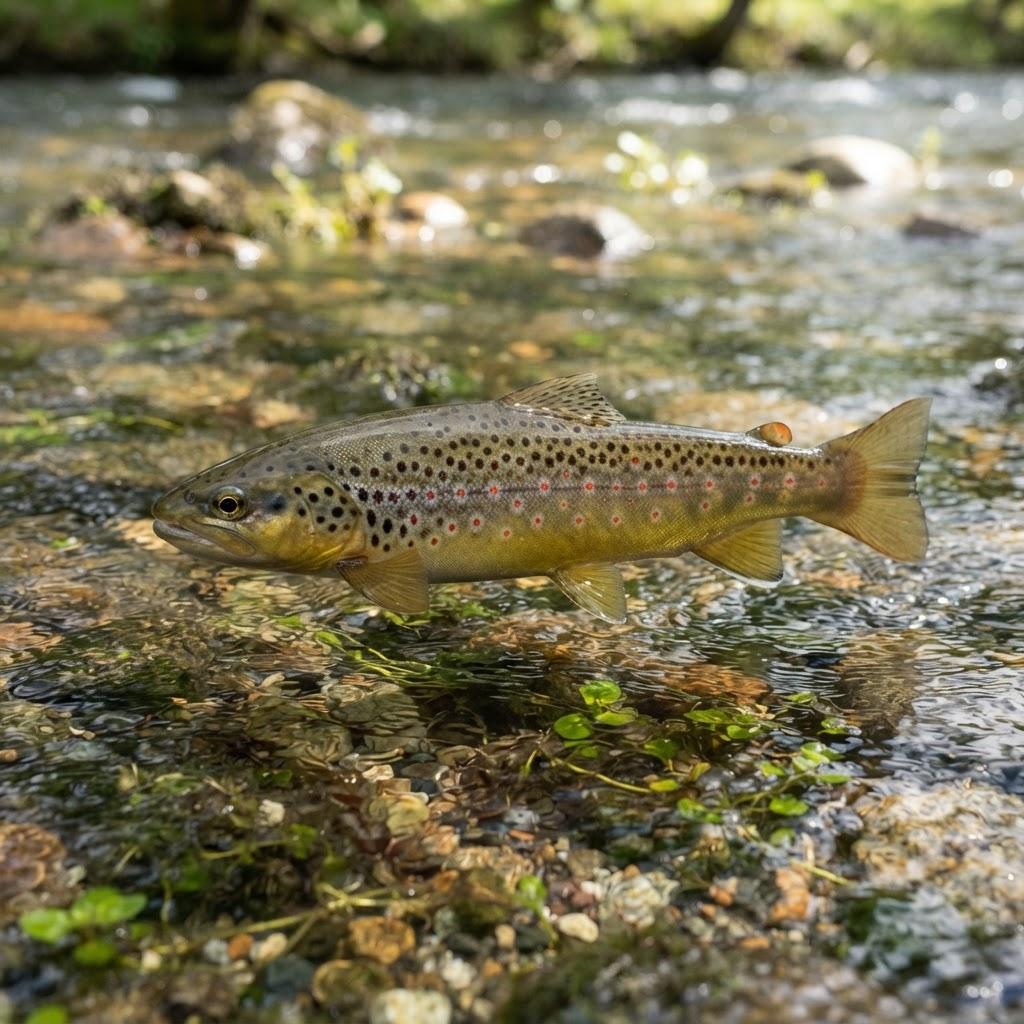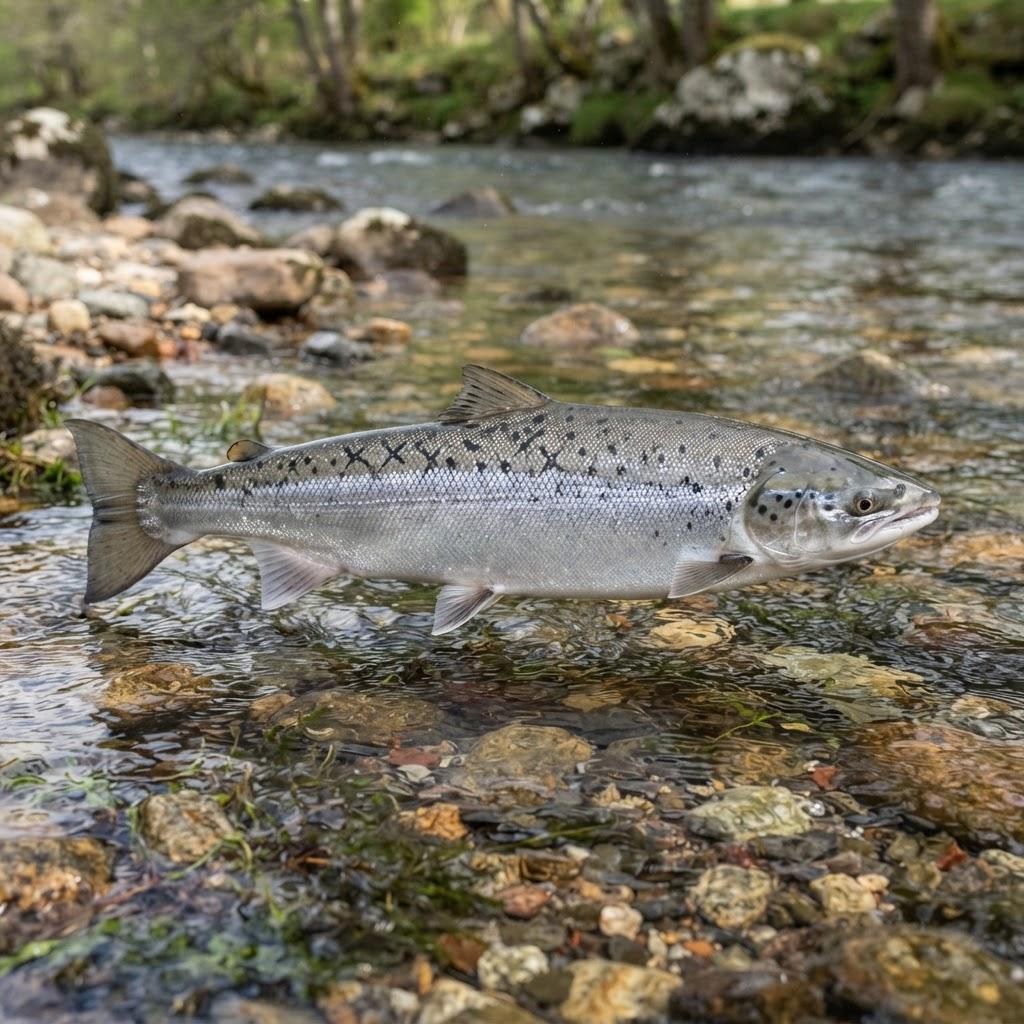
Salmo salar
Atlantic Salmon
Meet the Atlantic Salmon, the ocean's ultimate extreme athlete with an identity crisis. This silver-scaled legend spends its life oscillating between freshwater streams and the high seas like a globetrotting rockstar with a very specific travel itinerary.
Meet the Fish
Imagine you are an Olympian who runs a marathon every single day while simultaneously changing your internal plumbing to survive in different types of water. That is essentially the life of Salmo salar, the Atlantic Salmon. This fish is the ultimate road-tripper of the natural world, possessing a sleek, silver-armored physique that looks like it was designed by a luxury car company specifically for high-speed chases. When it is out in the vast, salty expanse of the ocean, it is a shiny, muscular torpedo, but when it returns home to spawn, it undergoes a metamorphosis that would make a goth teenager jealous. They develop bright, blotchy colors and the males grow a 'kype,' a hook on the lower jaw that gives them a permanent, slightly grumpy underbite. They are not just fish; they are long-distance travelers with a GPS better than your smartphone. They do not just swim; they defy gravity, leaping over waterfalls with the grace of a professional gymnast trying to clear a hurdle while wearing a tuxedo.
Weird Biological Superpowers Explained Simply
The most mind-bending trick in the Atlantic Salmon's arsenal is something called osmoregulation, which is essentially the ability to survive in both salt water and fresh water. Imagine if you could walk into a swimming pool filled with brine, take a sip, and then instantly adjust your body chemistry so your cells did not shrivel up like raisins. For humans, that is impossible, but for a salmon, it is just Tuesday. They possess specialized cells in their gills that can pump salt out when they are in the ocean and pull it back in when they hit the river. On top of this, they are magnetic compass users. Using tiny crystals of magnetite in their snouts, they detect the Earth's magnetic field to navigate across thousands of miles of featureless ocean. It is essentially an organic version of a high-tech navigation system, allowing them to pinpoint the exact river mouth where they were born years prior. It is science fiction brought to life through pure, instinctual engineering.
Absurd Self-Defense Mechanisms
When you are a tasty, high-protein snack for literally everything in the ocean—including seals, sharks, and hungry humans—you need a strategy. The Atlantic Salmon’s primary defense is the art of 'being invisible.' Their countershading is a masterclass in camouflage. If you look at them from above, their dark, bluish-green backs blend into the murky depths of the water. If you look at them from below, their bright, silvery undersides disappear against the light coming from the surface. It is like wearing a cloak that only works if the predator is looking from the wrong angle. When they are not relying on their ninja-like stealth, they rely on raw, unadulterated speed. They are built like drag racers. If a predator gets too close, a quick flick of their powerful, fan-shaped tail sends them bolting into the current, leaving slower, less-motivated fish to become the lunch special. It is a simple strategy, but when you can move that fast, you do not need spikes or slime.
Fish Drama and Gossip
If the Atlantic Salmon’s life were a reality TV show, it would be titled 'River Runway: The Ultimate Homecoming.' Once they hit the freshwater spawning grounds, the chill vibes of the open ocean evaporate instantly. The males become absolute drama magnets. It is a constant battle of ego and stamina, where the guys grow ridiculous snouts and fight over prime real estate. They nip, they chase, and they spend half their energy performing aggressive displays to prove they are the biggest, toughest fish in the gravel bed. The females are just trying to get their business done, but they are constantly followed by a parade of suitors who are essentially the underwater version of guys showing off their muscle cars at a stoplight. There is posturing, there is head-butting, and there is a lot of frantic swimming. It is petty, it is loud, and it is entirely focused on ensuring their specific genetic legacy is the one that makes it to next season’s casting call.
The "Wait, That's Real?!" Deep-Sea Oddities
While the Atlantic Salmon sticks closer to the surface than its truly deep-sea cousins, it shares the water with creatures that would look right at home on an alien planet. Deep-sea fish often deal with the 'midnight zone,' a place where sunlight is a forgotten memory and the pressure is high enough to crush a submarine. While our friend the salmon is out in the open, the deep-sea denizens are busy glowing in the dark. Some use bioluminescence, which is basically the ability to generate a neon light show from your own body, to lure in unsuspecting snacks or find a date in the dark. Compared to the salmon's sleek, efficient body, deep-sea fish look like they were drawn by a child with a wild imagination—some have transparent skulls, some have teeth the size of their heads, and others are essentially bags of jelly. It puts the salmon's relatively normal, streamlined appearance into perspective: the salmon is the sensible commuter car, while its deep-sea relatives are the bizarre concept vehicles that never made it to production.
Myth Busting
Let’s clear the air: the idea that salmon 'must die' immediately after spawning is a classic misconception that usually applies to their Pacific cousins, but not our Atlantic stars. Many people believe that every Atlantic Salmon makes one trip up the river, pops out eggs, and dies on the spot. While it is true that the journey is incredibly taxing and many perish due to pure exhaustion, Atlantic Salmon are 'iteroparous,' which is a fancy way of saying they can actually survive the ordeal, head back to the ocean, recover, and return to spawn again. They are repeat offenders of the migration game. Another myth is that they are mindless creatures. Studies have shown that salmon have distinct personalities and can learn to navigate complex obstacles through trial and error. They are not just swimming blips on a radar; they are calculating, learning animals that remember their home streams with a level of detail that would put your own sense of direction to shame.
Humorous Historical Tales or Folklore
Throughout human history, the Atlantic Salmon has been worshipped, hunted, and turned into the stuff of legends. In Celtic mythology, the Salmon of Knowledge is a recurring superstar. The legend goes that this magical fish ate hazelnuts that fell into the Well of Wisdom, absorbing all the knowledge of the world. Anyone who ate the fish would become the smartest person alive. It is a fantastic excuse for having a hearty dinner, really. Historically, these fish were so abundant in places like Scotland and New England that they were considered the 'working man's food.' Servants supposedly had clauses in their contracts that limited the number of times per week they had to eat salmon, because it was just too common! Imagine being so tired of eating high-quality, omega-3-rich fillets that you literally demanded it be taken off the menu. It is a far cry from today's expensive grocery store prices, but it proves that even the most legendary creatures can suffer from a bad public relations image if they show up on the table too often.
Underwater Love Stories and Bizarre Romances
Romance for the Atlantic Salmon is not about bouquets of flowers; it is about grit, sweat, and a whole lot of splashing. When a female decides she is ready, she starts scouting for the perfect gravel 'nursery' in the riverbed. The male stays close, acting as her bodyguard and keeping rivals at bay. There is no elaborate song-and-dance routine here. Instead, it is a display of strength. The male vibrates his body near the female, a high-frequency display that basically shouts, 'I have the strongest genes in the river!' Once the female releases her eggs into the gravel nest, the male immediately releases his milt, which is the fishy equivalent of a sperm cloud. It is a chaotic, messy, and incredibly intense synchronized event. There is no cuddling, no long walks on the beach—just a high-stakes, underwater chemistry experiment that determines the fate of the next generation.
Underwater Architecture and DIY Nesting
Forget the elaborate palaces of the reef fish; the Atlantic Salmon is a minimalist architect. The female, who is the real contractor of the operation, uses her tail to dig a depression in the riverbed gravel, known as a 'redd.' She turns on her side and beats her tail against the rocks, creating a pit by moving the substrate. It is hard manual labor, and she does it repeatedly, moving tons of gravel to make sure her eggs are nestled safely beneath the surface. This is not just a hole in the ground; it is an engineered protective vault. Once she is satisfied, she settles the eggs in and covers them up with more gravel to protect them from hungry trout and the force of the river’s current. It is simple, effective, and perfectly suited to the environment. It does not look like a sandcastle, but it is an architectural masterpiece of survival that keeps the next generation hidden from predators until they are ready to hatch.
The Chaos of Raising Tiny Swimmers
The moment those tiny, oversized-eyed fry hatch from their eggs, they are essentially the most vulnerable beings on the planet. They start out with a yolk sac attached to their bellies, which acts like a built-in lunchbox for their first few weeks of life. They hide in the gaps between the rocks of the redd, looking like tiny, helpless specks of dust. Parenting is not exactly a hands-on job; once the female finishes burying the eggs, her duty is done. She does not read them bedtime stories or teach them how to swim; she just leaves, and the babies are on their own. They have to figure out how to hunt tiny insects, avoid being eaten by literally everything in the stream, and grow big enough to survive their first trip to the ocean. It is a survival-of-the-fittest academy where the graduation exam is a swim across the entire North Atlantic. It is hilarious, tragic, and incredibly impressive that any of them survive to do it all over again.
How to Spot One & How It Is Doing
If you want to catch a glimpse of this silver titan, you need to head to cold, clean rivers in the northern hemisphere or keep a sharp eye out near the coast. They are easiest to spot during their migration season when they are fighting their way upstream. Look for the splash of a jump, a flash of silver against the dark water, or a silhouette darting through the shallows. Currently, their status is a bit of a mixed bag; while they are not critically endangered globally, many specific populations are struggling due to pollution, dams blocking their path, and warming water temperatures. The good news is that we know what they need: clean rivers, fish ladders that allow them to bypass dams, and protected spawning zones. You can help by supporting local river conservation groups or simply being mindful of water usage and pollution. These fish are fighters, but they need a fair playing field to keep their epic journey going for generations to come.