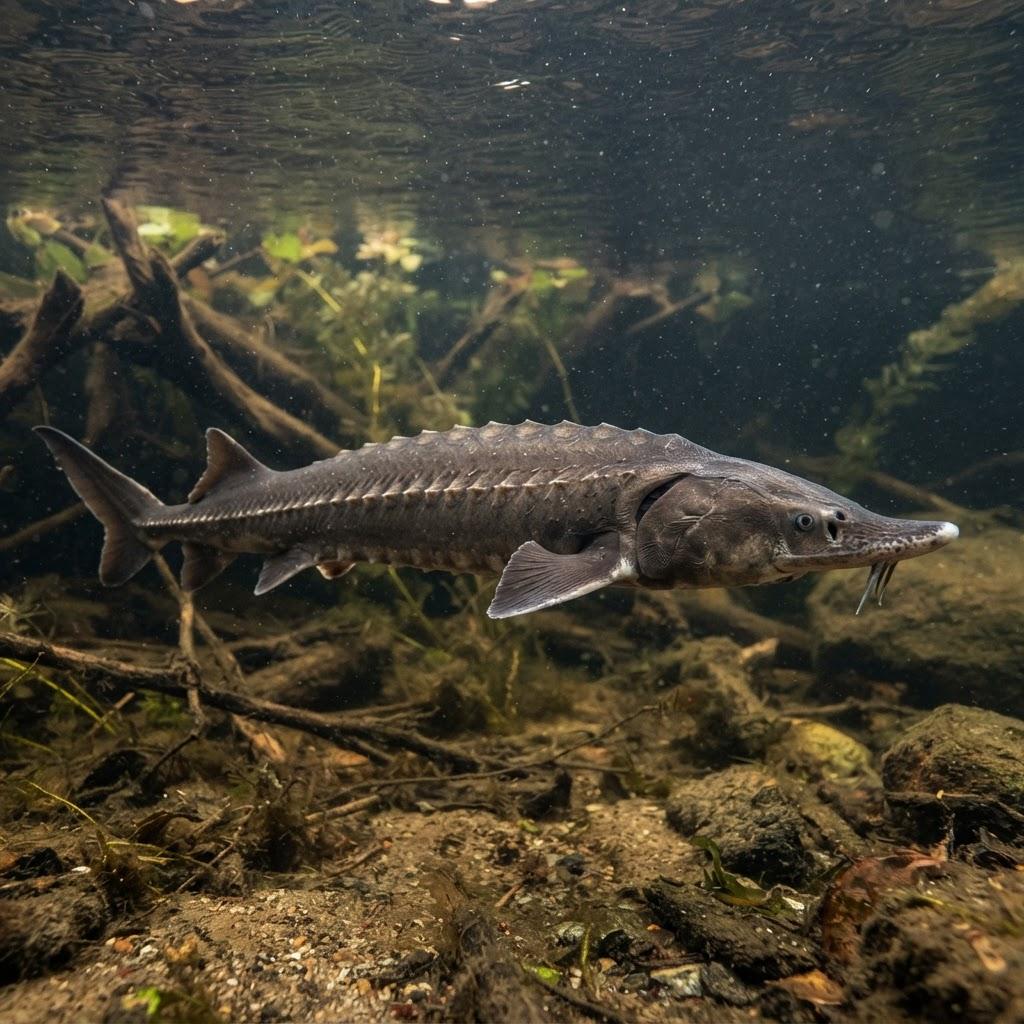
Acipenser oxyrinchus
Atlantic Sturgeon
Meet the Atlantic Sturgeon, a living dinosaur that looks like it stepped out of a prehistoric creature feature. With armor-plated skin and a nose that detects dinner like a high-tech metal detector, this gentle giant is the ultimate survivor of the aquatic world.
Meet the Fish
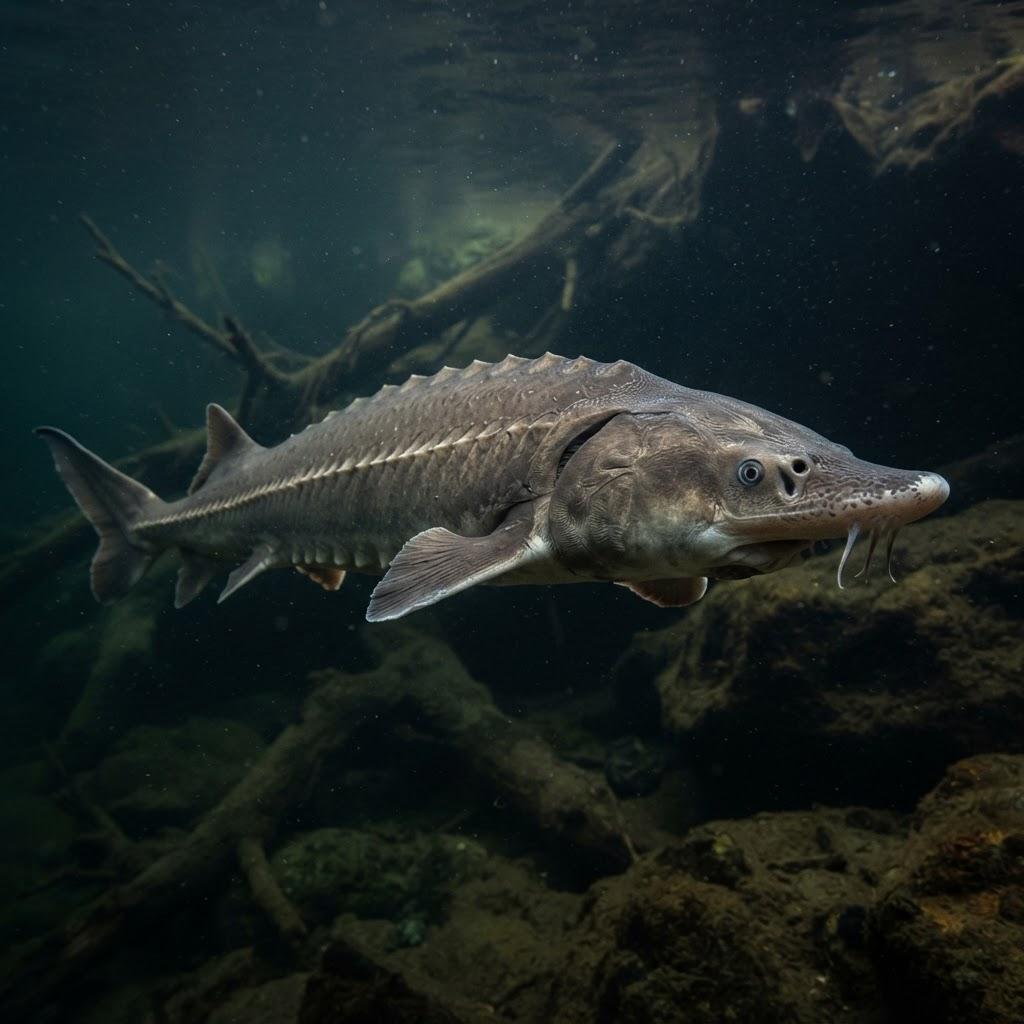
Imagine you are at a fancy cocktail party, and in walks someone wearing full medieval plate armor, a long, pointed nose that looks like it belongs on a vintage fighter plane, and an attitude that says, I have been here since the Jurassic period, so excuse me if I am not impressed by your modern gadgets. That is the Atlantic Sturgeon. This fish is essentially the Goth rockstar of the underwater world, sporting bony plates called scutes instead of normal, wimpy scales, which makes them look like they are ready for a deep-sea jousting tournament. While most fish are busy worrying about the latest trends, the sturgeon is busy being a living fossil. They have been doing their thing for millions of years, largely unchanged, which honestly makes them the most stylish creatures in the river. They are large, they are imposing, and they have an air of ancient mystery that makes everyone else look like a trendy flash in the pan. You don't just see a sturgeon; you acknowledge it as a local celebrity who has seen empires rise and fall while just minding its own business at the bottom of the murky riverbed.
Weird Biological Superpowers Explained Simply
If you ever wondered what it would be like to have a super-powered metal detector strapped to your face, ask the Atlantic Sturgeon. These guys possess a biological superpower known as electroreception. Imagine having a face covered in tiny, ultra-sensitive sensors—these are called ampullae of Lorenzini—that can detect the microscopic electric fields generated by the tiny movements of shrimp and worms hiding in the sand. It is like having a pair of heat-vision goggles that specifically hunt for lunch. They don't need to see their food because their nose is doing all the heavy lifting. They literally hover over the sandy bottom, nose-scanning the sediment like a security guard checking for contraband, and as soon as they pick up that faint electric buzz of a snack, they slurp it up with a specialized, tube-like mouth that acts like a vacuum cleaner. It is essentially a high-tech kitchen appliance attached to a prehistoric body, allowing them to thrive in dark, silty water where eyes would be as useless as a screen door on a submarine.
Absurd Self-Defense Mechanisms
When you are a giant, armored tank of a fish, you don't really worry about being picked on by the local school bully. The Atlantic Sturgeon’s primary defense system is basically wearing a suit of jagged, bony armor. Those scutes I mentioned earlier are not just for show; they are incredibly tough, sharp, and meant to make a predator think twice before taking a bite. Imagine trying to eat a pineapple that is also a knight in shining armor. That is the experience a shark would have if it tried to snack on a fully-grown sturgeon. They also have the benefit of being enormous—when you grow to the size of a small sedan, you automatically stop being on the lunch menu for most things in the river. If they feel threatened, they can also use their powerful, muscular tails to kick up a massive cloud of silt, essentially deploying a smoke screen before darting away into the murk. It is like a ninja disappearing in a puff of smoke, but with more mud and a significantly more impressive tail slap.
Fish Drama and Gossip
The social life of an Atlantic Sturgeon is less of a high school soap opera and more like an annual, highly anticipated music festival that happens once every few years. They are notoriously nomadic, wandering the Atlantic coastline and popping into rivers like a celebrity making a surprise appearance at a gala. When they finally gather in their home rivers to spawn, it is a scene of pure, unadulterated drama. You have these massive, prehistoric beasts jostling for space, leaping completely out of the water in giant, dramatic splashes that can be heard from the riverbank. Why do they jump? Scientists aren't entirely sure, but it certainly feels like a 'look at me' competition. It is the aquatic equivalent of an ego-filled display of strength to show the competition who the biggest, baddest sturgeon in the stream is. They are solitary for most of their lives, so when they get together, it is a high-stakes, once-in-a-while event where tempers can flare and the water basically boils with excitement.
The "Wait, That's Real?!" Deep-Sea Oddities
While the Atlantic Sturgeon prefers the river life and coastal shallows rather than the crushing, pitch-black pressures of the abyss, they are the distant, armored cousins of some truly bizarre deep-sea creatures. If you think the sturgeon looks like a freak of nature, imagine what it would be like to hang out with a barreleye fish, which has a transparent head that lets you see its actual brain and glowing green eyes that look upward like they are searching for flying saucers. The sturgeon is the sturdy, reliable cousin who stayed on land, while the deep-sea species went off to become alien-looking bioluminescent light shows. The abyss is a place where fish have evolved to look like monsters from a horror movie just to survive the pressure, whereas the sturgeon kept the classic, sturdy armor. Being a sturgeon is about having the strength to deal with changing currents, while deep-sea fish have to deal with the fact that they live in a place where the sun literally never shines.
Myth Busting
There is a long-standing myth that sturgeon are lazy, sluggish creatures that just drift around the bottom of the river like discarded rugs. This couldn't be further from the truth. While they don't sprint like a tuna, these fish are incredible athletes capable of long-distance migration. They travel thousands of miles up and down the coast, crossing state lines and borders with the confidence of a seasoned long-haul trucker. Another myth is that they are dangerous to humans because of their size and those sharp scutes. In reality, they are about as aggressive as a golden retriever, provided the retriever weighed as much as a piano. They have no teeth, they don't want to fight you, and their primary goal in life is finding worms in the mud. They are the gentle giants of the estuary, not the monsters the old seafaring tales tried to make them out to be. Their reputation as scary river monsters is purely a product of them being large, ancient, and misunderstood by people who don't spend enough time looking at river bottoms.
Humorous Historical Tales or Folklore
Historically, the Atlantic Sturgeon was so common and so massive that people didn't know what to do with them. In the old days, they were so abundant in places like the Hudson River that they were basically treated as a nuisance that would occasionally smash into small boats like a living torpedo. There is a story from the 1800s about a fisherman who was knocked right out of his boat by a jumping sturgeon. Imagine explaining to your insurance agent that you were defeated in battle by a fish that had been around since the time of the T-Rex. They were also once called 'Albany beef' because they were so cheap and plentiful that they were a staple food for people living in the capital region of New York. It is wild to think that this majestic, armored dinosaur was once the equivalent of a budget-friendly lunch special. Nowadays, they are treated like the royalty they are, but their historical journey from 'river nuisance' to 'protected treasure' is a roller coaster of human mismanagement and newfound respect.
Underwater Love Stories and Bizarre Romances
Romance in the world of the Atlantic Sturgeon is a slow burn that takes decades to ignite. These fish are not looking for a quick fling; they wait until they are practically middle-aged—sometimes fifteen or twenty years old—before they even think about settling down and starting a family. When the mood finally strikes, they make an epic pilgrimage back to the freshwater rivers where they were born, using their internal magnetic compasses to navigate the vast ocean like expert sailors. It is the ultimate long-distance relationship. Once they arrive at the spawning grounds, the dance begins. It is not exactly a romantic candlelit dinner; it is a chaotic, frenzied group event where males and females release their eggs and sperm into the water column simultaneously. It is basically a giant, underwater rave where the survival of the species is the only goal. It’s dramatic, it’s messy, and it only happens after they have spent years wandering the high seas, waiting for that one perfect, hormonal moment.
Underwater Architecture and DIY Nesting
Sturgeon aren't the type to build elaborate castles or dig intricate tunnels like some of their smaller, more creative fishy neighbors. They are more the 'go with the flow' type when it comes to interior design. They don't need a nursery with wallpaper and a crib; they rely on the environment to do the heavy lifting. They specifically search for rocky or gravelly patches in the riverbed where the current is fast enough to keep the water clean and oxygen-rich but slow enough that their eggs won't get washed away. They are essentially looking for the perfect real estate where the water flow acts as a natural air conditioning system for their future fry. The 'nest' is really just the right patch of gravel. They don't guard it, they don't decorate it, and they don't offer real estate tours; they simply choose the best rocky neighborhood they can find, hope for the best, and move on with their lives, leaving the eggs to hatch in the current.
The Chaos of Raising Tiny Swimmers
Parenting is not a strong suit for the Atlantic Sturgeon. Once the eggs are laid and fertilized, the parents pretty much head out for lunch and never look back. It is a 'good luck with that' kind of parenting style. The tiny, newly hatched sturgeon—called fry—are on their own from the moment they emerge. They are small, vulnerable, and look absolutely nothing like their giant, armored parents. They go through a fragile stage where they drift with the current, trying not to get eaten by every other creature in the river. It is a numbers game; by laying thousands of eggs, the adults hope that at least a few of the little ones survive the gauntlet of predators. The ones that do make it through this chaotic, dangerous youth start to develop their bony armor, eventually turning into the tanks we know and love. It is a high-stakes, Darwinian game of survival where the only thing that matters is avoiding the predators until you are finally big enough to become the predator.
How to Spot One & How It Is Doing
If you want to catch a glimpse of this prehistoric celebrity, you need patience and a good pair of polarized sunglasses. Look for them leaping—yes, the 'sturgeon jump' is real, and it is the best way to spot one near the surface. They tend to hang out in deep, slow-moving sections of large rivers during the spring and summer. If you see a massive fish breach the surface and land with a sound like a wet mattress hitting a swimming pool, you have found your target. As for how they are doing, things have been better, but there is hope. They were once overfished for their roe—the fancy eggs people eat—and habitat loss, like dams, made it hard for them to get to their spawning grounds. However, people are working hard to remove those obstacles and protect their river homes. You can help by supporting clean water initiatives and being a steward for your local river. They have survived millions of years, so let's make sure we aren't the ones to drop the ball on this living dinosaur.