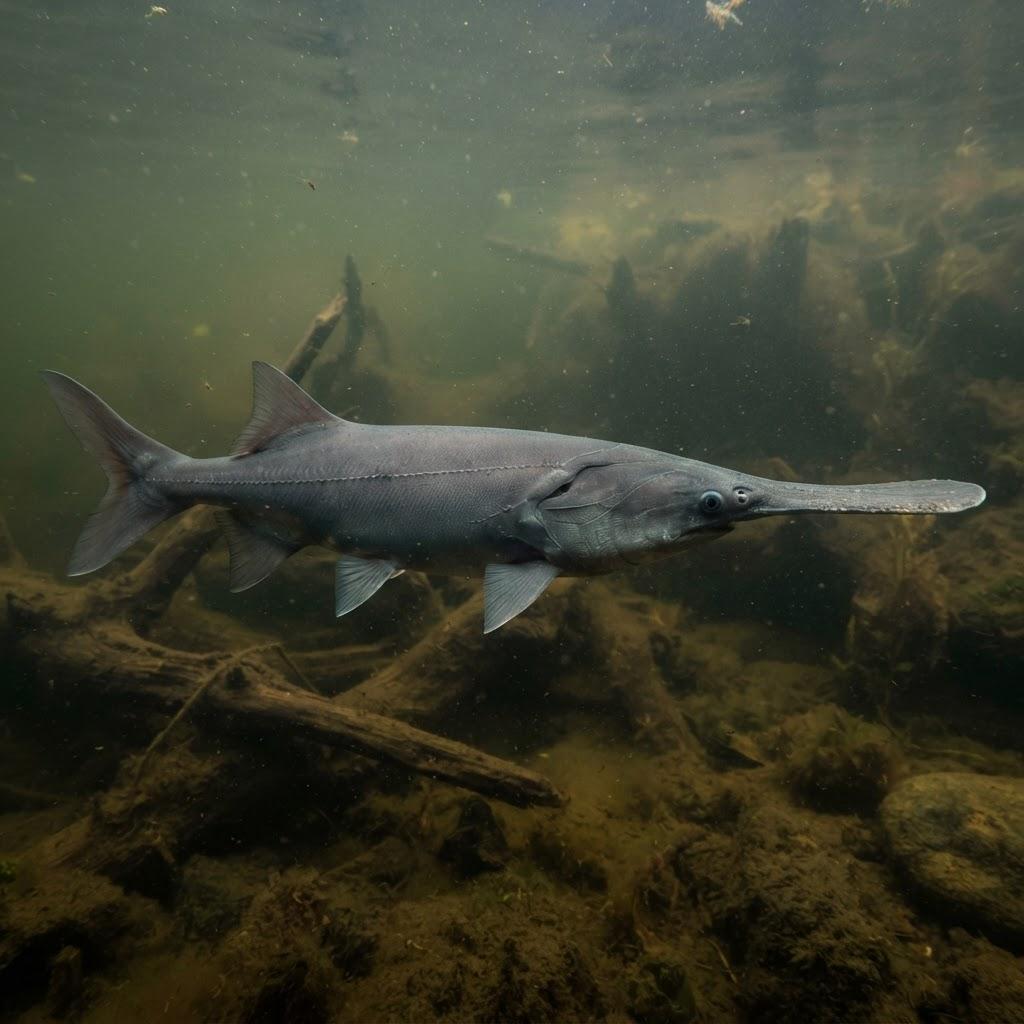
Polyodon spathula
American Paddlefish
Meet the American Paddlefish, a prehistoric oddball that looks like it swam straight out of a steampunk sci-fi movie. With its iconic, oversized snoot and filter-feeding skills, this gentle giant is the ultimate river celebrity you have likely never met.
Meet the Fish
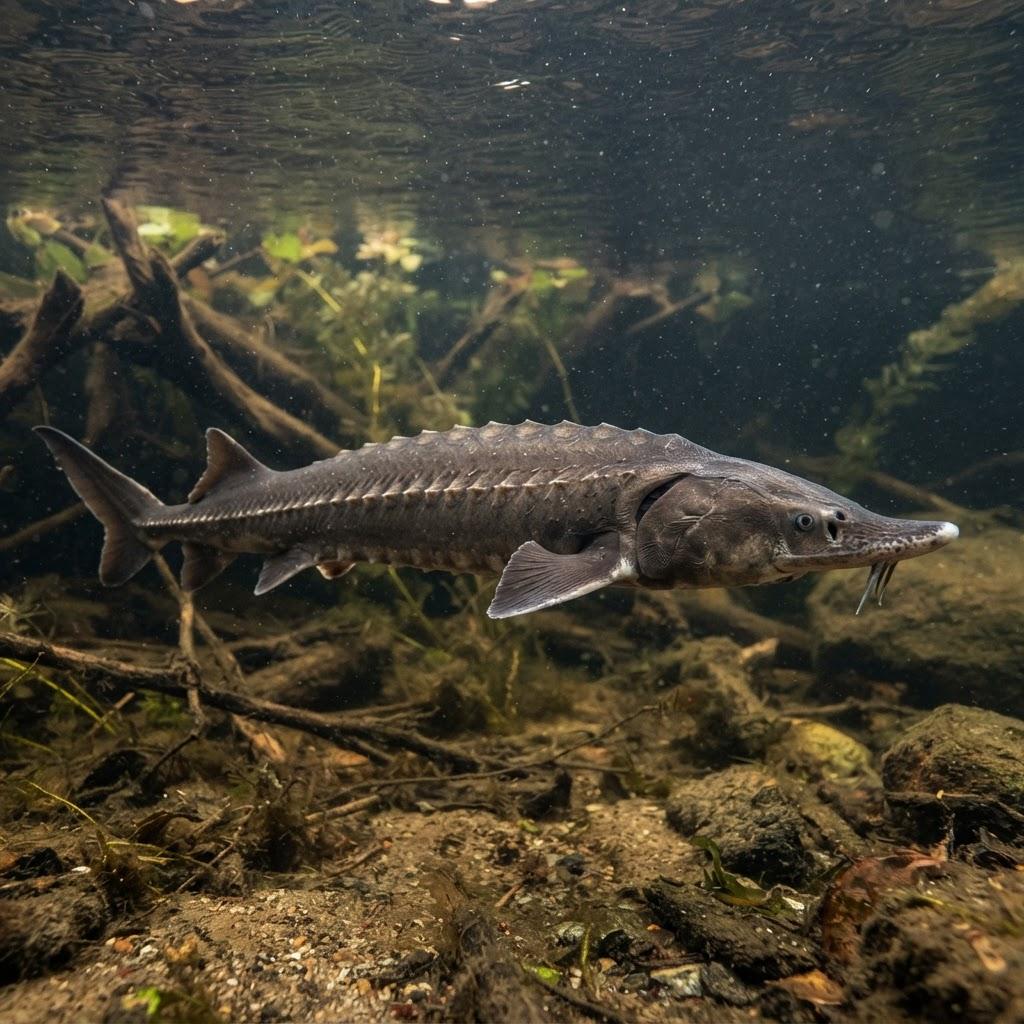
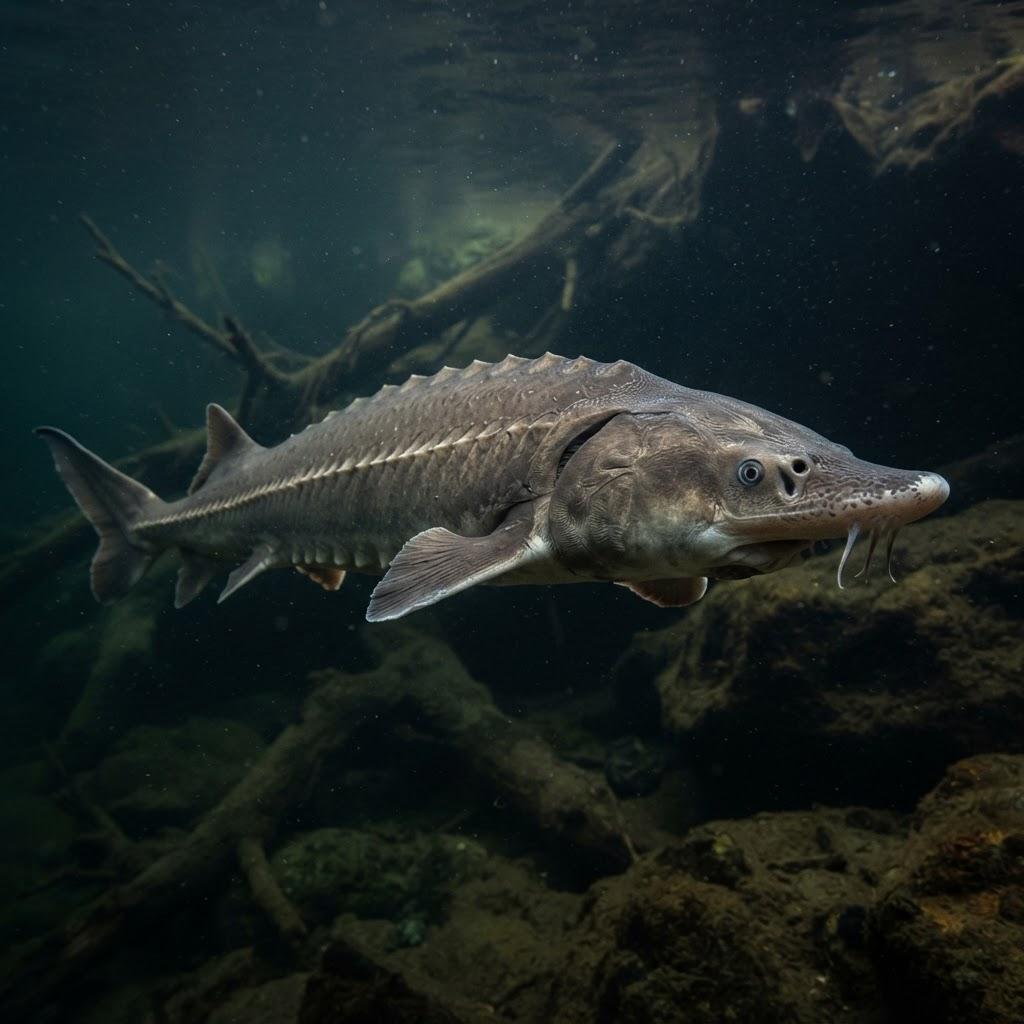
Imagine you are walking through the Mississippi River, and suddenly a creature with the face of a vacuum cleaner and the soul of a peaceful librarian drifts past you. That is the American Paddlefish. This fish is the aquatic equivalent of that one eccentric neighbor who wears oversized sunglasses inside because they are simply too cool for the rest of us. With a snout that takes up a third of its body length and a mouth that opens wide enough to make a pelican feel inadequate, the paddlefish is undeniably the weirdo of the freshwater world. It does not look like your average bass or bluegill; it looks like a remnant of the Jurassic period that somehow got lost on its way to a costume party. It moves with a slow, deliberate grace, constantly vibrating through the water column as if it were auditioning for a role as a soulful jazz musician in an underwater nightclub. It is a filter-feeding machine that treats the river like an all-you-can-eat buffet of tiny plankton, never bothering with the common fish drama of biting lures or fighting for territory.
Weird Biological Superpowers Explained Simply
The paddlefish possesses a biological superpower that makes a metal detector look like a child’s toy. That massive, flattened snout—which scientists call a rostrum—is not just there to help the fish look dramatic; it is absolutely packed with thousands of tiny sensory organs called ampullae of Lorenzini. Think of this snout as a high-tech antenna that can pick up the faint, buzzing electrical signals emitted by teeny-tiny crustaceans known as zooplankton. Imagine if you could wear a pair of glasses that made your dinner glow in the dark from fifty feet away. That is basically what the paddlefish does every single day. By swimming with its mouth wide open, it acts like a living lawnmower, harvesting its microscopic meal without ever needing to look where it is going. It is a masterclass in efficiency that would make any modern engineer weep with envy, turning the murky, brown waters of the Mississippi into a high-definition hunting ground for a fish that is essentially a giant, swimming sensor array.
Absurd Self-Defense Mechanisms
When you are the size of a grown human and made of tough, shark-like cartilage instead of wimpy bone, you don't really feel the need to hide in a hole or turn into a spiky ball of doom. The paddlefish relies on a strategy I like to call 'The Zen Master’s Refusal.' When faced with a potential predator, it doesn't inflate or spray slime; it simply uses its massive size and steady, cruising speed to glide away with the nonchalance of a cruise ship ignoring a speed boat. It is essentially too big to be bothered by most river bullies, and its skin is so incredibly tough that it acts like natural body armor. If a predator dares to take a bite, they quickly find that gnawing on a paddlefish is like trying to eat a rubber tire—not particularly rewarding and very hard on the teeth. While other fish panic, the paddlefish just keeps on cruising, secure in the knowledge that being large, rubbery, and incredibly boring to a predator is the best way to live to a ripe old age.
Fish Drama and Gossip
In the secret underwater world of the paddlefish, the drama is surprisingly low-key. Forget the aggressive, neighborhood-watch antics of cichlids or the territorial turf wars of damselfish; paddlefish are the ultimate 'live and let live' roommates. They tend to gather in loose groups, but don't expect them to be gossiping by the water cooler. Their social structure is more like a quiet commuter train where everyone is staring at their phones, except in this case, the phones are the electrical impulses of plankton. They don't fight over mates, they don't guard nests, and they certainly don't engage in the petty squabbles that define so many other aquatic species. If there is a paddlefish hierarchy, it is based solely on who found the best patch of nutrient-rich water. It is the fish equivalent of a bunch of hippies at a music festival, all drifting in the same direction, enjoying the vibes, and doing their own thing without causing a single scene for the park rangers.
The "Wait, That's Real?!" Deep-Sea Oddities
While the paddlefish spends its time in the murky, shallow waters of the American heartland rather than the spooky, abyss-like depths of the deep sea, it shares a certain 'alien aesthetic' with deep-sea dwellers like the barreleye fish. Both creatures look like they were designed by an artist who had never seen a normal vertebrate before. Deep-sea fish often need glowing lights or transparent heads to cope with the absolute darkness of the midnight zone, but the paddlefish has adapted to its dark, turbid rivers by developing its electrical snout. It is a similar kind of 'cheating' at life. Where a deep-sea anglerfish uses a glowing lure to trick prey into coming to it, the paddlefish uses its electric sensors to track the invisible. Both are masters of surviving in environments where eyes are basically useless, proving that nature is incredibly creative when it comes to finding ways to hunt when the lights go out.
Myth Busting
Let’s squash the rumor that the paddlefish uses its giant snout to dig through the mud at the bottom of the river. It’s a common misconception, probably because the thing looks like a shovel, but I assure you, it has never shoveled a day in its life. If it were a shovel, it would be the most expensive, specialized, and inefficient shovel in history. Furthermore, some folks believe these fish are aggressive monsters, but the only thing a paddlefish is aggressive toward is a clump of copepods. They aren't going to snatch your tackle box, and they certainly aren't going to drag you to the bottom of the river. They are delicate, filter-feeding giants that would probably be frightened if you tapped them on the nose. They are the gentle giants of the river, not the toothy villains people love to paint them as in local folklore and tall tales.
Humorous Historical Tales or Folklore
For centuries, the paddlefish has been a figure of mild confusion and culinary interest. Back in the day, people thought they were just glorified sturgeon and treated them with a bit of mystery. There are old tales from river communities about 'the fish with the sword nose,' a moniker that makes them sound like medieval knights when they are really just oversized soup strainers. Throughout the 19th and 20th centuries, they became the star of the caviar trade, which is a bit of a tragedy, really. Imagine being a majestic, prehistoric creature that has survived millions of years of continental shifting, only to have your legacy reduced to a fancy appetizer on a cracker. It is a bit like if humans were remembered only as the providers of hair for wigs. The history of the paddlefish is a reminder that we humans often struggle to appreciate the sheer coolness of a species until we have nearly loved it to death, which is a lesson we’ve had to learn the hard way.
Underwater Love Stories and Bizarre Romances
The courtship ritual of the paddlefish is less of a romantic dance and more of a synchronized swimming event. They don't do the whole 'show off my colors' routine that you see in tropical reef fish. Instead, they gather in the spring during high-water events, waiting for just the right amount of river flow and temperature. When the moment is right, they release their eggs and sperm into the water column in what can only be described as a giant, communal explosion of genetic possibility. It is very unromantic, very public, and remarkably efficient. There is no courtship dance, no dramatic gift-giving, and absolutely no candlelit dinners. They rely on the sheer volume of numbers and the swift current to carry their offspring to safety. It is the fish equivalent of a mass blind date where everyone shows up at the same time, tosses their contact info into the river, and hopes for the best.
Underwater Architecture and DIY Nesting
If you are looking for an award-winning nursery or a beautifully decorated nest, you have come to the wrong fish. The paddlefish is the ultimate 'anti-architect.' They do not build houses, they do not dig holes, and they certainly do not have a Pinterest board dedicated to nursery designs. Their entire strategy is to find a nice, clean patch of gravel, hit the release button, and move on with their lives. They are the nomads of the river bottom, nomadic parents who leave their eggs to face the world with nothing but a bit of luck and a current. While other fish spend weeks moving pebbles around to create the perfect home, the paddlefish trusts that the river—with its natural flow and seasonal cycles—will do all the work for them. It is a high-stakes, low-maintenance parenting style that has kept their lineage going for millions of years, so who are we to judge?
The Chaos of Raising Tiny Swimmers
Raising tiny paddlefish is basically a game of 'survive the jungle,' but the jungle is a murky river filled with hungry neighbors. Once those eggs hatch, the tiny fry are on their own. They don't have a doting parent guarding them; they have the entire river ecosystem trying to turn them into snacks. Most of them don't make it, but the ones that do grow incredibly fast, turning their high-protein plankton diet into massive body weight in just a few years. It is a brutal, chaotic system where the sheer number of offspring acts as the primary defense mechanism. It is less like being a parent and more like launching a fleet of tiny, fragile ships into a hurricane and hoping some of them reach the open ocean. It sounds harsh, but for a species that dates back to the era of the dinosaurs, it is a method that has clearly stood the test of time.
How to Spot One & How It Is Doing
To see one of these living legends, you generally need to be near the big rivers of the Mississippi drainage during the spring, though they are elusive creatures. They aren't the kind of fish that hang out by the docks, and you definitely won't catch one on a worm. Because they are filter feeders, they are rarely interested in what’s at the end of a line. Unfortunately, these prehistoric wonders are considered vulnerable. They face threats from habitat loss, dams that block their migration routes, and the occasional overzealous harvest. To help them out, you can support river conservation groups, advocate for dams that include fish-friendly passages, and spread the word about how incredible these 'vacuum-faced' fish really are. They are a treasure of the American river system, and keeping them swimming is a small price to pay for having a little bit of the Jurassic period still splashing around in our own backyard.