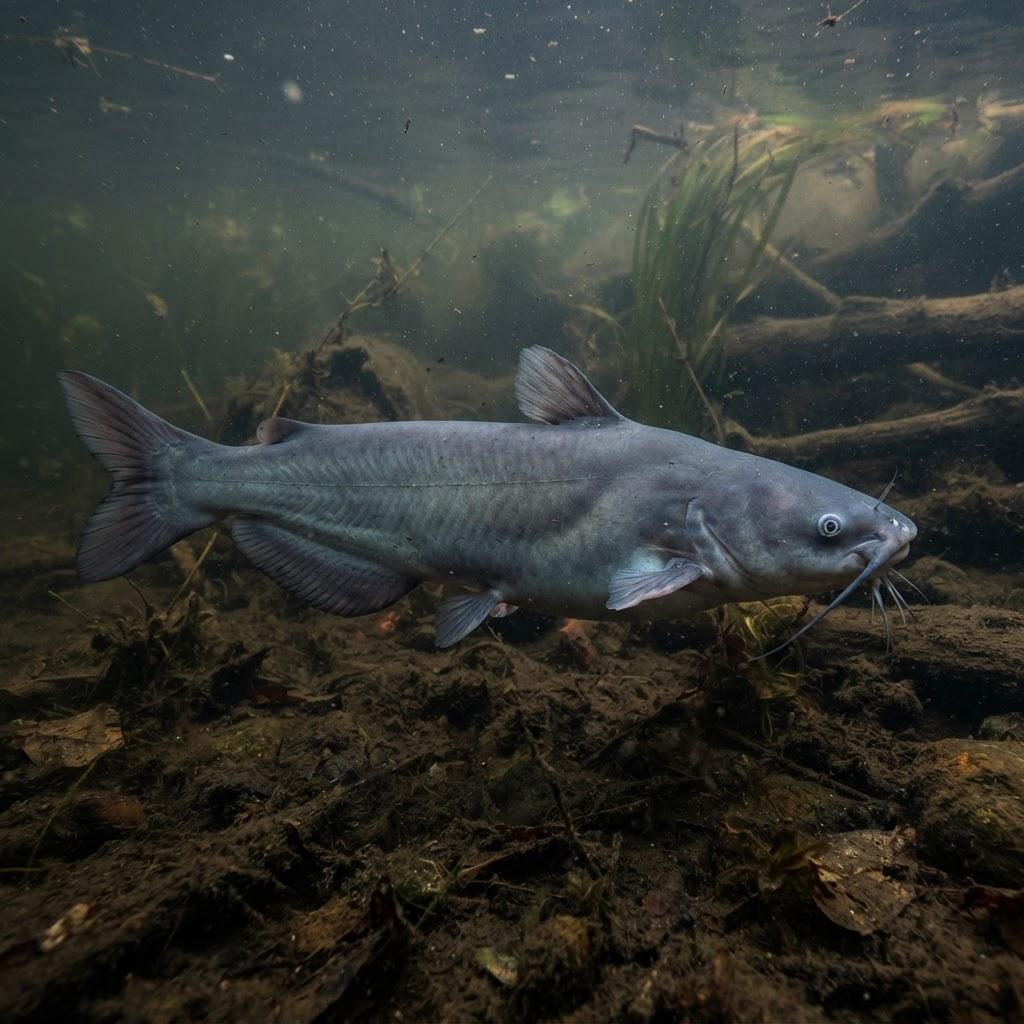
Ictalurus furcatus
Catfish (Blue)
Meet the Blue Catfish, the undisputed heavyweight champion of the American river system with a mustache that would make a Victorian gentleman jealous. This massive, whiskered marvel is part vacuum cleaner, part gladiator, and entirely fascinating for anyone brave enough to go toe-to-fin with a freshwater titan.
Meet the Fish
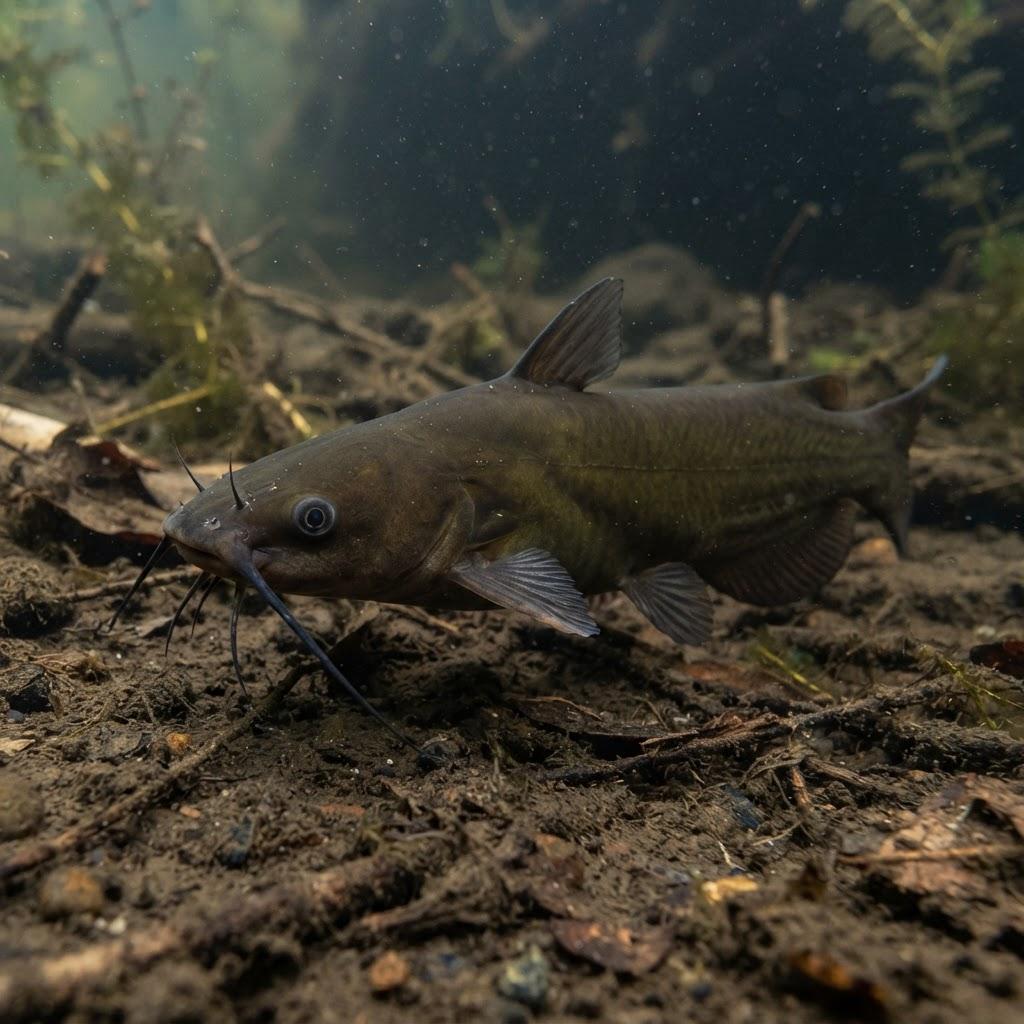
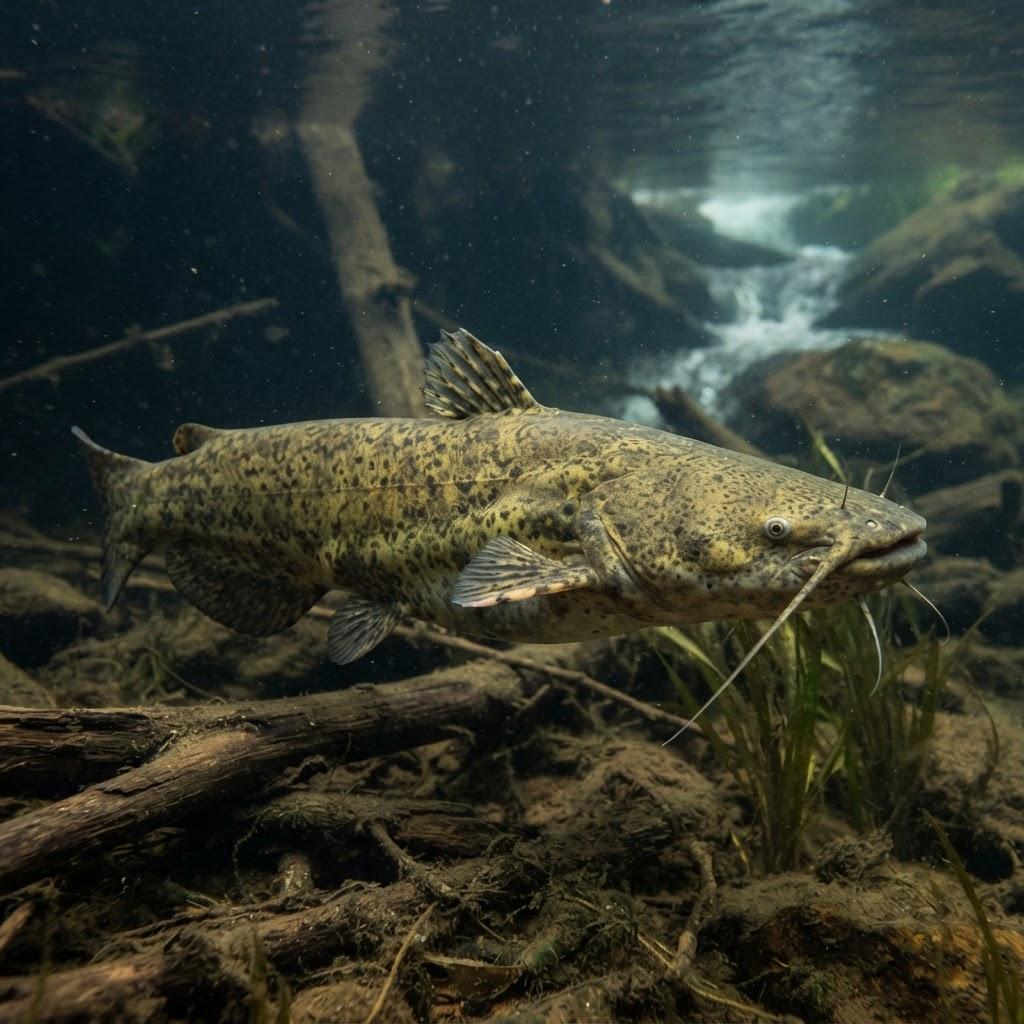
If the river world had a bouncer, it would definitely be the Blue Catfish. This is not your grandmother’s backyard pond goldfish; this is a hulking, slate-blue behemoth that looks like it spends its weekends doing deadlifts with sunken logs. Imagine a creature that is essentially a living, breathing torpedo with a permanent case of the 'grumps' and a set of sensory antennae that could pick up a snack from three counties away. They are the brooding, silent stars of the murky deep, preferring to hang out in the dark, high-current zones where other fish are too busy clutching their pearls to swim. With a head that looks like it was chiseled out of river stone and a tail that acts like a propeller of pure power, the Blue Catfish exudes an aura of 'I’ve seen everything, and I’m probably going to eat it.' It is a fish that refuses to apologize for its size or its appetite, making it an absolute legend among anyone who has ever held a fishing rod in the Midwest. They do not just swim; they occupy space with a heavy, deliberate elegance that commands respect from every minnow, bass, and turtle in their zip code.
Weird Biological Superpowers Explained Simply
While most fish rely on their eyes to see, the Blue Catfish operates like a sentient, swimming supercomputer that literally tastes the world around it. Those long, wispy whiskers—scientifically called barbels—are not just for show; they are packed with taste buds. Think of it like having the ability to taste a pizza from five blocks away without even opening the box. Their entire body is essentially one giant, sensitive tongue, allowing them to map out the riverbed, find hidden prey, and navigate through dark, silty water that would leave a human completely blind. Furthermore, they possess something called the lateral line, a row of sensory pores running down their sides that detects minute vibrations in the water. If a dragonfly so much as taps the surface of the river, the Blue Catfish knows exactly where it is, how big it is, and whether it’s worth the calories to swim up and investigate. It is a biological upgrade that turns the murky, chaotic river into a high-definition sensory map, proving that if you want to be the boss of the water, you do not need eyes; you need a really, really good sense of taste.
Absurd Self-Defense Mechanisms
When you are a Blue Catfish, you do not need to hide behind rocks or puff yourself up like a balloon to survive. You have an arsenal that is far more practical: rock-hard, locking spines. Each pectoral and dorsal fin is equipped with a sharp, bony spear that the fish can lock into place with a simple muscle twitch. If a predator tries to swallow a Blue Catfish, they are essentially trying to down a prickly, rigid knife-rack. These spines are often coated in a protein that acts like a mild sting, adding a little 'spicy kick' to the experience for anyone foolish enough to take a bite. It is the aquatic equivalent of holding a 'Do Not Disturb' sign made of barbed wire. Because they are so large and armored, they have very few natural enemies once they reach adulthood; honestly, the only thing that really troubles a full-grown Blue Catfish is a very determined angler or a particularly annoyed alligator. It is a simple, effective strategy: if someone wants to eat you, make sure the process involves a non-negotiable amount of pain and regret.
Fish Drama and Gossip
In the world of the Blue Catfish, social life is essentially a silent, underwater game of king-of-the-hill. They are not particularly social butterflies, but they are certainly aware of who lives where. When resources like deep, oxygen-rich holes become scarce, you can bet there is some serious, silent beef happening under the surface. They do not have Twitter to air their grievances, so they rely on posturing and aggressive displays to assert dominance. A larger catfish will simply loom over a smaller one with a 'you better move along, kid' energy that is impossible to misunderstand. There is no biting or tearing unless absolutely necessary; it is all about body language. The hierarchy is established through a series of slow, menacing drifts that signal to everyone else who gets the prime spot in the current. It is like a high school cafeteria where the coolest, biggest kid gets the best seat, and everyone else just finds a quiet spot in the corner and tries not to make eye contact. You can practically hear the underwater whispers as the younger fish watch the older ones and wait for their chance to climb the ladder of river supremacy.
The "Wait, That's Real?!" Deep-Sea Oddities
While the Blue Catfish is a river dweller, it is often compared to the legendary titans of the abyss because of its sheer, monolithic scale. The deep sea is a bizarre neighborhood filled with creatures that seem to be made of gelatin, glass, or pure, glowing energy, but the Blue Catfish represents a different kind of alien: the absolute mastery of low-visibility survival. In the deep ocean, creatures like the Viperfish grow long, needle-like teeth and bioluminescent lures to trick prey in the eternal darkness. The Blue Catfish does the same thing, just with better plumbing and, frankly, a much nicer color palette. While deep-sea fish might have to deal with crushing pressures and near-freezing temperatures, the Blue Catfish deals with the crushing pressure of silt and the volatile temperament of a changing river. It is a fascinating reminder that nature has two ways to solve the problem of living in the dark: evolve a glowing forehead or evolve a body that can taste the entire environment. Both methods are equally impressive and equally terrifying if you happen to be the thing they are hunting.
Myth Busting
There is a persistent rumor that Blue Catfish grow to sizes that could swallow a small car, or that they lurk under bridges waiting to snag unsuspecting swimmers. Let’s set the record straight: while these fish can get big enough to make a kayak feel very precarious, they are not out here hunting humans. They are, at their core, opportunistic scavengers and predators that prioritize energy efficiency over monster-movie antics. Another common myth is that catfish are 'dirty' fish because they eat whatever they find on the bottom. In reality, they are efficient recyclers that keep the river ecosystem clean, not 'bottom-feeding trash cans.' They are actually quite selective about their diet, favoring fresh prey when it is available. People often confuse them with smaller, more scavenger-prone species, but the Blue Catfish is a prime athlete that prefers a healthy, balanced diet of shad, crayfish, and whatever else fits in its mouth. They are not monsters, they are just big, beautiful, and misunderstood creatures trying to navigate a world that is way smaller than they are.
Humorous Historical Tales or Folklore
Folklore surrounding the Blue Catfish is a colorful tapestry of exaggerated fishing yarns told around campfires. There is an old legend from the Mississippi Delta about a catfish so large it was nicknamed 'Old Iron-Jaw,' which was said to have snapped a steel anchor cable just by swimming too fast in the opposite direction. While likely a result of too much moonshine and a very bent fishing hook, these stories reflect the awe that people have felt for these fish for generations. Historically, these fish were the backbone of many riverfront communities, providing a reliable, massive source of protein that helped folks get through tough times. There are even stories of early settlers using catfish 'whiskers' as makeshift tools or, in more superstitious circles, keeping a dried bone from the skull—which looks remarkably like a crucified figure—as a good luck charm. It is a testament to the fact that when a fish gets this big, it stops being just an animal and starts becoming a part of the local mythology, a ghost in the river that everyone knows, even if they have never seen it.
Underwater Love Stories and Bizarre Romances
When spring rolls around and the water temperature hits that sweet spot, the Blue Catfish turns from a grumpy loner into a surprisingly sentimental romantic. They do not have fancy songs or neon light shows to impress their partners; they use muscle, grit, and endurance. The male sets the stage by scouting out the perfect bachelor pad—usually a hollow log, a deep rock crevice, or a dark, protected hole—and cleaning it until it is fit for a queen. He will spend hours clearing away debris with his tail and fins. Once the nest is ready, he waits. When a female arrives, the courtship is a slow, steady dance of nudging and circling, a test of trust to see if the chosen spot is safe enough for their future progeny. It is less like a Hollywood romance and more like two people agreeing on a floor plan for a house; it is practical, serious, and deeply focused on the future. The male is looking for a partner who is just as hardy as he is, and once the eggs are laid, the real commitment begins.
Underwater Architecture and DIY Nesting
The construction skills of a Blue Catfish are, quite frankly, better than those of the average DIY homeowner. They do not just lay eggs in the sand; they create a customized nursery. The male is the architect, the interior designer, and the site foreman all rolled into one. He will tirelessly fan the silt away from a chosen cavern, creating a depression that protects the eggs from the harsh current. It is not an accidental nest; it is a fortress. By picking deep, shielded spots, he ensures that the eggs are hidden from the wandering eyes of hungry carp or turtles. The amount of effort he puts into these structures is a display of true dedication. He creates a micro-climate of stability in the middle of a shifting, dynamic river. It is almost touching to see such a massive, imposing creature acting as a gentle construction worker, meticulously ensuring that every grain of sand is in the right place to give his offspring the best possible start in the big, watery world.
The Chaos of Raising Tiny Swimmers
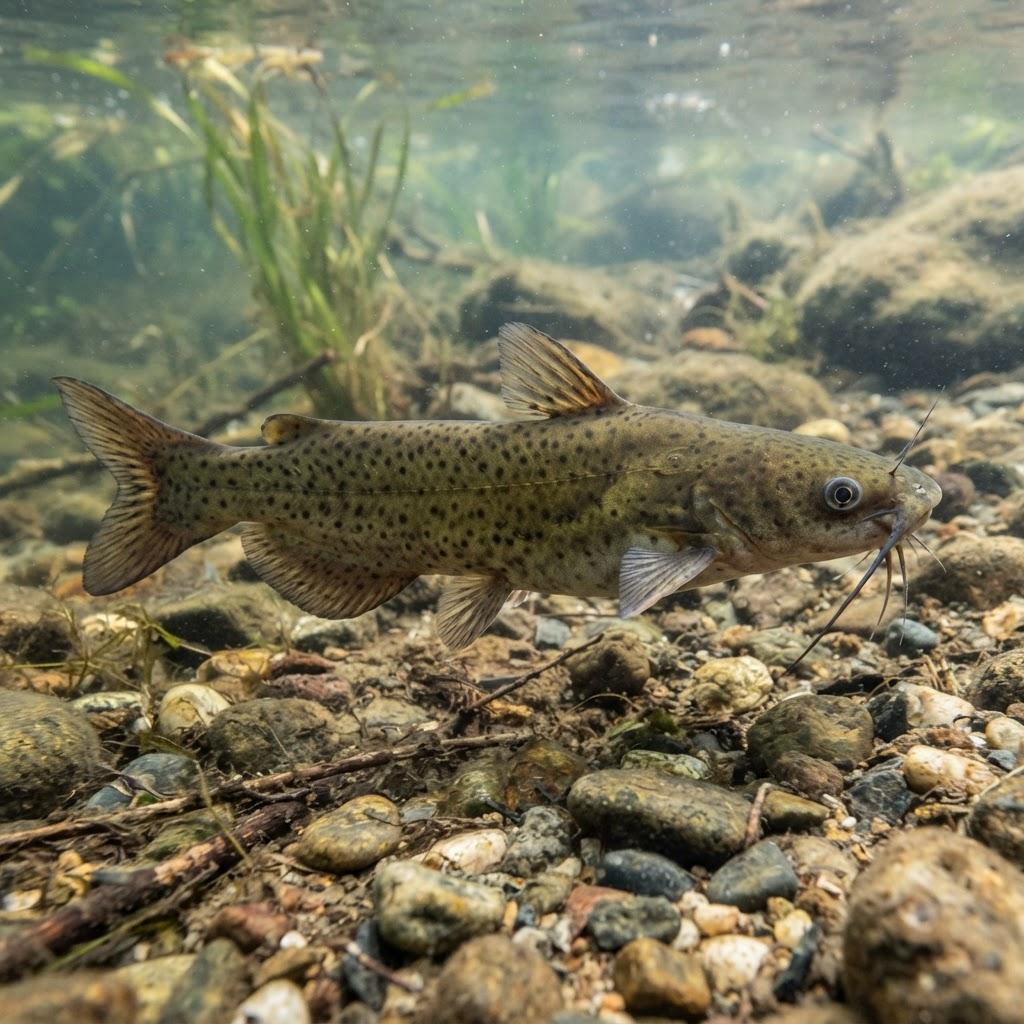
Once the eggs hatch, the real adventure begins. Unlike some fish that lay thousands of eggs and immediately abandon them to the mercy of the current, the male Blue Catfish takes the 'helicopter parent' approach to an extreme level. He stays to guard the nest with a tenacity that is genuinely impressive. If anything comes near those tiny, wiggling fry, he turns into a one-fish defensive squad, lunging at intruders with a ferocity that would make a shark rethink its life choices. The fry themselves start as tiny, translucent shadows that look more like tadpoles than giants-in-the-making. The father will even use his fins to keep the water flowing over the eggs, ensuring they get plenty of oxygen. Watching a giant fish hover over his little ones is a surprising sight, a gentle contrast to his usual fearsome reputation. It is a high-stakes daycare where the dad does all the work, showing that even the biggest, toughest guys in the river have a soft spot for their kids.
How to Spot One & How It Is Doing
If you are looking to catch a glimpse of this river legend, you are going to need patience and a sturdy boat. They are most active at dawn and dusk, prowling the deeper channels where the current is steady. Look for the iconic blue-gray sheen and those long, graceful whiskers that trail behind them like ribbons. They are not flashy, and they do not jump, but if you hook one, you will know immediately—it feels like trying to reel in a submarine. As for their health, the Blue Catfish is doing quite well. They are considered a species of 'Least Concern' because they are incredibly adaptable and breed successfully in many different types of water. However, the best way to keep them around is by keeping our rivers clean and our waters free of pollutants. You can help by supporting local conservation groups, picking up trash along the shoreline, and advocating for healthy river ecosystems. Every bit of plastic you keep out of the water is a win for the big, grumpy, wonderful Blue Catfish. Keep the rivers clean, and the giants will keep on swimming.