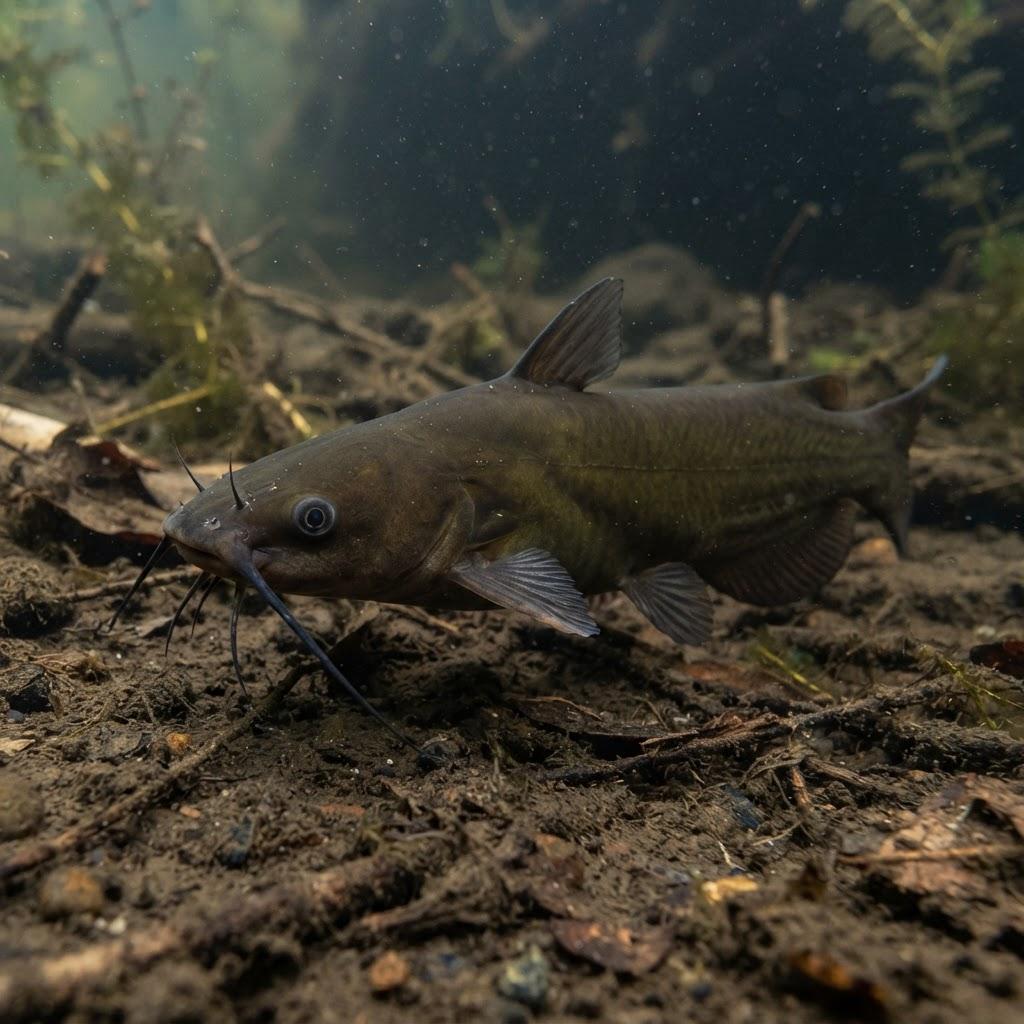
Ameiurus melas
Bullhead Catfish
Meet the Black Bullhead, the grumpy, mud-loving cousin of the catfish world who acts like a tough guy but is a total softie when it comes to parenting. This bottom-dwelling bruiser is basically the grizzly bear of the local pond, and you absolutely need to know why.
Meet the Fish
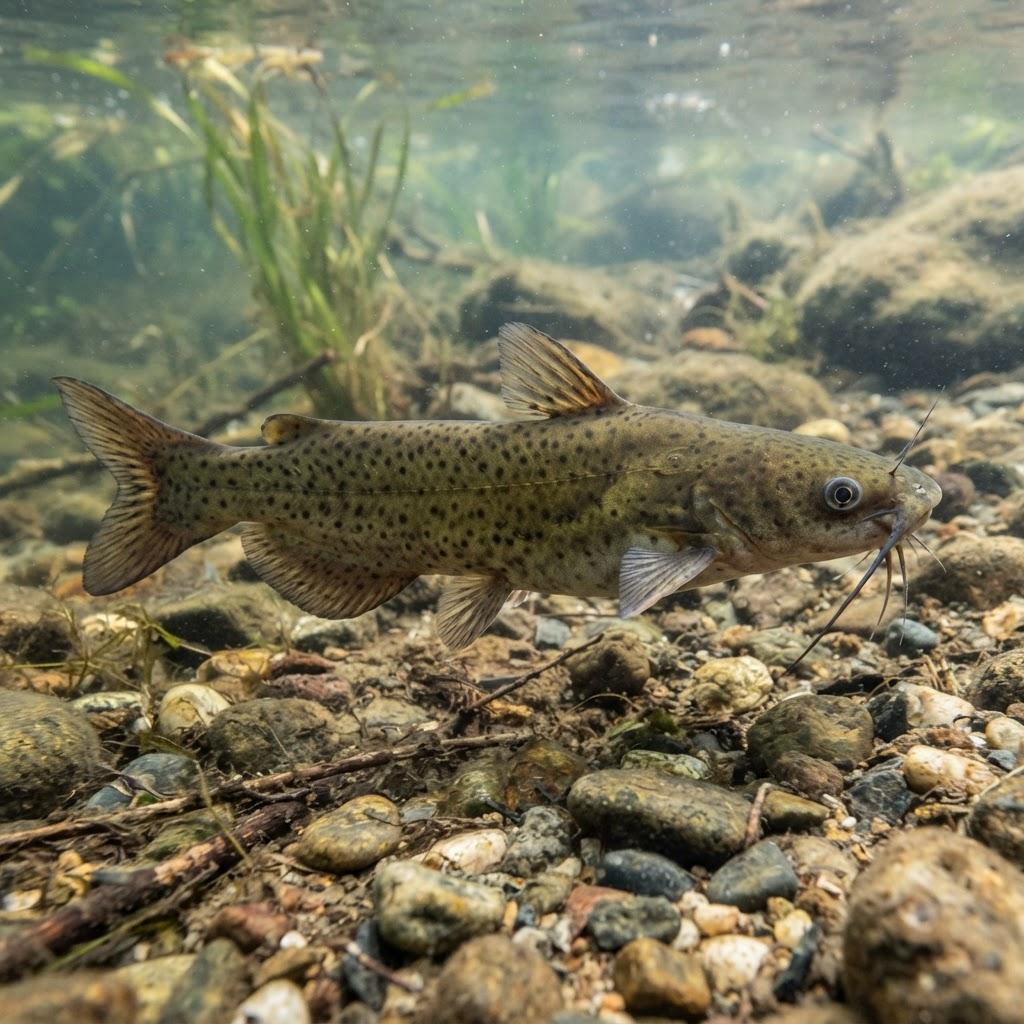
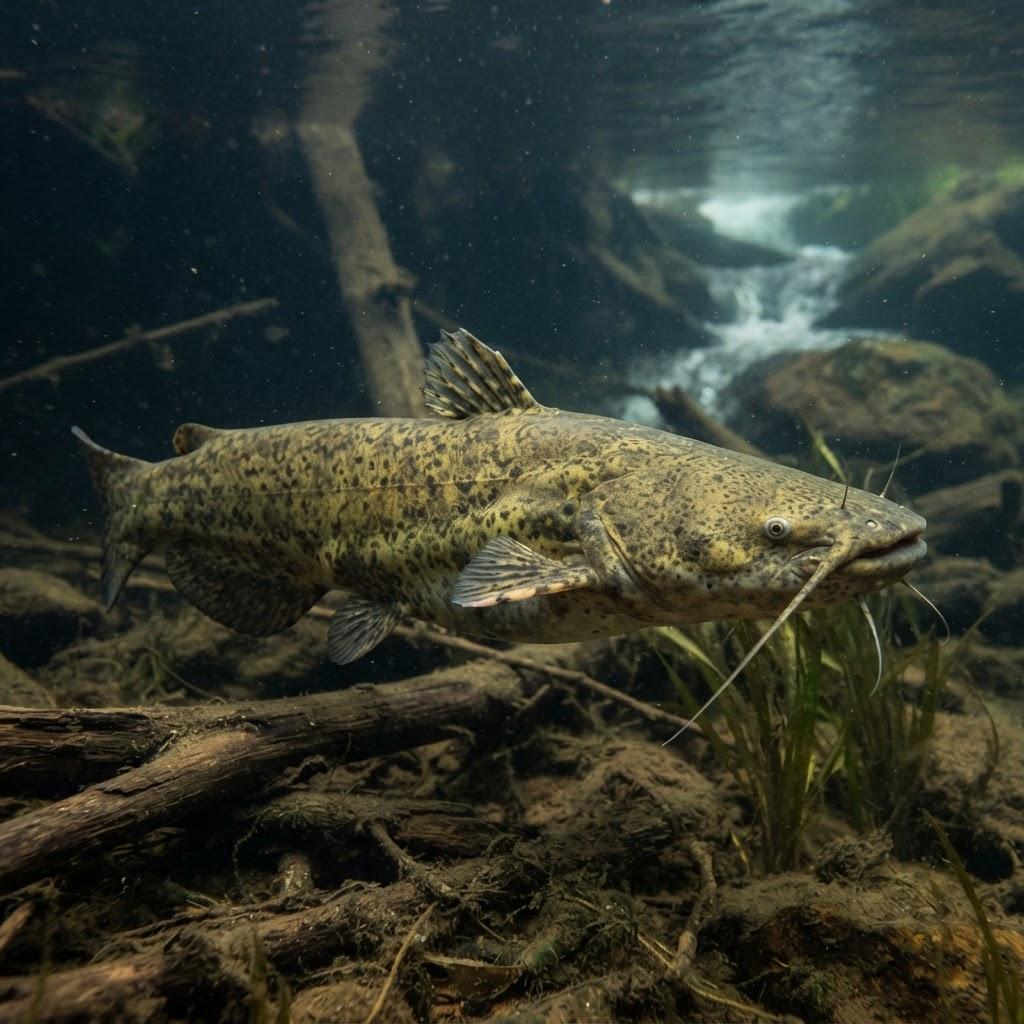
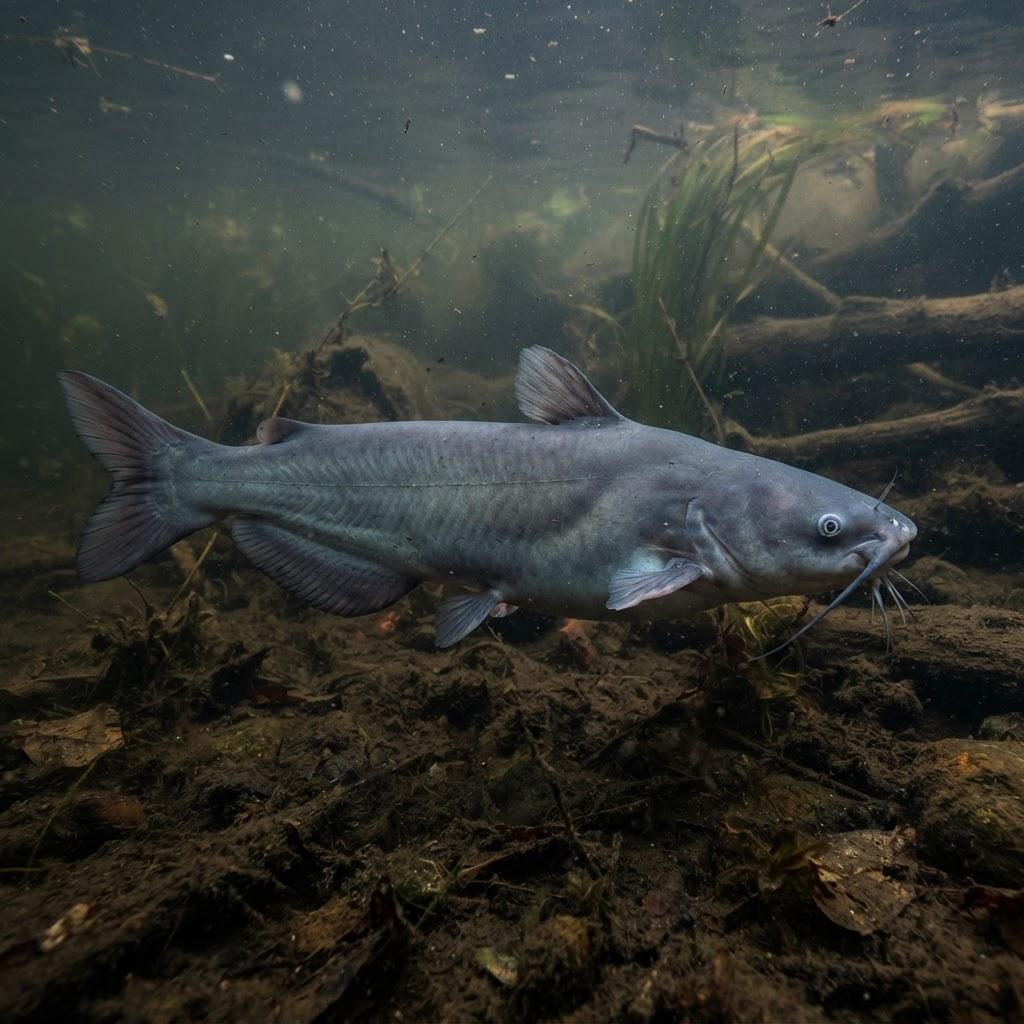
Picture a fish that looks like it just woke up from a three-day nap in a dumpster and isn't particularly happy about being awake. That is the Black Bullhead. This guy isn't winning any beauty pageants, but what he lacks in sleek, shiny scales, he makes up for in pure, unadulterated grit. He has a broad, flattened head, a mouth that looks like a permanent frown, and long, whisker-like sensory organs called barbels that dangle around his face like a mustache designed by a committee of bad decisions. The Bullhead is the character in the movie who sits in the back of the dive bar, nursing a drink and waiting for someone to try him. He is a bottom-dweller, a mud-lover, and an absolute master of living in places that would make a goldfish faint from the sheer murkiness of the water. He isn't fancy, he isn't fast, but he is everywhere, watching you through the silt with eyes that seem to say, 'Really? You again?'
Weird Biological Superpowers Explained Simply
If you want to know why the Bullhead is the king of the murky shadows, you have to talk about his sensory suite. His entire body is basically one giant taste bud. Those iconic whiskers, or barbels, are not just for show; they are packed with chemoreceptors. Imagine if your entire skin could taste the chemical composition of the air, and you had tiny, flavor-sensitive fingers trailing behind you. This allows the Bullhead to cruise through water so muddy that visibility is zero and still find a delicious morsel of decaying organic matter or a snack hiding under a rock. It is like having a superpower that lets you navigate a pitch-black room simply by smelling your way to the pizza in the kitchen. Plus, they possess a lateral line system, which is basically a series of vibration sensors running down their sides. They can feel the movement of a struggling bug or a predator from meters away, making them impossible to sneak up on.
Absurd Self-Defense Mechanisms
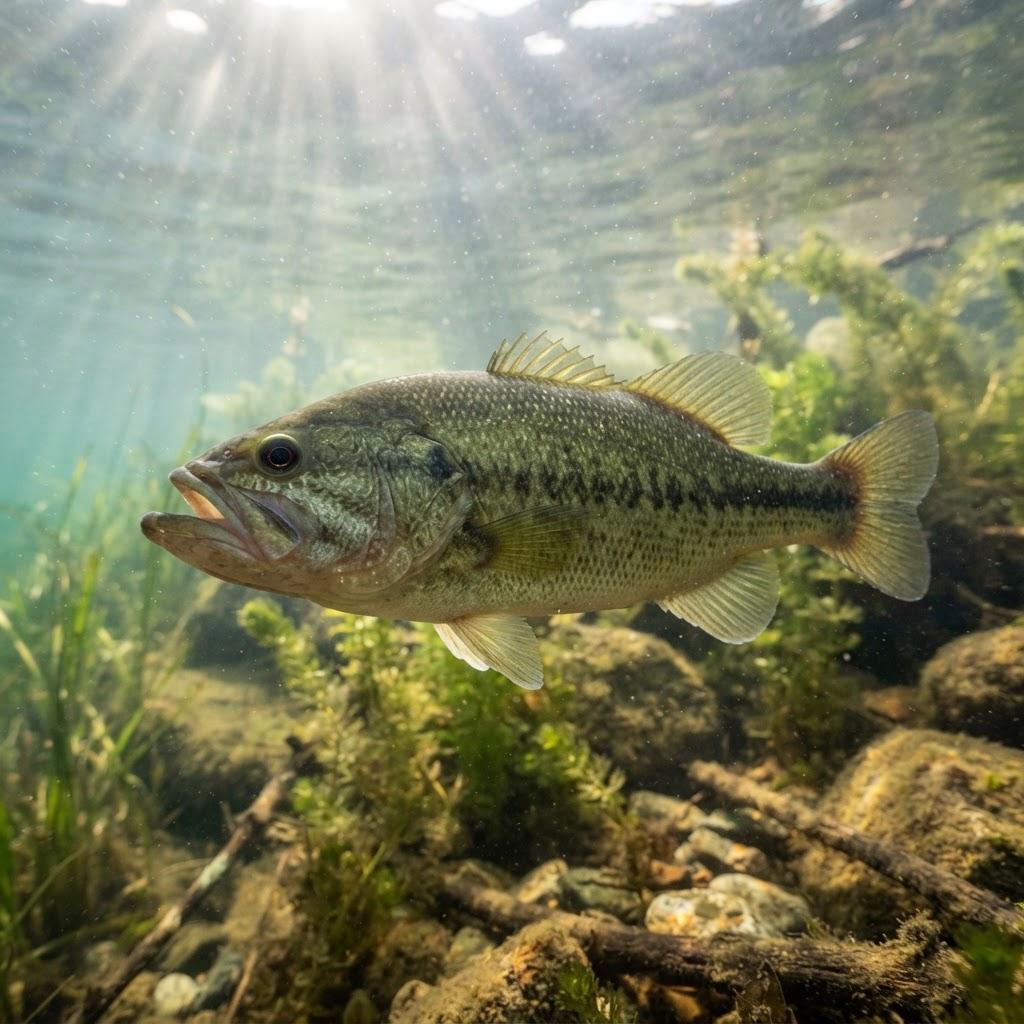
Let us talk about the 'handle with care' stickers you should mentally slap onto every Bullhead you ever see. This fish is equipped with some serious hardware. Behind those pectoral fins and on its dorsal fin, the Bullhead sports sharp, bony spines that are not just for looks. These spines can be locked into place, turning the fish into a living, underwater spike-strip. If a larger predator like a bass or a heron tries to swallow a Bullhead, they quickly realize they have made a grave mistake. The fish locks its fins out, making it practically impossible to gulp down, and in many cases, those spines can even pierce the predator's mouth or throat. It is the aquatic equivalent of an umbrella popping open inside your throat while you try to eat it. To make matters even worse for the predator, those spines are covered in a mild toxin that can cause significant pain and irritation to the mouth, ensuring that any attacker will think twice before bullying a Bullhead again.
Fish Drama and Gossip
If the pond were a high school, the Black Bullhead would be the kid who doesn't care about the cool table but definitely runs the underground wrestling circuit in the parking lot. They are notoriously territorial, especially when food is involved. You will often see them engaging in 'mouth-wrestling' matches where two males will lock jaws, push, and shove until one gives up and retreats to his favorite muddy corner. It is not exactly elegant, but it is high-stakes drama. They don't have complex social hierarchies like cichlids, but they certainly know who the local bully is. When resources are scarce, the Bullhead turns into a real grump, chasing away smaller fish with a flick of his tail and a menacing display of his fins. There is very little 'social' behavior unless you count competitive eating, where they race to finish off any bait that hits the bottom, often trampling their own kind in the process.
The "Wait, That's Real?!" Deep-Sea Oddities
The Black Bullhead is the absolute antithesis of the deep-sea weirdo. While deep-sea fish are out there looking like nightmare fuel with bioluminescent 'fishing poles' on their heads and needle-teeth longer than their bodies, the Bullhead is staying firmly planted in the shallow, boring, muddy flats. If a deep-sea creature is an alien spacecraft, the Bullhead is a reliable, rusted-out tractor. However, the connection is in the darkness. Deep-sea fish use light to find things in the abyss, whereas the Bullhead uses his incredible sense of smell and touch to navigate the 'abyss' of a silt-filled riverbank. While the barreleye fish has a transparent head to look up for prey, the Bullhead just doesn't need to look at all. He lives in a world of sensory input where light is optional, and his 'creature comfort' is a dark, warm patch of sediment. It proves that you don't need fancy neon lights to thrive in the dark; sometimes, a good pair of whiskers and a strong stomach are enough.
Myth Busting
There is a persistent myth that the Black Bullhead is 'dirty' because he lives in mud and eats whatever he finds. People often claim they taste like mud or are inferior to 'game' fish. Let us clear this up: the Bullhead is a scavenger, yes, but he is a clean-living scavenger. If you catch one in clear water, the meat is actually quite tasty and firm. The 'muddy' taste is a result of the environment, not the fish itself. Another myth is that they are indestructible monsters that destroy ecosystems. While they are hardy and can survive in water with low oxygen—thanks to their ability to gulp air at the surface—they are not the ecological villains people make them out to be. They are simply opportunists who have mastered the art of surviving in conditions that would cause more 'delicate' fish to give up and float to the surface. They aren't villains; they are just survivors in a tough neighborhood.
Humorous Historical Tales or Folklore
In the annals of American fishing lore, the Bullhead has always been the 'everyman' fish. While fly fishermen were obsessing over trout with expensive gear, regular folk were out with a bamboo pole and a worm, catching Bullheads to feed their families. There is a great piece of folklore from the Midwest that claims if you catch a Bullhead, you shouldn't throw it back because it will 'tell' the other fish to stay away from your hook for a week. It is clearly nonsense, but it speaks to the personality of the fish: grumpy, stubborn, and somehow capable of holding a grudge. Historically, these fish were the backbone of rural dinner tables during hard times. They were never celebrated in paintings or poetry, but they were there when the pantry was empty, patiently waiting in the mud for the next fisherman to drop a line. They are the blue-collar workers of the fish world, reliable and always punching the clock.
Underwater Love Stories and Bizarre Romances
When it comes to romance, the Black Bullhead abandons his 'tough guy' persona entirely. The courtship is less of a grand gesture and more of a mutual agreement to get down to business. The male will start by cleaning a patch of the river bottom, moving rocks, silt, and debris with his mouth to create a nice, cozy 'nesting area.' It is essentially the underwater version of deep-cleaning the house before the in-laws visit. Once the nest is ready, he presents it to a female. There is no dancing or glowing displays, just a lot of swimming in circles and checking out the property. If the female approves, she lays her eggs in the nest, and the male fertilizes them. It is very efficient, very practical, and surprisingly domestic for a fish that looks like he should be in a street fight. It is the most mundane, yet endearing, romantic ritual in the murky pond.
Underwater Architecture and DIY Nesting
If you are looking for the 'Extreme Makeover: Pond Edition' of the animal kingdom, look no further than the Bullhead's nest. They don't just lay eggs on a leaf and hope for the best. They are genuine architects of the silt. A pair will spend days excavating a depression in the bank or beneath a submerged log. They will fan away the loose mud with their fins to expose firm clay or gravel, creating a base that won't collapse. They also have a habit of dragging twigs and debris to the perimeter to act as a defensive wall. It is a bunker, plain and simple. They want a space that is protected from currents and hidden from prying eyes. Watching a Bullhead obsessively rearrange a pile of sticks because one of them is slightly out of place is a testament to their dedication as parents. They are the DIY kings of the river bottom.
The Chaos of Raising Tiny Swimmers
Once the eggs hatch, the real fun begins. The Bullhead is not the type of parent to just abandon his kids to the cruel, hungry world of the pond. No, he becomes a helicopter parent of the highest order. The fry, which look like tiny, translucent tadpoles with over-sized heads, stick together in a massive, swirling school. This school is constantly guarded by one or both parents. If you look closely, you will see a dark cloud of thousands of baby fish moving in unison, and right above them, there is the parent, shadowing their every move. If a curious bluegill tries to snap up a snack, the parent will dart out like a furry missile, fins erect, to chase the intruder away. They protect this 'black cloud' of fry for weeks until the youngsters are big enough to fend for themselves. It is a touching display of loyalty from a fish that looks like he hates everything.
How to Spot One & How It Is Doing
Spotting a Black Bullhead is easy if you know where to look, but you have to be willing to get a little dirty. Head to a slow-moving stream, a shallow lake, or a stagnant pond with plenty of cover. Look for the muddy edges where the water is opaque. If you use a bit of chicken liver or a nightcrawler as bait, you will likely find one of these guys in minutes. They are resilient, hardy, and currently doing quite well across their range. They are not threatened because, frankly, they are built for the world we live in—a world that is often a bit messy and unpredictable. To help them, just make sure to keep your local waterways free of plastic and chemical pollution. They might be tough, but they are part of a delicate cycle that keeps our ponds balanced. Treat them with respect, admire their grumpy faces, and maybe next time you catch one, give him a nod for being the neighborhood legend he is.