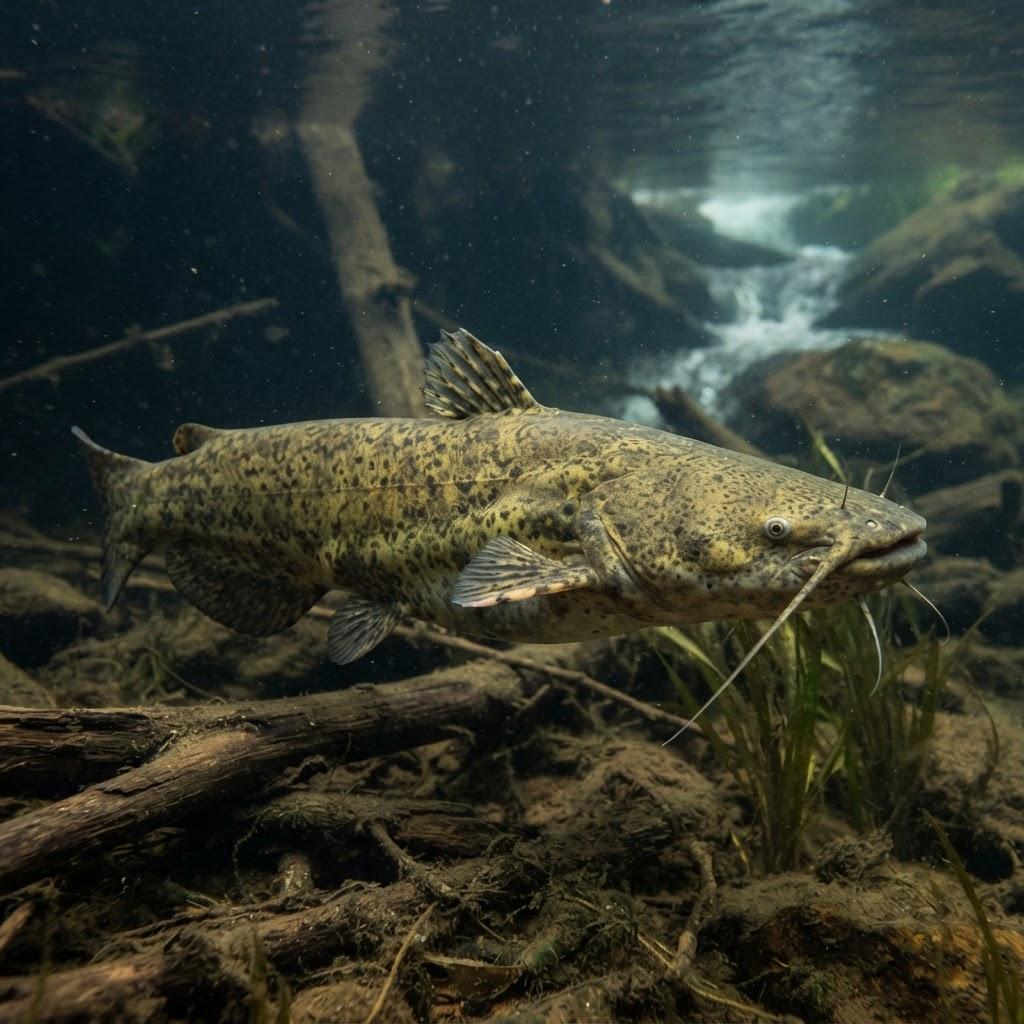
Pylodictis olivaris
Flathead Catfish
Meet the Flathead Catfish, the river's undisputed heavyweight champion and master of the ambush. This prehistoric-looking glutton is less of a fish and more of a vacuum cleaner with a serious attitude problem.
Meet the Fish
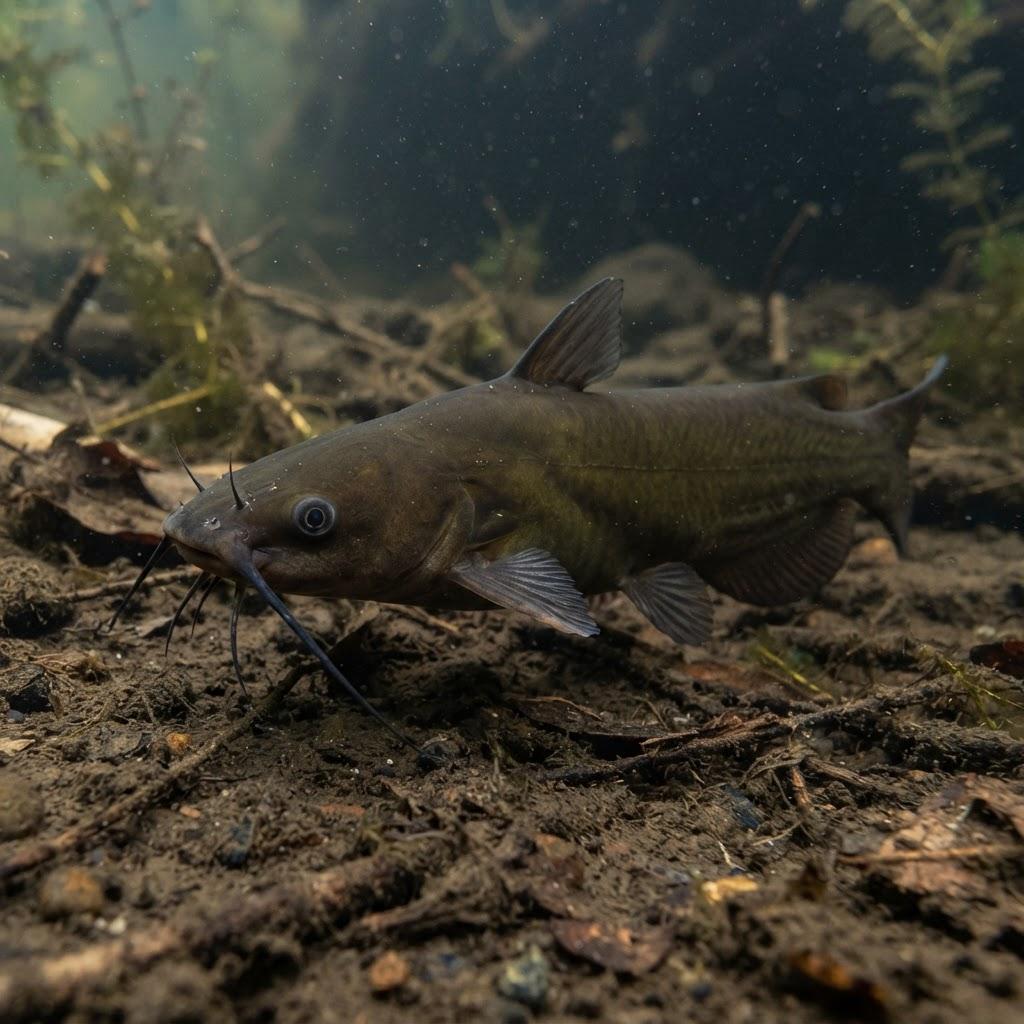
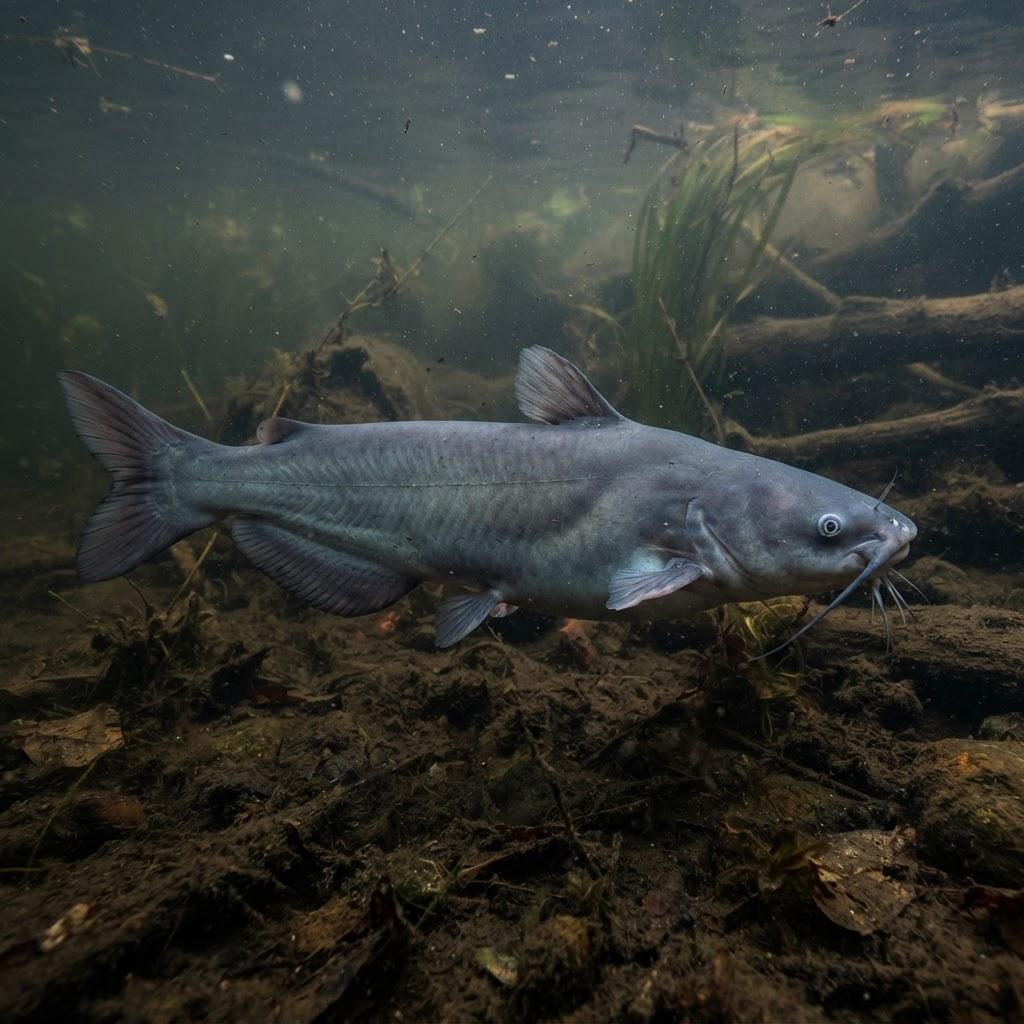
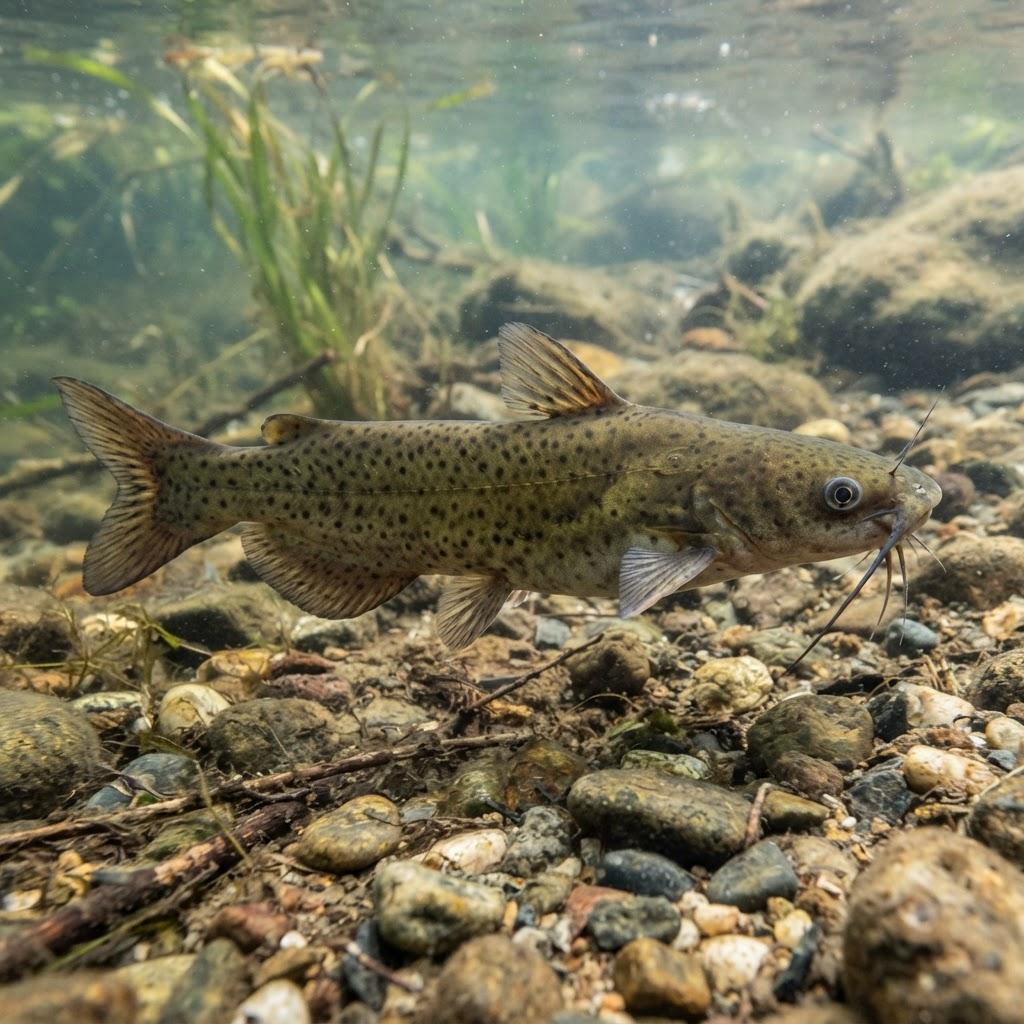
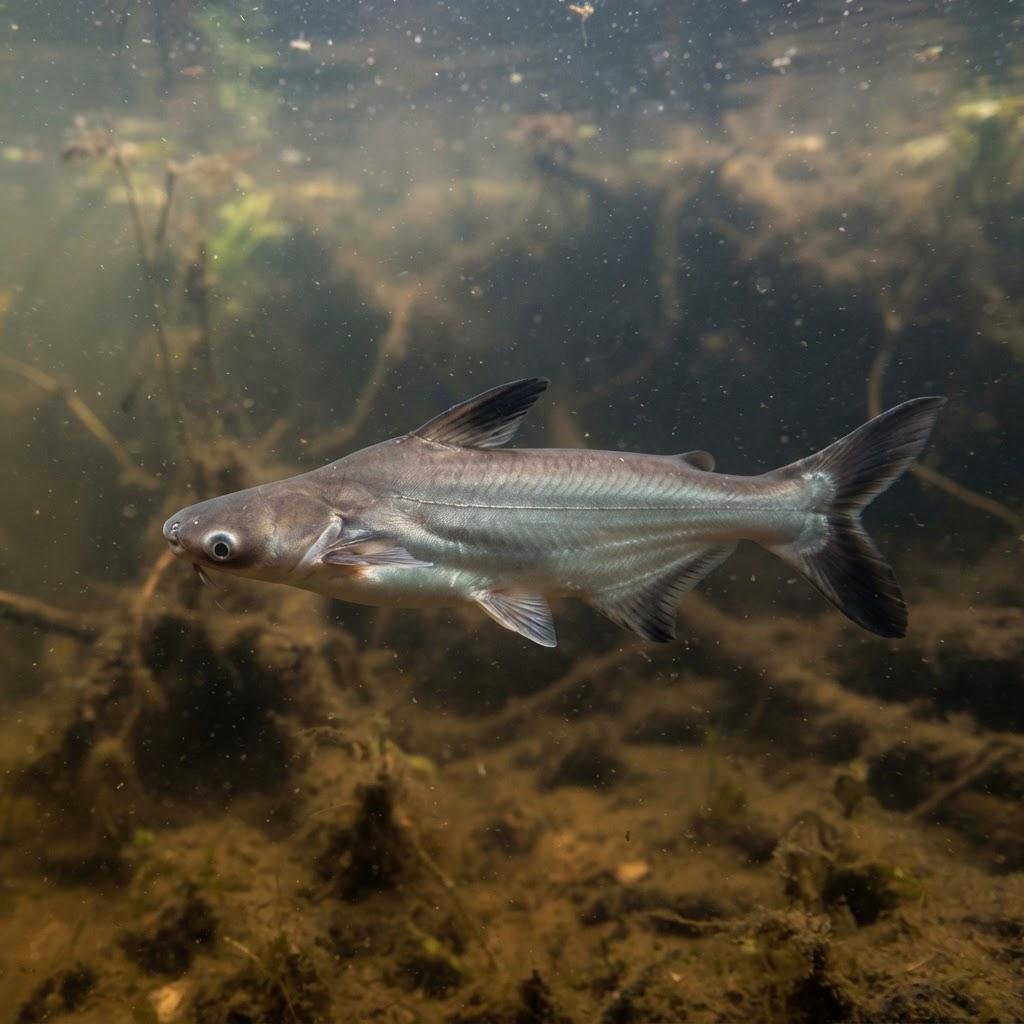
Imagine a grumpy, oversized river monster with a face only a mother could love, and you have the Flathead Catfish. Unlike your average, sleek trout or sporty bass, the Flathead looks like a piece of living granite that decided to sprout fins. Its head is incredibly wide, flat, and hard, earning it a name that sounds less like a species and more like a playground insult. This fish is the ultimate couch potato of the aquatic world, spending the vast majority of its time lurking in the shadows, waiting for some unsuspecting snack to swim by. It possesses a mottled, yellow-brown skin that acts like high-end camouflage, blending perfectly into the muddy, debris-filled bottoms of America’s biggest rivers. While other fish are busy darting around, burning calories and chasing sparkles, the Flathead is busy calculating exactly how much energy it can save by being completely motionless. It is the heavyweight champion of the 'sit and wait' lifestyle, and it wears its crown of slime with pride.
Weird Biological Superpowers Explained Simply
If you think the Flathead is just a big, lazy lump, you are severely underestimating its sensory array. This fish is basically a living, breathing sonar system. While humans rely on eyes that fail the moment the lights go out, the Flathead uses its entire body as a taste-bud-covered satellite dish. The barbels, those whisker-like protrusions hanging off its face, are loaded with chemoreceptors. It is as if the fish were constantly walking through a giant buffet with its tongue stretched out in front of it, sensing every molecule of food in the water. Furthermore, its body is covered in electroreceptors that can detect the tiny, minute electrical impulses given off by the muscles of other living creatures. If a crawfish so much as twitches its claw two feet away in the dark, the Flathead knows exactly where it is, what it’s doing, and how fast it’s moving. It doesn’t need eyes; it has a map of the universe drawn in static electricity.
Absurd Self-Defense Mechanisms
When you are the biggest, meanest bully in the river, you don't necessarily need to be a ninja. The Flathead Catfish’s primary method of self-defense is simply being too large and prickly to be bothered by most predators. However, should a hungry otter or a particularly ambitious alligator decide to test its luck, the Flathead is ready. It possesses sharp, serrated pectoral spines that are essentially jagged bone-daggers hidden in its fins. If a predator tries to grab the Flathead, the fish can lock these spines into a rigid, upright position. It’s the aquatic equivalent of a switchblade. If you swallow a fish that suddenly sprouts rigid, sharp spikes inside your throat, you are going to regret that decision immediately. These spines are often coated in a mild toxin as well, adding a little extra sting to the lesson. It’s a 'don't tread on me' strategy that works surprisingly well when you are built like a tank and armed with natural cutlery.
Fish Drama and Gossip
In the murky depths of a reservoir, the social life of a Flathead Catfish is remarkably low-key, mostly because they are solitary, grumpy introverts. If you were to watch them through a reality-TV lens, you wouldn't see dramatic dances or intricate schools; you would see a series of intense, brooding standoff sequences. They are incredibly territorial, and they do not appreciate neighbors. If two massive males happen to encounter each other in a prime piece of river real estate—like a deep, dark hollow log—the resulting 'conversation' is usually a shoving match that looks like two Sumo wrestlers bumping into each other in a swimming pool. There is a lot of posturing, fin-flaring, and side-swiping, but they are generally smart enough to know that a full-blown fight could leave them too injured to hunt. They prefer to let their massive size do the talking, with the smaller fish usually deciding that the other side of the river looks significantly more attractive.
The "Wait, That's Real?!" Deep-Sea Oddities
The Flathead Catfish might reside in the relative shallows of freshwater rivers, but it shares a certain 'alien aesthetic' with its deep-sea cousins. When you look at the deep-sea Fangtooth or the viperfish, you see a creature that has been pushed to the extreme by the crushing darkness of the abyss. The Flathead, while not living in the deep ocean, has adapted to the 'twilight' of the river bottom—a dark, pressurized world filled with sediment and shadows. Like deep-sea creatures, the Flathead has sacrificed fancy, bright colors for functional, drab survival gear. It doesn't need bioluminescence to attract a mate because it relies on touch and smell. While a deep-sea anglerfish dangles a glowing lure to trick prey, the Flathead uses its own body as a lure, tucking itself into a crevice and waiting for the prey to come to the light—or rather, the darkness. It is a surface-dweller that successfully mimics the survival strategies of the deepest trenches.
Myth Busting
There is a persistent myth that Flathead Catfish are 'dirty' fish that live on sewage and garbage because they have been seen near storm drains or runoff pipes. Let’s set the record straight: these guys are elite hunters. They are the apex predators of the river, and they are remarkably picky eaters. They don't want your discarded sandwich crusts; they want live, high-protein meals like bluegill, shad, or crawfish. They are the river's precision-guided missiles, not its trash collectors. Another common myth is that their 'whiskers' are venomous stingers. That is completely false. Those barbels are sensory organs meant to help them navigate in the dark; they couldn't sting you if they tried. While the spines on their fins are sharp and can puncture skin, they are not injecting poison into your thumb. The myth probably stems from the fact that people are terrified of the 'scary-looking' fish and assume it must be packed with weapons. It’s just a big, sensitive, and very effective hunter.
Humorous Historical Tales or Folklore
Folklore surrounding the Flathead Catfish often borders on the legendary, especially among 'noodlers'—the brave, slightly insane folks who hunt these fish with nothing but their bare hands. In many parts of the American South, there are whispered tales of 'river monsters' that have lived under old bridges for fifty years, growing so large they could pull a grown man underwater. While most of these are campfire tall tales, they highlight the genuine respect humans have for the sheer size and mystery of these fish. Historically, indigenous peoples and early settlers viewed the Catfish as a reliable, if stubborn, staple. There are accounts of frontier explorers using primitive gear to pull monsters from the depths, leading to myths about 'river-bottom spirits' that guarded the deepest, darkest holes of the river. These stories were likely just people’s way of explaining why they couldn't catch the biggest fish in the river; it wasn't bad luck or poor technique—it was an encounter with a legendary beast.
Underwater Love Stories and Bizarre Romances
When a Flathead Catfish decides it is time to find a partner, it doesn't bother with fancy displays or romantic gestures. The courtship is less 'The Bachelor' and more 'The Fast and the Furious.' Males will find a hollow space, such as a log or a rocky cave, and wait for a female to drop by. If she enters his territory, they engage in a ritual that involves a lot of body-rubbing and gentle head-butting. It is their way of checking if the other party is actually a potential mate and not a competing male who wandered into the wrong neighborhood. Once they reach an agreement, the female lays her eggs, and the male fertilizes them. There are no grand promises or long-term commitments; they do the deed, the female leaves, and the male is left holding the bag—or rather, the eggs. It is a cold, efficient, and surprisingly direct approach to starting a family in the fast-moving current.
Underwater Architecture and DIY Nesting
The Flathead Catfish is not an artist, but it is a master of structural engineering. When it comes time to lay eggs, the male spends days scouring the riverbed for the perfect 'nursery.' He isn't looking for aesthetics; he is looking for structural integrity and defensive potential. He will find a hollow log, a deep rock crevice, or even an abandoned culvert. Once he secures his location, he performs a cleanup operation that would make a janitor proud, using his mouth and fins to fan away silt and debris to ensure the surface is clean and oxygenated for the upcoming eggs. He essentially builds a fortress designed to keep predators out and the eggs safe from the current. It is a DIY project that involves heavy lifting, constant maintenance, and a very grumpy attitude toward anyone who comes near his front door while the eggs are developing inside.
The Chaos of Raising Tiny Swimmers
Once the eggs hatch, the parenting job for the male Flathead is actually quite impressive. While most fish just lay eggs and hope for the best, the Flathead male acts like an overprotective bouncer. He stays right next to the nest, constantly fanning the eggs with his fins to make sure they get enough fresh water and oxygen. He is essentially the world’s most dedicated personal assistant for a bunch of wiggly, microscopic larvae. If a school of small fish gets too close, he will chase them off with a display of aggression that is honestly quite intense for a guy who just spent a week cleaning a log. He stays until the fry are strong enough to swim on their own and venture out into the big, scary river. He doesn't hold their hands, but he does provide the best possible start in life before he eventually gets bored and goes back to being a solitary, grumpy hunter.
How to Spot One & How It Is Doing
If you want to catch a glimpse of the legendary Flathead, you have to change your schedule. These fish are nocturnal, meaning they do their best work when the sun goes down. Look for deep, slow-moving sections of rivers where there is plenty of sunken timber or rock structure. Bring a flashlight and a lot of patience. If you see a large, flat shadow shifting in the darkness, you might just be looking at a giant Flathead. As for how they are doing, the good news is that they are thriving. They are incredibly adaptable creatures, and their population is stable. You can help keep it that way by respecting the waterways they call home. Don't litter, avoid damaging the natural woody cover in rivers, and always practice ethical fishing practices. These 'river monsters' are a vital part of the ecosystem, and they deserve our protection and, perhaps, just a little bit of awe.