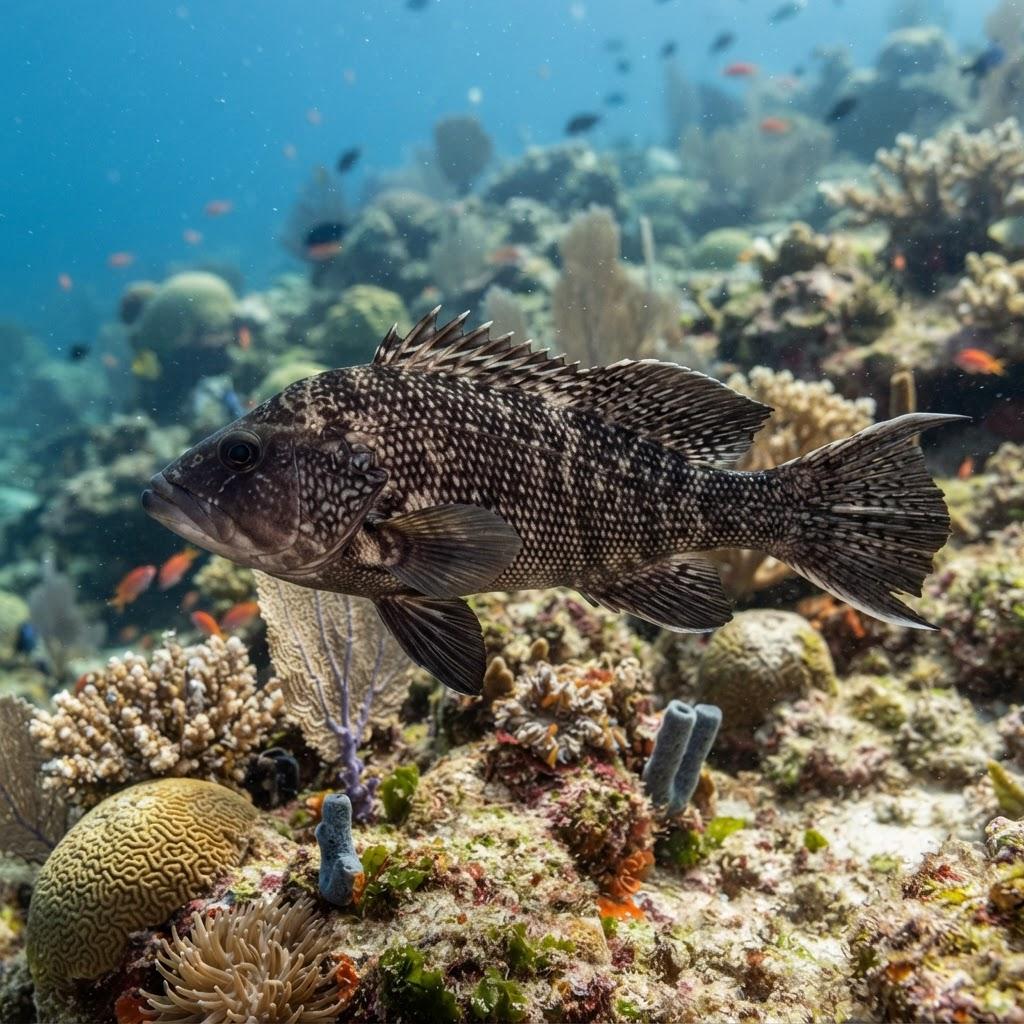
Centropristis striata
Black Sea Bass
Meet the Black Sea Bass, the ocean's sassiest shapeshifter with a flair for architecture and gender-bending drama. This grumpy-looking reef dweller is essentially the neighborhood bully with a heart of gold and a very confusing social calendar.
Meet the Fish
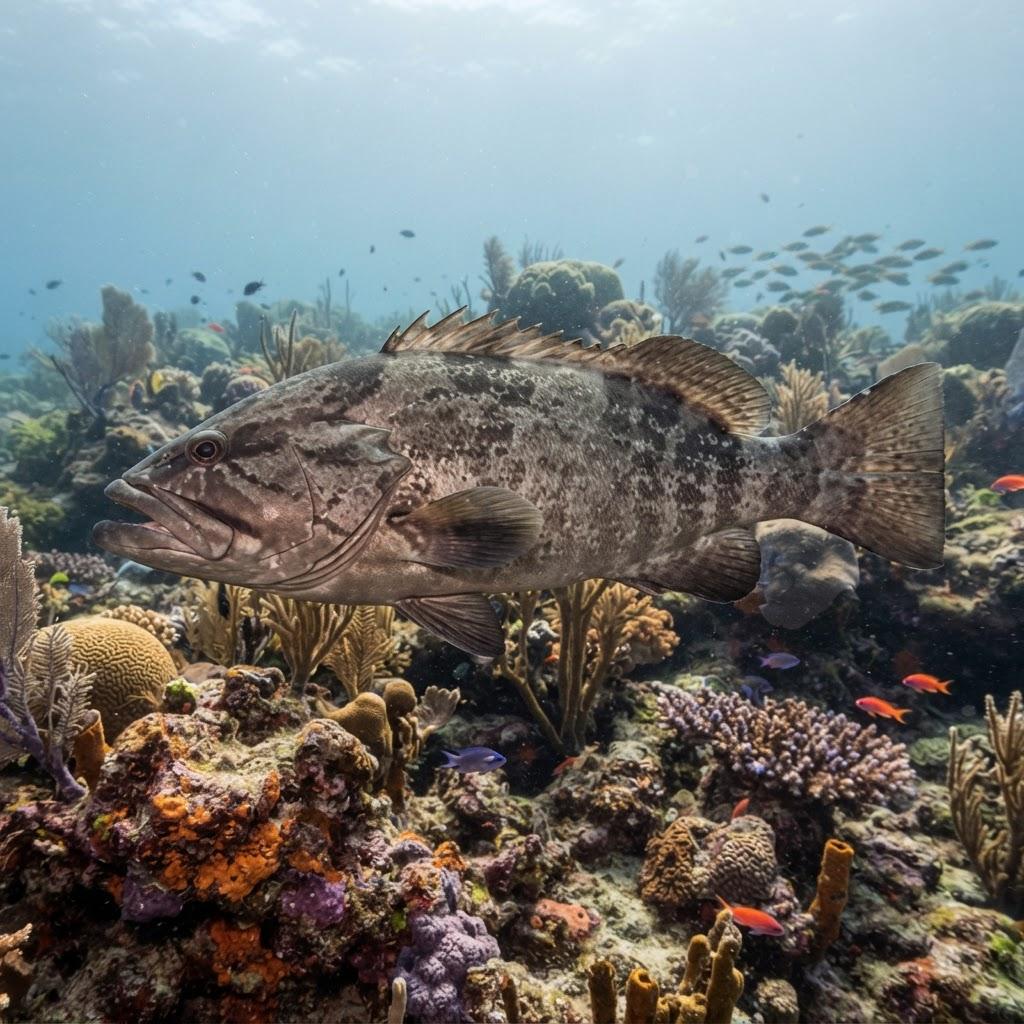
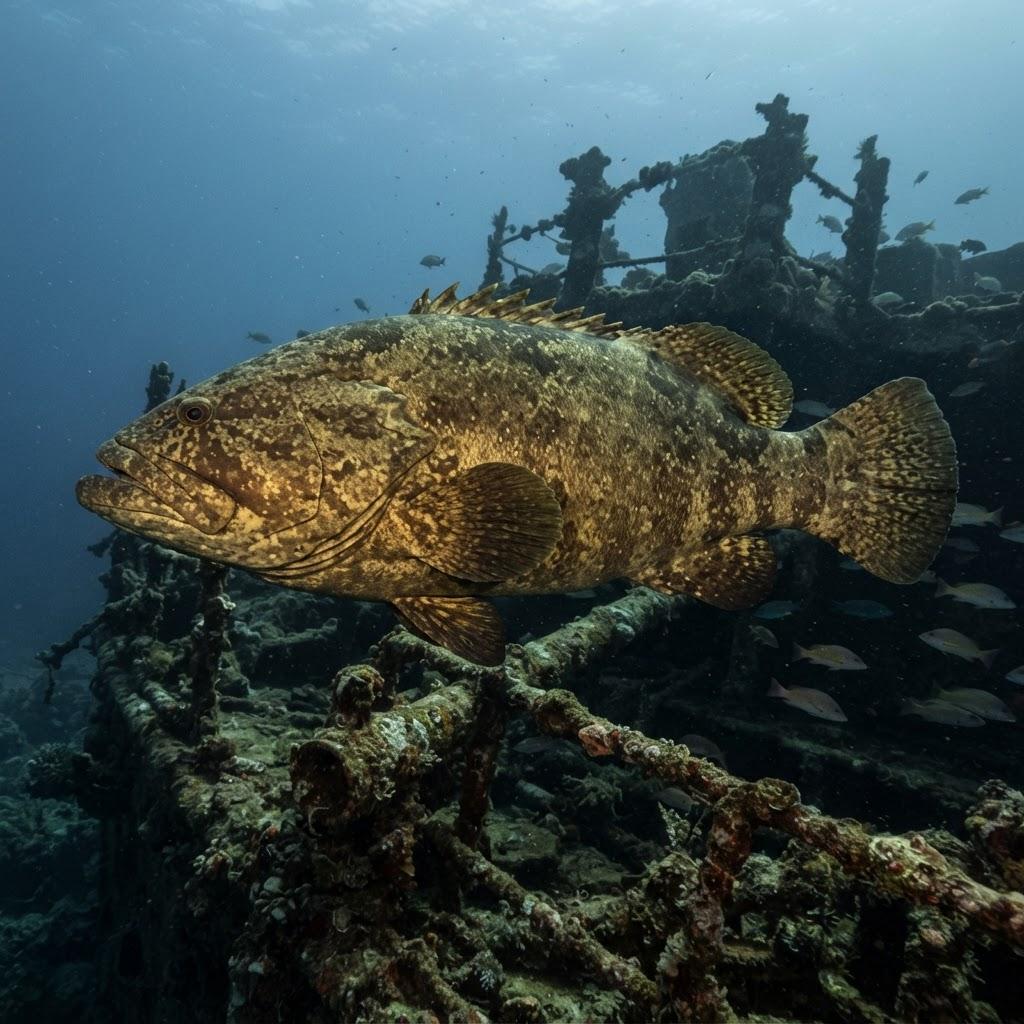
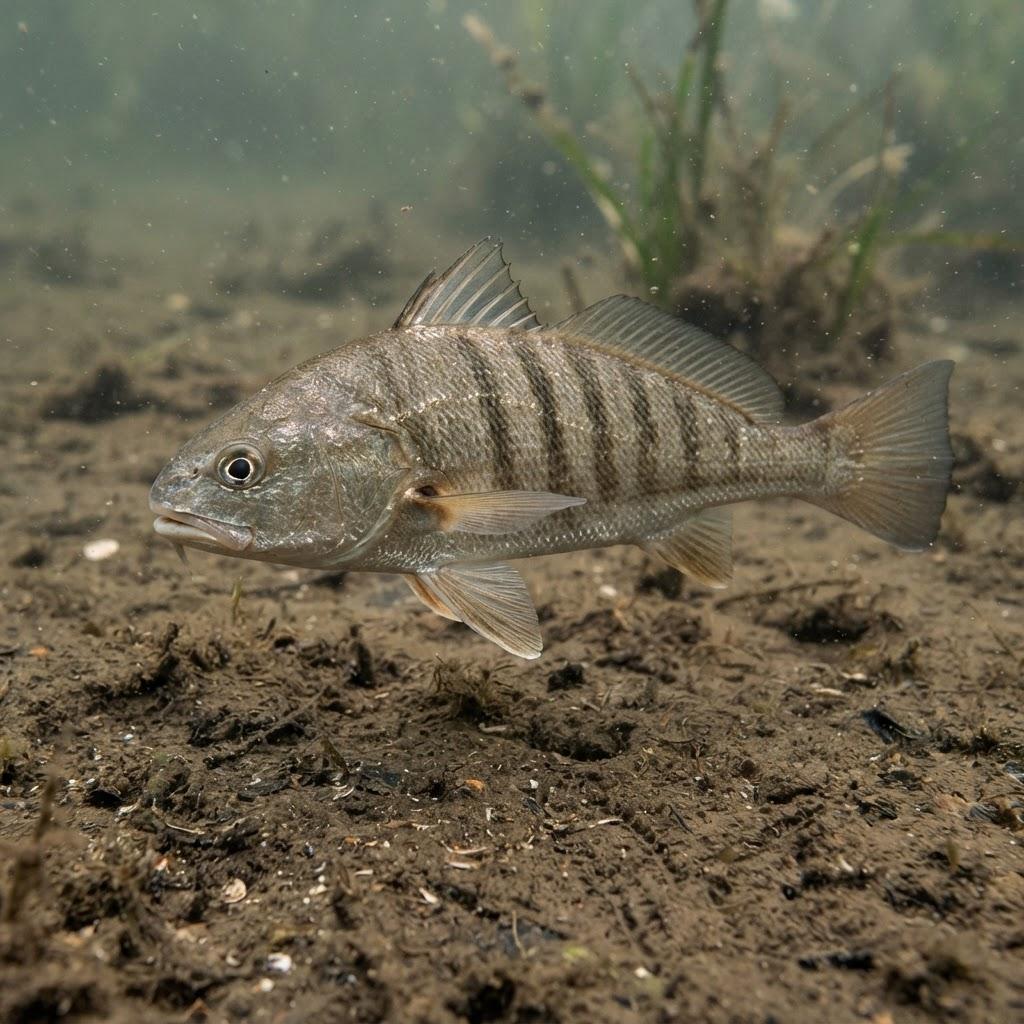
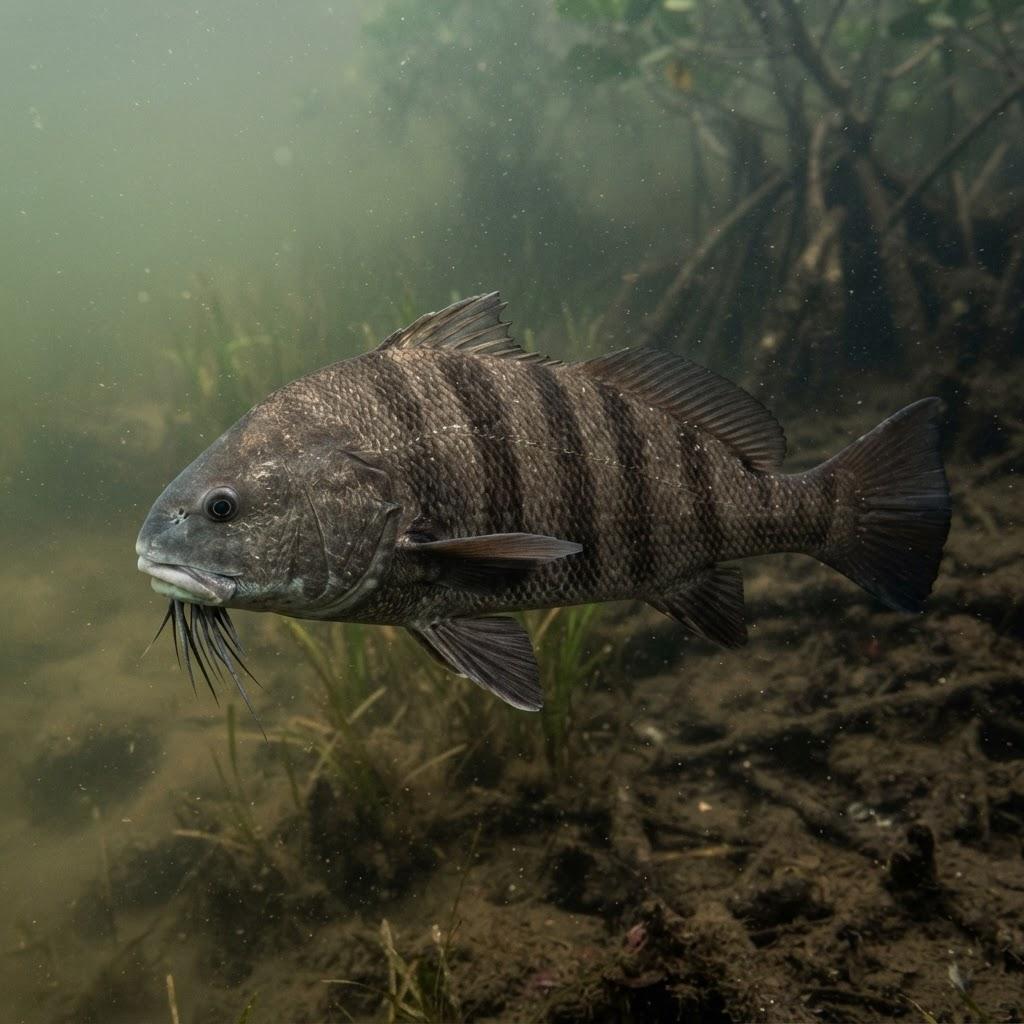
Picture a fish that looks like it just stepped out of a gritty 1940s noir detective film, wearing a fedora and holding a grudge against the entire seafloor. The Black Sea Bass is the quintessential tough guy of the Atlantic coast. With a color palette that ranges from smoky grey to deep, moody black, and fins that look like they’ve been sharpened for a street fight, this fish carries an air of intense seriousness. Its vibe is strictly 'get off my lawn, but also, check out how cool my scales look in this light.' They are compact, muscular, and possess a permanent pout that would make a Victorian ghost jealous. While other fish are out there darting around like frantic neon glow-sticks, the Black Sea Bass is usually hunkered down in a rocky crag, waiting for a chance to snap up a passing snack. They aren't trying to win any beauty pageants, but they definitely own the reef in terms of pure, unadulterated attitude. You’ll know one when you see it; they have this way of staring you down with eyes that seem to say, 'Do you have any idea how much effort it took to find this specific rock?' It is the kind of fish that makes you wonder if it has a day job, and frankly, we suspect it does—mostly involving petty tax collection from smaller crustaceans.
Weird Biological Superpowers Explained Simply
If you thought having a super-fast tongue or camouflage was cool, wait until you hear about the Black Sea Bass's party trick: they are serial gender-benders. In the scientific world, this is known as protogynous hermaphroditism. It sounds like a mouthful, but think of it like this: the entire species is part of an elaborate real-life role-playing game where your level is determined by your biological setup at the time. Most of these fish start their lives as females, dutifully contributing to the population. But as they grow larger, older, and perhaps a bit more cynical about the world, they undergo a transformation. They physically transition into males. It isn't just a costume change; their internal plumbing shifts, their color patterns become more vibrant and aggressive, and they take on a whole new set of responsibilities within the colony. It is basically the ultimate career pivot. Imagine if, after twenty years of working in accounting, you suddenly woke up as a flamboyant, high-stakes tournament champion. This superpower ensures that the social hierarchy is always in flux, keeping the reef population dynamic and preventing any one group from becoming too stagnant. It is nature’s way of saying, 'Why pick one life when you can experience the best of both worlds?'
Absurd Self-Defense Mechanisms
When you’re a fish that spends most of your time hanging out around wrecks and rocky outcrops, you’re bound to run into some unwanted visitors. The Black Sea Bass isn't exactly built for a high-speed chase; they aren't the Ferraris of the sea. Instead, they rely on a defense strategy I like to call 'Aggressive Interior Decorating.' When a predator like a larger shark or a hungry grouper shows up, these fish don't panic. They simply retreat into their impenetrable fortress of rock, shell, or sunken metal. Because they have evolved to be perfectly shaped for wedging themselves into tight crevices, they become essentially immovable objects. If a predator tries to pull them out, the Black Sea Bass flares its dorsal fin, which is lined with sharp, serrated spines that act like a collection of tiny, uninviting spears. It’s like trying to eat a balloon filled with needles. Furthermore, they can use their bodies to create a 'locked' position inside the rocks, making them virtually impossible to dislodge without a jackhammer. They are the masters of the 'I'm not here' strategy, demonstrating that sometimes, the best way to win a fight is to simply be too much of a nuisance to actually extract from your hiding spot.
Fish Drama and Gossip
The social structure of a Black Sea Bass colony is basically the script for a high-stakes high school soap opera, complete with cliques, bullies, and dramatic makeovers. Because of their gender-switching capability, the social ladder is incredibly competitive. The biggest, most dominant males—the ones who have successfully completed their 'pivot'—act like the kings of the castle. They spend their days patrolling their territory, picking fights with other males who get too close, and generally making sure everyone knows who is in charge. Meanwhile, the females are forming their own tight-knit social groups, navigating the local politics of the reef. If a dominant male happens to disappear, the highest-ranking female in the group immediately begins the biological transition to become the new king. It is a system built on constant turnover and power struggles. You can almost imagine them whispering, 'Did you see what Sheila did? She’s definitely going to transition next week, she’s been acting so territorial near the shipwreck lately.' There is no such thing as a boring day when you live in a society where your neighbor might change their identity, rank, and attitude before Tuesday’s dinner party.
The "Wait, That's Real?!" Deep-Sea Oddities
While the Black Sea Bass prefers the shallower, more manageable waters of the continental shelf, they share the ocean with some truly bizarre neighbors that make the deep sea look like a sci-fi convention gone wrong. Consider the barreleye fish, a creature with a transparent head dome that lets you see its actual brain and upward-facing green eyes. Or the anglerfish, which carries its own glowing fishing rod to lure prey in the absolute darkness. Compared to these deep-sea weirdos, the Black Sea Bass feels almost grounded and 'normal.' However, the Black Sea Bass acts as a bridge between the vibrant, sun-drenched shallows and the mysterious darkness below. They thrive in the twilight zone of the coast, where the light is dim and the water is chilly. They understand that while they don't have bioluminescent lures or alien glass heads, they have the benefit of living in a place that is complex and rich in resources. They don't need neon lights to get attention; they have enough personality to fill a dozen abyssal zones. They remind us that even without giant glowing teeth, you can still be the most interesting fish on the block.
Myth Busting
There is a persistent myth that fish are essentially goldfish-brained, mindlessly swimming in circles until they run into a hook. People love to think that fish have the attention span of a reality TV star, but the Black Sea Bass is here to prove that theory absolutely wrong. These fish are actually quite clever when it comes to memory and recognition. They can distinguish between different types of structures and habitats, remembering exactly where the best 'real estate' is located year after year. If they find a prime sunken boat or a particularly cozy rock pile, they remember how to get back to it. They also have a knack for learning where food sources are most reliable. It’s not just luck; it’s navigation and cognitive mapping. The idea that they are just wandering around aimlessly is a total fallacy. They have a deep, ingrained understanding of their home territory, and they show a level of behavioral consistency that implies they are doing some serious thinking under those scales. They aren't just reacting to stimuli; they are actively managing their lives in a complex, three-dimensional environment.
Humorous Historical Tales or Folklore
History is filled with stories of sea monsters, but rarely do we hear about the 'Rock-Dwelling Grumblers' of the Atlantic. In colonial times, fishermen had a very respectful, albeit slightly fearful, relationship with these fish. They were known as the 'sentinels of the wrecks' because finding them meant you were likely hovering over a ship that had met a messy end. There’s an old maritime legend—mostly whispered in taverns along the Eastern Seaboard—that if you caught a particularly large, dark Black Sea Bass, you were actually catching the spirit of a disgruntled sailor who was just looking for a bit of peace and quiet. Whether it was the sailors' way of explaining why these fish were so stubborn to catch or just a good excuse for a missing boat, the folklore stuck. They were often viewed as the gatekeepers of the seafloor, stubborn protectors of their sunken homes. While we know now they aren't reincarnation vessels, the legend speaks to their character; they have always been seen as formidable, intelligent creatures that demand a bit of respect, even if you’re only trying to have them for dinner.
Underwater Love Stories and Bizarre Romances
Love in the world of the Black Sea Bass is not about soft lighting and slow dancing; it is a high-octane performance of muscle, color, and sheer confidence. During mating season, the dominant males engage in what can only be described as a glitter-filled, underwater mosh pit. They shift their colors, vibrating with intensity, and display patterns that are meant to signal to every female in the neighborhood that they are the best 'catch' available. They are basically the guys at the gym grunting, but with more impressive fins. The males will perform elaborate 'flashes'—fanning their fins and changing their skin pigments to create startling contrast—to show off their health and virility. It is a very visual, very intense form of courtship. The females, ever the discerning judges, watch from their perches, evaluating which male has the best territory and the most stamina. It is a high-stakes game where the winners get to pass on their genes and the losers just have to keep practicing their dance moves for next season. It is dramatic, it is competitive, and it is entirely focused on ensuring that the next generation of grumpy-faced bass is up to par.
Underwater Architecture and DIY Nesting
If you thought only birds and beavers had construction skills, you haven't seen a Black Sea Bass during a renovation project. While they don't necessarily build sandcastles, they are masters of modifying their environment to suit their needs. A prime male will work tirelessly to clear out a den, moving debris, shuffling rocks, and ensuring that his nest site is perfectly defensible and attractive to potential mates. They are the 'fixer-upper' enthusiasts of the ocean floor. They will use their mouths to push and pull rocks, creating a secure alcove that acts as both a nursery and a fortress. It is a labor-intensive process that shows a high degree of foresight. They aren't just looking for any old hole; they are looking for a place with the right water flow, the right amount of protection, and the right aesthetic appeal for a demanding female. They demonstrate that architecture isn't just for humans; it is a fundamental part of securing a future in a world where everything wants to eat you.
The Chaos of Raising Tiny Swimmers
Parenting for a Black Sea Bass is an exercise in hope, endurance, and extreme statistical probability. Once the eggs are laid in the carefully constructed den, the male shifts from 'dashing suitor' to 'intense bodyguard.' He guards the nest with the ferocity of a dragon protecting gold. He will chase off anything—crabs, other fish, curious snails—that dares to even look at his future offspring. The problem? Thousands of tiny, helpless fry emerge, and the ocean is a very hungry place. It’s like throwing a bag of popcorn into a stadium full of hungry fans. Most of these little swimmers don't make it to adulthood, which is why the bass produces so many of them in such rapid succession. It is a chaotic, beautiful, and slightly terrifying process. For those few that do survive, they spend their early days hiding in the grass or within the safer crevices of the reef, keeping their heads down and trying not to become lunch for a passing predator. It is a tough start to life, but it builds character—and clearly, it creates the perfect foundation for becoming a future, grumpy-faced, rock-loving adult.
How to Spot One & How It Is Doing
Spotting a Black Sea Bass is an adventure in patience. If you’re a diver or a snorkeler, look for areas with high structure—sunken wrecks, artificial reefs, or rocky bottoms. Don't look for a fish swimming in the open water; look for the one peering out of a hole with a look of existential dread. They are quite common throughout the Atlantic coast, and their populations are currently doing quite well, thanks to responsible management and their own natural resilience. They aren't endangered, which is a great relief to anyone who appreciates a bit of sass in their local marine life. You can help keep their populations strong by respecting local fishing regulations and supporting marine conservation efforts that protect the very reefs they call home. If you happen to see one, give it a respectful nod, admire its grumpy little face, and appreciate the fact that you’ve just made contact with one of the most interesting characters in the ocean. They’ve been doing their thing for millions of years, and with our help, they’ll keep being the grumpy, gender-switching, architectural geniuses of the reef for a long, long time.