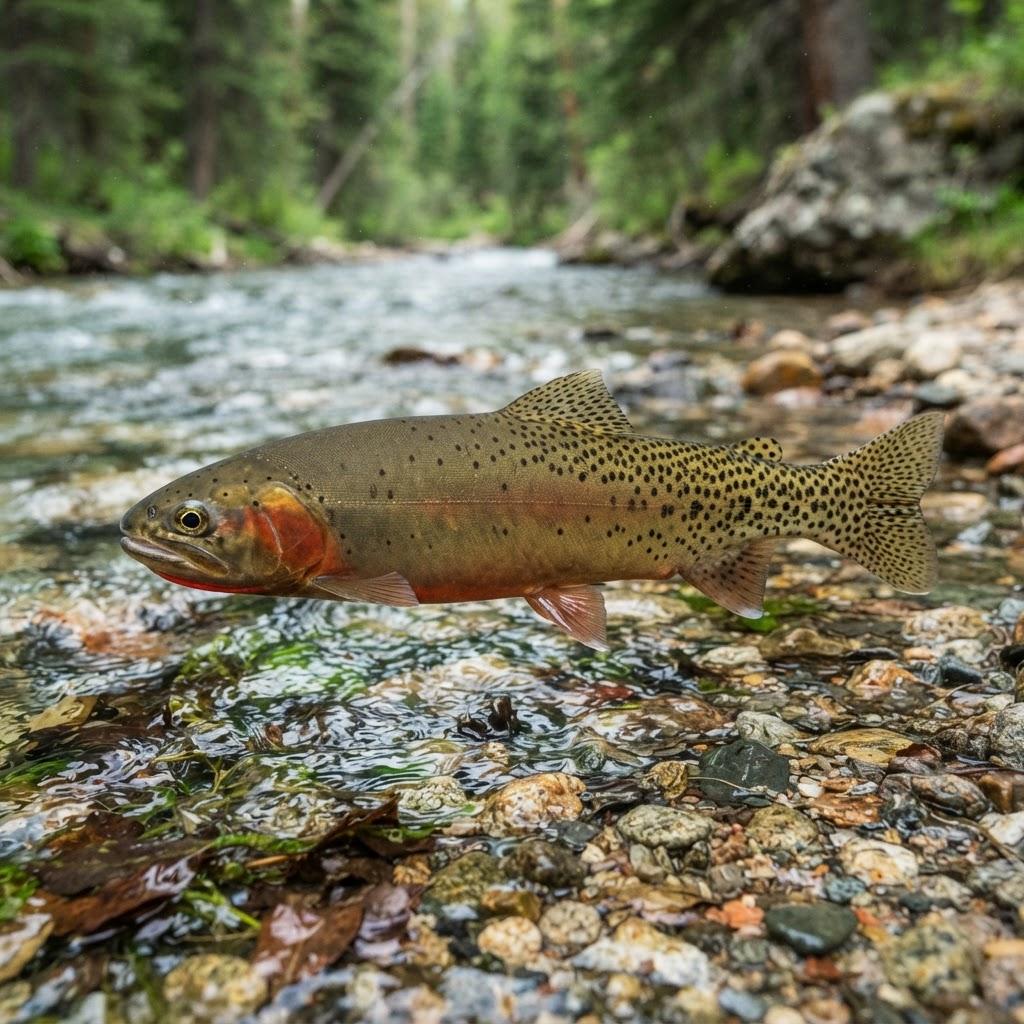
Oncorhynchus clarkii
Cutthroat Trout
Meet the Cutthroat Trout, the rugged, mountain-dwelling rockstar of the fishing world. With its iconic orange throat-slash markings and a penchant for crystal-clear streams, this fish is the undisputed king of the wild west.
Meet the Fish
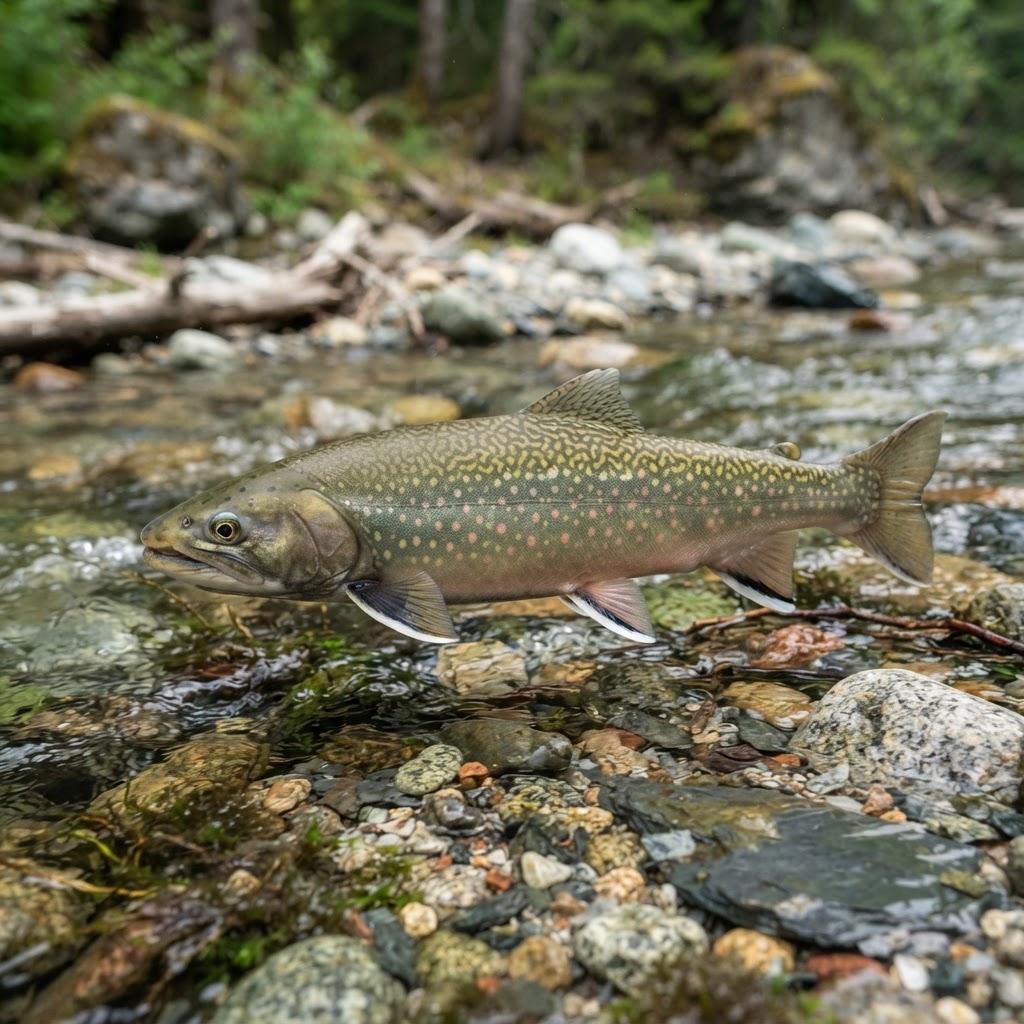
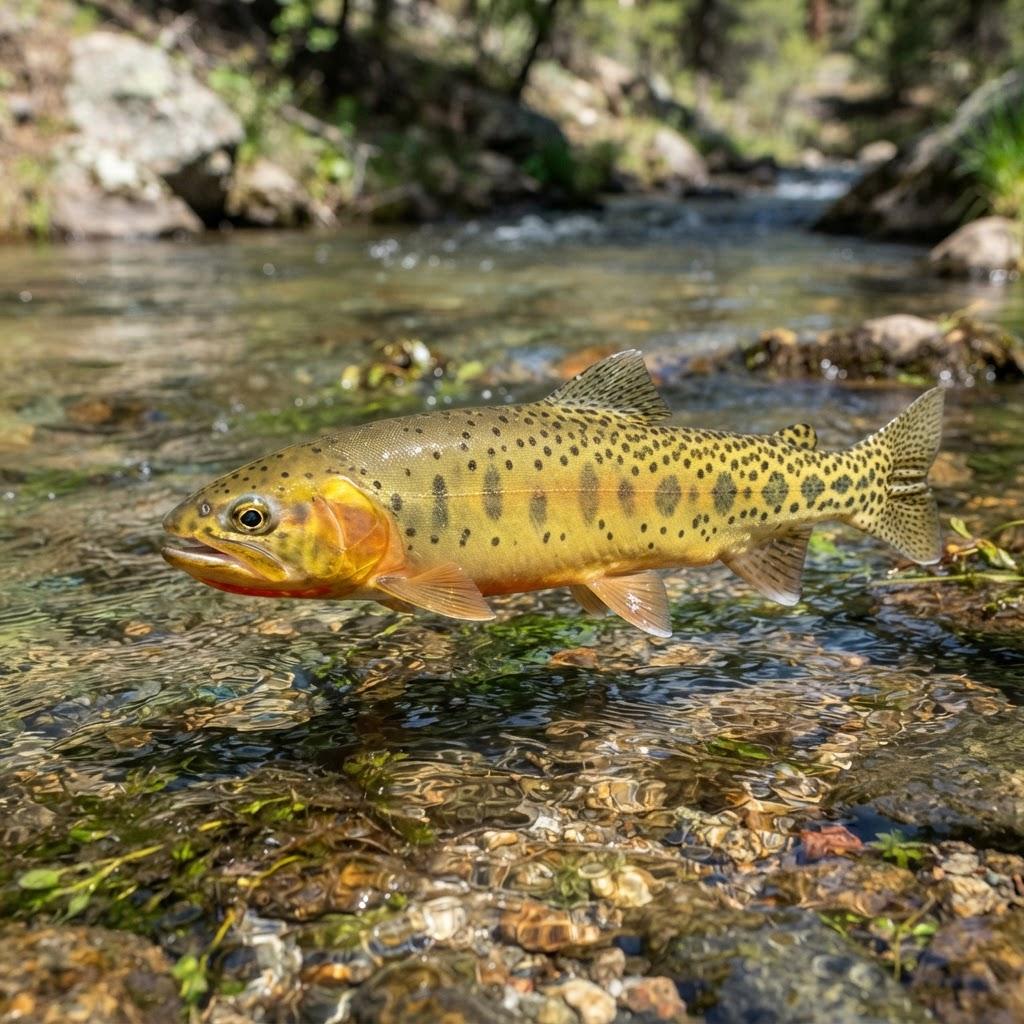
Imagine a fish that wears its drama right on its neck. The Cutthroat Trout enters the stream like a lead guitarist walking onto a stage, rocking an unmistakable pair of bright crimson or orange streaks beneath its jawline. These 'slashes' aren't just for show; they are the namesake feature that makes every Cutthroat look like it just got into a high-stakes duel and won. While other fish might blend into the background, the Cutthroat has a vibe that screams classic, rugged, mountain-adventure aesthetic. It prefers the high-altitude life, hanging out in freezing, oxygen-rich waters that would turn a tropical goldfish into a frozen fish stick in seconds. This isn't a fish that wants to be bothered by the riff-raff of the lowlands; it demands pristine streams and the kind of solitude you usually only find on a Pinterest board for rustic log cabins. It is bold, beautiful, and slightly moody, often hovering behind a rock waiting for the perfect fly to drift by like a celebrity waiting for the perfect paparazzi shot.
Weird Biological Superpowers Explained Simply
If you think your favorite athlete has good reflexes, wait until you hear about the Cutthroat Trout's lateral line system. It is essentially a sixth sense that runs along the side of the fish like a secret radio antenna. This line is jam-packed with tiny, jelly-filled tubes that act like pressure-sensitive sensors. When a bug hits the water or another fish swims by, it creates tiny ripples and pressure waves. The Cutthroat’s lateral line picks these up in an instant, allowing it to 'feel' its environment even in complete darkness or murky water. It is basically the aquatic equivalent of having super-powered sonar vision without needing bulky goggles. Furthermore, these fish are champions of osmotic regulation, which is just a fancy way of saying they are masters at managing their internal water balance. Whether they are living in a freshwater stream or taking a rare, salty vacation in an estuary, their gills and kidneys work together like a high-tech filtration system to ensure their blood doesn't get too salty or too diluted. It is a biological miracle that keeps them ticking when other fish would simply give up and float away.
Absurd Self-Defense Mechanisms
The Cutthroat Trout doesn't have spikes, slime, or the ability to turn into a poison-dart projectile, so it relies on the oldest trick in the book: pure, unadulterated speed and evasive maneuvers. When a predator like a bear, a larger trout, or a determined osprey decides it wants a sushi dinner, the Cutthroat turns into a blur. They have evolved to utilize 'burst swimming'—an explosive, high-energy movement generated by their massive, muscular tails. This allows them to rocket out of harm's way before the predator even registers that their lunch has left the building. In shallow water, they become masters of the disappearing act by kicking up clouds of silt and sediment, essentially throwing a handful of sand in the eyes of their attackers to create a tactical smoke screen. It is less like a refined martial arts move and more like an action-movie star jumping through a window to escape a burning building. They also utilize their mottled, camouflaged skin to blend perfectly into the dappled sunlight reflecting off a rocky riverbed, making them nearly invisible to any hungry creature looking down from above.
Fish Drama and Gossip
If the Cutthroat Trout lived in a suburban neighborhood, they would be the homeowners association president who constantly measures the height of your grass. These fish are fiercely territorial, and they do not take kindly to intruders crashing their specific patch of the stream. When two males decide they want the same piece of prime real estate—usually a spot with great water flow and plenty of floating snacks—it becomes a classic soap opera. They start with a series of posturing displays, flaring their gills and showing off the full extent of their throat markings to intimidate the competition. If that doesn't work, things get physical with chasing and aggressive nips. It is a constant cycle of status jockeying where the biggest, strongest, and most colorful fish gets the best spot, while the smaller ones are relegated to the 'bad' parts of the stream where the water is slow and the food is scarce. It is a cutthroat world, and for these trout, that term is literal, personal, and happens on a daily basis.
The "Wait, That's Real?!" Deep-Sea Oddities
While the Cutthroat Trout is a master of the shallow, sunlit mountain stream, it stands in stark contrast to its deep-sea cousins who live in the midnight zone. Down where the light doesn't reach, fish are doing things that look like they were designed by a science fiction writer with a penchant for neon lights and nightmare fuel. The Cutthroat lives in a world of crystal clarity, where the biggest challenge is spotting a bug on the surface. Deep-sea fish, however, have to deal with the pressure of a thousand elephants standing on their backs and a complete lack of sunlight. Instead of relying on camouflage to match the rocky bottom, deep-sea creatures use bioluminescence to light up the dark like a floating rave. The Cutthroat might think it is fancy with its orange slash, but it has nothing on a fish that can literally grow its own fishing pole with a glowing lure attached to its face. It is a humbling reminder that while the Cutthroat is the champion of the alpine river, the ocean floor is where things get truly, wonderfully, and terrifyingly weird.
Myth Busting
There is a long-standing myth that fish are 'dory-brained' with a memory span of only a few seconds, but the Cutthroat Trout is here to set the record straight. Research into salmonids—the family to which our hero belongs—shows that they have excellent memories and can learn to navigate complex environments with ease. They aren't just mindlessly swimming in circles; they are mapping the stream, memorizing the locations of predators, and remembering where they found the most delicious snacks last Tuesday. Another myth is that trout are just 'dumb luck' eaters that will bite anything. In reality, Cutthroats are notoriously picky eaters. They have a refined palate and are known to be 'selective feeders,' meaning if you offer them a fly that doesn't look exactly like the bugs hatching on the water that day, they will look at it, scoff, and keep swimming. They are smart, strategic, and far more discerning than the average angler gives them credit for in the heat of the moment.
Humorous Historical Tales or Folklore
The Cutthroat Trout holds a place of honor in the history of the American West. Native American tribes, who relied on these fish as a primary food source, often held the trout in high spiritual regard, weaving them into legends about the creation of the rivers and the survival of the mountain people. As settlers moved west, the Cutthroat became the stuff of legend, often inflated in size by tall tales shared around campfires. There is a famous, albeit likely exaggerated, story from the 1800s about a frontier explorer who claimed to have caught a Cutthroat so large he had to use a wagon axle as a fishing rod and a braided rope for line. While the fish in the story were definitely smaller than the narrator claimed, these tales reflect how the Cutthroat became a symbol of the untamed wilderness. They were the original 'trophy fish' that drew people into the rugged peaks of the Rockies, often serving as the main course in stories of endurance, survival, and the search for gold, or at least a very tasty dinner.
Underwater Love Stories and Bizarre Romances
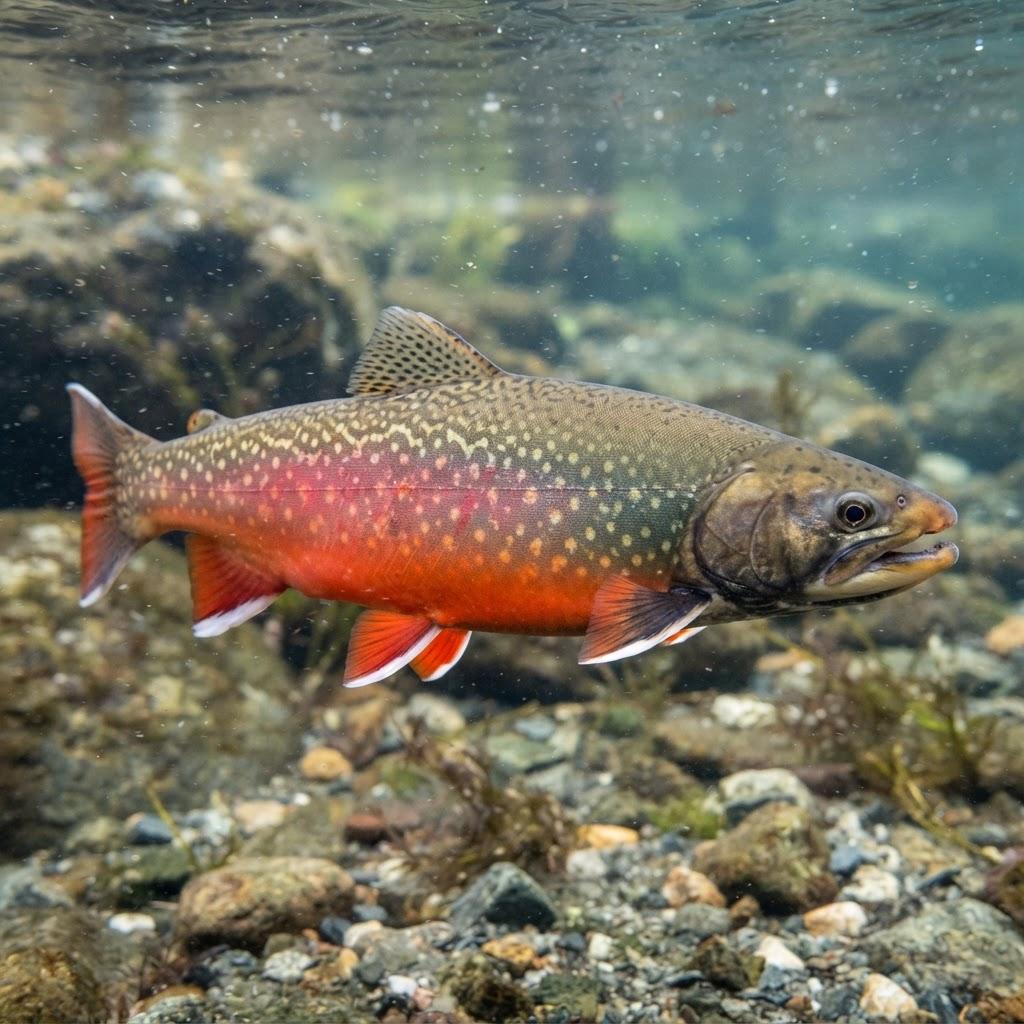
When it comes to romance, the Cutthroat Trout pulls out all the stops for the annual spawning season. It is less of a quiet dinner date and more of an all-out, high-energy dance party in the gravel beds. The males transform, their colors intensifying until they are practically glowing, and they begin a ritual of 'vibration and display.' They crowd around the females, shaking their bodies with intense energy to demonstrate their physical prowess. It is effectively the underwater version of a competitive dance-off. The female, who is unimpressed by anything less than the best, does her own part by testing the riverbed, using her tail to dig a depression called a 'redd.' She wants a spot with the perfect water flow to ensure her future babies get plenty of oxygen. Once the male wins her over, they release their eggs and milt simultaneously into the gravel. It is a brief, intense, and highly coordinated performance that ensures the next generation of trout is ready to take on the world.
Underwater Architecture and DIY Nesting
You might think of a fish as just floating around, but the female Cutthroat is actually a skilled construction worker. When it is time to lay her eggs, she creates a 'redd,' which is a meticulously excavated pit in the gravel of the riverbed. She doesn't just dig a hole; she uses her tail like a hydraulic excavator, flapping it with incredible force to lift the rocks and create a depression that will safely house her future offspring. This process requires significant stamina, as she has to move heavy gravel against the current while ensuring the depth and width are just right for water filtration. Once the eggs are safely deposited, she doesn't just walk away; she pushes more gravel over the top to create a protective mound. This prevents the eggs from being washed away by the current or snatched by hungry scavengers. It is a masterpiece of natural engineering that turns a simple stream bed into a high-security nursery, protecting the next generation of trout from the dangers of the river.
The Chaos of Raising Tiny Swimmers
Parenting for a Cutthroat Trout is a 'set it and forget it' style of care, which might seem harsh but is actually a masterpiece of evolutionary strategy. After the female does the hard work of building the nest and laying the eggs, she and the male move on. They don't stick around to teach the fry how to swim or where to find the best bugs. Instead, they produce hundreds, sometimes thousands, of eggs. The fry emerge from the gravel with a yolk sac attached to their bellies, which provides them with a built-in lunchbox for their first few days of life. This is the 'chaos phase' where thousands of tiny, defenseless trout have to learn to hide from everything in the stream—including their own siblings and larger, cranky relatives. It is a tough life, but by spreading their eggs across different areas of the riverbed, the parents ensure that at least a portion of the family survives to become the next generation of trout. It is a numbers game, and while the survival rate is low, the sheer amount of effort they put into nesting keeps the species thriving.
How to Spot One & How It Is Doing
If you want to catch a glimpse of this mountain legend, look for the coldest, clearest water you can find. You are going to need a good pair of polarized sunglasses to cut through the surface glare of the water; without them, you are just looking at reflections. Look for shadows near undercut banks or large, submerged rocks where the water slows down just a bit. When you spot a fish, check for that tell-tale orange slash under the jaw—that is the signature of the Cutthroat. As for how they are doing, they are currently classified as 'Least Concern' globally, but they face constant pressure from habitat loss, pollution, and the introduction of non-native fish species that try to steal their food or move into their homes. The good news is that conservationists are working hard to protect the purity of these streams. You can help by practicing 'catch and release' if you fish, keeping waterways clean, and supporting local organizations that restore native river habitats. Every little bit of awareness helps keep these beautiful, slasher-jawed trout swimming in the wild for generations to come.