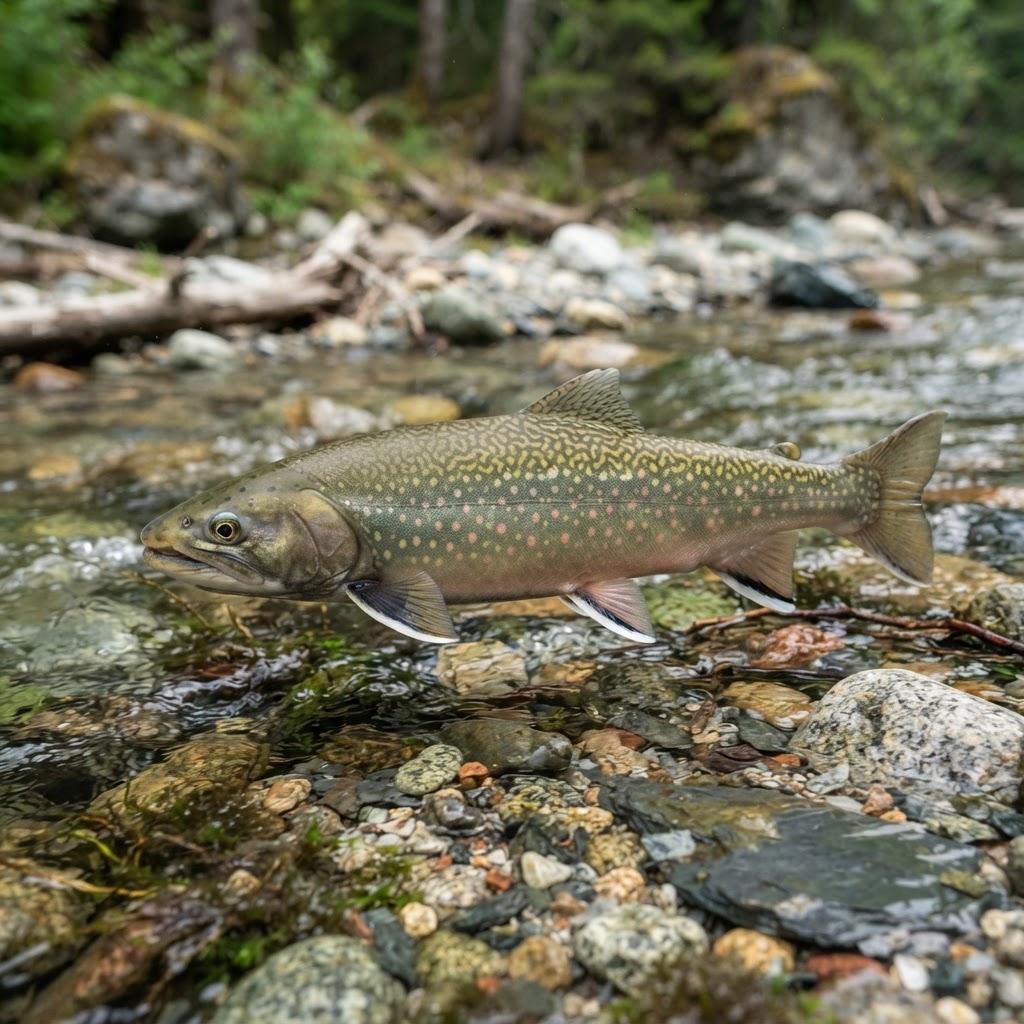
Salvelinus confluentus
Bull Trout
Meet the Bull Trout, the shadowy, moody teenager of the salmon family that prefers cold water and a solitary lifestyle. This apex predator is a gorgeous, stealthy survivor that rules the mountain streams like a grumpy landlord.
Meet the Fish
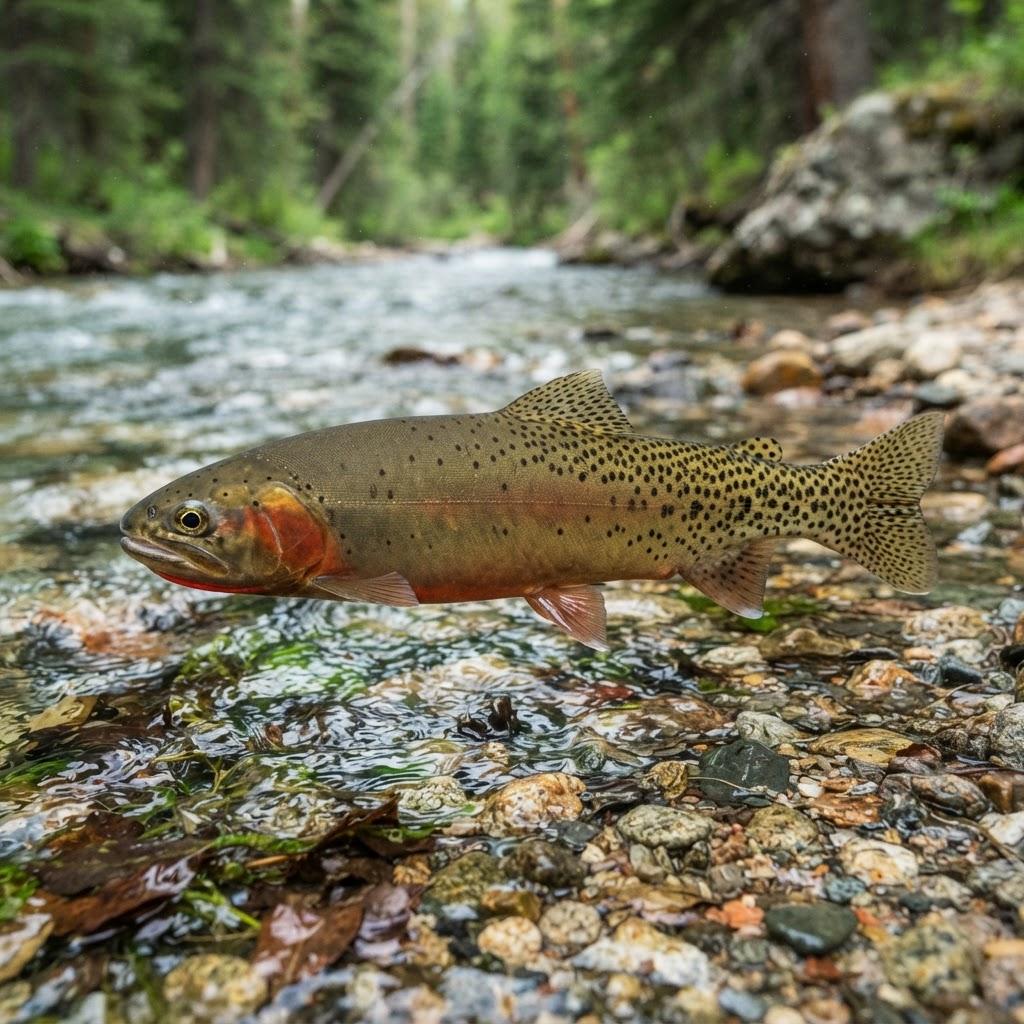
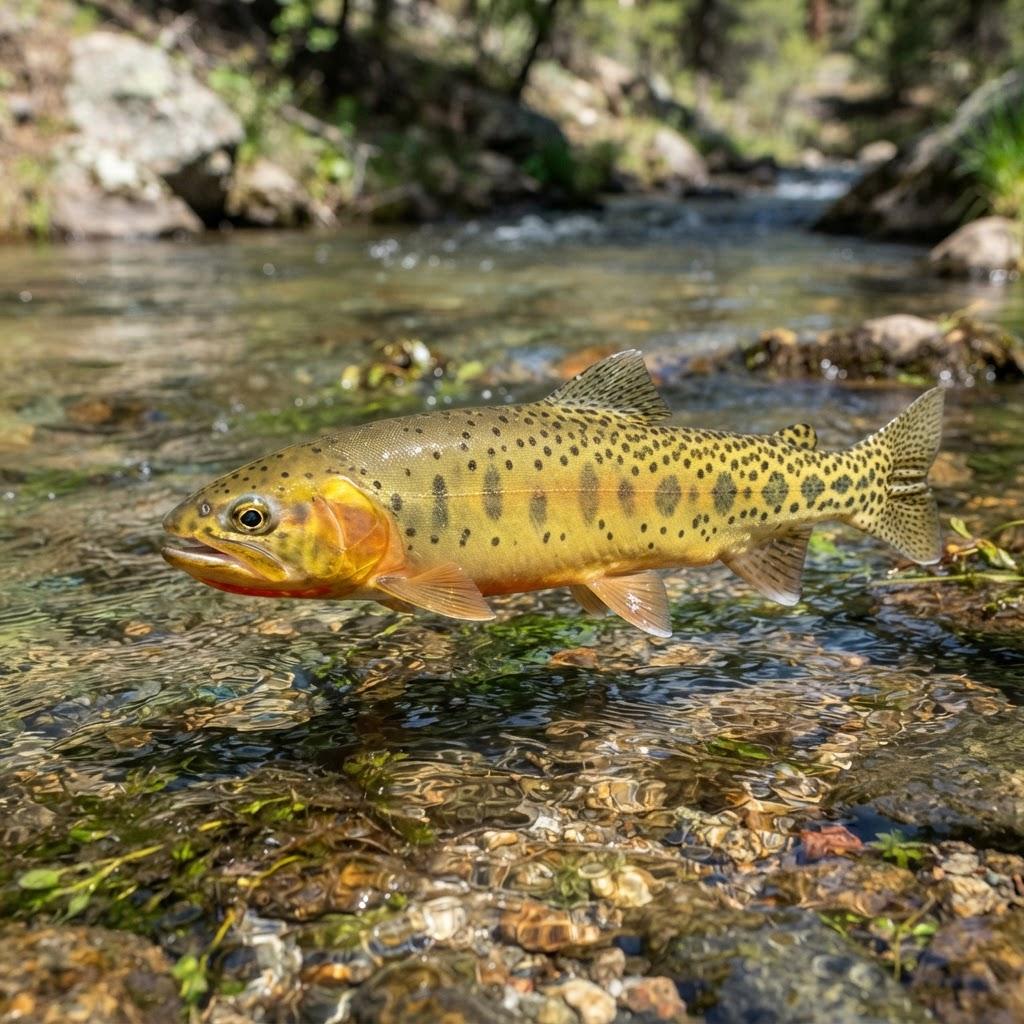
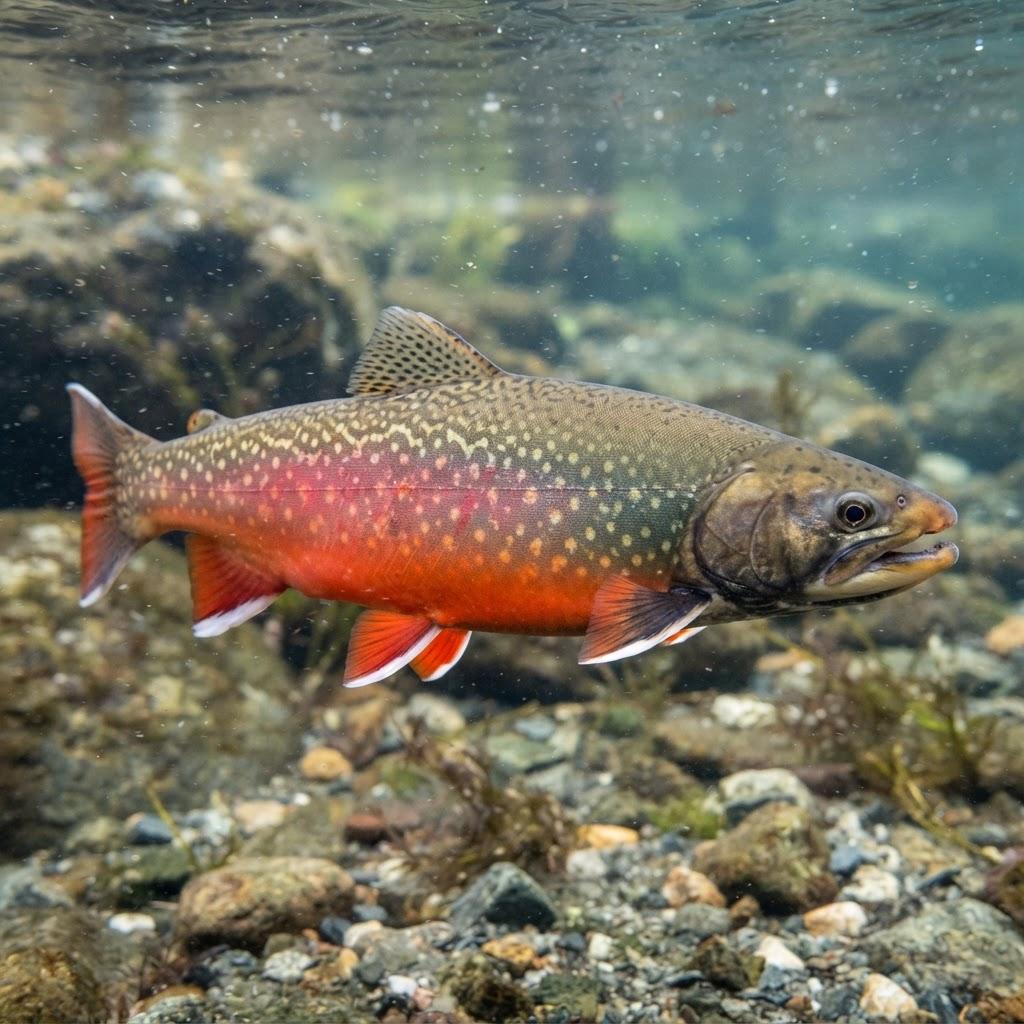
If the salmon family were a high school, the Bull Trout would be the kid sitting in the back corner of the library wearing a leather jacket, listening to music nobody else has heard of. While its flashy cousins, the Rainbow Trout or the Sockeye Salmon, are busy jumping through hoops and making a scene, the Bull Trout is chilling in the coldest, sketchiest corners of the stream. It has a vibe that screams 'I don't need your approval.' These fish are the ultimate introverts of the aquatic world. They aren't just trout; they are char, which is like the refined, cooler version of a trout, featuring lighter spots on a darker background—a classic fashion choice that never goes out of style. With a head that looks like it was designed by a committee that wanted to prioritize snagging unsuspecting prey over aerodynamics, the Bull Trout is essentially the bulldog of the river. It has a massive, slightly overhanging jaw that gives it a permanent 'tough guy' scowl, and it spends most of its time patrolling the deep, dark shadows where it can contemplate its next meal without being bothered by the mainstream crowd.
Weird Biological Superpowers Explained Simply
The Bull Trout has a superpower that would make any arctic explorer jealous: it is an absolute master of the 'Icebox Lifestyle.' While most fish start to feel a bit sluggish or sleepy when the temperature drops, the Bull Trout is just getting started. It has specialized proteins in its blood that act like internal antifreeze, preventing its vital fluids from turning into fish-flavored slushies when the mercury plunges. This isn't magic; it is biology. These 'antifreeze proteins' grab onto tiny ice crystals as they form in the fish's body and stop them from growing into jagged shards that could pop cells like balloons. It is essentially the biological equivalent of pouring high-quality coolant into your car’s radiator so you don't break down on a mountain pass. Because of this, the Bull Trout can survive in water that would turn a goldfish into an ice sculpture in minutes. It lives in the 'Goldilocks' zone of freezing temperatures, hanging out in frigid glacial meltwater where few other predators dare to venture, giving them a private dining hall where they never have to wait for a table.
Absurd Self-Defense Mechanisms
When you are a top predator, you don't really have to worry about being eaten, but you do have to worry about being bothered, which the Bull Trout finds incredibly rude. Its main self-defense mechanism is the art of 'Disappearing into Thin Water.' If a larger predator or an annoying human comes splashing around, the Bull Trout doesn't puff up or release toxic ink; it just vanishes. It uses its countershading—a fancy term for being darker on top and lighter on the bottom—to blend perfectly into the rocky, shadow-dappled floor of the riverbed. From above, it looks like just another dark pebble; from below, its belly blends into the bright sky-lit surface. It is the aquatic version of a stealth bomber. They are also masters of the 'Sudden Pivot,' using their powerful, muscular bodies to execute sharp, jerky movements that make it nearly impossible for anything to get a good grip on them. They essentially act like a slippery bar of soap in a shower that is trying to win a wrestling match against a giant, and usually, they win by simply being too uncooperative to catch.
Fish Drama and Gossip
The social life of a Bull Trout is essentially a low-budget soap opera called 'I Hate Everyone.' Unlike school-based fish that love to hang out in big, gossipy groups, the Bull Trout is a territorial grump. They view the river as their private property and any other fish entering their 'zone' is treated like an uninvited guest at a dinner party. You will often see them engaging in aggressive posturing—staring each other down with their big, downturned mouths and flapping their fins in a way that suggests they are one second away from a full-blown argument. It is all about the real estate. They want the best spot in the pool—the one with the deepest, coldest current—and they will guard that piece of gravel with the intensity of a homeowner arguing over a property line. If you are a smaller fish, you don't gossip with the Bull Trout; you leave, and you leave quickly, before the Bull Trout decides you look like an appetizer.
The "Wait, That's Real?!" Deep-Sea Oddities
The Bull Trout might not live in the midnight zone where fish have glowing lures dangling from their faces, but it lives in the 'mountain midnight.' The deepest, coldest pools of high-alpine rivers are just as mysterious and alien to us as the deep ocean. These alpine pools are often pitch black due to heavy silt or extreme depth, and the Bull Trout thrives there with highly sensitive sensory systems. While they don't have bioluminescence, they have something just as cool: the lateral line. This is a sensory organ that runs along their body like a high-tech vibration detector. It allows them to feel the slightest movement in the water, even in total darkness. Imagine being able to sense a fly landing on your back from across the room. That is the Bull Trout’s superpower. It doesn't need neon lights to see its prey; it feels the 'whispers' of the water, mapping out the entire stream through vibrations. It is living in a tactile world that we can only dream of understanding, proving that you don't need a glow-in-the-dark vest to be a master of the darkness.
Myth Busting
There is a long-standing myth that Bull Trout are just 'mindless eating machines' that destroy entire rivers. Some old-school anglers used to believe that if you had a Bull Trout in your creek, you had nothing else, because they would eat every other fish in existence. This is total nonsense. While it is true that they are predators, they are part of a balanced ecosystem. They are the 'check and balance' system of the river. By keeping the population of smaller, faster-breeding fish in check, they actually help maintain the health of the entire waterway. They aren't villains; they are the janitors and the managers. Another myth is that they are lazy because they stay in deep water. In reality, they are saving their energy for the 'Great Migration,' which is like the Olympic marathon of the fish world. They travel hundreds of miles to reach their spawning grounds, battling currents and obstacles that would make a salmon think twice. They are not lazy; they are just very, very focused on their long-term goals.
Humorous Historical Tales or Folklore
In the folklore of the Indigenous peoples of the Pacific Northwest, the Bull Trout was often viewed with a sense of wary respect. It wasn't seen as a 'glory fish' like the massive Chinook Salmon, which were the heroes of the legends, but rather as the 'wise old spirit' of the deep pools. There are stories of these fish being the keepers of the cold, guarding the sacred glacial waters that fed the valleys. They were seen as serious, ancient beings who were not to be trifled with. Some settlers even had tall tales about 'River Giants' that were so large they could pull a dog off the bank—likely an exaggeration of a very hungry, very large Bull Trout that snapped up a dropped lure. These stories speak to the Bull Trout’s presence: it was always there, lurking in the shadows, watching the human world from its cool, quiet retreat. It has become a symbol of the wild, untamed nature of the mountains, a relic of a time when the rivers were still wild enough to hold secrets.
Underwater Love Stories and Bizarre Romances
When it comes to romance, the Bull Trout takes the 'slow and steady' approach. There is no flashy ballroom dancing or elaborate color-changing light shows. Instead, it is all about the 'long-distance courtship.' They will travel for weeks, sometimes months, to reach the specific gravel beds where their ancestors were born. When they finally meet a potential partner, the dance is subtle and serious. The male will quiver alongside the female, a vibrating display that is meant to show off his strength and genetic quality. It is less of a 'look at my colorful fins' and more of a 'I have enough stamina to survive this grueling journey and still have the energy to help you build a home.' It is a very mature, very practical way of finding a mate. They choose each other based on fitness, endurance, and the ability to find a perfect, cold, oxygen-rich patch of gravel. It is the fish equivalent of a couple bonding over their shared love of marathon running and real estate investment.
Underwater Architecture and DIY Nesting
The Bull Trout is the champion of DIY renovation when it comes to the seabed. They don't just lay eggs and leave; they perform heavy-duty construction. The female uses her powerful tail to dig a 'redd,' which is a fancy word for a gravel nest. She whips her tail against the river bottom to clear away fine silt and sand, creating a bowl-shaped depression. This is serious labor—it involves thousands of tail flicks that move massive amounts of gravel. The male, acting like a protective site supervisor, stays nearby to chase off any 'contractors' (other males) who try to encroach on the job site. Once the eggs are laid, they cover them with a fresh layer of carefully selected rocks to protect them from the current and hungry scavengers. It is a meticulous, high-effort project that ensures the next generation of 'shadow fish' has the best possible start in life. The result is a well-hidden, fortified bunker buried under the stream floor, invisible to the casual observer.
The Chaos of Raising Tiny Swimmers
Once the eggs hatch, the real chaos begins. The tiny 'fry'—the baby fish—are essentially little bundles of energy that don't know how the world works yet. They start out living under the gravel, surviving on a yolk sac they carry like a little backpack of nutrients. It is a very safe, very boring time for them, which is exactly how they like it. Once they emerge, they are suddenly in a massive, dangerous, fast-moving world. There is no daycare here; they are on their own from the moment they swim up to the surface. They have to learn to hide, hunt for tiny aquatic bugs, and avoid getting eaten by everything from birds to larger trout. It is a baptism by fire—or rather, by freezing water. Most of them won't make it, but the ones that do are the toughest of the tough. They spend their first few years growing slowly in the small side-channels, learning the ropes before heading off to the bigger, more dangerous main river.
How to Spot One & How It Is Doing
So, you want to see a Bull Trout? First, you need to be prepared to get cold and go to some really beautiful, really remote places. Look for deep, clear pools in high-mountain streams. If you see a fish that looks like a ghost—long, lean, with a big head and pale spots on its back—you have found the legend. But here is the serious part: the Bull Trout is currently listed as 'Vulnerable.' They need very specific, very cold, very clean water, and as the climate changes and rivers get warmer, their 'cool' lifestyle is being squeezed. The good news? They are incredibly resilient if we just give them a chance. You can help by supporting local organizations that work to protect mountain watersheds, planting trees along stream banks to keep the water cool, and practicing 'catch and release' with extreme care if you ever go fishing. By protecting their homes, we keep the spirit of the cold, wild mountains alive. They are the guardians of the stream, and it is our turn to be the guardians of the Bull Trout.